GM’s $900 Million Bet on the Future of V8 Engines

Timeless Adventure: The Allure of Retro Off-Roading with Classic Jeeps

Teen’s Joyride Ends in Disaster: BMW M4 Crashes While Drifting in Dearborn

Heartbreak on Two Wheels: Quartararo’s Race Cut Short by Misfortune
Ram’s Bold Comeback: Is the Hemi V8 Making a Return?

Revamped Land Rover Defender: Enhanced Style and Tech for 2026
 Smoked rear lights and gloss black grille bar now standard, with prices starting at £57k
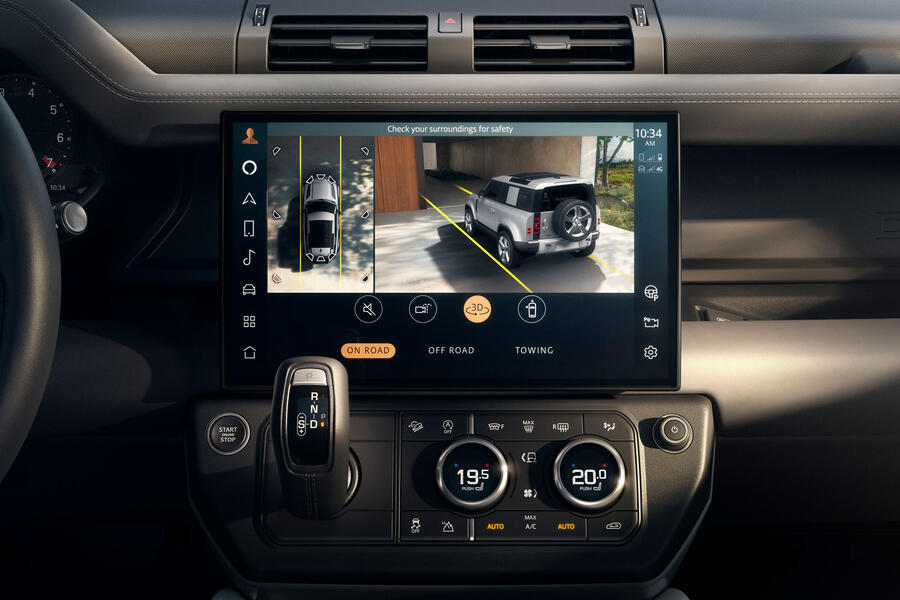
The Land Rover Defender has been updated with a series of subtle styling tweaks and reworked interior technology, including a larger infotainment touchscreen.
The exterior refresh includes a revised headlight design with a smaller centre section – said to provide a “distinctive” graphic when activated – as well as the application of a smoked tint to the rear lights.
A gloss black grille bar becomes a standard fitment and the front and rear bumpers are now painted either silver or satin grey.
Inside, the revised Defender gets a larger, 13.1in touchscreen (up from the current 11.4in), which completely fills the gap between the centre console and the upper surface of the dashboard.
The update also introduces a driver-facing infrared camera on the steering column, which underpins the driver attention monitoring system mandated by the European Union’s GSR2 legislation. This triggers audio and visual alerts if it detects a driver is not paying attention to the road ahead, but it can be adjusted or disabled altogether using the driver assistance settings in the infotainment.
Land Rover’s adaptive off-road cruise control system is also being offered on the Defender for the first time, as an optional extra.
Land Rover has yet to announce which powertrains it will offer in the updated Defender but the current line-up is not expected to change. This comprises a 3.0-litre twin-turbocharged diesel straight six with 246bhp or 345bhp; a 2.0-litre petrol plug-in hybrid with 296bhp and 30 miles of electric range; and a supercharged 5.0-litre petrol V8 with outputs of 419bhp, 493bhp or 518bhp.
The range-topping Defender Octa remains available, packing a 626bhp twin-turbocharged 4.4-litre V8 supplied by BMW.
Prices for the updated Defender start at £57,135.
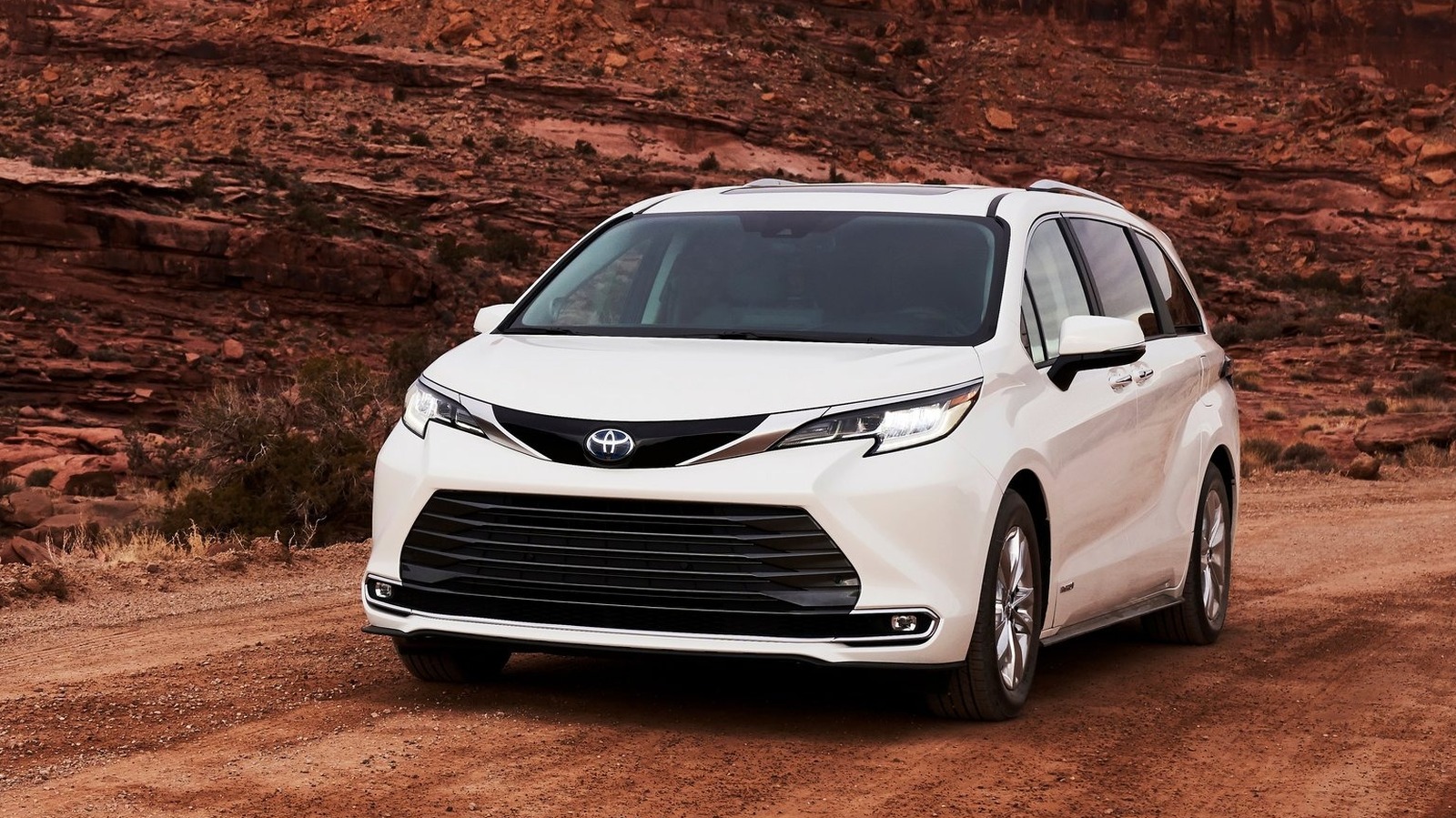
Revamping the Sienna: A Bold Idea to Win Over Dallas Moms
Unleashing the Beast: The 2026 BMW M2 CS Redefines Performance and Style
Repair Delays: The Hidden Costs of Complex Cars and Parts Shortages
 Motorists face waits of months – and in some cases years – for vital repairs due to parts shortage
Drivers are facing increasing delays in getting their cars repaired as cash-strapped manufacturers struggle to maintain a healthy stock of spare parts for an increasingly complex car parc.
Readers have alerted Autocar to the issue in recent months, sharing their experiences of long waits.
One reader had a Range Rover Sport P400e with a JLR dealer for seven weeks before its drive battery fault was diagnosed and a part wait time of more than a year was relayed. Another’s Hyundai Ioniq 5 had been off the road for 10 weeks awaiting a part that was still “two to three more weeks” away.
Their experiences tally with the findings of the latest Reliability Survey by Autocar sibling title What Car?. Of the nearly 10,000 respondents who had a problem with their car last year, more than one in 10 were made to wait more than a week for repairs.
The issue also has significant ramifications for businesses. According to a new report by leasing firm Arval, almost a quarter of UK fleets recorded an increase in vehicle downtime over the past year.
The main reason for that, according to Ben Townsend, head of automotive at risk analyst Thatcham Research, is the increasing complexity of new cars, which require more parts.
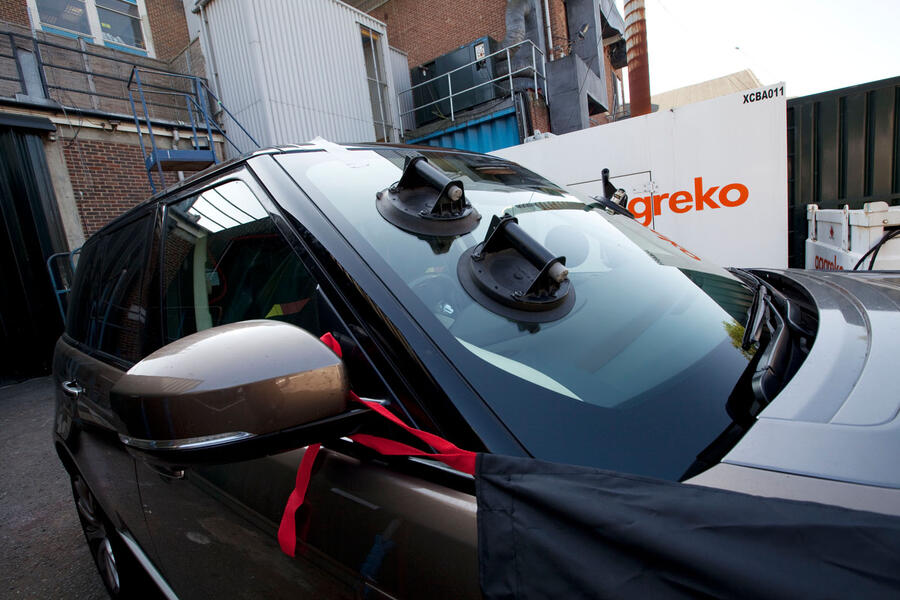
He explained: “Look at a windscreen replacement as a simple example. If you go back 15 years, windscreen replacement was [swapping] a piece of glass that could be done in your driveway. Now it’s a piece of glass that’s potentially got a camera behind it, that’s potentially got radar or lidar attached to it, that’s potentially got a heated windscreen matrix. All of that adds to the complexity.
“It also requires specialist tooling and calibration that requires more specialist tooling. So what has been a circa-£300 job on your driveway becomes a circa-£1500 job at a specialist centre that may take two days. That requires a courtesy car.
“You can see, just for a windscreen replacement, the complexity goes up, and the number of parts required and the skill that’s required, all of that. Do that for headlights, do that for radars and the amount of parts that logistics companies have to carry goes up massively.”
On top of this, suggested Townsend, car makers are no longer stocking a large surplus of spare parts, due to various factors affecting their finances.
“The biggest pain point for the incumbent vehicle manufacturers is cash flow,” he said. “Because of the challenges coming from the likes of China and with [import] tariffs in America, Dieselgate, electrification and all of this, they simply don’t have the cash flow to have millions of pounds sitting in stock.
“They’re having to reduce their stock holdings across Europe that would traditionally have supplied the market, because they simply can’t afford to have millions of pounds sitting in a warehouse not doing anything.”
This point is particularly pertinent at a time when the market is demanding broader choice, explained Townsend, because with each type of powertrain comes a different assortment of parts, dramatically increasing the cost of keeping a healthy supply of spares.
He said: “If we were all buying electric vehicles, the problem would go away, because they would just move from one [powertrain type] to another. But the market isn’t quite ready, so manufacturers have to serve the market by producing plug-in hybrids, normal hybrids, electric variants etc. So it’s hugely complex at a time when manufacturers are cash-constrained.”
The wait times also put pressure on insurers to declare crashed cars a total loss when they have suffered only minor damage, explained Townsend. This is because the cost of a courtesy car may outweigh the value of a repair if the part will take weeks or months to arrive.
He said: “We had an incident with an EV in the middle of 2023. Somebody bought an EV brand new in July for £35,000. Then it suffered a third-party hit. The door and the wing mirror were damaged. The vehicle manufacturer couldn’t provide a lead time [for a replacement mirror], so that car was written off for a wing mirror.”
In a similar example, Townsend revealed that when Thatcham crash-tested an Ioniq 5 at less than 10mph (representative of most incidents for which an insurance claim is made), it incurred repairable damage to its front bumper and front wing, and while its radar was unblemished, the radar’s bracket had snapped, and a replacement had a lead time of seven months.
“If you then look from an insurance point of view, seven months of an electric hire car would have written that car off,” said Townsend.
Culture clash scuttling Chinese cars
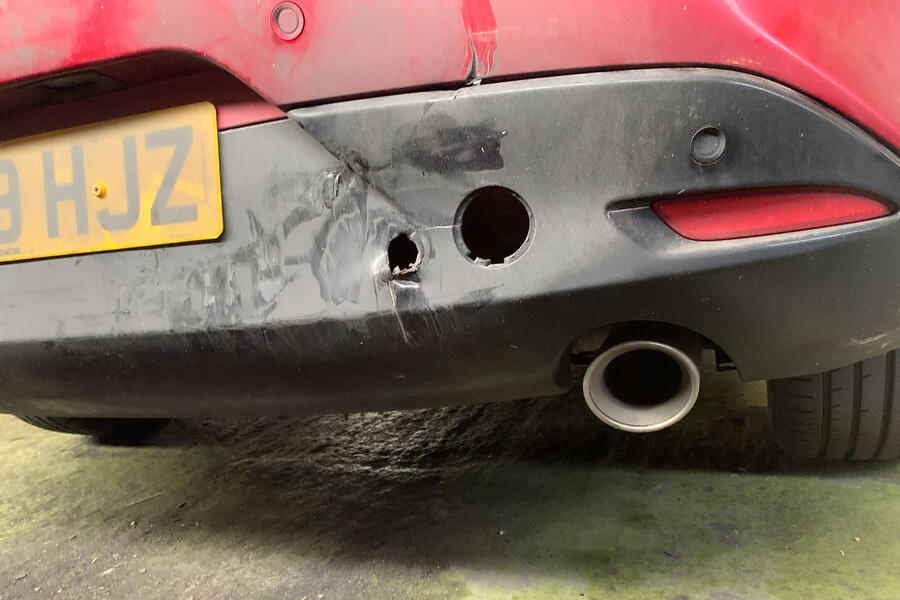
Chinese manufacturers have caught flak for long lead times and high repair costs. But according to Thatcham’s Ben Townsend, the issue isn’t necessarily with the cars or manufacturers themselves; instead it’s down to a differing philosophy.
Due to China’s significantly cheaper labour rates, the country’s standard approach to repairs is to replace entire sections of a car, rather than individual panels.
“They will spend £3000 on the parts and then £300 on labour, because it’s cheap to do,” said Townsend.
“You would never do that in Europe. For a rear-end repair, you would replace the back panel or the rear quarter, but the parts that Chinese manufacturers are supplying are a whole boot floor or a whole side of a vehicle.”
This means the spare parts supplied in Europe are often overkill for the repair work needed, creating wastage both in time and in materials.
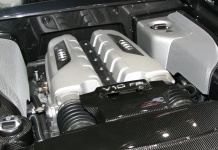
The End of an Era: Why the V10 Engine is No Longer in Production