
Charging Ahead: Why Disabled Drivers Are Left Behind in the EV Revolution
 Obstructions, cable weights and force required to attach connectors it too great for many impaired motorists
A parliamentary report has criticised the absence of electric car charge points that fully satisfy new standards for disabled driver access, concluding that “the interests of disabled drivers have been left behind in the rollout”.
The Public Accounts Committee’s paper into the UK’s EV charge point network also claimed that of the 15,000 rapid and ultra-rapid charge points in the UK, none is fully compliant with BSI PAS 1899, a standard created partly by the Department for Transport (DfT) to improve the charge point experience for disabled drivers by making chargers safer and more accessible.
Explaining the challenges facing disabled users, the committee wrote: “By 2035, 1.35 million drivers with disabilities are expected to be partially or wholly dependent on public charge points, but many charge points, or their surrounding environment, have features which make them inaccessible.”
It noted that these challenges include charge points being placed near obstructions, such as kerbs, which make it harder for wheelchair users to use, or the weight of the cable/force needed to attach the connector being too great.
The report went on to conclude: “Failure to address problems with the uptake of the standard will mean that the public charge point network will continue to develop without meeting the needs of drivers with disabilities.”
In response to the findings, Nigel Fletcher, CEO of the Motability Foundation, a charity that has been advocating for PAS 1899 to be recognised as the legal standard for charge points, argued that while ultimately it is a decision for the government, “providers of public charging should also be taking responsibility for ensuring their infrastructure is accessible”.
While the Motability Foundation agreed with the committee’s report, it said it cannot verify the claim that there are no charge points that comply with the standard, given there are no requirements for operators to collect and share data on accessibility. It did, however, agree the number was low.
For example, in March Instavolt opened a new ultra-rapid charging site in Hampshire. Each of the facility’s 44 charging bays are larger than standard charging bays, to improve access and safety for disabled users.
The Winchester Superhub has up to 1.8 metres of additional access and wheelchair manoeuvring space around each bay. In addition, payment terminals and screens are at a more convenient height for wheelchair users, while swing arms extending from the chargers support the weight of charging cables.
Elsewhere, and in advance of the standard’s publication in 2022, charging company Osprey launched what it claimed was the UK’s first accessibly designed rapid-charging hub. It followed this with improvements to its existing compact and hub sites that included creating larger bays, removing kerbs and installing more accessible hardware.
The opening of another accessible charging site, especially given the size of Instavolt’s 44-acre Superhub in Winchester, is good news for EV owners and future buyers, but it bears out another concern expressed by the Public Accounts Committee: the geographic disparity of charging facilities. The report said London and the south-east alone host 43% of all UK charge points.
Meanwhile, it said, major roads in England’s southwest and in the north lack sufficient rapid-charger points, while it continues to be less commercially viable for charge point operators to serve rural areas.
“This raises concerns around regional divides and inequalities for different groups of drivers. Without action, it risks being baked into the rollout of charge points,” said the report.
The dominance of London and the south-east is also reflected in the distribution of the UK’s 15,000 rapid and ultra-rapid chargers. According to Zap-Map, by the end of February the region was home to around 3500, compared with major regions including the north-west and the West Midlands with around 1500 rapid and ultra-rapid chargers each. The north-east had barely more than 500.
Another concern raised by the report is that, as of January, approximately one-third of the UK’s 117 motorway service stations had yet to meet the DfT’s target of having six or more ultra-rapid chargers. “Charge points need to be installed in advance of need,” noted the report.
It suggested the shortfall might be explained by the fact that not one penny of the DfT’s Rapid Charging Fund (RCF), which was created five years ago to help finance grid connections on the strategic road network and is worth £950 million, has yet been spent.
ChargeUK, the organisation representing charging companies, welcomed the report but claimed that charger rollout was actually running ahead of demand. CEO Vicky Read said members wanted to increase the pace of installations but faced “delivery barriers”.
The DfT insisted it was rolling out the UK’s charge point network at “lightning pace”, with “a new one added to the network every 29 minutes”.
Regarding the unspent RCF, the DfT spokesperson said: “The market has changed significantly since the fund was announced in 2020. We launched a pilot project to better understand where we should target support and will apply learnings from it to continue boosting charging infrastructure on the strategic road network.”
Melanie Shufflebotham, founder and CEO of ZapMap, which plots charge points across the UK, said that, overall, the number had grown in proportion to the number of new EVs on the roads. But she warned that “local and regional areas are the challenge”, adding: “For example, Wales and Northern Ireland are lagging behind.”

Toyota’s Role in Nissan’s Revival: A New Hope for the Auto Giant


Porsche Dealership Scandal: Co-Owner’s Antisemitic Text Sparks Outrage and Resignation


Reviving Internal Combustion: How Horse Powertrain Aims to Innovate Beyond Electric Vehicles
 Downsizing and thermal efficiency are key to the engine builder's mission as growth in EV uptake slows
The rush to electric cars has generally coincided with a slowing down if not a complete pause in looking for breakthroughs in internal combustion engine development. Car makers’ pockets typically do not run deep enough to invest so heavily in parallel technologies.
Yet with EVs set to make up only half of all global sales by 2040, what about the other half? In the context of reducing emissions, Horse Powertrain CEO Matias Giannini asks: “Do we accept that 50% of cars being electric is enough?”
Surely, reducing emissions of all kinds every step of the way and at every opportunity is logical – and that’s where Horse comes in: “to continue to improve the other 50%”.
Not even a year old, Horse was spun out of the engine divisions of Geely (including Volvo) and the Renault Group. It is a start-up with a difference: it is a profitable business that’s not looking for extra investment and it has already banked some rather large customers.
Giannini wants to help all car makers with engine design, development and manufacture. That includes everything from more traditional powertrains to compact hybrids that fit in the space of an electric motor in what were thought to be battery-electric-only architectures. Petrol-powered Renault 5, anyone?
Any public opinion issues aside, the industry is stuck on engine development, says Giannini, because profits were ploughed into developing EVs that aren’t selling. The hybrid conversion for EVs in particular excites him and “is the only way OEMs are going to make money” on natively BEV models that have limited global appeal.
Brazilian-born Giannini is a mechanical engineer by trade and a self-confessed car guy. In a near-30- year varied career, he has worked on everything from brakes, suspension, chassis and powertrains across all different disciplines. In his most recent role, he did something similar to Horse at Continental, breaking out its engine operation as a stand-alone entity.
All of these experiences have resulted in what he calls this “mission” being “so appealing”. He says there is “definitely” more to come from ICE, including developments in precombustion, alternative fuels, material use, turbochargers, emissions and exhausts.
Thermal efficiency is another key area and in China in particular “there is a race for thermal efficiency”. He says: “Everybody is talking about it. Can we get to 43%, 45%, 46%? Who is going to have the best? Who knows how far we can get: 48%? Powertrain engineers say 50% is physically impossible, but I think there’s room to improve in that direction.”
It’s easier to list who Horse isn’t speaking to, says Giannini, in partnering car makers that see the value in what he is offering amid “incredible” early progress. Don’t write off ICE just yet.

Toyota RAV4 Surpasses Ford Trucks as America’s Top-Selling Vehicle


Dump Truck Disaster: How a Raised Bed Led to a Close Call on Florida’s...

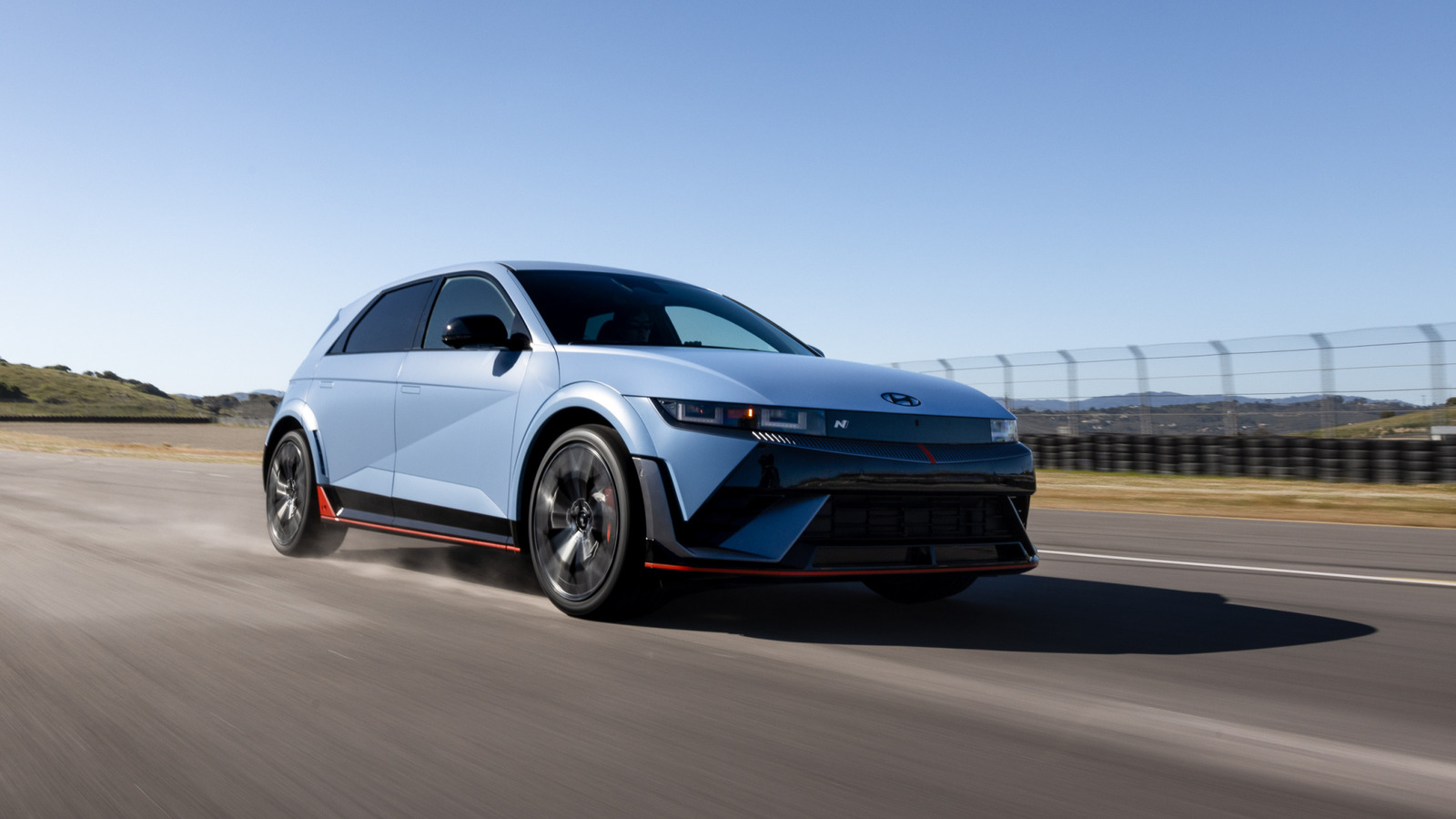
Hyundai Slashes Lease Price on 2025 Ioniq 5 N: Drive the Future for Less

Tesla Model Y Transformed: A Creative Solution to Range Anxiety on the Road to...


Reviving the R35: A Tuner’s Manual Shift Solution for All-Wheel Drive Enthusiasts


Subaru’s Price Surge: What You Need to Know About Upcoming Increases