Engine Longevity as Automotive Heritage Why Iconic Powerplants Outlast the Cars They Serve
 Tried and trusted engines can survive in production for decades – often far longer than the cars in which they’re fitted. These are the longest survivors
The engine world as we know it is changing.
The advent of electrification means that the days of us being able to worship legendary engines in the future may well just not happen. The industry is yet to make legends of any of the raft of new electric motors now being installed in the wave of electric vehicles, and we can’t see that changing anytime soon. Time, then, to salute the units of the past and present that have character, class – and lived a long time. Here are the longest running of the lot:
Opel CIH: 1965-1995 (30 years)
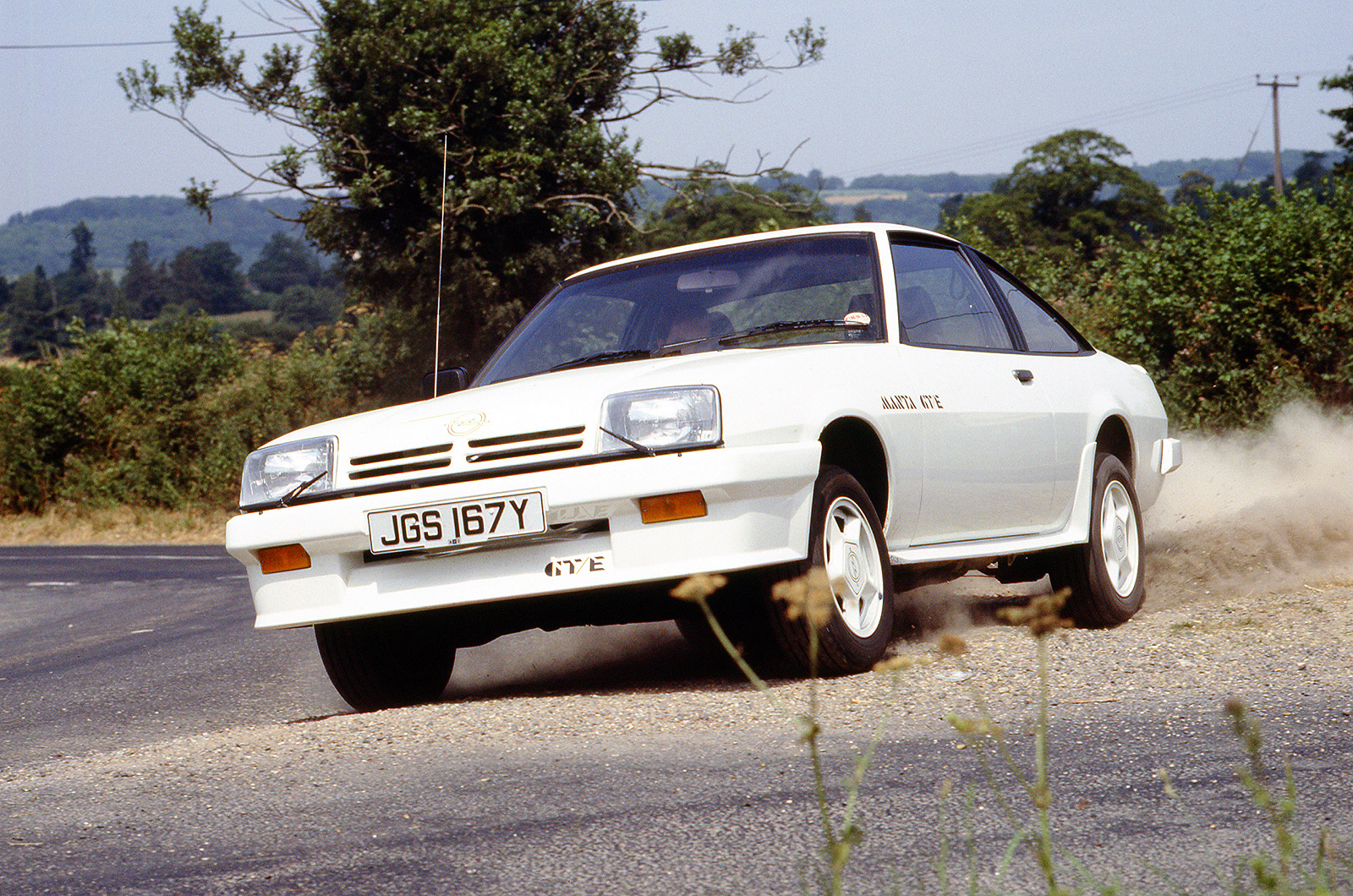
The Opel CIH from General Motors’ (GM) European arm was a highly flexible series of engines that featured four or six cylinders, with sizes ranging from 1.5-litres up to 3.6-litres. The most well-known cars fitted with Opel’s Cam In Head engine were the Ascona, Kadett and Manta (pictured).
The CIH actually made its debut in the second-generation Rekord, and was still being used in 1995 in the Isuzu MU SUV, sold in the UK as the Vauxhall Frontera.
Opel CIH: 1965-1995 (30 years)
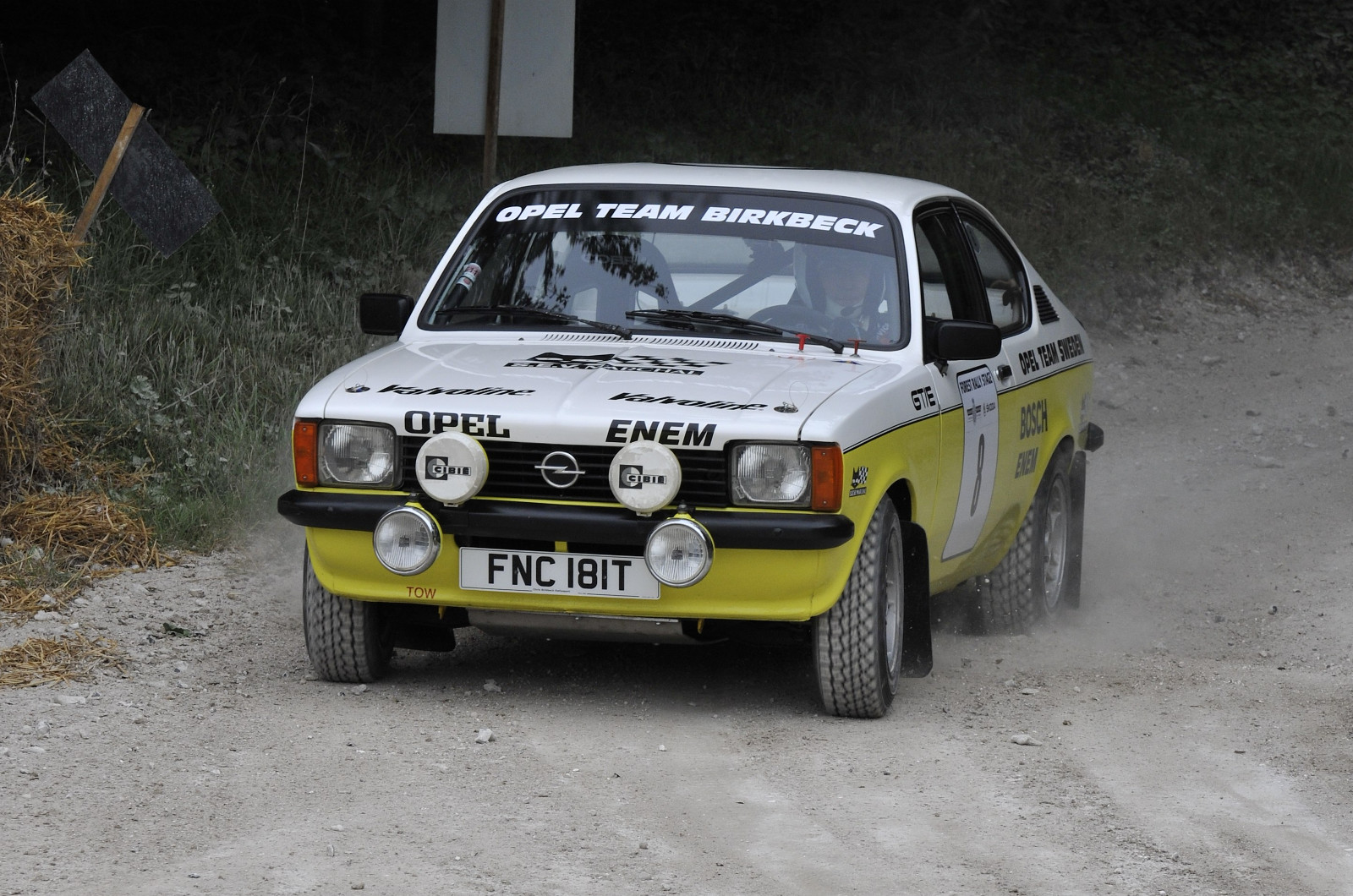
USED IN:
CHEVROLET 1700, DAEWOO Royale, HOLDEN: Sunbird, Torana, ISUZU MU. OPEL: Ascona, GT, Kadett (pictured), Manta, Olympia, Omega, Rekord, Ranger, Saehan Rekord, VAUXHALL: Carlton, Vauxhall Cavalier, Vauxhall Frontera.
Ford Modular V8: 1990-present (36 years & counting)
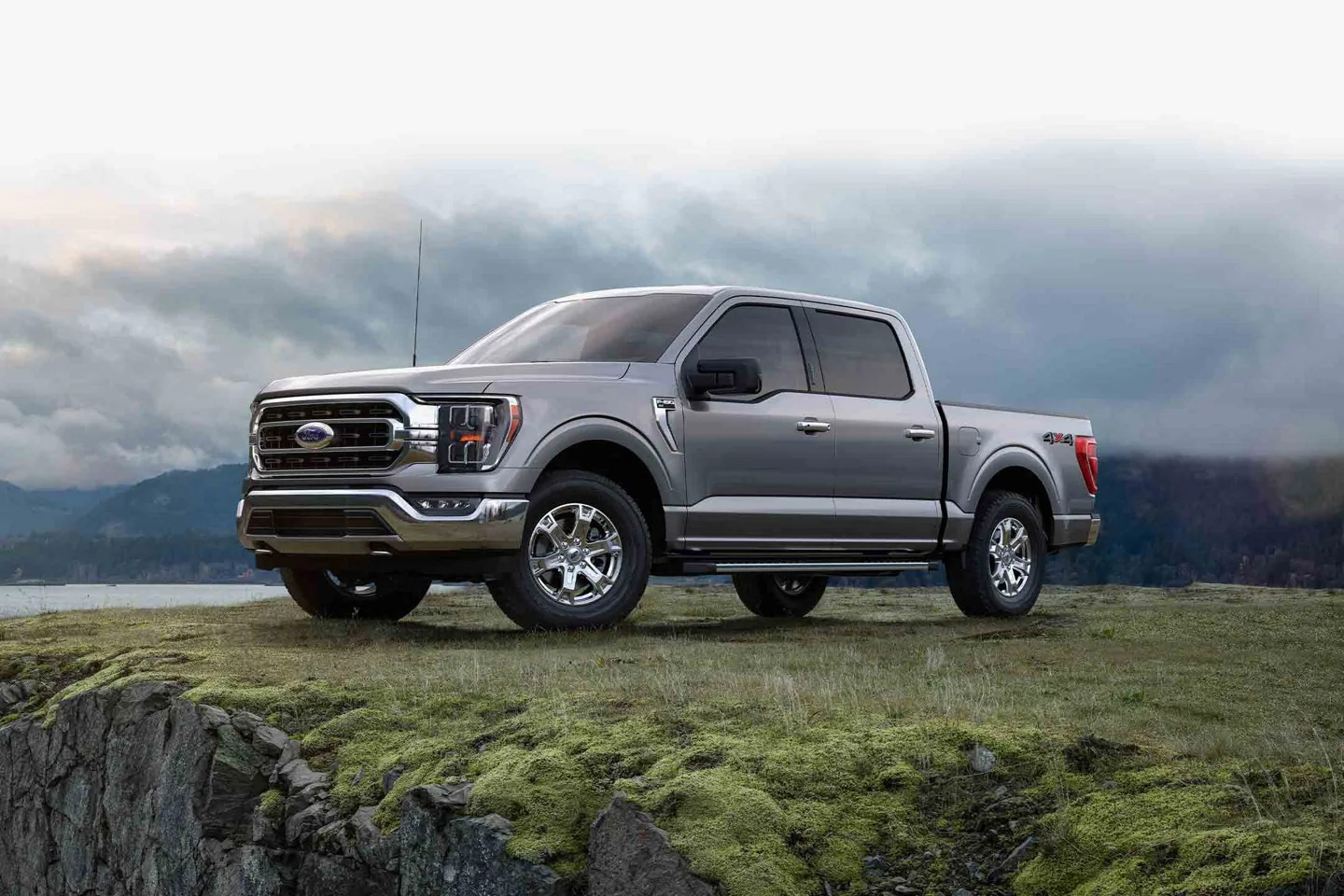
Ford has been downsizing its petrol engines for a long time now, especially around its EcoBoost units. So it’s easy to forget that Ford’s V8 has been around for well over three decades now. Finished in cast iron but with weight-saving aluminum-alloy heads and pistons, its size ranges from 4.6-litre to 5.8-litre; there was even a V10 6.8-litre version used mainly in the Super Duty F-Series. Highly adaptable, the engine has also powered 240mph supercars, with the engine cranked out to 817 hp. Today it’s built at Ford’s plant in Windsor, Ontario.
Ford Modular V8: 1990-present (36 years & counting)
USED IN:
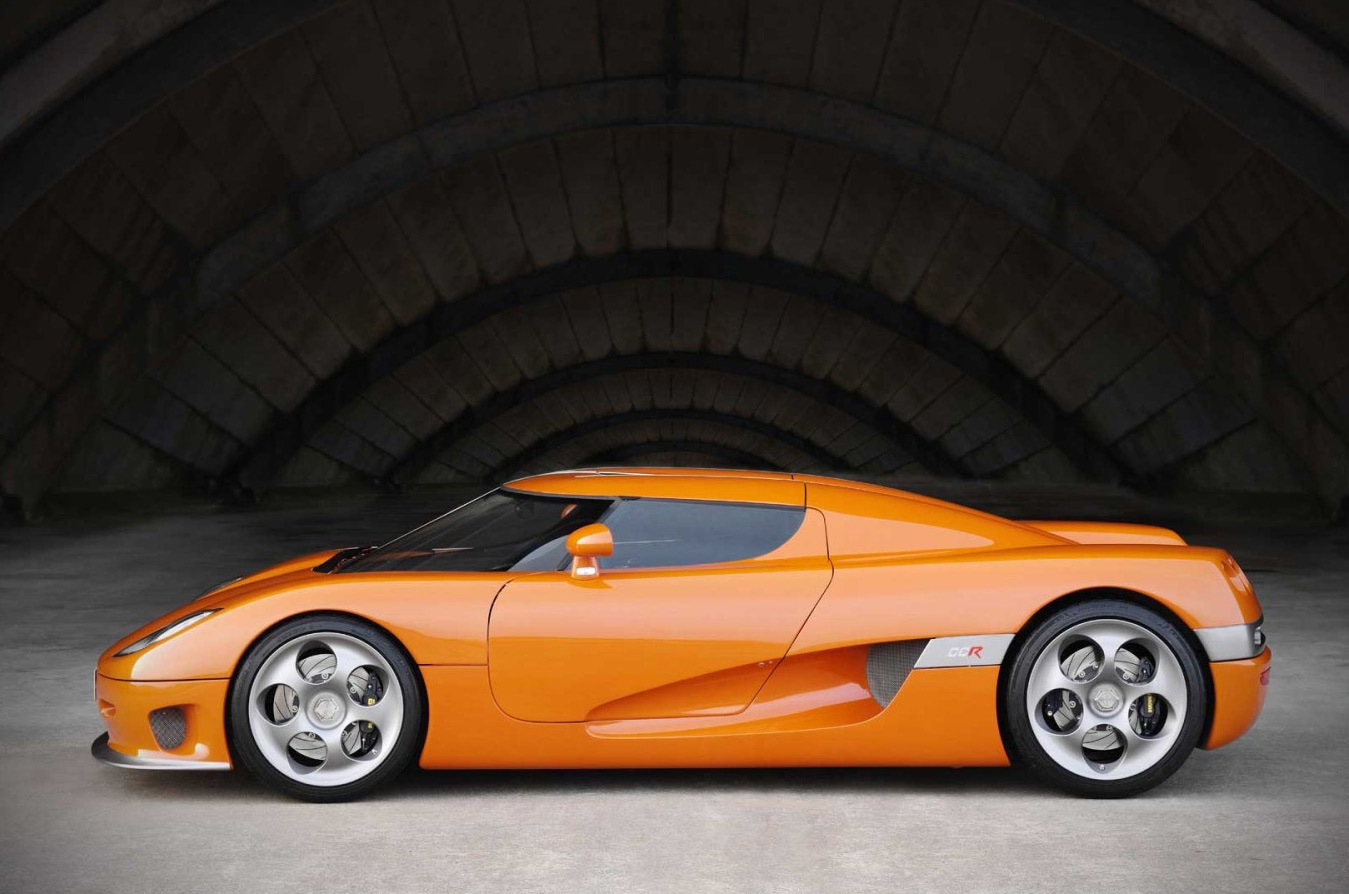
FORD F-Series, E-Series, Expedition, Mustang, Crown Victoria, Thunderbird, Falcon, MERCURY Grand Marquis, Cougar, Mountaineer, Marauder, LINCOLN Mark VIII, Town Car, Navigator, Continental, Aviator, ROVER 75 V8, MARCOS Mantis, PANOZ Esperante, MG X-Power SV, ZT 260, QVALE Mangusta, KOENIGSEGG CC8, CCR (pictured), INVICTA S1.
Rover V8: 1967-2004 (37 years)
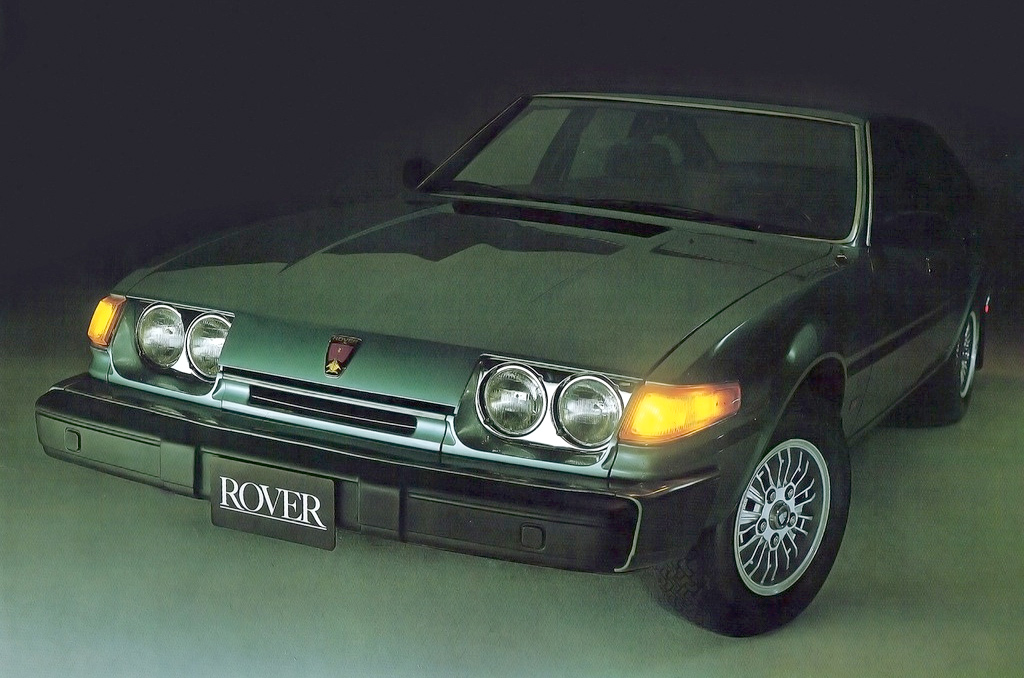
This all-aluminum engine was based on the Buick 215 (born in 1960), used in both Buicks and Pontiacs. General Motors abandoned it for reasons of expense and unreliability, then sold it to Rover, which redesigned it and made it much more dependable.
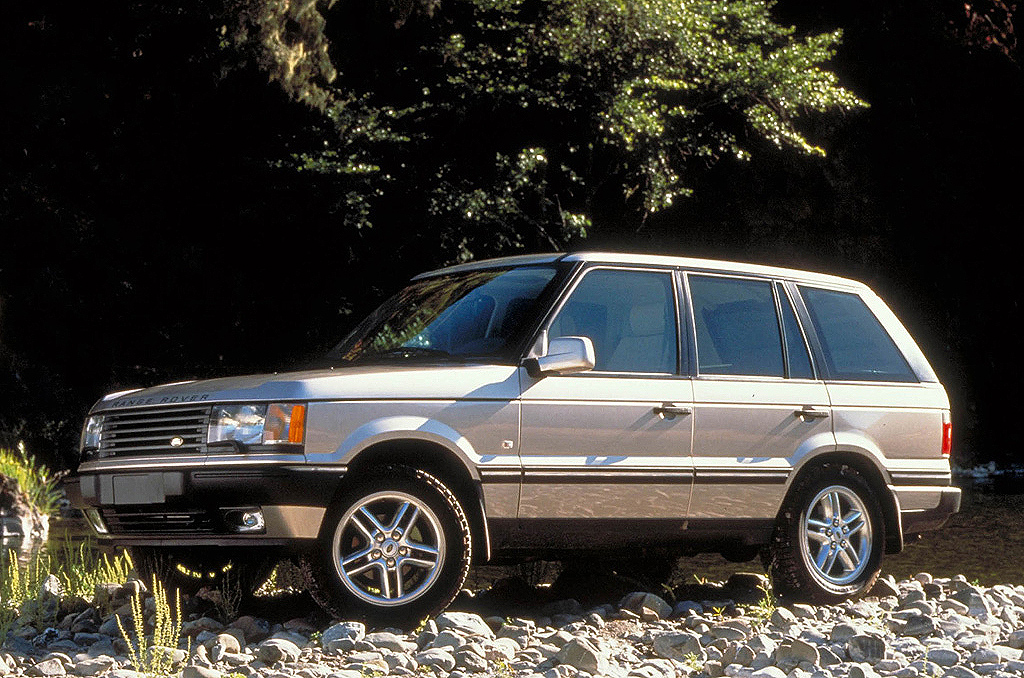
With an excellent combination of power, torque and light weight, it featured in Rovers (like the SD1 3500, pictured), Land Rovers, MGs, Morgans and TVRs. Starting life as a 3.5-litre, it ended its days as a 4.6-litre, as fitted to the Range Rover.
Rover V8: 1967-2004 (37 years)
EXCLUDING ITS GM DAYS, IT WAS USED IN:
GINETTA G33, LAND ROVER: Series II, 110/130, Defender, Discovery, Range Rover (pictured), LEYLAND P76, MGB GT V8, MG RV8, MORGAN Plus 8, ROVER: P5, P6, SD1, TRIUMPH TR8. TVR: 350i, Chimaera, Griffith, V8S.
AMC Straight Six: 1964-2006 (42 years)
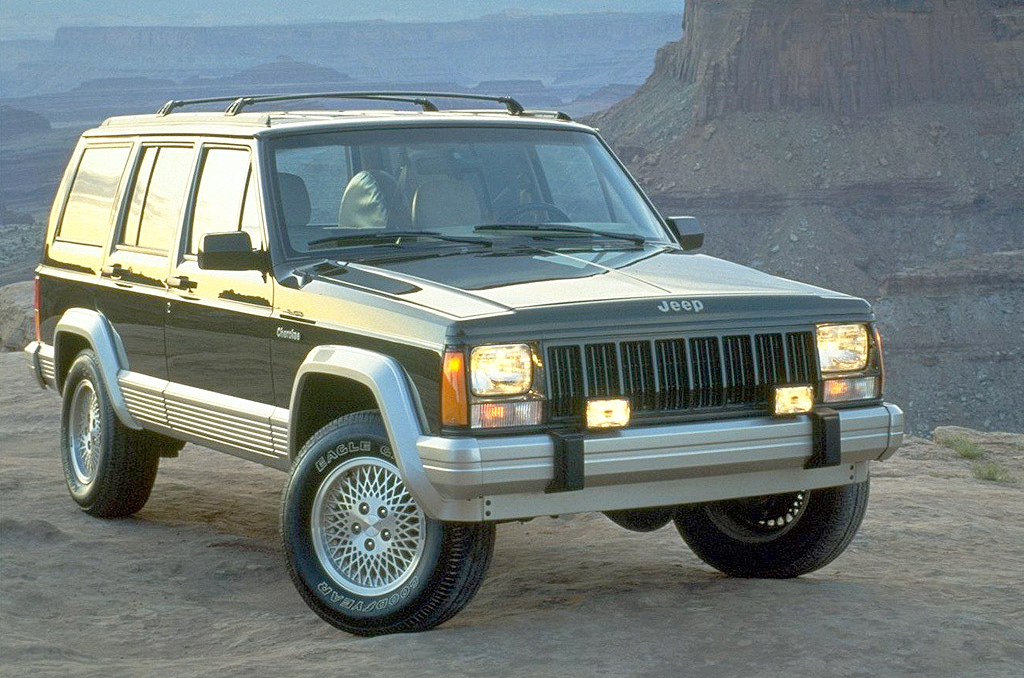
American Motors Corporation first put its new inline six-cylinder engine into a special version of the 1964 Rambler called the Typhoon. In 4.0-litre form it was one of the best features of the first Jeep Cherokee (pictured), and was still being fitted to the Wrangler as late as 2006.
AMC Straight Six: 1964-2006 (42 years)
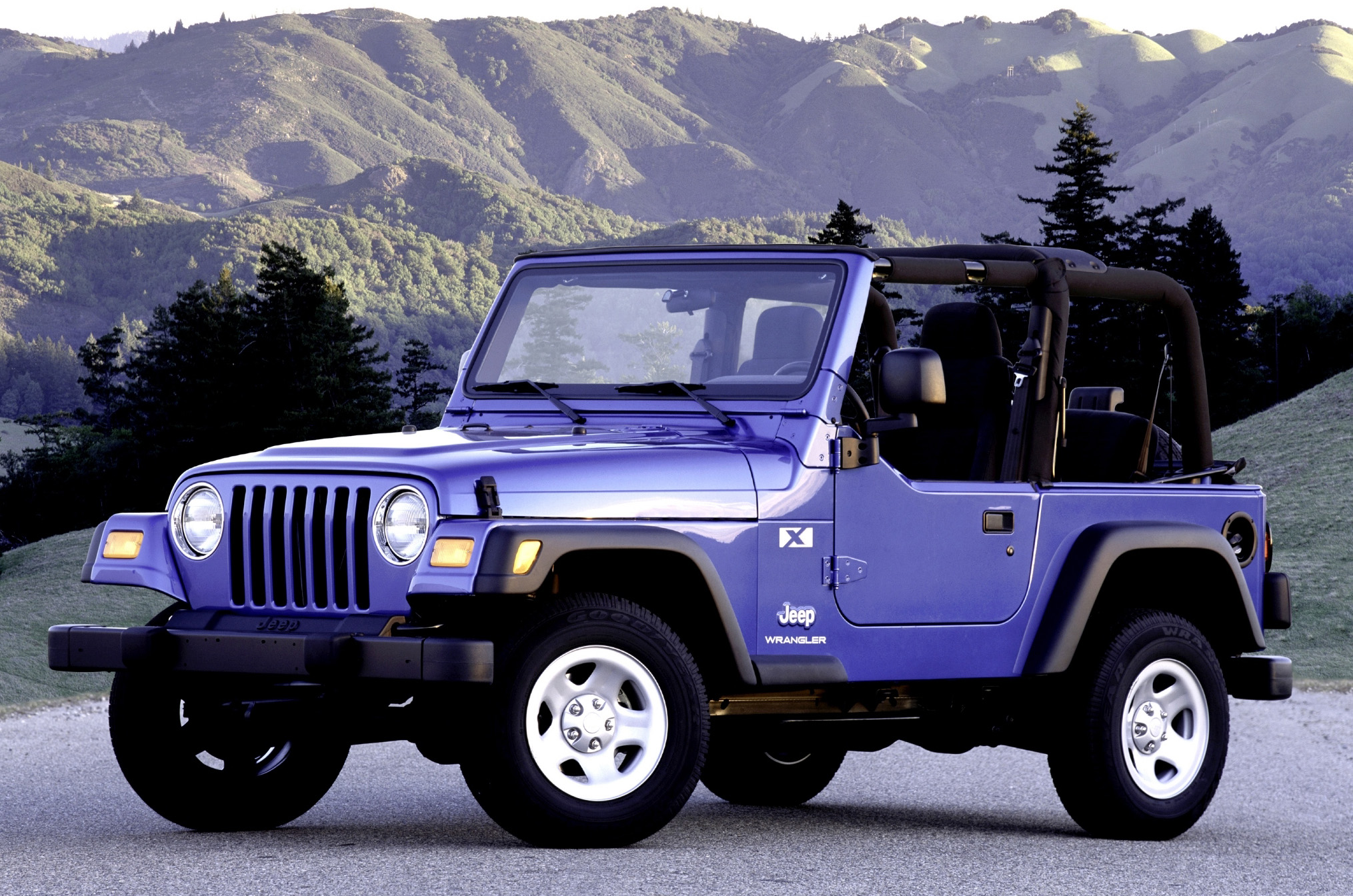
USED IN:
AMC: Concord, Eagle, Gremlin, Hornet, Javelin, Matador, Pacer, Rebel, Spirit. JEEP: CJ, Cherokee, Comanche, Commando, Gladiator, Grand Cherokee, Wrangler (pictured), Wagoneer, PARS KHODRO: Arya, Shahin, RAMBLER: Ambassador, American, Marlin, Rebel, Typhoon, RENAULT Rambler.
Citroën 2CV: 1948-1990 (42 years)
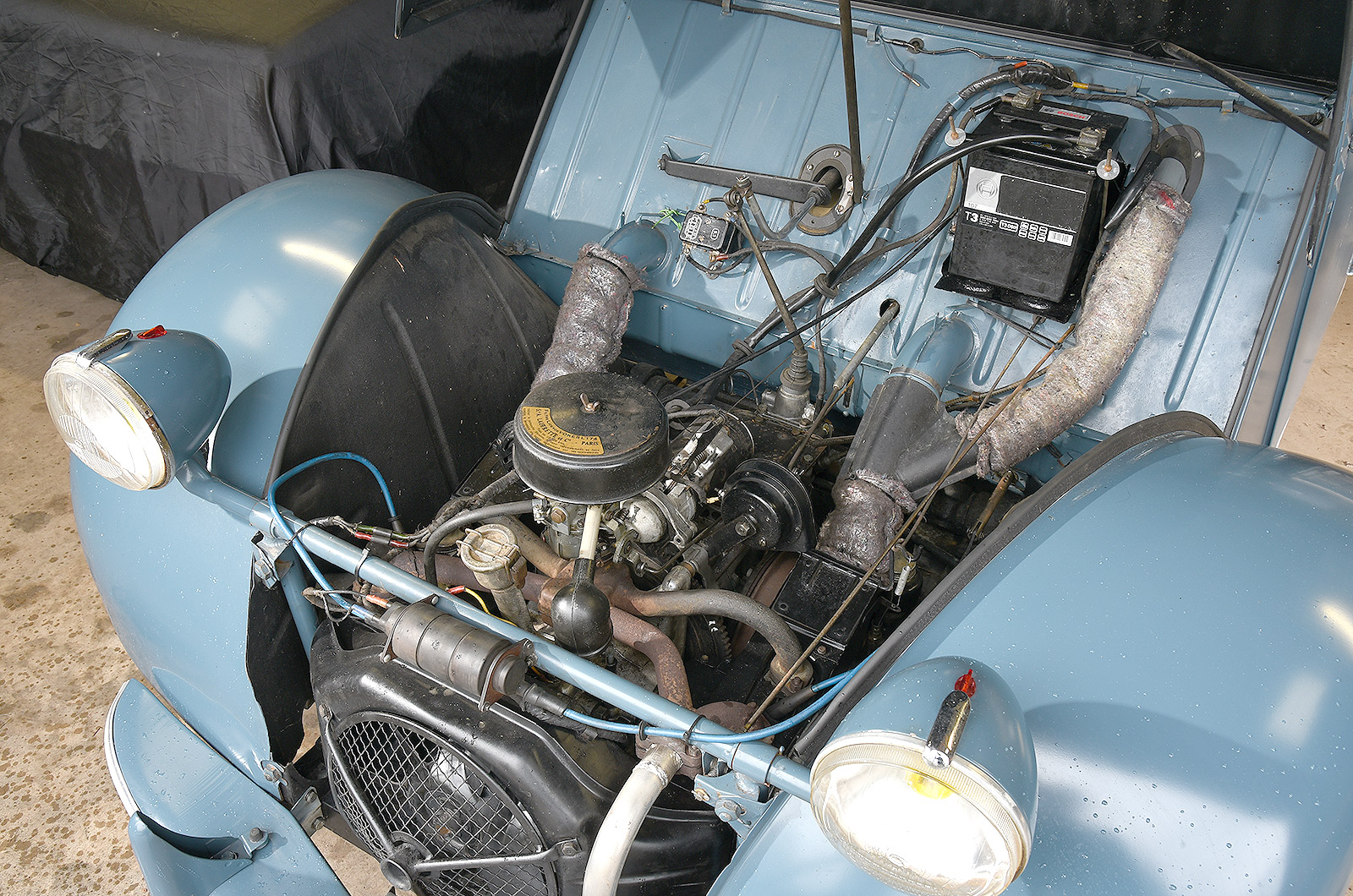
Citroën’s air-cooled two-cylinder, ranging in size from 375cc to 602cc, lasted the entire life of the 2CV, which might have begun nine years earlier if war hadn’t got in the way. The engine was also used in the Ami, Dyane and Mehari. A 652cc development of it later appeared in the Visa.
Citroën 2CV: 1948-1990 (42 years)
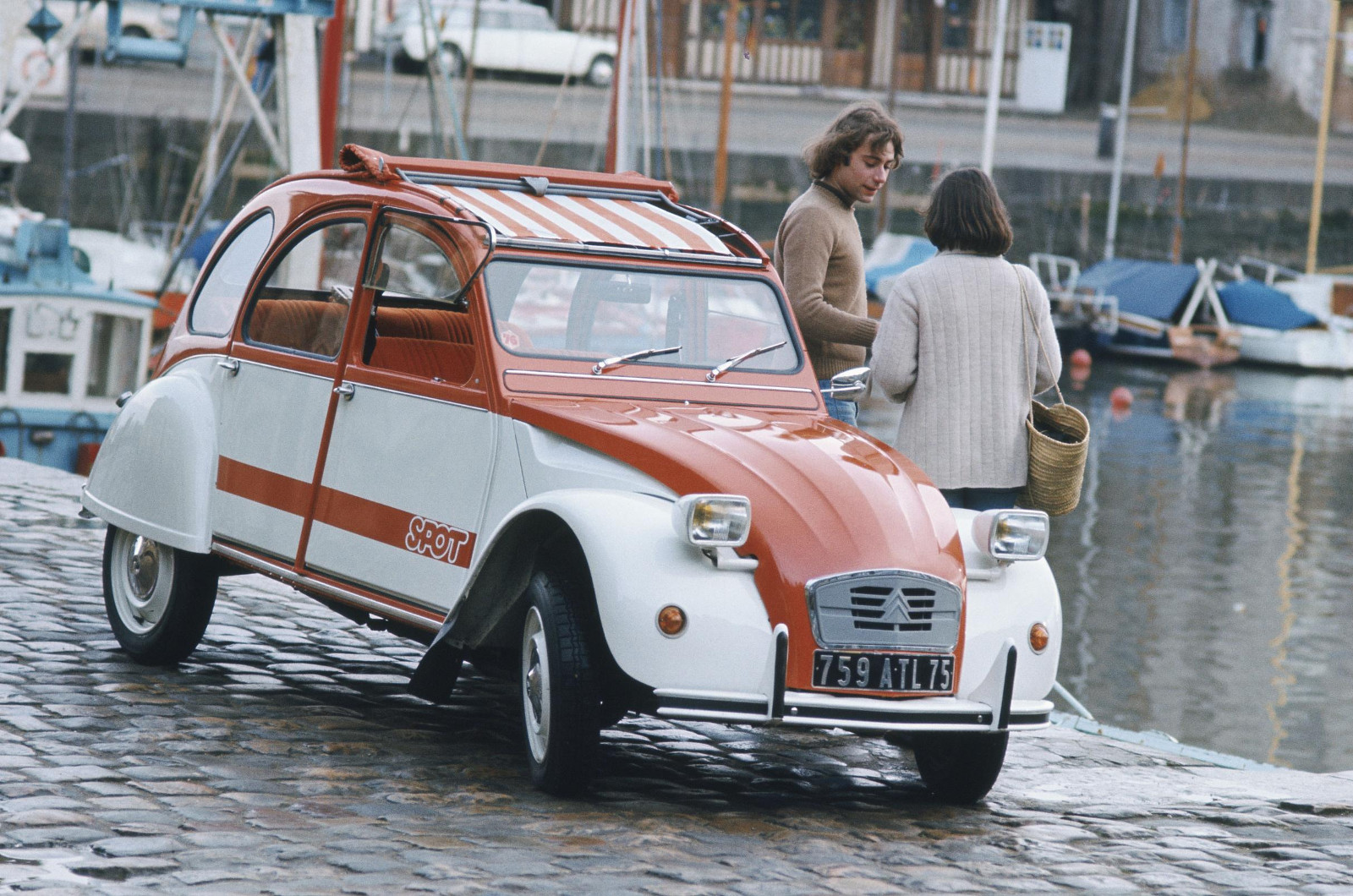
USED IN:
CITROËN: 2CV (pictured), Acadiane, Ami, Bijou, Dyane, Mehari.
Ferrari Colombo V12: 1947-1989 (42 years)
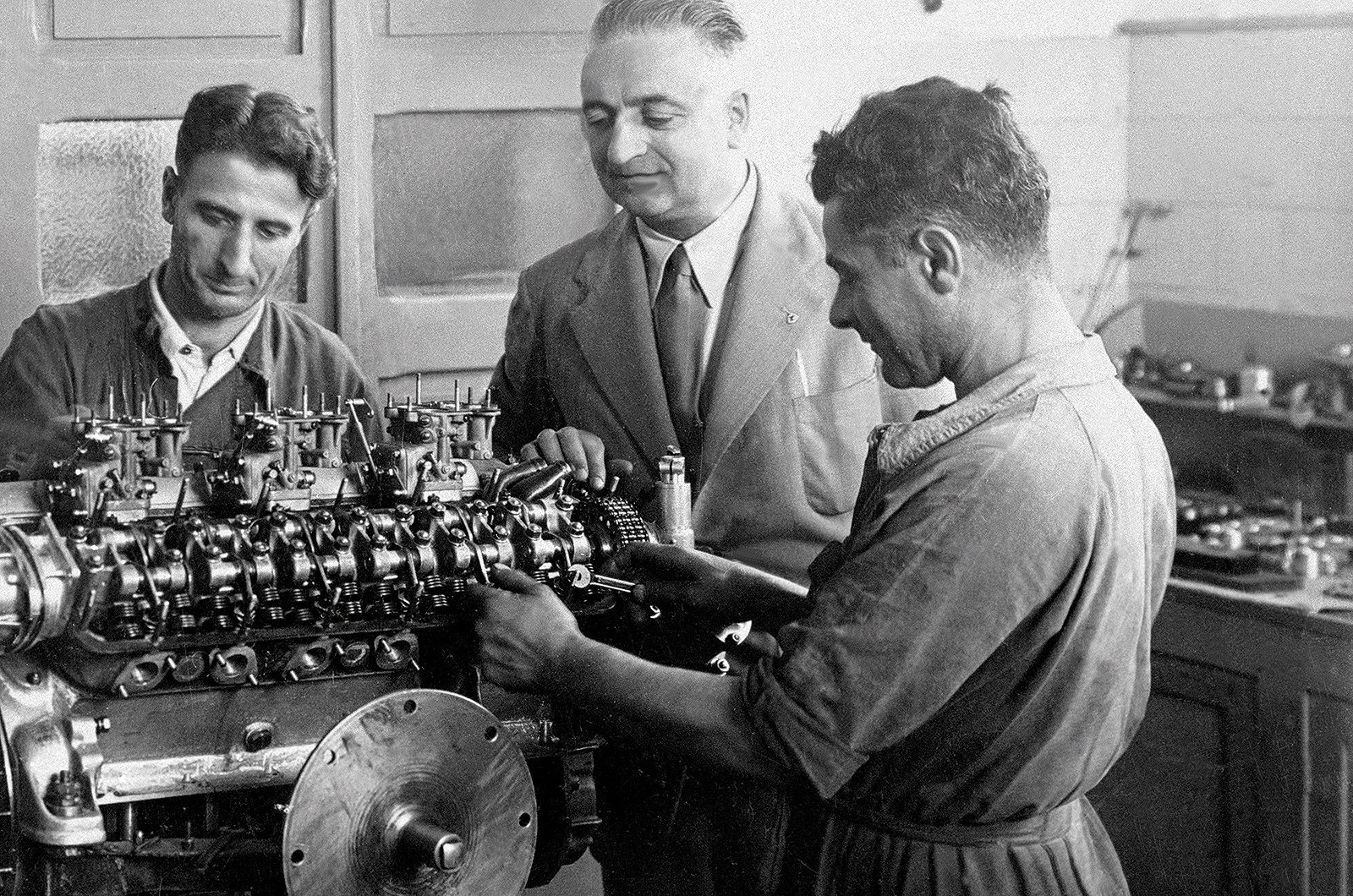
Shortly after World War 2, Enzo Ferrari (pictured center) asked engineer Gioacchino Colombo what he would do with a 1500cc engine. Colombo replied that “Maserati has four cylinders, the British have six, Alfa Romeo has eight, so we should have 12.” Enzo entirely agreed, and Colombo’s resulting brilliant V12 was at the heart of a great many 20th-century Ferraris.
Ferrari Colombo V12: 1947-1989 (42 years)
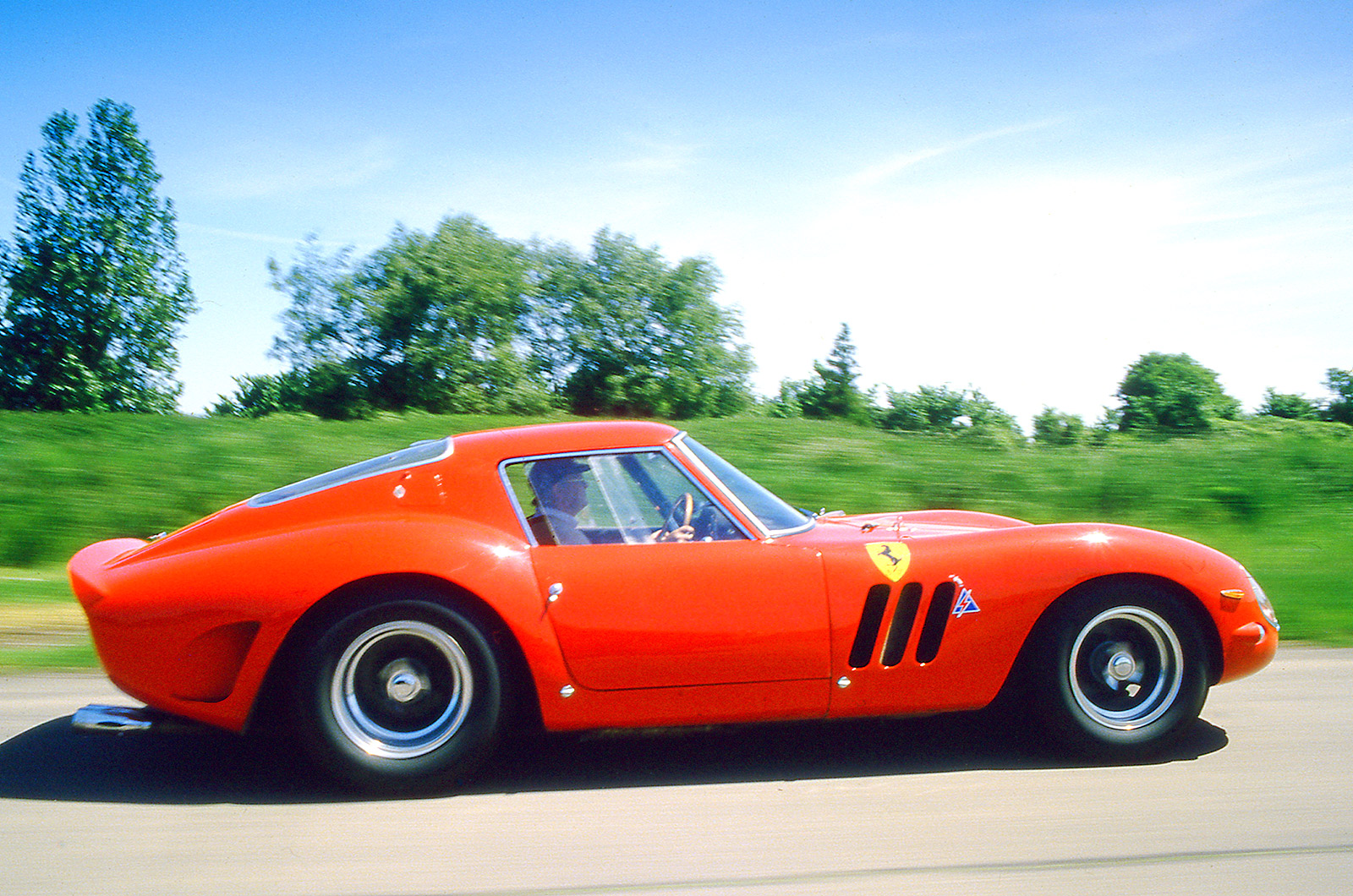
It appeared in the very first Ferrari-badged car, the 1.5-litre 125 S sports racer, and stayed around (after decades of development and an increase in size to 4.9-litres) until production of the 412 grand tourer came to an end in 1989.
USED IN:
FERRARI: 125 S, 250 (pictured), 275, 330, 365, 400, 412, Daytona, Superamerica.
Jaguar XK: 1949-1992 (43 years)
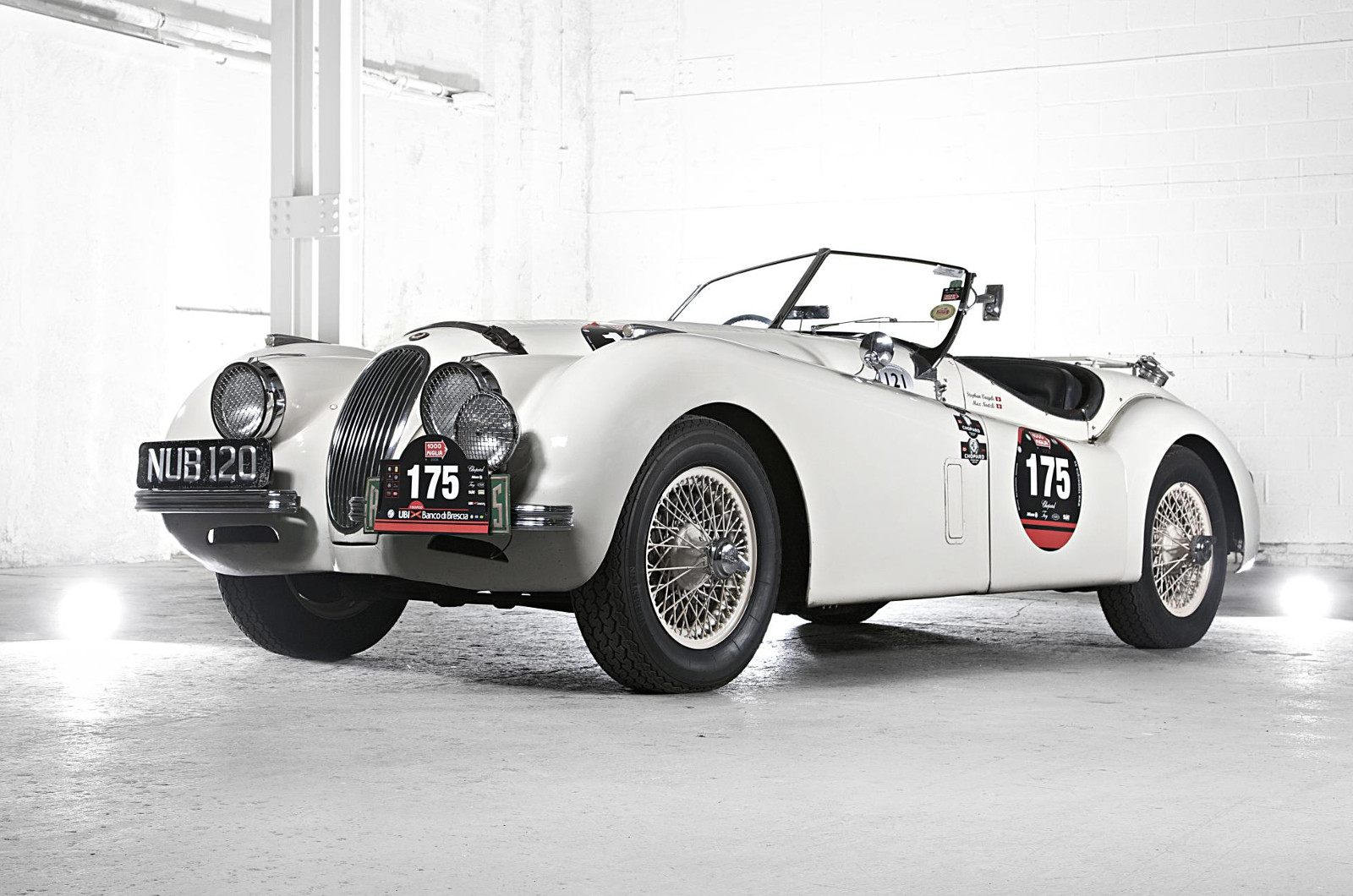
The six-cylinder XK became available to the public when the XK120 (pictured) went into full-scale production in 1950, and for two decades after that it was the only engine fitted to any Jaguar. Born as a 3.4-litre, it went as small as a 2.4-litre and as large as 4.2-litres.
Jaguar XK: 1949-1992 (43 years)
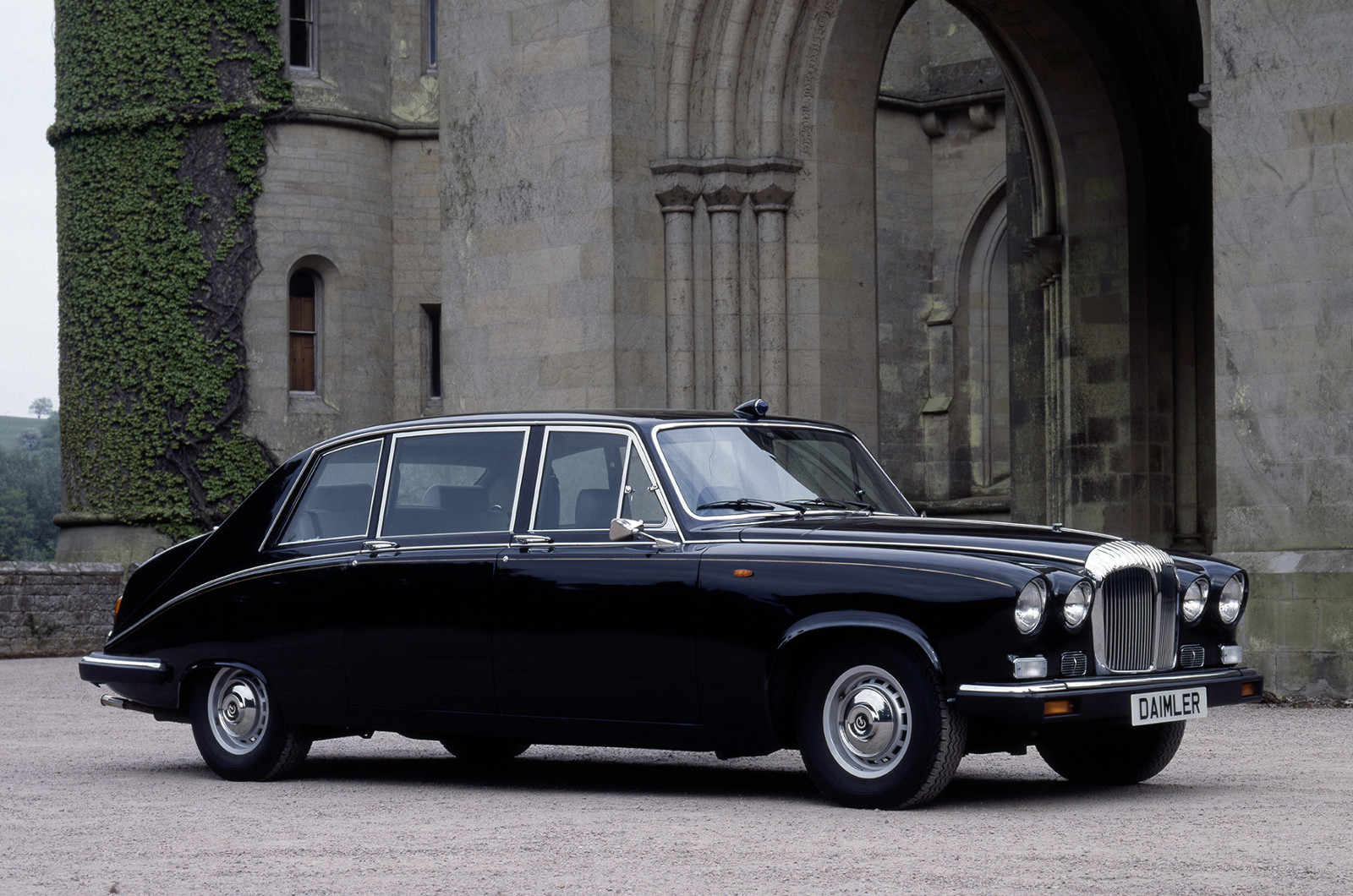
Its swansong was its appearance in the Daimler DS420 limousine (pictured).
USED IN:
DAIMLER: DS420, Sovereign, JAGUAR: 240, 3.4-litre, 420, S-Type (1960s), E-Type, Mark 2, Mark 7, Mark 8, XJ6, XK120, XK140, XK150, XK SS, PANTHER: De Ville, Panther J72.
Renault Cléon-Fonte: 1962-2004 (42 years)
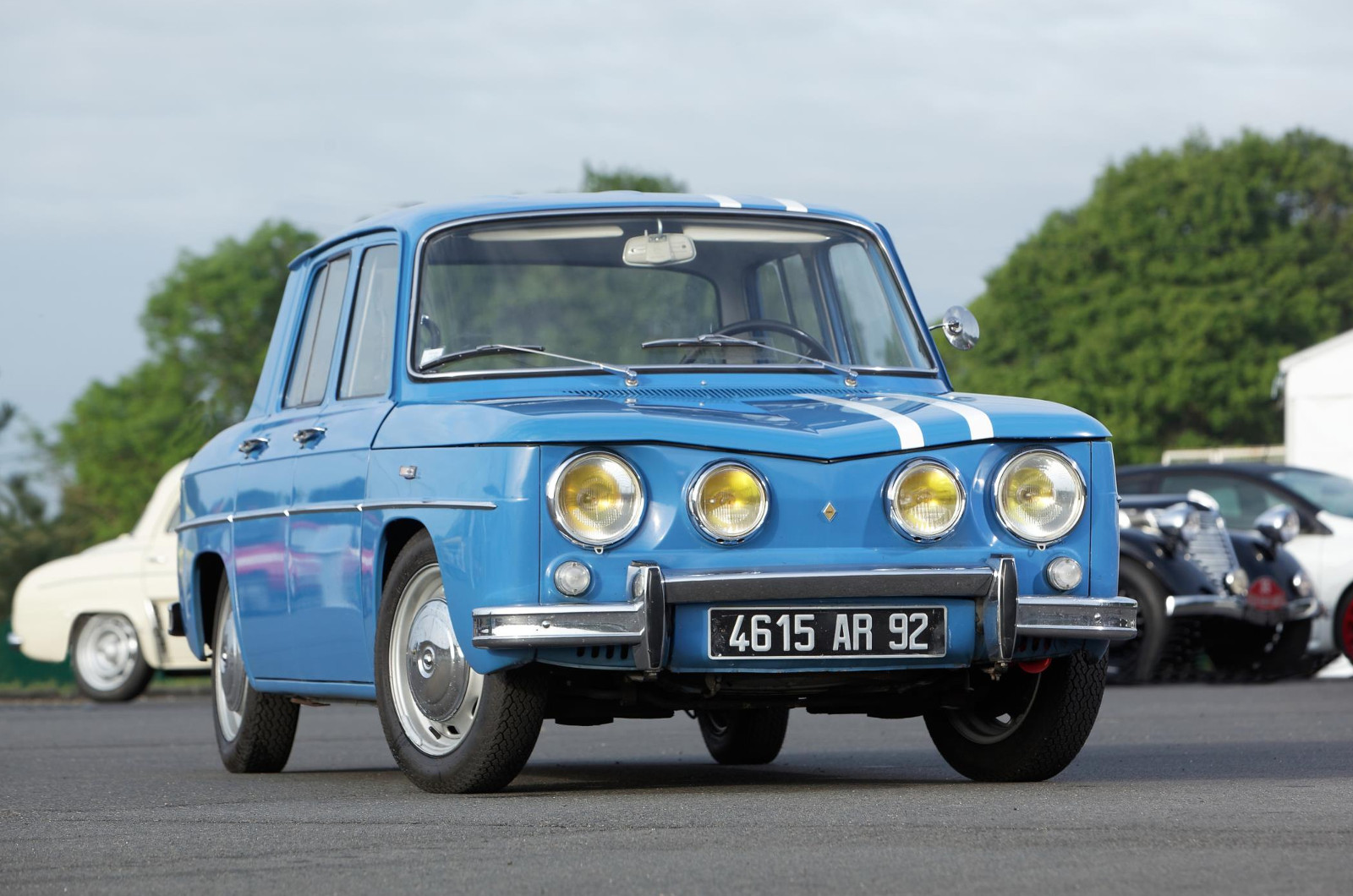
Named after a factory in Normandy and the French word for cast iron, the Cléon-Fonte appeared in 1962 in the Caravelle sports car (as an 845cc), the Estafette van and the 8 sedan (pictured), the latter being the first vehicle specifically designed to use it. Its last appearance was in a Dacia, by which time it had been enlarged to as much as 1.6 litres.
Renault Cléon-Fonte: 1962-2004 (42 years)
USED IN:
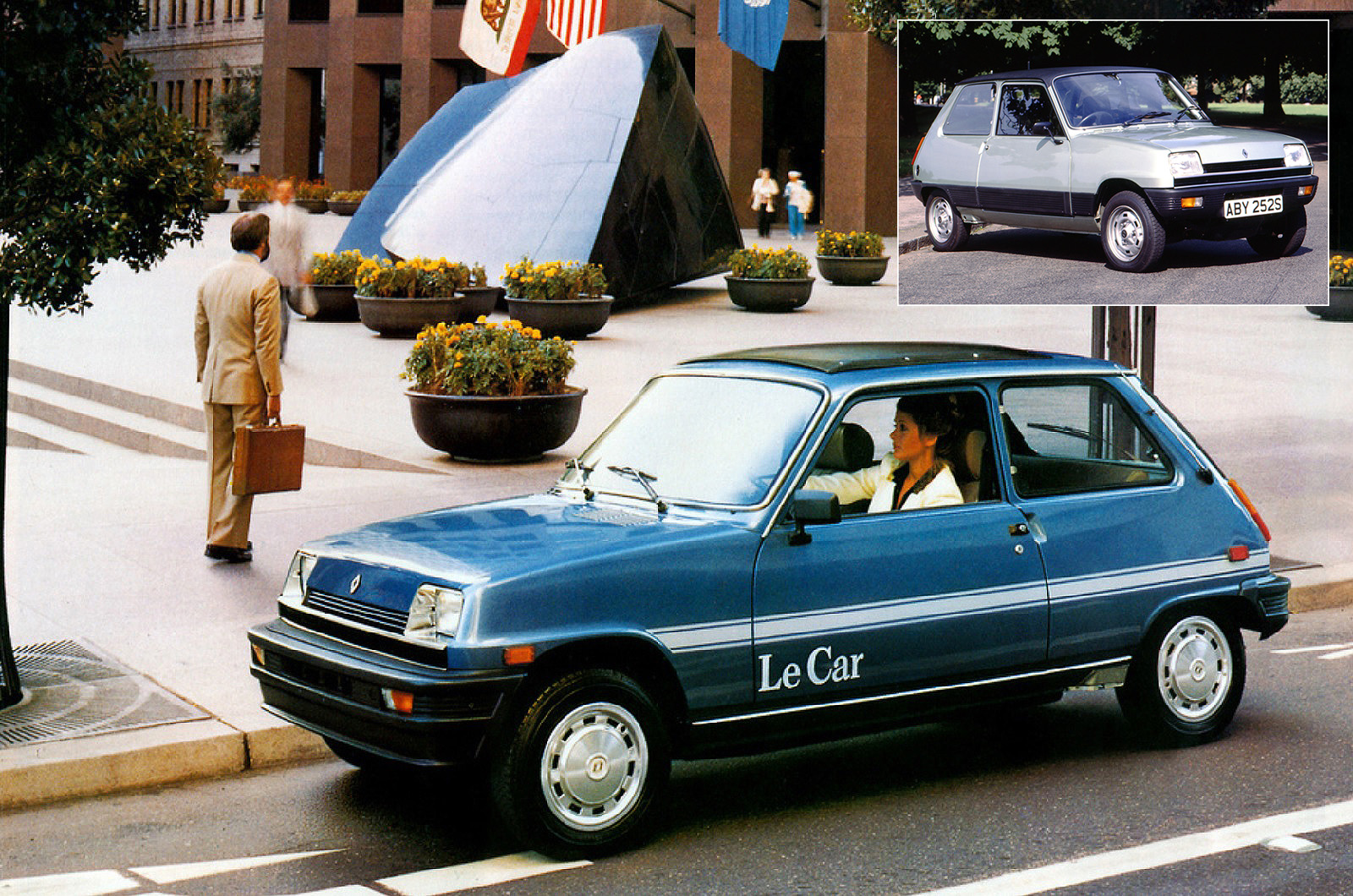
Alpine A110, DACIA: 1100, 1300/1310, DAF: 55, 66, RENAULT: 4, 5 (sold as Le Car in USA, pictured), 6, 7, 8, 9, 10, 11, 12, 15, 18, 19, Caravelle, Estafette, Fuego, Twingo, VOLVO: 343/345, 66.
Alfa Romeo Twin Cam: 1954-1997 (43 years)
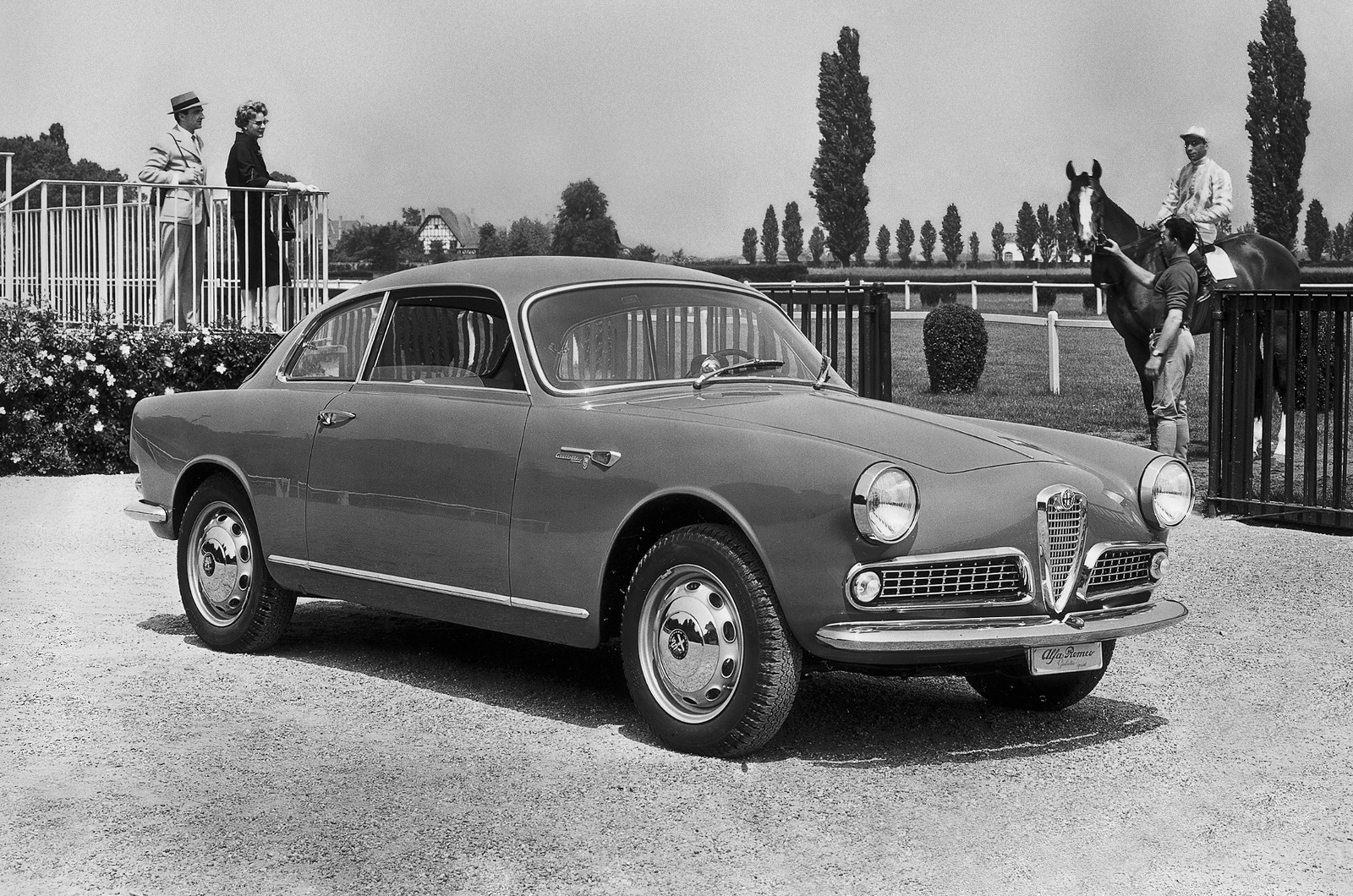
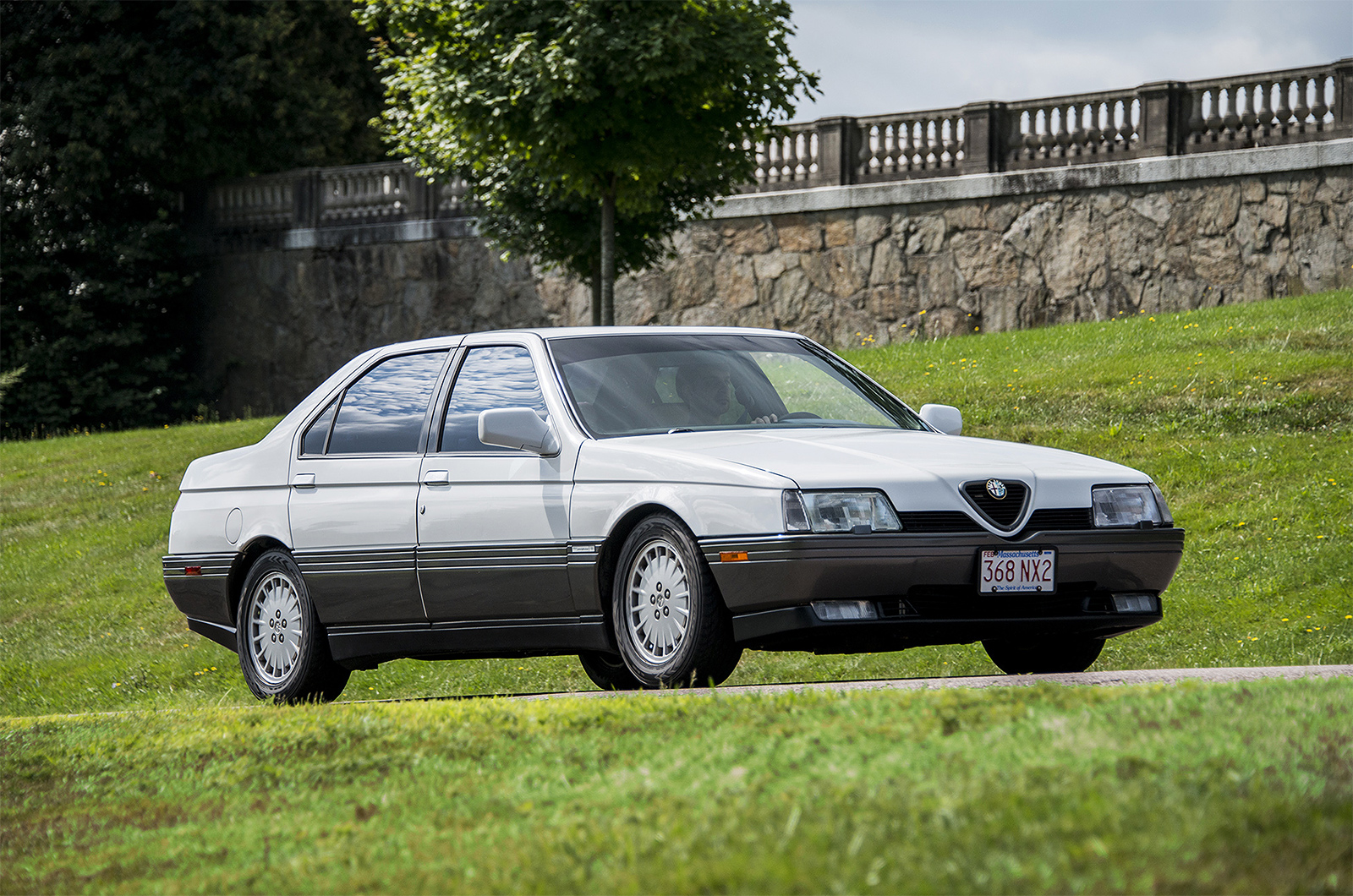
This twin overhead-camshaft engine was used for more than four decades in front-engined, rear-wheel drive Alfas, from the 1.3-litre Giulietta (pictured) to the 164 eight-valve 2.0-litre Twin Spark which went out of production in 1997. 16-valve Twin Sparks were based on a later engine designed by Fiat.
Alfa Romeo Twin Cam: 1954-1997 (43 years)
USED IN:
ALFA ROMEO: 155, 164 (pictured), 1750, 1750 Berlina, 2000, 2000 Berlina, 75, 90, Alfetta, Giulia, Giulietta, Gran Sport Quattroruote, GTA, GTV, Romeo, Spider (1966-1994).
Ford Kent: 1959-2002 (43 years)
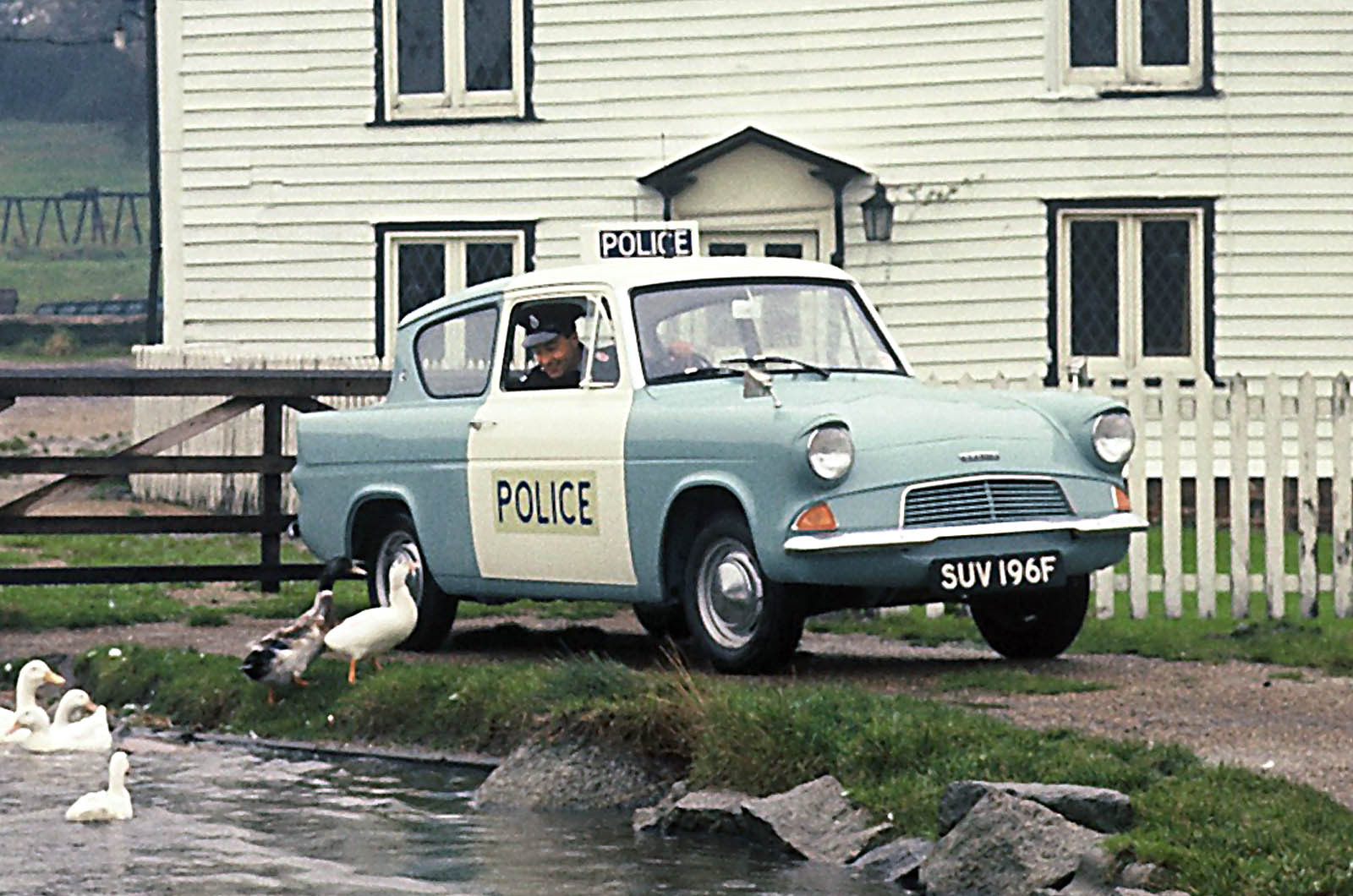
The Kent name is used for an engine which first appeared in the British Ford Anglia (pictured - a model today most famous for its appearances in the Harry Potter movies); it was updated with a crossflow cylinder head in 1967. Later versions for front-wheel drive cars are known as Valencia. Lotus and Cosworth used the Kent as a basis for high-performance engines including the Twin Cam and the BDA.
Ford Kent: 1959-2002 (43 years)
USED IN:
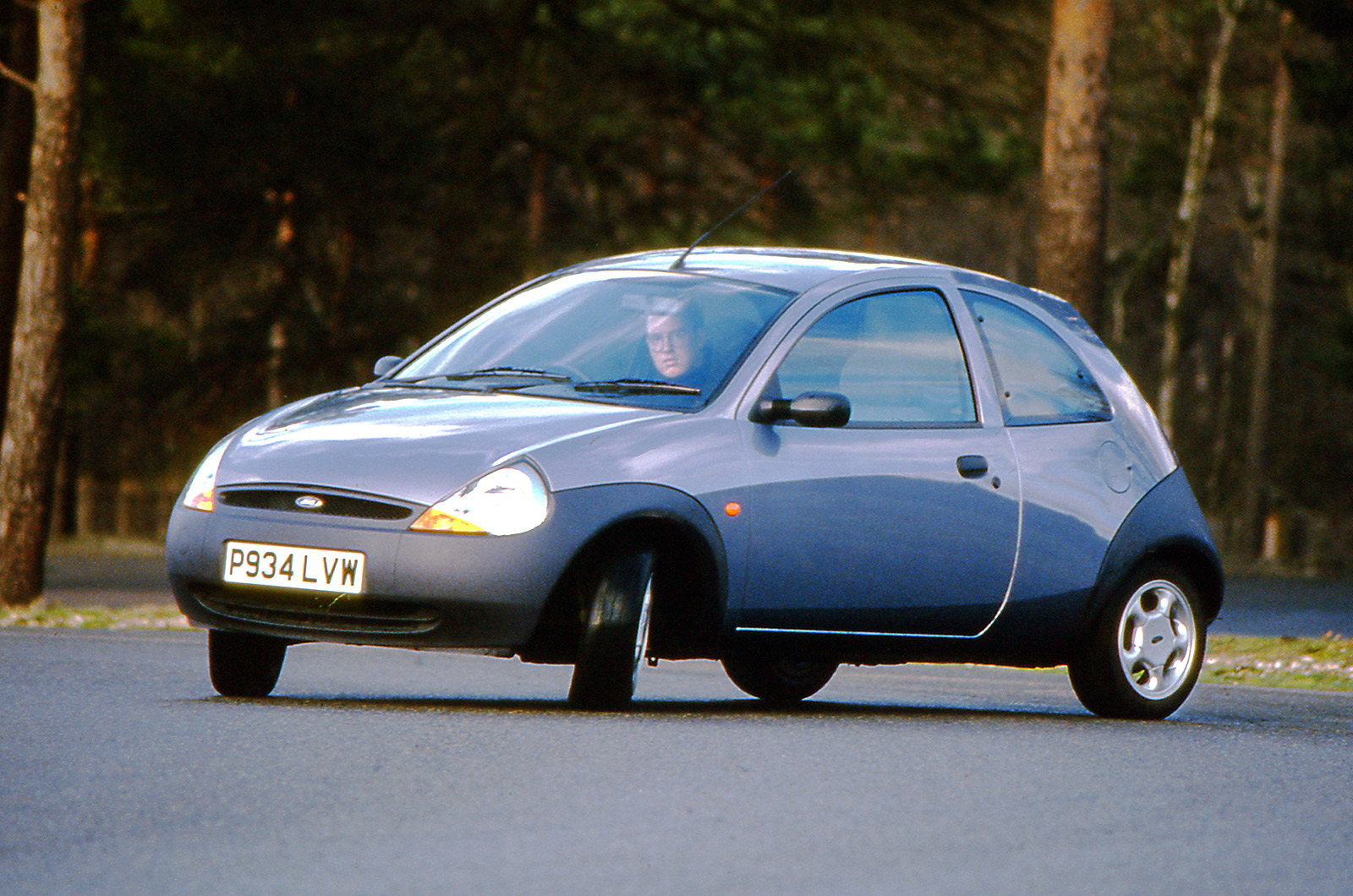
CATERHAM Seven, FORD: Anglia, Capri, Consul Classic, Consul Capri, Corsair, Cortina, Escort, Fiesta, Ka (pictured), Orion, Prefect 107E, LOTUS: Elan, Seven, MARCOS GT, MORGAN 4/4, TVR: 1600M, Grantura, Vixen.
Fiat 100 Series: 1955-2001 (46 years)
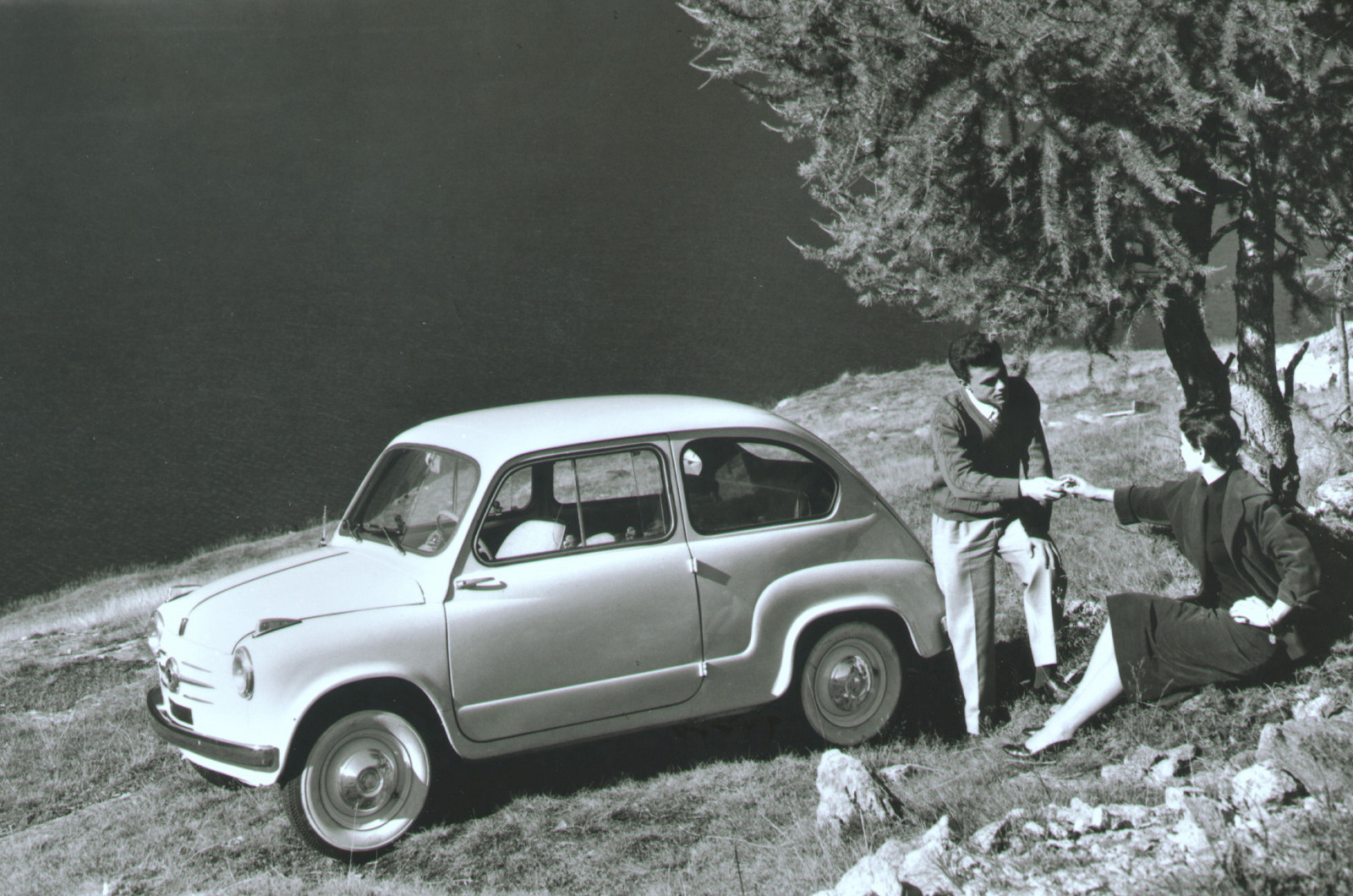
The first engine fitted to the rear of any Fiat was the 100 Series, which made its debut in 633cc form in the 600 (pictured) of 1955. Available in many sizes from then on, up to 1055cc, it just made it into the 21st century before Fiat withdrew it from the Panda range early in 2001.
Fiat 100 Series: 1955-2001 (46 years)
USED IN:
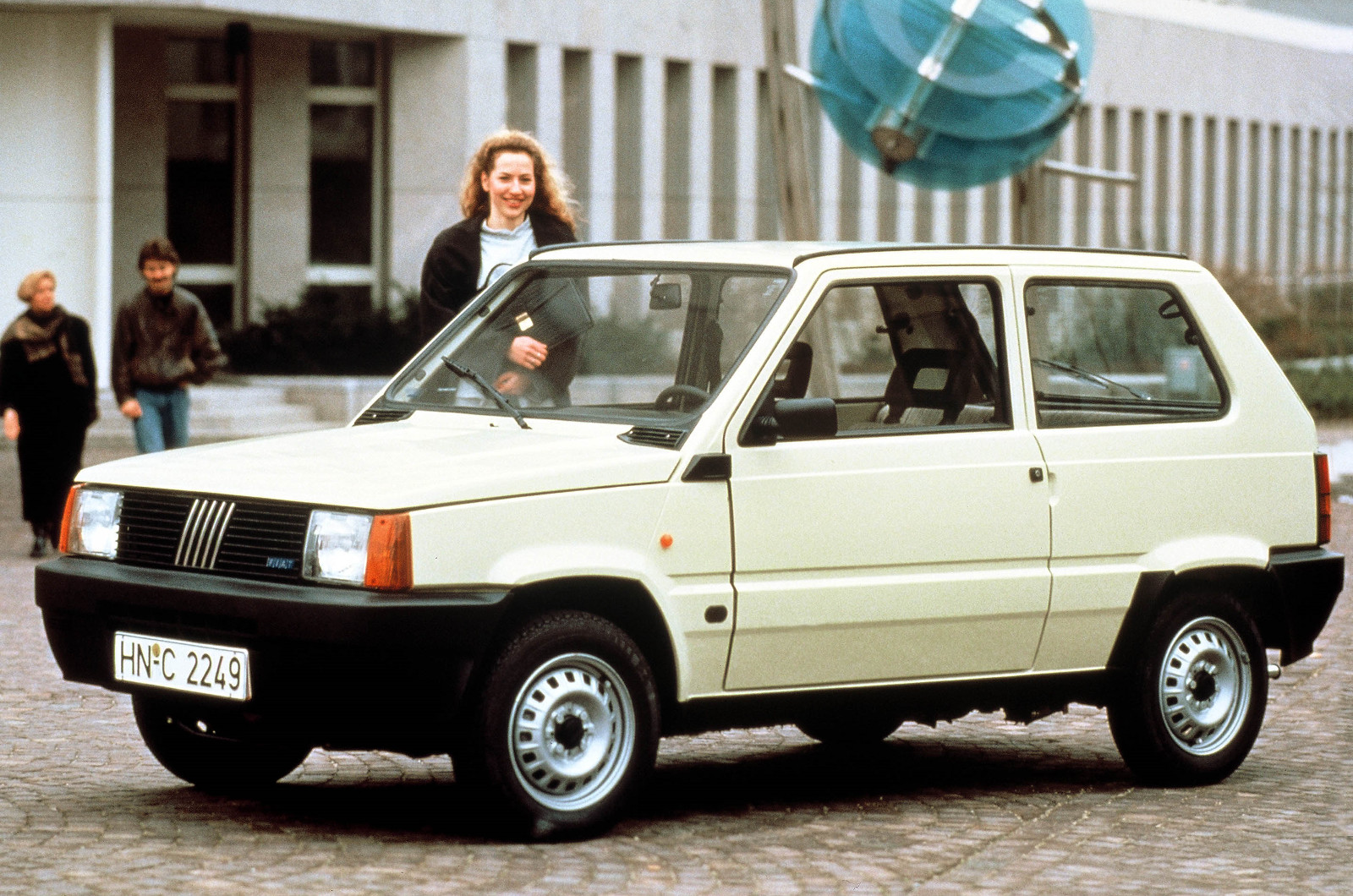
ABARTH Spyder 210 A, AUTOBIANCHI A112, FIAT: 127, 600, 850, 900T, Cinquecento, Panda (pictured), Seicento, Uno, FIAT-ABARTH: 750, 850, 1000, OT, GIANNINI: 1000, LOMBARDI Grand Prix, NECKAR Jagst, OTAS Grand Prix 820, SEAT: 127, 133, 600, 800, 850, Ibiza Mk1, Marbella, Panda, YUGO 45, ZASTAVA: 600/750/850, Koral.
Buick V6: 1962-2009 (47 years)
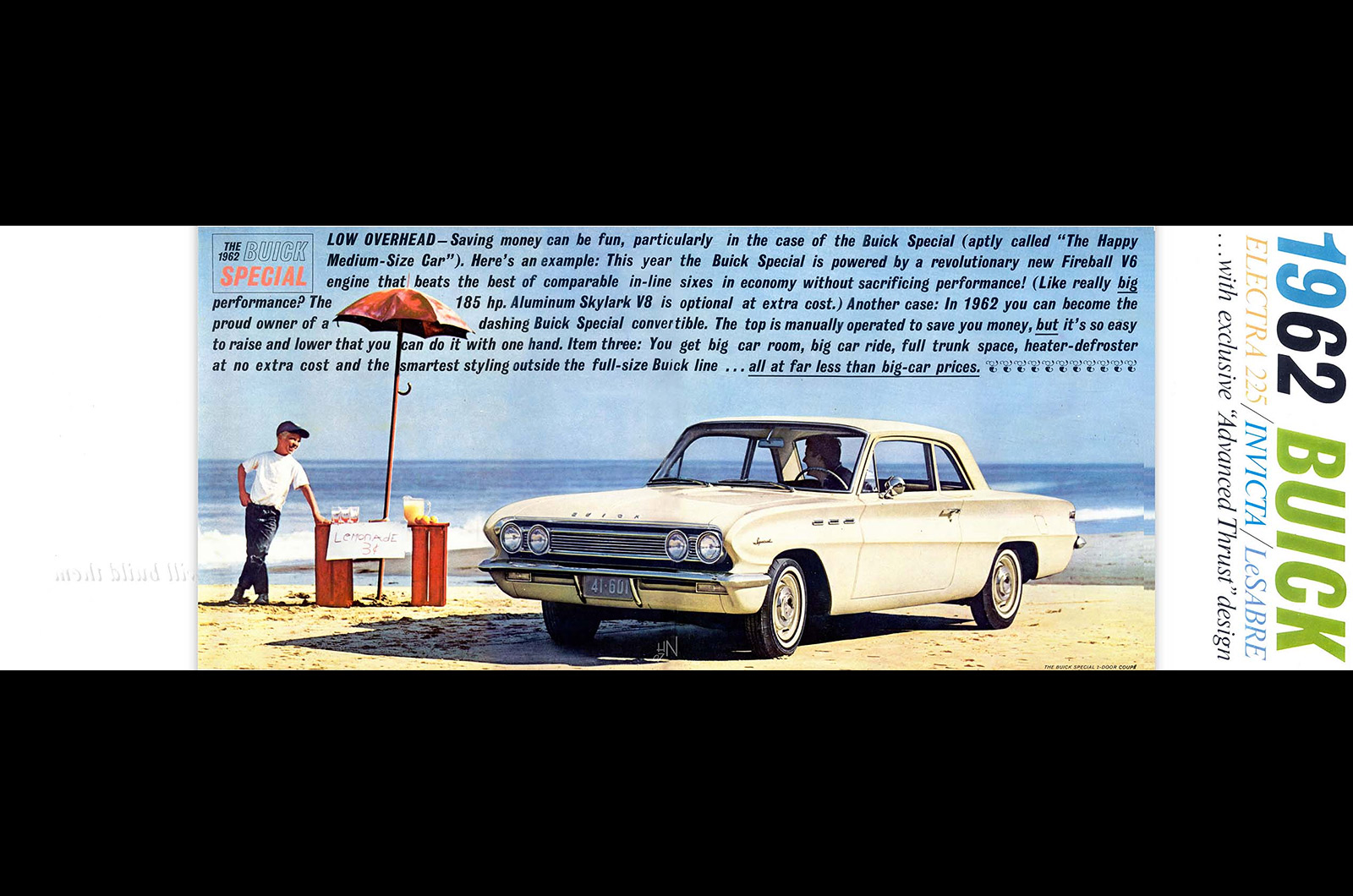
This became the first V6 to power a volume-produced American car when it was fitted to the Buick Special (pictured), as a 3.2-litre. Manufacturing rights were briefly held by Kaiser-Jeep until GM bought them back. The last car among many in the GM empire to use it was the first-generation Buick LaCrosse, which went out of production in 2009, by which time the engine was a 3.8-litre.
Buick V6: 1962-2009 (47 years)
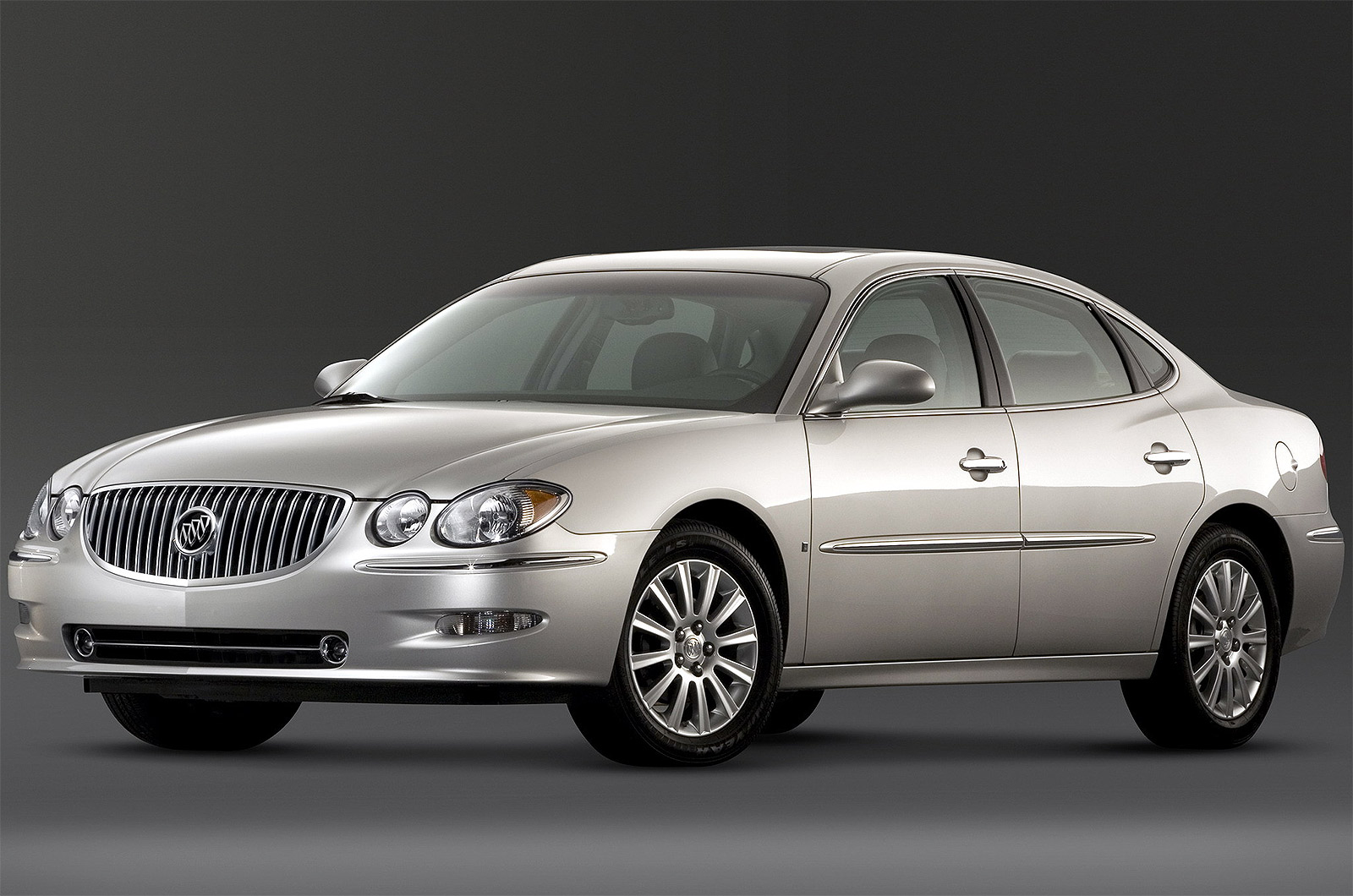
USED IN:
BUICK: Century, Electra, LaCrosse (pictured), LeSabre, Regal, Riviera, Skyhawk, Skylark, Special, CADILLAC: DeVille, Seville, CHEVROLET: Camaro, El Camino, Impala, Malibu, Monte Carlo, Monza, HOLDEN: Caprice, Commodore, JEEP: CJ, Jeepster Commando, OLDSMOBILE: 98, Achieva, Cutlass Ciera, Cutlass Supreme, Delta 88, Omega, Starfire, Toronado, PONTIAC: Bonneville, Firebird, Grand Am, Grand Prix, LeMans, Sunbird, Ventura.
BMC A-Series: 1951-2000 (49 years)
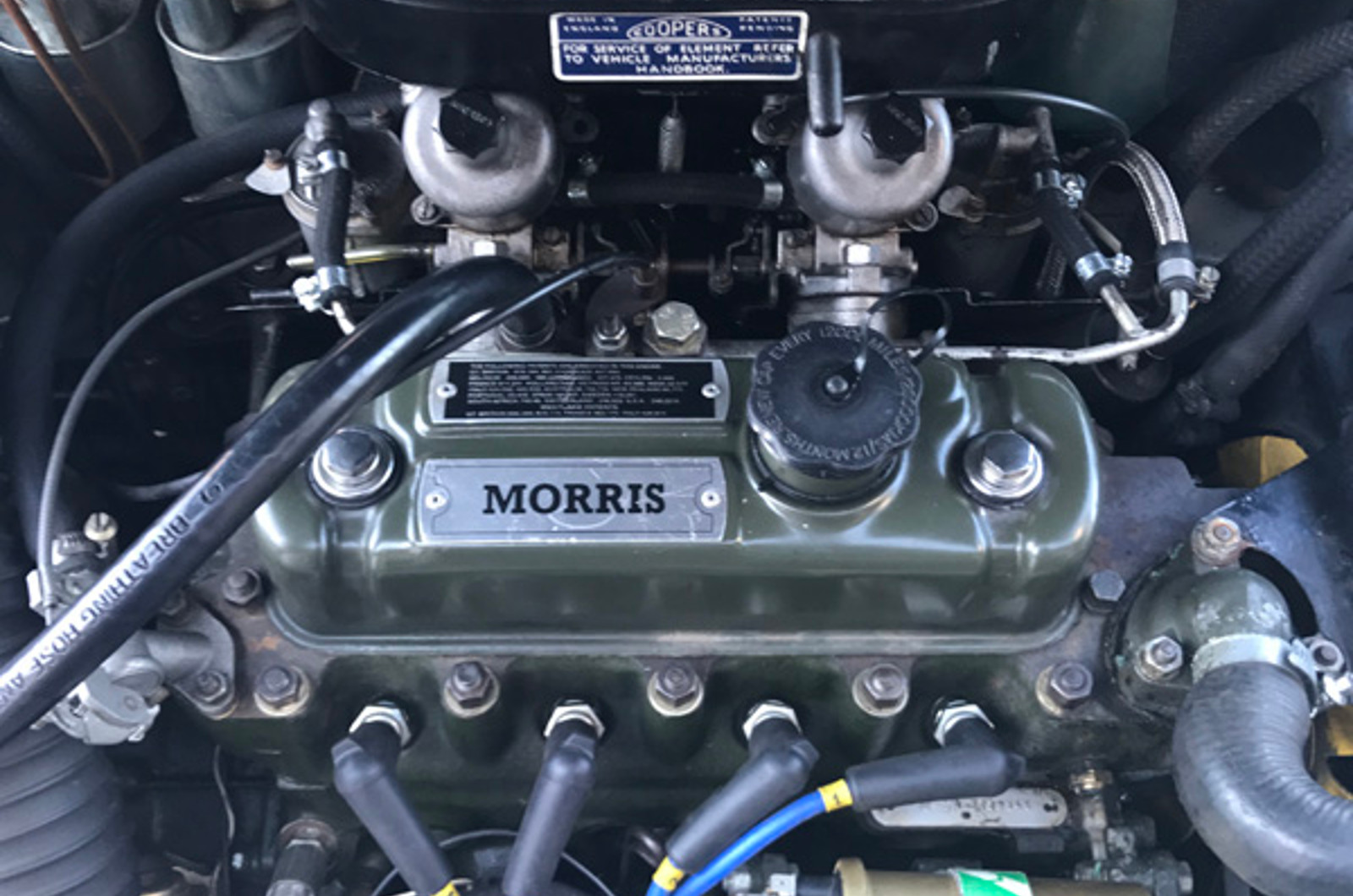
From the first Austin A30 to the last classic Mini, the A-Series and the highly developed but technically similar A-Plus were used in a bewildering variety of mass-market British cars. It was also a cheap and usually reliable power source for many low-volume sports cars, kitcars and home-built specials. Originally 803cc in size offering just 28 hp, it maxed out as a 1275cc with 95 hp of output, powering the MG Metro Turbo.
BMC A-Series: 1951-2000 (49 years)
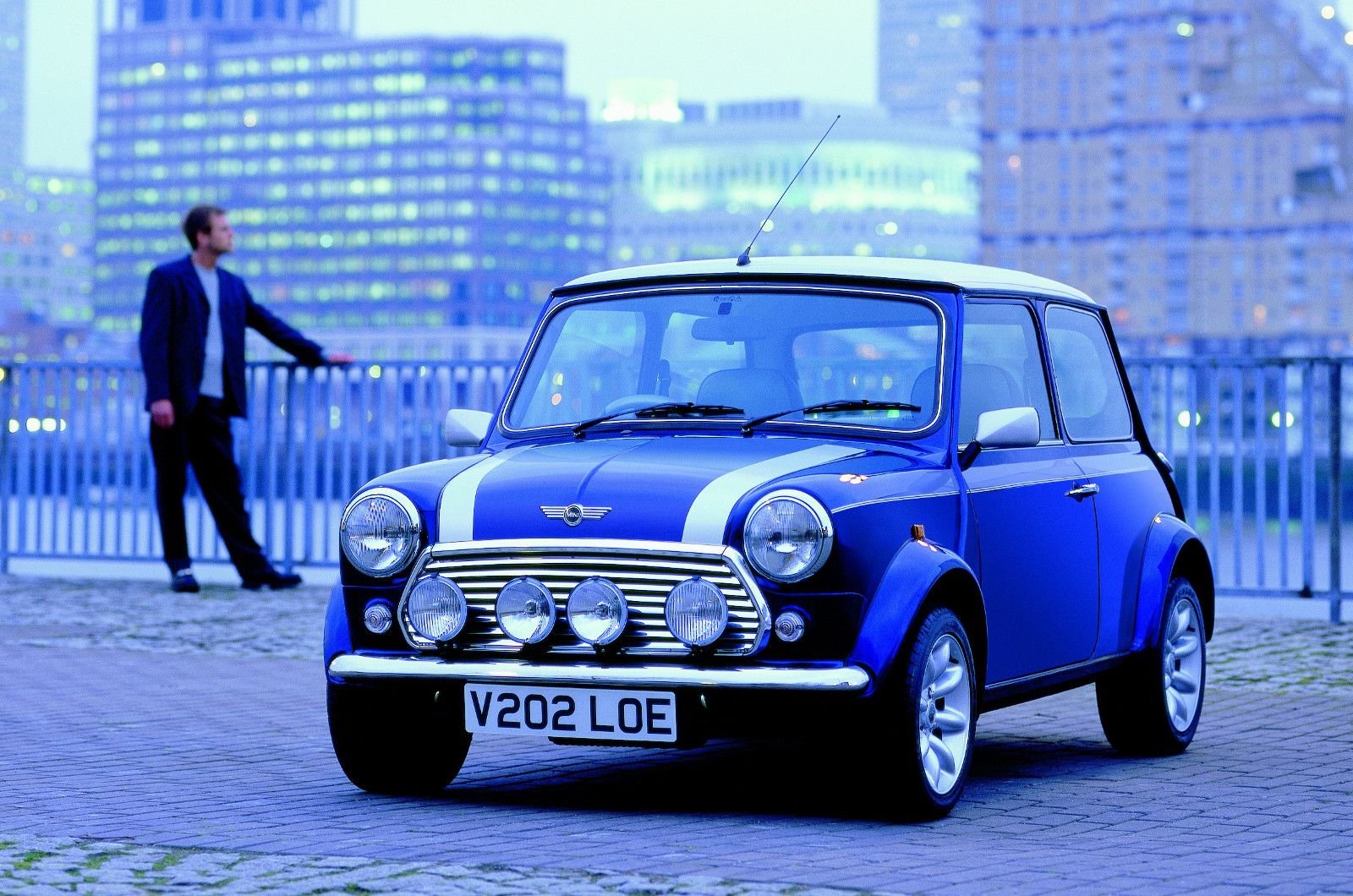
USED IN:
AUSTIN: 1100/1300, A30, A35, A40, Allegro, Austin-Healey Sprite, Metro, INNOCENTI: Mini, Regent, Spyder, MG: 1100/1300, Midget, Mini: Mini (pictured), Cord, Jem, Marcos, Moke, MORRIS: 1100/1300, Minor, RILEY: Elf, Kestrel 1300, VANDEN PLAS Princess 1100/1300, WOLSELEY: 1100/1300, Hornet.
Ford Windsor V8: 1961-present (65 years & counting)
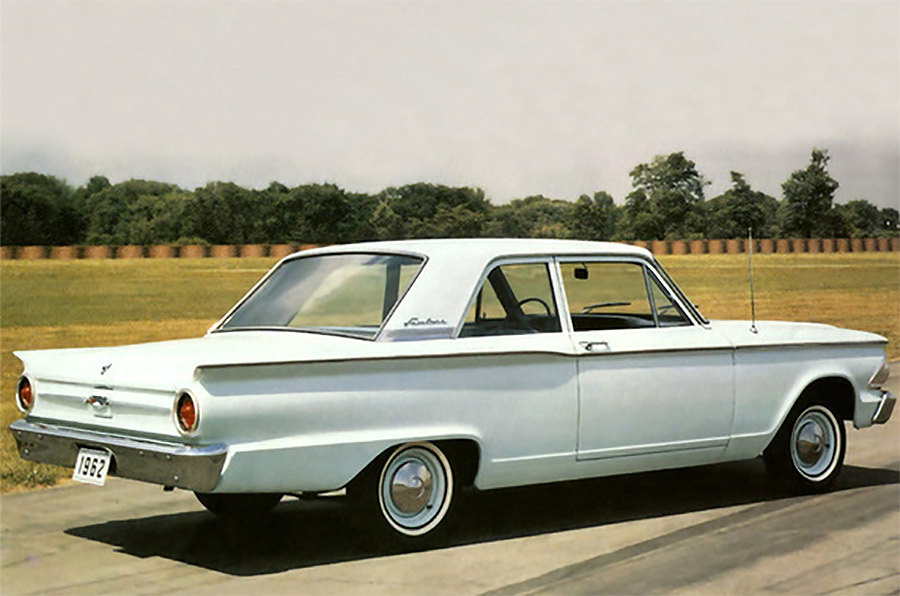
The Windsor is a medium-sized V8 fitted initially to the fourth-generation Fairlane (pictured) and later to many other Fords, as well as the Sunbeam Tiger and AC Cobra. Last placed in the Ford Explorer in 2001, it’s no longer used for any production car, but Ford will still sell you a new ‘crate’ engine to do with as you will.
The Windsor began life as a 3.6-litre, but got as large as 5.8-litres in the ‘351W’. Among many other cars, this version was fitted to the Ford LTD Crown Victoria in 1982-1991 – but only for police departments.
Ford Windsor V8: 1961-present (65 years & counting)
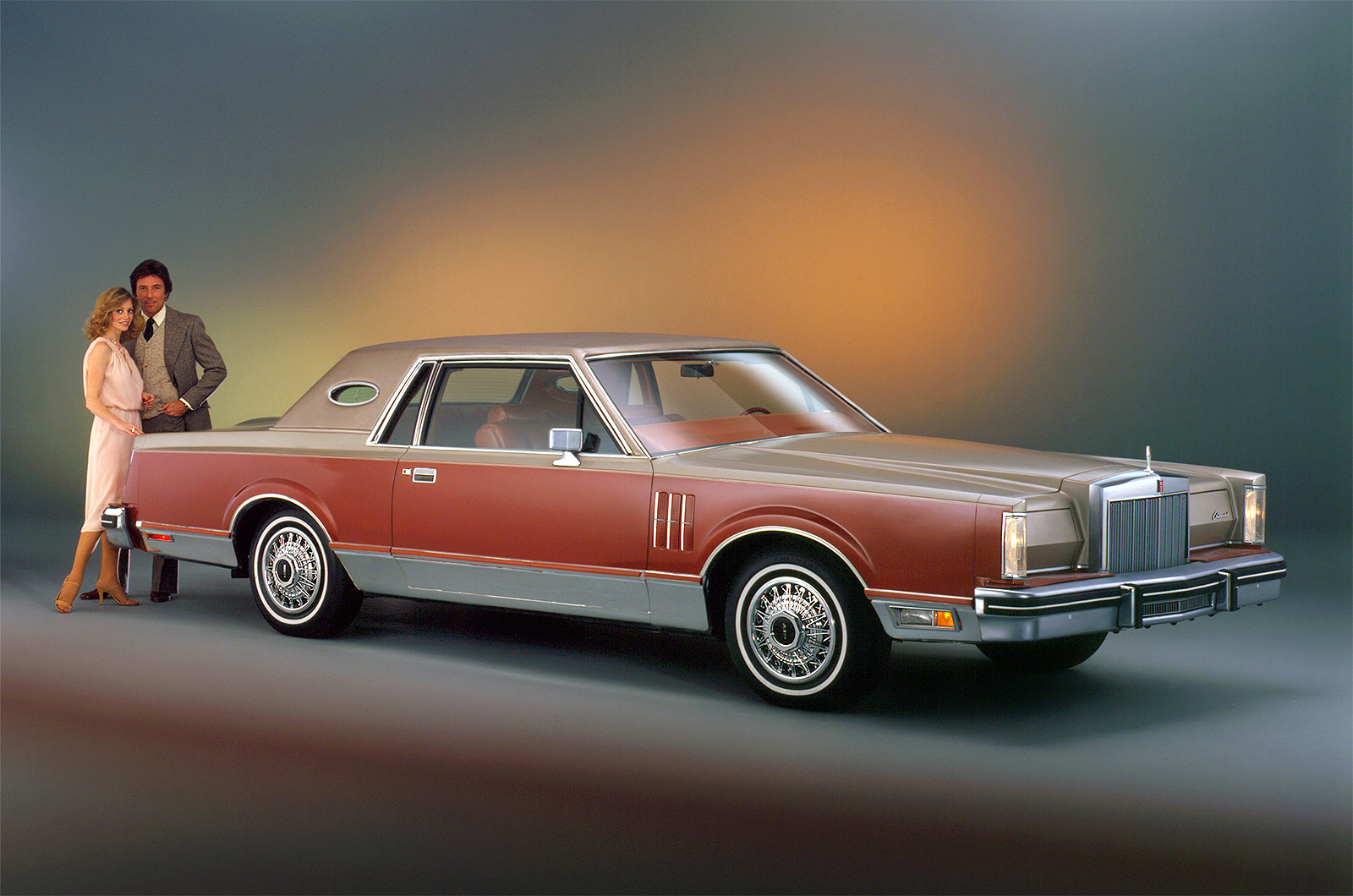
USED IN:
AC Cobra (pictured), CONTINENTAL: Mark 6 (pictured), Mark 7, FORD: Bronco, Country Squire, Econoline, Elite, Explorer, E-Series, F-Series, Fairlane, Fairmont, Falcon, Falcon Ranchero, Galaxie, Granada (North America), GT40, LTD, LTD Crown Victoria, Mustang, Thunderbird, Torino, LINCOLN: Continental, Mark 7, Town Car, Versailles, MERCURY: Colony Park, Cougar, Cyclone, Grand Marquis, Marquis, Meteor, Monarch, Montego, Mountaineer, Zephyr, SALEEN: S7, SHELBY GT350, SUNBEAM Tiger.
Rolls-Royce L-Series: 1959-2020 (61 years)
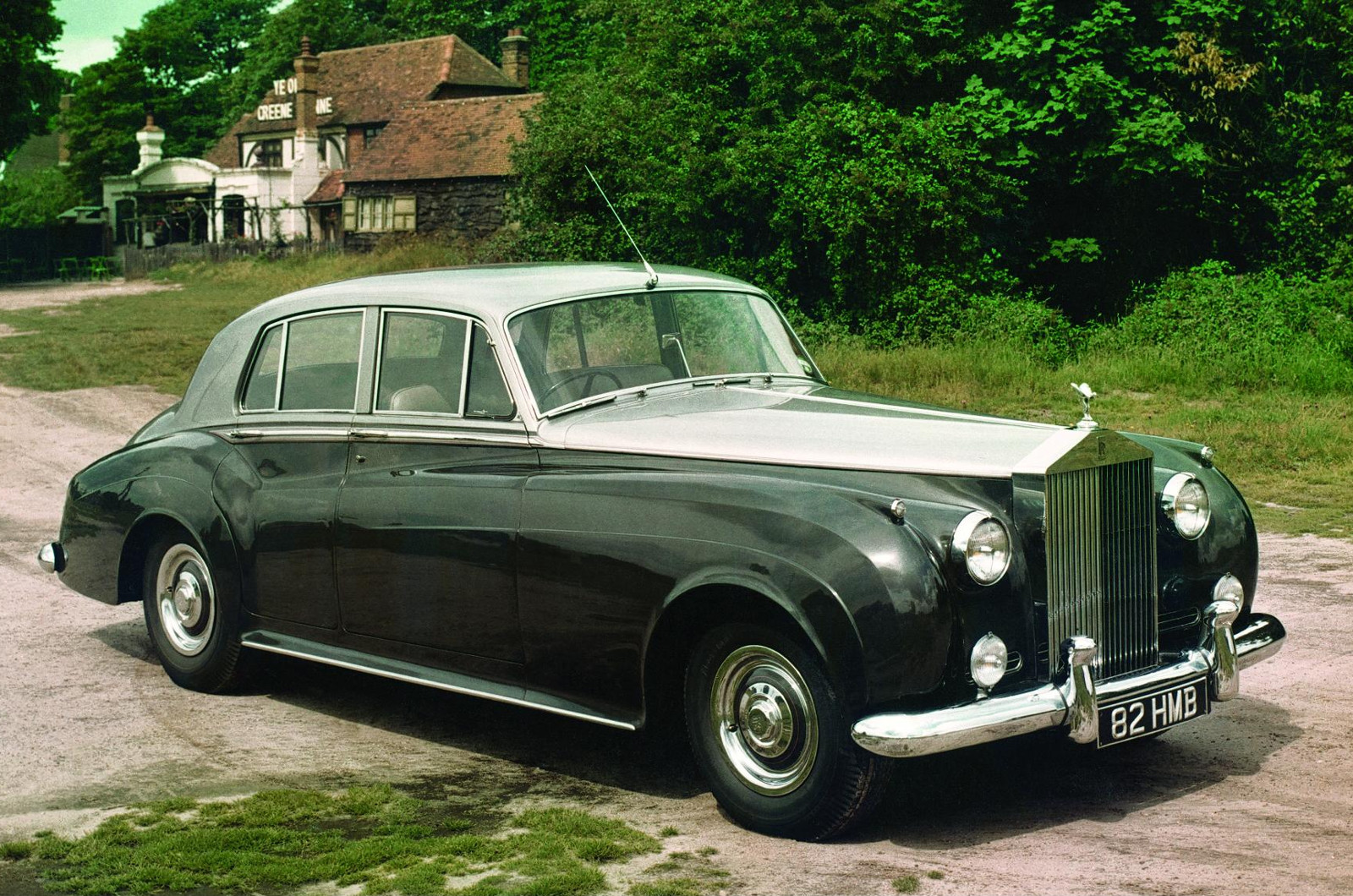
The L-Series is Britain’s longest-lived engine, and Rolls-Royce’s second V8. It made its debut in the Silver Cloud II (pictured) and Phantom V and the Bentley S2, though BMW-owned Rolls-Royce no longer has the rights to use it.
It started life as a 6.2-litre, with 188 hp, but died in the Bentley Mulsanne, which left production in 2020.
Rolls-Royce L-Series: 1959-2020 (61 years)
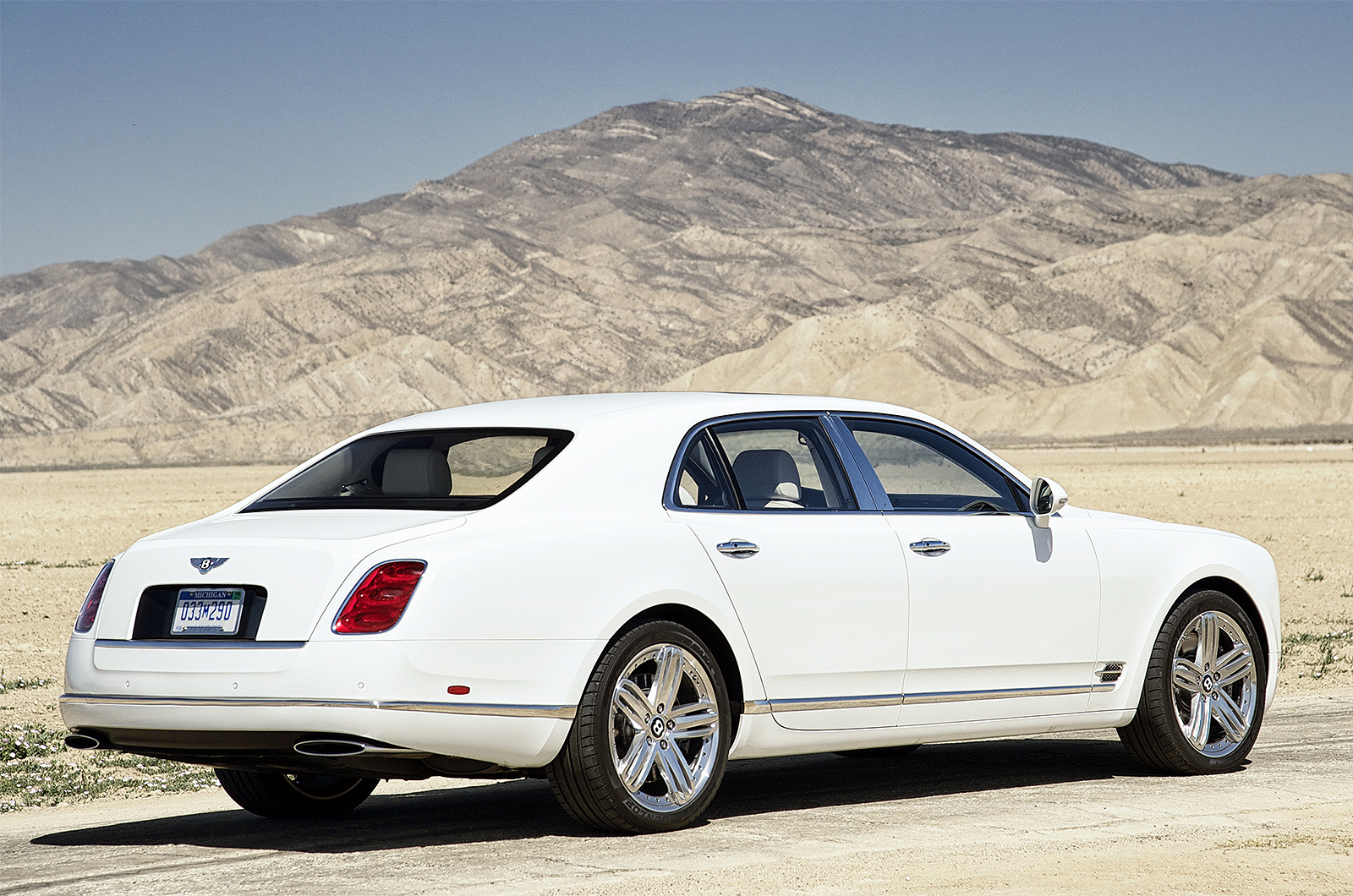
At the end fitted with twin-turbochargers, as a 6.75-litre in the Mulsanne Speed (pictured) it delivered 530bhp and a thunderous 190mph top speed. The engine had its last day of production on 1 June 2020, and was fitted to the final Mulsanne, a 6.75 Edition by Mulliner special edition, of which just 30 were produced. It marks the end of an era: 36,000 or so L-Series engines were produced, with perhaps a majority of these still in existence in some form today.
The Mulsanne will probably be replaced as the flagship of Bentley’s range with, we believe, an ultra-posh variant of the Bentayga SUV, probably powered by the W12 engine developed by parent Volkswagen.
USED IN:
BENTLEY: Arnage, Azure, Brooklands, Continental (pre-2003), Eight, Mulsanne, S2, S3, T-Series, Turbo, ROLLS-ROYCE: Camargue, Corniche, Phantom V and VI, Silver Spirit, Silver Spur, Silver Cloud II and III, Silver Shadow.
Chevrolet Small Block: 1955-present (71 years & counting)
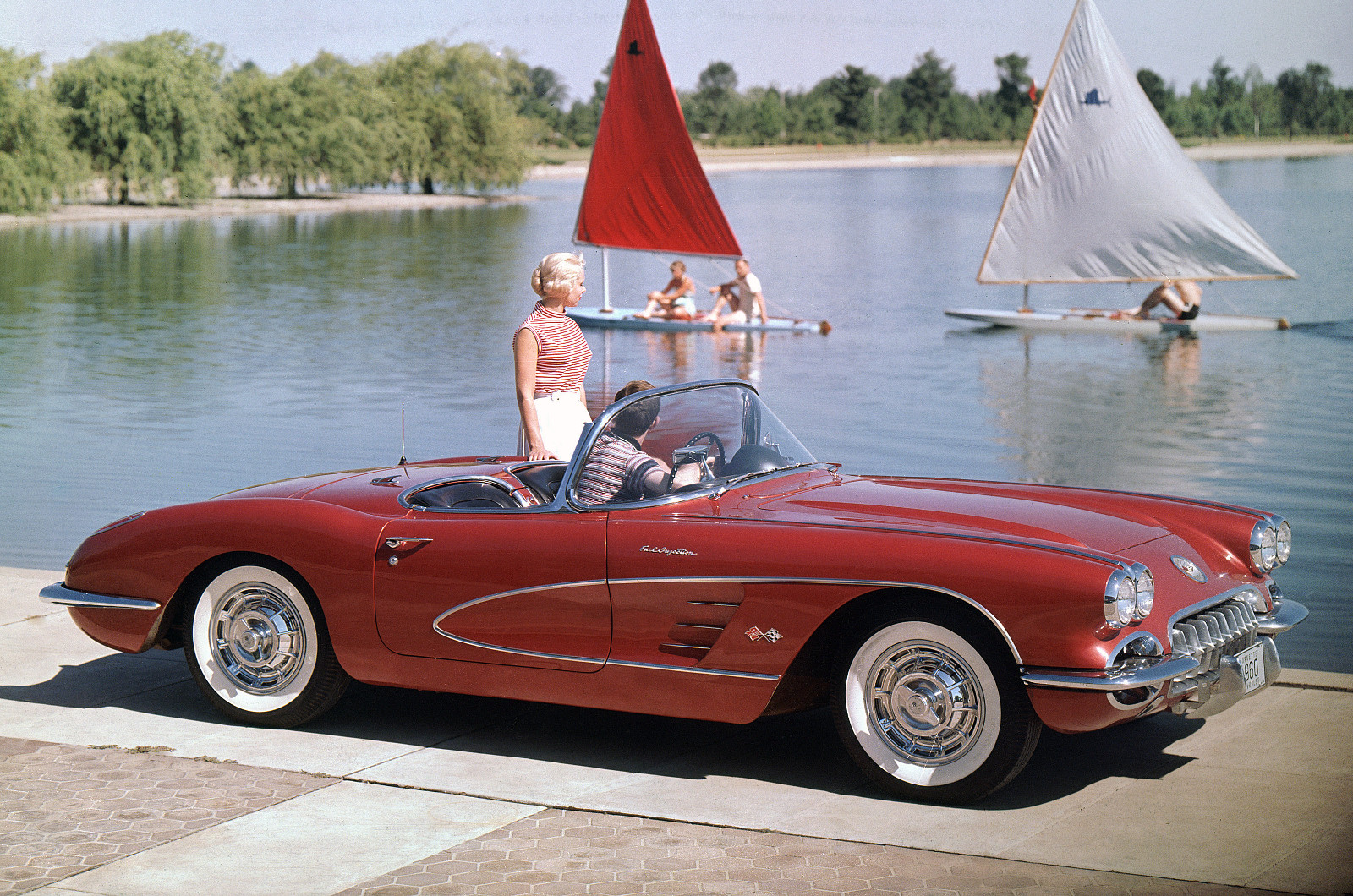
The Small Block V8 was first used as a 4.3-litre in the Chevrolet Corvette (’58 model pictured) and the much larger Bel Air sedan in 1955, and appeared in many GM cars and trucks after that. Like the Ford Windsor, it is available nowadays from GM only as a ‘crate’ engine, available to buy to keep an older car going. Total production is believed to be well over 100 million.
Chevrolet Small Block: 1955-present (71 years & counting)
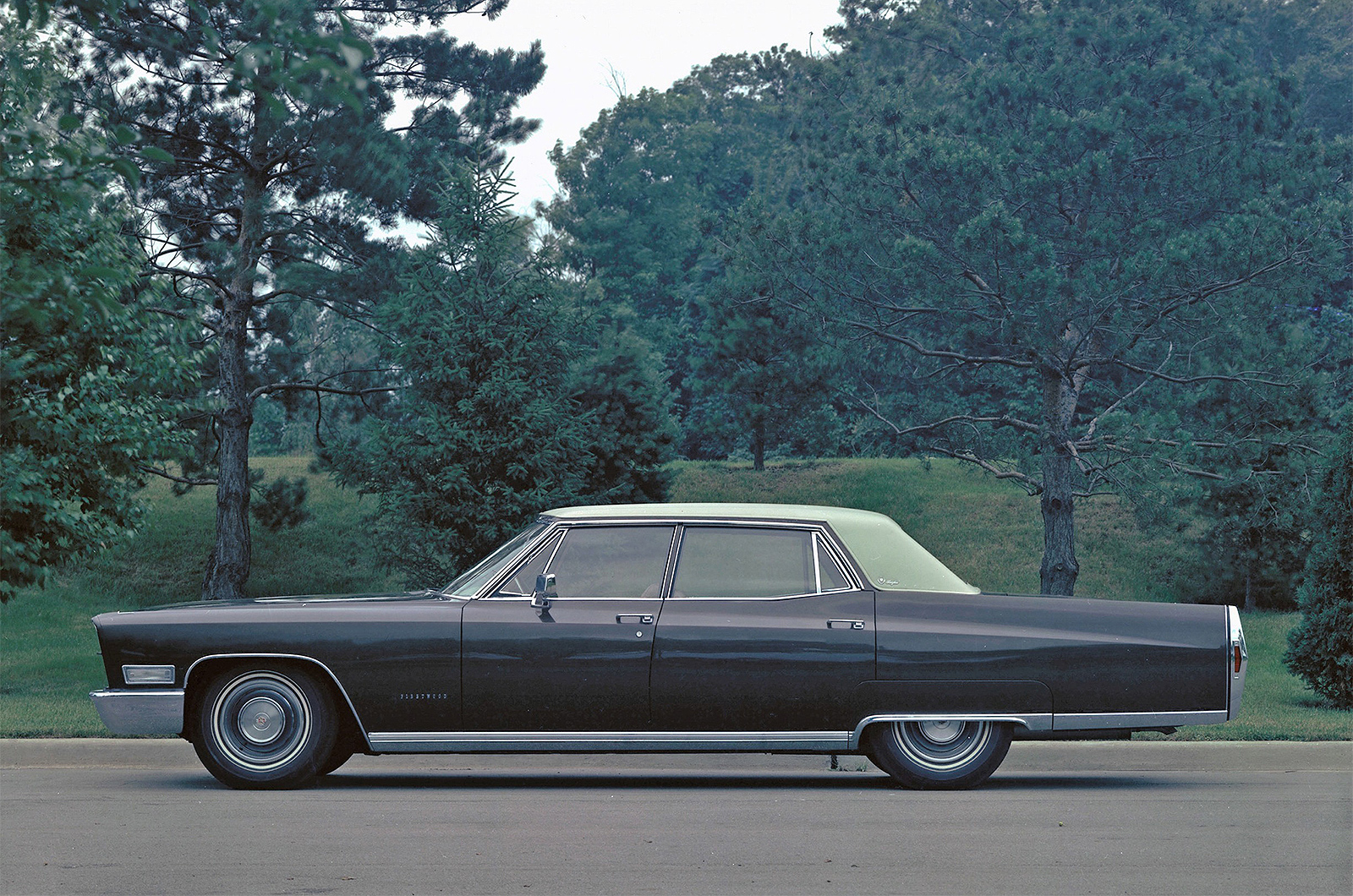
USED IN:
ACADIAN, BEAUMONT, BUICK Roadmaster, CADILLAC: Brougham, Escalade, Fleetwood, Fleetwood Sixty Special (pictured), CHECKER Marathon, Taxi, CHEVROLET: Bel Air, Camaro, Caprice, Chevelle, Corvette, El Camino, Express, Impala, Monte Carlo, Monza, Nova, Suburban, Tahoe, GMC: Carryall, Savana, Sierra, Suburban, Yukon, GORDON KEEBLE, HUMMER H1, ISO: Grifo, Lele, OLDSMOBILE: Custom Cruiser, Omega, Starfire, PONTIAC: Bonneville, Firebird, Grand LeMans, Grand Prix, Parisienne, Sunbird, Ventura.
Volkswagen Type 1: 1938-2003 (65 years)
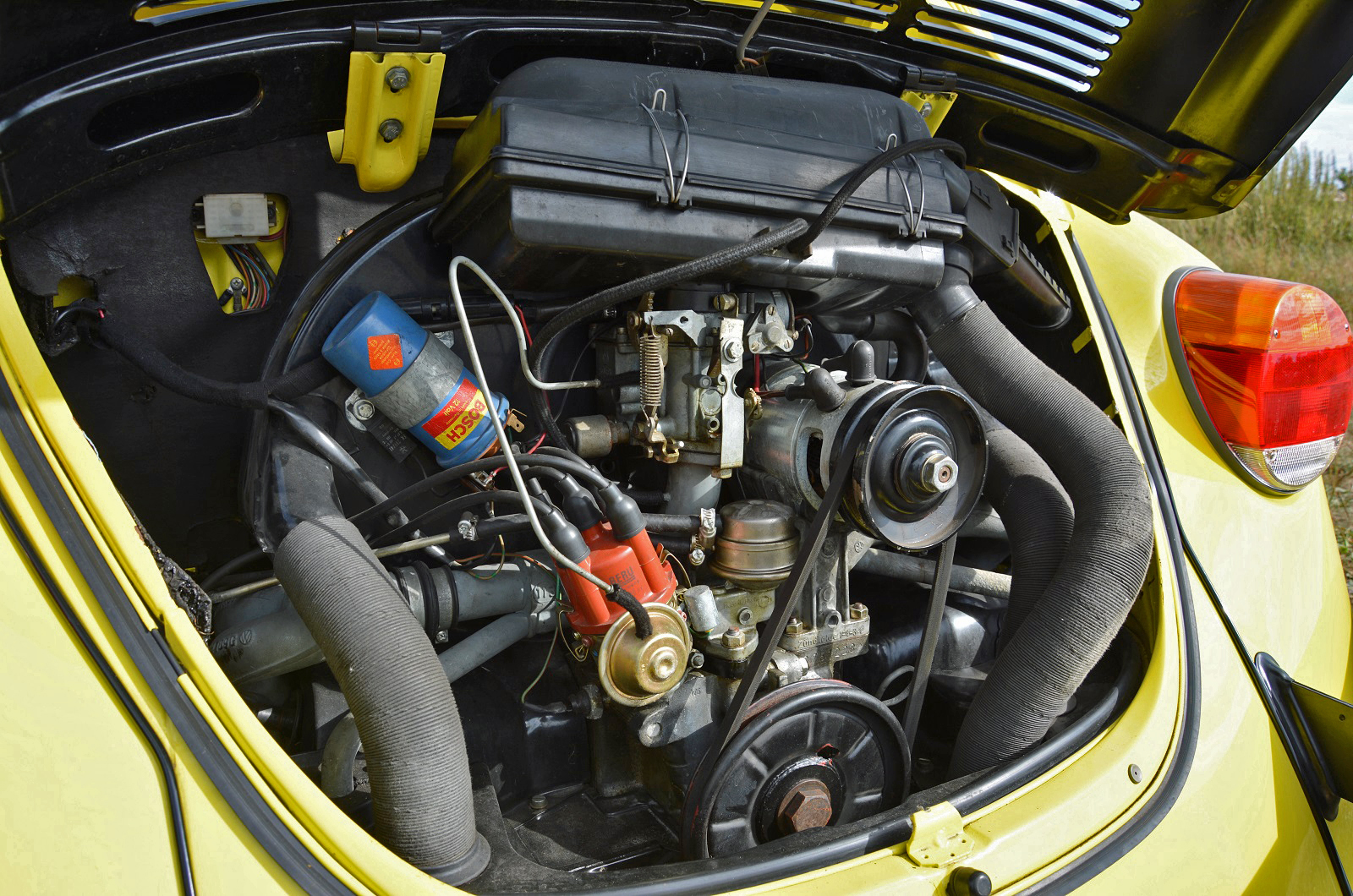
The Type 1 was the air-cooled flat-four cylinder engine designed for the original Volkswagen (nicknamed the Beetle though it was never officially called that) and used for many years in other small VWs.
It first appeared in 1938 as 985cc (with output of 24 hp) and did not stop being built until Mexican production of the Beetle ended in 2003.
PICTURE: 1303 GSR engine.
Volkswagen Type 1: 1938-2003 (65 years)
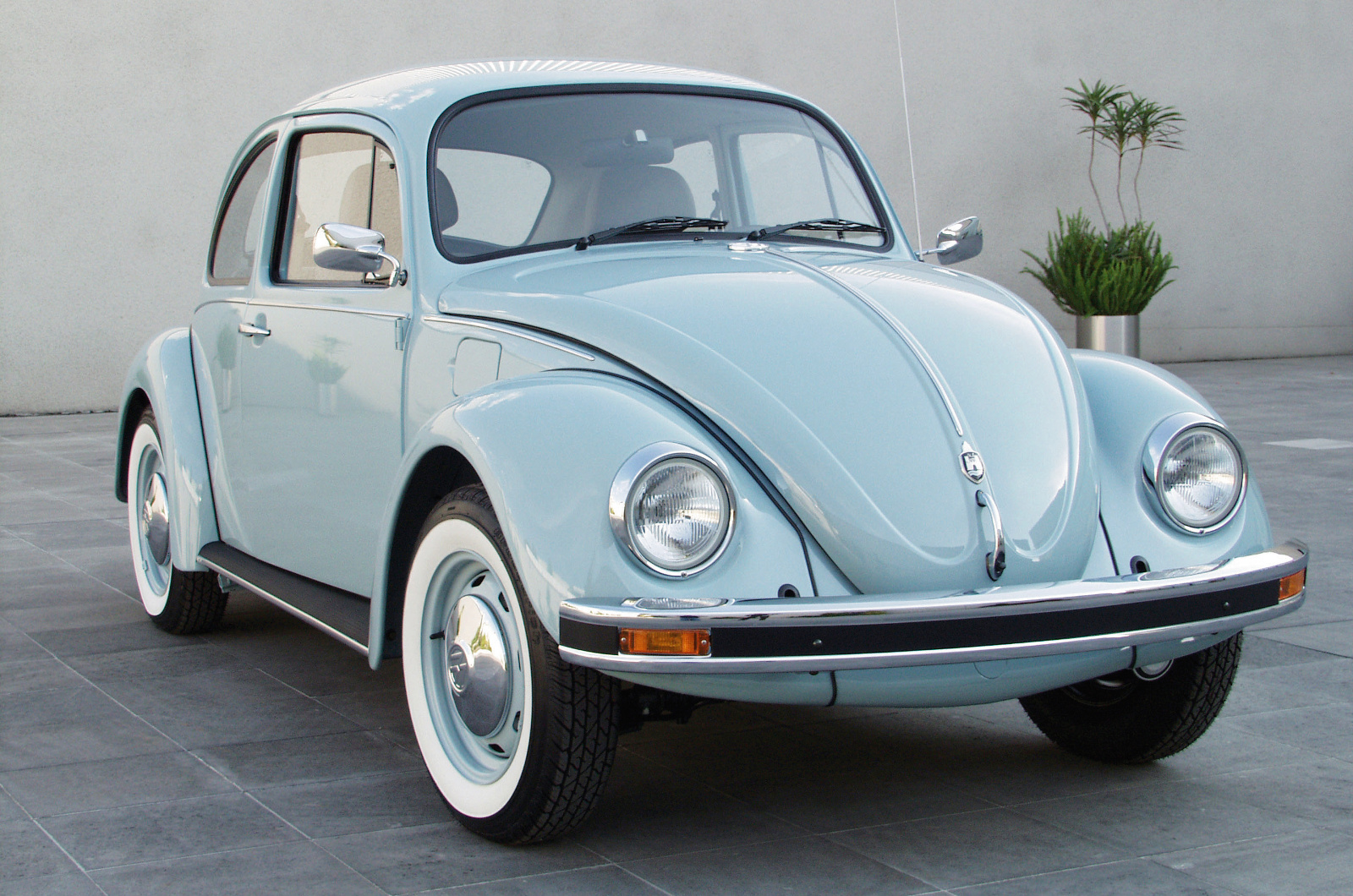
By this late period (pictured) time the engine was a 1.6-litre, with fuel-injection, delivering 51 hp. Apart from its engine’s record, the car itself also holds the record for the longest ‘single-shape’ production run car so far produced.
USED IN:
VOLKSWAGEN: 1500/1600, 411/412, Karmann Ghia, Type 1 (Beetle), Type 2 (Kombi/Microbus/Transporter).

Infotainment Design, Not Button Count, Drives Driver Distraction in Modern Cars

Ford’s Legacy of Innovation Traced Through Its Most Influential Models and Their Global Impact
 A company whose illustrious history is just as important as some of its cars - here are a few examples
The Ford Motor Company was founded in Detroit over 120 years ago, on 16 June 1903.
Within five years, it had hit the jackpot, creating the most important, and for a long time the best-selling, car in history. Today, it remains one of the largest manufacturers in the world, and one that has ingrained itself into the culture of countries other than America like few other foreign firms.
This would not have been possible if it hadn’t produced a long series of great models. The definition of ‘great’ is fluid – we’re using it here to describe cars which might not have excelled in all areas, but which at least pushed Ford forward in one way or another.
Among many other possibilities, we’re listing 50, in order of when they first went on sale. Models produced by Ford-owned brands such as Lincoln or Mercury are not included, before you ask…
Ford Model A (1903)
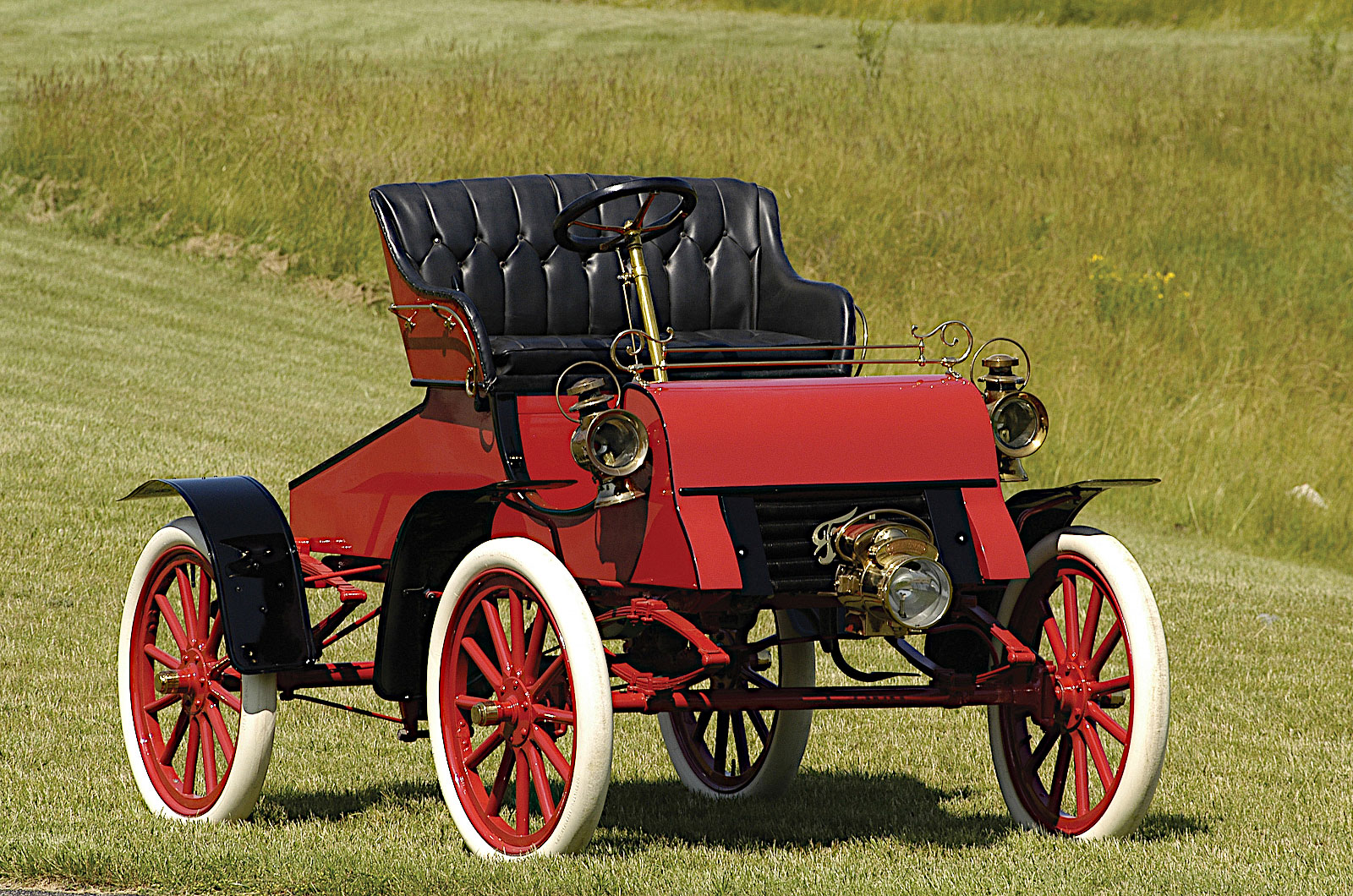
The main requirement of any manufacturer’s first car is that it should be successful enough to allow the company to create a second. The Model A was short-lived, remaining in production for only a year, but it at least fulfilled that requirement.
It bore a close resemblance to the contemporary Cadillac Model A, which is perhaps not surprising since Cadillac was a reorganisation of the second company founded by Henry Ford (1863-1947), which was itself a reorganisation of his first. The main difference between the two cars was that while the Cadillac was powered by a 1.6-litre single-cylinder engine, the Ford had a 1.7-litre twin.
Ford Model T (1908)
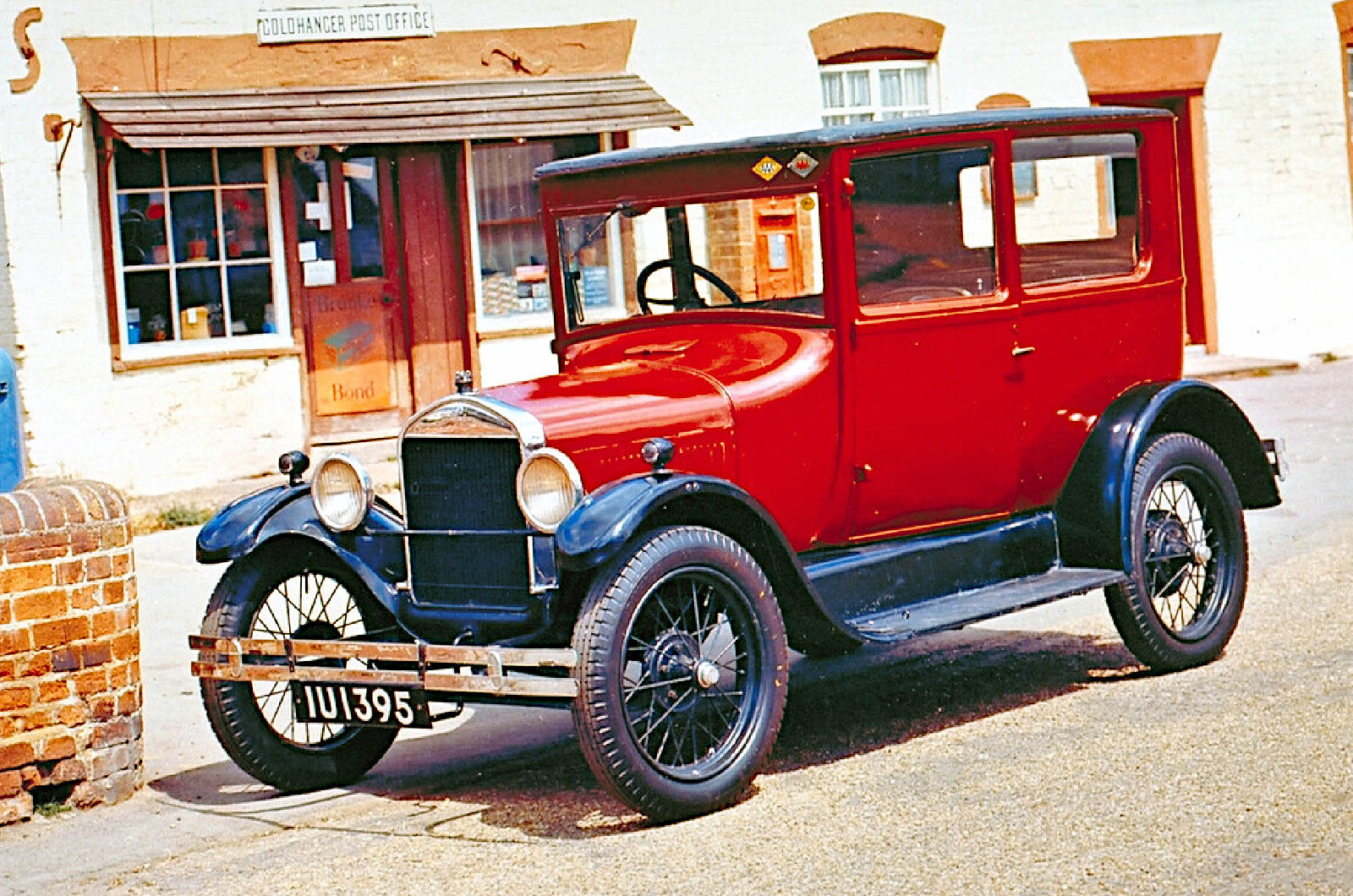
Technological advance and the rapid growth of the US auto industry combined to ensure that none of the earliest Fords remained on sale for more than a couple of years. In contrast, the Model T was available all the way through from 1908 to 1927, and ended up far cheaper than it was on the day it was launched.
Since it was the first car built using interchangeable parts on a moving assembly line, Ford was able to build it in enormous numbers. The exact figure is disputed, but it’s generally agreed to have been at least 15 million. This remained a record until it was beaten by the Volkswagen Beetle in 1972, 45 years after the last Model T left the factory.
Ford Model A (1927)
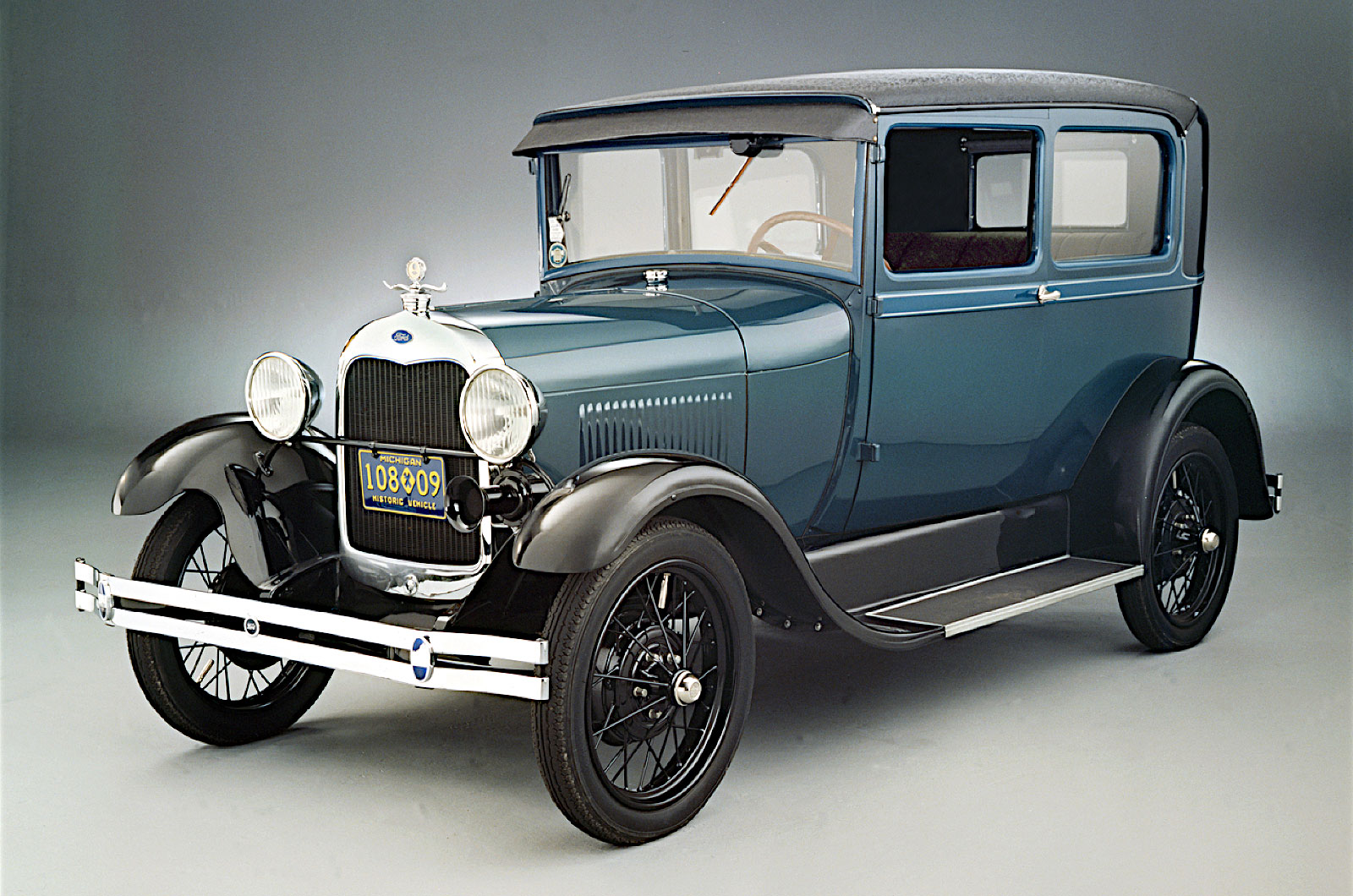
The Model T was replaced - arguably far later than it should have been - by the second Ford known as Model A. Far more modern than the car it replaced, it survived for only four years.
This might sound unimpressive, but during that short period Ford built nearly 4.9 million examples, with a bewildering variety of body styles. The T might have hit the big numbers overall, but the A easily exceeded it in terms of annual production. Even by 21st-century standards, Ford built Model As at a phenomenal rate.
Ford Model Y (1932)
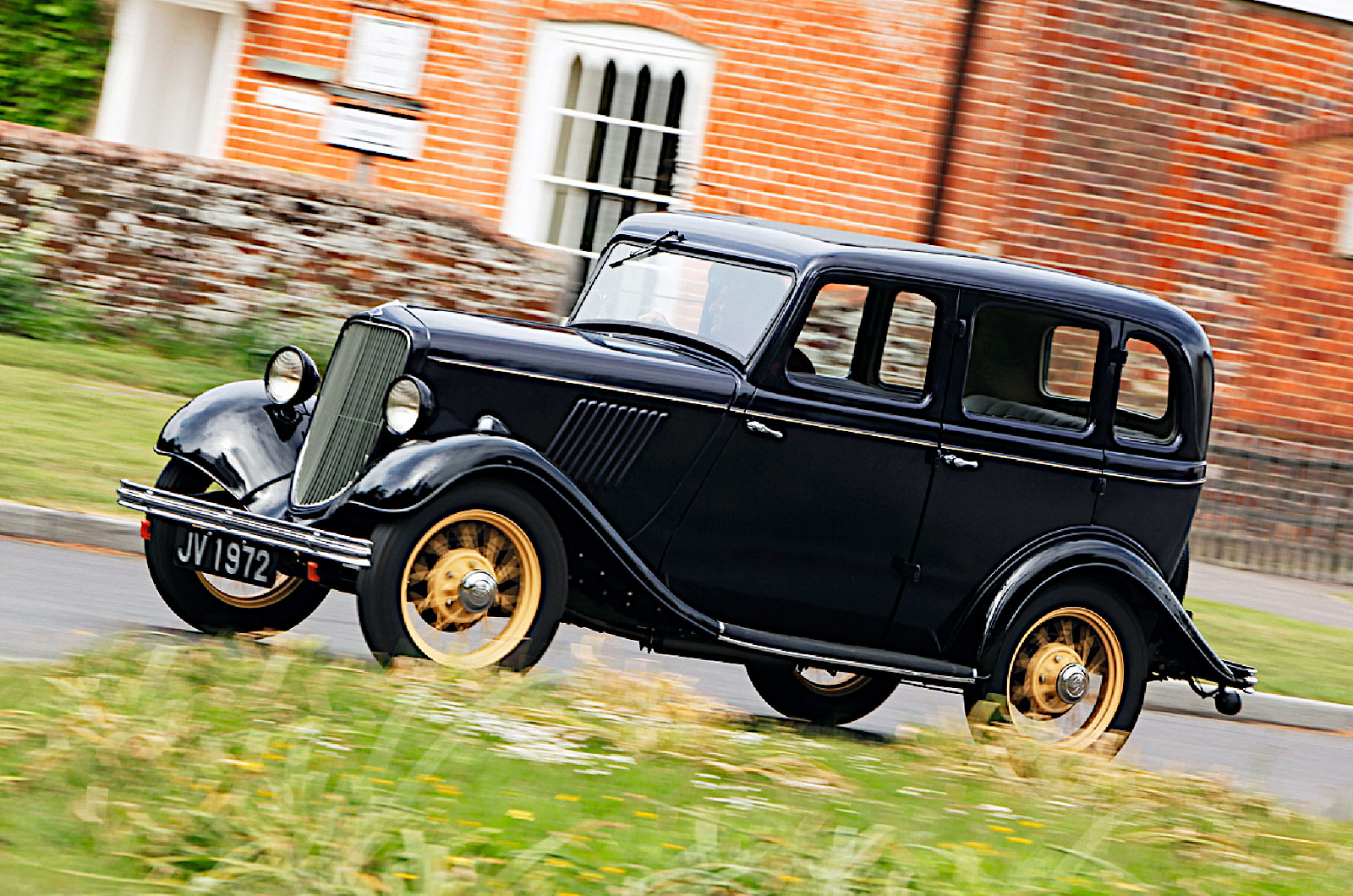
Model T production began in Manchester in England in 1911, but by the early 1930s the British side of the operation was in serious trouble. In desperate need of a car which was cheap both to buy and to tax, it created the Model Y, which in its most basic form retailed for just £100 – a record low for a UK four-seater.
Fortunately for Ford, it was a huge success, accounting for 40% of sales in the 8hp class. It was also built in other countries, including Germany, where it was named Köln (Cologne) because that’s where those versions were produced.
Ford Model 18 (1932)
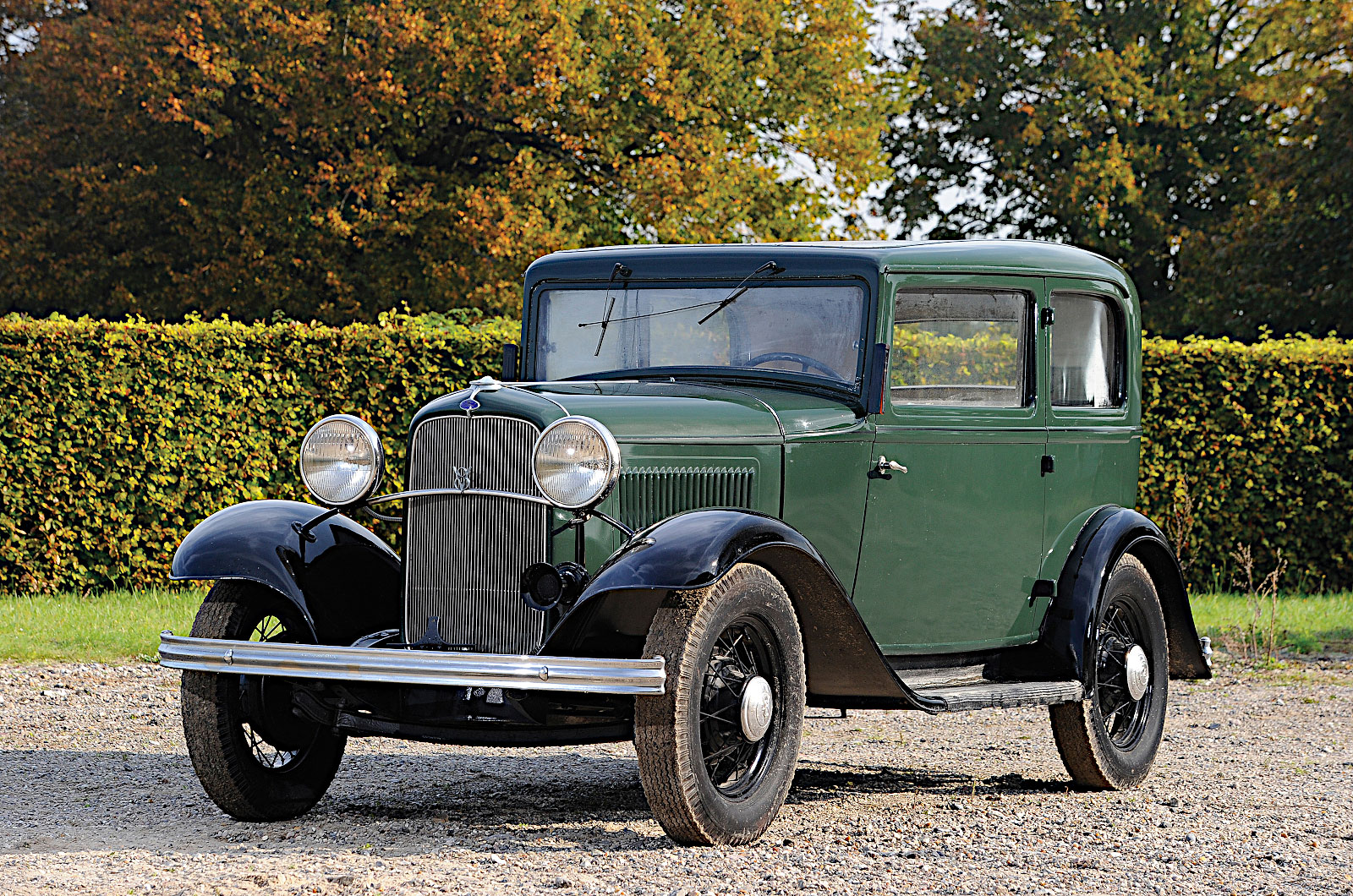
As we’ll see, full-size American Fords were often grouped together and referred to collectively by the name of the model year in which they were first produced. This happened first in 1932, but in this case we’re concentrating on the Model 18.
It’s a significant car because it marked the debut of a 3.6-litre V8 engine known, because of its configuration (the valves were alongside the cylinders rather than above them), as the Flathead, though the European term is sidevalve. V8s weren’t new at the time, but the fact that you could have one in a relatively inexpensive car certainly was.
1937 Ford
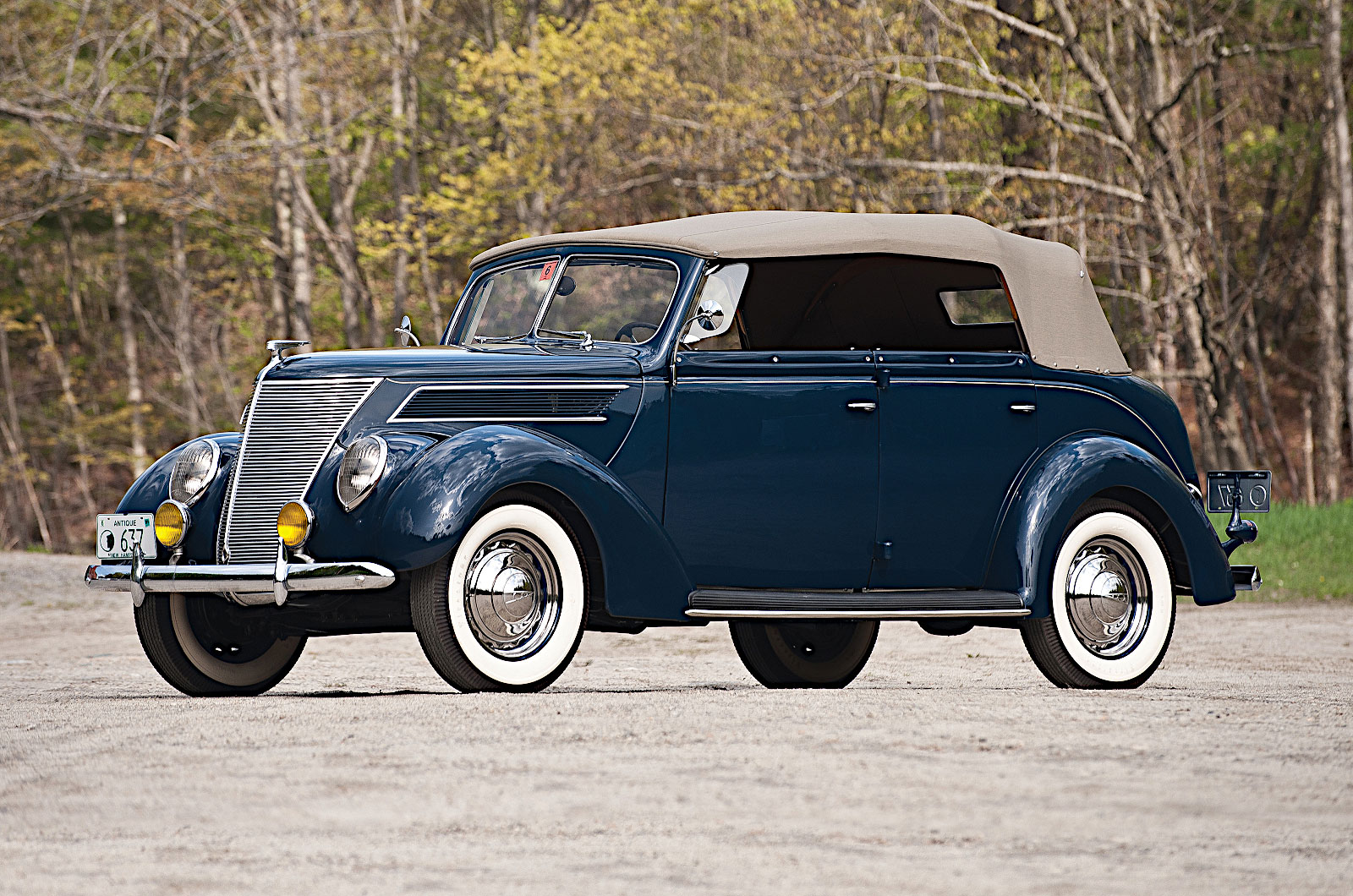
The 1937 Ford range consisted of cars which were far more streamlined than those launched five years earlier. This was dictated partly by fashion, but Ford avoided Chrysler’s mistake (with its radical 1934 Airflow) of making these vehicles look so outlandish that customers shied away from them.
The Flathead V8 engine had become so successful that Ford now offered nothing else. The only change was that a smaller, cheaper and of course less powerful 2.2-litre derivative was now available in addition to the 3.6.
(PICTURE: Model 78 Deluxe Phaeton)
1941 Ford
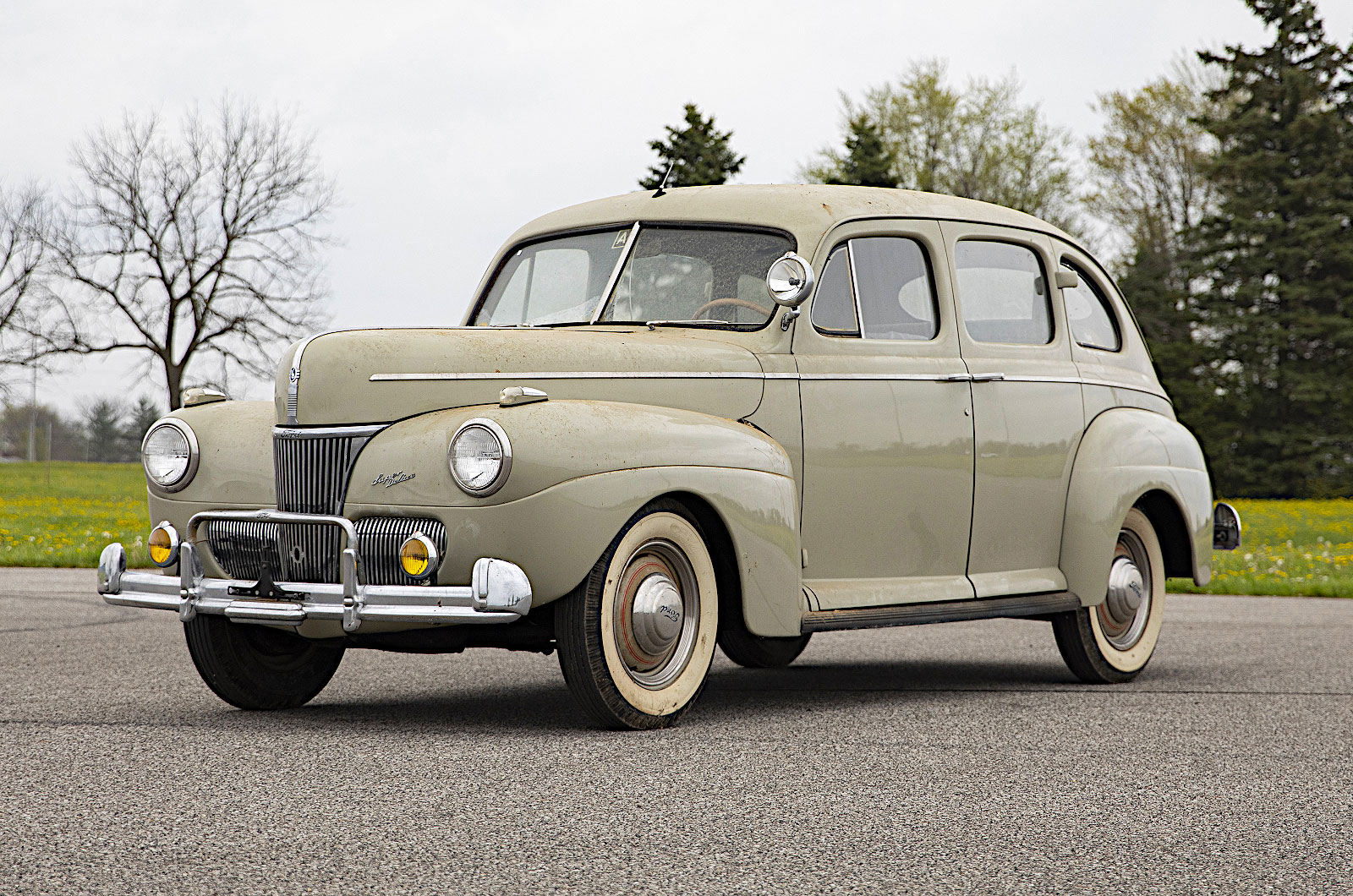
As with so many other cars of the period, production of the 1941 Ford was interrupted by the Second World War. How successful it would have been otherwise is impossible to say, but it was certainly a big advance over the ‘37 range, with a stiffer frame, a longer wheelbase, a wider body and far more space for passengers and luggage.
The Flathead V8 was retained, of course, but the 2.2-litre version was abandoned in favour of a new 3.7-litre straight-six, the first Ford engine of that design for several decades.
(PICTURE: Super DeLuxe Sedan)
Ford F-Series (1948)
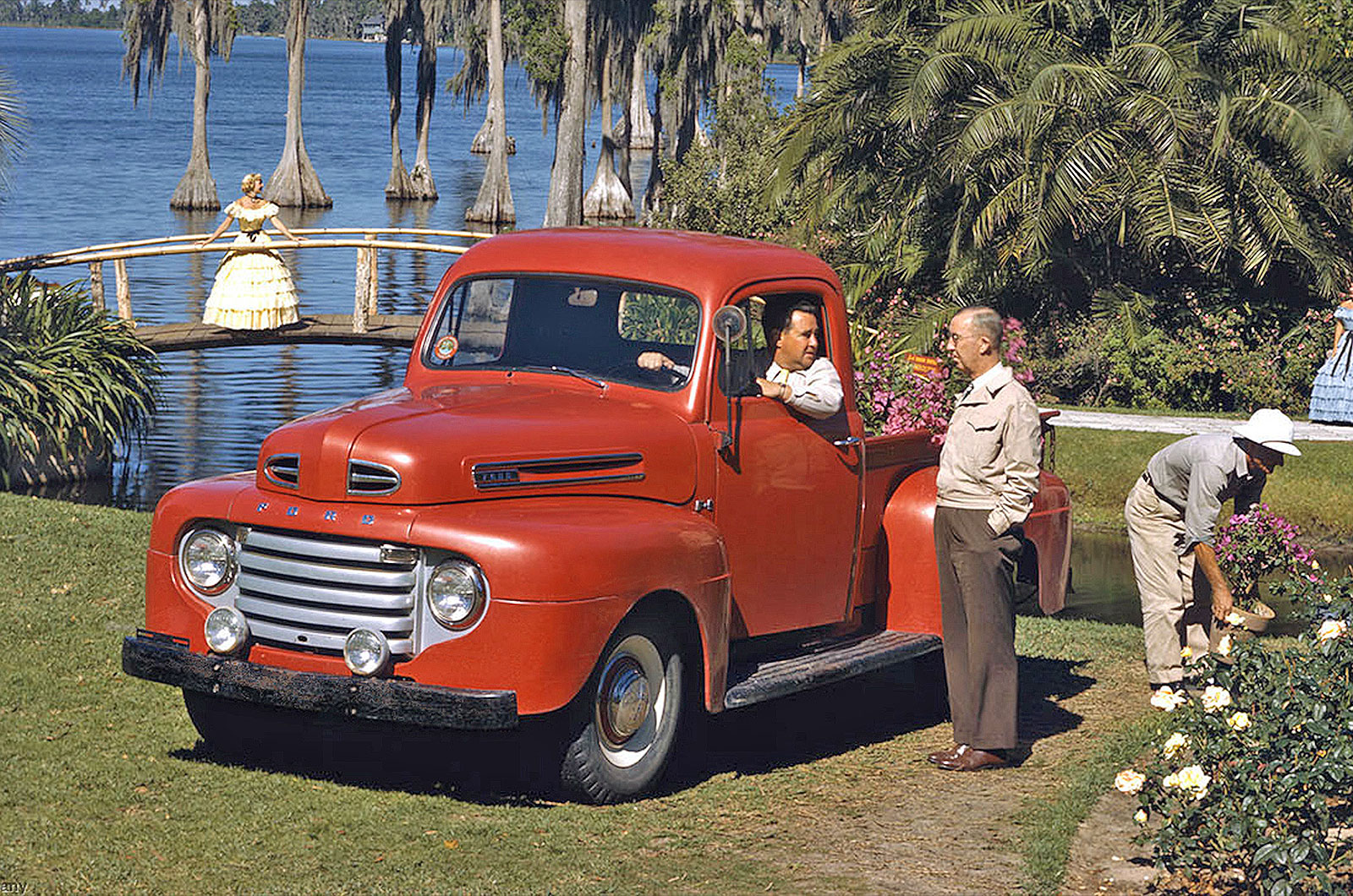
Ford realised at an early stage that it could profitably exploit the truck market, but until the Second World War all its vehicles of this type were derived from passenger cars. The first-generation F-Series, also known as the Bonus-Built, was different. It was designed from the start as a truck, and came in many forms, with a tremendous variety of gross vehicle weight ratings. It established a long running model-line that reliably sells even in the worst of times.
1949 Ford
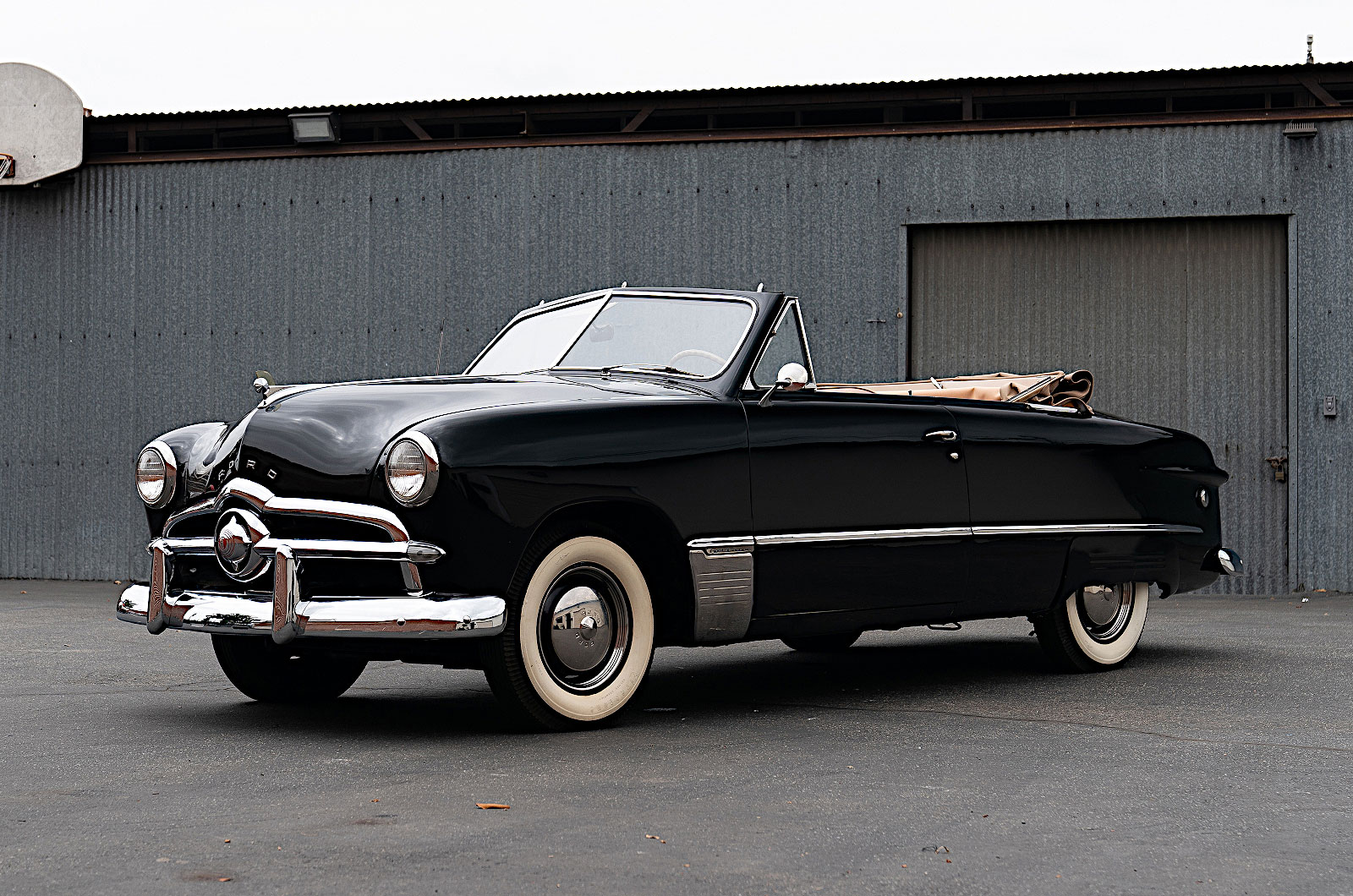
The 1949 Fords were the first of the company’s models to feature ponton styling, which consisted of a three-box shape (at least in the case of the saloons) and a relatively flat hood line. Model names, which varied according to the body style, included Tudor, Custom, Fordor, Victoria and, in the cases of the station wagon, Country Squire.
The ’49 was the first all-new model from the Big Three following the Second World War, and they sold like hot cakes. As with the ‘41 Ford, the engines on offer were a 3.9-litre version of the Flathead V8 and a 3.7-litre straight-six.
(PICTURE: Custom Convertible)
1952 Ford
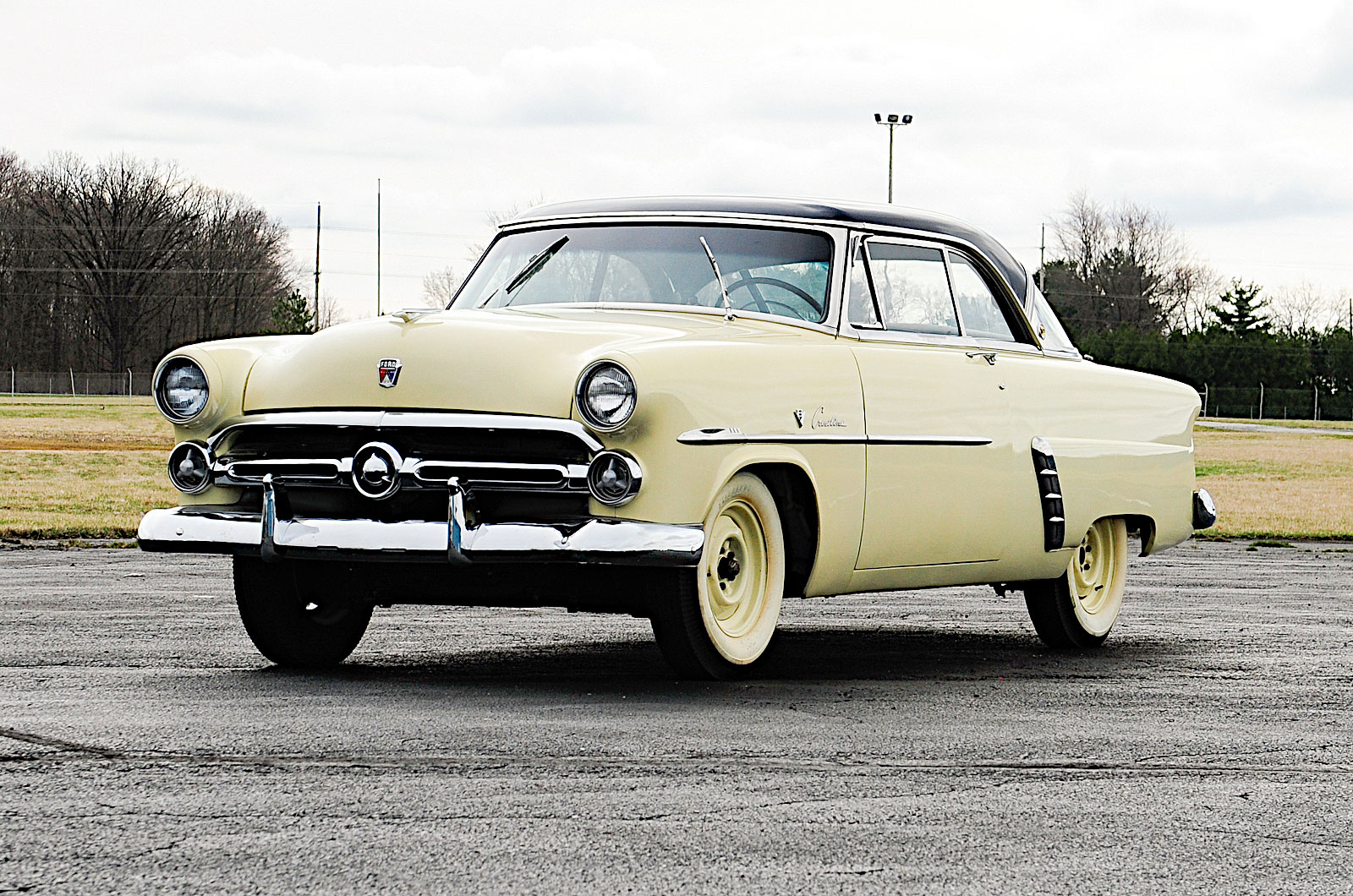
Three years can be a long time in car design. The 1952 Fords were far more adventurously styled than their immediate predecessors, though the basic idea of producing essentially the same vehicle with many different body styles (including two coupe utilities built in Australia) remained the same.
Right from the start, the 1952 range included a new 3.5-litre overhead-valve straight-six known as the Mileage Maker. Ford persevered with the by now ageing Flathead for a couple of years before replacing it with a new V8 (also with overhead valves) called the Y-Block.
(PICTURE: Crestline Victoria)
Ford Thunderbird (1954)
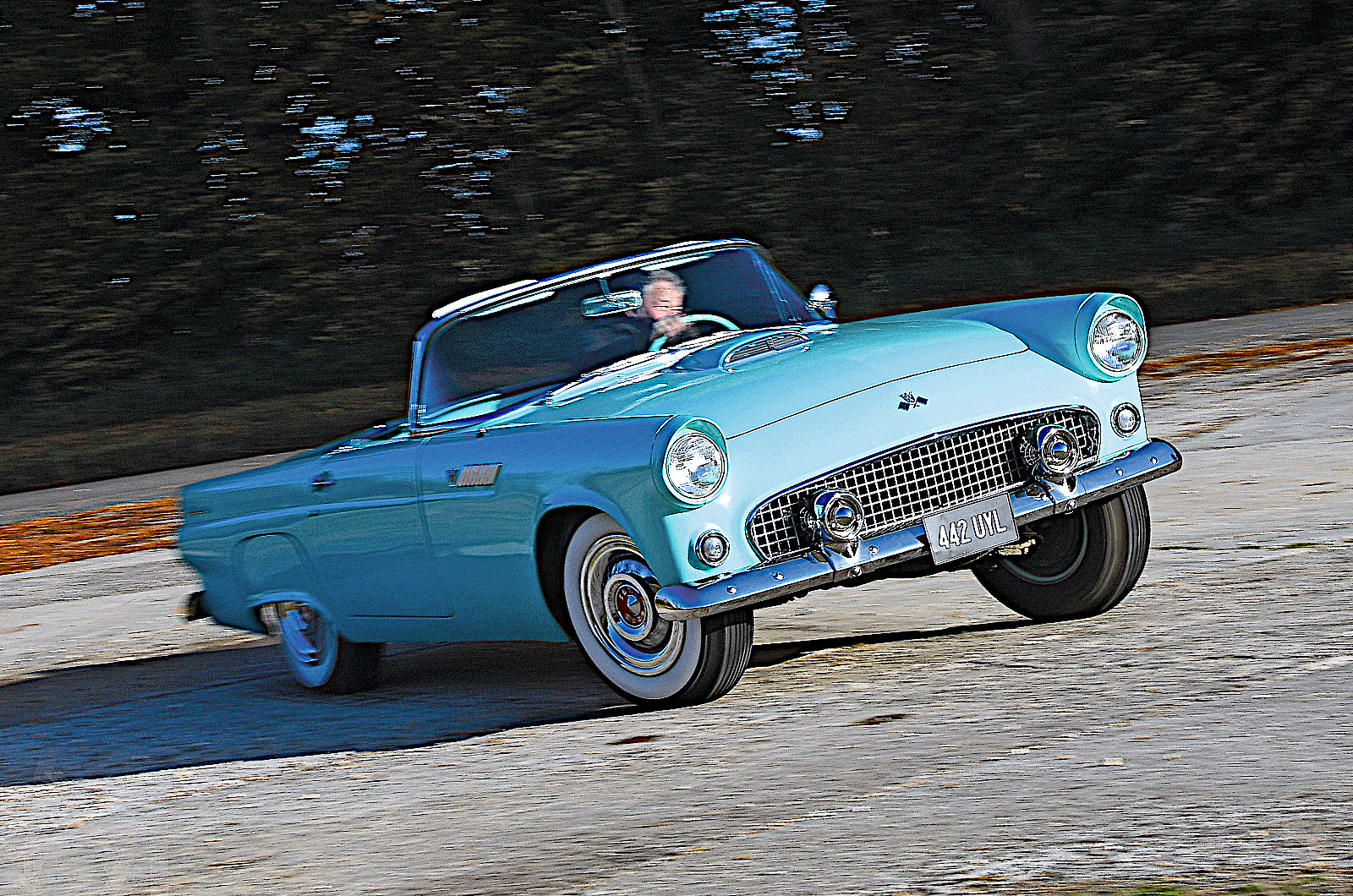
Ford produced eleven generations of Thunderbird for more than half a century, though with a four-year gap between the last two. The original model was the only two-seat roadster in the line built during the 20th century, and was powered by 4.8- and 5.1-litre versions of the Y-Block V8.
Not quite as sporty as it looked, and therefore not really a rival to the slightly earlier Chevrolet Corvette, this Thunderbird was nevertheless reasonably popular, achieving around 50,000 sales in three years. Ford, however, felt it could do better, and came up with a plan to make the second T-bird more successful than the first – and help firmly establish the ‘personal car’ concept in the US market.
1955 Ford
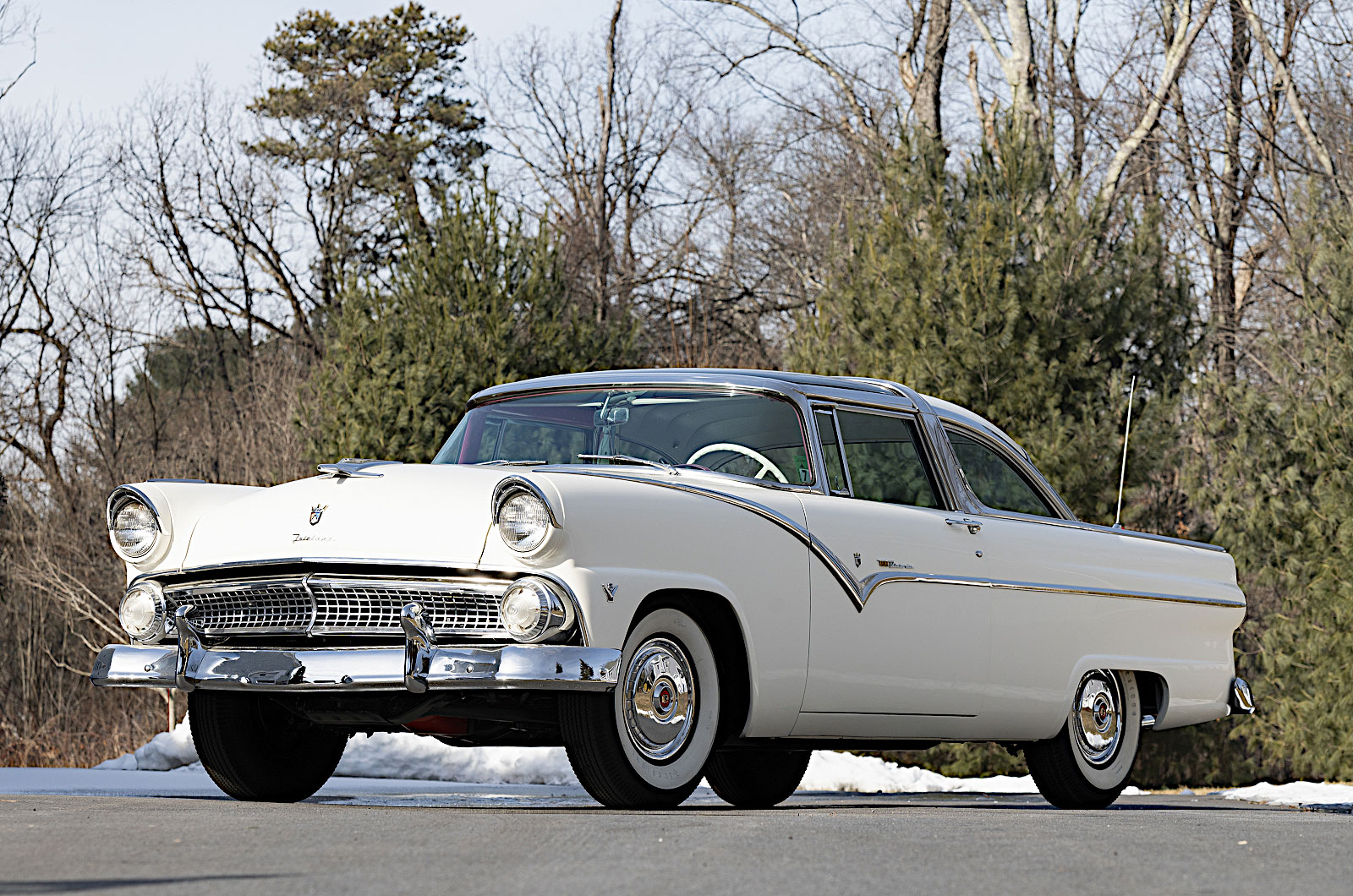
Full-size Ford styling took another leap forward in 1955. The cars were even more visually exciting than they had been three years before, and almost unrecognisable from the ones sold at the end of the previous decade. The range-topping trim level was the first Ford to be called Fairlane, and was available with six body styles all on its own.
Mechanically, not much had changed. The Mileage Maker straight-six and the Y-Block V8 were still offered, though the latter was now available with capacities of 4.5 and 4.8 litres.
(PICTURE: Fairline Crown Victoria)
Ford Thunderbird (1957)
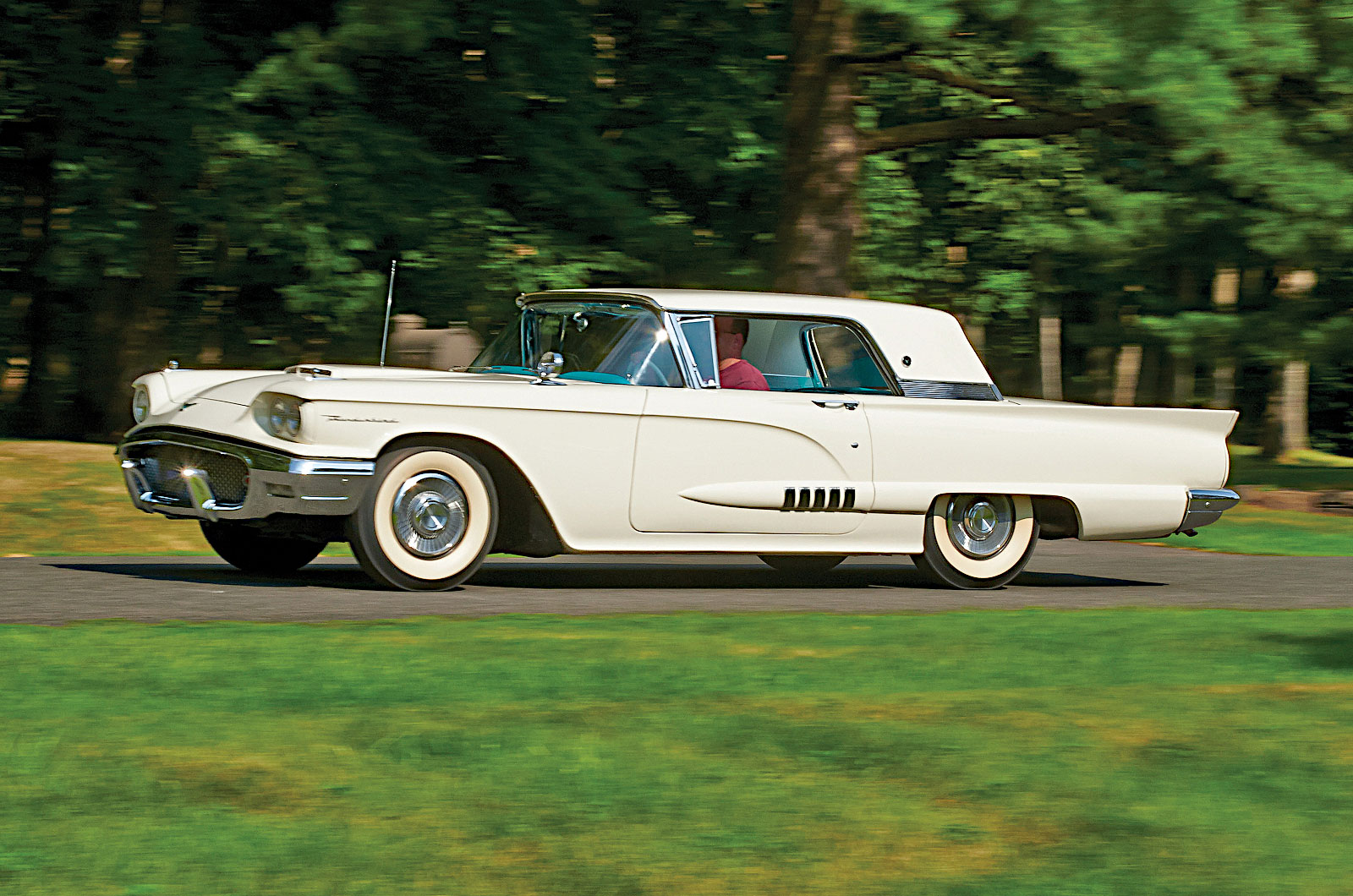
Few cars sharing the same name and produced with no interval between them can have been as outstandingly different as the first and second Thunderbirds. The new model was much larger, could seat four people rather than just two, had very different styling (which led to it being nicknamed Squarebird) and was available as either a convertible, as before, or a coupe.
There was more power, too, thanks to a 5.8-litre version of Ford’s new FE V8, and later an even larger 7.0-litre MEL unit of the same layout. The combined effect of all the changes was phenomenal. Although it lasted for only three years, the same as the original Thunderbird, this one achieved four times as many sales, at just short of 200,000.
Ford Taunus (1957)
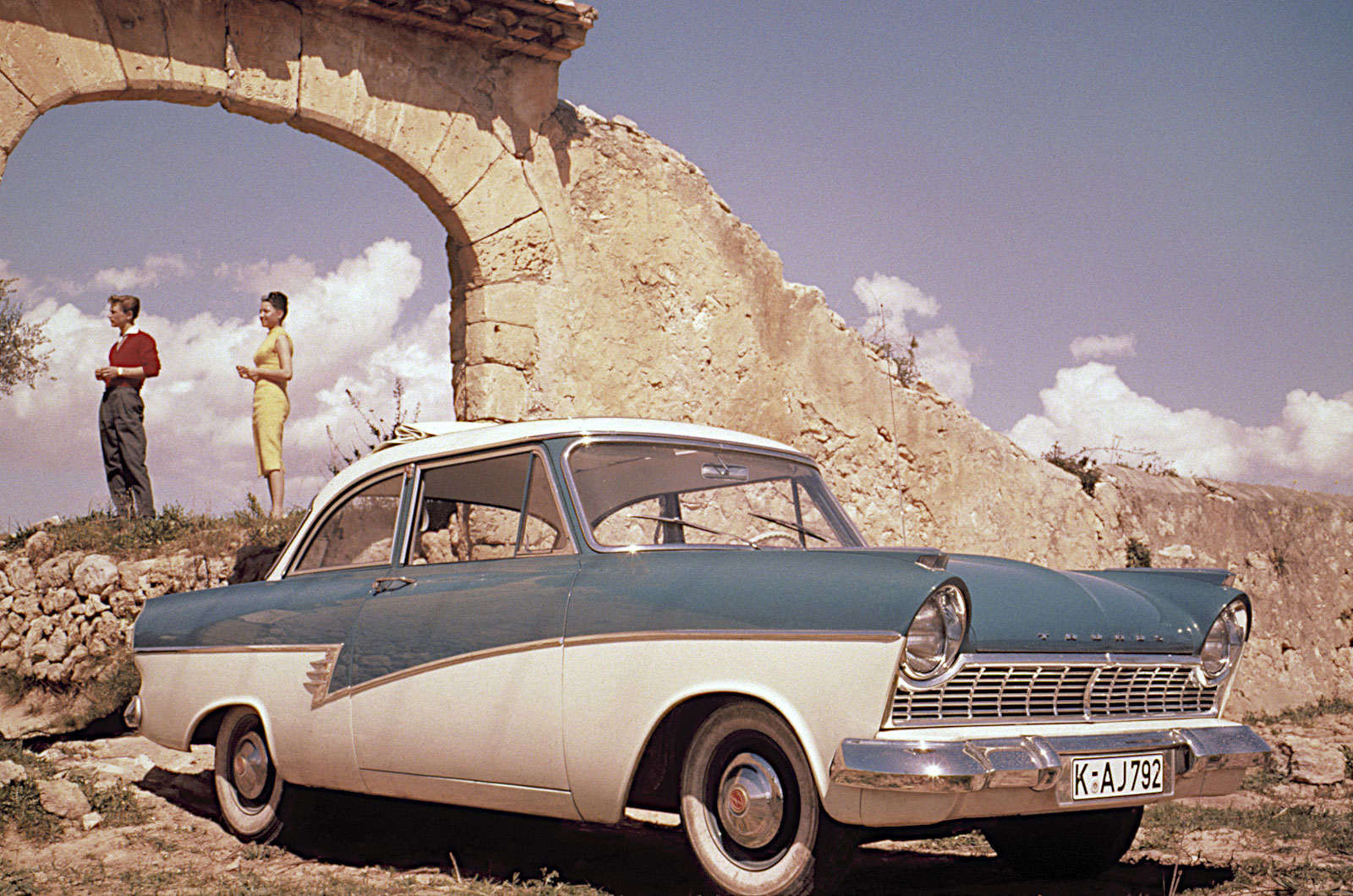
Ford of Germany produced cars named Taunus for six decades. One of the most notable versions was the P2, built in saloon, estate and convertible forms from 1957 to 1960, during which period it actually outsold the second-generation Thunderbird despite operating in a far smaller market.
By the rather sober standards of German Fords during this period, the P2 featured flamboyant styling which led to it being nicknamed Barocktaunus (baroque Taunus). The P3 which followed was one of the first cars ever sold with lozenge-shaped headlights, but apart from that its styling was so restrained that it became known as the Badewanne (bathtub).
1957 Ford
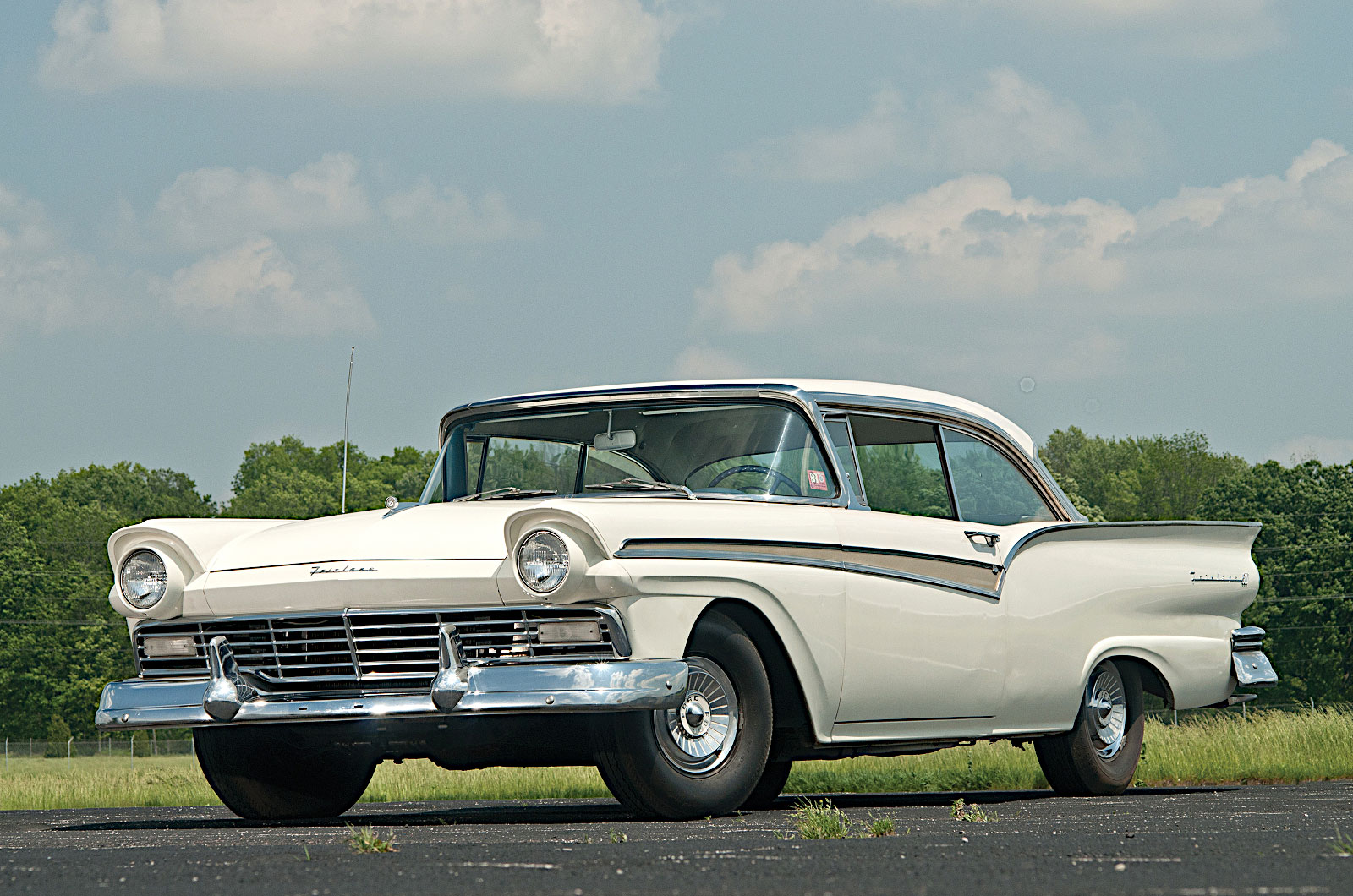
The full-size Fords produced in the 1957 to 1959 model years were absolutely of their time – longer and lower than the ‘55s and with even more brash body designs. But styling was only part of the story. The chassis frame was up to a foot wider than before, so the occupants were surrounded by it rather than sitting on top of it, and Ford lost no time in emphasising the additional safety this provided.
Customers had a choice of the Mileage Maker straight-six, V8 Y-Block and V8 FE engines, the last of these measuring as much as 5.8 litres. Those willing to pay more could have what Ford called ‘power assists’ – servo brakes, power steering, electric windows and four-way powered front seat adjustment. American buyers liked all this so much that Ford became the best-selling brand in the US, removing Chevrolet from a position it had held since 1935.
(PICTURE: Fairlane 500 Victoria Hardtop Coupe)
Ford Anglia (1959)
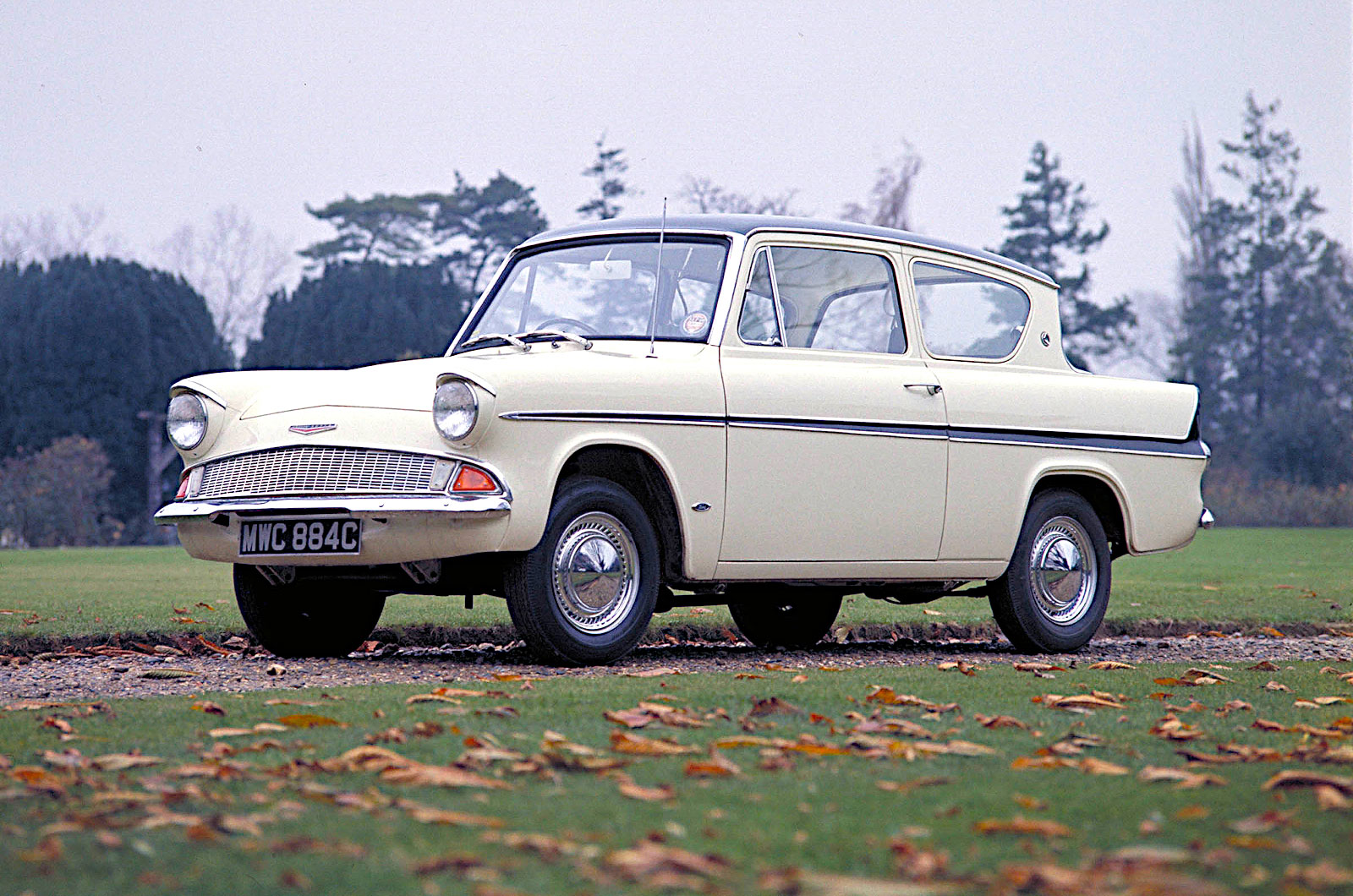
Of the four Anglias produced by Ford of Britain, the one introduced in 1959 was the most distinctive. This was mostly because of its shape, created by Elmwood Engel (1917-1986), who caused quite a stir by giving the new model a reverse-rake rear window, though for practical reasons this was used only for the saloon version and not the estate.
That feature didn’t survive the car, but its engine very much did. This was the first members of the Kent family, initially measuring 997cc and with its inlet and exhaust ports on the same side. Much larger Kents, with crossflow cylinder heads, would follow, and the engine would also become the basis for the overhead-camshaft Lotus Twin Cam and Cosworth BD series.
Ford Galaxie (1959)
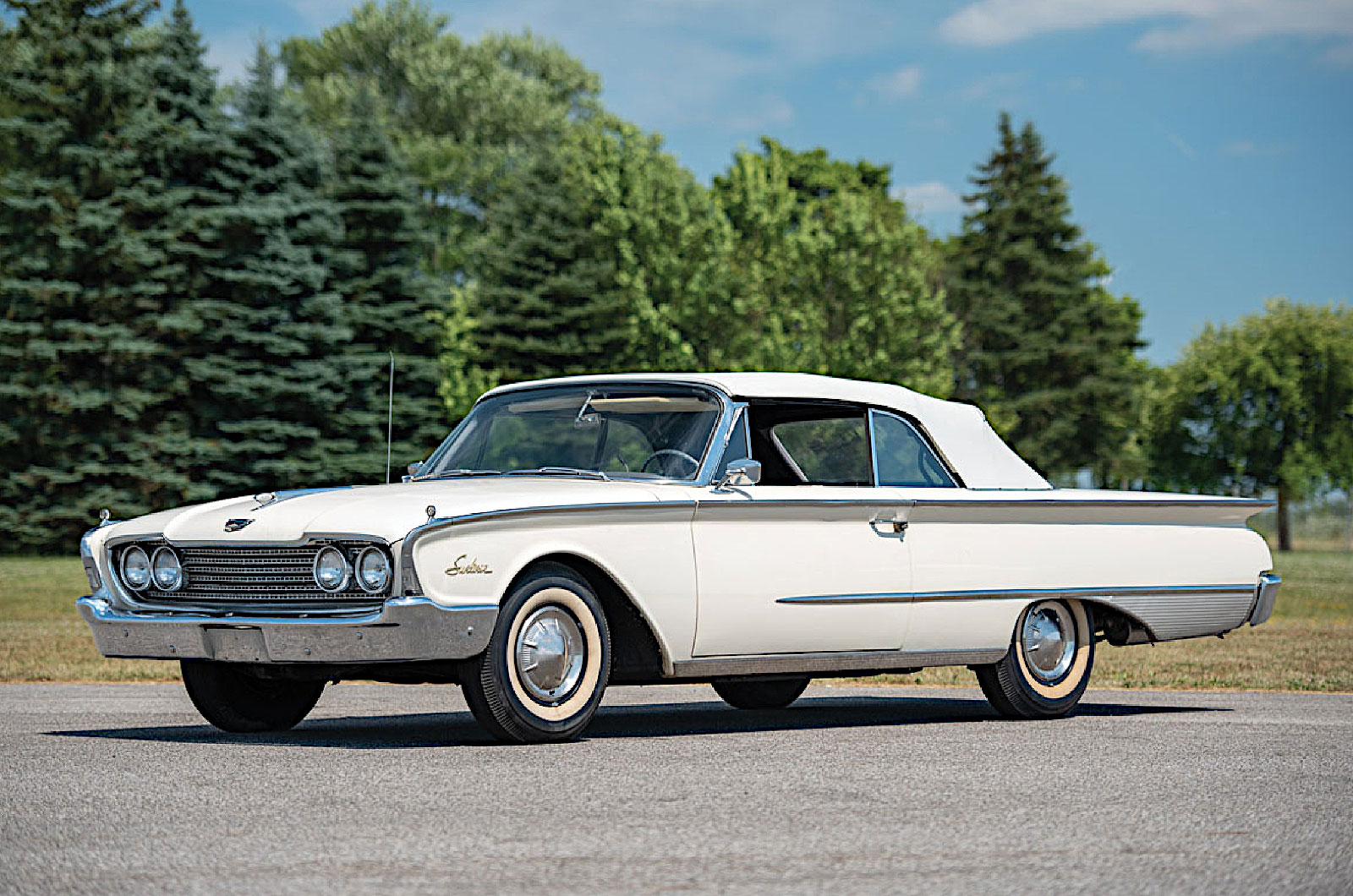
The Galaxie started out as the most expensive car in the 1959 Ford range, and became independent in the following model year. The first-generation Galaxies were available with several engines, the most dramatic being the 7.0-litre FE V8, and despite their lack of presence on the UK market they became popular, and very successful, in British saloon car racing.
The Galaxie name was used for intimidatingly large Fords for a decade and a half before being phased out after the 1974 model year.
Ford Cortina (1962)
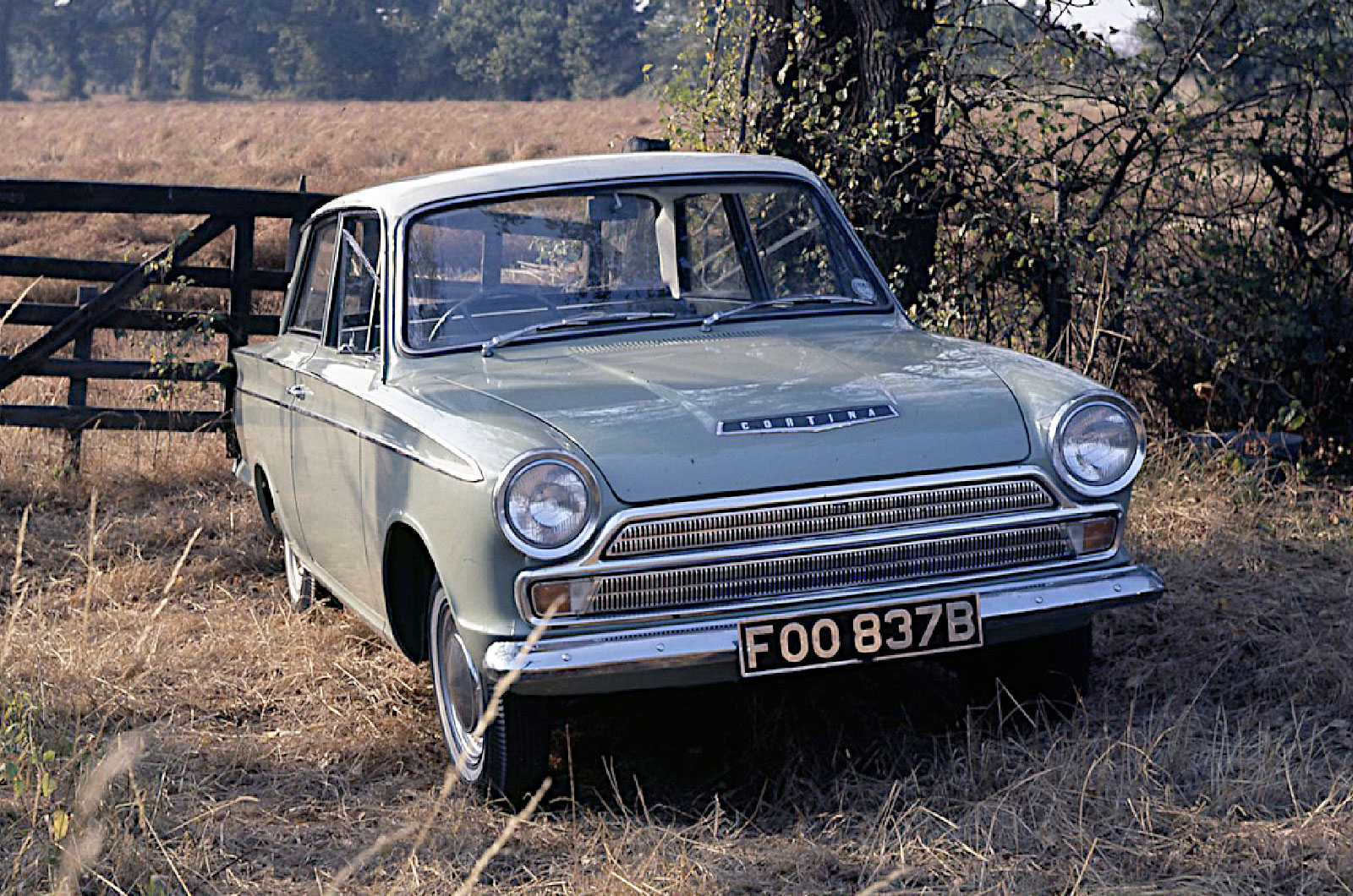
The odd-looking Consul Classic of 1961 was a long way from being Ford of Britain’s finest achievement, but fortunately it was followed almost immediately by the first-generation Cortina, introduced late the following year.
The Cortina was only on the market for four years, but demand was so high that Ford was able to build over a million saloons and estates, all with either 1.2- or 1.5-litre versions of the pre-crossflow Kent engine. Excitingly, the 1.5-litre GT introduced in April 1963 had an output of 78bhp, but it wasn’t the most powerful Cortina for long.
Lotus Cortina (1963)
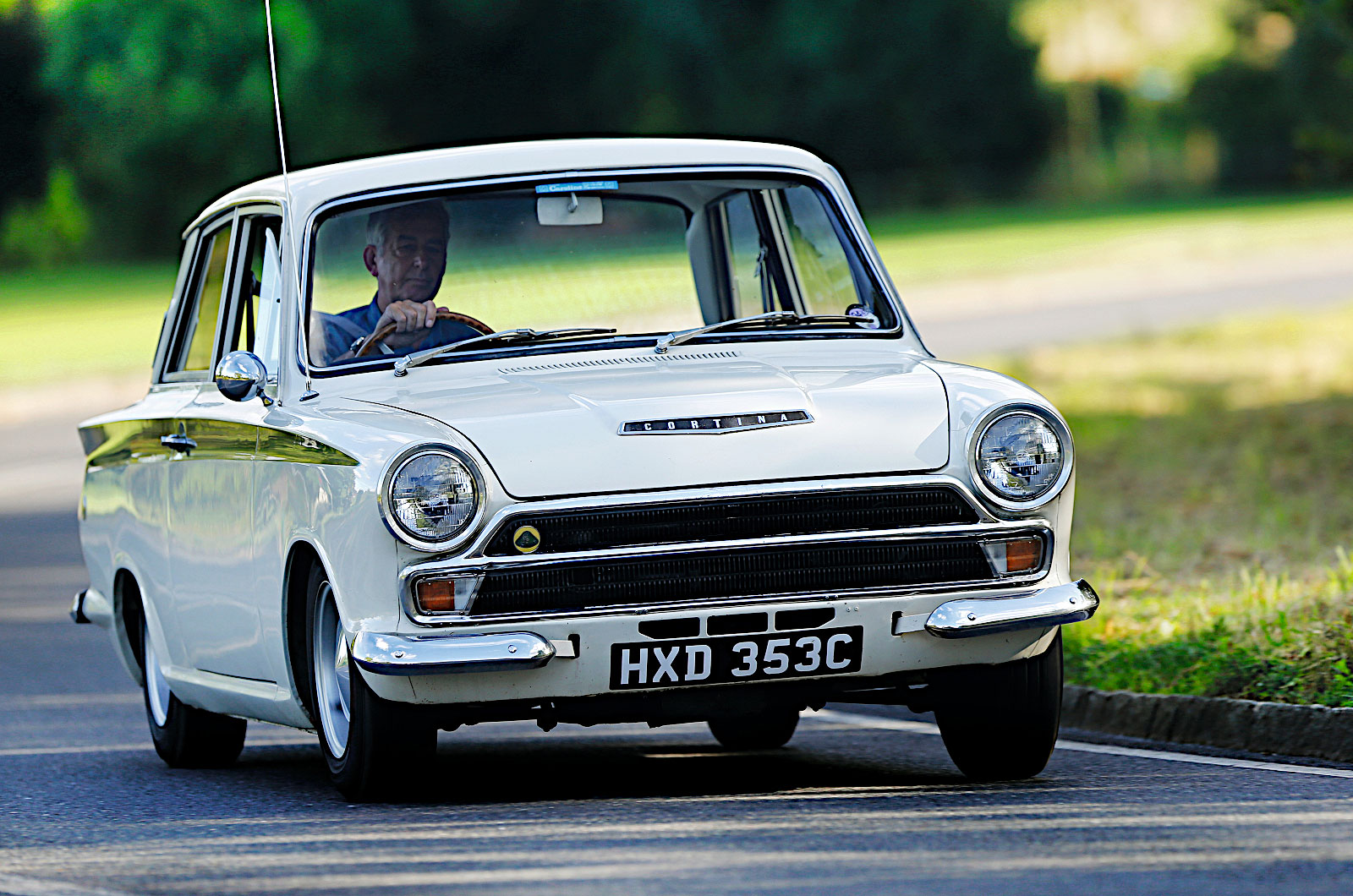
Launched only a few months after the base model, the Lotus Cortina immediately became the most desirable of them all. As its name suggested, it was developed by Lotus, and featured that company’s Twin Cam engine, which was essentially a 1.5-litre pre-crossflow Kent with a double overhead camshaft cylinder head and had made its debut just a year before in the Elan.
It still had only two valves per cylinder, which now seems like a missed trick, but it produced an impressive 105bhp in standard form. It also responded very well to tuning, which led to great success in both circuit racing and rallying.
Ford Mustang (1964)
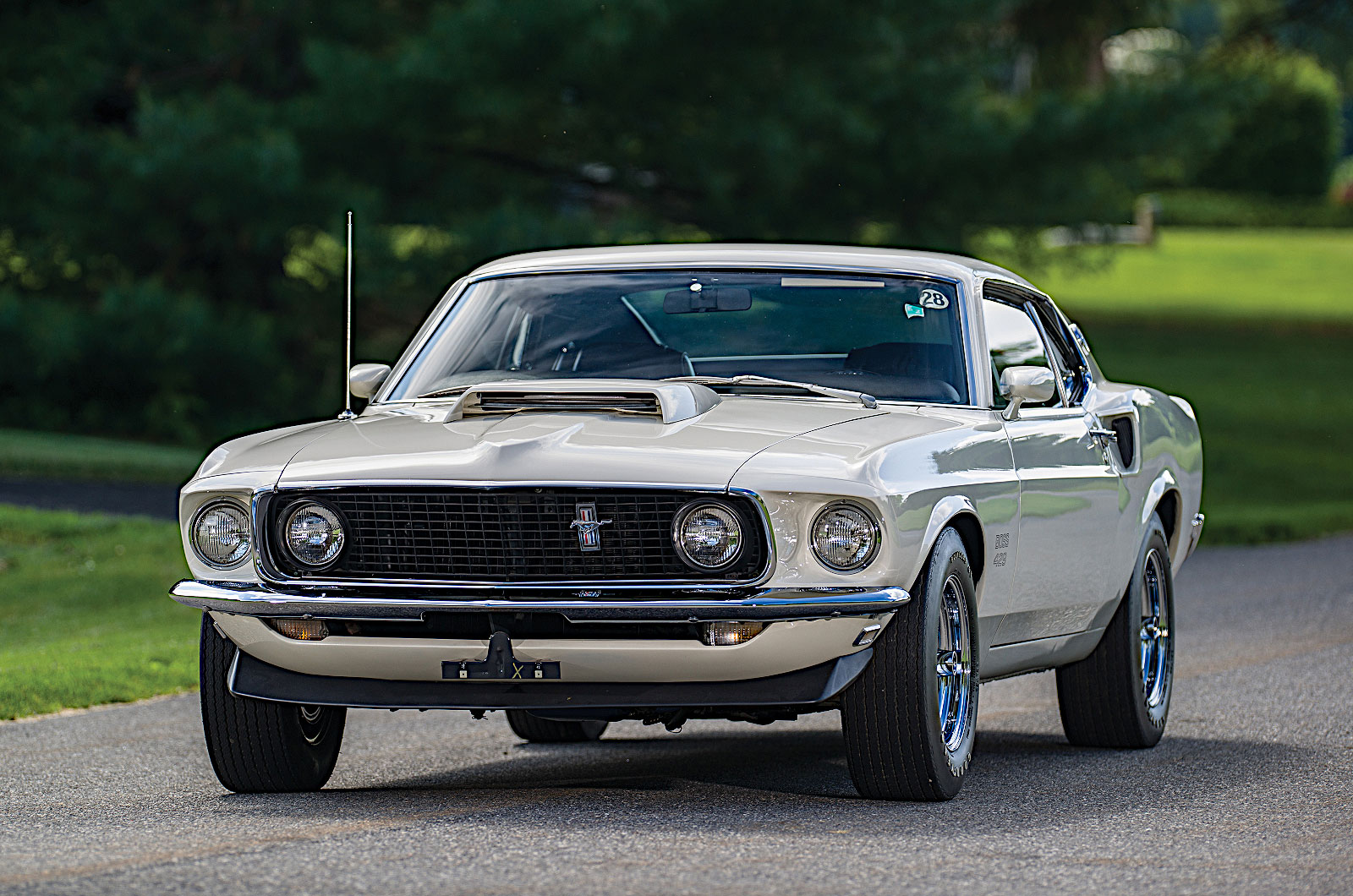
One of several possible definitions of a pony car is that it is a small, high-performance coupe or convertible designed and built in North America. The first of them is generally agreed to be the first-generation Mustang, which made its debut halfway through the 1964 model year – and quickly became a sales phenomenon.
Mustangs of this period could be powered by a straight-six engine, but the favoured unit was a V8. This could be a Windsor or a Cleveland or, for the really powerful models, an FE. The Boss 302 used briefly in 1969 and 1970 was a combination of two of these, consisting of the bottom half of a Windsor with the more free-flowing cylinder heads of the Cleveland (which wasn’t yet in full-scale production at the time) mounted on top.
Ford GT40 (1964)
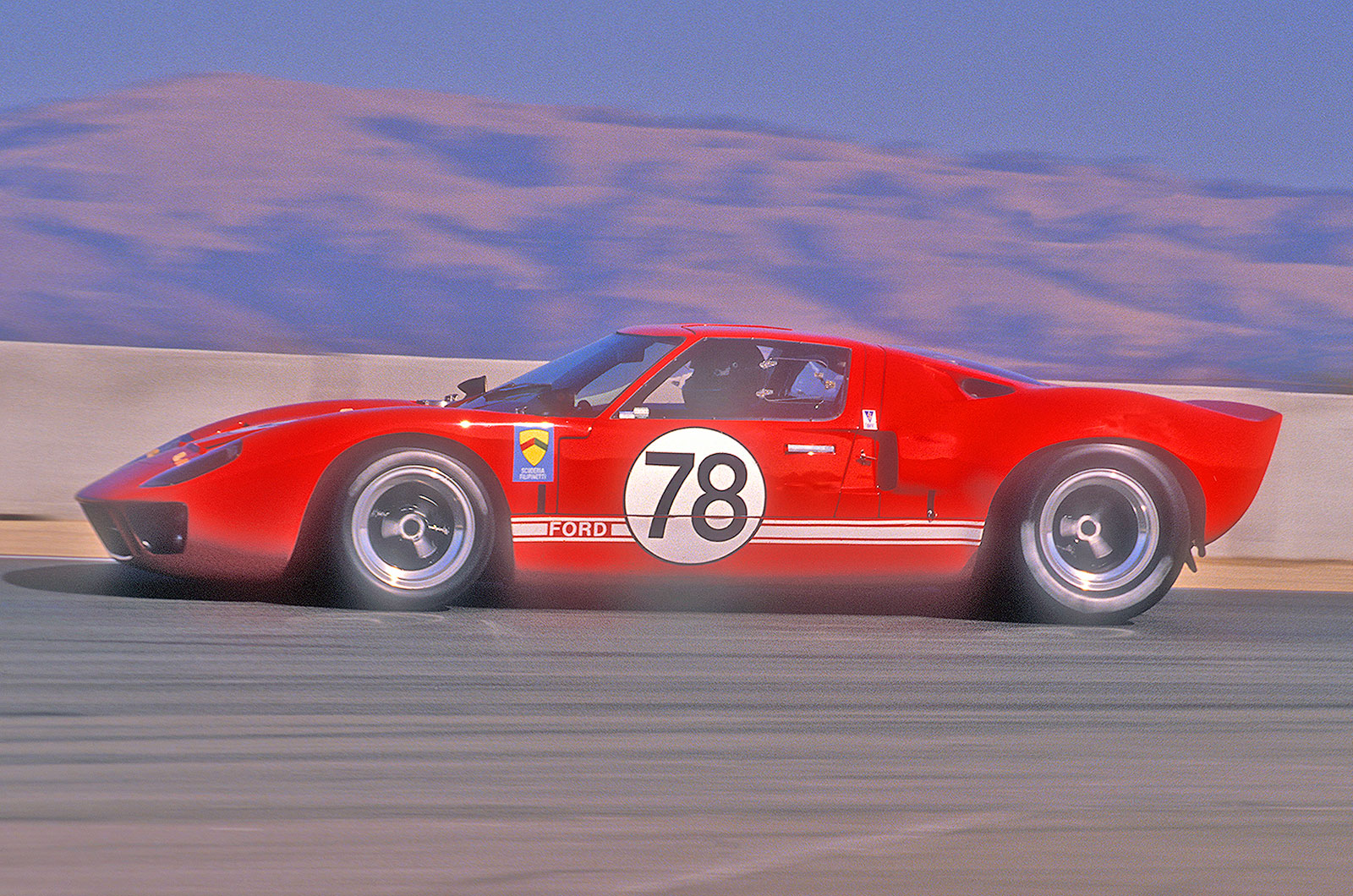
Although it was sold as a road car (an exciting prospect), the GT40’s purpose was to compete successfully – or, in other words, to beat Ferrari – in endurance sports car racing. Powered by a mid-mounted 7.0-litre FE V8 engine, this incredibly low-slung supercar, named after its height in inches, did exactly what it was supposed to, winning the Le Mans 24 Hours in 1966 and 1967.
After that, a new rule was introduced, prohibiting the use of any engine with a capacity of over 5.0 litres. Ford responded by switching to the 4.9-litre Windsor V8, and won at Le Mans again in 1968 and 1969.
Ford Bronco (1965)
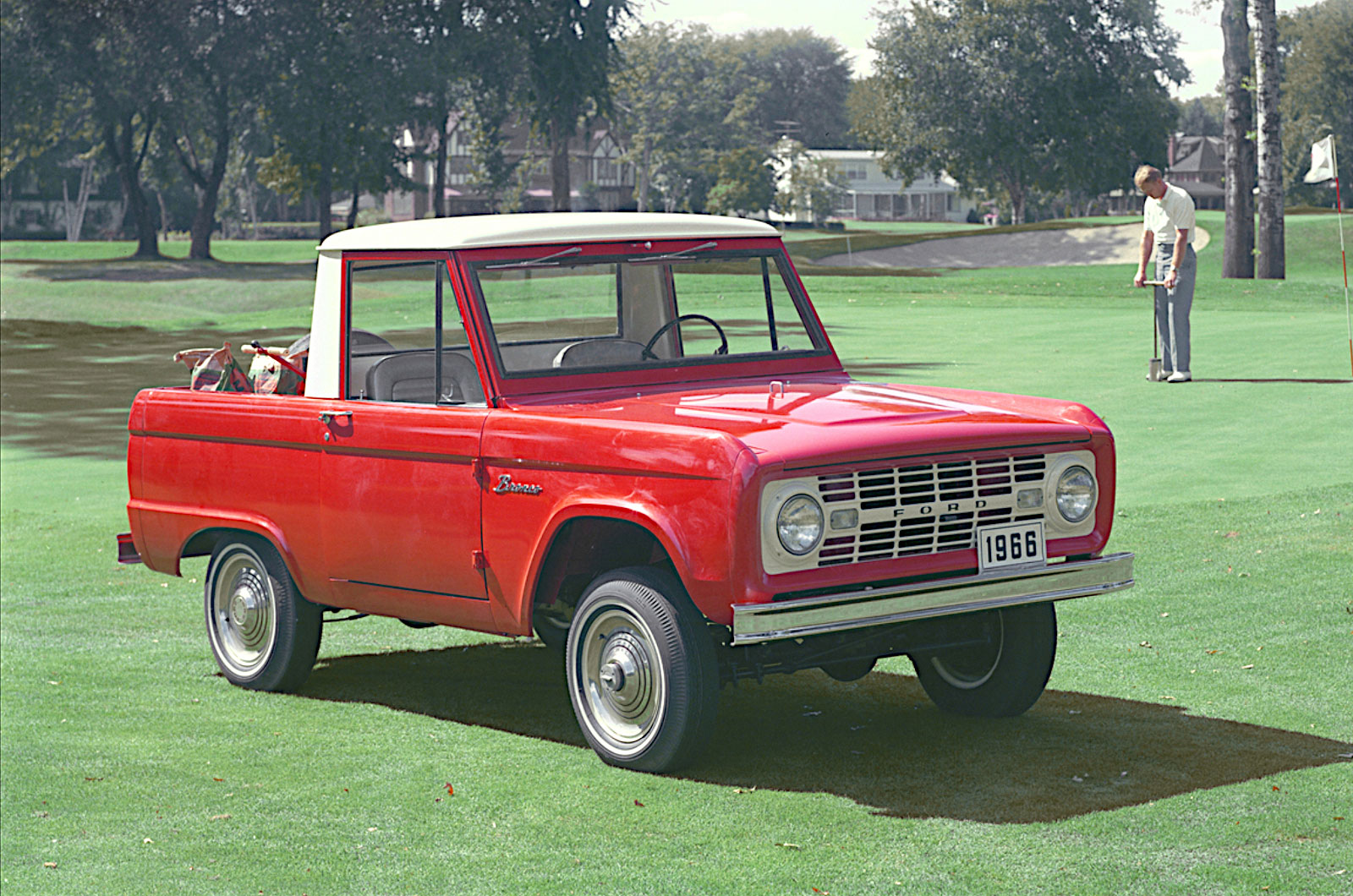
The Bronco was Ford’s first SUV, and was also available as a pickup truck and, briefly, as a roadster. To begin with, the only power source was a straight-six, but a V8 was soon added to the range. Sales peaked at just short of 26,000 in 1974, but quickly faded after that in the face of increasing competition from other manufacturers, and a much larger Bronco took the place of the original model in 1977.
Despite this, the original Bronco had nestled into the affections of North American motorists. A sixth version introduced in 2021, a quarter of a century after the demise of the fifth, was deliberately made to resemble its most distant ancestor.
Ford Transit (1965)
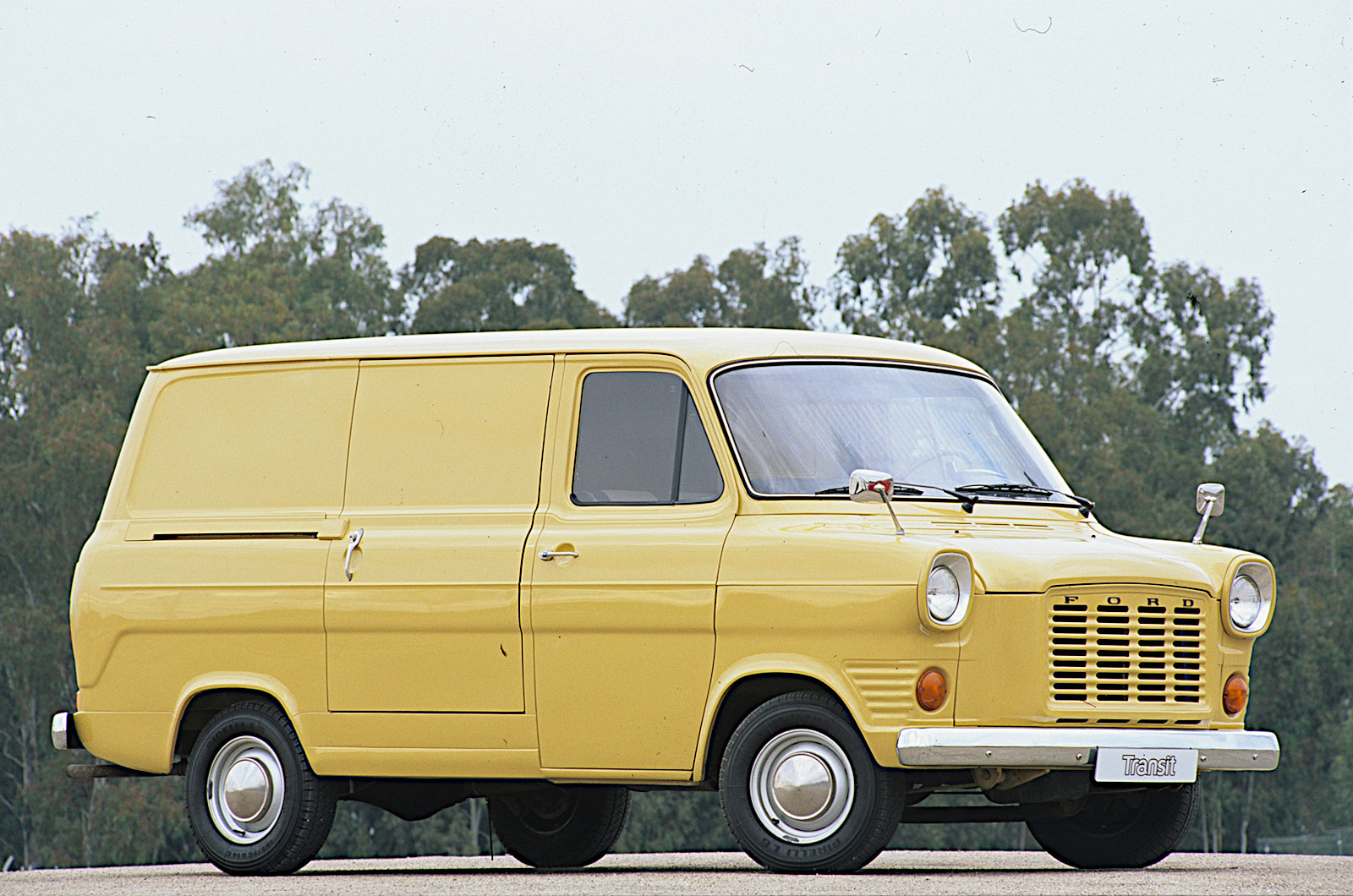
The Transit name was first used for a commercial vehicle developed by Ford of Germany and launched in the mid 1950s, but it’s generally accepted that the current line dates back to the British version which made its debut in October 1965. The most common engine type was a V4, which was so short and fitted so snugly under the bonnet that Transits with inline-four or V6 engines required nose extensions.
A 1977 facelift included a longer nose which could accommodate any engine Ford considered appropriate. While this is sometimes referred to as the Transit Mark II, a completely new model was not considered necessary until 1986, more than two decades after the launch of the original.
Ford Escort (1968)
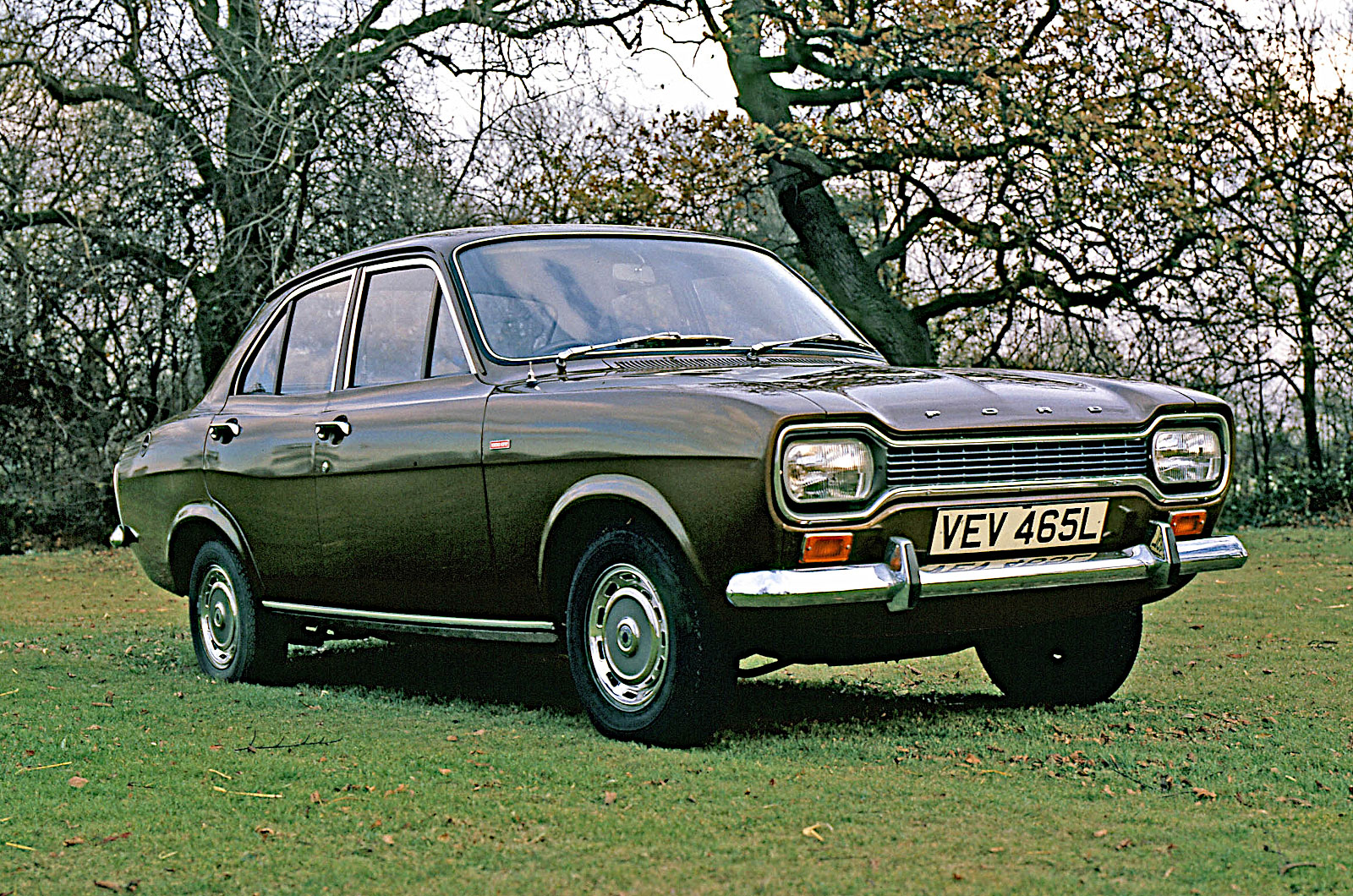
The last Anglia was replaced by what is generally regarded as the first Escort (if you conveniently forget a not particularly successful estate car produced from 1955 to 1961). Unlike the car it followed, the Escort didn’t have a reverse-rake rear window, but it was appropriately smart and modern-looking for its time.
Available as a saloon, an estate and a van, it was mostly powered by the Kent engine (now with a crossflow cylinder head), but the Twin Cam had the Lotus-developed unit of the same name and the RS2000 used a 2.0-litre Pinto. Both were used to great effect in motorsport, though an even more potent engine would soon put them firmly in the shade.
Ford Corcel (1968)
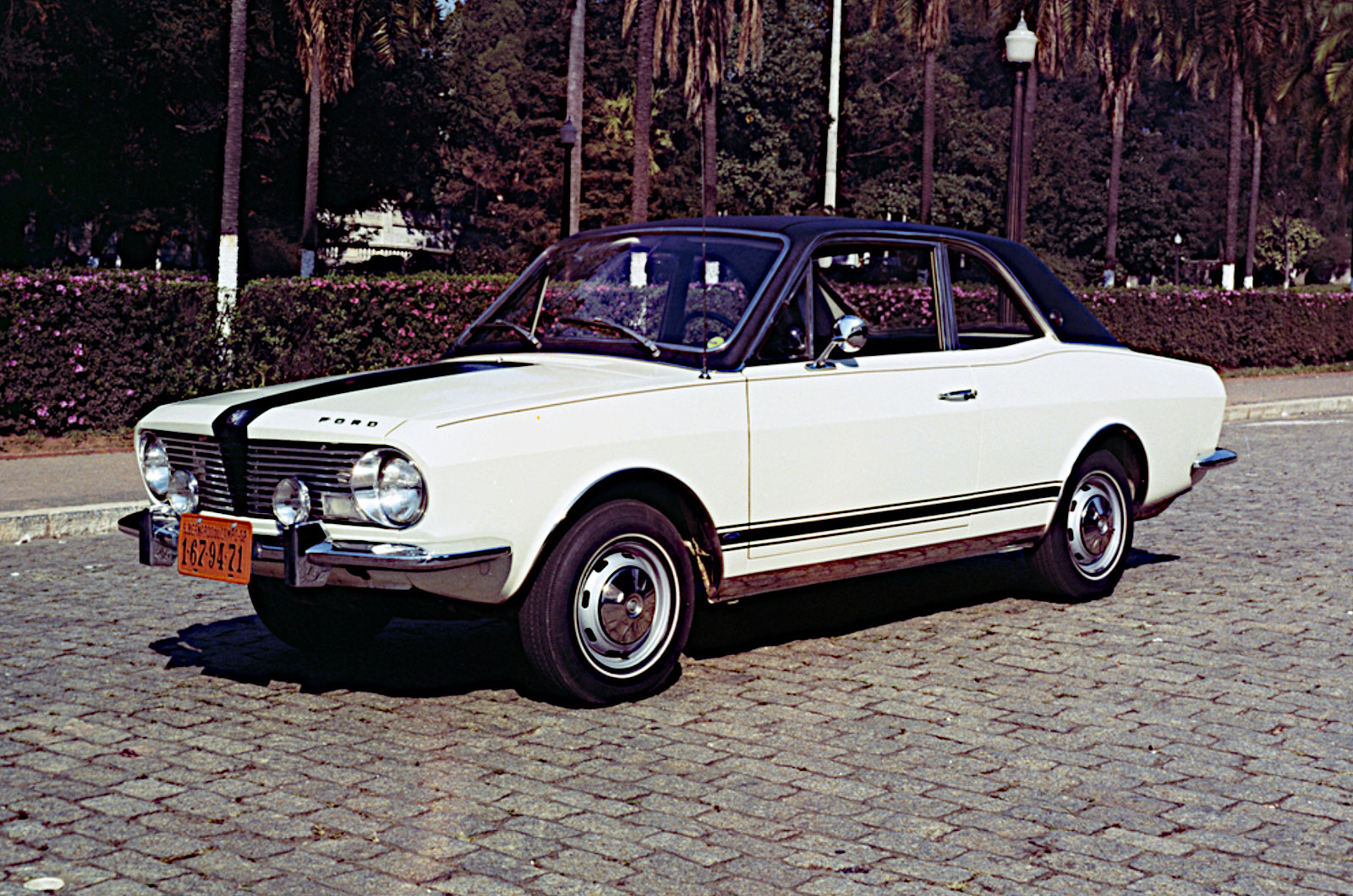
Ford of Brazil inherited the Corcel project as a result of buying Willys-Overland’s local operation. In the 1960s, Willys built Renaults in the region, and had developed what became the Corcel using the technology of the Renault 12, which was not yet on sale anywhere in the world.
Although Ford did not create the Corcel, it did develop it during its production life, and almost completely redesigned it in 1977. Thanks to Ford’s efforts, the car remained on the market for nearly two decades, finally being discontinued in 1986.
Ford Capri (1969)
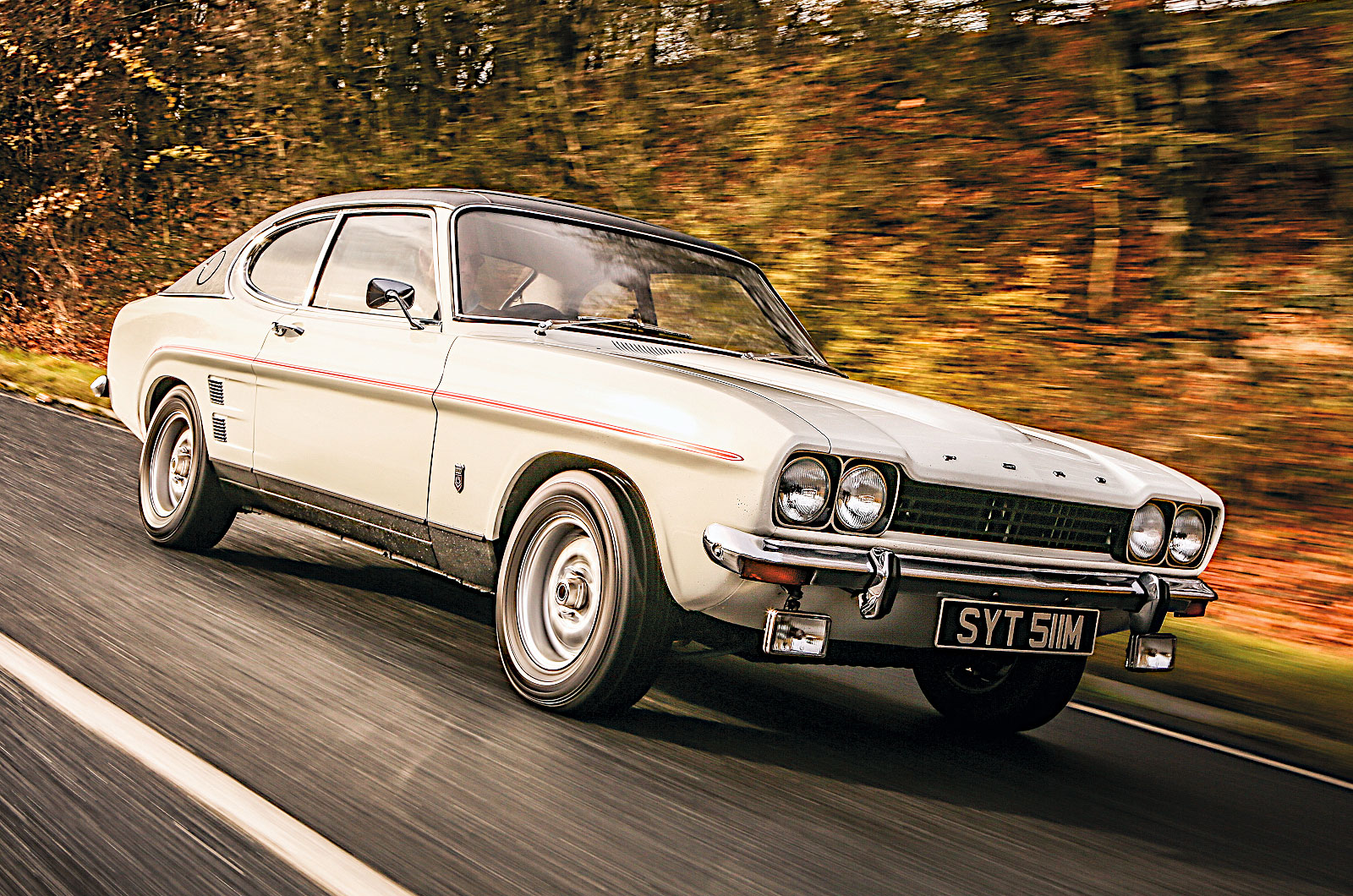
‘The car you always promised yourself’, as Ford called it, looked more exciting than it really was in most cases. Under the skin, it was basically a second-generation Cortina, but the exciting coupe bodywork made it seem like rather more than that.
Ford offered a tremendous variety of engines, from the 1.3-litre Kent to the 3.0-litre Essex V6. South African customers who wanted even more performance than the Essex could provide had the extra option of the Capri Perana, which was developed by Basil Green Motors of Johannesburg and used the 5.0-litre Windsor V8.
Ford Torino Talladega (1969)
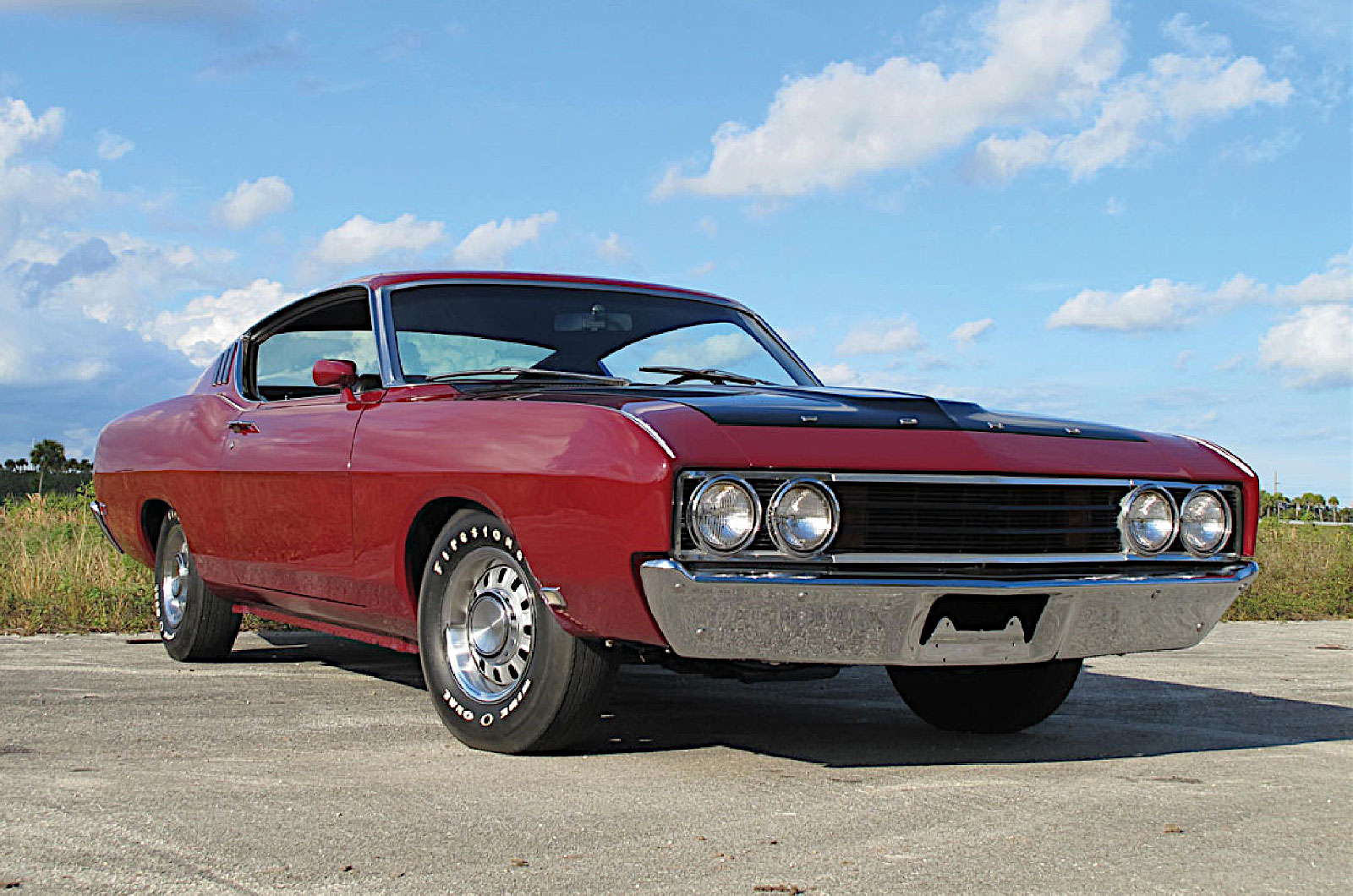
The Torino Talladega was a very short-lived derivative of the Torino muscle car, produced only in early 1969. It was based on the SportsRoof fastback bodyshell, which had the most efficient rear-end aerodynamics in the range. Ford created a special nose for it to reduce aerodynamic drag still further.
The whole point of the exercise was to make the car competitive in NASCAR racing, for which Ford built only just enough examples to qualify. Along with the contemporary – and more or less identical – Mercury Cyclone Spoiler II, the Talladega was one of the four Aero Warriors designed for this purpose. They were extremely effective, so inevitably (because this sort of thing happens a lot in motorsport) they were first hobbled by the authorities and later banned altogether.
Ford Escort RS1600 (1970)
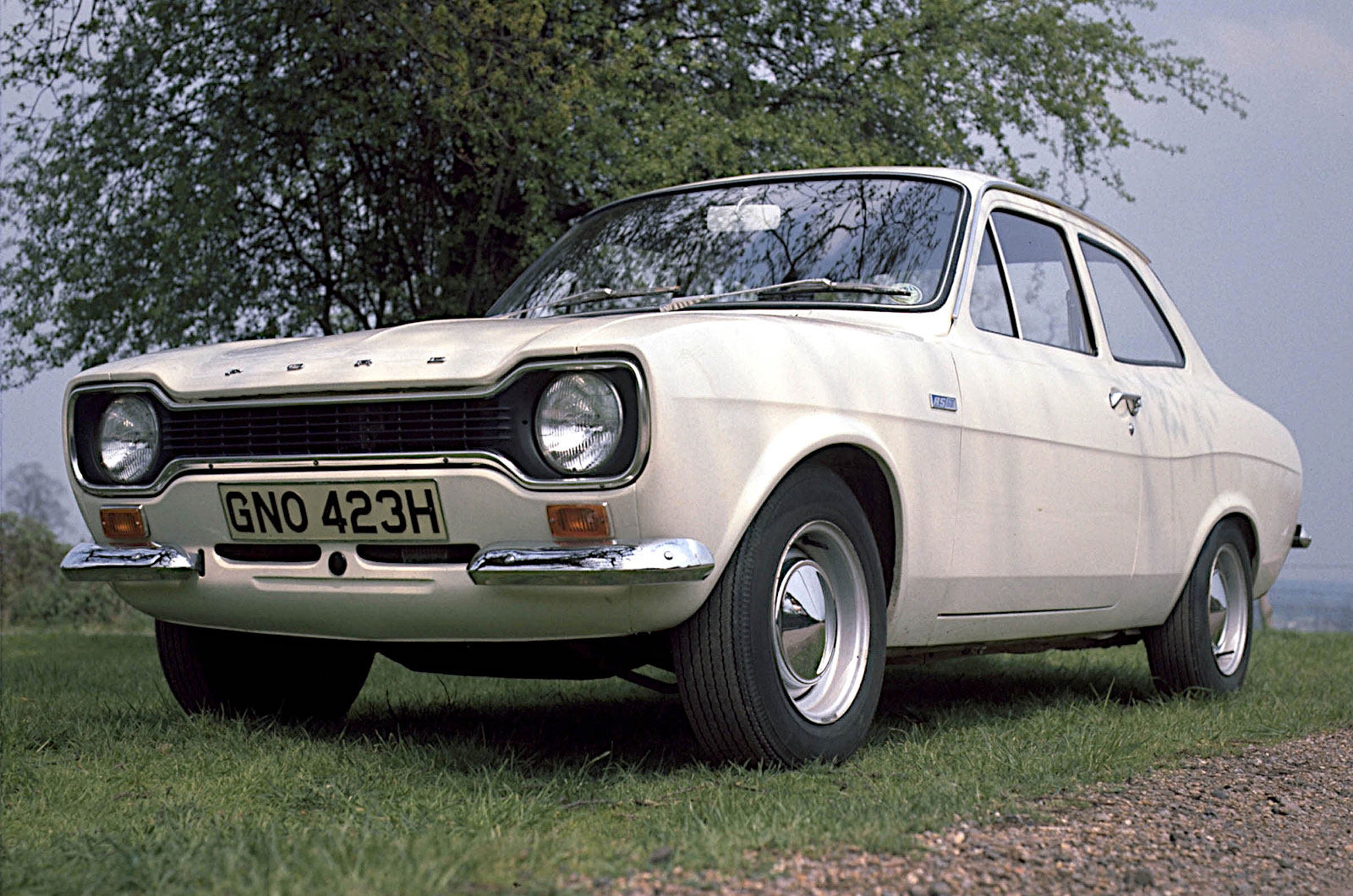
Beyond question, the RS1600 was the ultimate Mk1 Escort. Manufactured by Ford Advanced Vehicles Operation in Essex, it was powered by the Cosworth BDA engine, which in broad terms was the bottom end of a 1.6-litre crossflow Kent with a 16-valve twin overhead cam cylinder head on top.
As standard, the BDA produced 120bhp, but that figure barely hints at its full potential. In modified form, the RS1600 became Ford’s mainstay in rallying, and was also exceptionally successful in circuit racing.
Ford Granada (1972)
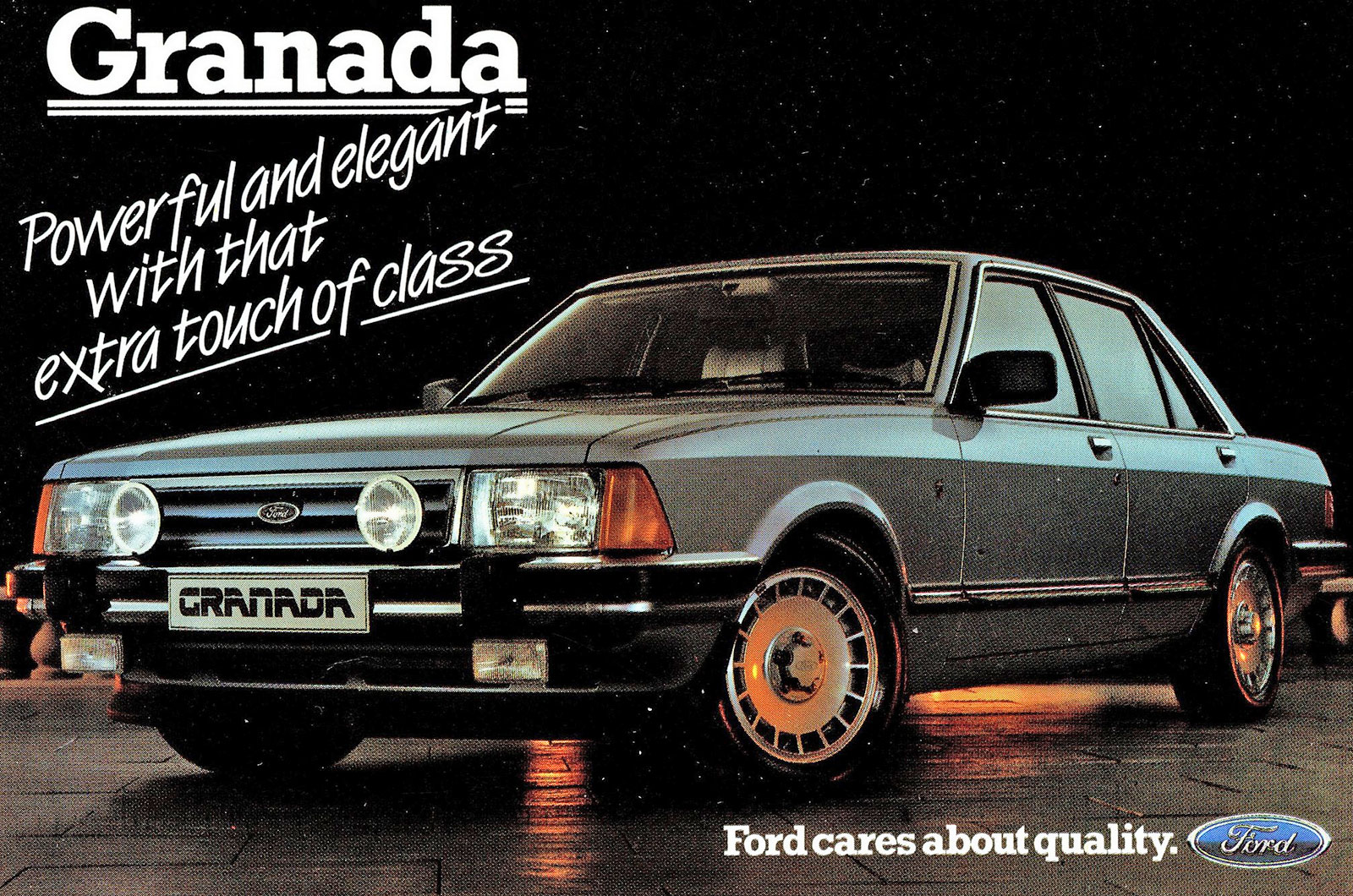
The (European) Granada Mk1 arrived in 1972, and this muscular machine was offered with the usual array of engine options, including Essex V6s in 2.5- and 3.0-litre guises, later replaced by more powerful Cologne V6s. The model continues for two generations, with a major facelift in 1981, which also birthed the 2.8i Ghia Executive – the car that ruled the company car park, and one that every business person would aspire to in that distant age before German brands owned this space.
Ford Capri RS3100 (1973)
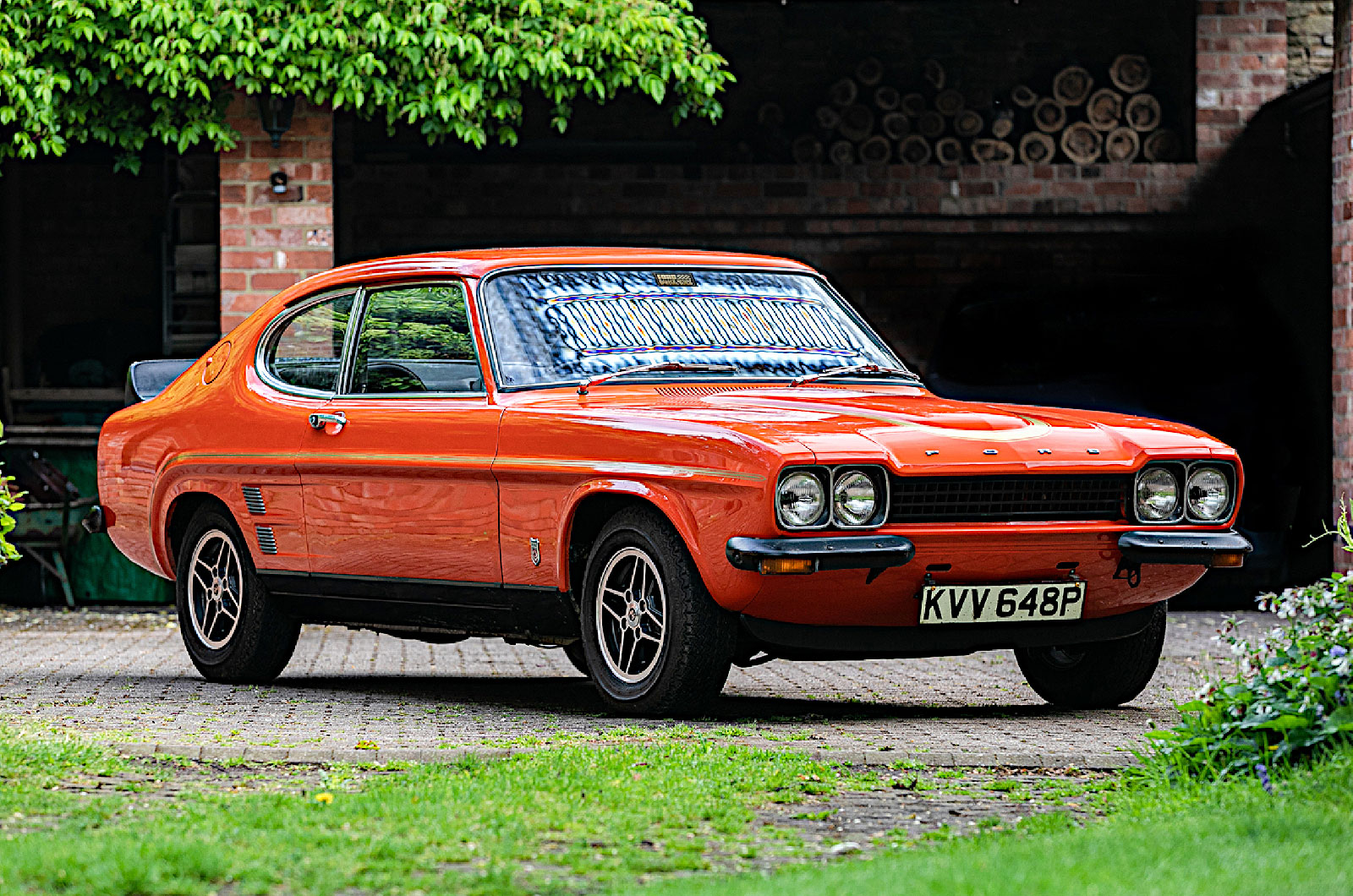
For reasons too complicated to go into here, it was important to Ford’s success in Touring Car racing that it should have a production car whose engine capacity exceeded 3.0 litres. Excluding the 5.0-litre Perana, which didn’t count, the beefiest Capri was powered by the Essex V6, which fell slightly short. Ford got round this by simply increasing the bore slightly, which took the capacity to just under 3.1 litres.
This allowed Ford to fit its racing Capris with the 3.4-litre Cosworth GA engine, which was to the Essex what the BDA was to the Kent. The road-going version, called RS3100, was produced in very small numbers, and is now highly prized as much for its rarity as for its performance.
Ford F-150 (1975)
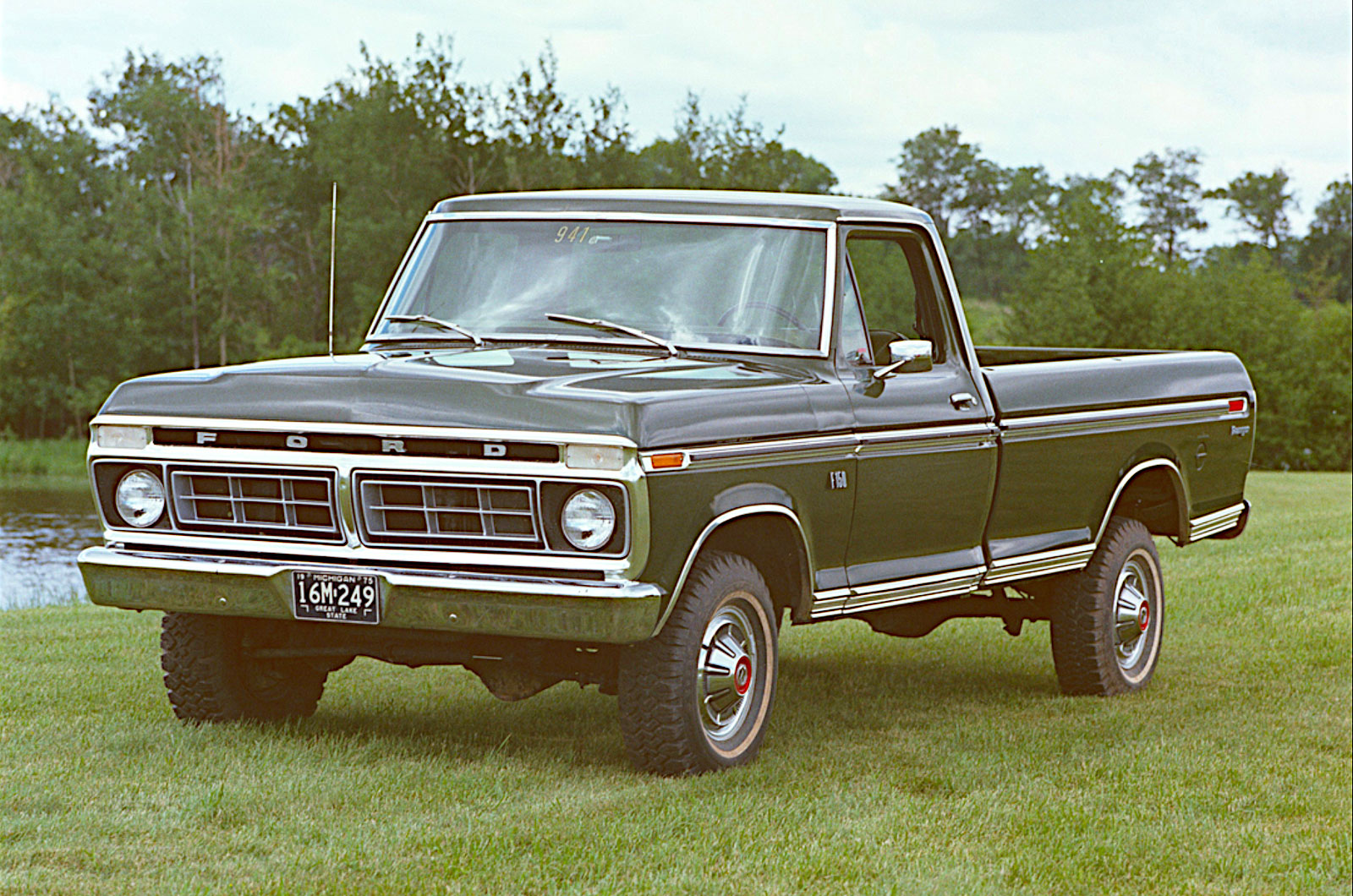
Although the F-Series line began back in 1948, as previously mentioned, the F-150 nameplate used today first appeared in 1975, during the sixth generation. The F-150 of that time was similar to the F-100, but had a slightly higher Gross Vehicle Weight Rating of just over 6000lb (2727kg).
This made it more practical than the F-100. Crucially, it also meant that the F-150 did not need to have a catalytic convertor or run on unleaded petrol. The combination of factors made the F-150 an instant hit, as it has remained ever since, though no longer for the same reasons.
Ford Escort (1975)
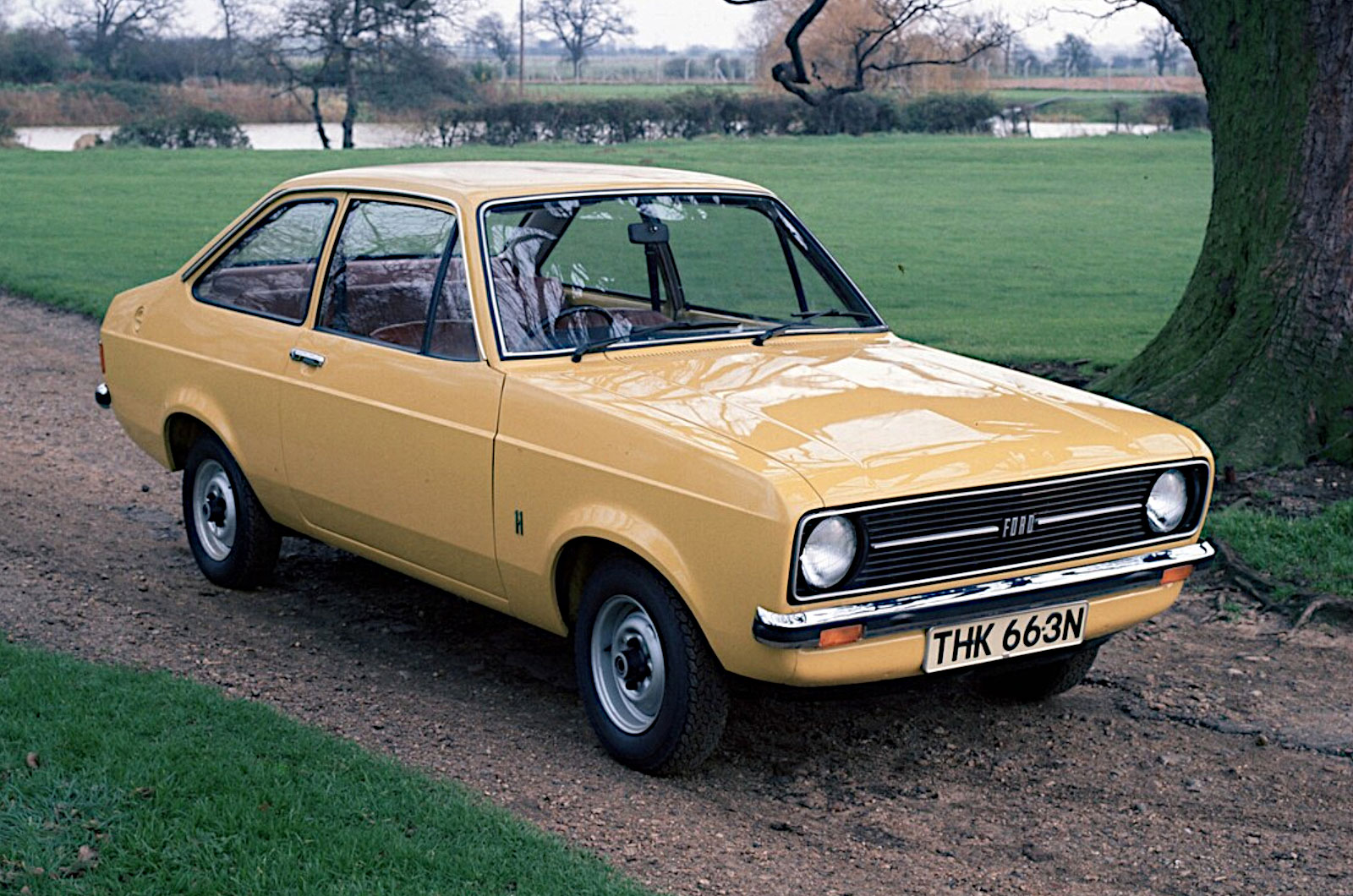
While the original Escort was entirely the work of Ford of Britain, the Mk2 was a joint venture with Ford of Germany. Despite this, there was almost no mechanical difference between the two cars, though the later model looked very different, and had more rear legroom and larger windows.
In 1976, the Escort was the most-registered car in the UK – partly, it has to be said, because the Cortina was in the middle of a transition from Mk3 to Mk4, but still. As with the Mk1, there were mildly sporty versions such as the RS2000 and the Mexico, along with an absolute fire-breather whose story is just a single click away.
Ford Escort RS1800 (1975)
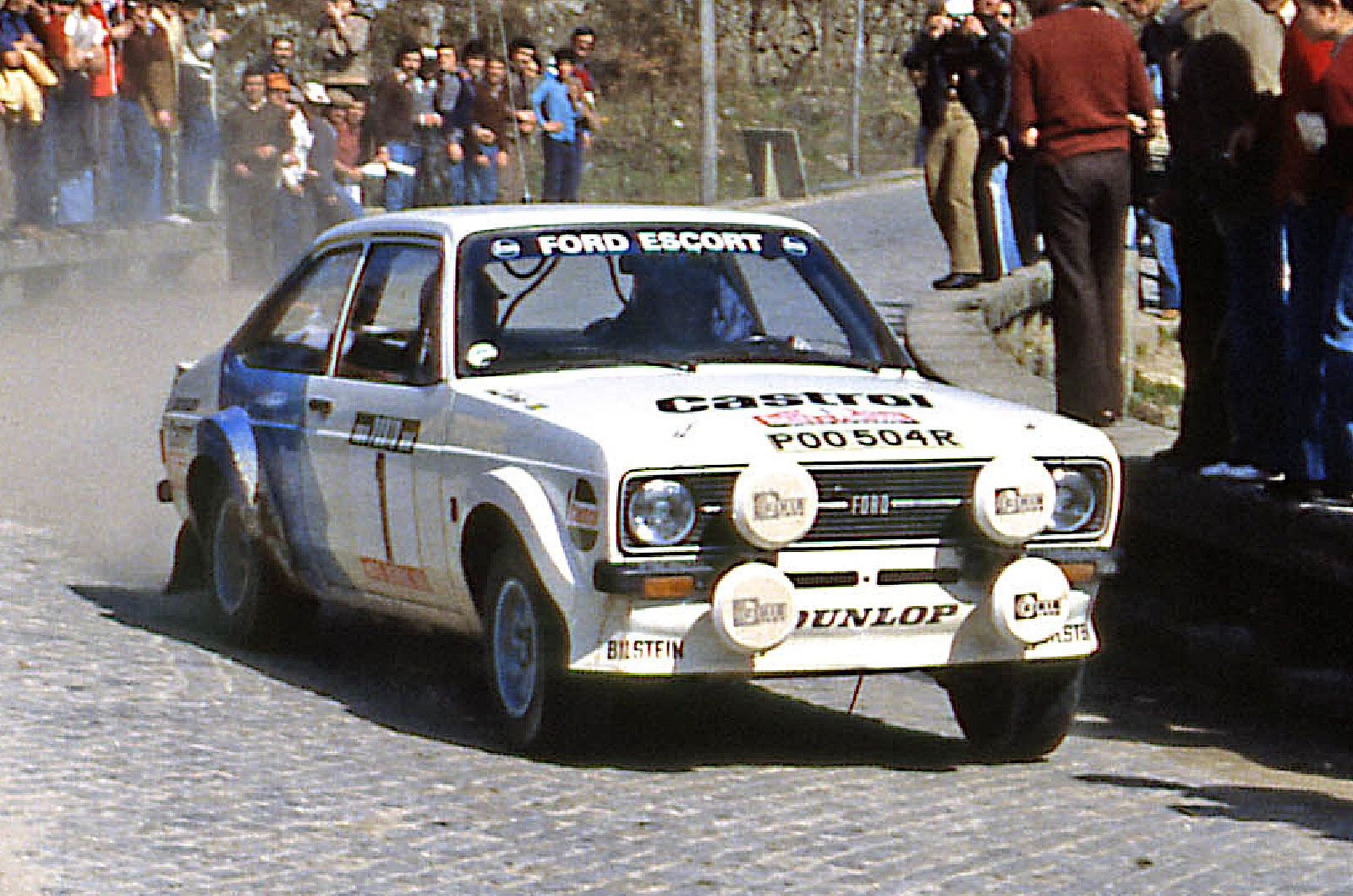
The Mk2 equivalent of the RS1600 had a similar Cosworth BD series engine, this time measuring 1.8 litres in standard form but capable of being taken out to 2.0 litres. The intention, of course, was to maintain Ford’s success in rallying. Sure enough, Björn Waldegård (1943-2014), who won the inaugural World Rally Championship for Drivers in 1979, drove an RS1800 in most of the events that season. Ari Vatanen (born 1952) did the same two years later, after production of the Mk2 had ended.
Nearly half a century after it was introduced, the RS1800 is still regarded as one of the most exciting rally cars ever made. Many examples are competing today, several of them based on brand new bodyshells.
Ford Fiesta (1976)
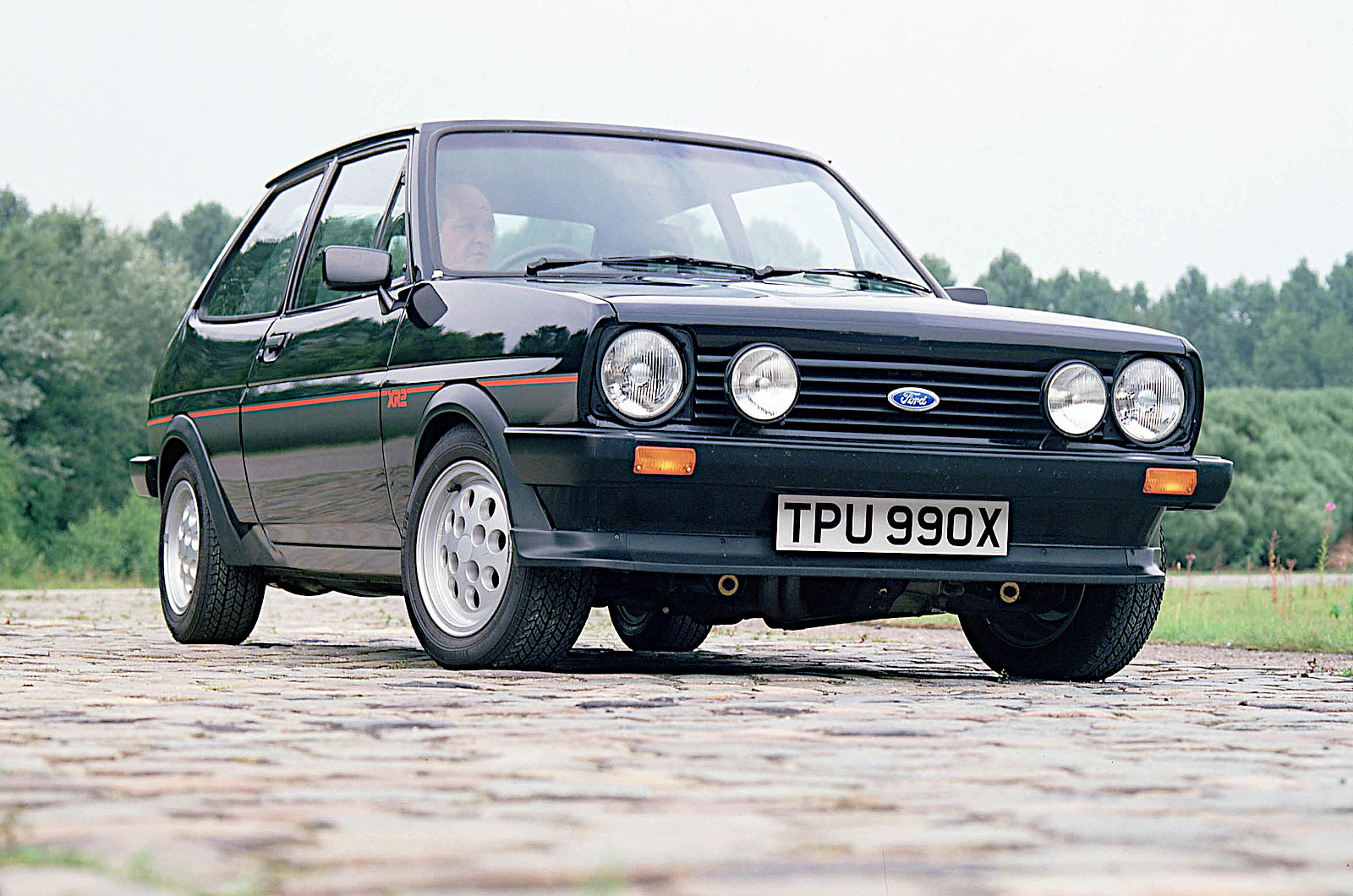
Ford was a late entry into the European supermini class, already populated by the Fiat 127, Renault 5 and such, but the Fiesta was triumphant when it finally arrived. The first Ford with a transversely mounted engine driving the front wheels, it looked fabulous, had a reliable power source, and was efficiently spacious for its size.
The engine, known as Valencia, was actually an adapted Kent, offered initially in 957cc and 1117cc forms, then as a 1.3-litre and eventually, in the XR2 (pictured), as a 1.6. One major consequence of the Fiesta was that generations of young people would first learn to drive on – and inevitably also come to own early in their lives – a Ford.
Ford Ranger (1982)
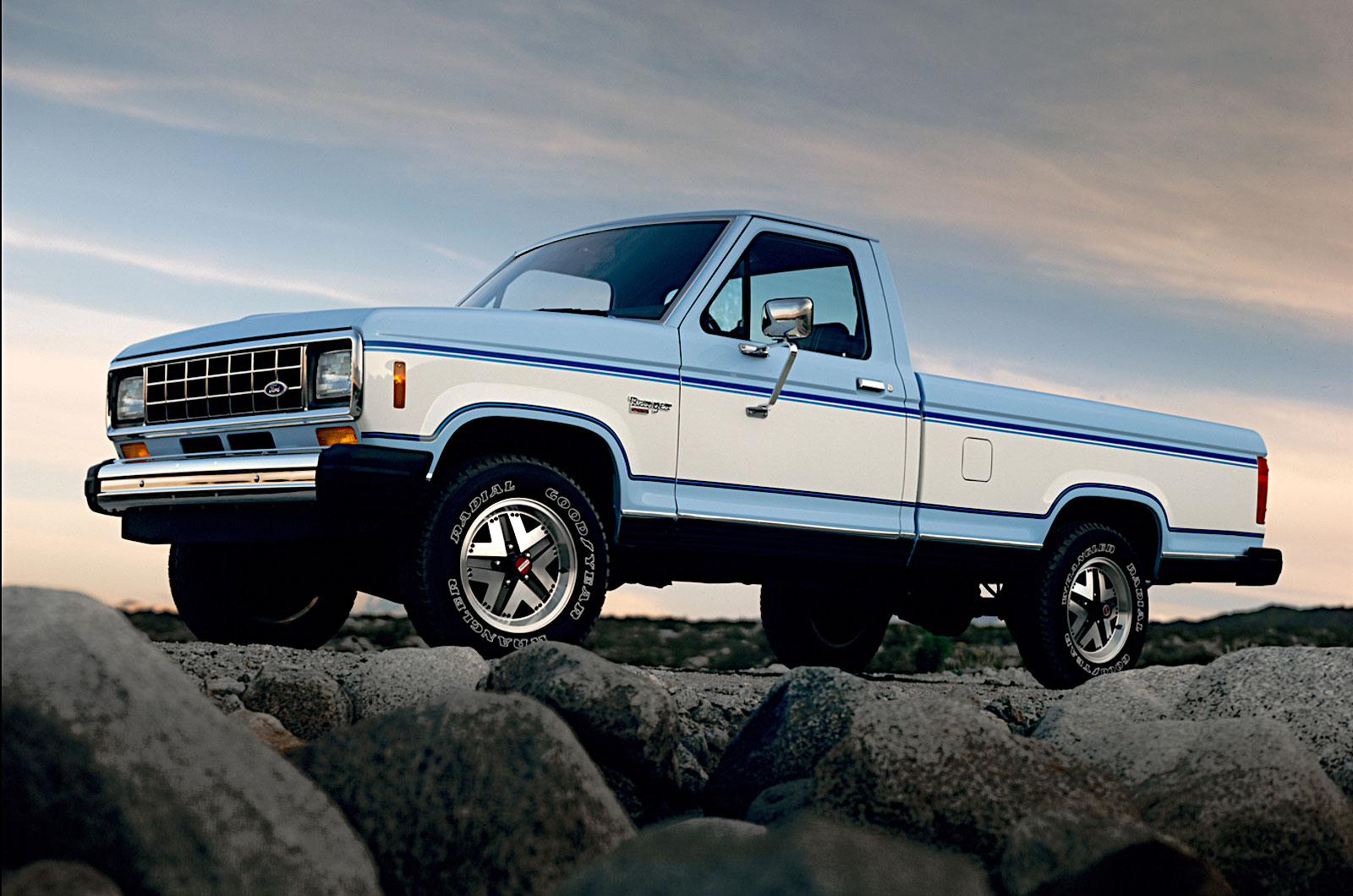
The first Ford-badged compact pickup truck sold in North America was the Courier, which was to all intents and purposes a second-generation Mazda B-Series. While this worked well for both companies, providing extra revenue for Mazda and a straightforward entry into a new market sector for Ford, the latter soon decided it was time to create a small truck of its own.
The resulting first-generation Ranger bore some resemblance to the contemporary F-Series, but it was far smaller. Despite strong competition from the Chevrolet S-10 and its corporate cousin, the GMC S-15, the Ranger was a success, and remained on sale for a full decade before being replaced by a new version which looked very different but was mechanically similar.
Ford Sierra (1982)
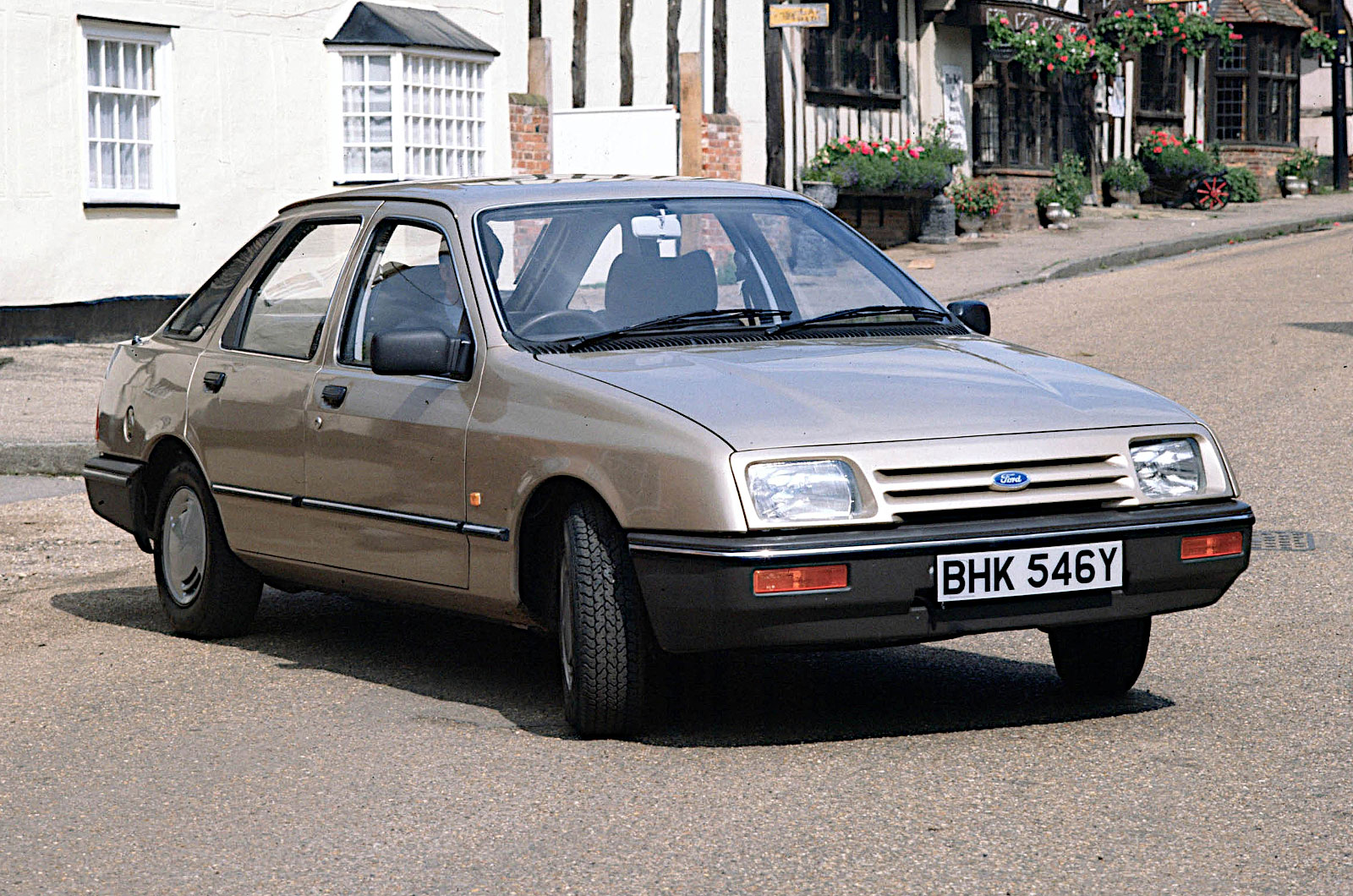
Retaining rear-wheel drive for a medium-sized European family car in the early 1980s did not suggest forward thinking, but the main public objections to the Sierra on its introduction were that it looked (or was said to look) like a jelly mould and it wasn’t called Cortina.
The fuss soon abated, and the Sierra quickly became a common sight on roads across Europe. As usual, the choice of engines was very wide, and you could have a hatchback, an estate or a three-box saloon, though the latter was called Sapphire. There were even four-wheel drive versions.
Ford RS200 (1984)
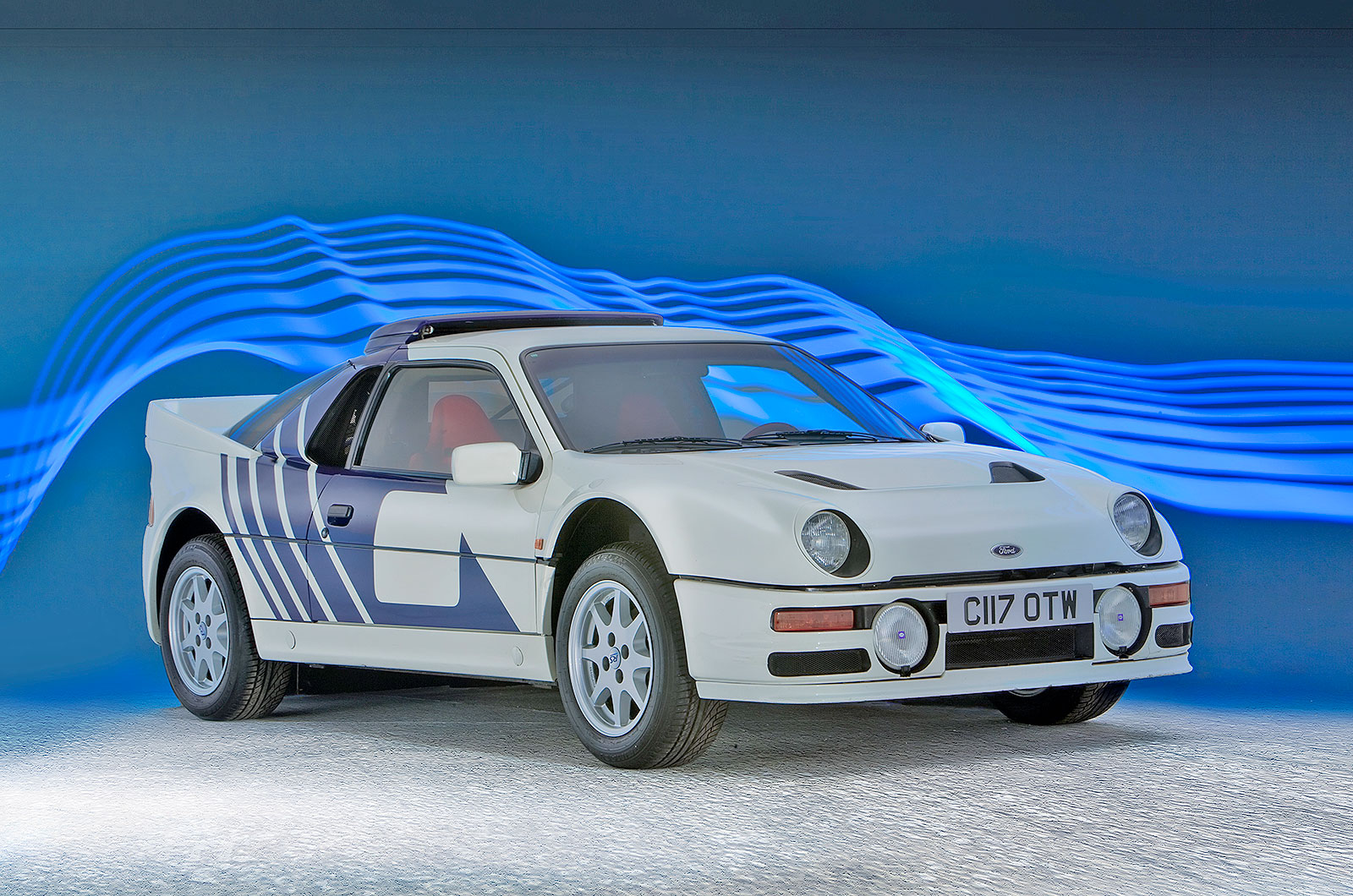
Ford was one of the few rallying manufacturers of the Group B era to take advantage of the fact that a car didn’t have to resemble a mainstream model as long as you built a few hundred examples of it for road use. The mid-engined, fibreglass-bodied RS200 therefore looked nothing like any other Ford model, and was designed from the ground up for competition use.
There’s no doubt that it had a great deal of potential, but it was used in World Championship events only in 1986, achieving a best result of third in Sweden. This should have been a development year, but Group B was cancelled at the end of the season, and so was Ford’s project. RS200s subsequently competed with great success in rallycross and at the Pikes Peak hillclimb, but that wasn’t quite the same thing.
Ford Sierra RS Cosworth (1985)
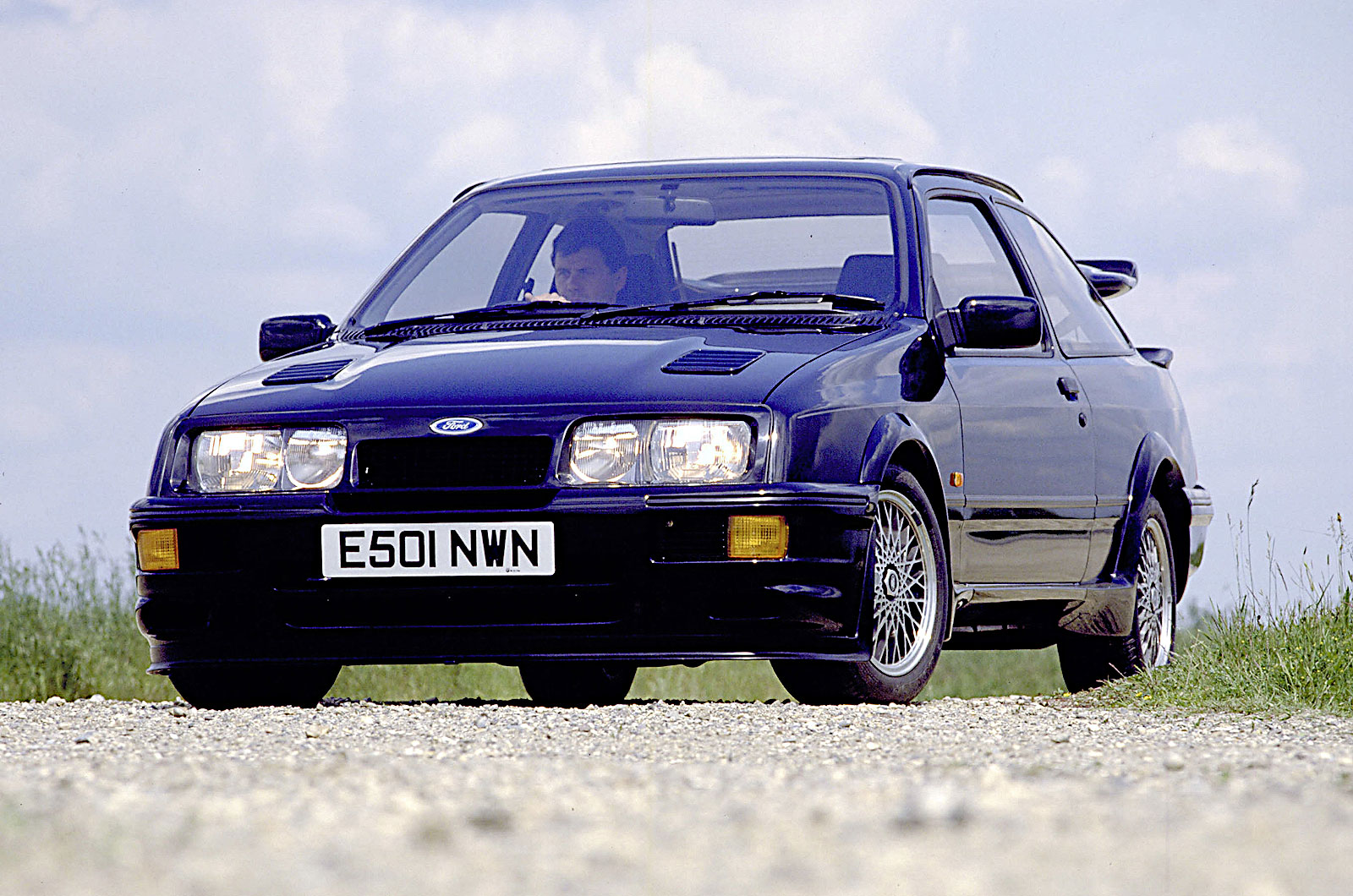
The ‘Cossie’, as it’s affectionately known, had a 2.0-litre engine with a Cosworth twin-cam 16-valve cylinder head and a turbocharger. A later derivative called the RS500 (pictured), launched in 1987, produced roughly the same power in standard form, but could be tuned far higher within international motorsport regulations – figures of over 600bhp were eventually achieved.
RS Cosworths were the dominant cars in Touring Car racing for several years. With the abandonment of Group B, they were also used for rallying with some success, though at world level they were never going to be able to keep up with the four-wheel drive opposition.
Ford Explorer (1990)
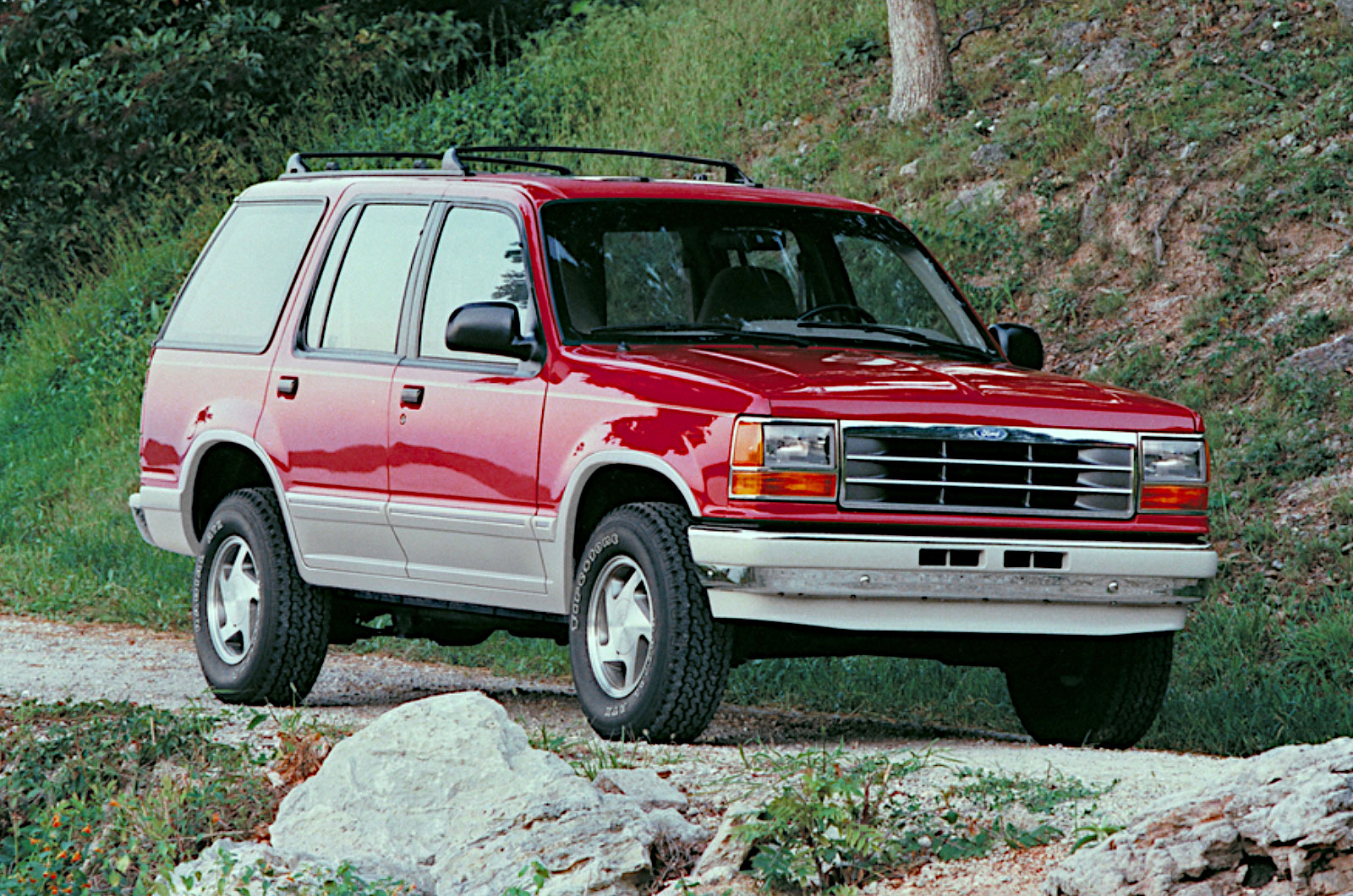
Like the preceding Bronco II, the Explorer was an SUV based on the underpinnings of the first-generation Ranger pickup truck, but it was considerably larger and, unlike the Bronco II, available in five-door as well as three-door form.
Powered only by the 4.0-litre pushrod Cologne V6 engine, the first-generation Explorer had rear-wheel drive as standard, though four-wheel drive was also available. Public enthusiasm was high – the vehicle found well over 200,000 buyers in almost every year before it was replaced in 1995.
Ford Mondeo (1993)
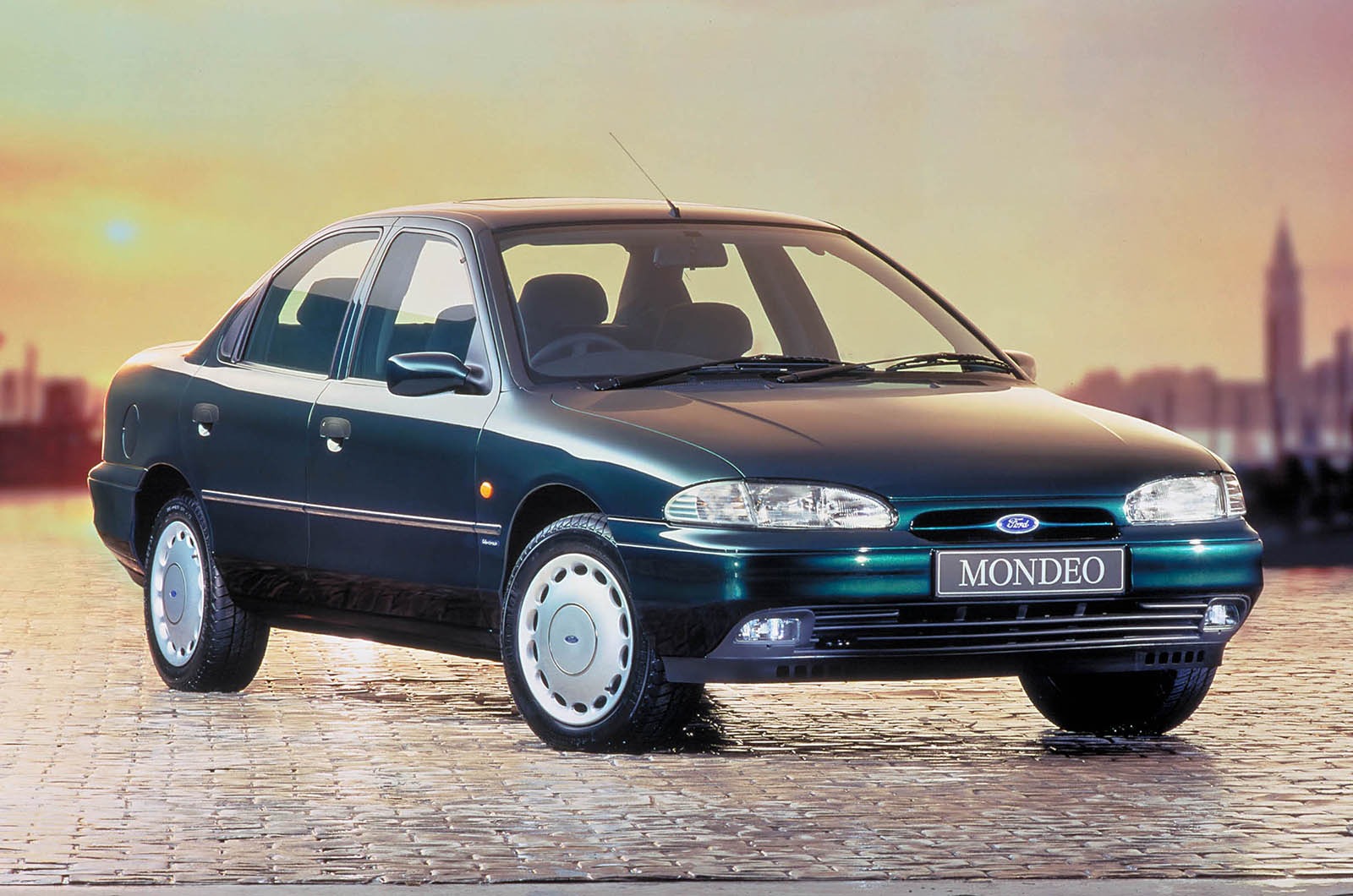
The Mondeo was the first medium-sized European Ford with front-wheel drive. Launched only 11 years after the Sierra, it felt like something from a completely different era, not least because it was an excellent driver’s car even in its most basic form.
Only the third Ford in three decades to win the Europe-based Car of the Year award, it was available as a saloon, a hatchback and an estate, and with engines ranging from a 1.6-litre four-cylinder to a 2.5-litre V6. With a smaller engine line-up and just one body style, the same car was later reworked for North American markets, where it was sold as the Ford Contour and Mercury Mystique.
Ford Galaxy (1995)
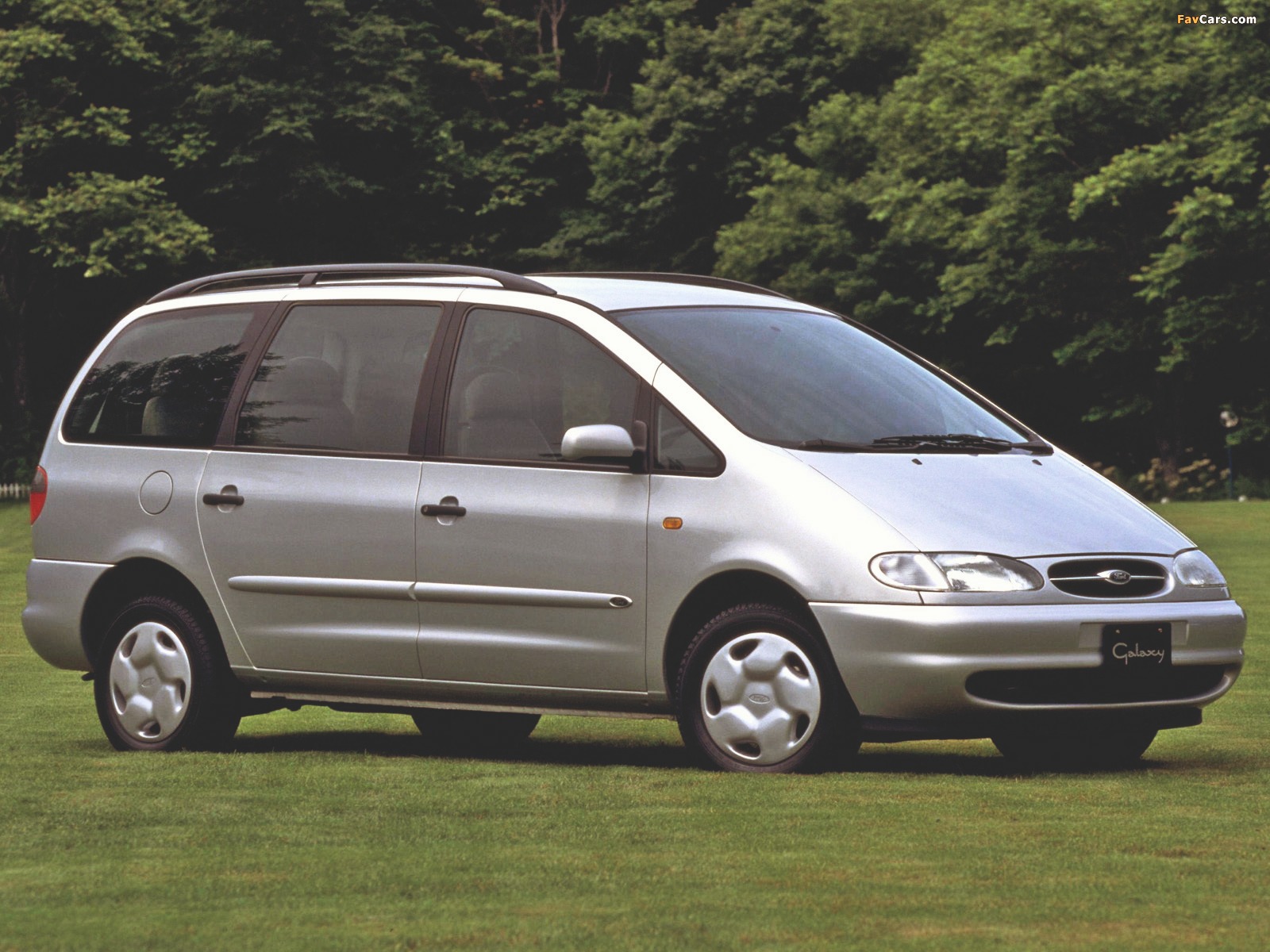
Completely unrelated to the much earlier Galaxie (though the names sounded identical), the Galaxy was, by European standards, a very large MPV. A little like the Corcel, it wasn’t entirely a Ford project, though Ford had more input to the design this time round.
In fact, the Galaxy was a joint venture between Ford and the Volkswagen Group. Essentially the same vehicle was also sold as the VW Sharan and the Seat Alhambra. The tie-up lasted for only one generation – the second Galaxy, launched in 2006, was entirely Ford’s work.
Ford Focus (1998)
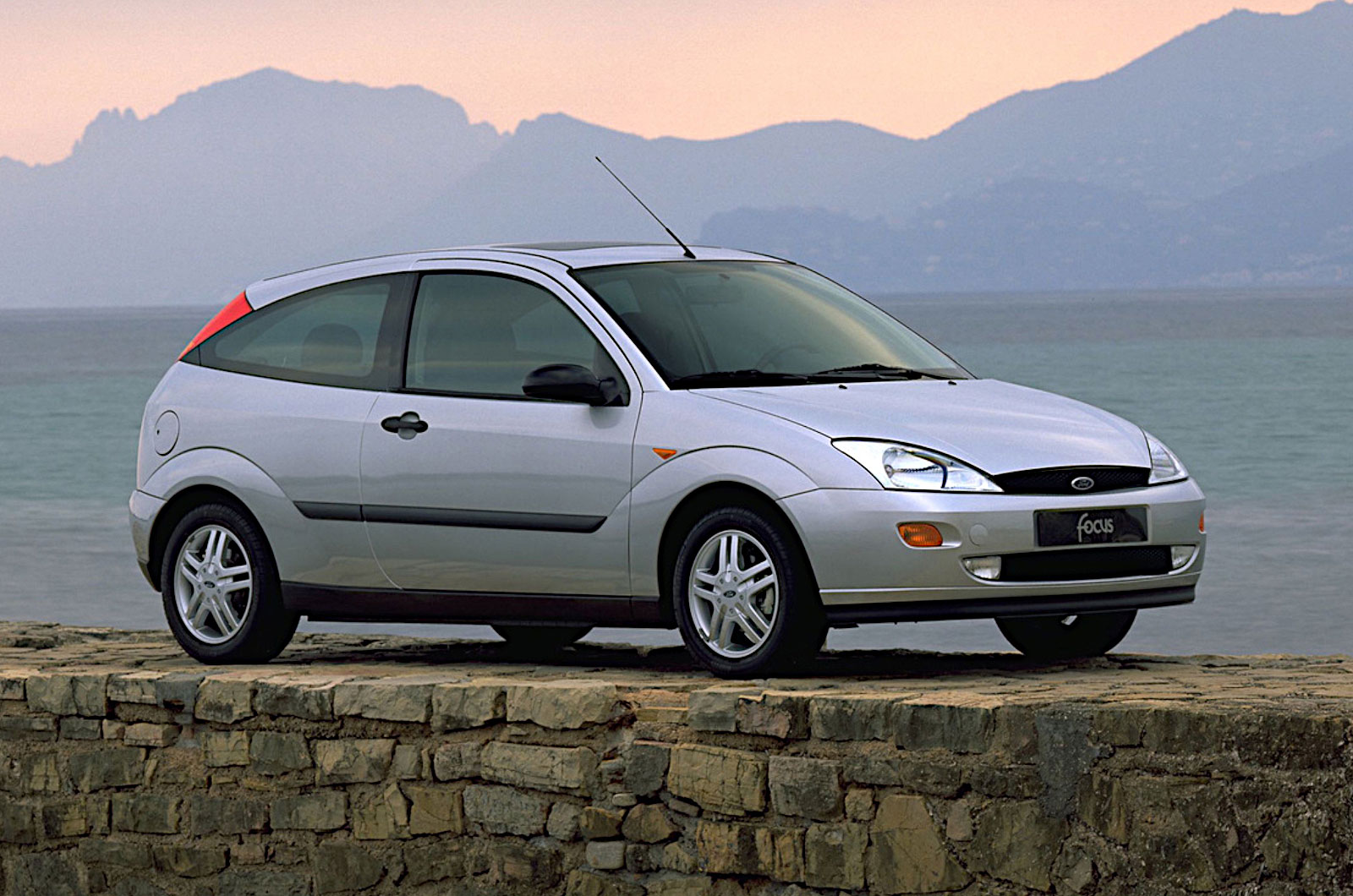
Ever since the adoption of front-wheel drive in 1980, all generations of Escort had been criticised for not being as good as they should be in one way or another. The last version’s 1998 successor, by contrast, was immediately hailed as one of the best medium-sized cars on the market. The New Edge styling was smart and modern, and the clever ‘control blade’ rear suspension was enormously effective.
The Focus was available as a hatchback, an estate and a not particularly pretty saloon. Petrol engines ranged in size from 1.4 to 2.0 litres. The original TDDi 1.8-litre diesel engine was disappointing, so the TDCi which replaced it in 2001 came as a welcome relief.
Ford Focus RS (2001)
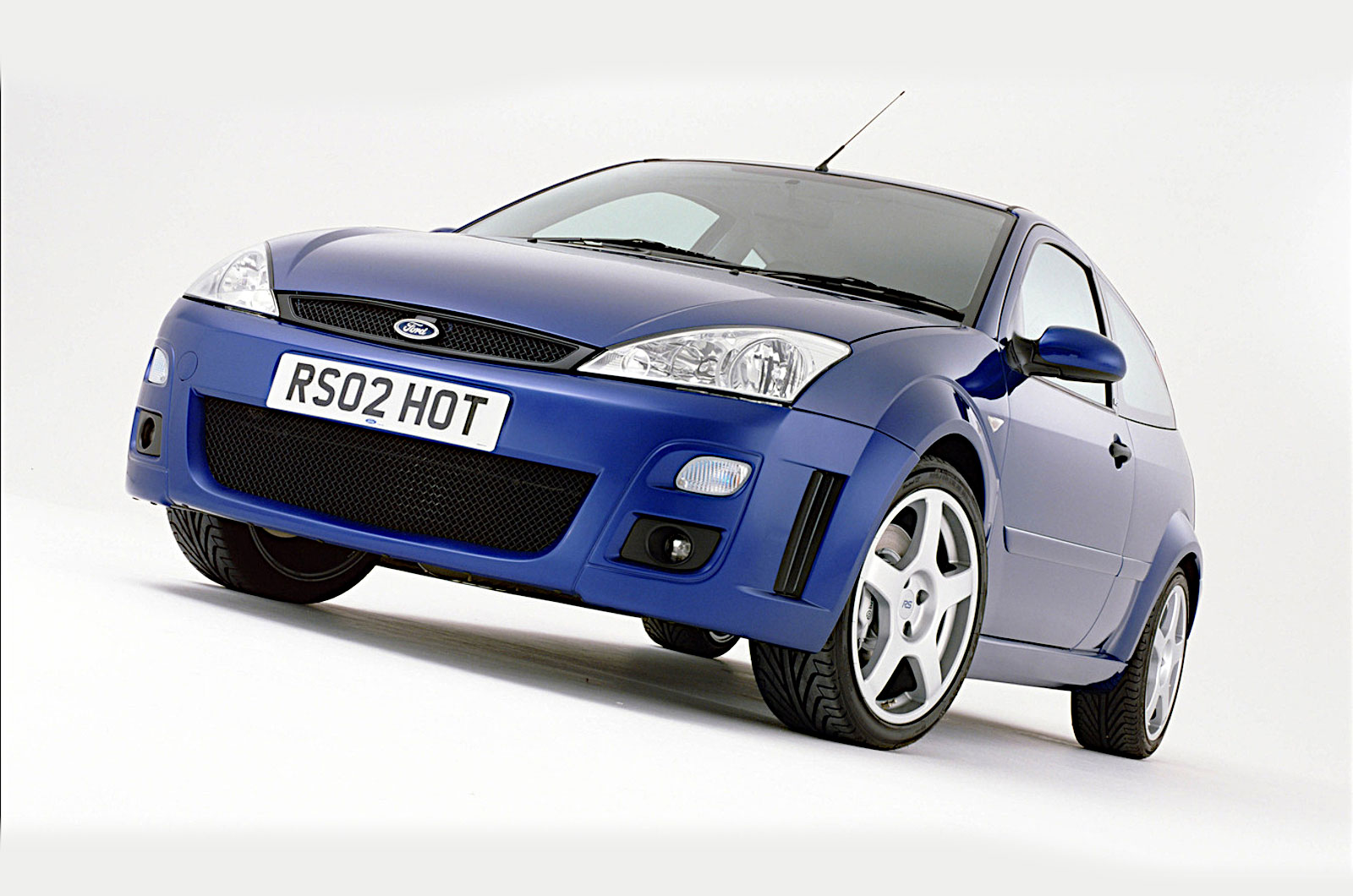
Ford did its best to compare the first Focus RS to its World Rally version, but there was very little connection between the two. Despite that, the RS was a very effective hot hatch, slightly spoiled by torque steer which was blamed – quite wrongly – on the limited slip differential. (The problem was due to the front suspension design, which was revised for the second-generation car.)
A much later Focus RS would have four-wheel drive, but this one didn’t. A journalist who asked why this was the case at the media launch received two contradictory replies within ten seconds. “It doesn’t need it,” said a PR person, as PR people do. “We couldn’t afford it,” said an engineer, as engineers do.
Ford GT (2004)
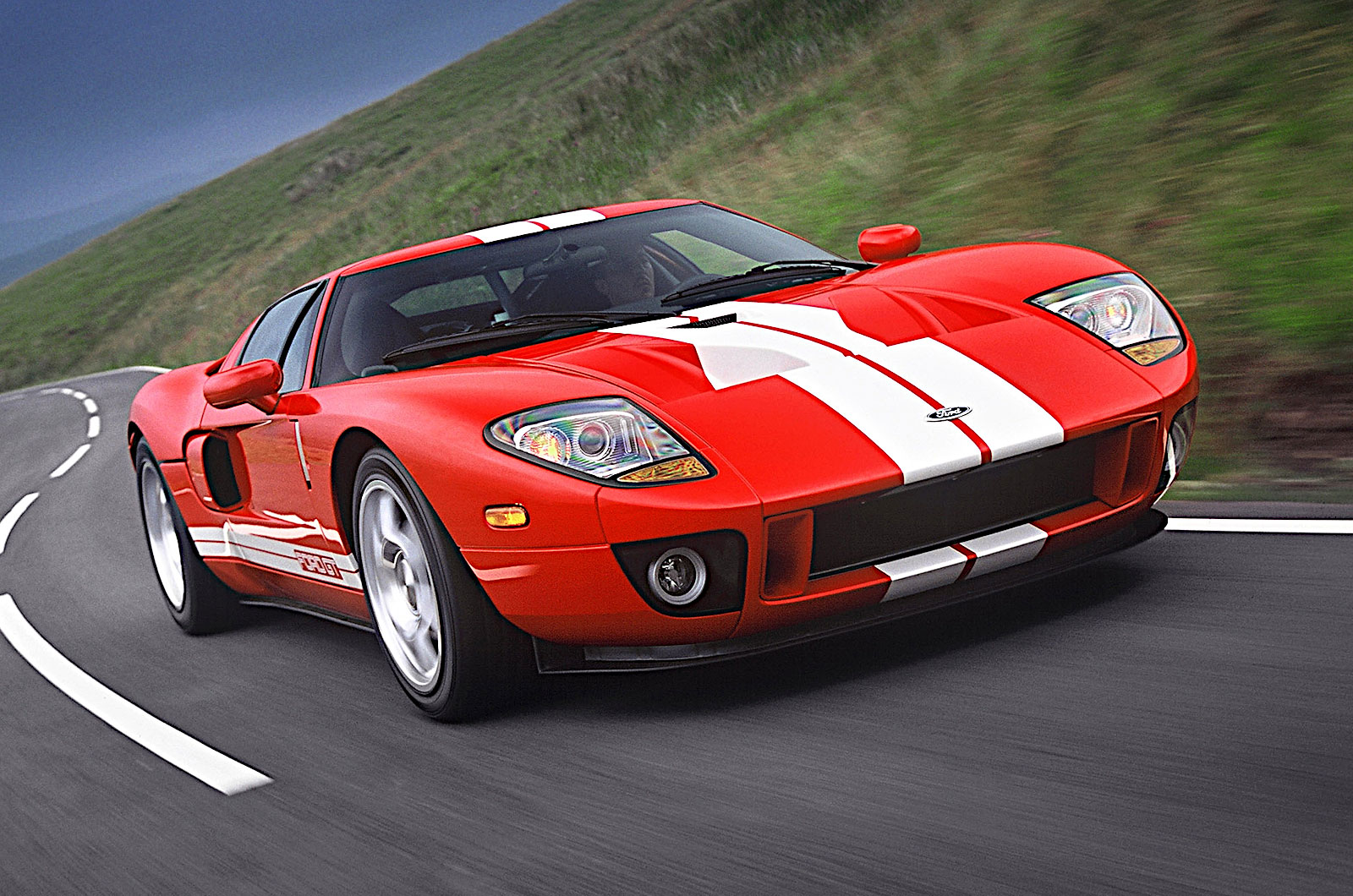
35 years after the last GT40 was built, Ford launched a successor model called the GT, as part of the company’s 100th birthday celebrations. Like the car which inspired it, it was a two-seater with a mid-mounted V8 engine, in this case a supercharged version of the 5.4-litre Modular unit. In a reverse of the earlier procedure, it was created specifically as a road-going model, though racing derivatives were also made.
This GT was produced for only two years. Another, fitted with a twin-turbocharged 3.5-litre EcoBoost V6, made its debut in 2016.
Ford Mustang (2004)
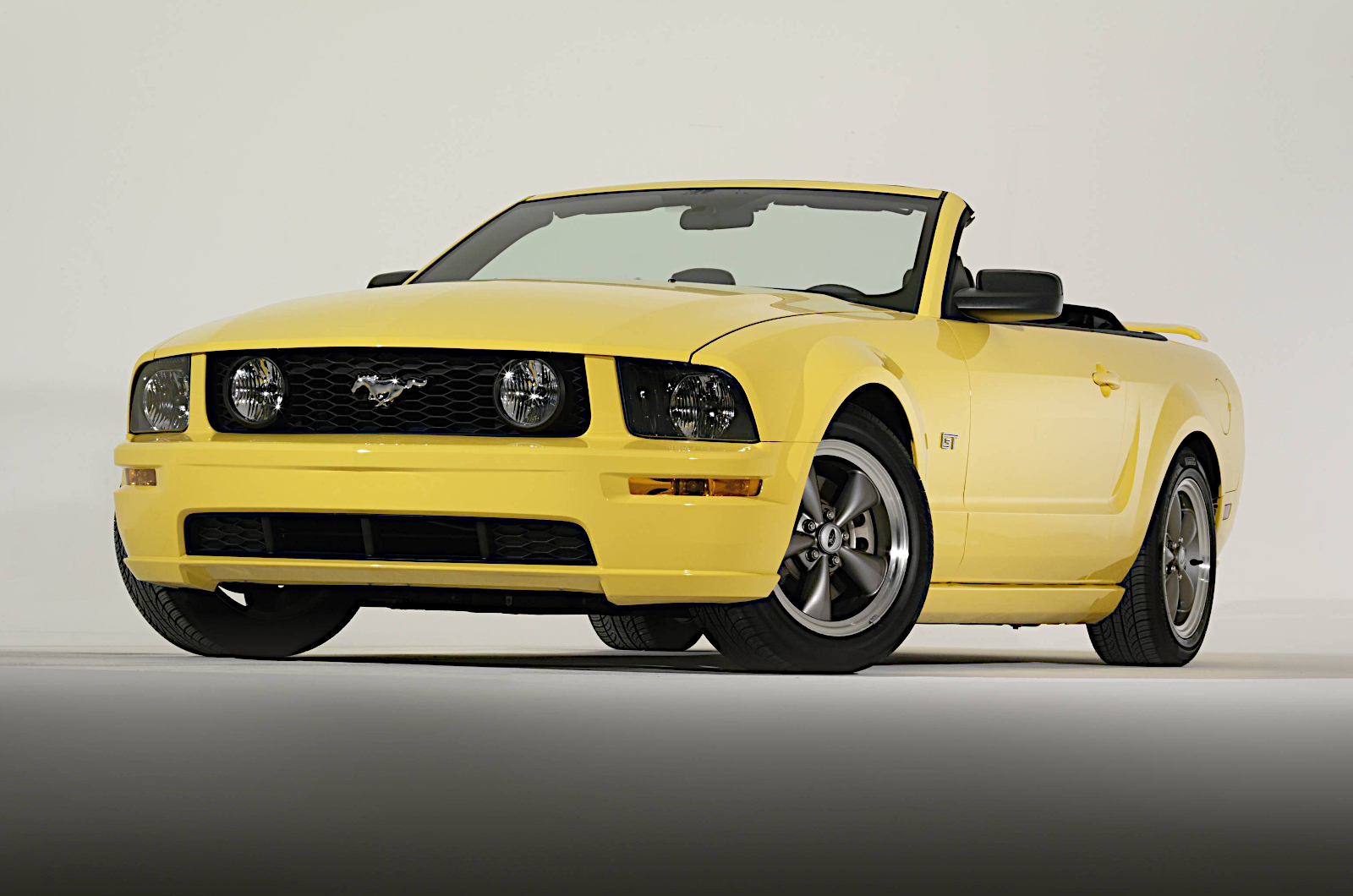
Ford applied what has become known as retro-futurism to the fifth-generation Mustang, giving it the character of the original 1960s version without actually making it look the same. The Mustang now looked once more like a muscle car, which had not been the case since 1979.
Mustangs of this era were available with V6 engines, but the most common layout was of course the V8. The supercharged 5.8-litre unit of this type fitted to the 2013 Shelby GT500 produced 662bhp, and gave the car a claimed top speed of over 200mph.
Ford Fiesta (2008)
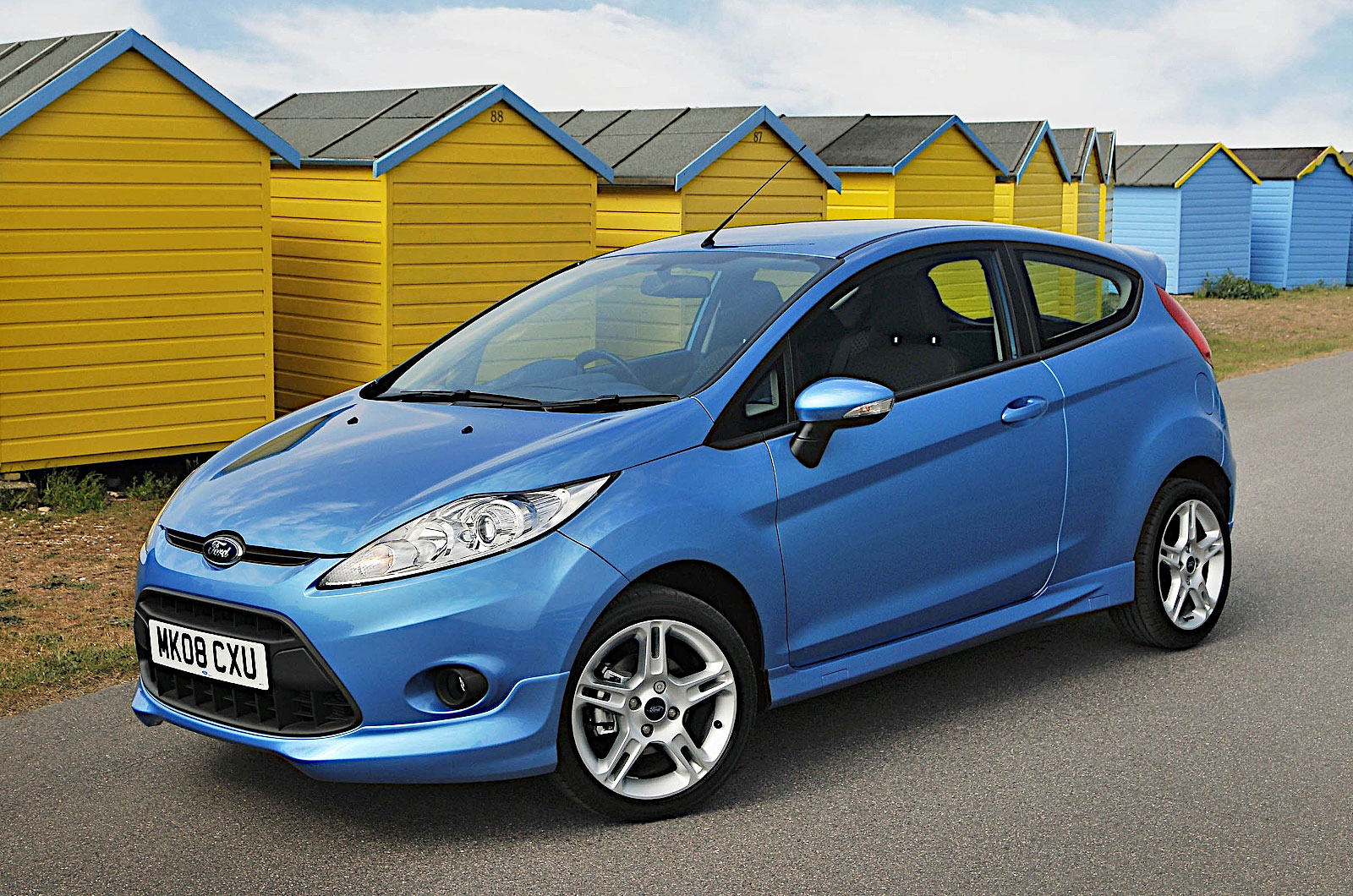
The contrast between the last Escort and the first Focus was echoed ten years later when Ford introduced a new Fiesta. It was far better than its predecessor, and quickly became the most popular car sold in the UK; it topped the charts without interruption from 2009 until it ended in 2017. Its chassis was so good Ford carried it over to the following generation – and that car remains a class-leader in drivability; sad to say this quintessential small modern Ford will die shortly.
Ford Ranger (2011)
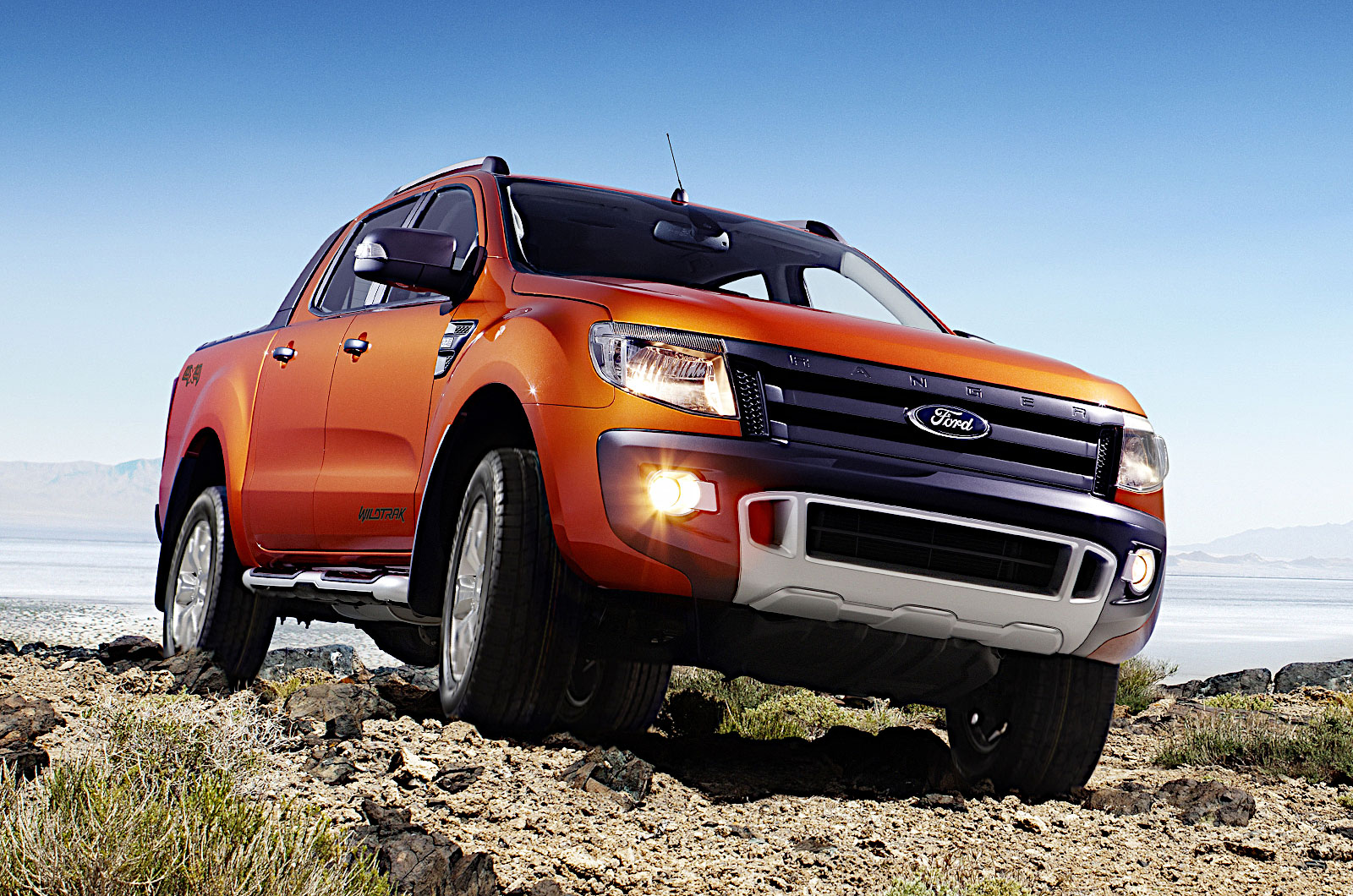
For many years, the Ranger name was used for quite distinct pickup trucks sold either in or outside North America. That changed in 2011, when a global Ranger was launched. Developed by Ford of Australia, it surpassed all previous versions in several areas including refinement and safety. On the latter point, it became the first ever pickup to be given the maximum five-star rating by Euro NCAP.
Despite its global nature, the new Ranger was not sold in the US or Canada for several years, but this was resolved when it became available in both countries in the 2019 model year.
Ford Focus RS (2015)
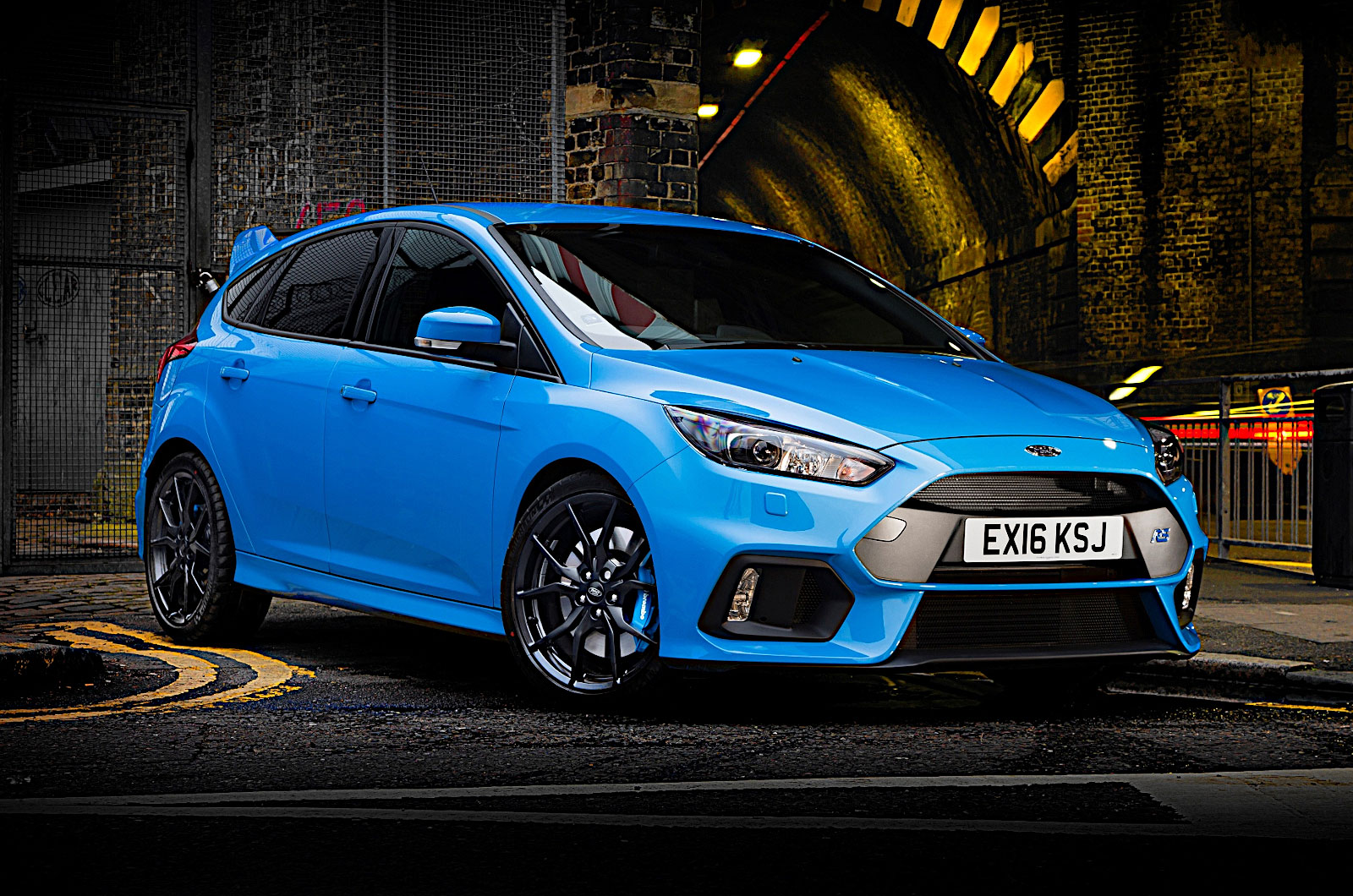
The third (and almost certainly final) Focus RS was the first with four-wheel drive, and therefore easily capable of coping with the 345bhp produced by its turbocharged 2.3-litre EcoBoost engine in standard form. Nor was there a problem if the car happened to be fitted with the Mountune performance package, which raised the output to 375bhp without invalidating the factory warranty.
By way of electronic trickery, Ford was able to offer a drift mode, for owners who liked that sort of thing, and launch control, though in independent testing the latter made very little difference to the car’s already tremendous ability to leap away from a standing start.
Ford F-Series Lightning (2022)
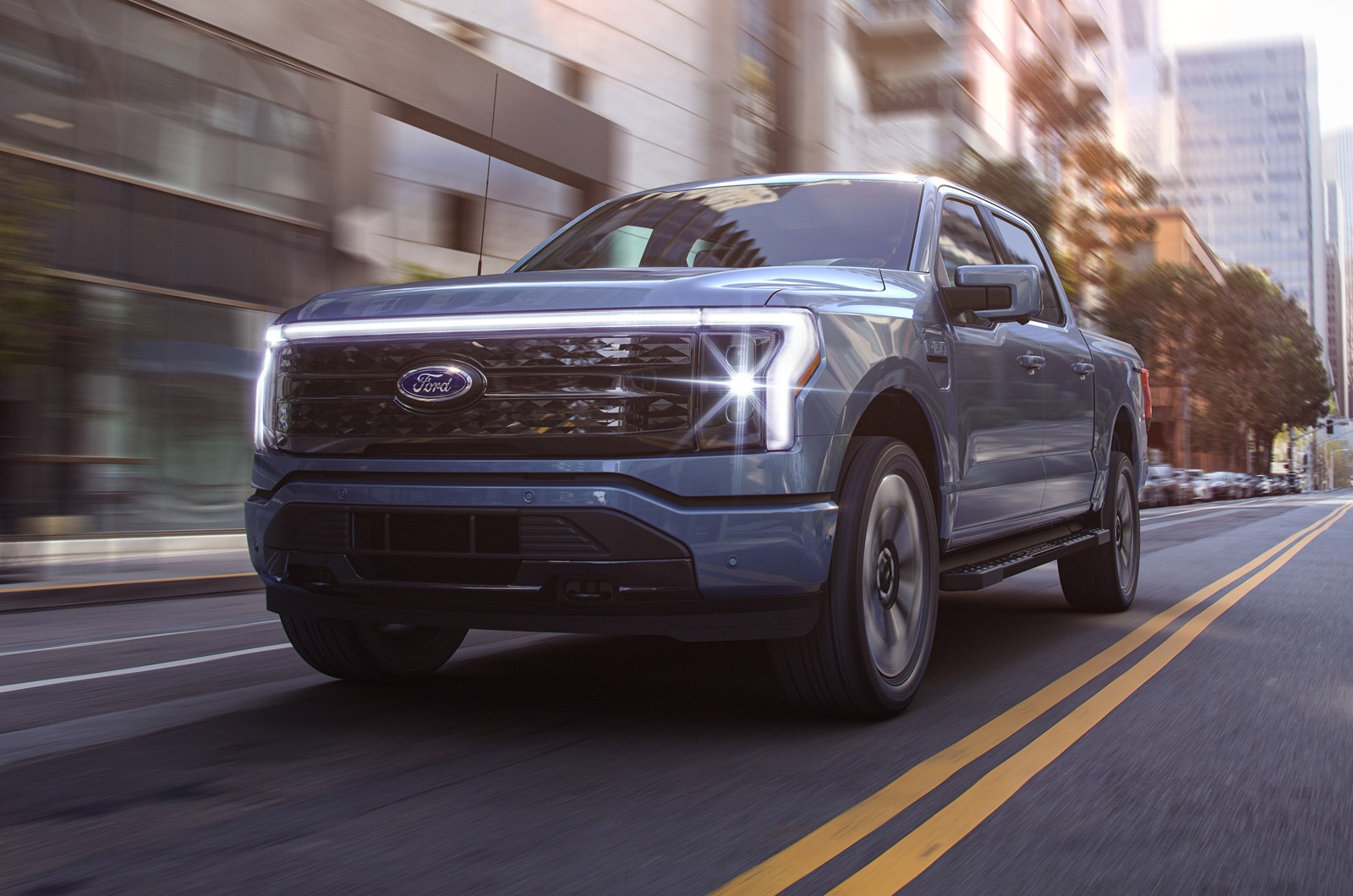
The F-Series success story was extended still further when the fourteenth-generation model arrived in the 2021 model year. Highlights included the introduction of the F-150 Lightning, the first all-electric model in the history of the range. As the world goes electric, this is surely an important milestone.
With the help of this latest version, the F-Series was the best-selling truck in the US for the 46th consecutive year by the end of 2022, and the best-selling vehicle of any kind for the 41st. Strictly speaking, the rival full-size mainstream pickups produced by General Motors are slightly more popular, but they are divided into the mechanically identical but differently badged Chevrolet Silverado and GMC Sierra, neither of which individually outsells the Ford.

MR2 Development Accelerates as Toyota Masters Mid-Engine AWD Platform with New Turbo Four

Battery Defects in Hyundai and Kia EVs Expose Risks of Supplier Quality Lapses and...

Car Collection as Cultural Spectacle Inside the Rainbow Sheikh’s Museum of Automotive Oddities and...
 It may belong to an oil sheikh, but there's no room for supercars in this particular collection. We pay it a visit
You're looking at the world's largest SUV.
In the lower half it's an Oshkosh M1075, an all-terrain 10-wheeler truck more usually deployed by the US Army. On top however it's a Jeep Wrangler, while overall power comes from a 15.2-litre Caterpillar diesel, good for 600 hp. It's a cool 10.8 metres long (35 feet) and 3.2 metres (10 feet) high. Oh, and it has headlights from a Ford F-Series Super Duty and rear lights from a Dodge Dart, as you do.
The owner of this intriguing confection is none other than Sheikh Hamad bin Hamdan al Nahyan - and he's no ordinary billionaire. As a high-profile member of the United Arab Emirates royal family, the man known as the Rainbow Sheikh once paid to have a series of canals that spelled out his first name carved into an island located off the Abu Dhabi coast.
But this vast SUV (called the Dhabiyan) is far from his only car. Indeed, it's just the latest in a long line of vehicles in his personal collection that also doubles as the country’s national car museum and Autocar paid it a visit.
Considering the sheikh's net worth is in the vicinity of $20 billion (£15 billion), you might expect a building full of rare, powerful supercars. However, there are none to be found and the museum is all the more fascinating to visit because of it. It’s an eclectic collection of oddities peppered by stellar examples of 1980s tuning. Join us for a virtual tour of one of the most mystifying car collections in the world:
The giant Land Rover
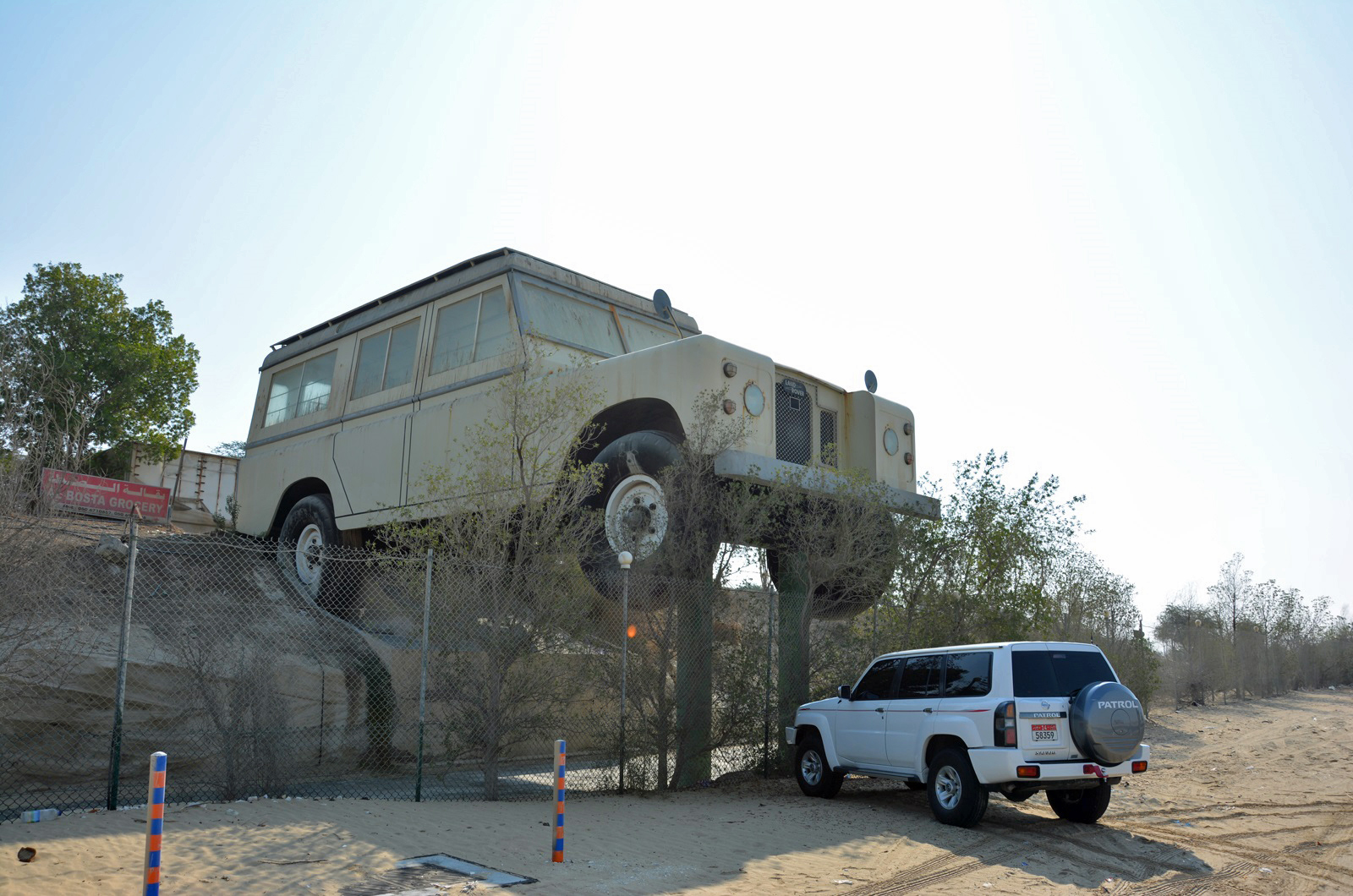
The Emirates National Auto Museum is located in a pyramid-shaped building that’s about an hour away from central Abu Dhabi in the United Arab Emirates. After leaving the city, getting there is a matter of following the long, straight roads that cross the desert. You know you’ve arrived when you see a mammoth replica of a Land Rover Series 3 that effortlessly dwarfs a Nissan Patrol.
The giant Jeep
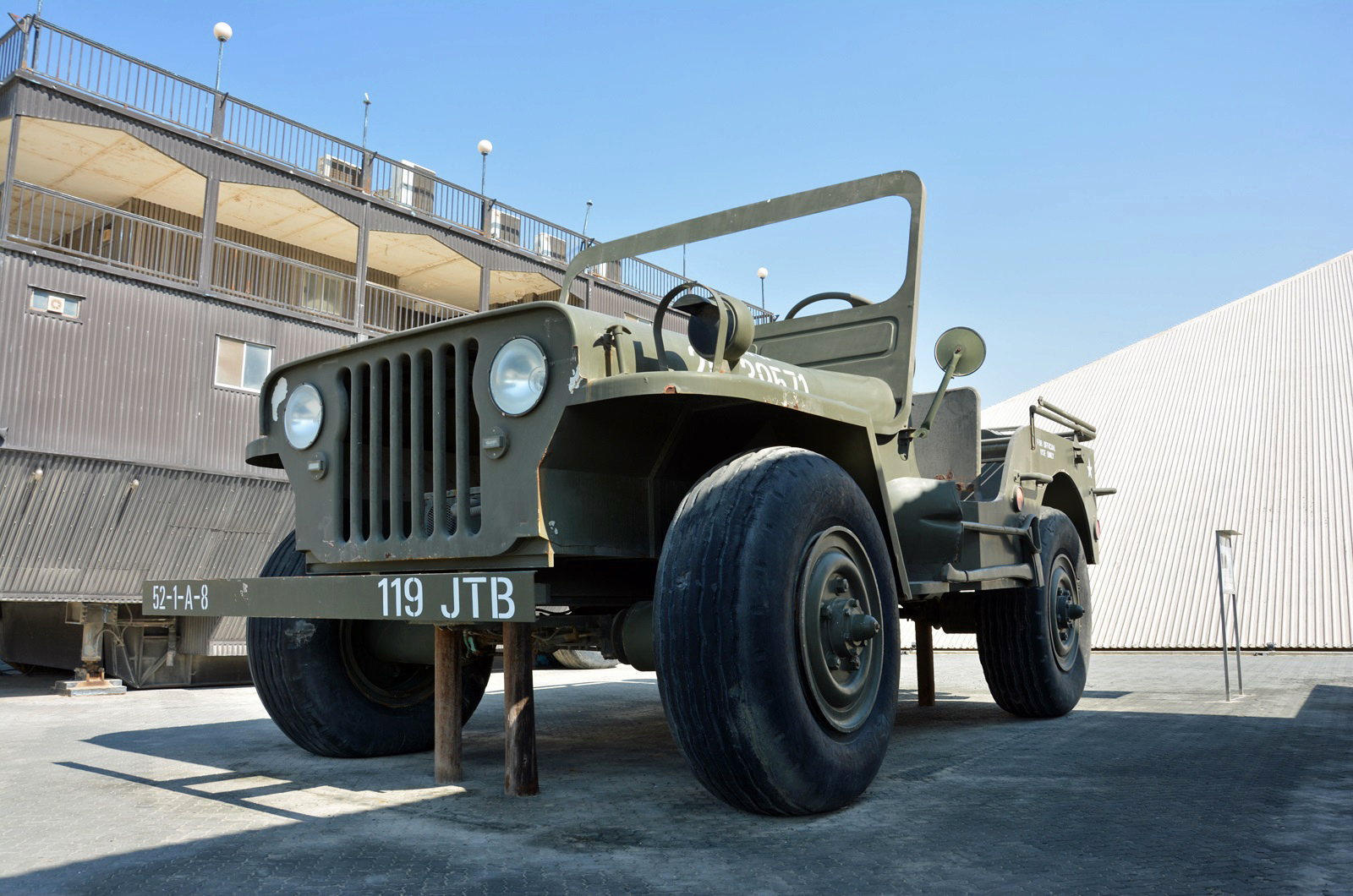
The second house-sized car parked outside of the museum is a replica of a Willys Jeep complete with a shovel and an axe mounted on the driver’s side of the body. It rarely moves but it’s drivable from a seat hidden behind the grille. At 21ft tall it's four times bigger than an actual Willys and it's certified by Guinness as the largest Jeep replica in the world.
Mercedes-Benz W116 monster truck
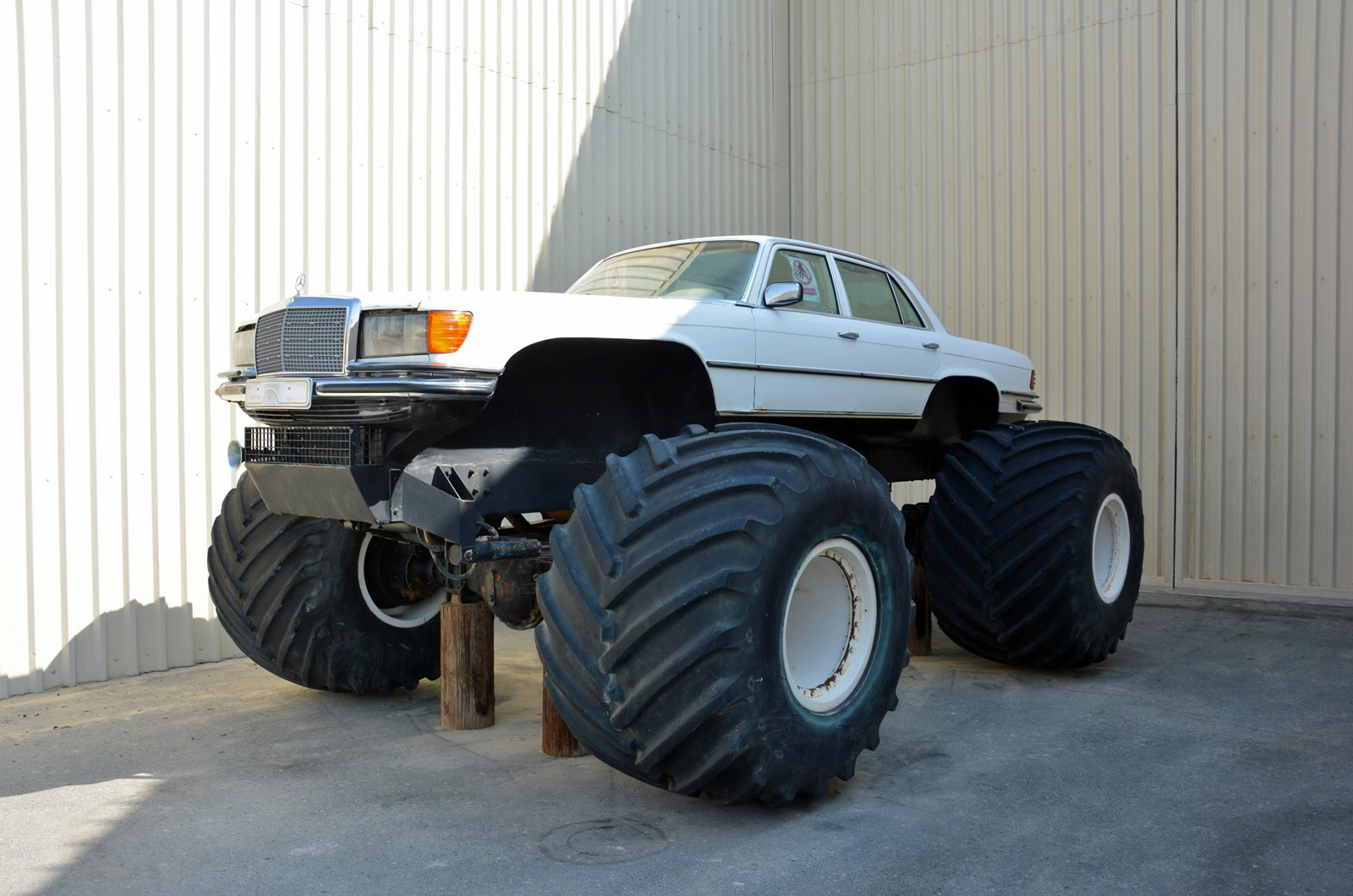
The Rainbow Sheikh has a soft spot for odd, obscure and underappreciated vehicles and he frequently makes his wildest dreams a reality. This is evident before you walk in: there is a Mercedes-Benz W116 turned into a monster truck parked in front of the museum. It was developed and built to be used but it hasn’t turned a wheel in quite some time.
Mercedes-Benz R107 SL
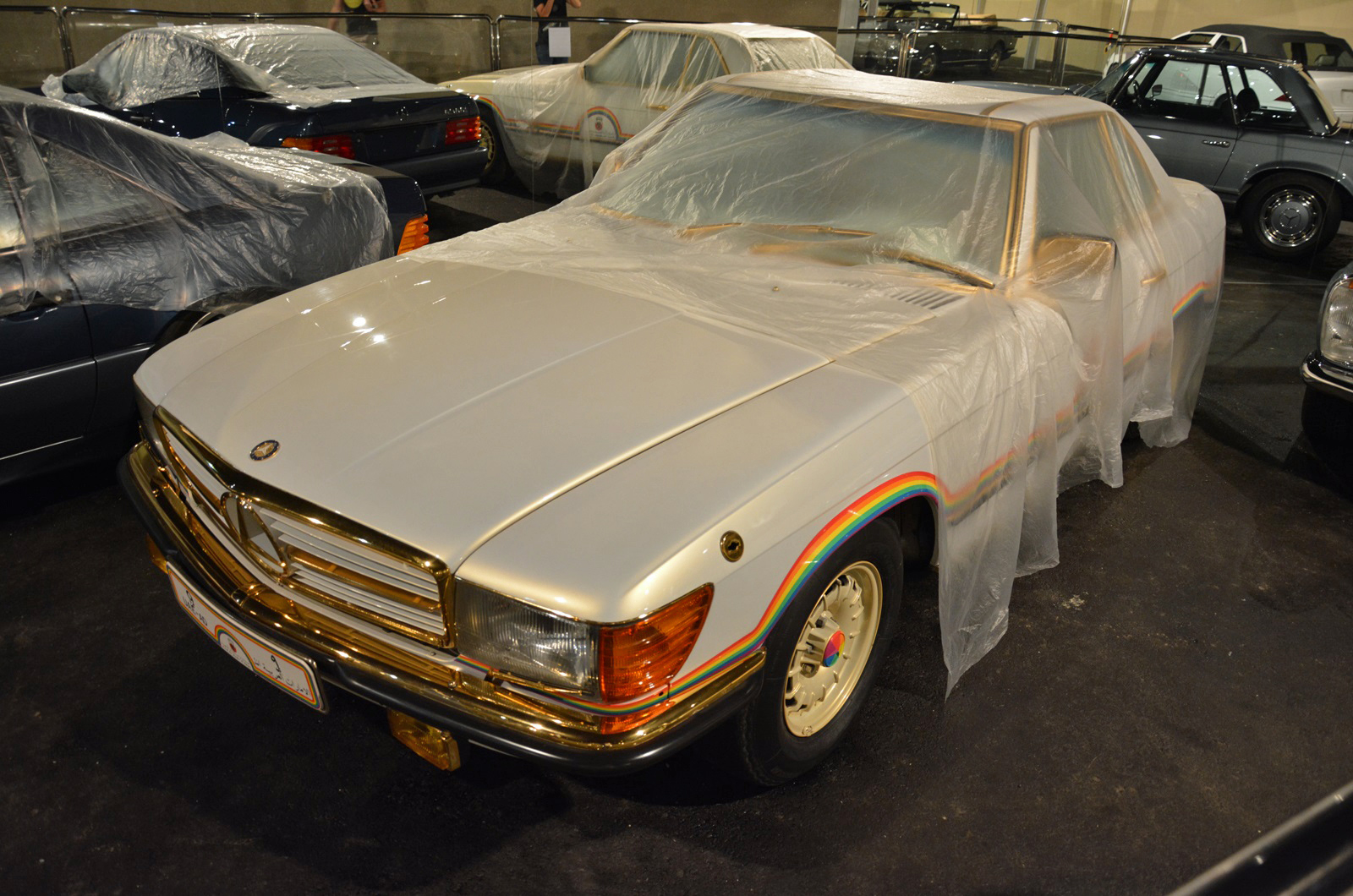
Hamad bin Hamdan al Nahyan’s fascination with the colors of the rainbow earned him the nickname Rainbow Sheikh. Many of the cars in his collection consequently wear rainbow accents, including this R107-generation Mercedes-Benz SL. Every part that’s chromed on a standard SL has been gold-plated on this example and the flag ports indicate it was driven in parades.
Mercedes-Benz 500SEC by Styling Garage
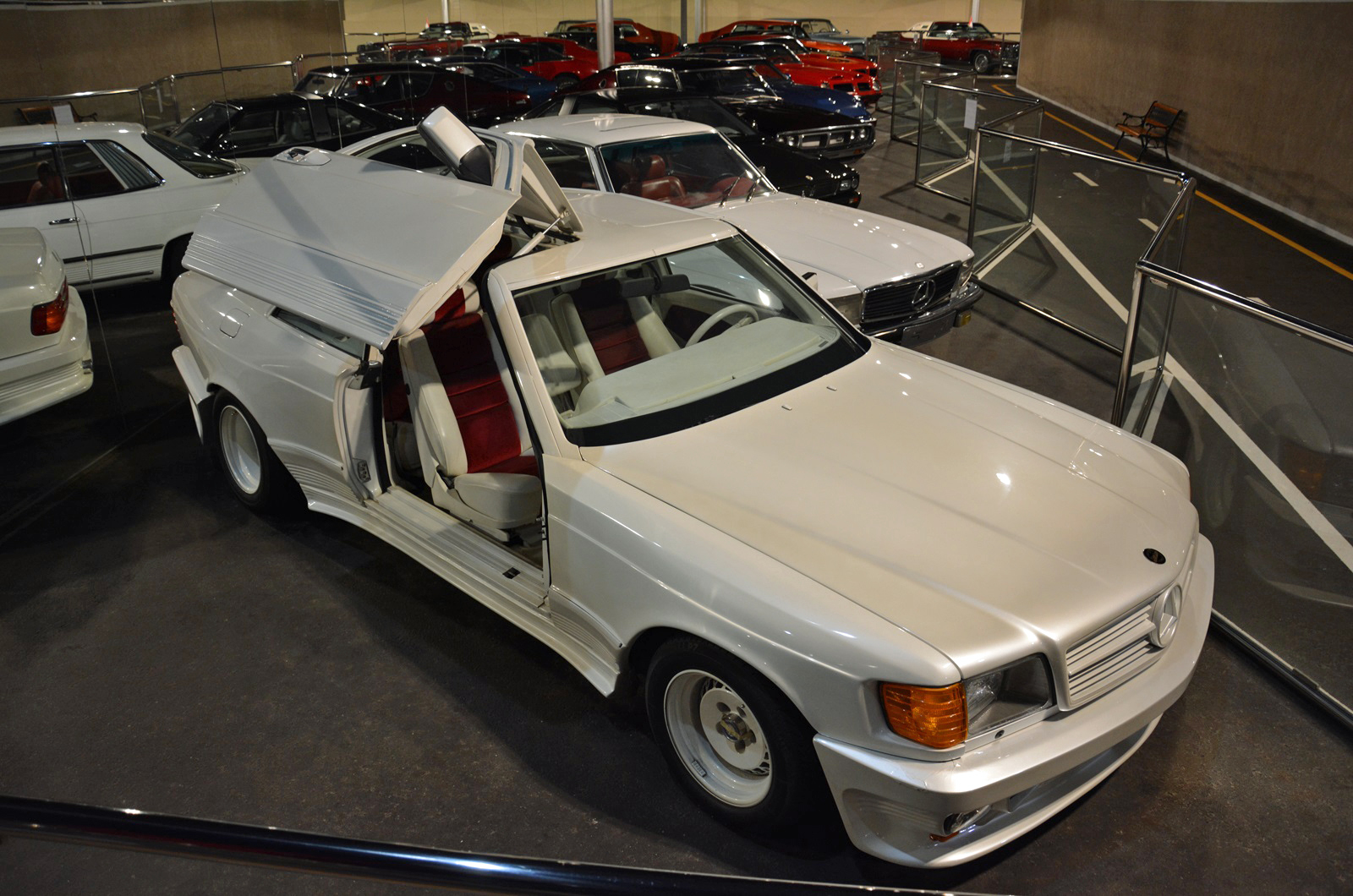
Hamburg-based tuner Styling Garage converted this 1983 Mercedes-Benz 500 SEC into a tuner’s dream come true during the 1980s. The modifications included widening the wheel arches, adding custom bumpers on both ends and installing a pair of gullwing doors.
Riding with a falcon
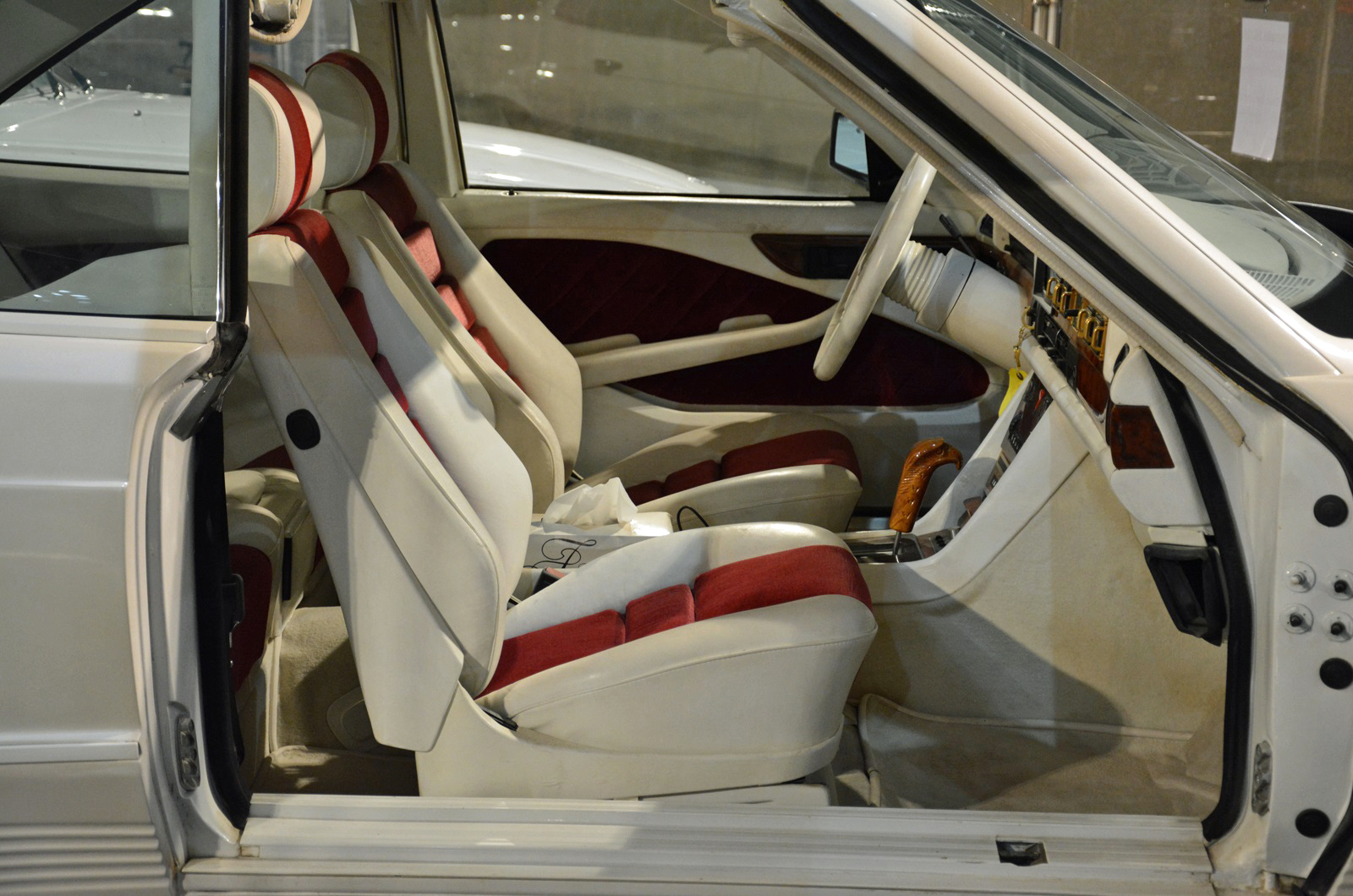
The modifications made to the Mercedes-Benz 500 SEC by Styling Garage continue inside with an AMG steering wheel painted white, re-upholstered seats and a new-look dashboard fitted with gold accents. The finishing touch is a falcon-shaped shift lever sculpted from a solid block of wood.
Mercedes-Benz 600
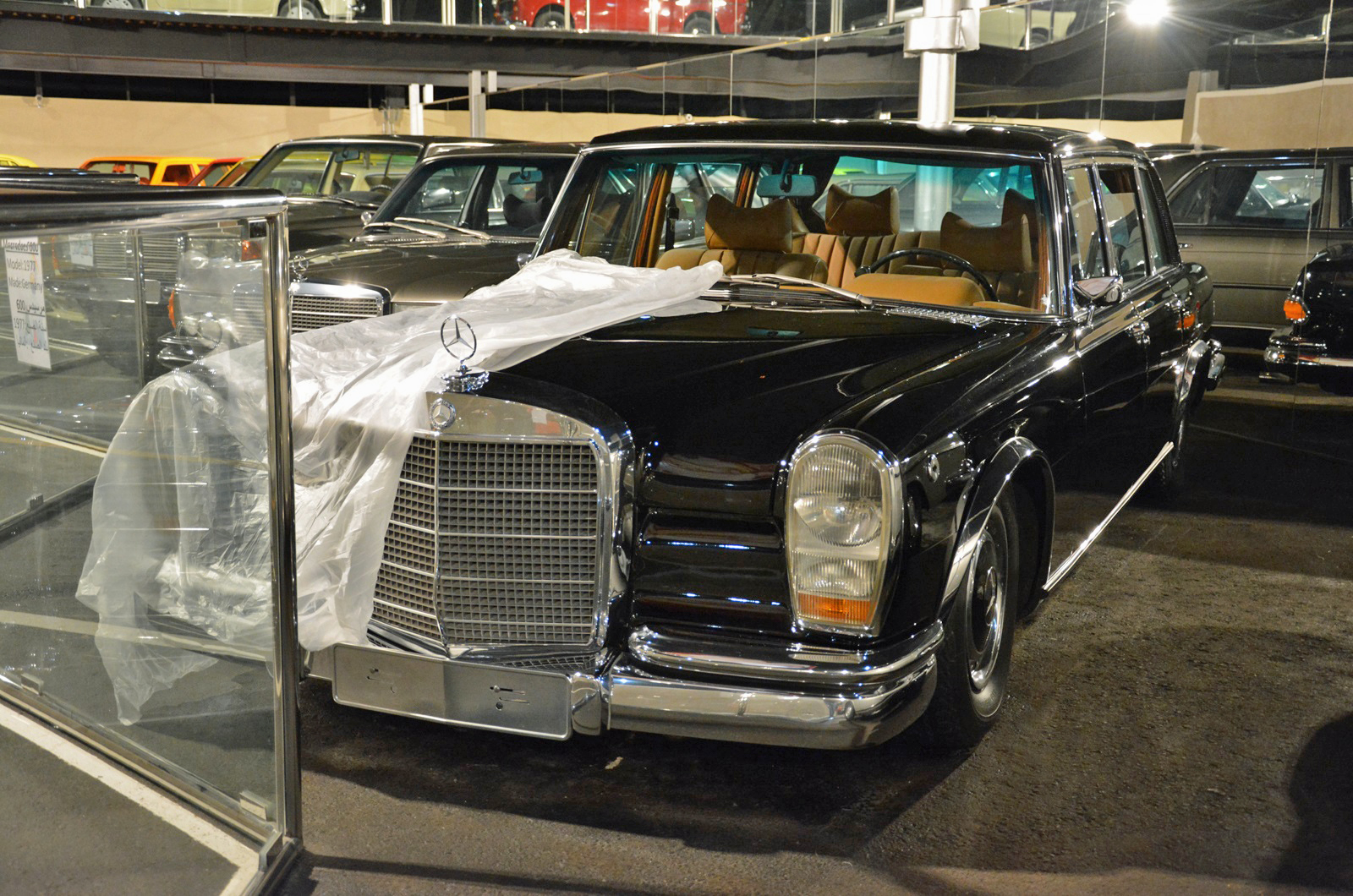
Mercedes-Benz designed the 600 limousine to carry the world’s wealthiest individuals so it’s no surprise to see one in the Rainbow Sheikh’s collection. The list of famous 600 owners includes David Bowie, Elvis Presley, Coco Chanel, Josip Broz Tito, Leonid Brezhnev, Mao Zedong and Saddam Hussein.
Made in 1977, this short-wheelbase example is in immaculate condition inside and out.
Mercedes-Benz V123
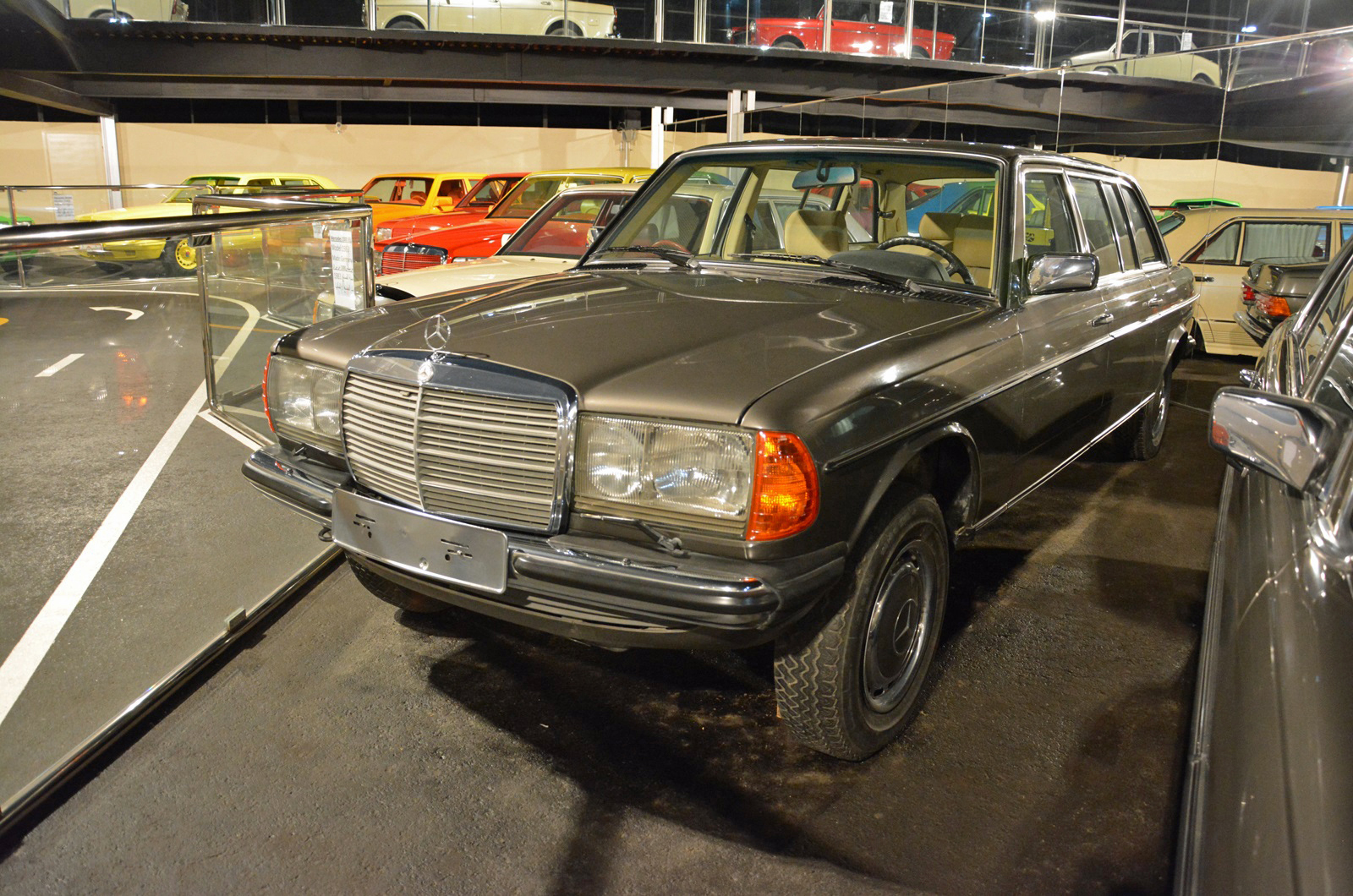
The V123 was the factory-produced long-wheelbase version of the Mercedes-Benz W123. Some were converted into hearses and ambulances by coachbuilders like Binz while others – including the Sheikh’s – were sold to private buyers as limousines. Don’t let the SUV-like ground clearance fool you; it shouldn’t ride higher than a regular W123 but it’s propped up by sturdy pieces of wood.
Mercedes-Benz 500 SEL
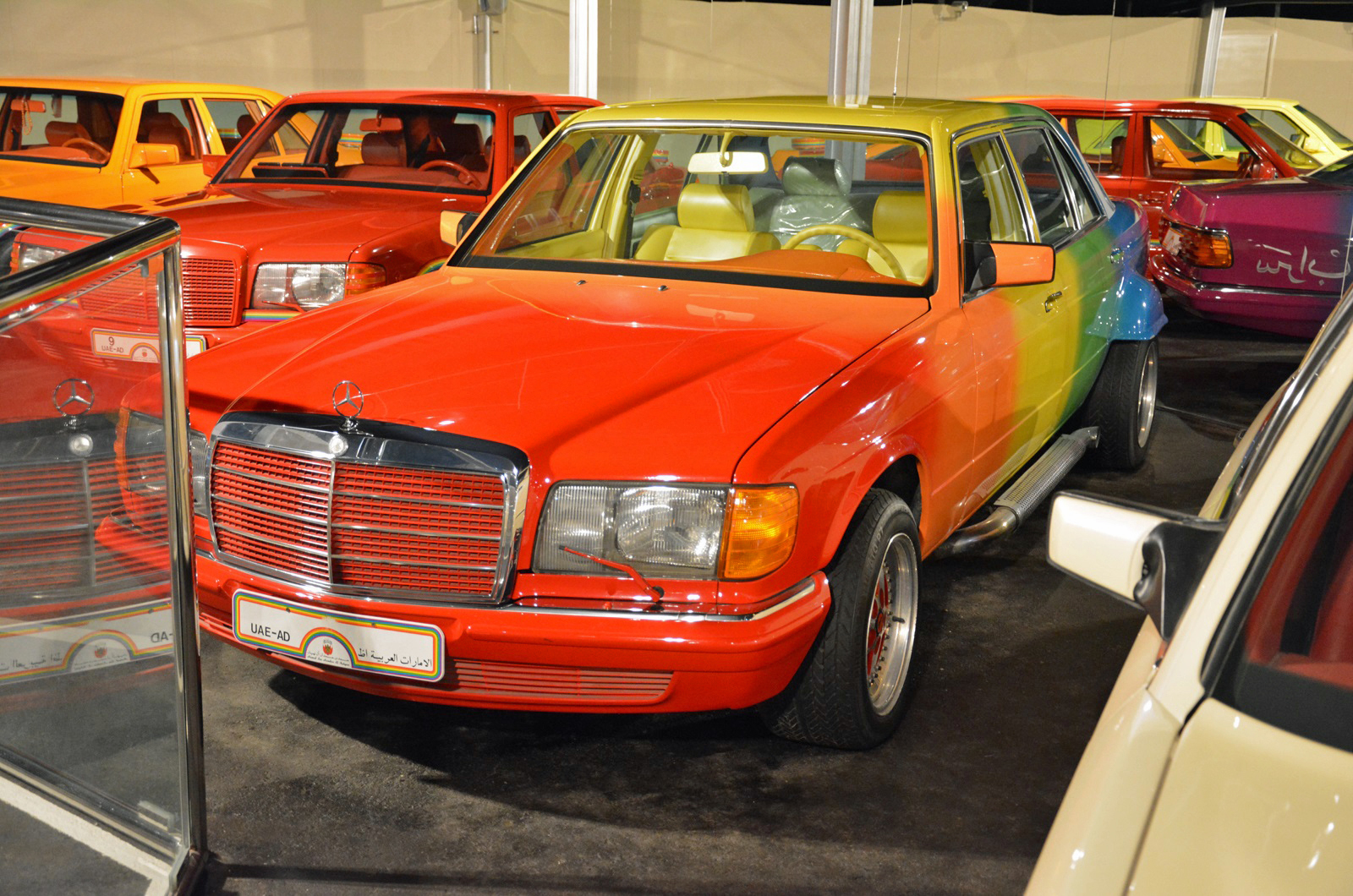
We told you the Sheikh likes the colors of the rainbow. Used for parades and special events, this Mercedes-Benz W126 received a multi-colored paint job in addition to a wider rear track and a pair of side exhaust pipes. Note that the interior matches the exterior; the dashboard is orange, the front seats are yellow, the rear seats are green and the parcel shelf is blue.
The rainbow Mercedes-Benz 500 SELs
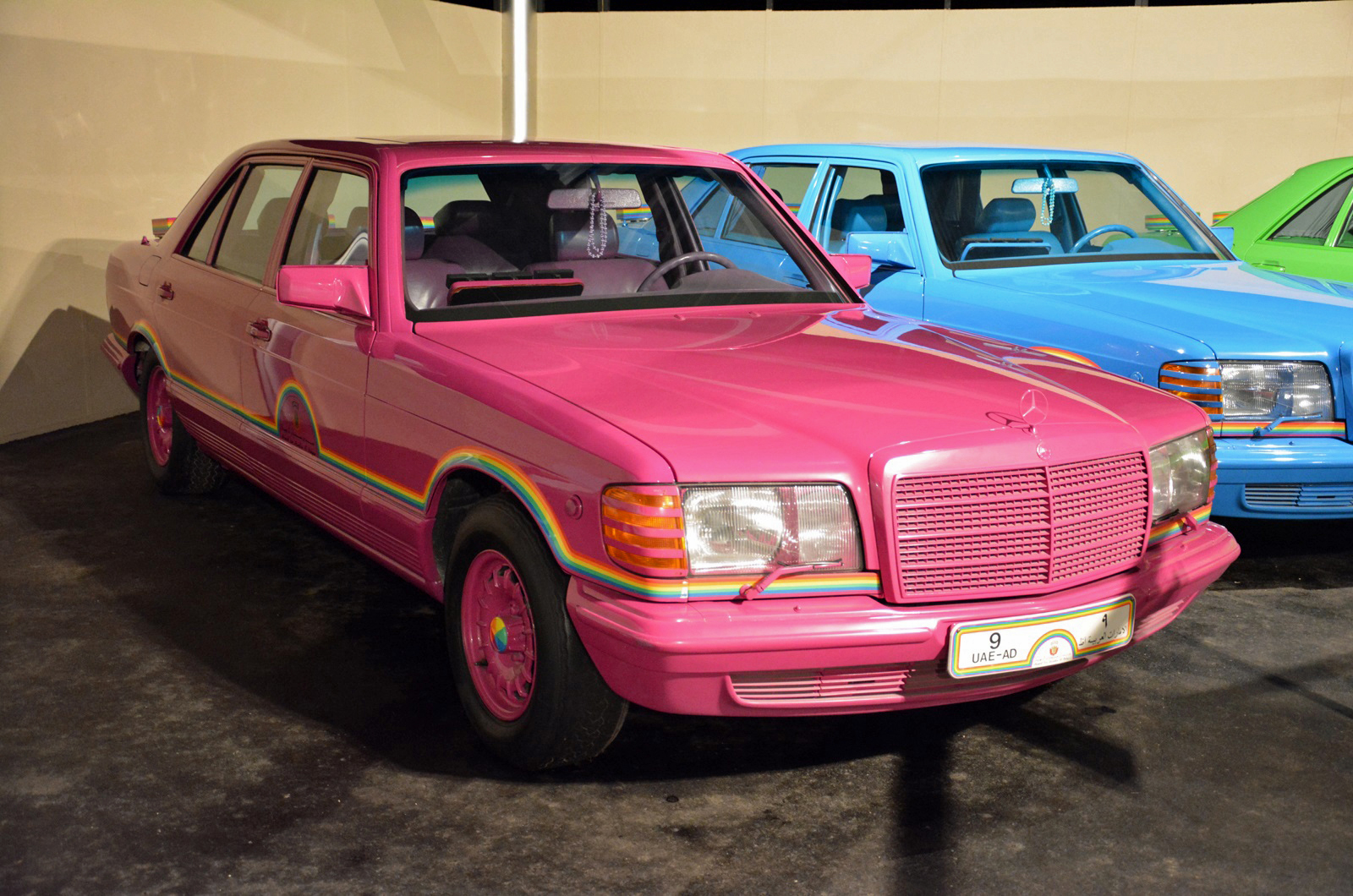
The Rainbow Sheikh ordered seven new Mercedes-Benz W126s for his wedding and asked that each one be painted in one of the colors of the rainbow with matching upholstery inside. Paint aside, the seven cars are identical. All of them are V8-powered 500 SEL models made in 1983 and each one gained a rifle rack in the cargo compartment.
Mercedes-Benz 1001 SEL
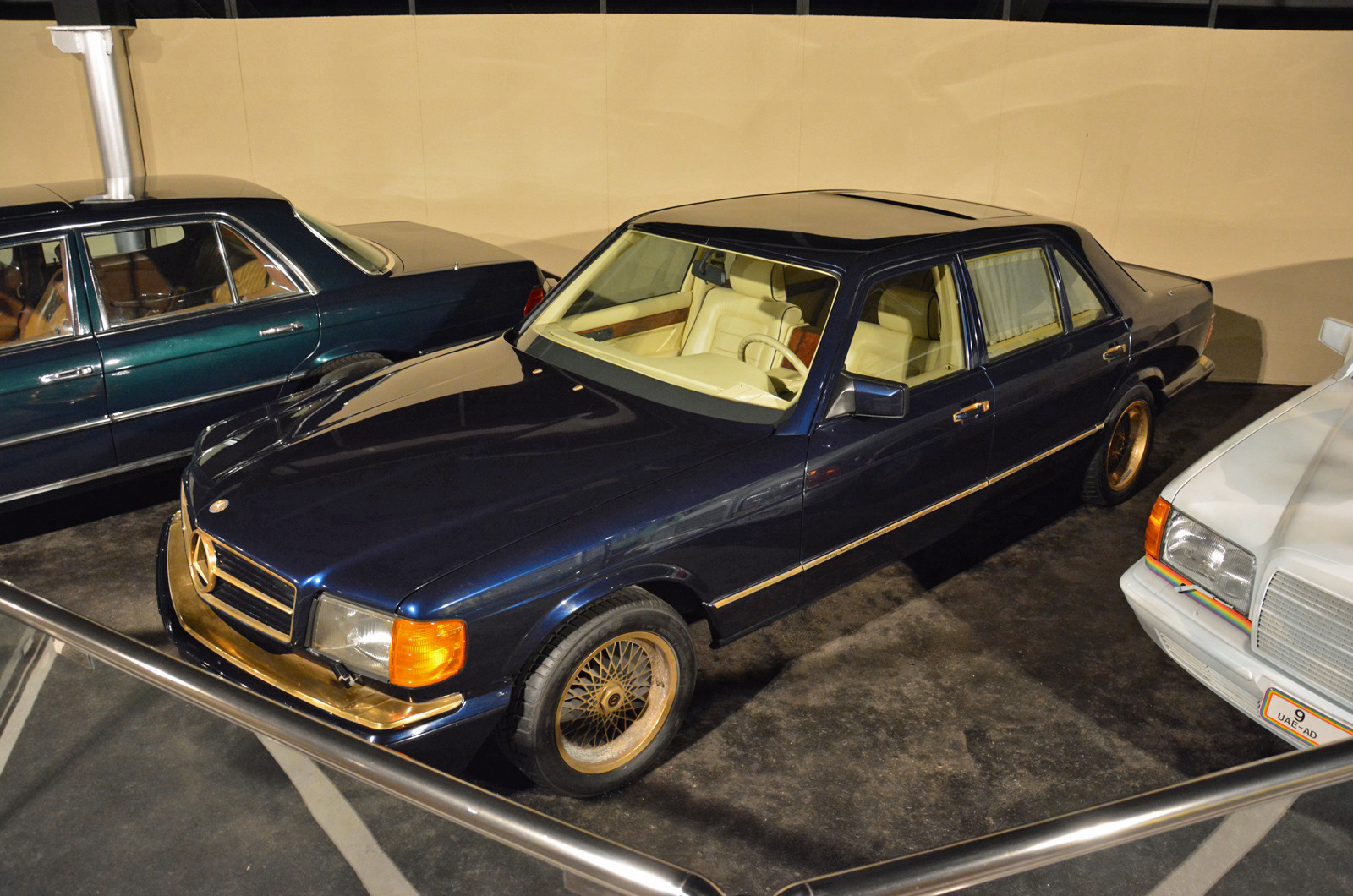
Mercedes-Benz never made a car named 1001 SEL; tuner Gemballa did. Starting with a 500 SEL, the firm added gold trim, alloy wheels plus lavish interior appointments like wall-to-wall leather upholstery, a television and privacy curtains. Other tuners performed similar modifications and the cost of the build sometimes matched the price of the donor vehicle.
Why 1001? It’s not, as the name implies, because the car has a 10-litre engine. Most historians agree that a customer who ordered a tuned 500 SEL concluded the final product was twice as good as what he could get through Mercedes and declared it a 1000 SEL. This led to several variations of the nameplate including 5000 SEL and even 100000 SEL – complete with a matching emblem out back.
Citroën DS
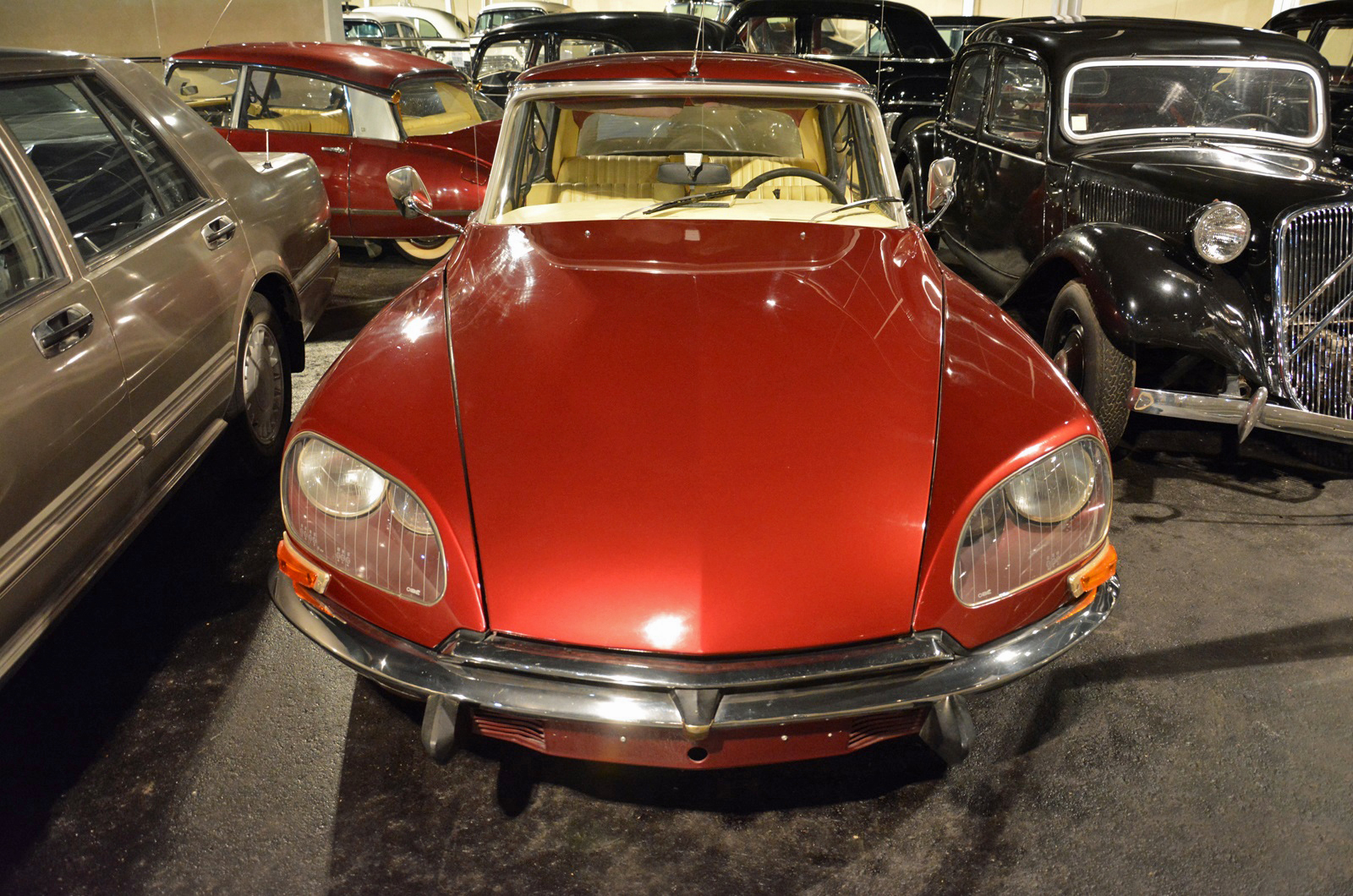
The Citroën DS – a staple in just about every car museum around the world – stands out as one of the few French cars in the Rainbow Sheikh’s collection. He chose a later, fuel-injected model and parked it next to a Traction Avant, its predecessor.
Teilhol Tangara
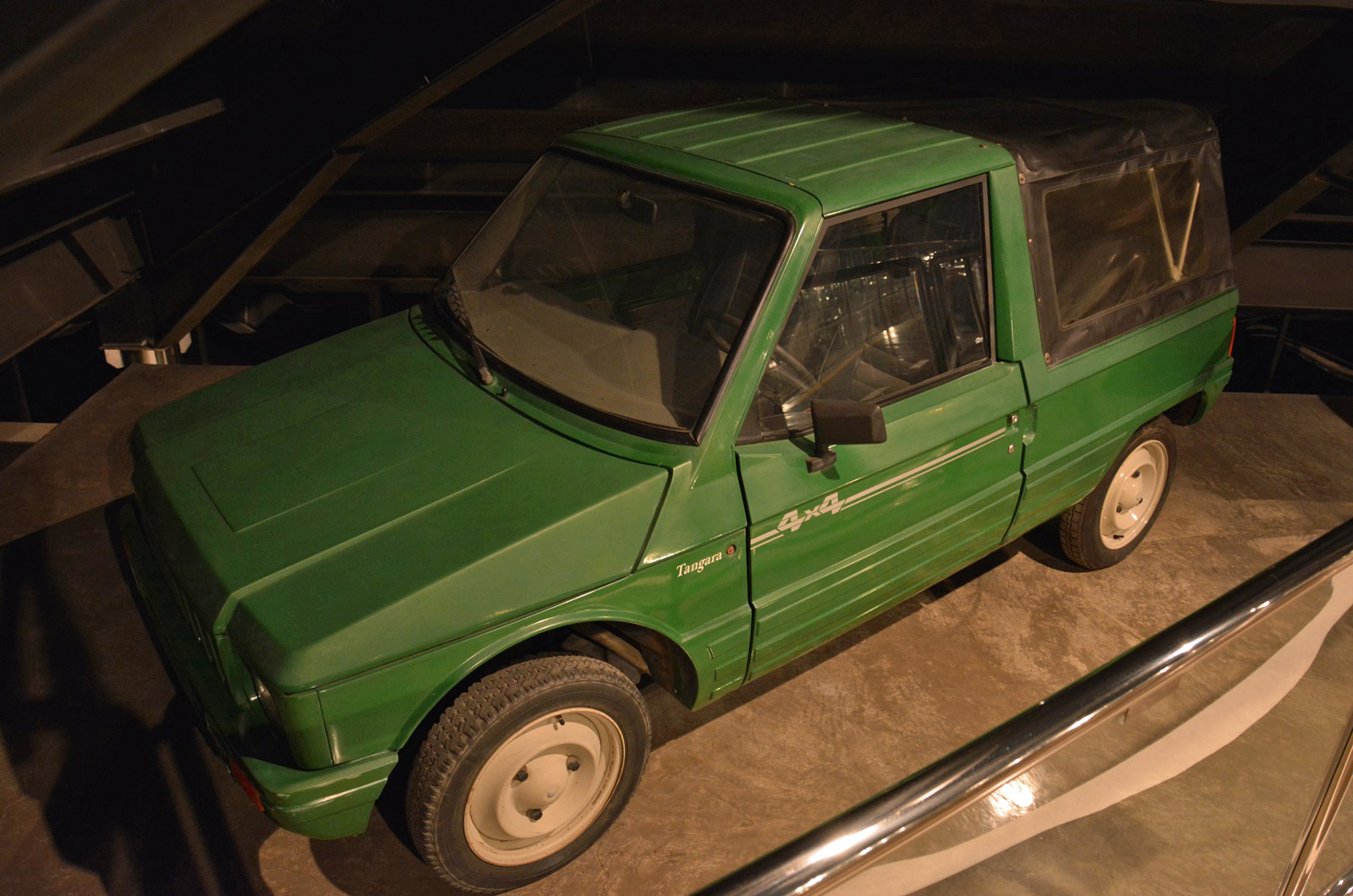
Rare even in its home country of France, the Teilhol Tangara was a Citroën 2CV-based beach car designed to pick up where the Mehari left off. It was introduced in 1987, the same year Mehari production ended, and it came with a 2CV-sourced 602cc flat-twin engine. The example in the Sheikh’s collection is one of the very few fitted with four-wheel drive.
Teilhol equipped later examples of the Tangara with a four-cylinder engine borrowed from the AX. Production ended when the firm filed for bankruptcy in early 1990.
Fiat 500
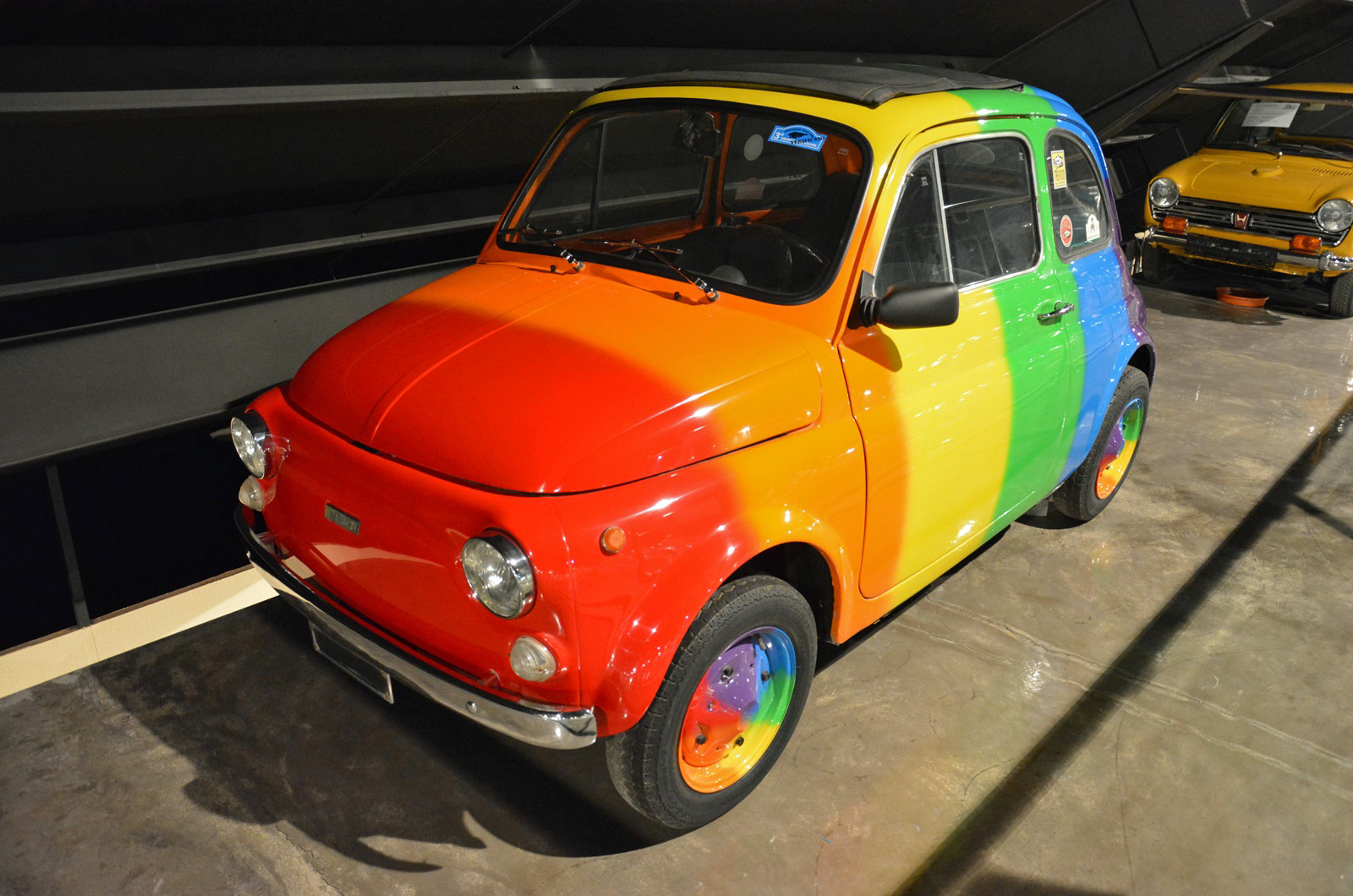
The stickers on this Fiat 500 indicate it spent the bulk of its life in Treviso, an Italian town located a stone’s throw from Venice. Peeking inside the car reveals it was originally painted in an uncommon shade of orange. We don’t know when it joined the Sheikh’s collection but it likely received the rainbow treatment after disembarking in the United Arab Emirates.
Volkswagen Beetle dune buggy
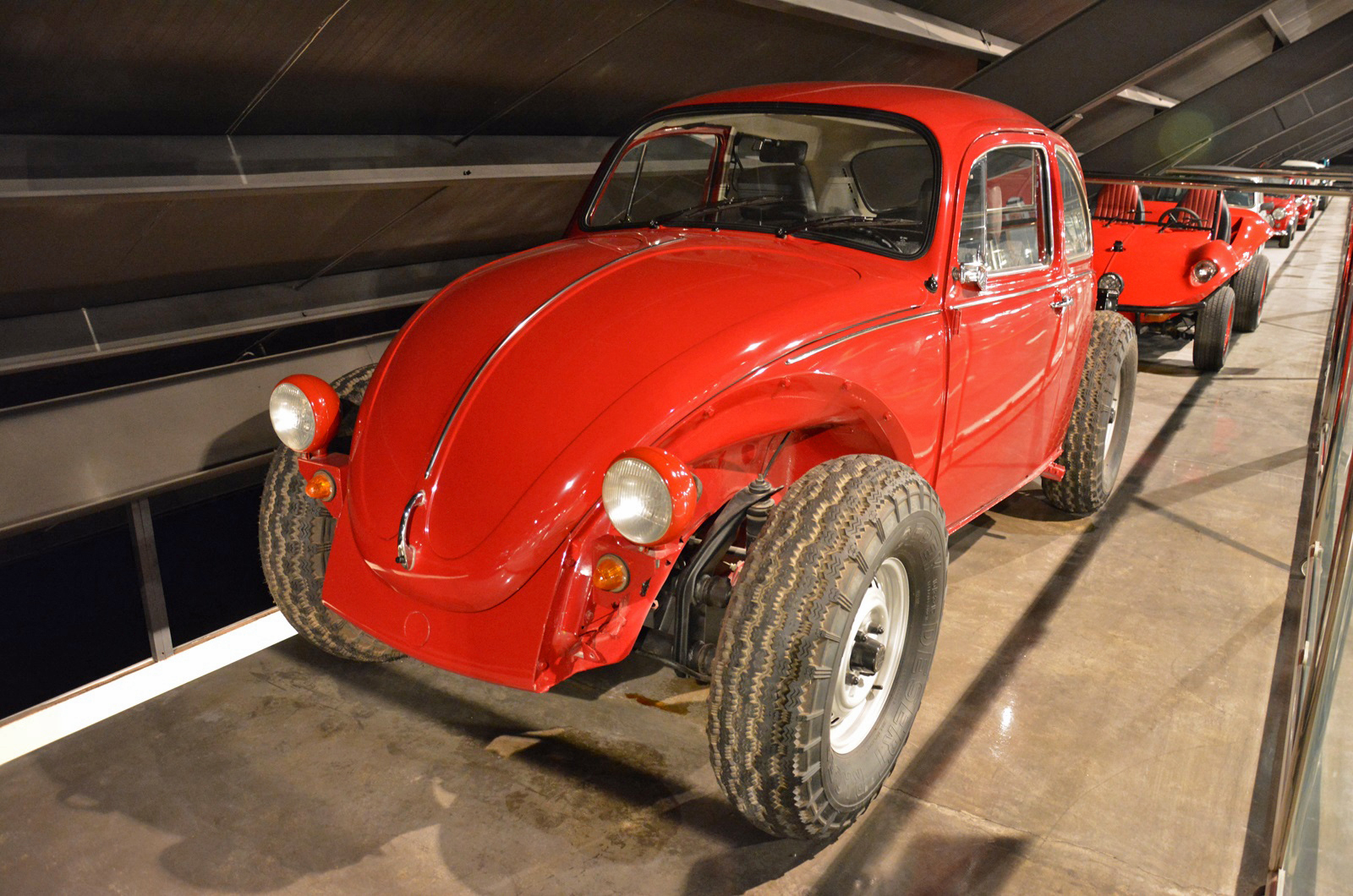
This Volkswagen Beetle was transformed into a dune buggy in the United Arab Emirates. It lost its four fenders, its running boards and its original lights during the conversion and it gained massive tyres. The end result looks markedly different than the dune buggies made in the US and in the UK.
Mini Moke
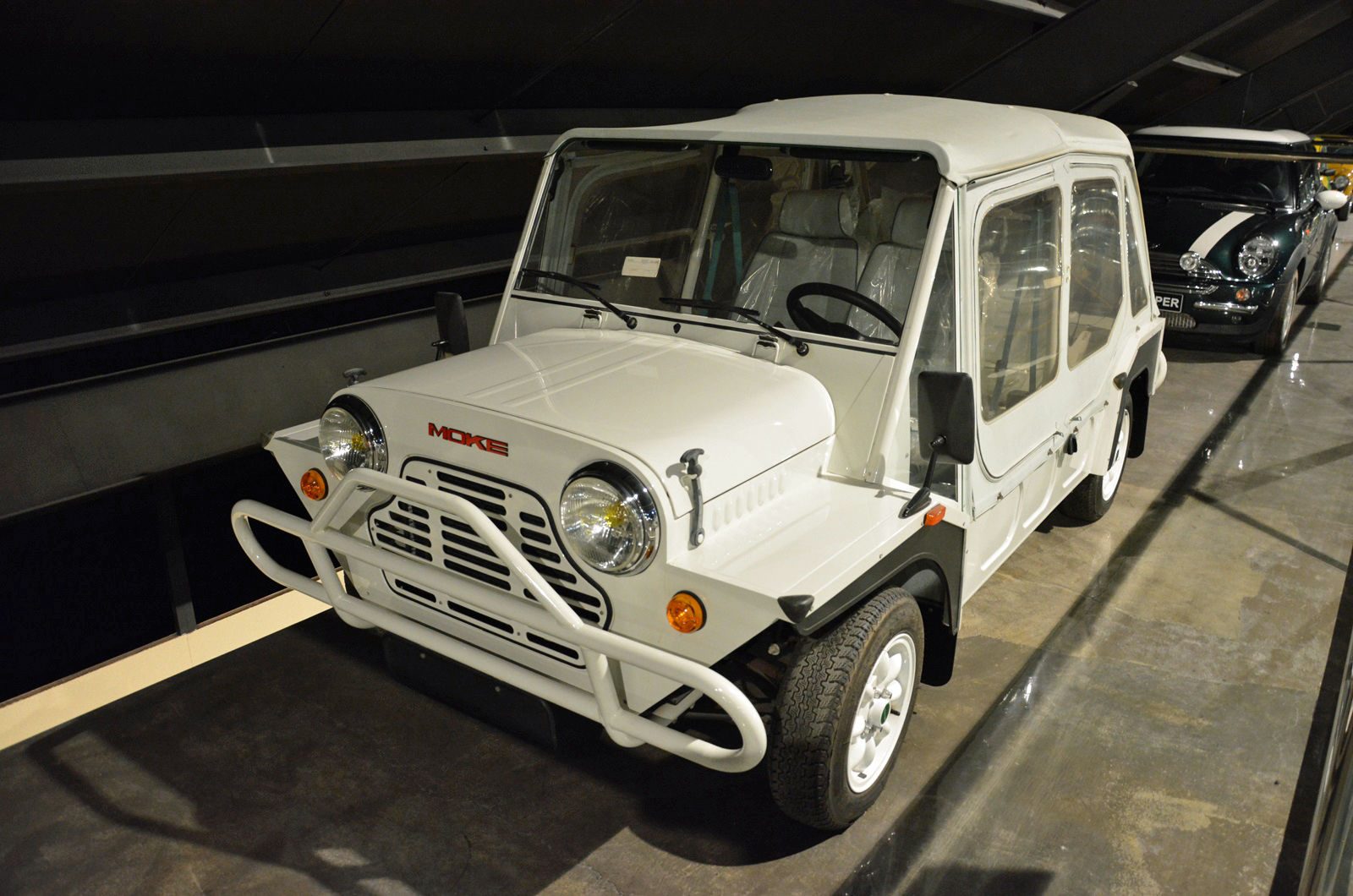
The Sheikh has several variations of the Mini in his collection and none are rainbow-themed. This Moke is in near-new condition as evidenced by the plastic wrappers still on the seats. The yellow headlight bulbs suggest it was sold new on the French market. The collection also includes an Italian-built, Innocenti-badged Mini Cooper, a late-model Rover Mini Convertible and a first-generation BMW Mini.
Erad Junior
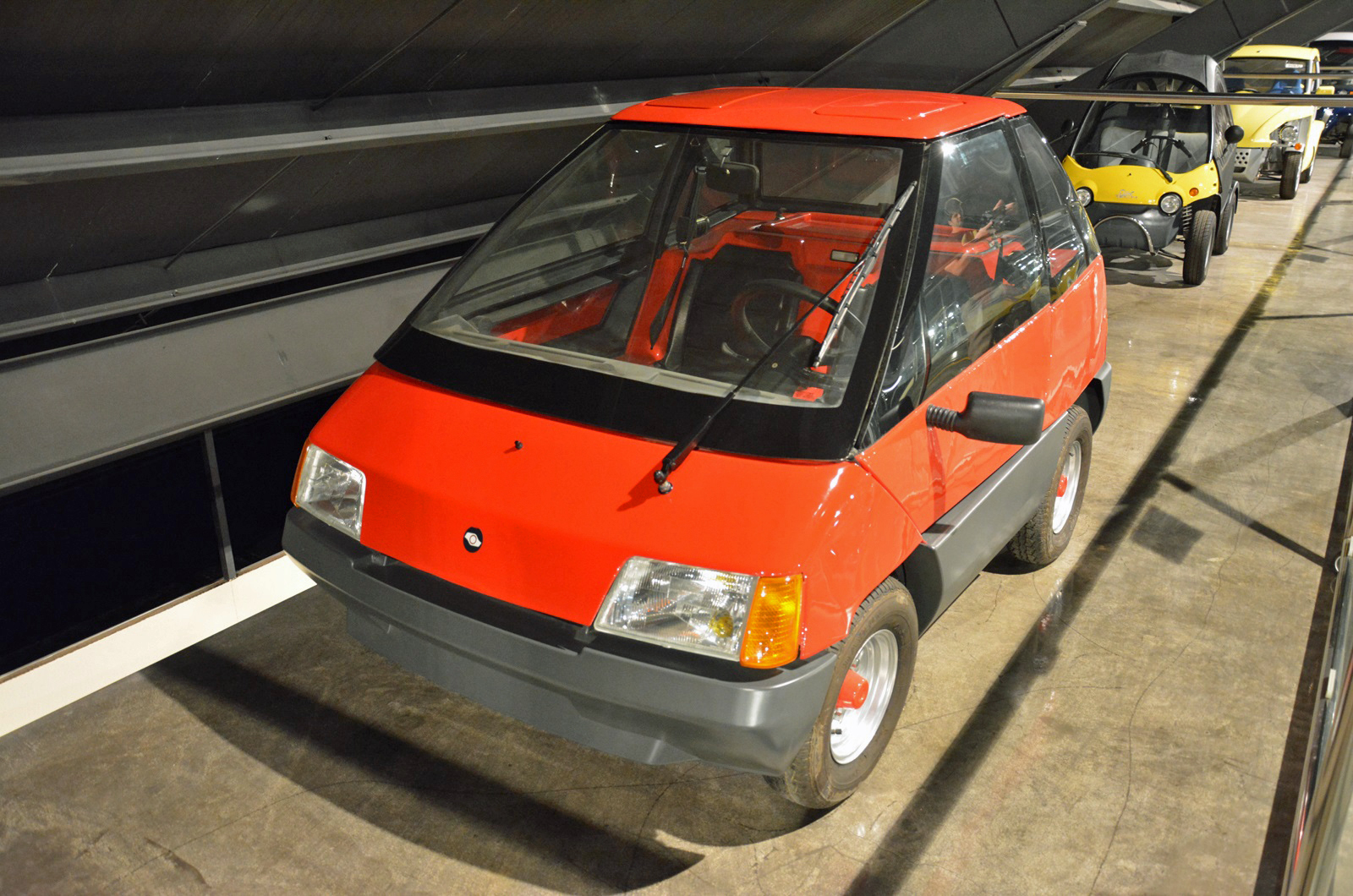
French minicar manufacturer Erad released the Junior in 1988. Much smaller than a Smart ForTwo, the Junior was a voiturette that motorists could drive without a regular driver’s licence. Erad fitted it with headlights from a Peugeot 205 in order to keep costs in check yet it went through the trouble of making the windshield, the roof and the doors into a single unit that could be removed to go topless.
Erad made a handful of examples of the Junior. Very few examples remain and the Sheikh’s is likely the only one lucky enough to live in a museum.
Premier Padmini
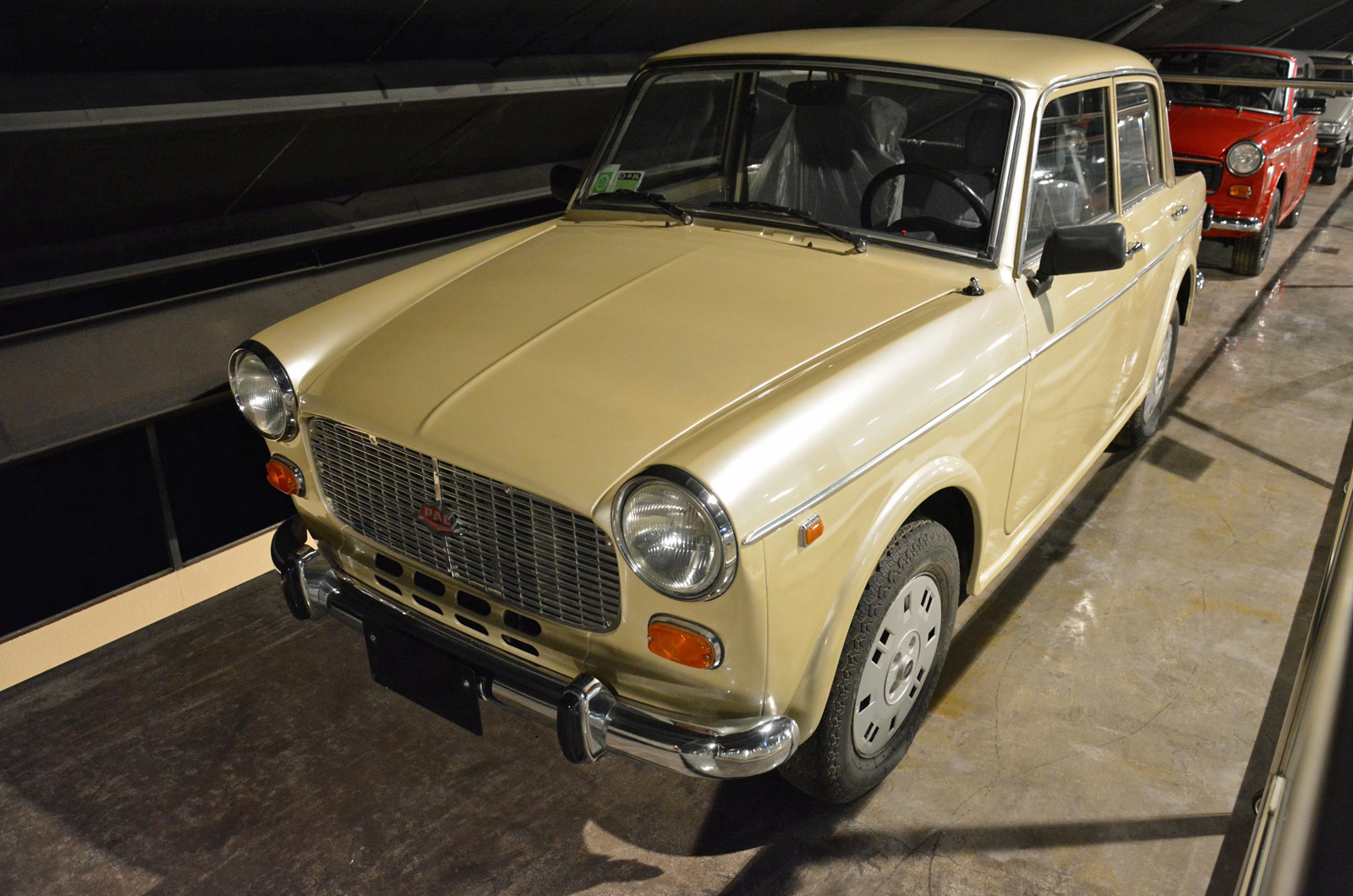
In 1954, Premier began assembling Fiat’s 1100 and Topolino models from complete knock-down (CKD) kits for the Indian market. The Topolino was ill-suited to Indian roads but the 1100 sold so well that local production of its successor, the 1100D, started in 1967. Premier acquired a license to build the 1100D and the necessary tooling from Fiat in 1973 and continued making it with only minor changes until 2000. Known as the Padmini from 1974 on, it was hugely popular among taxi drivers.
Premier Padmini convertible
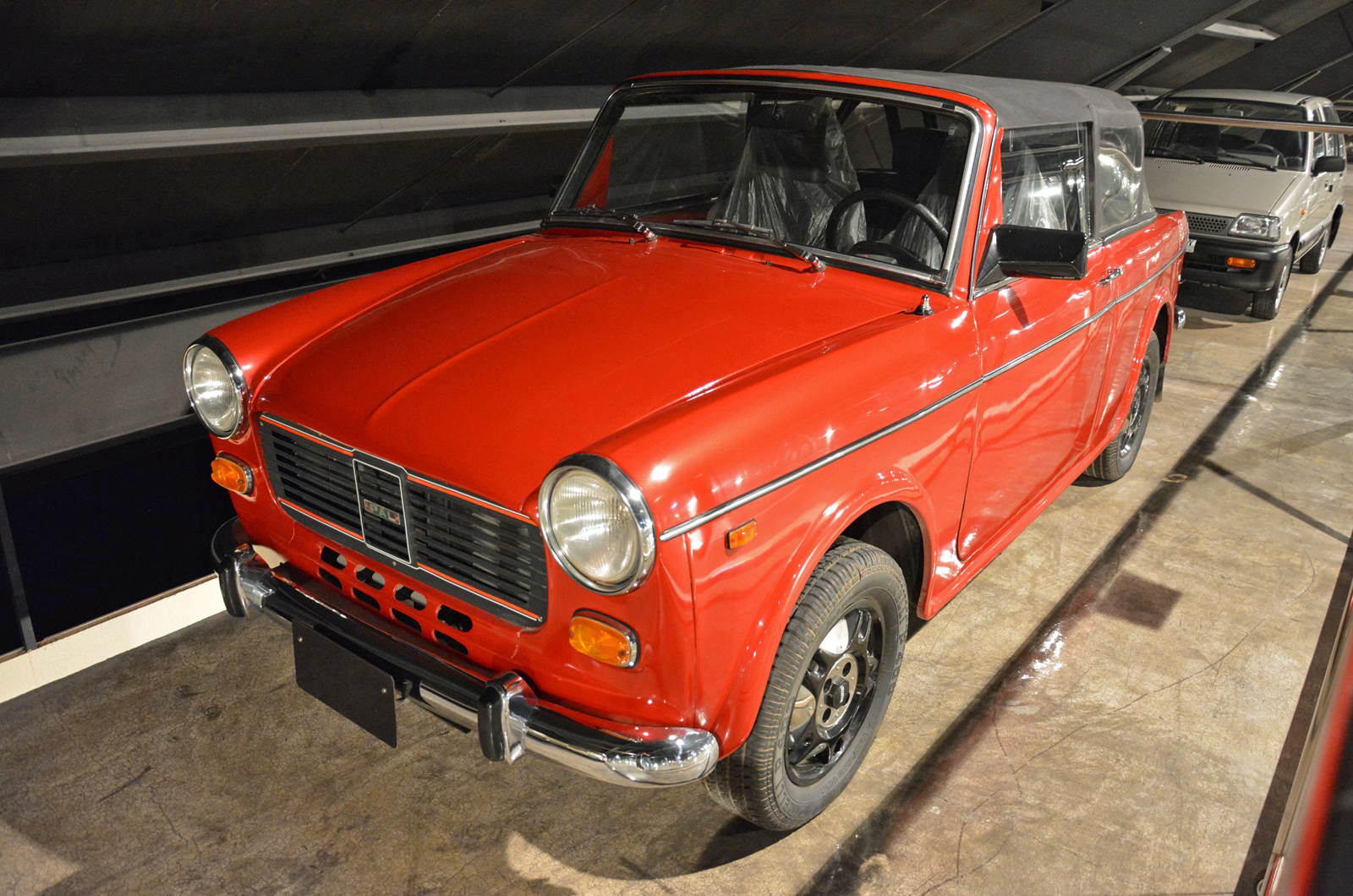
Doggedly determined to keep the Padmini in production for as long as possible, Premier released an updated model named S1 in 1996. It received a new-look design with an updated grille and mechanical modifications like a more powerful engine that shifted through a Nissan-sourced transmission with a floor-mounted gear selector.
This left-hand drive S1 has been alchemized into a convertible and a sticker on its back end suggests it spent time in Dubai before joining the Emirates museum.
Honda N600
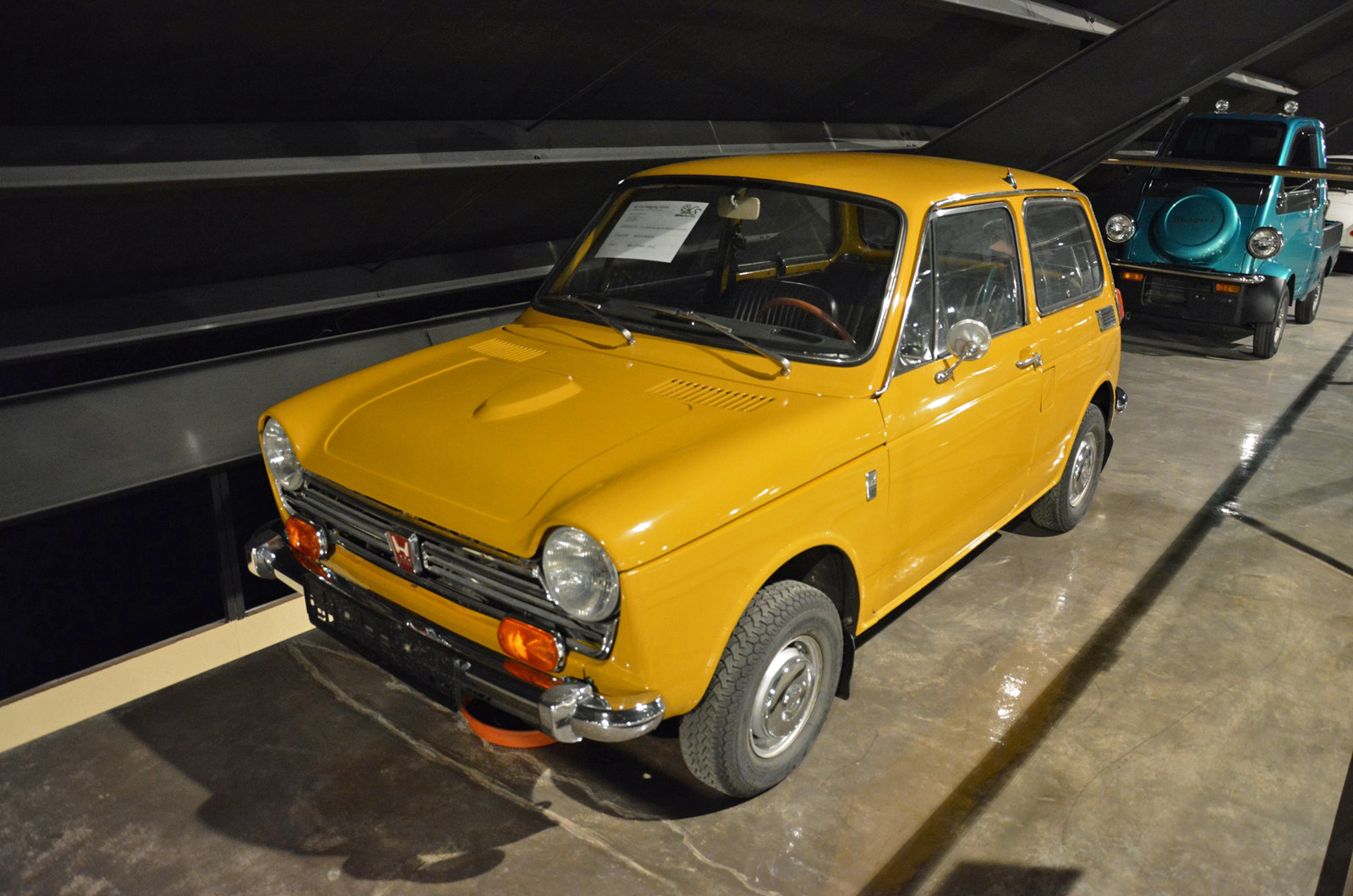
The N is the car that put Honda on the map. It went on sale in 1967 as the N360 with – as its name implies – a 360cc two-cylinder engine. Honda stuffed a bigger, 600cc twin behind the grille to export the model to the United States and Europe. Though small and underpowered, the N360 and the N600 paved the way for more successful models like the Civic and the Accord.
Subaru 360
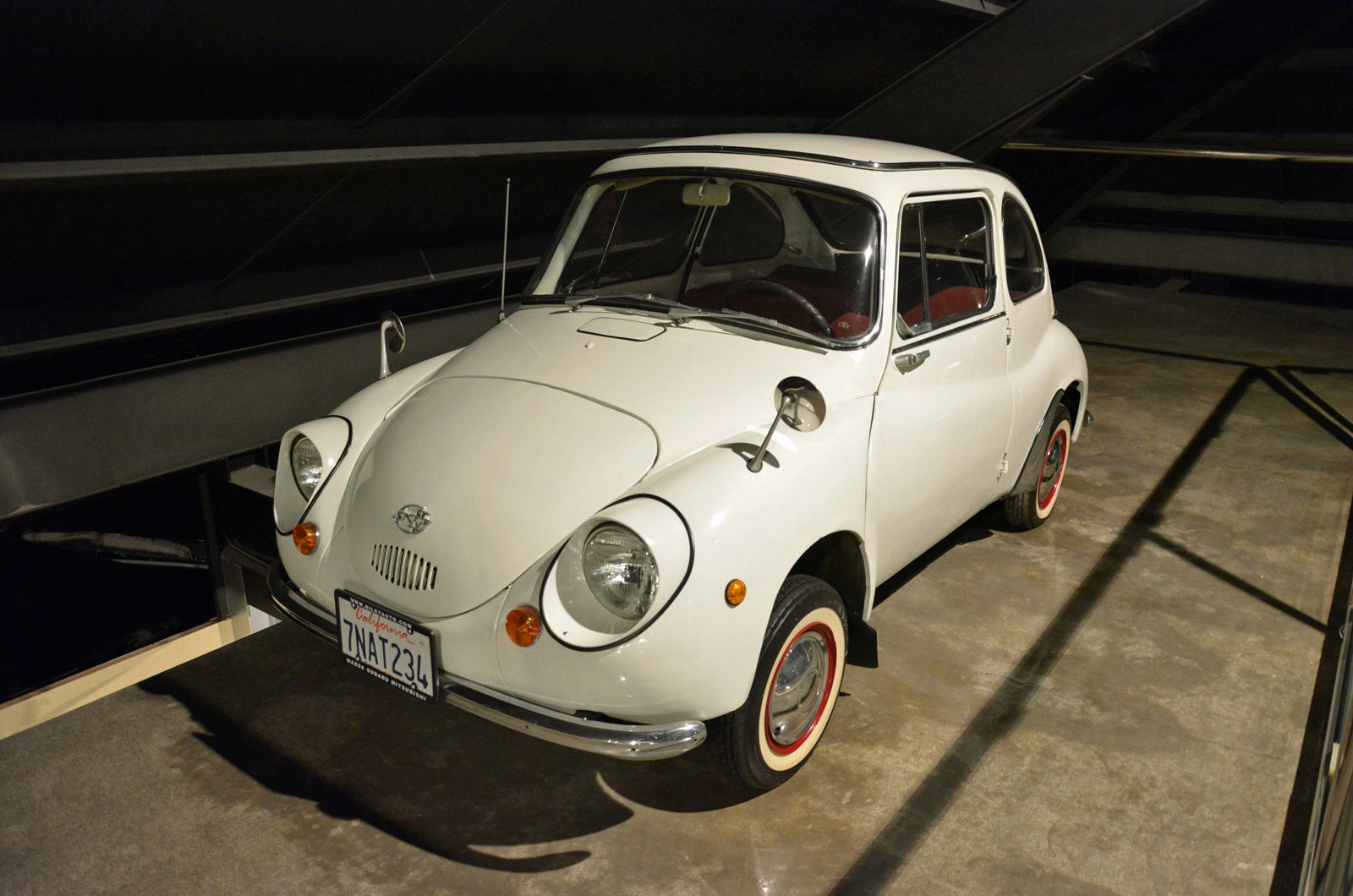
Every member of the Subaru line-up traces its roots back to the homely 360. Developed to comply with Japan’s kei car regulations, the 360 got its name from the 360cc, two-cylinder engine mounted behind the passenger compartment. It’s one of the models that helped put Japan on wheels.
The 360 went on sale in its home country in 1958. 10 years later, entrepreneur Malcom Bricklin founded Subaru of America to begin importing the 360 to the US. It was exempt from safety standards due to its low weight but Consumer Reports nonetheless dubbed it ‘the most unsafe car on the American market.’ It sold relatively well considering it was classified as a death trap and advertised as being cheap and ugly. The Sheikh's 360 came from California.
Daihatsu Midget II
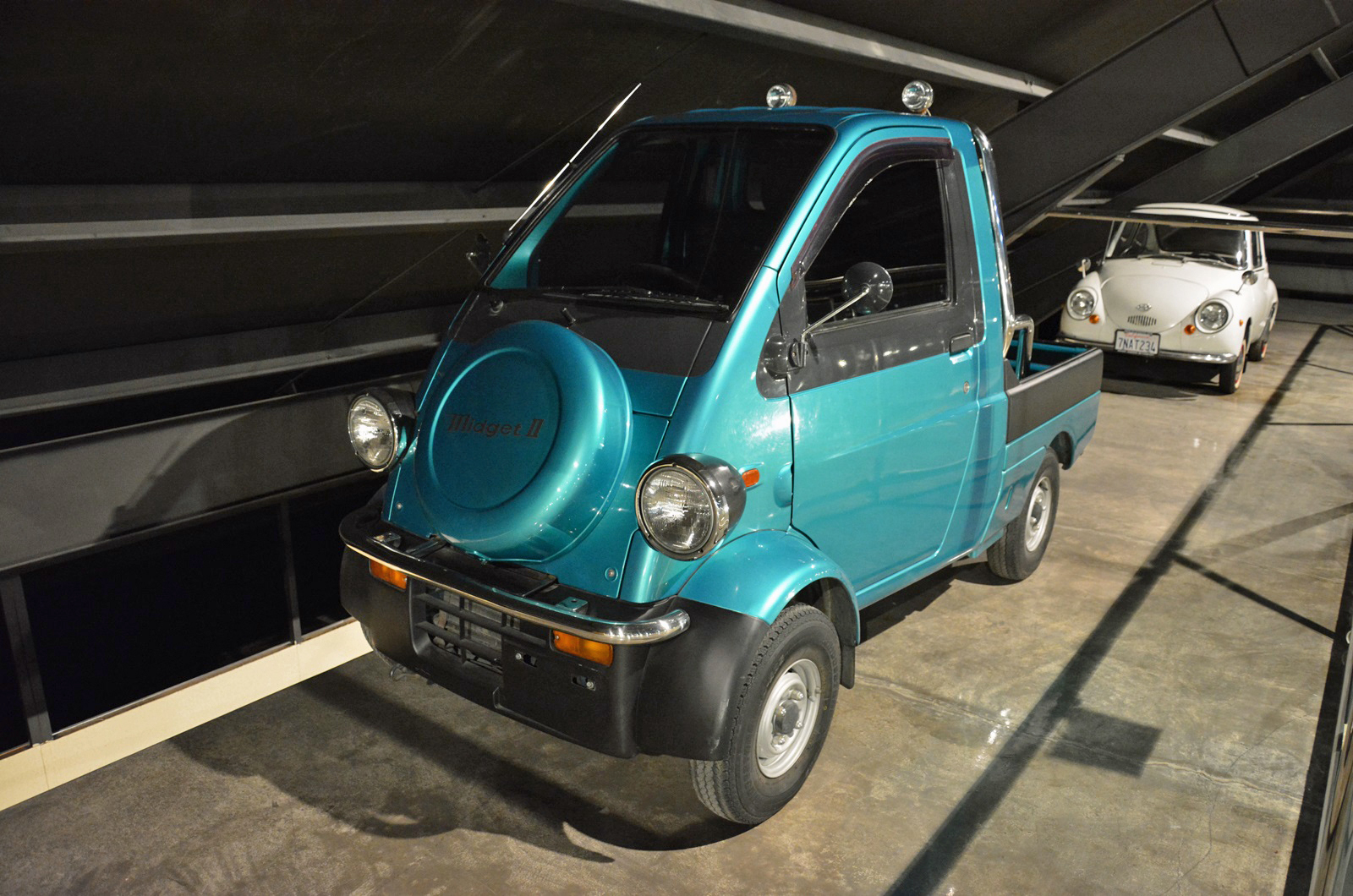
The Daihatsu Midget II is small and narrow even by Japanese standards. Introduced in 1996 to compete in the kei car segment, it offered buyers a long list of options including one- and two-seater configurations, four-wheel drive and an automatic transmission. The driver sits right over the three-cylinder engine, a packaging solution that helped Daihatsu design a pickup that fits in the back of a Ford F-150.
Toyota Crown
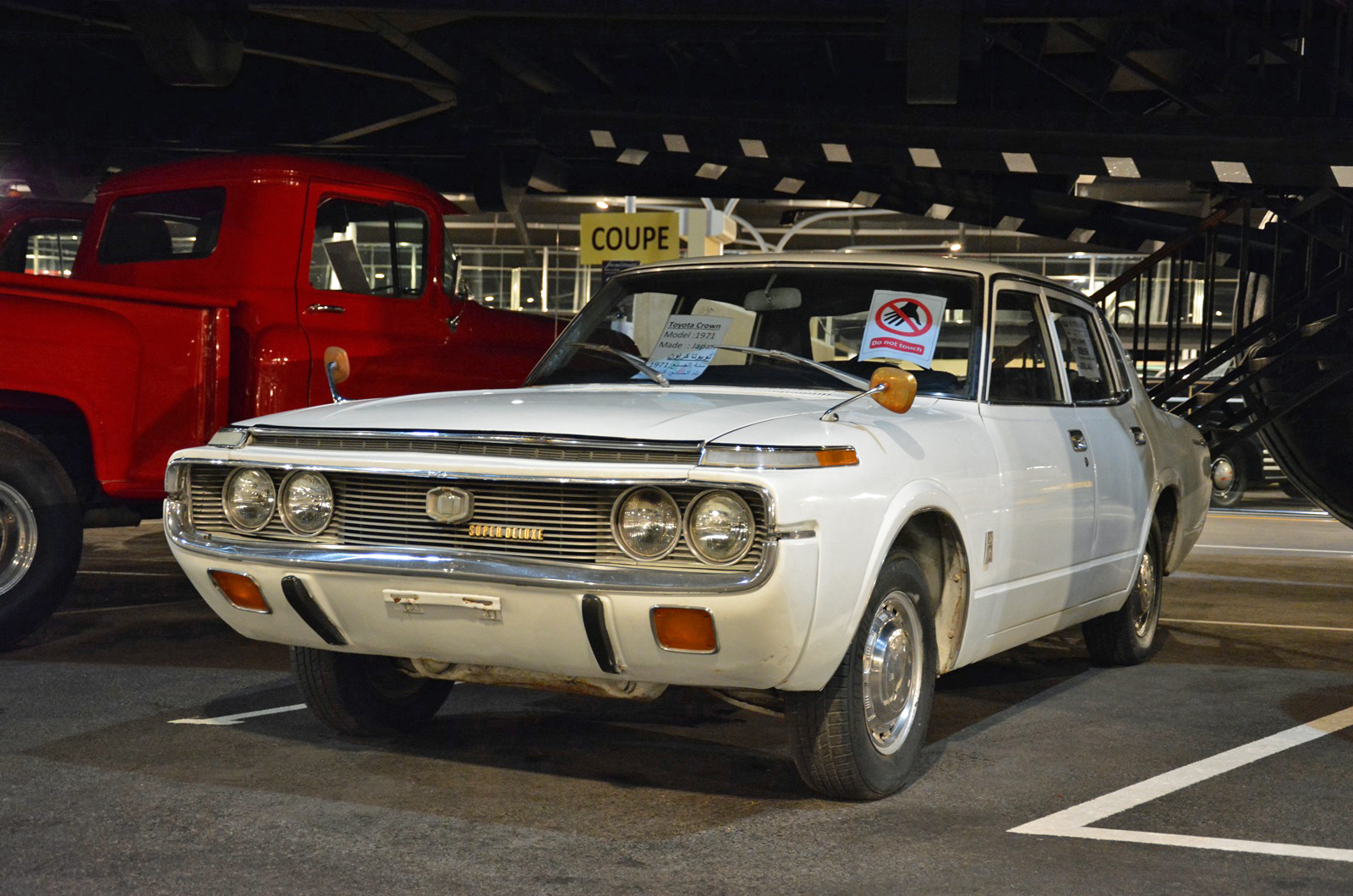
Export documents taped to the rear window of this 1971 Toyota Crown Super Deluxe reveal it originated in Belgium. It’s peppered by small battle scars (including superficial rust in the wheel arches and a bent front bumper) which indicate it was used regularly for most of its life.
Nissan Cedric
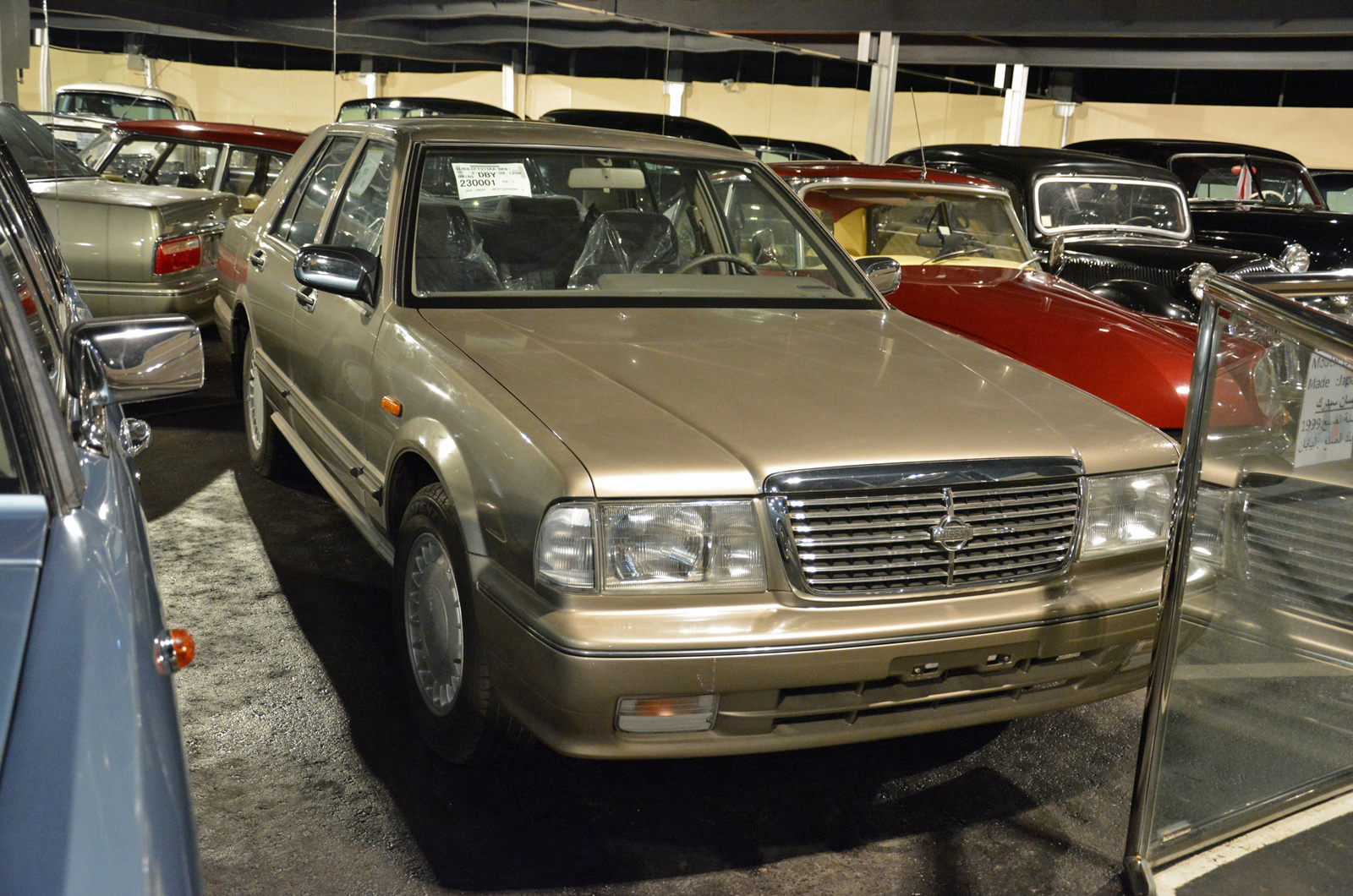
This 1999 Nissan Cedric looks like it has never been driven. When new, it appealed to buyers seeking a large, four-door model with a sizable dose of classicism. It’s a left-hand drive example so it wasn’t originally delivered in Japan but the path it followed to reach the Sheikh’s collection is an enigma.
Datsun 280ZX
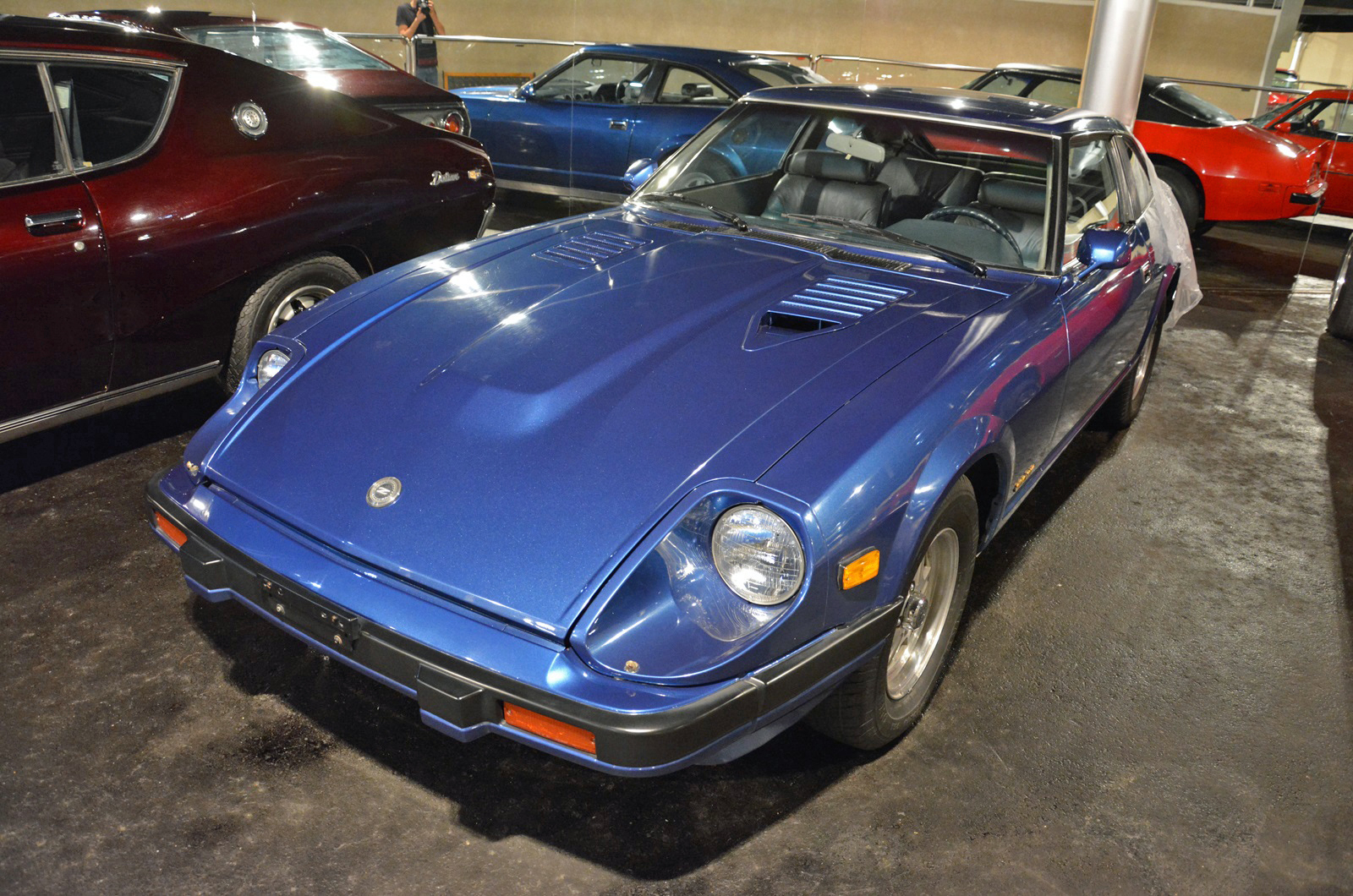
There are several Japanese sports cars in the museum, including this well-preserved Datsun 280ZX. The NACA duct identifies it as one of the last examples built while the leather upholstery suggests it’s a high-spec model. It was imported from the US.
Endurance
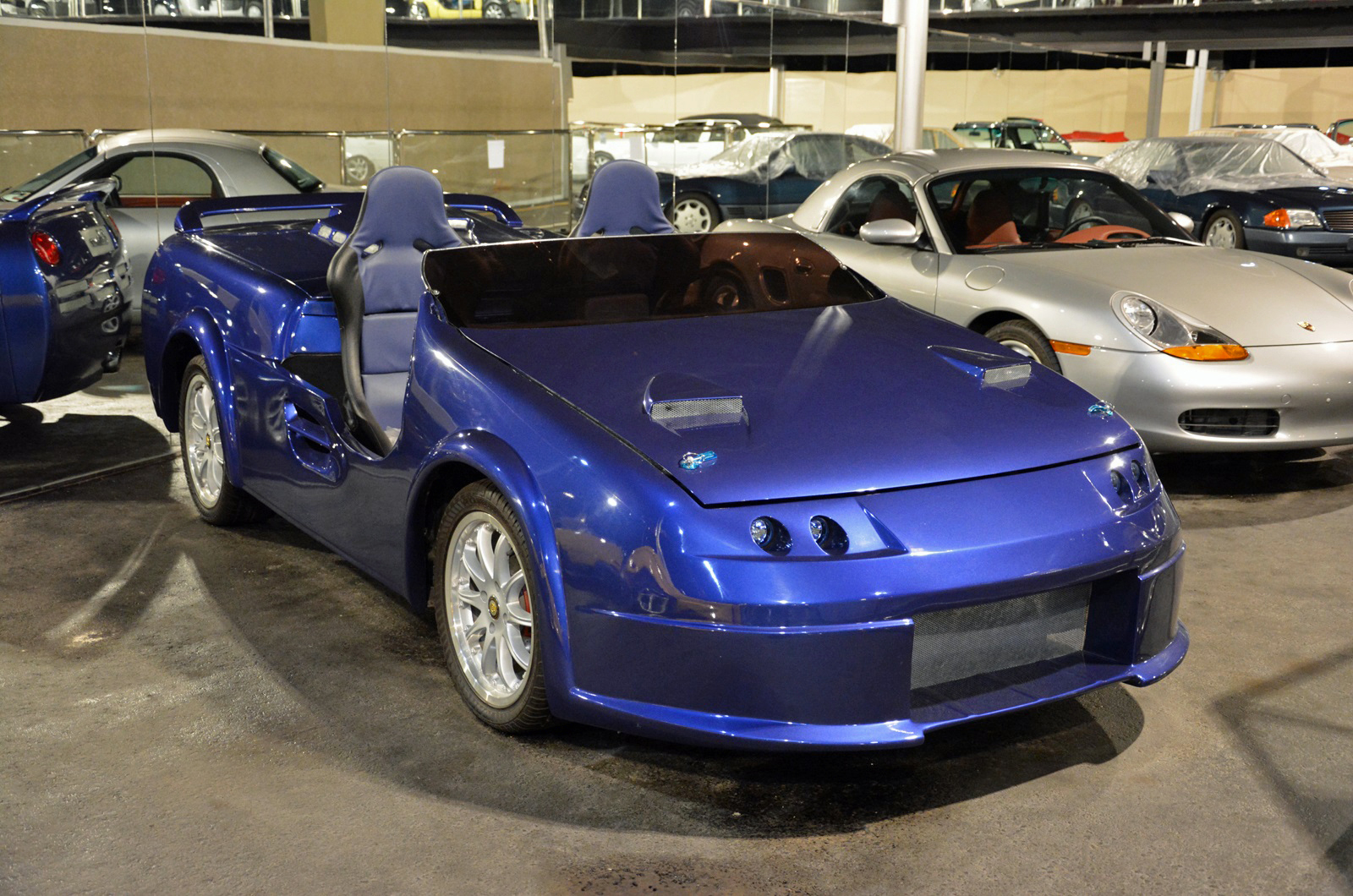
This puzzling roadster is called Endurance. It’s a two-seater that was built in Japan in 1998, and it’s likely based on an existing car, but additional information about it seems completely lost to history. Providing information about the cars on display is not one of the Emirates museum’s strong points.
Ford Crown Victoria
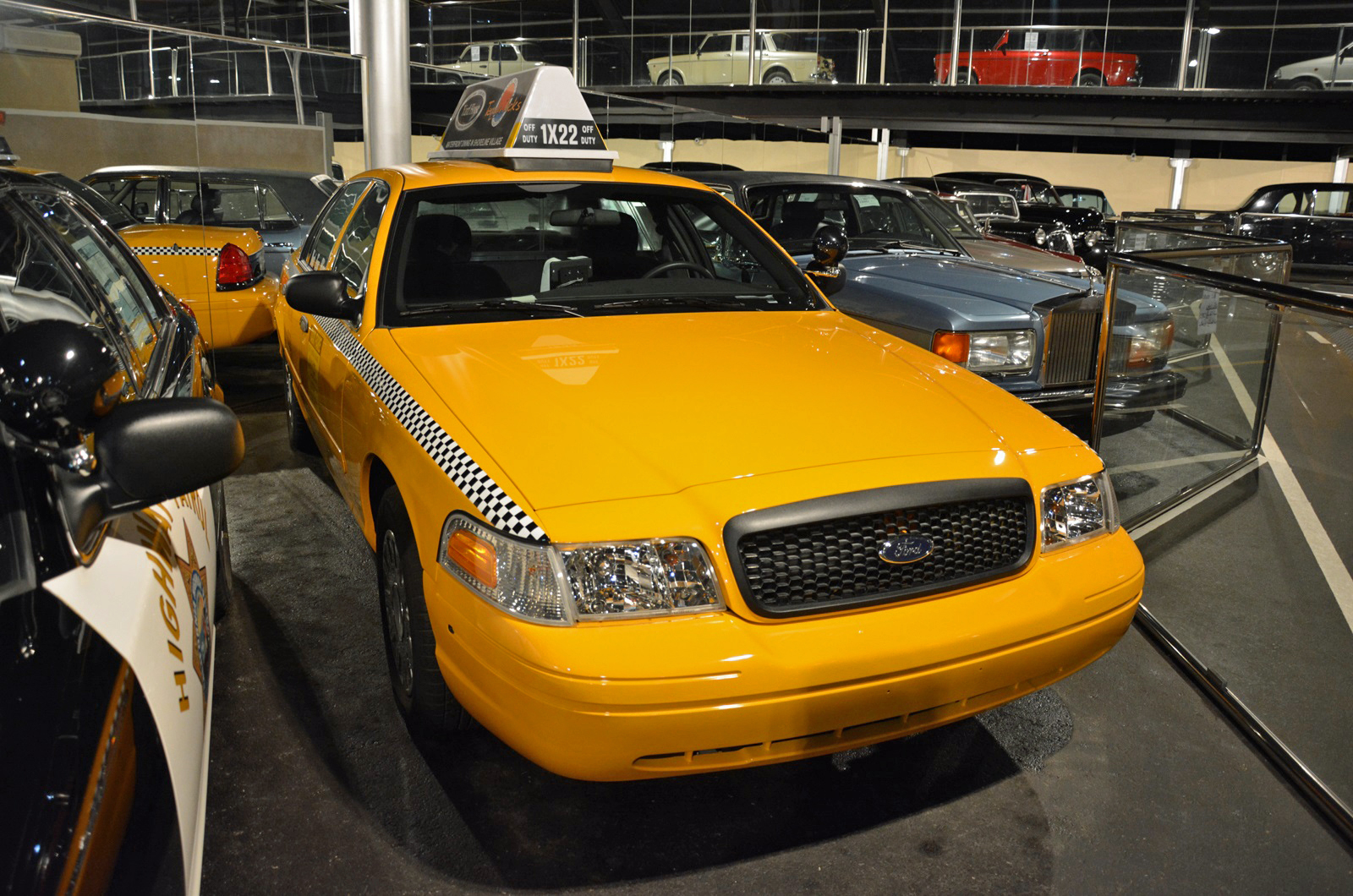
In 2021, there are probably more examples of the Ford Crown Victoria registered in the Gulf countries than in New York City. The Sheikh owns two of the nicest ones around. The first (pictured) is a taxi from the Los Angeles area; the second served as a highway patrol car.
Pontiac Firebird Trans Am
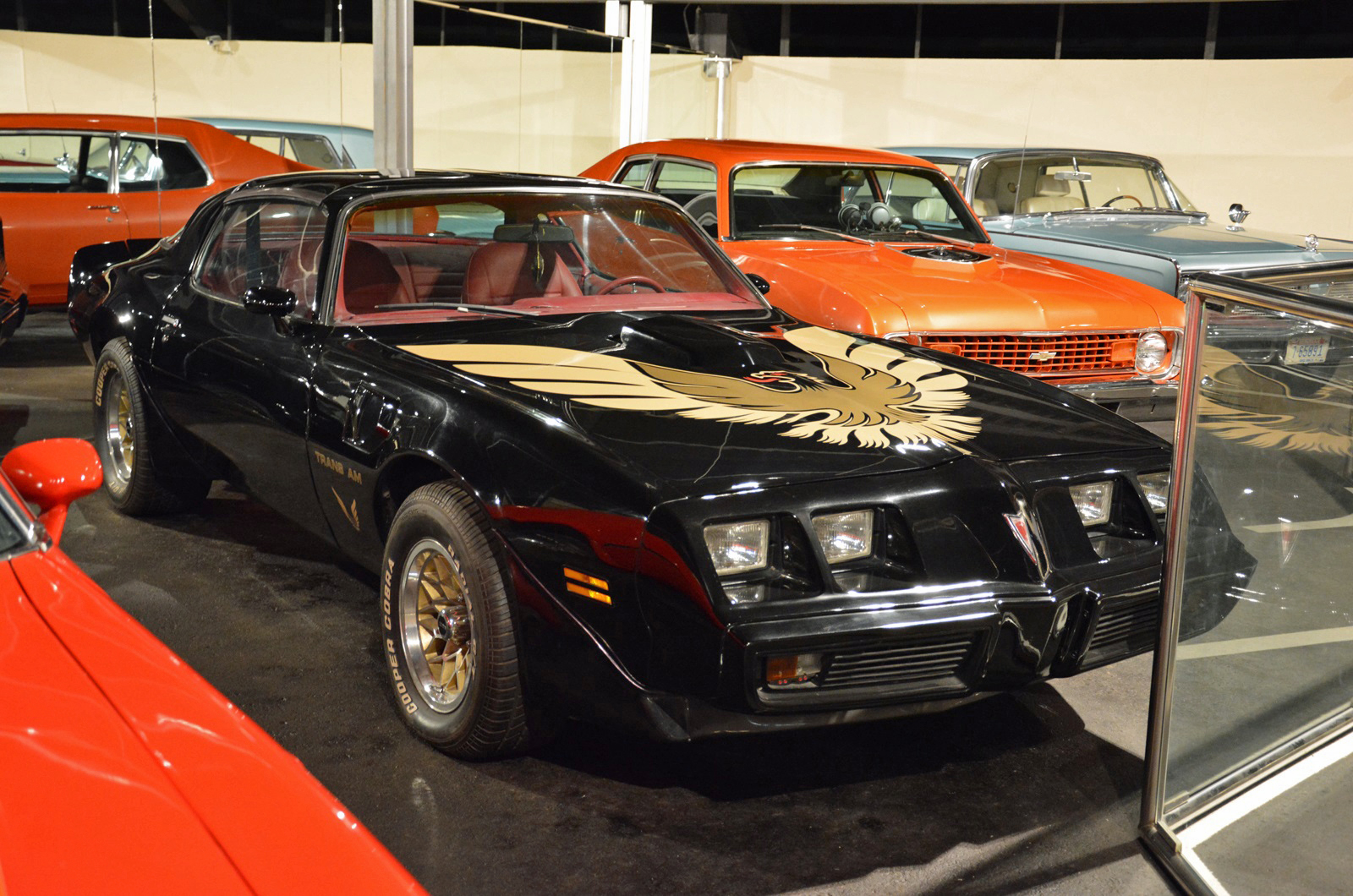
This third-generation Pontiac Firebird Trans Am is one of several American muscle cars in the museum. Equipped with T-tops, it’s original and in like-new condition; odds are it was shipped from the US. The Chevrolet Nova behind it was modified into a drag racer, showing another facet of muscle car culture.
Scaled-up Dodge Power Wagon
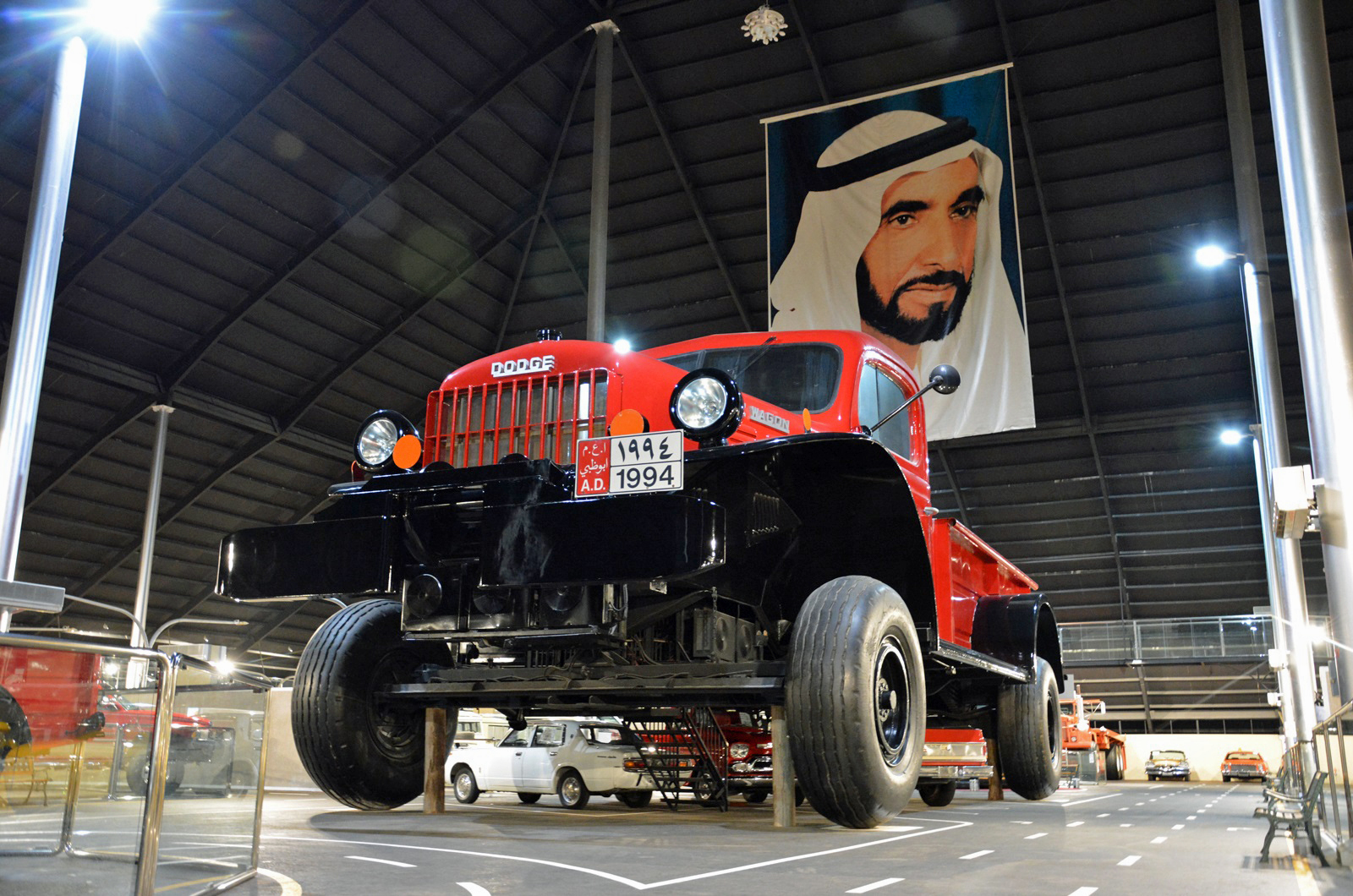
Trucks and SUVs are well represented in the Sheikh’s museum. The most impressive one is undoubtedly this gigantic replica of a Dodge Power Wagon, a model commonly seen in the United Arab Emirates desert during the 1950s. It’s big enough to park a full-size, 1980s Chevrolet pickup under yet it runs and drives.
Willys Jeep
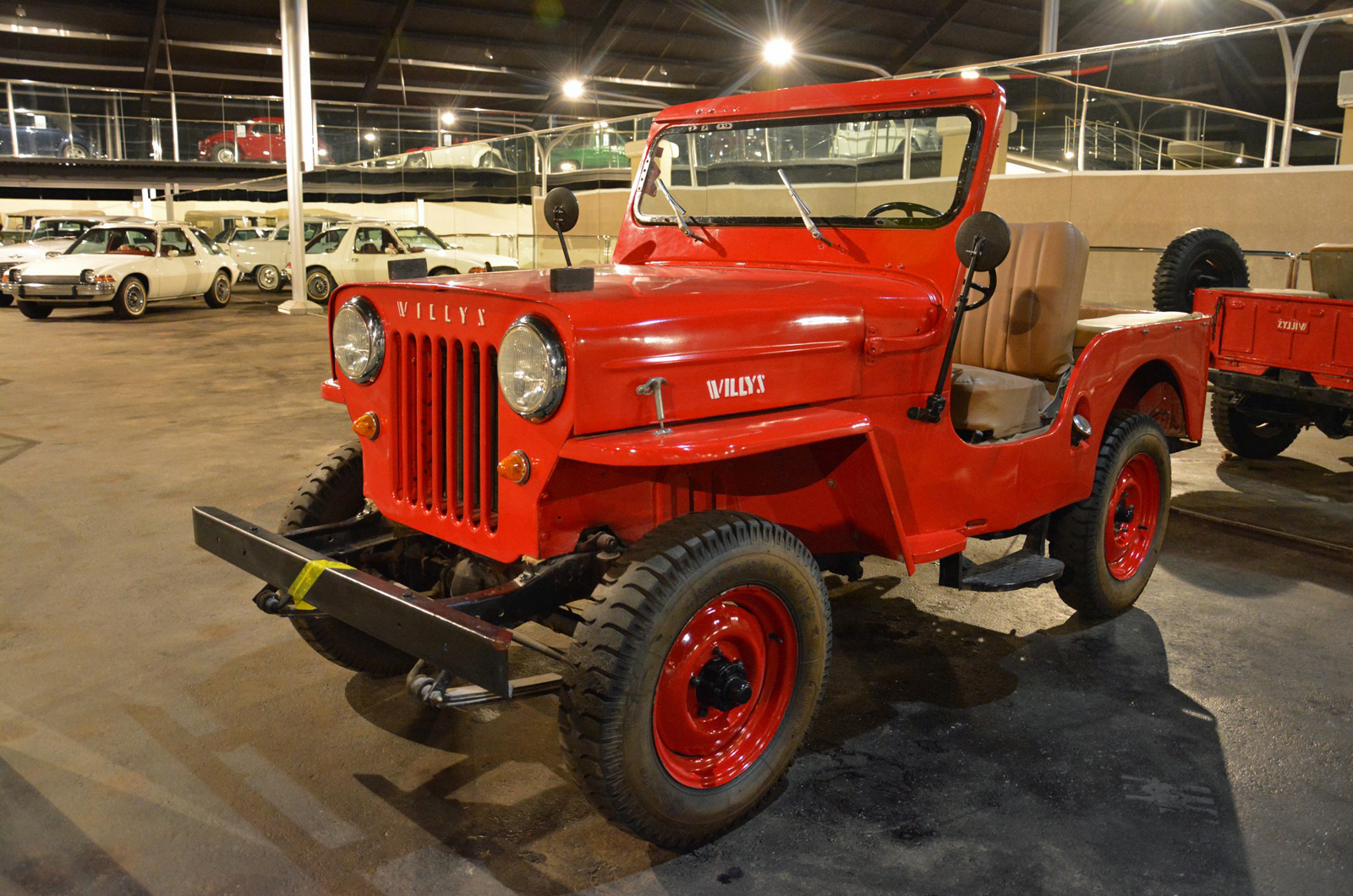
The dust on this Willys Jeep reveals it hasn’t moved for a while. It’s parked along with other American cars (including an AMC Pacer and a Checker Marathon) on a row of the museum that’s mostly empty. The Sheikh still has space to expand his collection.
Willys-Overland Jeepster
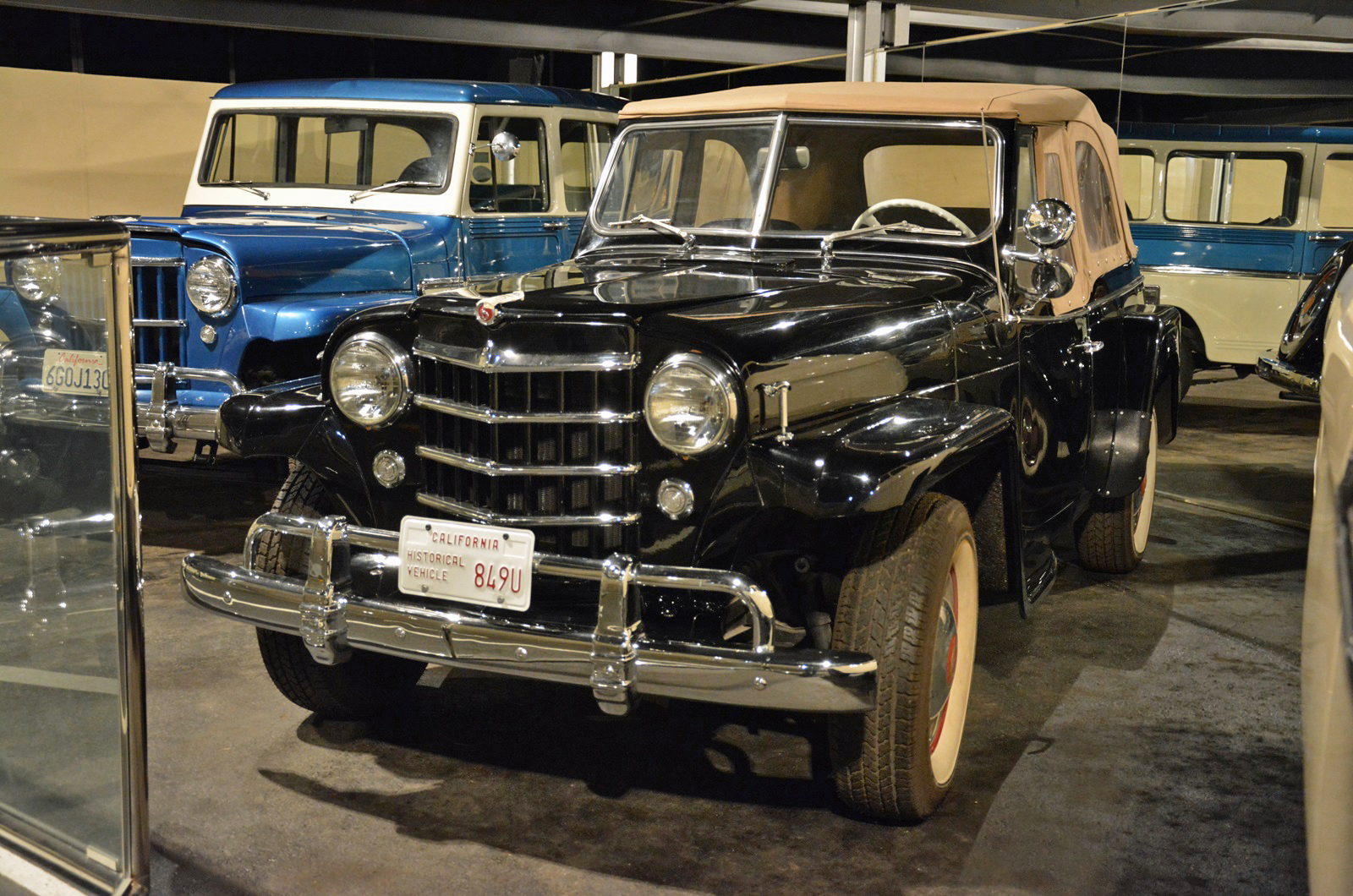
The Jeepster is the black sheep of the Jeep family. It was released by Willys-Overland in 1948 as a more road-focused alternative to the CJ-2. It took the form of a convertible available exclusively with rear-wheel drive. It never caught on and production ended in 1950. The example in the Sheikh’s museum still wears historical vehicle plates issued in California. The Jeep Station Wagon parked next to it came from the Golden State, too.
Jeep Grand Wagoneer
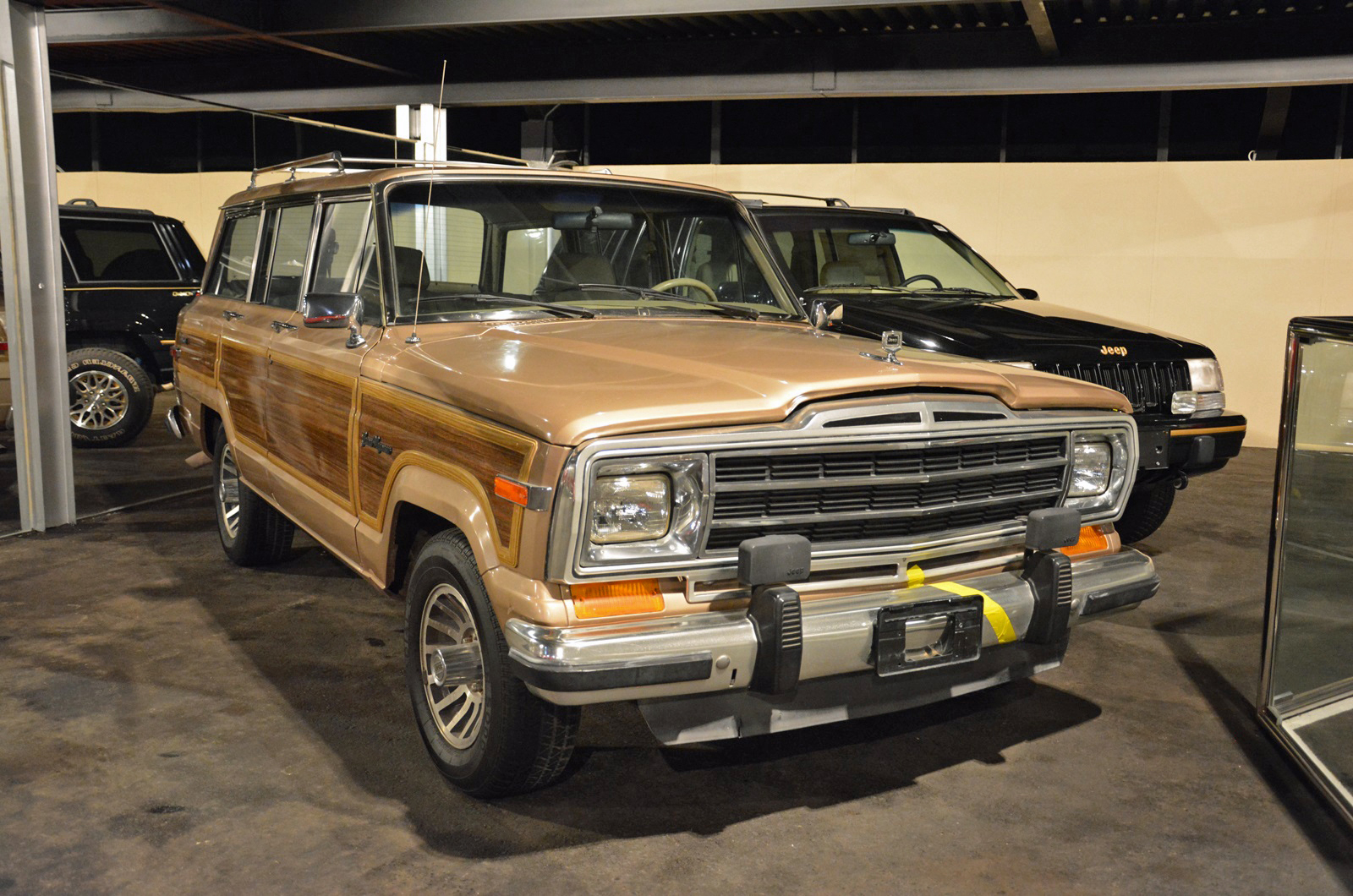
This late-model Jeep Grand Wagoneer is parked next to its successor, the first-generation Grand Cherokee. It’s the ultimate evolution of the model that many historians call the first luxury SUV. The Grand Wagoneer rusted well and clean ones like the Sheikh’s sky-rocketed in value during the 2010s.
The Dodge Ram Suburban that never was
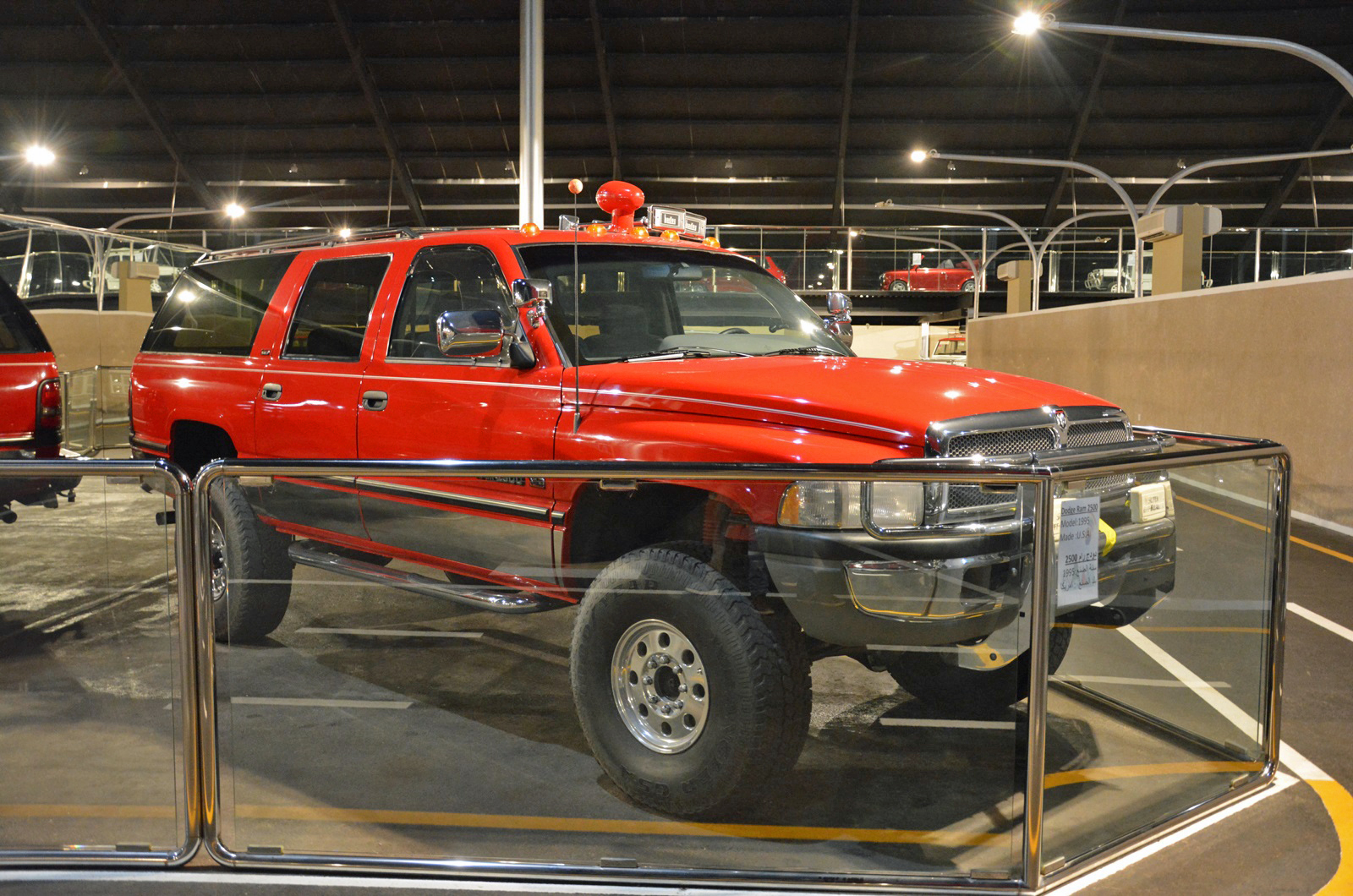
This 1995 Ram 2500 pickup was converted into the Chevrolet Suburban-fighting SUV Dodge refused to build during the 1990s. This transformation was rare but not unheard of in America during the 1990s. The museum didn’t provide information about who performed the conversion and when.
Retro-styled Ford F-250
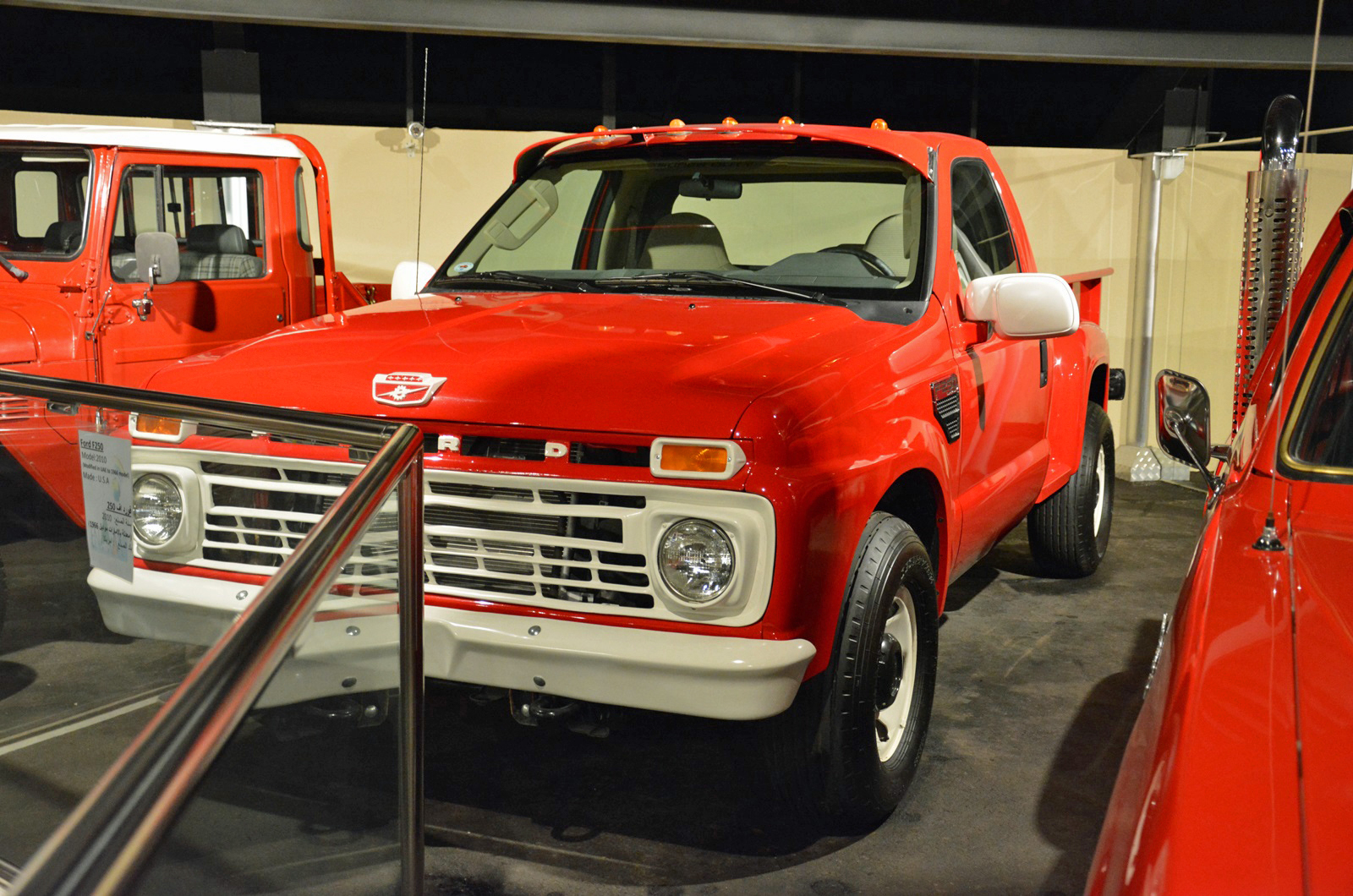
Another enigmatic conversion in the Sheikh’s museum is this 2010 Ford F-250. It was modified to look like a 1966 F-Series by a private company in the United Arab Emirates. The grille and the headlights are from the 1960s but they’re mounted on custom-made sheet metal. The step-side cargo box looks custom-made, too.
Land Rover Series III
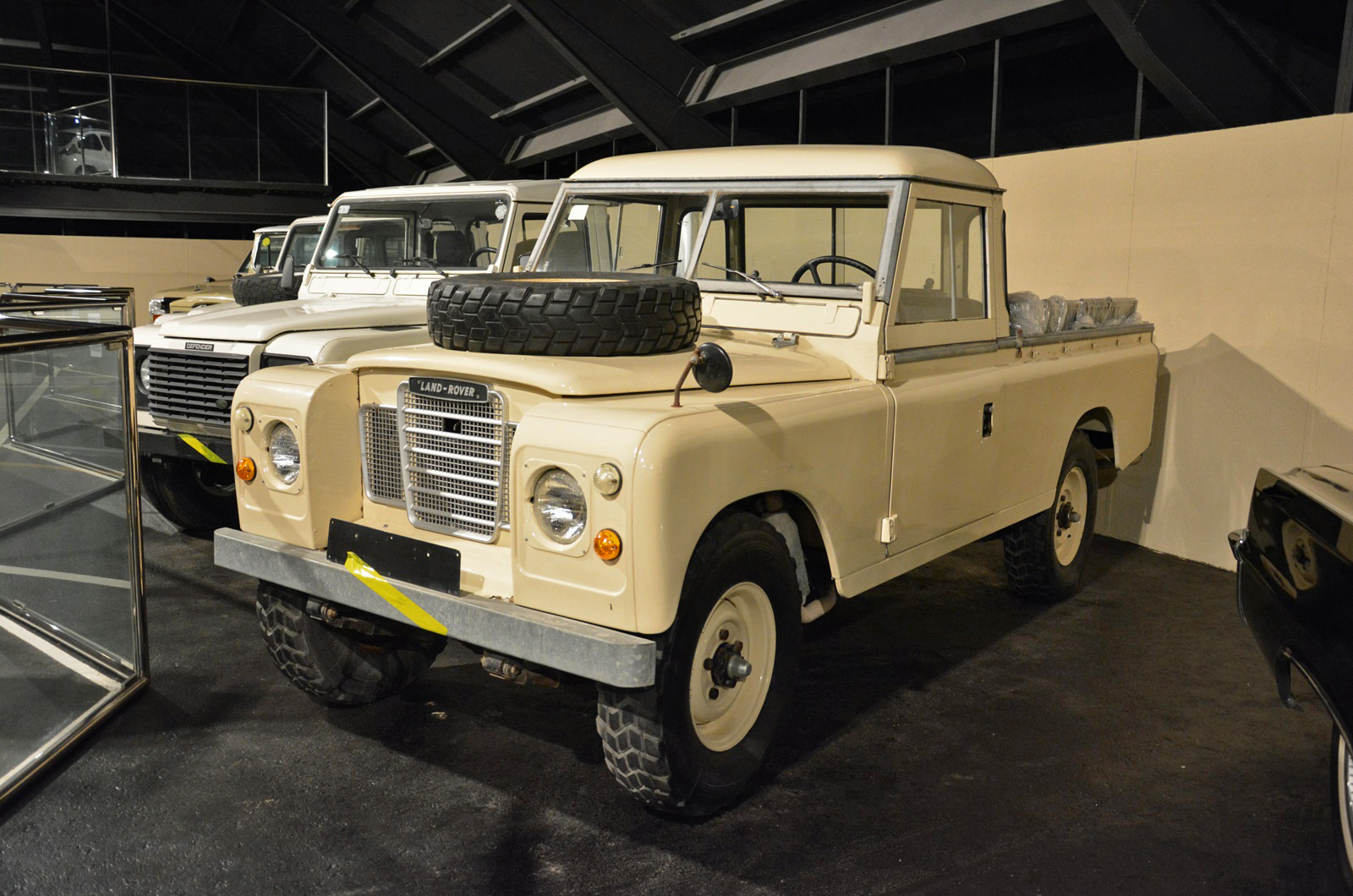
Toyota is the preferred off-roader brand in the Gulf countries, not Land Rover, but the Sheikh doesn’t discriminate when it comes to 4x4s. His collection includes several Land Rovers including a V8-powered 110 and a 1972 Series III pickup (pictured).
Toyota Land Cruiser
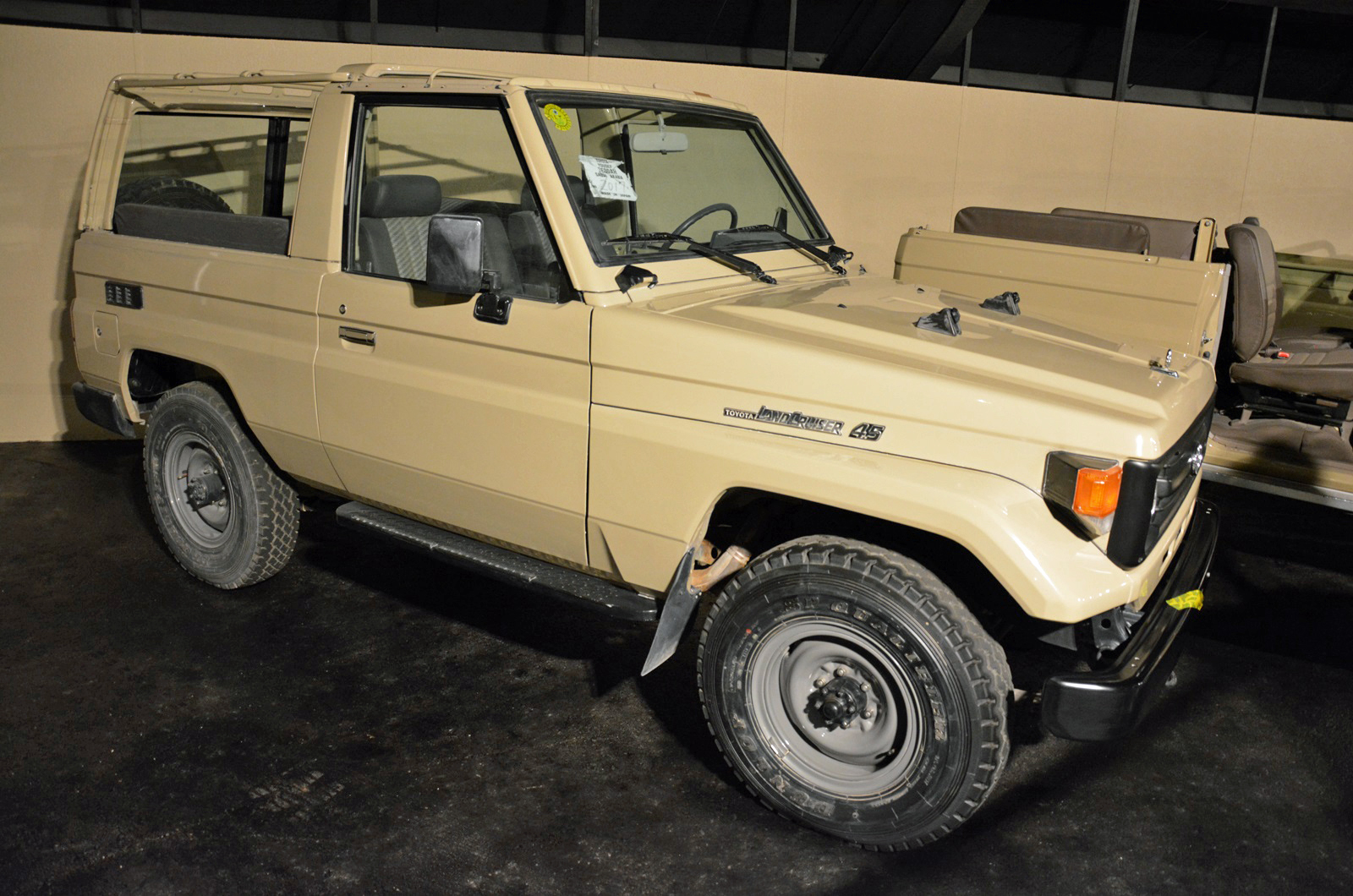
Referred to in the museum as a Toyota Jeep, this short-wheelbase Land Cruiser is ready to tackle the desert. It’s equipped to receive a soft top and its windshield folds down to provide the full open-air motoring experience. The basic design dates to 1984 but this example was made in 1999.
Nissan Patrol
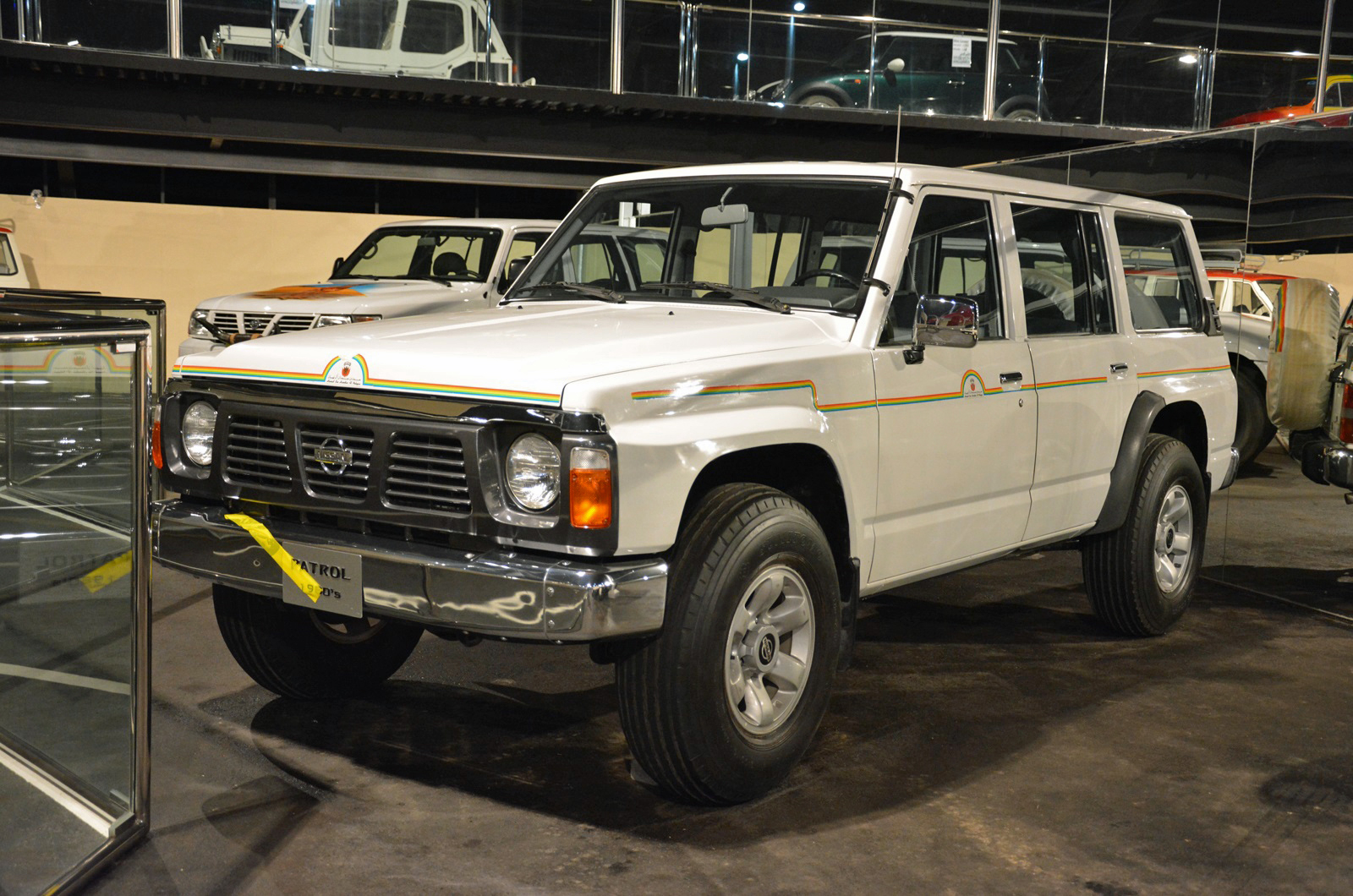
Nissan’s Patrol stands out as one of the most popular SUVs in the United Arab Emirates. This is a long-wheelbase, fourth-generation model surrounded by the Sheikh’s beloved rainbow stripe. It’s shiny and dent-free so it was likely used for parades rather than for desert exploration.
Suzuki Jimny
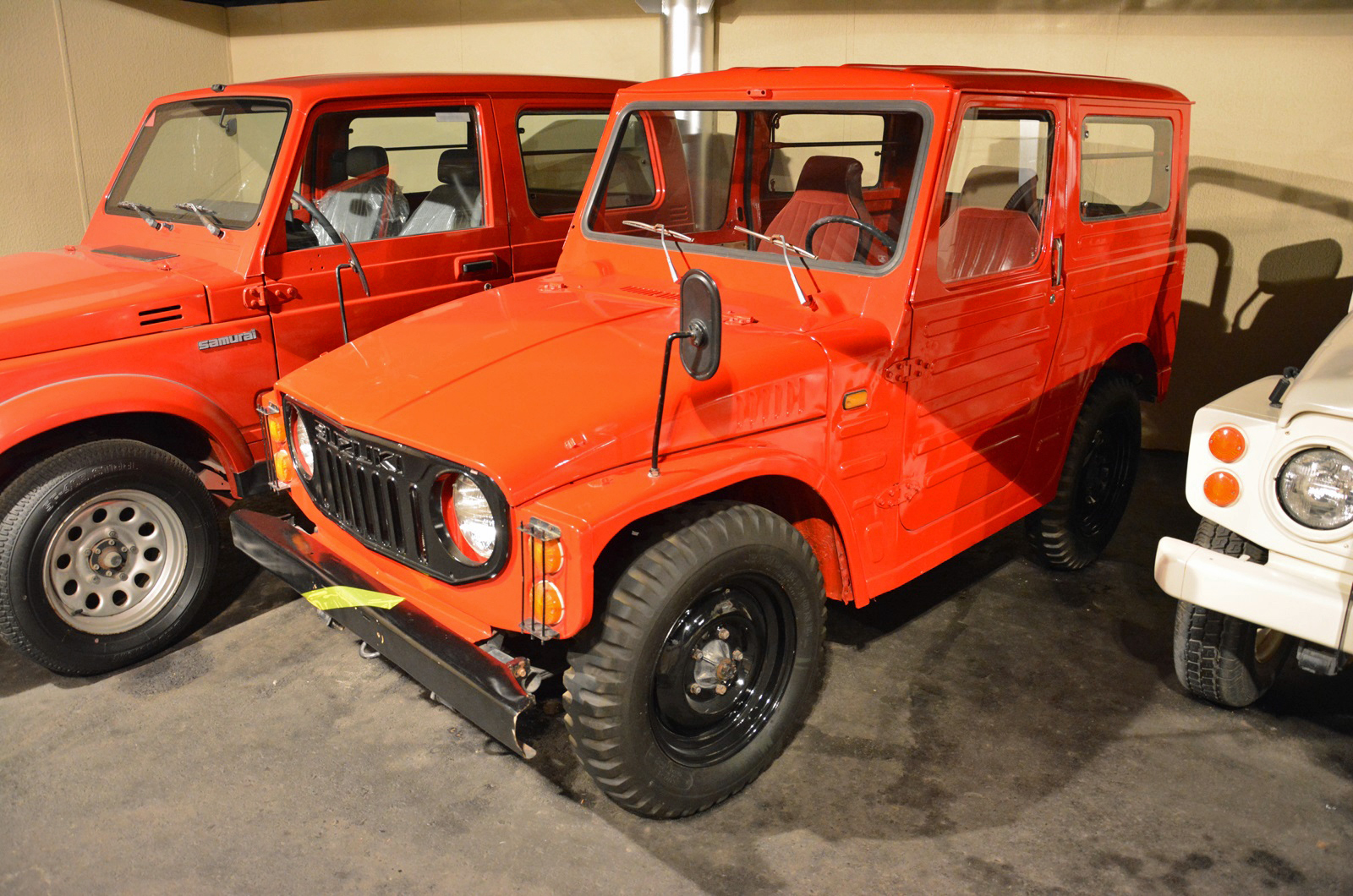
Many motorists in the Gulf countries prefer to drive big, powerful SUVs like the Nissan Patrol, the Toyota Land Cruiser and the Chevrolet Suburban. The Suzuki Jimny isn’t one but its off-road prowess is difficult to argue against. Every generation of the tiny SUV is represented in the museum, including the first-generation example pictured here, but the Sheikh hasn’t gotten his hands on the newest model – yet.
Suzuki Jimny
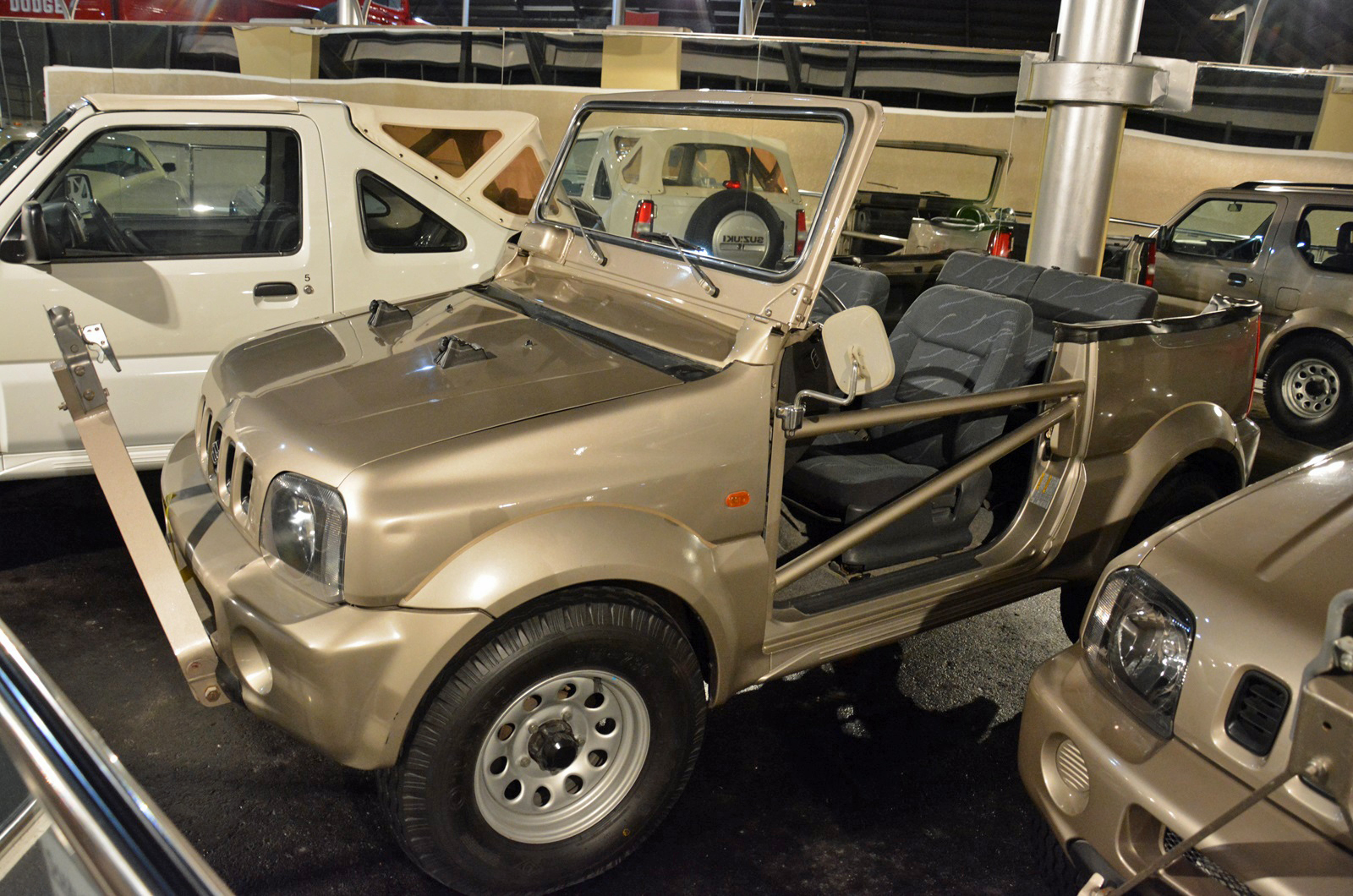
Suzuki never offered the third-generation Jimny with a fold-down windscreen. The modification was done by a private company in the United Arab Emirates. The Jimny also lost its top and its doors while gaining a tow bar attached to the front end.
Zamyad Z24
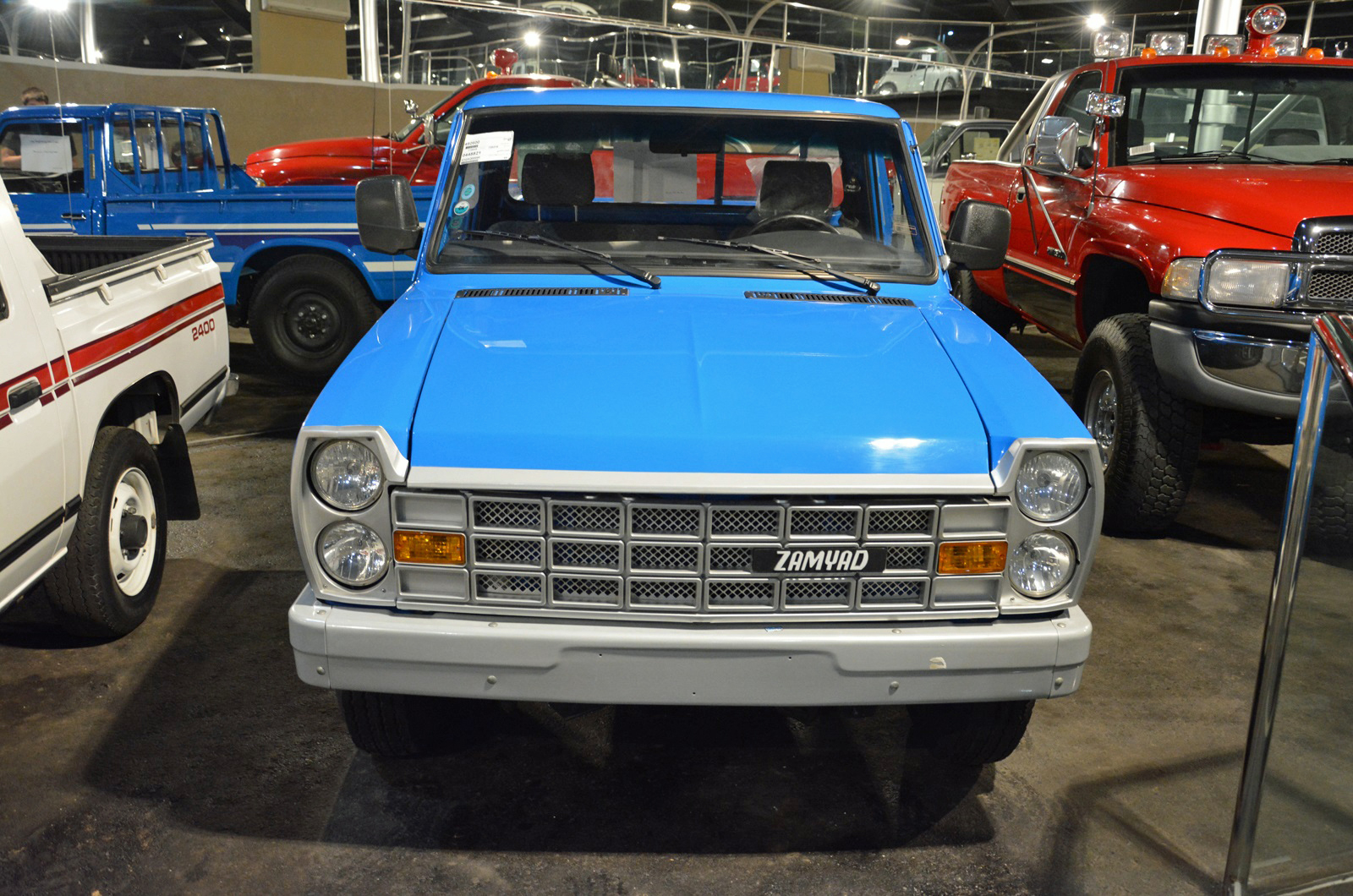
The Zamyad Z24 is a Nissan Junior pickup manufactured under license in Tehran, Iran. Nissan released the third-generation Junior in 1970 and it stopped building the model in 1982 but Zamyad still manufactures it in 2021. The Sheikh’s is a late-model example fitted with fuel injection.
Mercedes-Benz G-Class
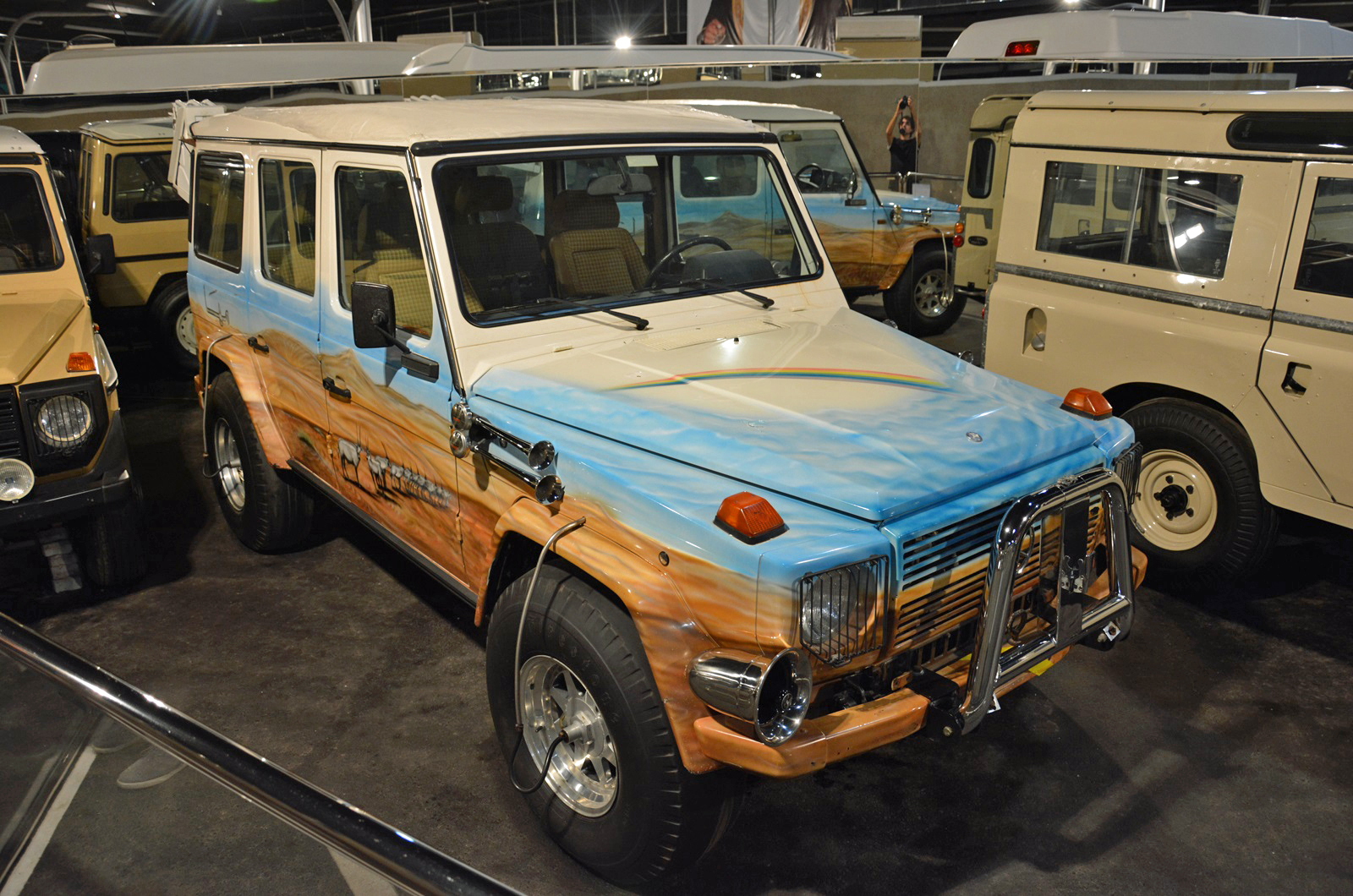
The highly-detailed custom paint job worn by this Mercedes-Benz G-Class is just the tip of the iceberg. It’s also equipped with a central tire inflation system, dual air horns, a fold-down bull bar and a rack for fuel cans out back. Unlike many cars in the Sheikh’s collection, this one looks like it has spent a considerable amount of time off the beaten track.

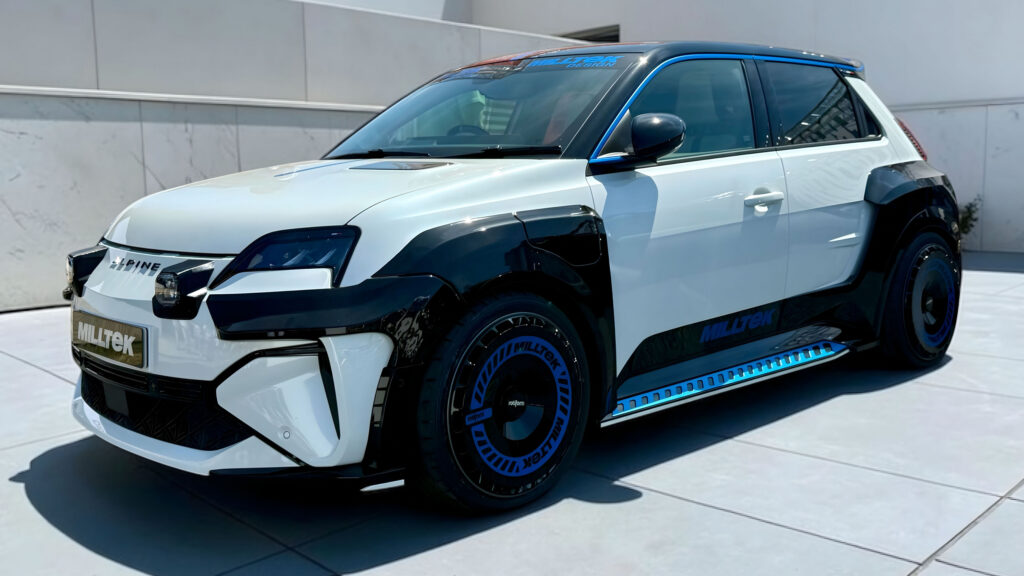
Milltek Widebody Kit Reimagines Renault 5 and Alpine A290 EVs with Group B Rally...

Denza Z Challenges Porsche 911 with Hypercar Power but Struggles to Deliver Sports Car...
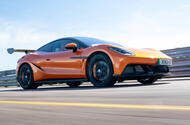 How do you beat the best-known sports car with an EV? A Chiron-baiting power output is a good start...
Disorder would seem to be the main risk for BYD’s new premium brand Denza. Lack of cohesion, if you prefer. With a bluff, ladder-frame off-roader, a large seven-seat MPV, and a sleek executive shooting brake in it already, the firm’s product portfolio could, before long, look more like an odd sock drawer than a unified family of desirable electrified cars.
A focal point to gather attention around should certainly help address this; a true ‘hero model’. Enter the Denza Z sports car. Could this be the car to really grab the attention of the European public, and make us interested in ‘the Denza story’?
Well, it looks like a clever cross between a sports car, supercar and sleek grand tourer. It comes with a tri-motor, all-electric powertrain with suitably heroic performance potential. And, on price, it’s going right after the most revered sports car in the world. Taking notice now? Thought you might be.
Denza’s senior product planners and engineers make no bones about the fact that it was a certain Porsche they had in their sights when designing and engineering this 4.8-metre ‘2+2’-seater halo model. They don’t mean the Taycan.
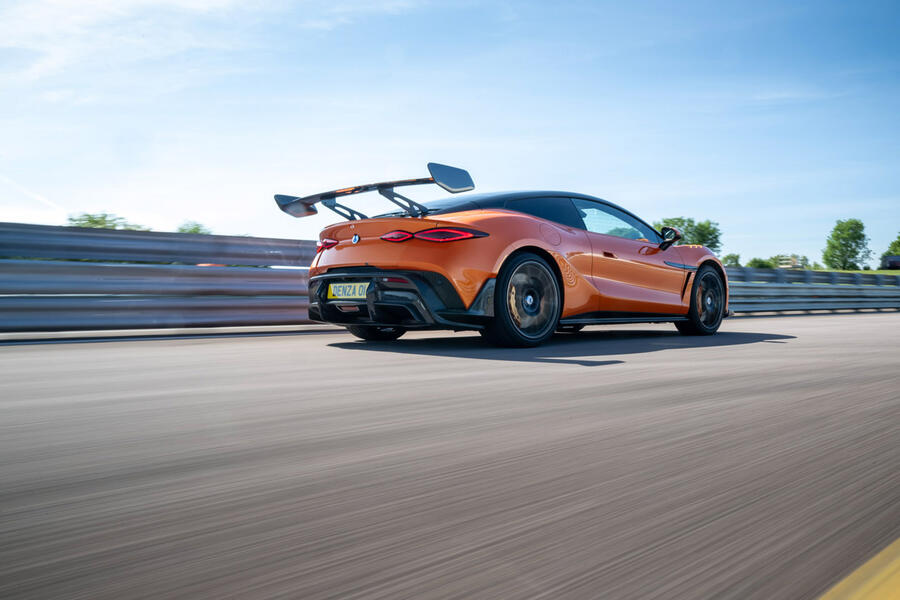
Sure, it’s electric; and that’ll make it about as likely to be chosen by some sports car regulars as a seafood salad that’s been out in the sun for too long. But it’s the obvious choice for Denza; because BYD has some of the best battery, motor and charging technology in the world, develops most of it in-house, and quite understandably wants a way to show it off.
Of course, you could easily mistake this for a car with even greater performance ambitions. The motor layout certainly suggests so. The Z is powered by a pair of 456bhp permanent magnet motors at the rear axle (driving a wheel each ‘asymmetrically’), and a 671bhp one that drives the front. Peak power is therefore 1584bhp - which is well in advance of the ‘megawatt’ threshold that defined the very first electric hypercars (Rimac Concept One, Nio EP9). You might also have clocked that it's even several bhp more than the Bugatti Chiron Supersport.
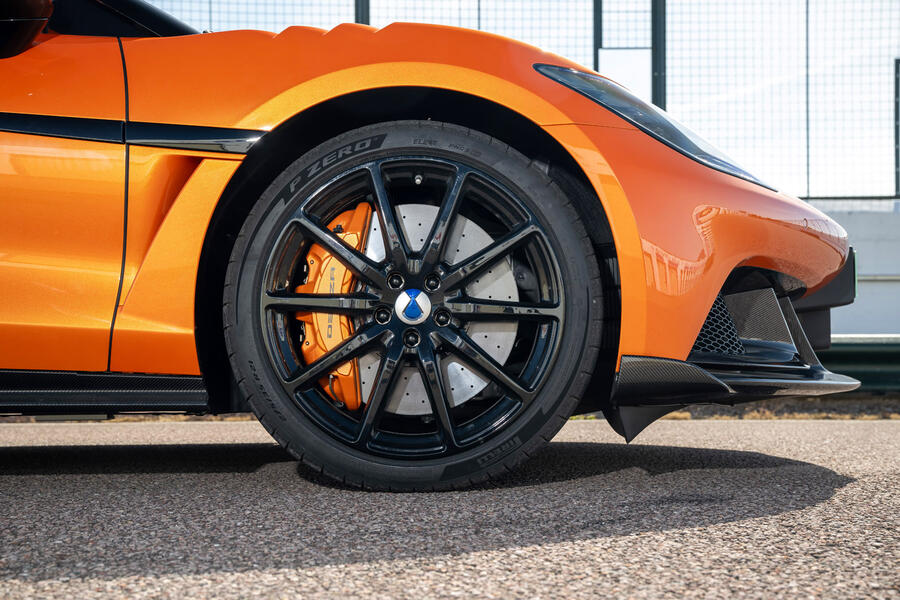
Under the Italianate bodywork (for which we can credit BYD Design Director Wolfgang Egger; Alfa Romeo 8C, etc) sits BYD’s ‘e3’ (pronounced ‘E Cube’) platform, however - shared with the larger Denza Z9 GT shooting brake.
That means the car has a unitary chassis ‘gigacasting’ (like a 911) rather than a monocoque ‘tub’ (like a supercar). The chassis makes room for one of BYD’s second-generation LFP ‘blade’ battery packs, worth 76kWh, within it; which works as a stressed part of it, and contributes to impressive torsional rigidity - albeit perhaps not the kind of low kerbweight you might expect of a sports car (2250kg).
Denza will offer three versions: Coupe, convertible Spider, and track-ready Racing (a special edition, engineered ostensibly to win the Nordschliefe lap record for production EVs back from the Manthey-kit Porsche Taycan Turbo GT, will also be made, but in very small numbers). They are priced from £142,900, £159,900 and £172,900, respectively, putting the Z squarely in Carrera 4 GTS territory (for want of a more technically similar reference point) and making this comfortably the most expensive car China has yet put on our shores.
In advance of the car’s public debut at the Goodwood Festival of Speed this week, Denza graciously afforded us one flying lap of Goodwood circuit as a preliminary test; with an instructor in the passenger seat making sure we didn’t exceed its ‘recommended speed limit’, or experiment with the drive modes.
For that lap, we did at least get the Racing version, which uses steel coil suspension in replacement of the air springs of other models; magnetorheological dampers, too; and will be available with proper circuit-appropriate semi-slick tyres (although ours didn’t have those).
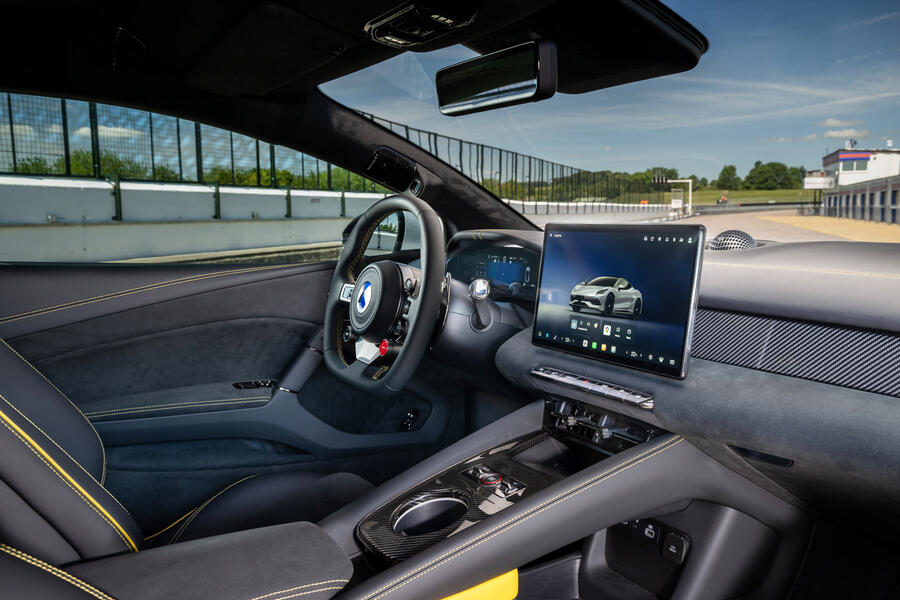
The test didn’t include much time for detailed impressions of the cabin. The driver’s seat felt quite softly padded, and a little short on purposeful support for a track-intended model. For a sports car, it could have been lower-set. The wider cabin contents looked and felt a little plasticky, in some places, given what you might expect for a six-figure price tag; but nothing was particularly, conspicuously cheap.
After a warm-up lap, Goodwood circuit gives you only four or five places where you can open the accelerator wide; which isn’t many when you’ve got nearly 1600 horsepower to account for. I’m not fully convinced that the Denza Z felt quite that powerful.
The car has surprisingly progressive power delivery, seemingly feeding torque through gradually. To me, it didn’t quite seem to have that really titanic, super-linear throttle feel of other 1000bhp+ EVs I’ve tested -despite working up a very rapid head of steam in any case. This may have been because the car's road tyres couldn't transmit the necessary traction on track, and the car's governing electronics were dampening its responses.
By sports car standards, the Z also seemed to lack a little bit of simple agility and willingness to change direction, perhaps on account of its heft. The car’s tri-motor powertrain felt a little reigned in and closely governed by its electronics. It didn’t seem able to rotate the car with power, or add much directional impetus to the car’s handling; in the default driving mode in which we were able to test it, at least.
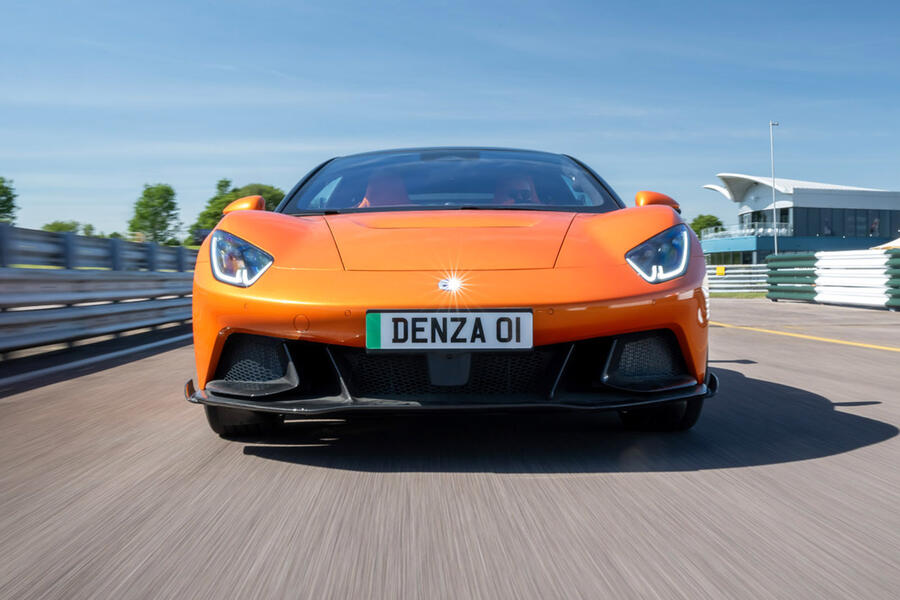
This wasn’t the most promising start from BYD’s bold electric sports car, then. The Denza Z clearly has much to reveal yet. This first 'test' was hardly a test at all, obliged as we were to take the opportunity and learn what we could. Had we been able simply to drive without so much oversight and interference, and experiment just a little more, we might well have unearthed a great deal more than a rather staid, perfunctory top-level dynamic character.
For what we could discover and what it's worth at this stage - which isn't much - the Denza Z doesn’t seem to be the most forthcoming, appetising, accessibly entertaining driver’s car. Here’s hoping we find evidence later that it has an agenda for more than just outright speed.
Denza Z Racing
Verdict: BYD’s premium-brand 911 chaser has all the firepower it needs, but may lack some simple, accessible dynamic entertainment factor and sporting verve
| Specification | Details |
|---|---|
| Price | £172,900 |
| Engine | 3 x AC synchronous, permanent magnet motors (1 x front; 2 x rear) |
| Power | 1584bhp |
| Torque | 915lb ft |
| Gearbox | Single-speed reduction ratio, per motor |
| Kerb Weight | 2250kg |
| 0-62mph | 1.96sec |
| Top Speed | 217mph |
| Battery | 76kWh |
| Range and economy | 236 miles, tbc |
| CO2 and BIK tax band | 0g/km, 4% |
| Key rivals | Porsche Taycan Turbo GT, Maserati Granturismo Folgore |

Waymo Robotaxi Incident Highlights Limits of Autonomous Vehicles as Accomplices in Juvenile Crime

Oil Surplus Outlook Dims as US-Iran Tensions Threaten Global Supply Stability