

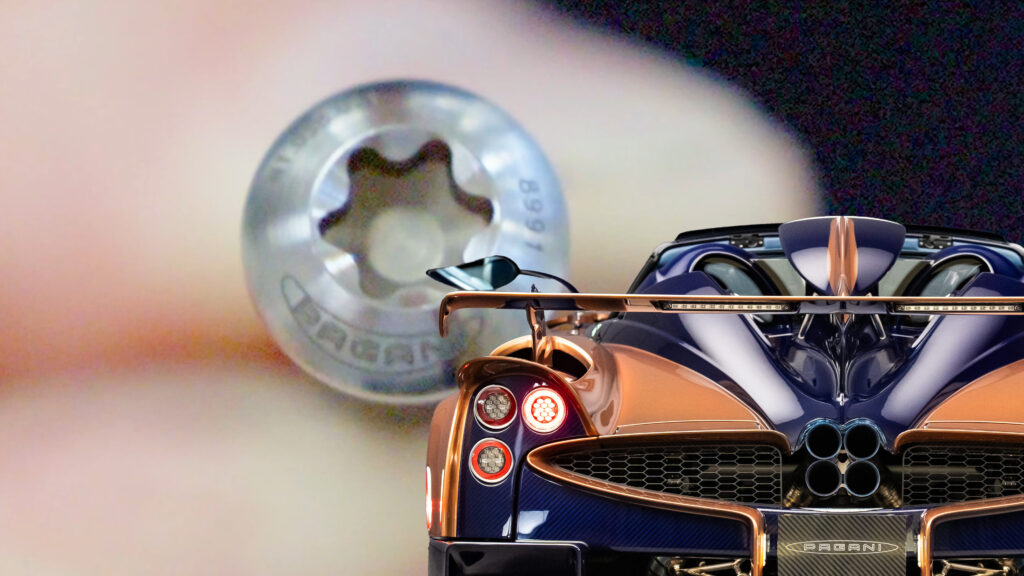
Pagani Craftsmanship Redefined as Titanium Bolts Surpass Porsche 911 in Value and Detail

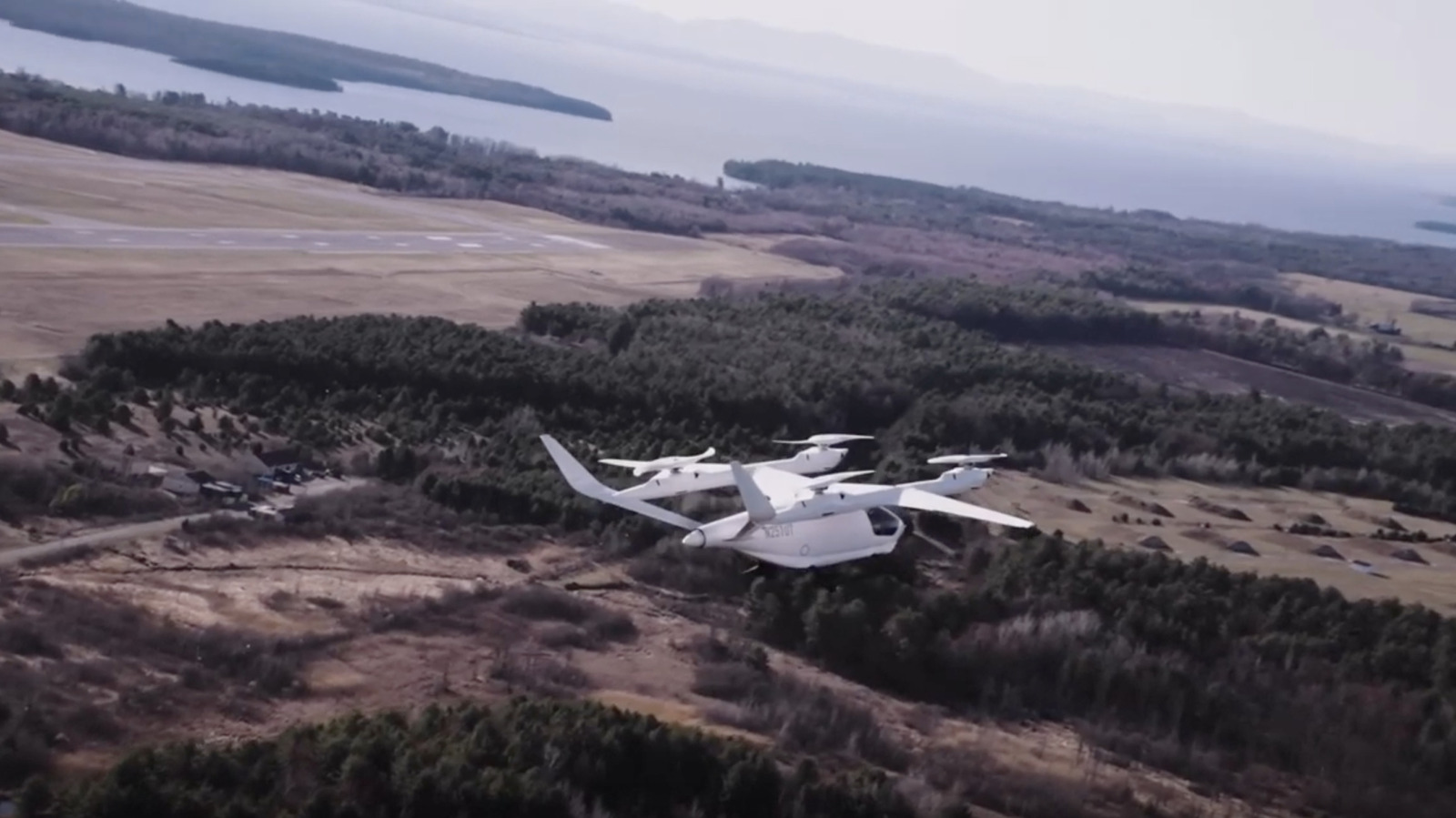
Florida Prioritizes Flying Cars Over Public Transit in Transportation Funding Decisions

Smart #2 Reinvents the Urban Electric Car With Premium Design and Compact Innovation
 Smart returns to its city car roots with tiny new #2, due next year as UK's smallest electric car
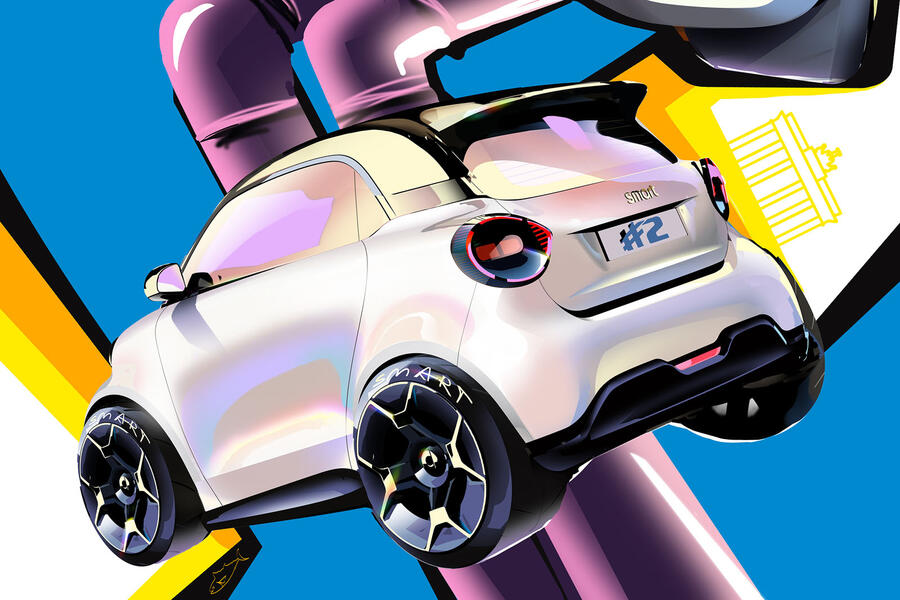
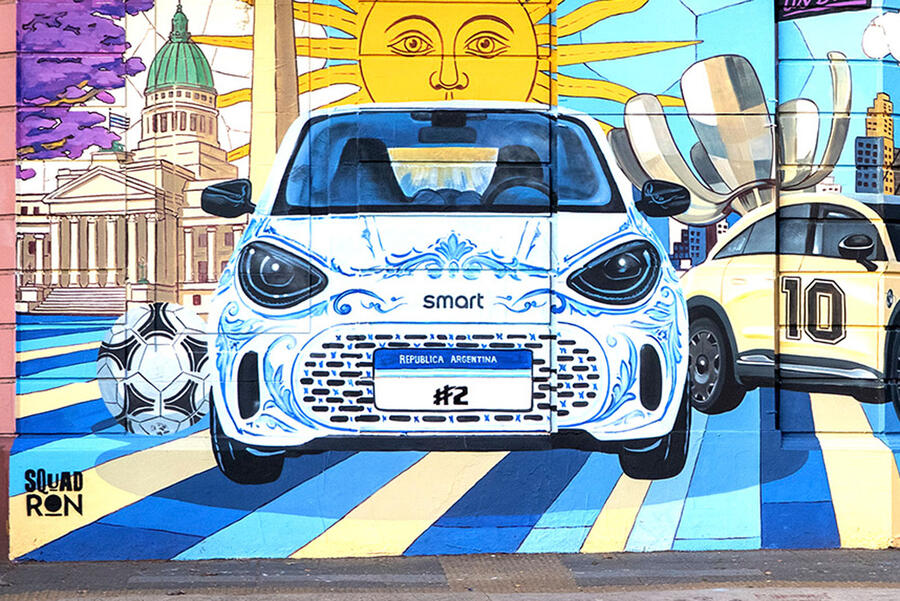
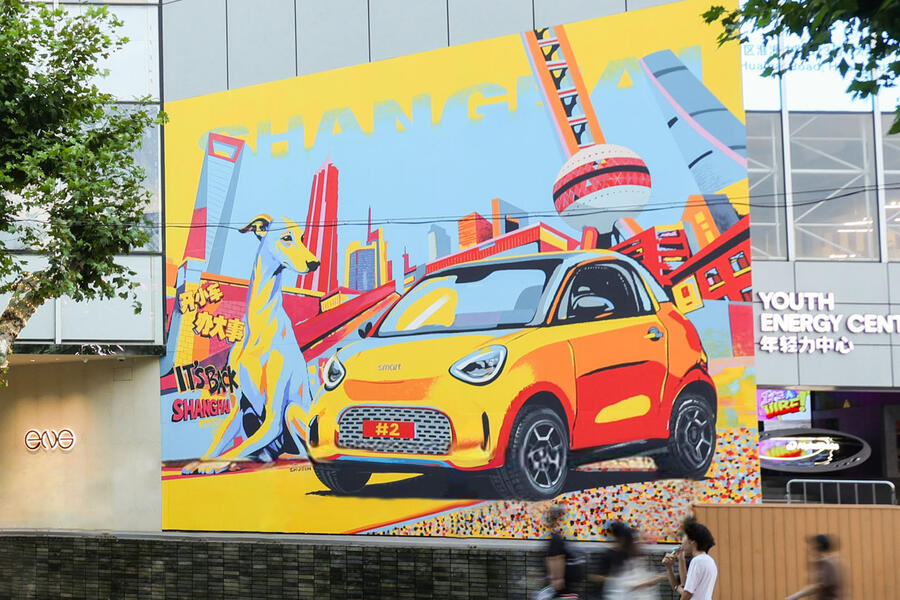
Smart has all but revealed the #2, the electric successor to the famed Fortwo, with a series of murals dotted around the globe.
Although it will be revealed in full at the Paris motor show, the new art pieces give a clear indication of the finished car's design.
It bears a strong resemblance to its predecessor, retaining its stubby proportions, although key changes include scowling headlights and rounded units at the rear.
The #2 marks the Smart brand's return to its roots after launching a range of electric crossovers including the #5, its largest model yet.
Due in UK dealerships next year, it has been designed to offer what Smart calls "uncompromised urban capability".
The two-seater is based on a bespoke Electric Compact Arcitechture developed by Geely.
The Chinese company co-owns Smart with its original founder Mercedes-Benz, which took the lead on the #2's design.
Full details remain under wraps until the Paris motor show in October, but Smart has confirmed the #2 will offer a range of 186 miles and be capable of charging its battery from 10-80% in less than 20 minutes.
It will also have vehicle-to-load capability, meaning its battery can be used to power external devices.
At just 2792mm long, the concept was only around 100mm longer than the old Fortwo, so it will reclaim its position as the shortest electric car on sale, undercutting the Fiat 500e by almost a metre. Anything smaller, like the Citroën Ami or Micro Microlino, typically fits into the quadricycle category.
That will also enable a turning circle of just 6.95m.
Smart said the new #2 will move its entry-level model upmarket while "brilliantly maximising interior space" within its compact dimensions - a product of moving onto a bespoke EV architecture, as the old electric Fortwo was based on an ICE car platform.
The #2 "elevates the city car beyond mere utility" according to Smart - and while it hasn't yet revealed the cabin in full, it promises to be much plusher and more luxuriously appointed than the sparsely furnished original.
It will still be minimalist, in keeping with an exterior design that's been "reduced to its essence", but liberal use of leather, translucent surfacing and two-tone gold paintwork will help to cultivate more of a premium aesthetic.
Notably, will it swap traditional front seats for a bench – which, Smart claims, frees up additional interior space.
Kai Sieber, head of Smart design at Mercedes, said the Concept #2, which previewed the finished article, demonstrates the company's vision that "a city car should do more than solve challenges: it should spark joy".
He continued: "Carrying the heritage of the Fortwo's iconic design, the Concept #2 translates our bold personality into a new era where function becomes fashion. It is not only about clever practicality but serves as a true extension of personal identity."
Smart has given no indication of pricing ahead of next year's scheduled launch, but the more luxurious cockpit and vastly superior technical attributes mean the #2 could command a premium over its short-legged predecessor, which cost around £22,000 when it was discontinued in 2024.
There's no word yet on whether Smart plans to stretch the #2 and add a back seat to create a successor to the Forfour, but such a model would give the brand a footprint in the increasingly competitive electric supermini market, where it could take on the likes of the Renault 5, Citroën C3 and next DS 3.

Ford 1.0L EcoBoost Timing Belt Failures Spur Expanded NHTSA Probe Over Premature Engine Seizures

Repossessions Surge as BYD Gains, Tesla Faces European Headwinds, and Toyota Reports Strong Earnings

BMW X5 Emissions Cut by 40 Percent Through Recycled Materials and Renewable Manufacturing
 Around one third of the new iX5 is made from waste products or recycled materials
Making cars greener involves a lot more than reducing tailpipe emissions or fashioning seat covers from recycled plastic bottles.
It spans the whole gamut of environmental implications in manufacturing, use and end-of-life disposal.
Putting a figure on a car's CO2 footprint is a huge task, and for the past couple of decades considerable brain power has been expended on figuring out the cradle-to-grave CO2 impact of vehicles and powertrains.
The results now lie in Life Cycle Analysis databases that make it easier to put figures on a new car's environmental impact.
BMW has done it with the new X5, explaining how decarbonising the whole production process, including suppliers of parts that make a car up, is reducing CO2 emissions.
The X5's carbon footprint, validated by the German Technical Inspection Association, won't be published until the car is officially launched, but BMW puts the impact of its efforts to reduce CO2 equivalent (CO2e) emissions during the product development process at around 40%.
Around half of the steel used in the X5's body is electric arc furnace steel, which includes a high proportion of recycled material and is produced using renewable energy. Secondary materials are also widely used throughout the rest of the X5's structure and interior.
Heavy-duty items such as aluminium components including wheel rims, wheel supports, rear axle supports and brake calipers are all manufactured using renewable energy for both electrolysis and production.
Thirty-five per cent of the aluminium used in the doors is either from external recycling sources or waste from the press shop being fed back into the process (known as 'closed loop').
The yarn used to make the cabin's headliner material is 100% recycled polyethylene terephthalate (PET), typically from plastic bottles. Overall, around one-third of an iX5 60 xDrive is made from secondary raw materials - equivalent to 940kg of its mass.
Battery recycling has been around for some time, and in the early days it was limited to reuse of the materials in basic components such as steel casings. Today things have moved on, and the active materials are recovered and reused as well. BMW's Gen6 battery includes a high proportion of secondary materials in the cobalt, lithium and nickel content.
Renewable energy is used in the production of anode and cathode materials and in the cell manufacturing.
BMW says that compared with the Gen5 battery used in the iX, CO2e emissions have been reduced by around 28% per watt-hour of battery capacity.
The carbon footprint reduction of the new model will continue during the 'use phase' of its life.
Depending on a few obvious variables, such as drivetrain variant, annual mileage and source of electricity used for charging, BMW estimates that a new iX5 60 xDrive should achieve a CO2e advantage over a comparable combustion engine after around one to two years of use.

Cybertruck Production Threatened as Tesla Accuses Texas Supplier of Withholding Critical Tooling Amid Weak...

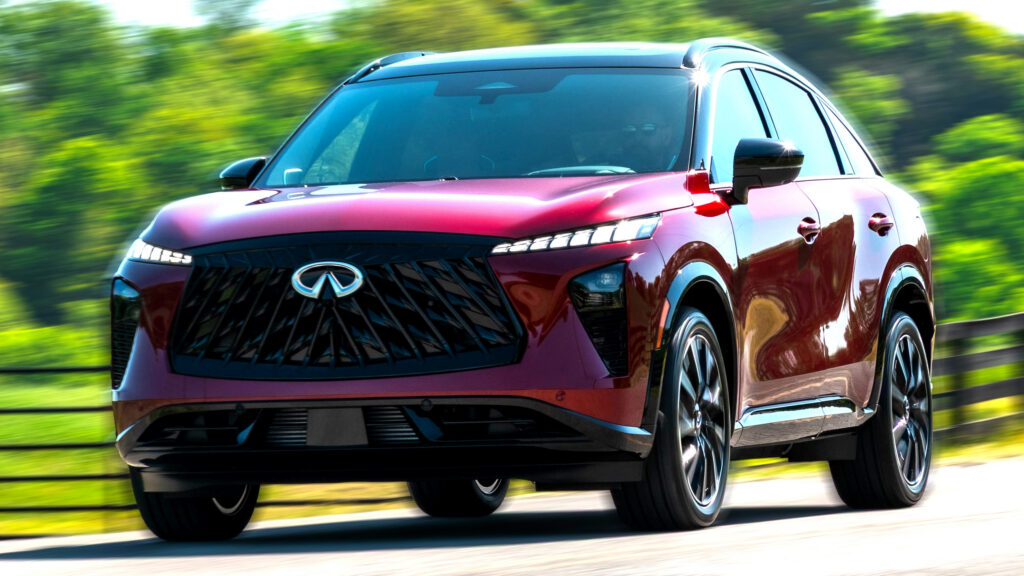
Infiniti Discounts Highlight Costco’s Expanding Role in New Car Sales Incentives

Pajero Returns as Mitsubishi Reinvents the Ladder-Frame SUV for Modern Off-Road Demands

Audi A2 E-tron Redefines Electric Efficiency with Aerodynamic Revival and Premium Ambitions
 Effort to maximise efficiency on Volkswagen ID 3 platform results in unlikely electric revival of cult-classic supermini
In one of the 2020s’ less likely retro revivals, the Audi A2 is back.
The A2 has become a bit of cult classic, because it was such an uncompromising piece of engineering, using an aluminium spaceframe and radical aerodynamics to create an incredibly spacious and fuel-efficient small hatchback. But unlike the Mini and the Renault 5, it wasn’t all that popular when it was new and didn’t make its manufacturer any money.
Audi has come to the retro wave from a different angle, because it didn’t actually set out to create something that deliberately riffed on the past. The idea was to make an EV smaller than the Q4 E-tron and make it as aerodynamic as possible, so it would go farther with a relatively small battery – and it turned out that if you optimise a hatchback shape for aerodynamics, something A2-shaped is the logical conclusion.
A fairly short, bluff front end that flows into an monolithic body makes sense because it doesn’t force the air to change direction any more than necessary, as does a teardrop shape that’s cut off at the end for practicality. Try to maximise rear visibility and you end up with a split rear window.
No, the new A2 E-tron isn’t as radically innovative as the all-aluminium original. It can’t be, because making interesting but unprofitable cars isn’t a great business strategy. It also needs to be relatively affordable and indirectly replace the recently departed A1 and Q2. As a result, it’s based on more mass-market underpinnings, namely the familiar Volkswagen Group MEB platform, albeit the latest version thereof.
This comes with a raft of upgrades over previous cars, chief among which is that the middle battery option now uses lithium-iron-phosphate (LFP) instead of nickel-manganese-cobalt (NMC) chemistry, so it’s happy to be charged to 100% all the time.
The other big thing is the new ‘APP350’ electric motor, which is even more efficient, thanks to thinner materials, thinner oil and a separate oil pan, so the gears don’t constantly splash through a bath of oil, causing drag.
The A2 E-tron, then, is effectively Ingolstadt’s take on the Volkswagen ID 3. Audi isn’t releasing dimensions yet, but it’s clear the A2 is a similar size to that car. Since BMW and Mercedes-Benz have yet to come up with an electric 1 Series or A-Class, that puts the A2 up against premium-ish rivals such as the Renault Megane, Volvo EX30 and Mini Countryman E, as well as its other sibling, the Cupra Born.
Under the camouflage
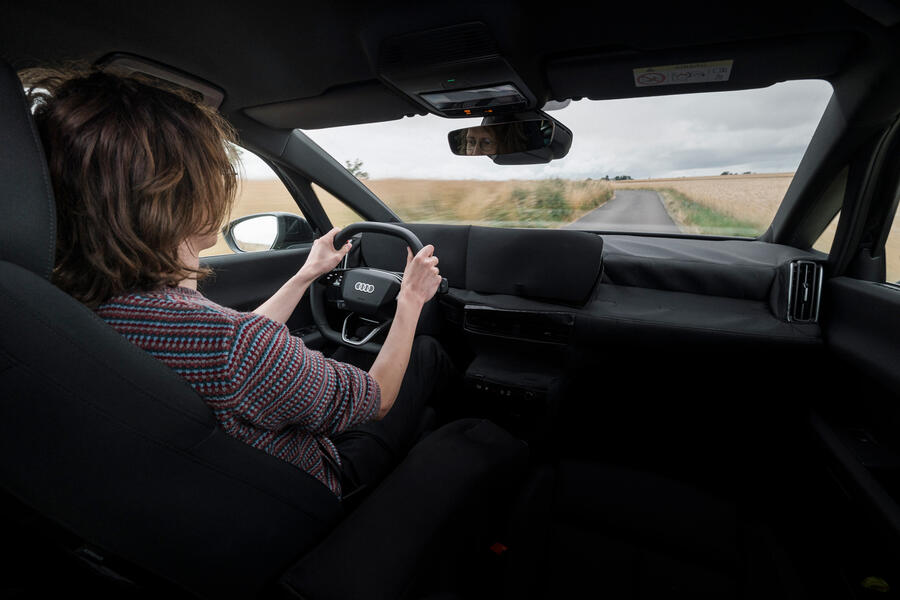
So it will need to feel a little bit posh inside. You can’t see much of the interior yet, but I had a decent peek under the camouflage sheets, revealing that the A2 shares a lot more with other recent Audis than with the ID 3. Think Q3 for the digital screens, steering wheel and 1980s-Citroën-style column stalk array.
Mostly that’s good news, because it all works intuitively and feels pretty solid and robust, but it’s still a far cry from the wonderfully tactile Audi interiors of old. There are very few physical controls, and the thick bezels on the screens remind me of a first-generation iPad.
On the door tops and the dash, Audi has gone big on the sort of knitted-looking fabric that we’ve also seen in recent Minis, which feels pleasant enough. It’s all very black and rather austere, which suits an Audi, I suppose, but I’m not sure it feels any more upmarket than a Megane.
The manually adjustable cloth seats are superb, though, and the driving position is spot on – not super-low, because the A2 was never like that, but hatchbacky enough.
In the rear there’s generous head room and okay knee room, albeit with quite a high floor, so the seating position isn’t very comfy.
We don’t have a boot space figure yet, but there’s no reason to believe that it would be any smaller than the Born’s 385 litres.
So how efficient is it, really?
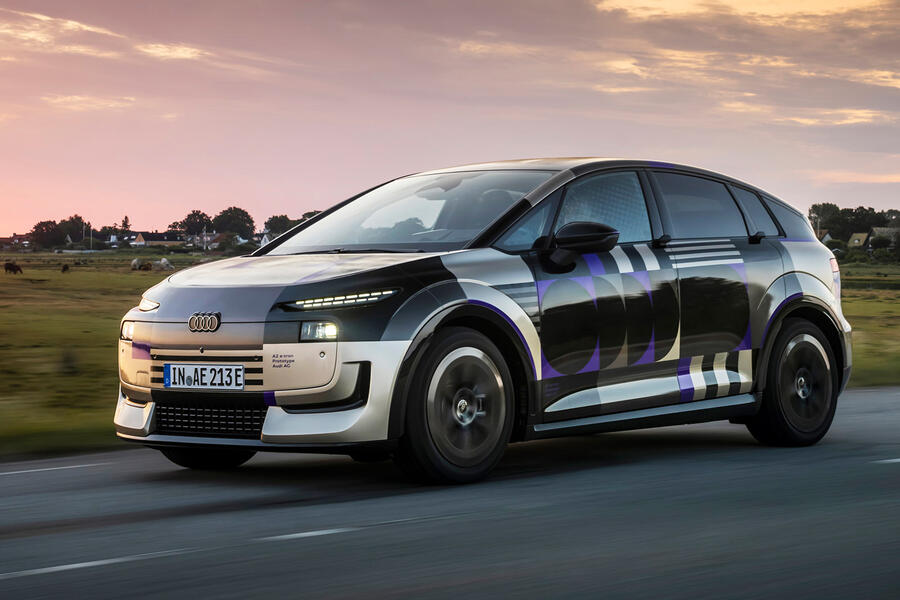
Our first taster of the A2 came in the form of an ‘efficiency drive’ on a loop around Denmark and southern Sweden in the most efficient version of the car, with the new motor and 58kWh LFP battery (there will most likely be 52kWh and 79kWh NMC versions as well) and on sport suspension, because that lowers the car for less wind resistance.
It wasn’t the most exciting drive of my life, truth be told. There’s a reason Porsche GT3s flock to Nürburg and not Trelleborg, but it did suit the A2, because it duly returned 5.4mpkWh.
That’s not to say this was an unrealistic route: it included some motorways and A-roads. So that’s a hugely impressive result. It means you could squeeze 300 miles out of this 58kWh battery, which would be beyond any of its rivals. Even with a bit more spirited driving, I suspect an efficiency figure in the high fours should be doable.
You get all the tools you need for efficient driving. The brake and accelerator pedals are smooth and progressive, and between the steering wheel paddles and the drive selector you can have full freewheeling, one-pedal driving and everything in between. There’s something for everyone here.
On the chassis side, you do clearly notice some compromises in order to get that efficiency – at least in the spec of this test car.
When the A2 comes to the UK later this year, I’d avoid the sport suspension at all costs, because whatever efficiency benefits it brings isn’t worth suffering a bone-shaking ride.
Even on the near-perfectly kept roads of southern Sweden, the A2 was incredibly stiff. It felt well controlled and not brittle, but it got tiresome very quickly.
There was also a fair bit of road noise from the Bridgestone Turanza 6 tyres.
I’d be curious to see how those would hold up in the wet, as we’ve road tested a couple of EVs (Mercedes-Benz CLA Electric, Toyota C-HR+) with Turanza 6s that really underperformed in wet braking during the road test. The tyres on the A2 are Audi-specific, though, so might do better.
On the day, the roads were dry, and the A2 had reasonable grip and steering that was nicely measured and free from corruption, thanks to the motor being at the back.
Verdict
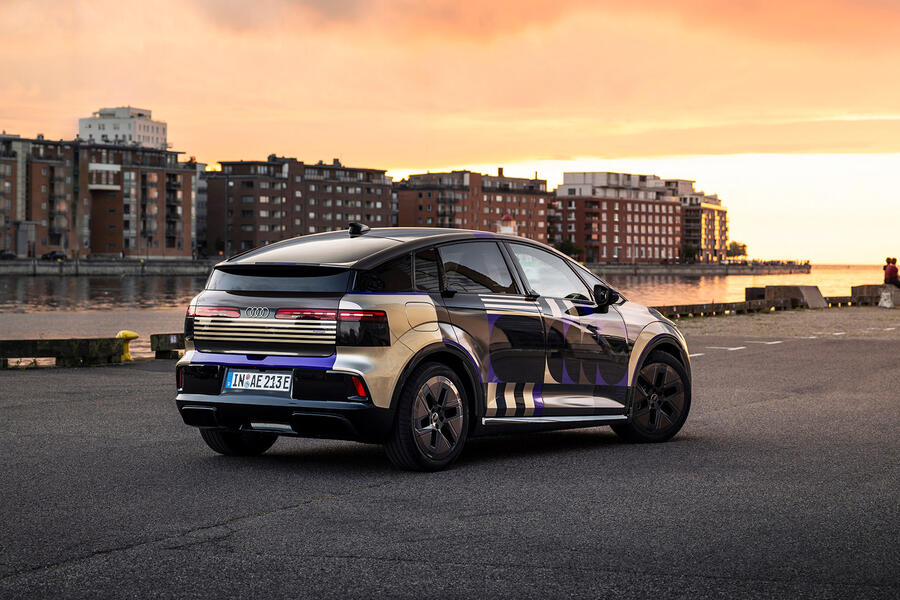
The purists will bemoan that the new A2 isn’t the rolling science experiment that the original was, but such a thing was never going to get the green light. The question is whether Audi has done enough to make this its own car.
It’s a bit of a shame that Audi can’t make something more bespoke, like Mercedes did with the CLA, but the A2 is more than just an ID 3 clone.
We will need to spend more time in it on more varied roads and try different versions for a full verdict but, based on this slightly limited drive, the new A2 is recognisably Audi in its style, feel and focus on aero, and its efficiency is very impressive. It stands to reason that this EV will probably be more successful than the ICE original, although I doubt it will have as loyal of a following in 20 years.
Audi A2 E-tron 58kWh
Interesting design and aerodynamics and a plusher interior combine for a promising premium take on the VW ID 3
| Price | £33,000 (est) |
| Engine | Permanent magnet synchronous motor |
| Power | 188bhp |
| Torque | 258lb ft |
| Gearbox | 1-spd reduction gear, RWD |
| Kerb weight | 1900kg (est) |
| 0-62mph | 8.0sec (est) |
| Top speed | 99mph |
| Battery | 61/58kWh (total/usable) |
| Range, economy | 350 miles, 5.5mpkWh (est) |
| CO2, tax band | 0g/km, 4% |
| Rivals | Renault Megane E-Tech, Volvo EX30 |