Car Ownership and the Elusive Promise of Freedom

BMW X5 M60 Redefines Performance SUV with Pure V8 Power Amid Electrification Shift

Car Model Generational Shifts Reveal Why Timely Innovation Matters

Company Car Tax in the UK Shifts Incentives Toward Electric and Hybrid Vehicles Amid...
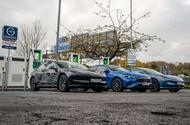 You don’t need to be an accountant to wrap your head around Benefit-in-Kind tax. Here’s what you need to know.
Finding the right car for your needs and budget is never an easy task, but if you’re lucky enough to be one of the UK’s 840,000 company car drivers then that decision can also have a massive impact on your tax bill too.
Company cars have been a top-tier workplace perk for decades. They’re a tool of the trade for jobs with regular travel needs and very attractive for employees – who get a brand new, fully maintained car, paid for by the business, but available for them to use outside work hours.
Naturally, there is a cost. His Majesty’s Revenue & Customs (HMRC) classes company cars as a ‘Benefit-in-Kind’ (BiK for short), which a term for any perks provided on top of your salary. And, just like the rest of your pay packet, they’re taxable.
The amount of company car tax you’ll pay depends on the vehicle you choose and how much you earn. But, beneath the jargon, it’s relatively easy to figure out how much it’ll cost, and what steps you can take to keep a lid on your bills.
How does company car tax work?
Company car tax isn’t a linear system in the UK, and there are a few factors that can significantly alter the amount you’ll pay.
HMRC assigns what’s called a ‘taxable value’ to every company car, which is a percentage of the list price based on its tailpipe CO2 emissions and, for plug-in hybrids (PHEVs), how far it can drive on battery power.
The list price (known as the P11d) includes optional extras, VAT and delivery charges but not the registration fee or the first year of vehicle excise duty (VED, or road tax). It’s also fixed for life, so it doesn’t reflect discounts for new cars and there’s no driver incentive to opt into a used one.
Drivers then pay BiK on that taxable value at the same rate as their income – typically 20%, 40% or 45% in England, Wales and Northern Ireland (Scotland has its own rates). For example, a 20% income taxpayer would be liable for 20% of their vehicle’s taxable value each year, split into instalments and recovered from their monthly wages.
In short, the cheaper the vehicle and the less CO2 it emits, the lower your tax bill.
Which tax band does my company car fit into?
You’ll need two pieces of information for this; CO2 emissions at the tailpipe and, if you’re considering a PHEV, the electric range. Most manufacturers and leasing companies have online configurators which will give the exact figures you need. If not, ask your fleet manager.
It’s important not to be precise. All new cars are tested on a spec-by-spec basis, which means both figures can be affected by options such as larger wheels, bodykits and even panoramic sunroofs. In some cases, this can nudge different versions of the same vehicle into higher tax bands.
Those figures will place your company car into one of the 28 tax bands in the following table, which gives you the percentage used to calculate its taxable value. Rates normally increase by 1% point each April, at the start of the new financial year.
| CO2(g/km) | Electricrange(miles) | Company car tax band | |||
|---|---|---|---|---|---|
| 2026-27 | 2027-28 | 2028-29 | 2029-30 | ||
| 0 | N/A | 4% | 5% | 7% | 9% |
| 0-50 | >130 | 4% | 5% | 18% | 19% |
| 0-50 | 70-129 | 7% | 8% | 18% | 19% |
| 0-50 | 40-69 | 10% | 11% | 18% | 19% |
| 0-50 | 30-39 | 14% | 15% | 18% | 19% |
| 0-50 | <30 | 16% | 17% | 18% | 19% |
| 51-54 | 17% | 18% | 19% | 20% | |
| 55-59 | 18% | 19% | 20% | 21% | |
| 60-64 | 19% | 20% | 21% | 22% | |
| 65-69 | 20% | 21% | 22% | 23% | |
| 70-74 | 21% | 21% | 22% | 23% | |
| 75-79 | 21% | 21% | 22% | 23% | |
| 80-84 | 22% | 22% | 23% | 24% | |
| 85-89 | 23% | 23% | 24% | 25% | |
| 90-94 | 24% | 24% | 25% | 26% | |
| 95-99 | 25% | 25% | 26% | 27% | |
| 100-104 | 26% | 26% | 27% | 28% | |
| 105-109 | 27% | 27% | 28% | 29% | |
| 110-114 | 28% | 28% | 29% | 30% | |
| 115-119 | 29% | 29% | 30% | 31% | |
| 120-124 | 30% | 30% | 31% | 32% | |
| 125-129 | 31% | 31% | 32% | 33% | |
| 130-134 | 32% | 32% | 33% | 34% | |
| 135-139 | 33% | 33% | 34% | 35% | |
| 140-144 | 34% | 34% | 35% | 36% | |
| 145-149 | 35% | 35% | 36% | 37% | |
| 150-154 | 36% | 36% | 37% | 37% | |
| 155g+ | 37% | 37% | 37% | 37% | |
Although list price makes a difference, that system heavily favours vehicles with the lowest CO2 emissions. It’s hardly surprising that company car drivers led the ‘dash for diesel’ in the early 2000s, or that they are now moving, en masse, to PHEVs and battery electric vehicles (EVs).
For context, HMRC’s latest data shows there were 120,000 more company car drivers in 2023/24 than in 2020/21, when it reintroduced ultra-low bands for plug-in vehicles. Almost two thirds of all company cars (62%) are EV or PHEV, but the incentives are beginning to shift.
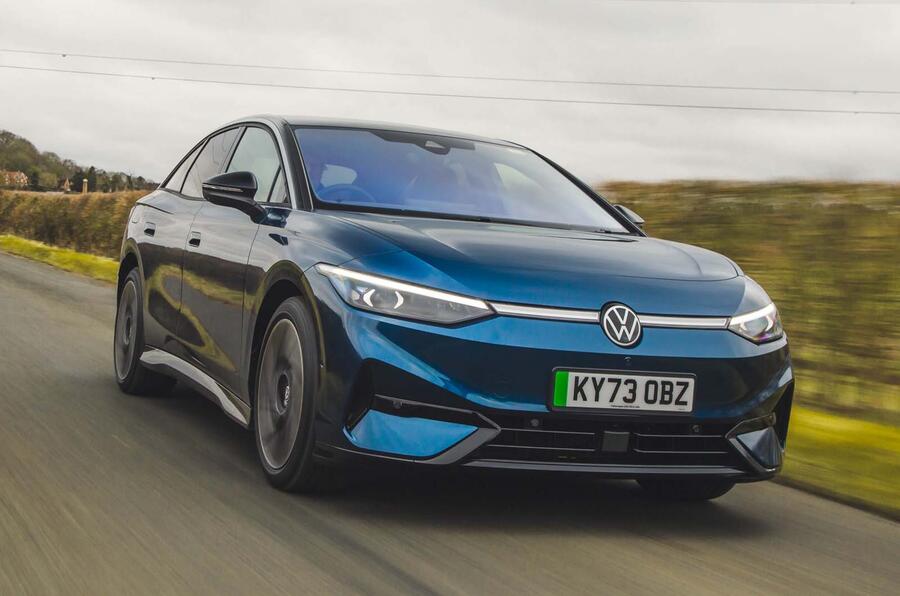
What are the BiK costs for an electric company car?
With zero tailpipe emissions, electric company cars fall into the lowest 4% band. That’s enough to not only offset their typically higher list price, but to cut drivers’ tax bills by around 80% compared to an equivalent petrol or diesel car.
Rates are set to rise by 1% point in 2027/28 and then 2% in the next two tax years. Although that’s faster than any other vehicle type, they’ll still comfortably undercut even the best-performing hybrids over a three-year contract.
What are the BiK costs for a hybrid company car?
PHEVs are second only to EVs for low CO2 emissions and have similarly favourable tax rates. However, with damning reports about the gap between real-world performance and brochure figures, those incentives are being wound down.
There are five company car tax bands for PHEVs emitting 50g/km CO2 or less. Cars that can travel more than 130 miles are taxed at the same rate as EVs (currently 4%), but no such vehicles exist. Most can travel between 40 and 60 miles to a full charge, so fall into the 10% band.
However, the entire system is about to change. All PHEV bands will increase by 1% point in 2027/28, before being replaced with a single 18% rate the following year, regardless of their electric range, which offers a much smaller incentive compared to other vehicles. Then that rate rises to 19% in 2029/30.
PHEVs over 50g/km and ‘self-charging’ hybrids (the type that can’t be plugged in) are taxed the same as a petrol or diesel company car – with bands based entirely on their CO2 emissions.
What are the BiK costs for a petrol or diesel company car?
The tax outlook for regular petrol and diesel cars is a bit more stable. Rates are currently frozen until April 2028, then they’ll go back to 1%-point yearly increases in 2029 and 2030.
There are a couple of exceptions. Vehicles emitting 75g/km or less don’t have a rate freeze, while diesel cars that aren’t compliant with the latest Real Driving Emissions 2 (RDE2) standard – which requires on-road pollutant output to almost match laboratory testing – get a 4%-point surcharge. However, RDE2 compliance been mandatory since January 2021, so it’s unlikely that most company car drivers would need to pay it.
What are the BiK costs for a company van?
It’s less common, but some businesses will allow drivers to use vans outside work hours. They’re taxed on a much simpler system than cars, with a flat taxable value of £4,170, regardless of CO2 emissions, or £0 if they are electric. Both are cheaper than an equivalent size car.
However, HMRC recently changed the rules for double-cab pickups (which have two rows of seats and four doors) claiming it was a loophole. If they’re registered or have changed hands since April 2026, then they’re taxed based on their CO2 emissions, just like a car, which has led to much higher bills for drivers. Older pickups are taxed as vans until April 2029.
Company car tax bill examples
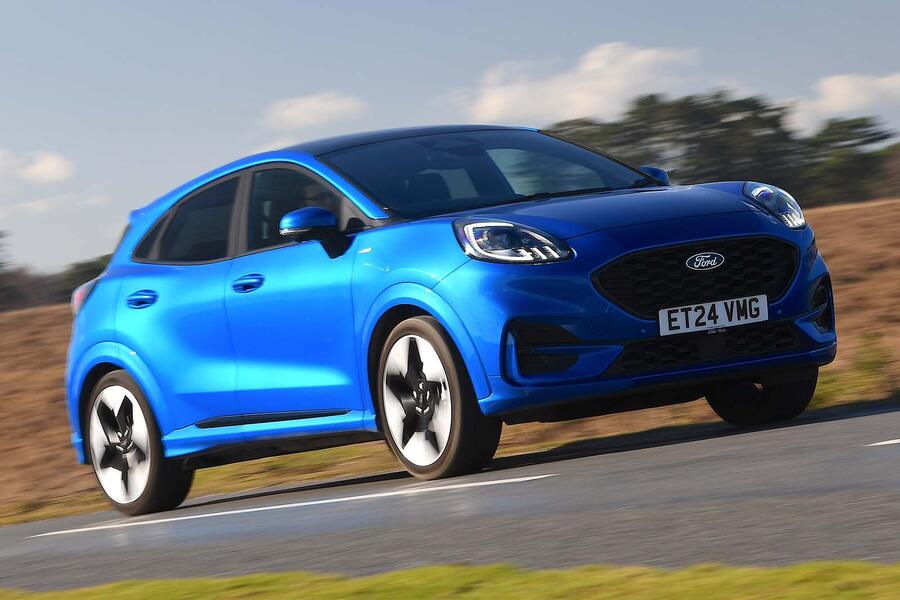
Ford Puma 1.0 EcoBoost Titanium (125PS)
P11D price: £26,610CO2 emissions: 122g/km 2026/27 BIK rate: 30%Taxable value: £7,983Basic-rate taxpayer (20%): £1,597 annual BIK chargeHigher-rate taxpayer (40%): £3,193 annual BIK charge
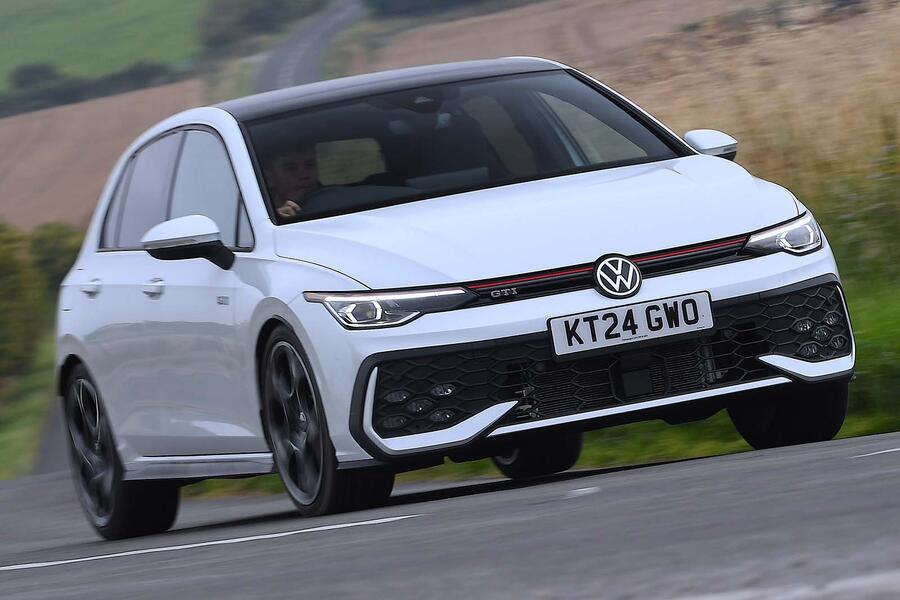
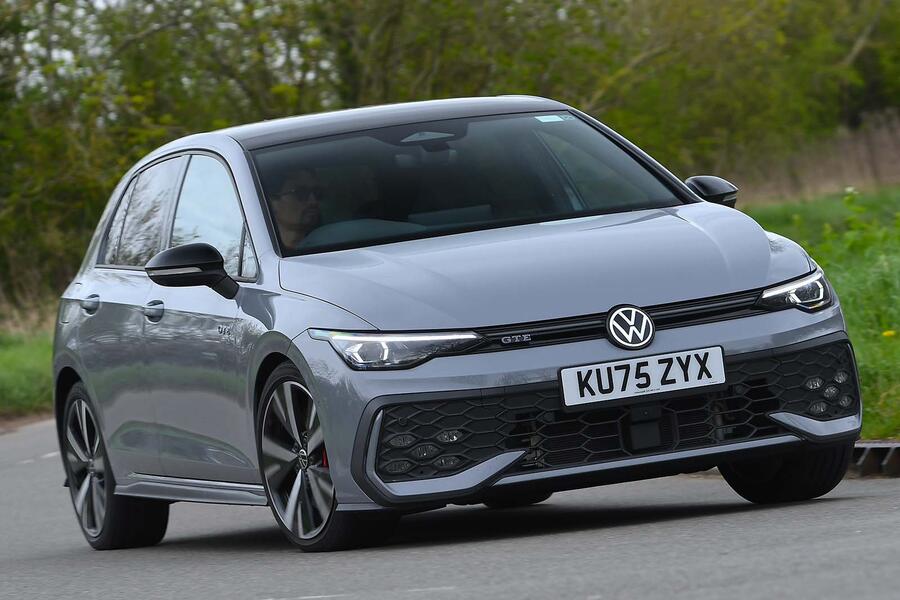
Volkswagen Golf GTI
P11D price: £40,395CO2 emissions: 160g/km 2026/27 BIK rate: 37%Taxable value: £14,946Basic-rate taxpayer (20%): £2,989 annual BIK chargeHigher-rate taxpayer (40%): £5,978 annual BIK charge
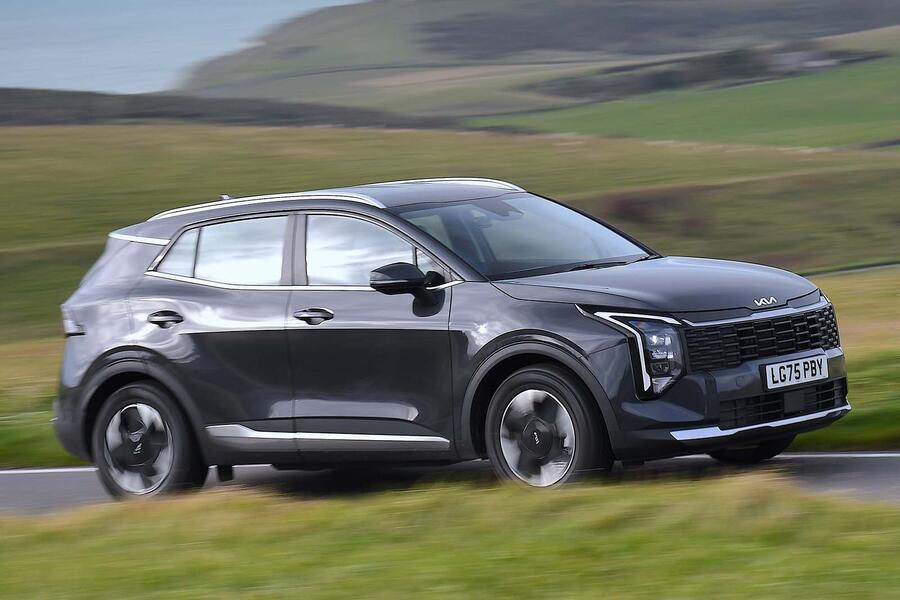
Kia Sportage GT-Line Hybrid
P11D price: £36,685CO2 emissions: 128g/km 2026/27 BIK rate: 31%Taxable value: £11,372Basic-rate taxpayer (20%): £2,274 annual BIK chargeHigher-rate taxpayer (40%): £4,549 annual BIK charge
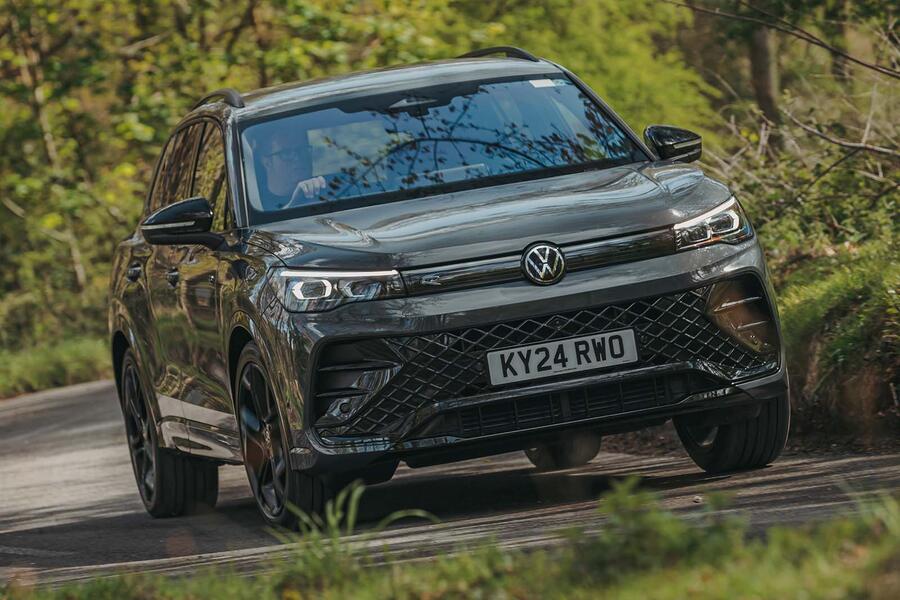
Volkswagen Tiguan 2.0 TDI Match
P11D price: £40,550CO2 emissions: 142g/km 2026/27 BIK rate: 34%Taxable value: £13,787Basic-rate taxpayer (20%): £2,757 annual BIK chargeHigher-rate taxpayer (40%): £5,515 annual BIK charge
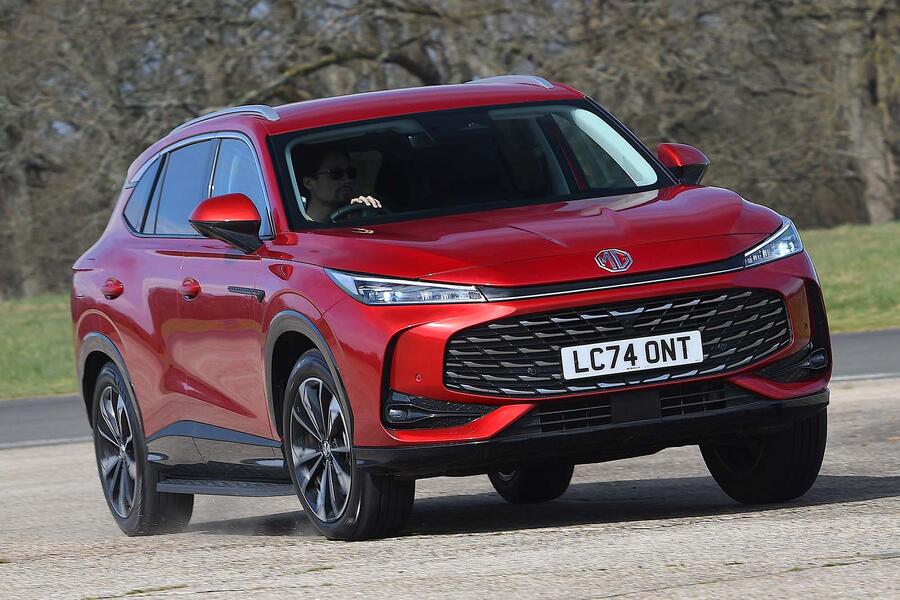
MG HS Trophy PHEV
P11D price: £34,825CO2 emissions: 12g/km (75-mile EV range)2026/27 BIK rate: 7%Taxable value: £2,438Basic-rate taxpayer (20%): £488 annual BIK chargeHigher-rate taxpayer (40%): £975 annual BIK charge
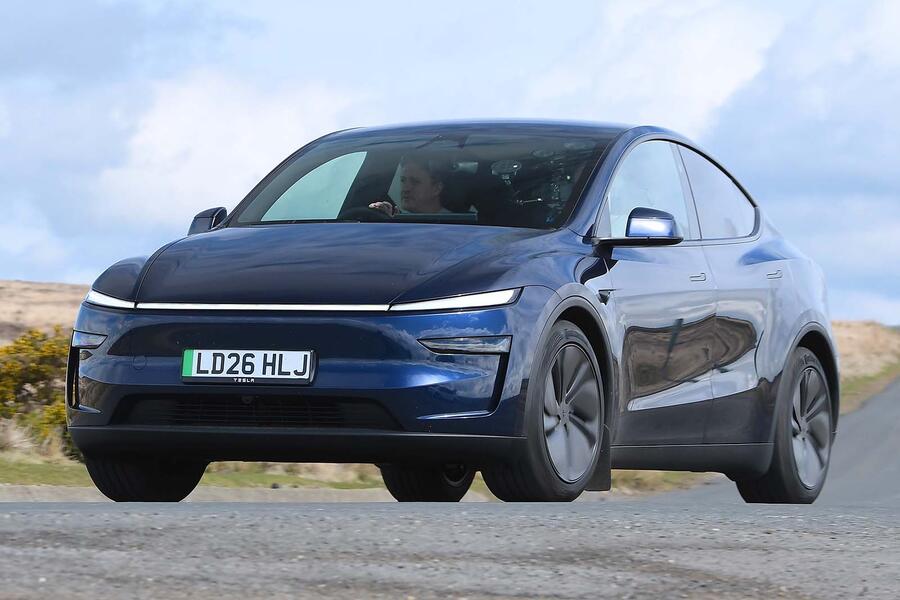
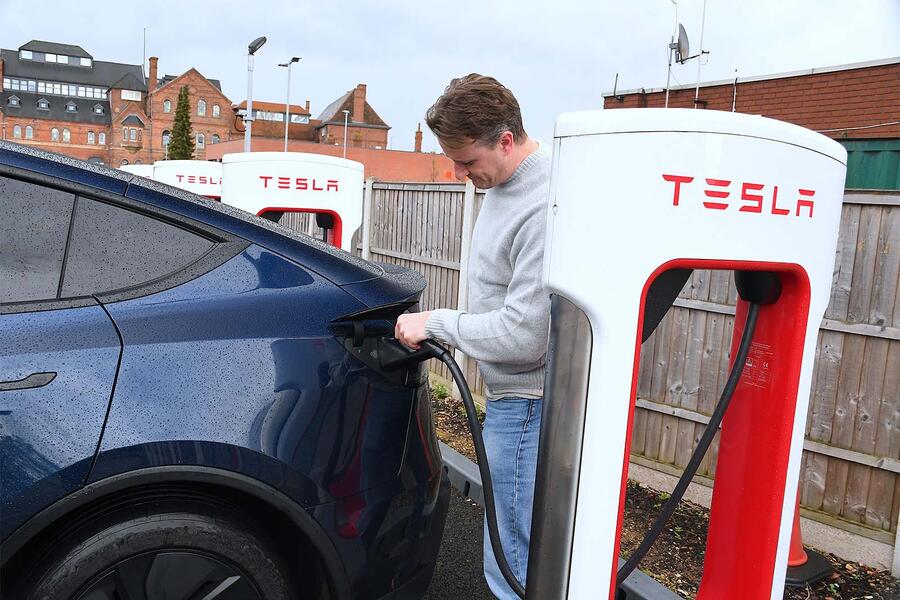
Tesla Model Y Premium Long Range
P11D price: £48,925CO2 emissions: 0g/km 2026/27 BIK rate: 4%Taxable value: £1,957Basic-rate taxpayer (20%): £391 annual BIK chargeHigher-rate taxpayer (40%): £783 annual BIK charge

Hyundai US Sales Surge as Electrified Models Drive Record Growth Despite Loss of EV...

Alpine A110 Electric Prototype Reveals Dual-Battery Platform and Lightweight Strategy Ahead of 2027 Launch
First official images of the A110 test mule show significantly wider archesTest mule for crucial next-generation sports car will be displayed as part of an 'Alpine moment'
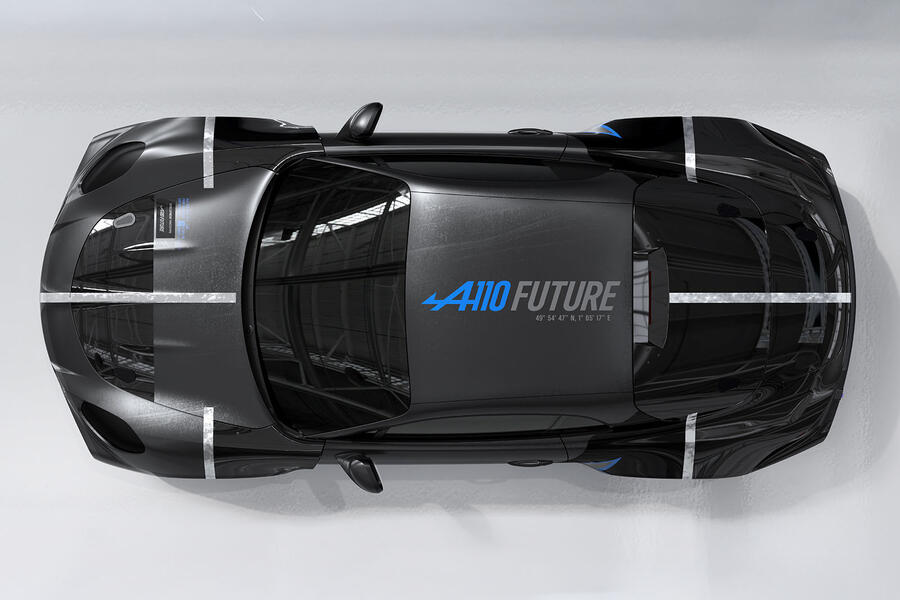
The next-generation Alpine A110 will make its debut at the Goodwood Festival of Speed in prototype form.
The French sporting brand has released the first image of the test mule that will be displayed as part of an 'Alpine moment' alongside several variants of the outgoing petrol model.
It confirmed that the prototype, named A110 Future, is underpinned by the same Alpine Performance Platform (APP) as the production car.
However, it appears to wear the previous A110's bodywork, with wide wheel-arch extensions hinting at the new iteration having a significantly wider track.
The APP has been developed with weight reduction as a priority, with aluminium construction and 800V electricals. Notably, it features two battery packs, rather than one larger unit as is conventional for high-performance EVs.
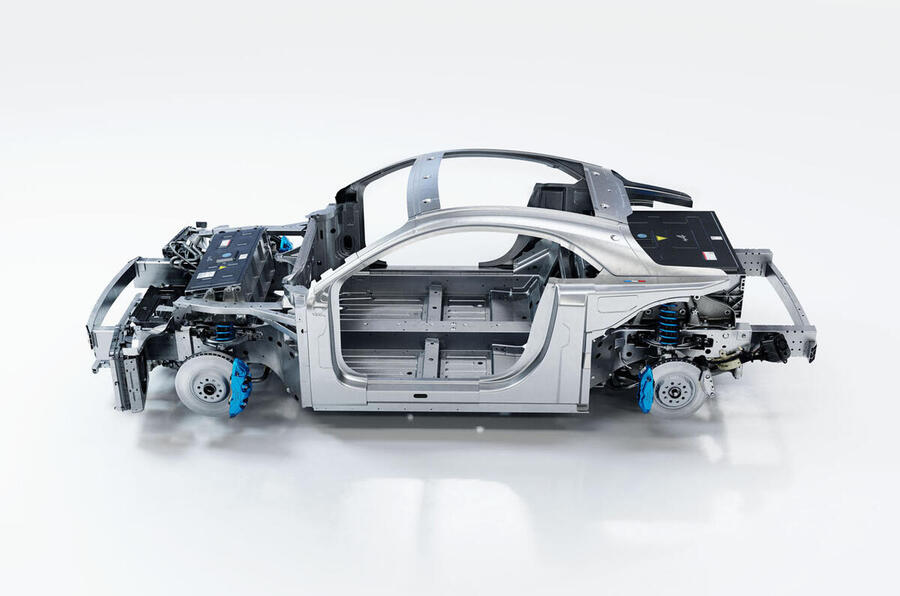
The two batteries are positioned over the front and rear axles, giving a 40:60 weight distribution. That is slightly further rear-biased than the petrol A110, which is split 44:56.
Alpine CEO Philippe Krief previously said the split-pack design was chosen so the electric A110 could sit as low as its petrol predecessor, while also bringing more than 340 miles of range.
He added that it had been conceived to complete three laps of the Nürburgring Nordschleife without the battery derating (losing performance due to heat).
The positioning of the rear battery approximately where the petrol engine sits in today’s A110 also presents “an opportunity” to convert the EV to combustion power if needed, said Krief.
But he added that this capability has not been included at the cost of the car’s potential as an EV: “If the answer would have been that, it would make the electric car worse. There’s no way we’d have done it.”
Alpine confirmed that the A110 will be powered by two rear-mounted motors with silicon-carbide inverters. This suggests a different set-up from the related Renault 5 Turbo 3E mega-hatch, which uses two in-wheel motors from UK firm Protean for a combined output of 533bhp.
Krief told Autocar that the new A110 will have a kerb weight on a par with its ICE rivals today, suggesting it will be around 1500kg.
That's significantly heavier than the current A110, which is around 1100kg, but Alpine has previously touted the potential of torque-vectoring technology to make EVs feel as agile as ICE equivalents.
Although it's rare for car makers to present test mules, particularly on a stage as large as the Festival of Speed, Alpine’s decision to do so represents a significant step towards the launch of the electric A110 in 2027.
The prototype's debut will come just a week after Alpine produced the last of 28,701 petrol-powered A110s built at its Dieppe factory.

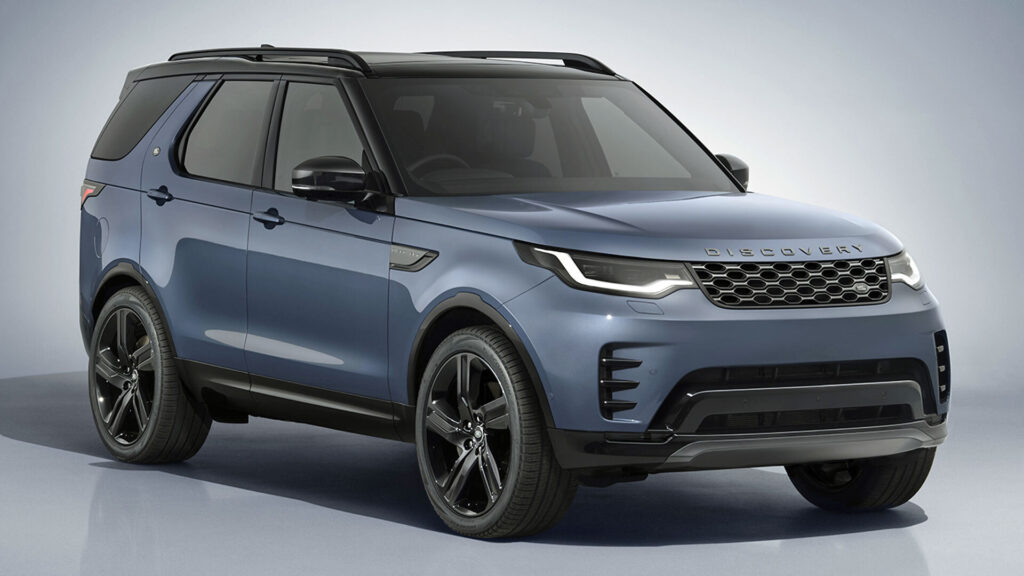
Land Rover Discovery Nears Retirement as 2027 Model Drops Four-Cylinder and Introduces Landmark Edition

Dacia Duster Redefines Budget SUV Value with Durability, Efficiency, and Surprising Refinement
 This budget SUV is a simple solution for all your motoring needs
When the Mk2 Dacia Duster reached our shores in 2018, we were mightily impressed.
The original had won hordes of UK fans for its ruggedness and affordability, but it was this later iteration that really made Romania's SUV a genuine mainstream disruptor.
While underneath it was just a heavily updated Mk1, it had come on so far in terms of refinement and build quality that we gave it four road test stars and the class crown.
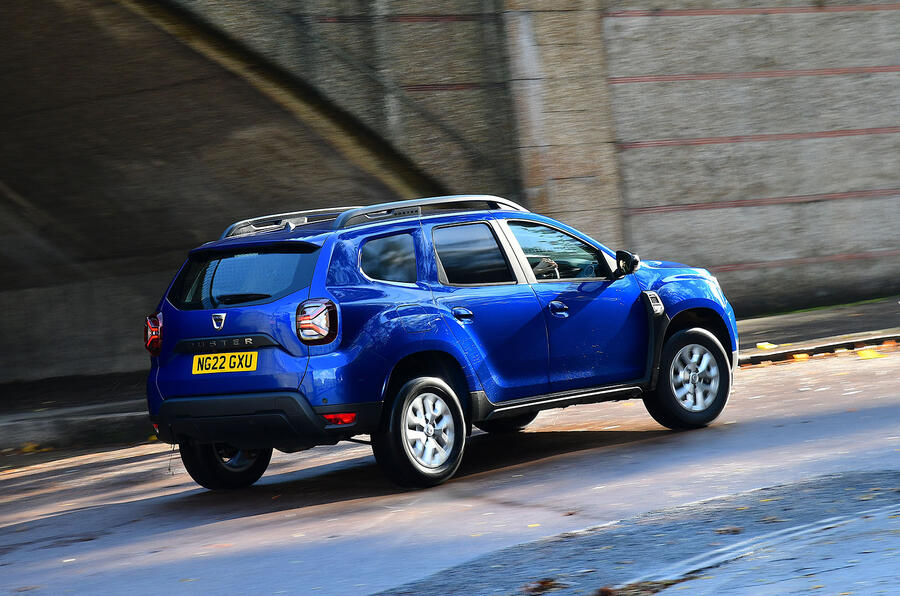
This is a properly dependable workhorse that also does the whole daily-driver thing far better than you might think - and if that doesn't convince you, then consider the fact that it even tempted our own Steve Cropley out of his legendary Citroën Berlingo after 19 years. "The Duster never disappoints, whatever you've been in beforehand," he says. It's pretty astounding, then, that you can pick one up for just £5000 now - and you don't even have to give much up in return. If you're upgrading from a Mk1, you will be particularly impressed: better insulation halved the amount of road and wind noise, according to Dacia (although it's still only about average for the class) and the ride quality improved too.
The Duster grew into a do-it-all kind of car, being comfortable and quiet, with perfectly adequate B-road handling; light, precise steering for urban duties; excellent visibility; class-leading off-road performance with 210mm of ground clearance; and deceptively compact dimensions (it's barely any larger than a Volkswagen Golf). Inside there's a lot of hard, scratchy plastics, but it's all well screwed together. Meanwhile, the seats are comfy enough, there's plenty of head and knee room, the dashboard is well laid out and the boot is a useful 445 litres (slightly smaller in four-wheel-drive versions).
It's hard to believe prices opened at a mere £9995 when it was new. Okay, so that was for an Access, which didn't even get hubcaps (and therefore sold in very small numbers), but the Essential (air-con, DAB radio, Bluetooth) started at only £11,595. Comfort was the next trim up, adding sat-nav, Apple CarPlay, Android Auto, cruise control and a rear parking camera and sensors, and Prestige rounded things off with climate control, keyless entry, a 360deg parking camera and blindspot monitoring.
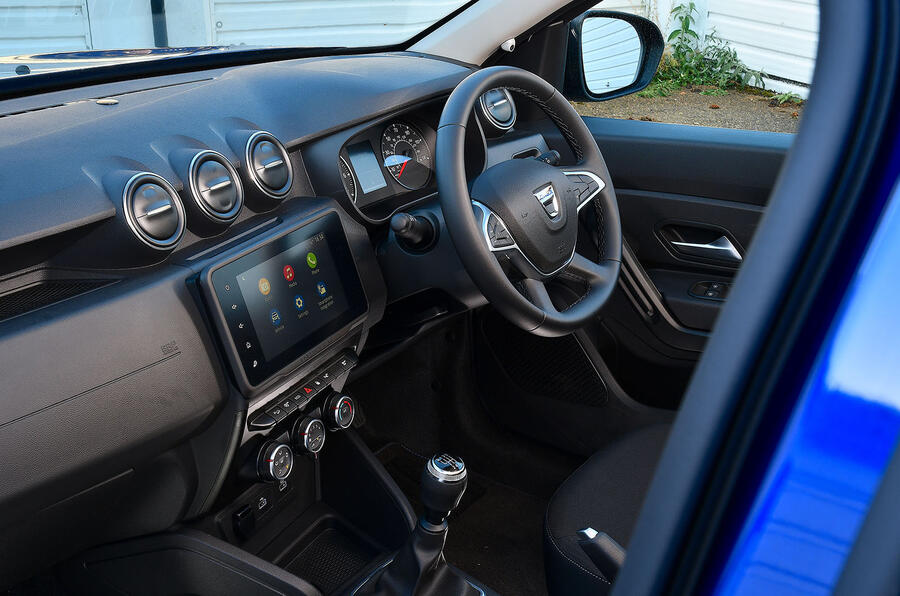
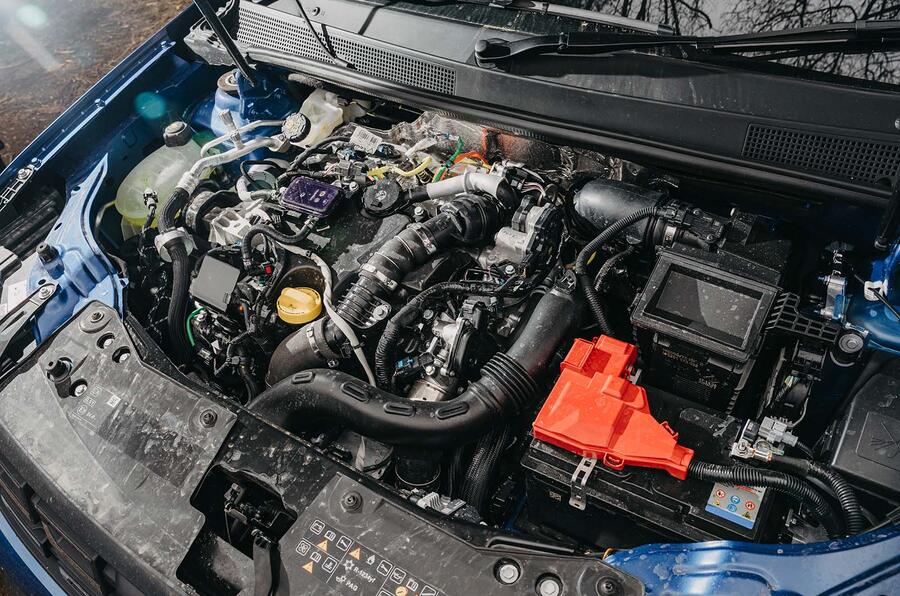
In late 2021, there was a light facelift that introduced some fresh LED light designs and an automatic gearbox for the first time. The Duster's engine range is quite straightforward: a 114bhp 1.5-litre four-cylinder turbo diesel engine was available throughout with a six-speed manual and optional four-wheel drive. Capable of 60mpg and decently torquey, it's our pick of the line-up, even if petrols are more common. Initially the green-pump offering was a 114bhp atmospheric 1.6-litre four with a five-speed manual, but it was wheezy and felt like it was missing a gear.
The 1.3-litre turbo four with 128bhp (plus a six-speed manual and the option of four-wheel drive) or 148bhp (a six-speed dual-clutch automatic) is more up to the job and should get more than 40mpg. The final option was a five- speed 0.9-litre turbo petrol triple. Although a little underpowered, it was available in Bi-Fuel form, meaning it could run not just on petrol but also LPG, which can be cheap to buy and extends the combined range beyond 700 miles.
What to look out for
Petrol engines: It may be the best petrol option from a performance and fuel economy standpoint, but some owners have had problems with the 1.3 TCe. Excessive coolant use will probably be due to a failing water pump, while an oil leak might signal the death knell of the turbo. The 'EDC' six-speed automatic gearbox with which it is sometimes paired can overheat in intensive stop-start traffic. Coolant leaks can occur on the 0.9 TCe around the thermostat housing, due to a leaking gasket. Timing chains can stretch and fail after 100,000 miles. More regular oil changes than Dacia suggests will help prevent problems.
Diesel engines: AdBlue and diesel particulate filter problems can occur in the diesels but are generally rare unless the car is repeatedly used for very short journeys.
Gearbox: In manual cars, some owners have experienced judder from the clutch in first gear (even at very low mileages) or heaviness. These can be annoying but don't seem to cause problems.
Electrics: Owners have reported slow and unresponsive electric windows, crashy infotainment systems and warning lights with minds of their own. You should therefore check all electrical functions before buying, although dodgy fuses are often the simple cause of issues.
Also worth knowing
The Duster was a bargain when new but as a used purchase it's not a lot cheaper than rivals, owing to very strong residuals, yet it's still easy to recommend and should hold its value well. A Bi-Fuel model could save you hundreds if there's an LPG pump near you (unlikely now) but aren't allowed in the Channel Tunnel.
All Mk2 Dusters are ULEZ- compliant and just £200 to tax annually, with insurance groups beginning as low as nine. Various special editions like the Extreme, Journey, SE Twenty and Techroad added colours and trim otherwise missing from the Duster's rather staid spec. They successfully turn it into a surprisingly stylish proposition.
How much to spend
£5000-£7499 We found a 170,000-mile diesel for even less, which demonstrates the Duster's toughness. There are plenty in this bracket with fewer than 100,000 miles, although most are quite low-spec.
£7500-£10,999 Lots of sub-50,000-mile, good- spec Comfort and Prestige cars and a choice of petrol or diesel power. The 4x4s are rare and command a premium.
£11,000 and above Mainly post-facelift cars with few miles - some below 10,000.
An owner's view
Steve Cropley: "My 30,000-mile, 71-plate Duster diesel 4x4 has just passed its second MOT test in my ownership. I was expecting it to fly through, because it has always been completely reliable, but it failed initially this time because the front brake discs had corroded so badly that they needed replacement - a £450 job that my Dacia dealer was able to do on the spot before giving it a clean test certificate. "Apart from that, the car is perfect and I have full confidence in it. The engine is sweet and delivers 60mpg. The car needed two new front tyres at 25,000 miles but the rears are still going strong. The body and interior seem perfect to me and, despite the arrival of newer models, it still feels good to drive."

Ford Sales Slide Reveals Deepening Struggles as Hybrids and EVs Fail to Offset Model...

McMurtry Fan Car Expands in Size and Power for Production with Seven-Figure Price Tag