Connected Vehicle Rule Exemption Highlights Regulatory Disparities in U.S. Auto Policy

Alfa Romeo’s Enduring Allure: How Innovation, Racing Heritage, and Iconic Design Shaped an Automotive...
 Alfa has long been one of the most-loved Italian marques for Autocar readers, and here we celebrate its history
Some people say that every true petrolhead has either owned an Alfa Romeo or, at the very least, wanted to.
Alfa was founded in Milan, less than a hundred miles from its current home in Turin. The actual date was 24 June 1910, but as we’ll see the Alfa Romeo story in fact began a little earlier than that. Let's take a look at this famous firm through the lens of its most famous cars:
The Darracq connection
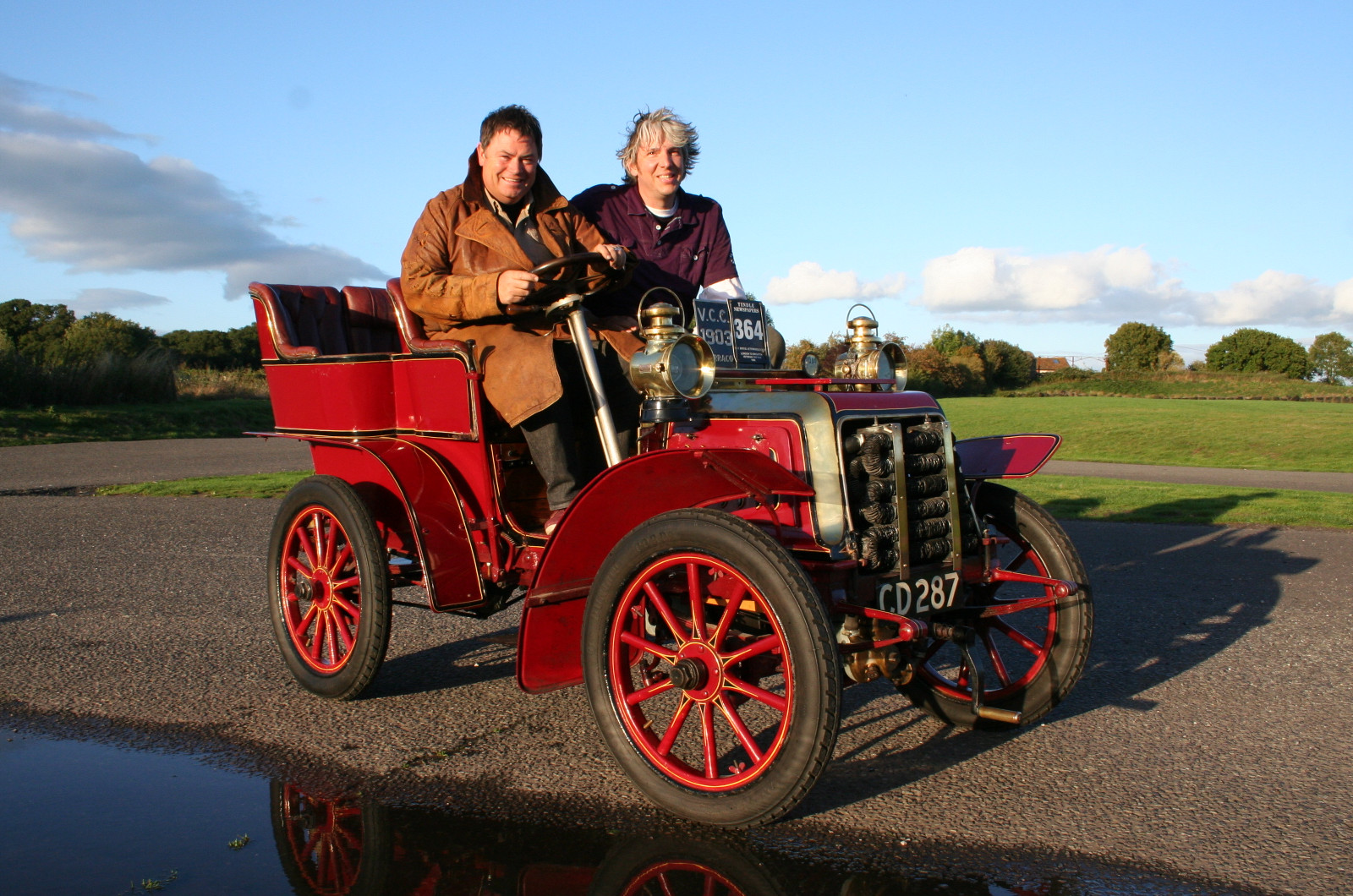
The company we now know as Alfa Romeo arose from S.A.I.D., which was created in 1906 to build French Darracq cars for sale in Italy. By 1909, S.A.I.D. was in trouble, and its directors decided to try a new approach and build cars of their own.
The new organisation was given the descriptive name [Società] Anonima Lombarda Fabbrica Automobili, which approximately translates into English as Lombardy Automobile Factory Limited. For convenience, it was referred to by its initial letters, A.L.F.A.
The logo
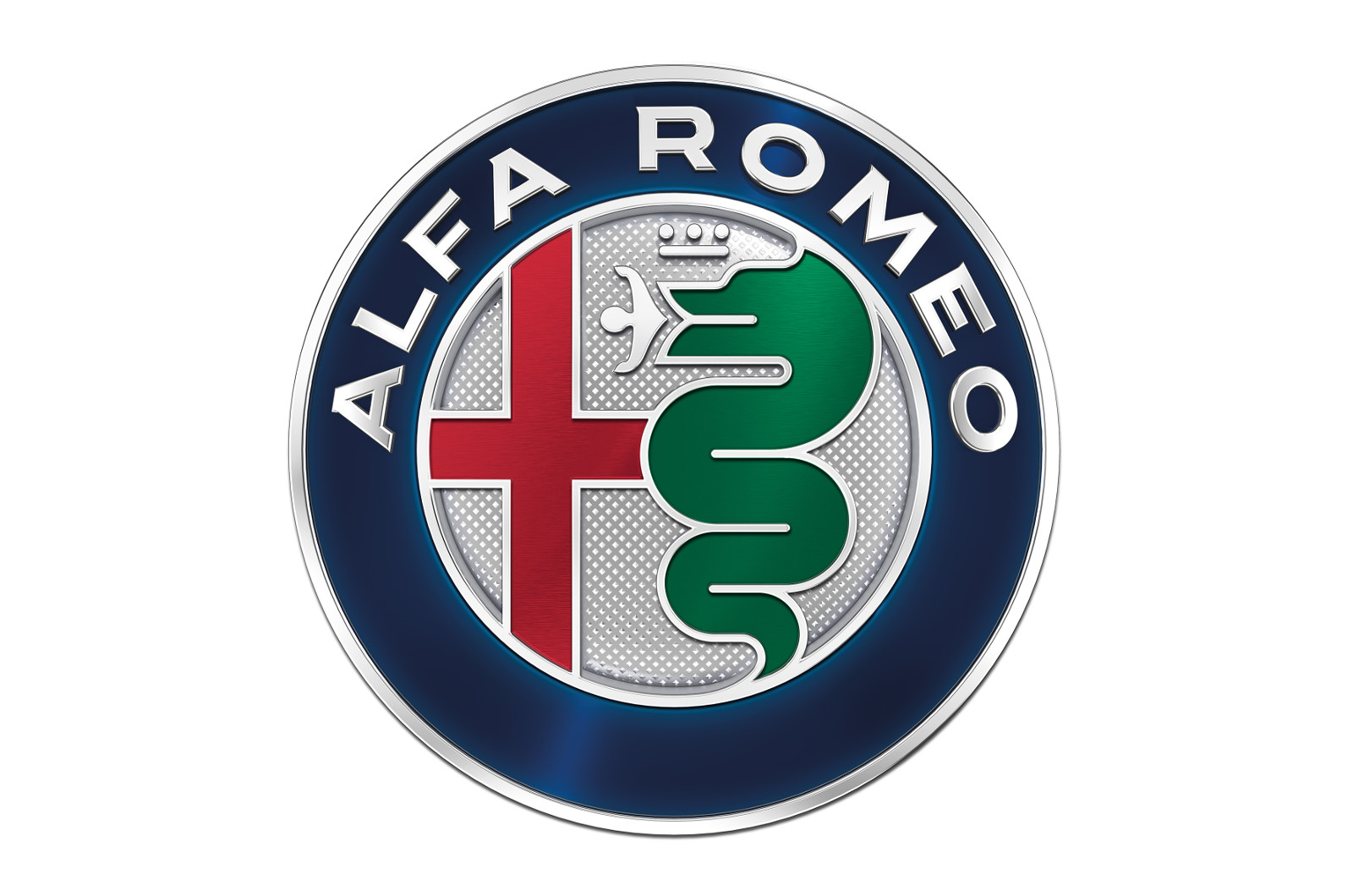
The A.L.F.A. logo was designed by Romano Cattaneo. It has been redesigned several times over the years, but two elements have remained throughout: a red cross representing Milan and a grass snake taken from the coat of arms of the Visconti family, which ruled the city until 1447.
The 24 HP
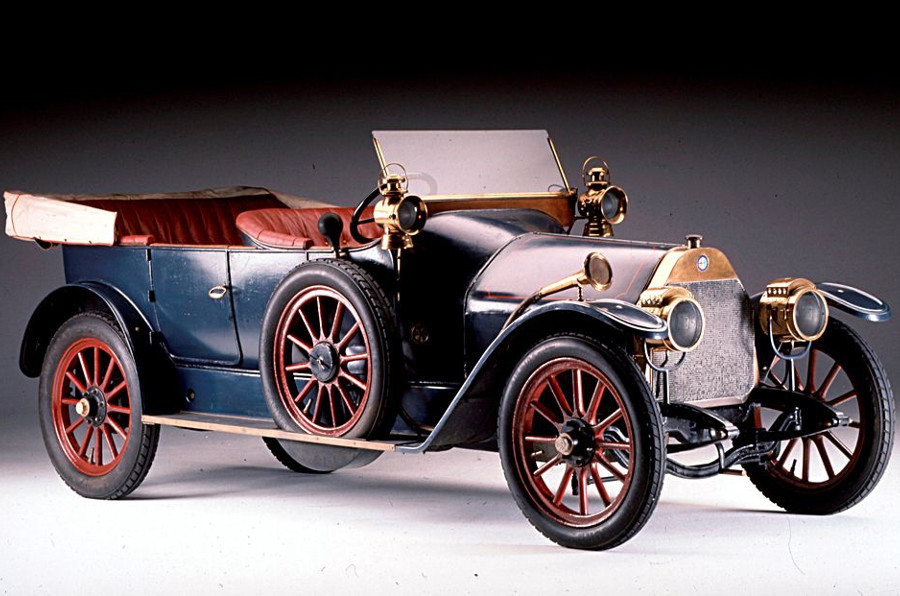
A.L.F.A. hired ex-Fiat man Giuseppe Merosi as its chief engineer, a post he held until 1923. He designed the company’s first car, a four-seater with a 4.1-litre engine known as the 24 HP (pictured). It was followed almost immediately by the smaller 12 HP. Production of the 24 HP continued until 1914.
Two 24 HPs were entered in the 1911 Targa Florio race, but both retired on the third and final lap of the 91-mile road course, one because of the accident which befell Nino Franchini and the other due to the exhaustion suffered by Ugo Ronzoni.
Nicola Romeo
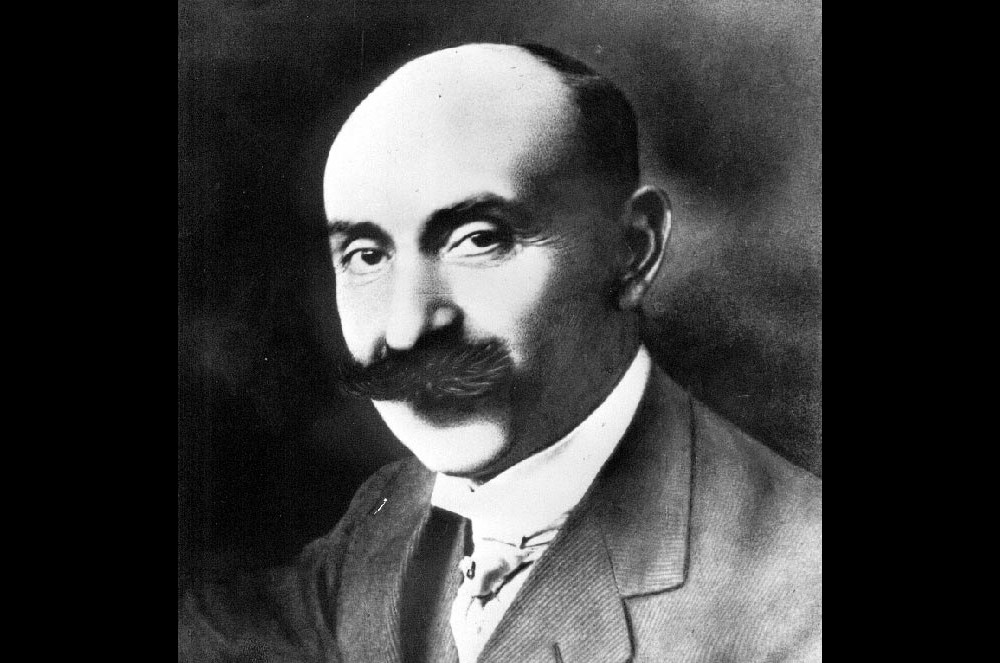
In 1915, entrepreneur Nicola Romeo bought a controlling stake in A.L.F.A., which spent the remaining war years building military equipment. Romeo soon became the full owner of the firm, whose name was changed in his honour to the current Alfa Romeo in February 1918.
Romeo left in 1928 and died ten years later at the age of 62, but he is still commemorated in the name of the company and those of streets in several Italian cities, including Milan.
The 20-30 HP
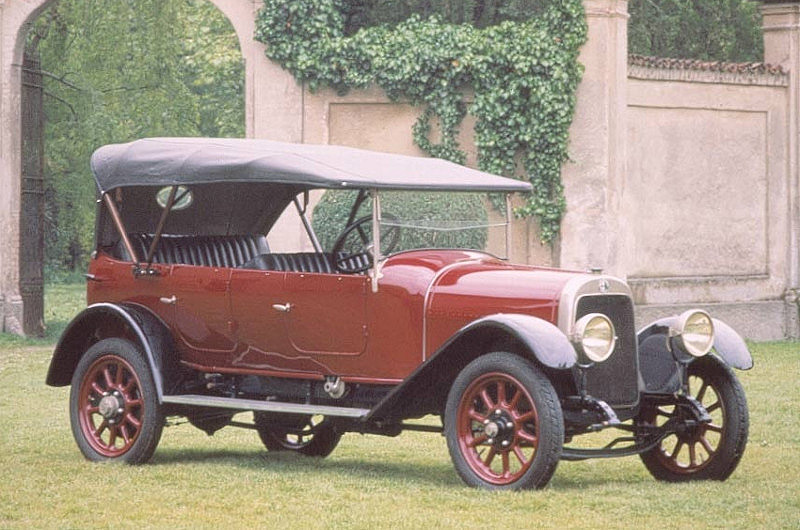
The 20-30 HP, introduced in 1914, was a development of the original 24 HP. Production was interrupted by the First World War, so many cars started before hostilities began were completed only in 1920.
A sports version of the 20-30 HP was the first model ever to be badged as an Alfa Romeo.
The RL
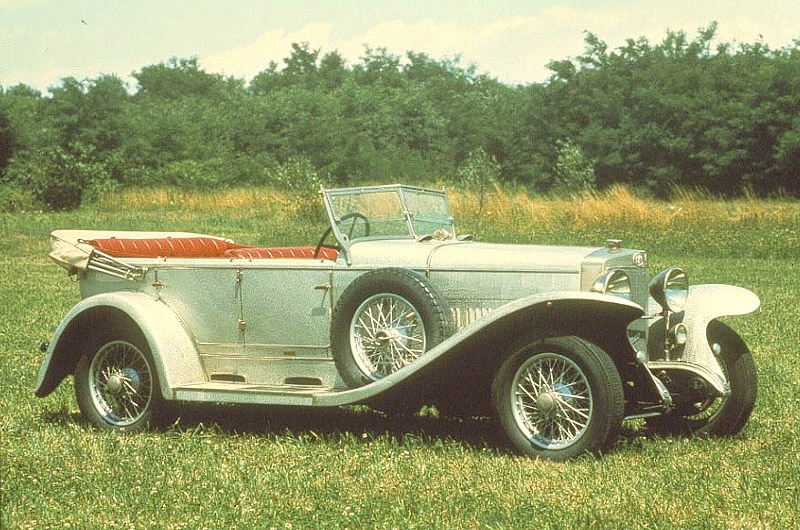
The Alfa Romeo RL was in production for five years starting in 1922. There were four grades called Normale, Turismo, Sport and Super Sport (pictured).
In addition to those, Alfa built several lighter and more powerful race versions named after the Targa Florio road race. Drivers included Enzo Ferrari, who won a major event at Ravenna in June 1923.
The cloverleaf
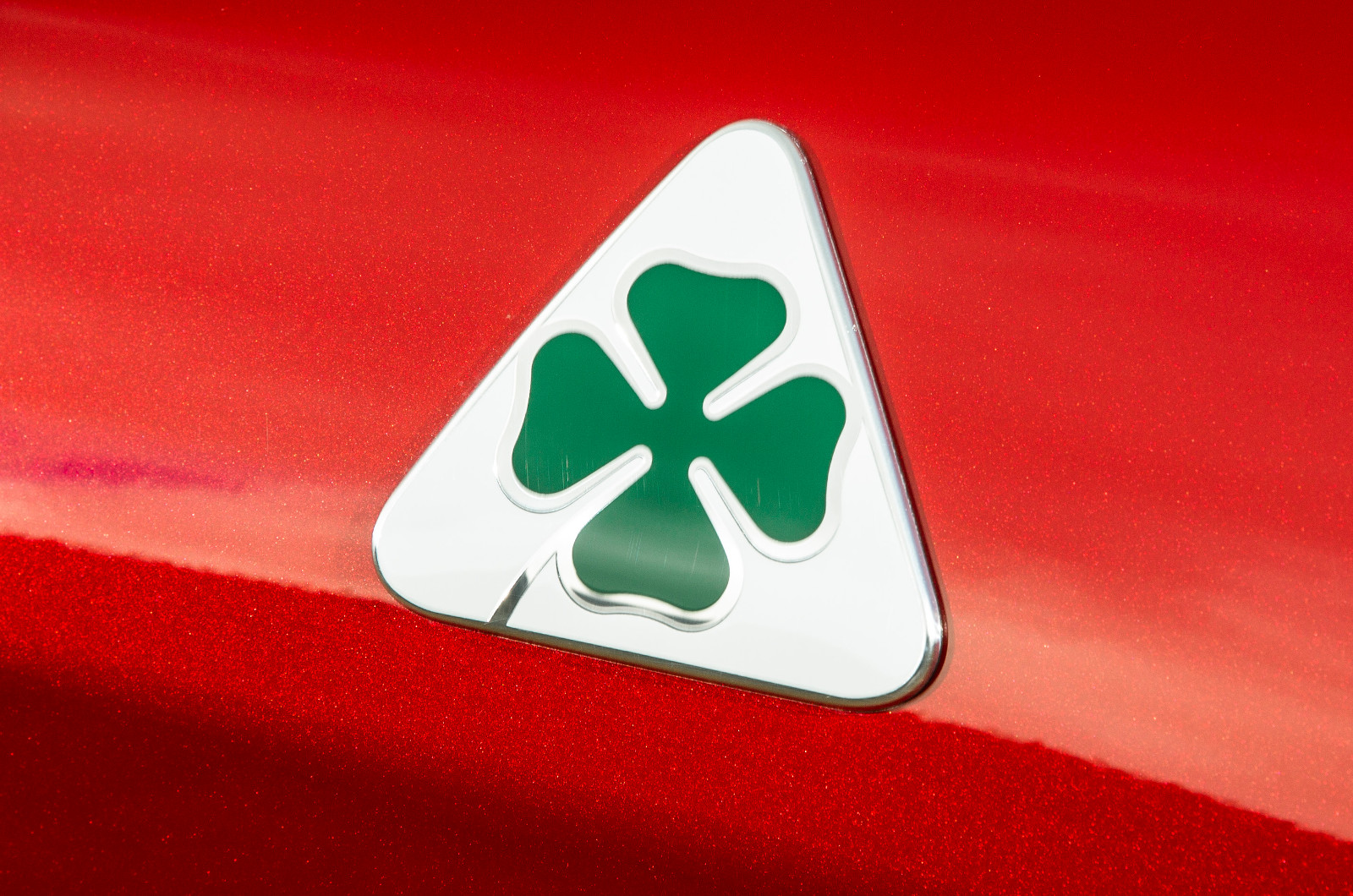
Hoping that it would bring him luck in the 1923 Targa Florio, Alfa racing driver Ugo Sivocci painted a four-leaf clover on his RL. It seemed to be effective. Sivocci won the race, but later died at Monza while practising in another car which did not have the clover on it.
The clover, known as quadrifoglio, was added to Alfa Romeo race cars from then on in Sivocci’s honour. The logo and the name began to be used on high-performance production cars in the early 1960s.
The 6Cs
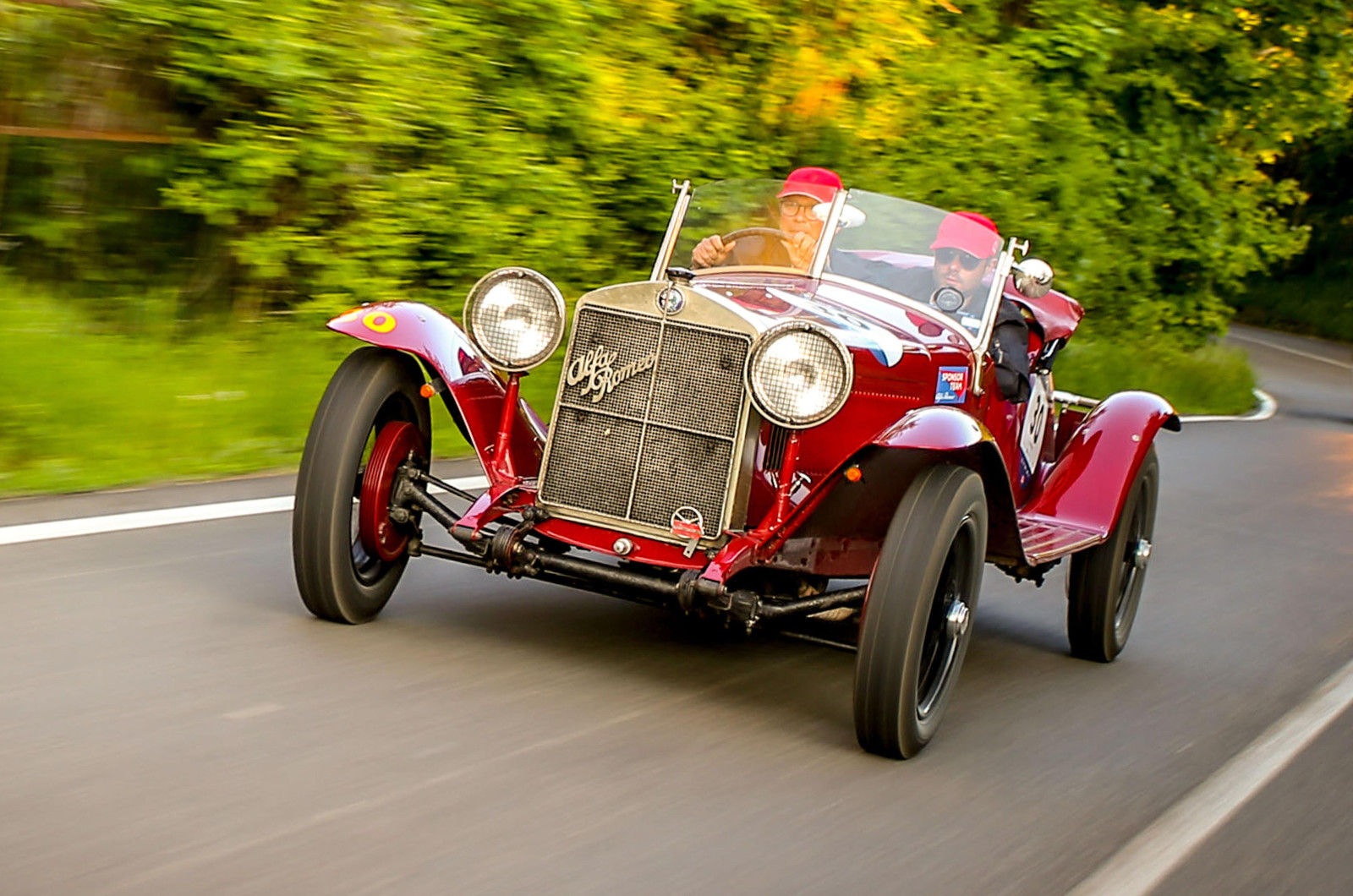
The RL was replaced in 1927 by the first of a series of sports models called 6C because they all had six-cylinder engines. Giuseppe Campari won the 1928 Mille Miglia race in a competition version, and road models appeared with several engine sizes and a great many body styles, mostly created by independent coachbuilders.
A new 6C went on sale in 1934, a year after Alfa Romeo, by now in serious financial trouble, came under the control of Italy’s Institute for Industrial Reconstruction. Its replacement was produced from 1938 to 1952.
The 8Cs
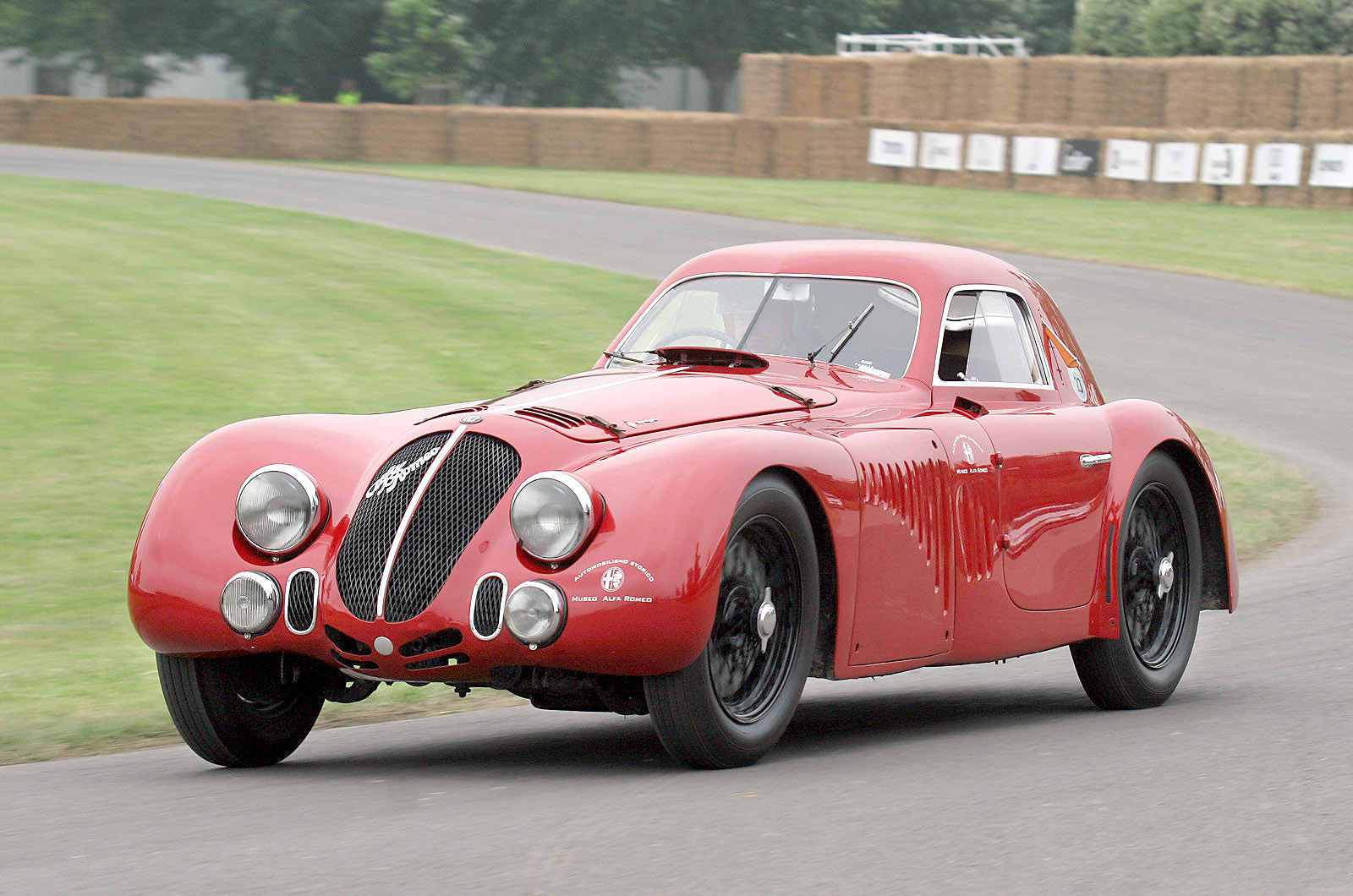
Similar to the 6C, the 8C, built throughout the 1930s, was available in many road-going and competition forms, all with variants of an eight-cylinder engine designed by Vittorio Jano.
A streamlined 8C coupé (pictured) led the 1938 Le Mans 24 Hour race by the almost unbelievable margin of 14 laps before retiring with engine failure two hours before the finish.
A famous victory
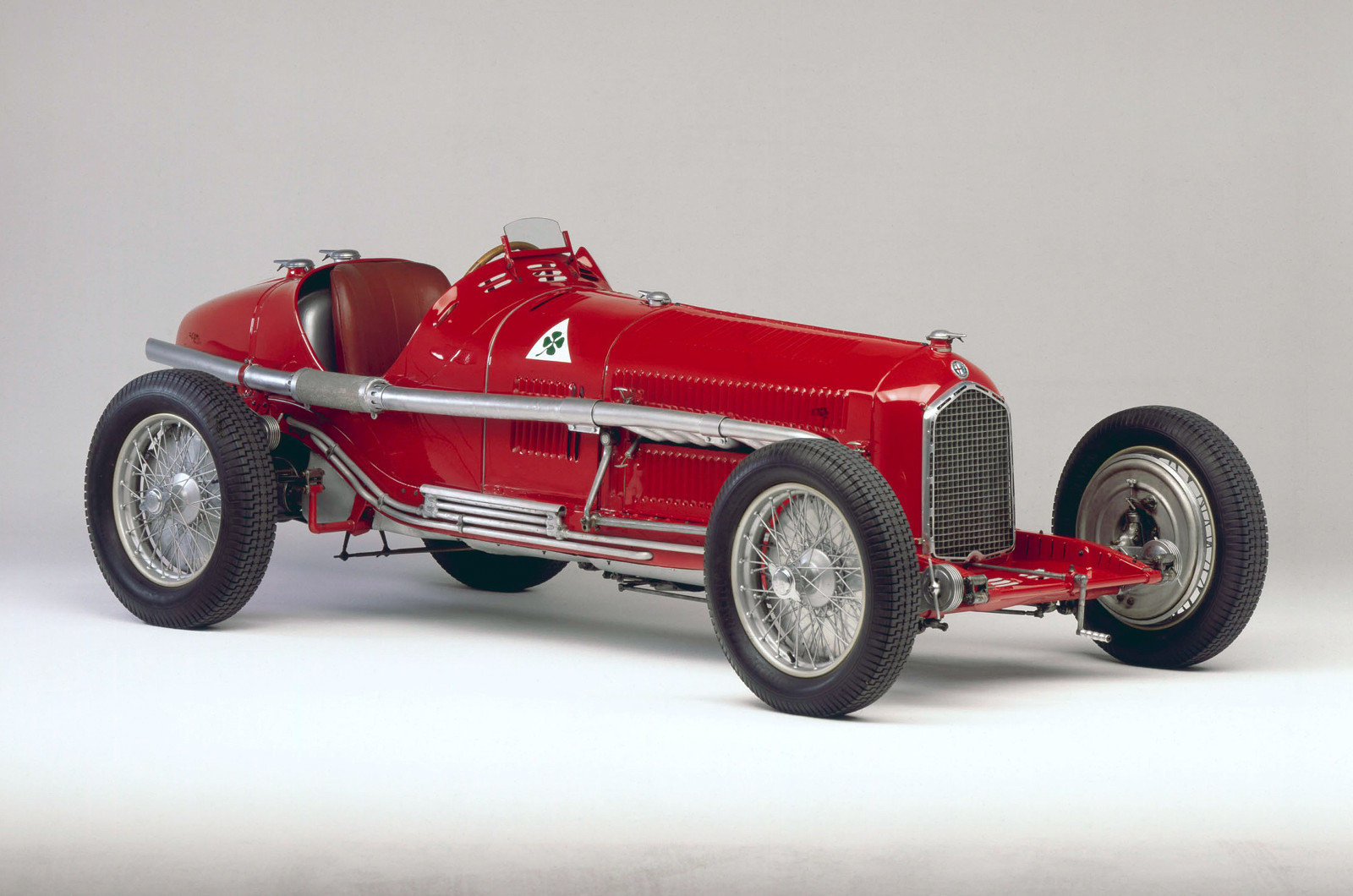
Alfa Romeo’s new Grand Prix car for 1932 was known variously as the Tipo B or P3. It was very successful to begin with, until the technically brilliant Mercedes and Auto Union machines collectively known as the Silver Arrows arrived in 1934.
Despite this, Tazio Nuvolari achieved possibly the greatest result of his career in the 1935 German Grand Prix, driving a P3 in terrible weather at the Nürburgring. Recovering from a bad start and a disastrous fuel stop, Nuvolari took the chequered flag first ahead of eight Silver Arrows, to the disgust of the high-ranking Nazi officials present.
The last 6C
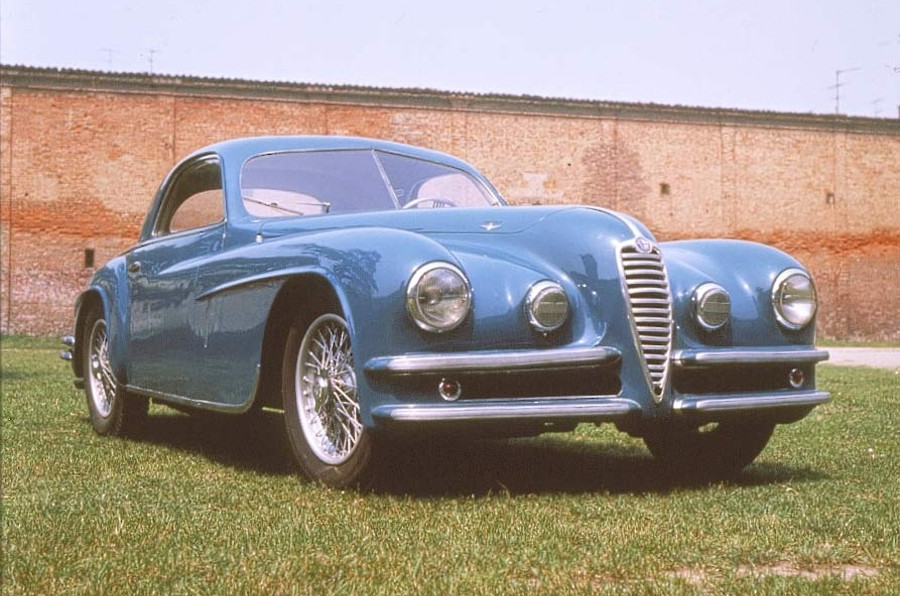
The final 6C model, whose 2.5-litre engine was the largest in the series, was introduced in 1938. The chassis was offered in three sizes, the longest being used for the 2500 Super Sport (pictured).
The 6C was both the last pre-War and the first post-War production Alfa Romeo, remaining on sale until 1952.
The 1900
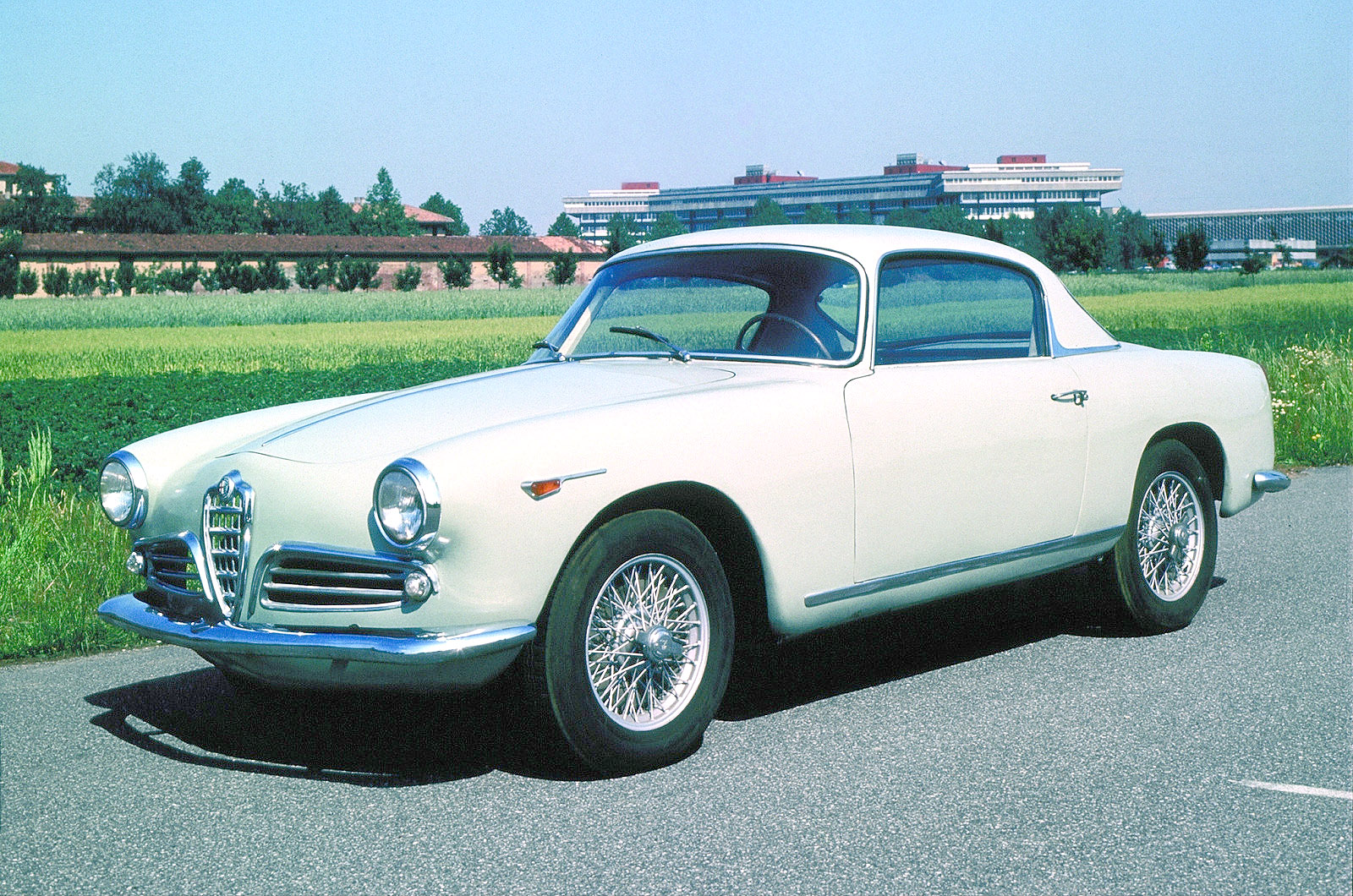
Alfa’s first post-War design was the 1900, which differed from previous models in that it was built on a production line and had a structural body rather than a separate body and chassis.
Aimed at a larger market than previous Alfa Romeos, it was quite successful. Over 20,000 were built between 1950 and 1959.
World champions
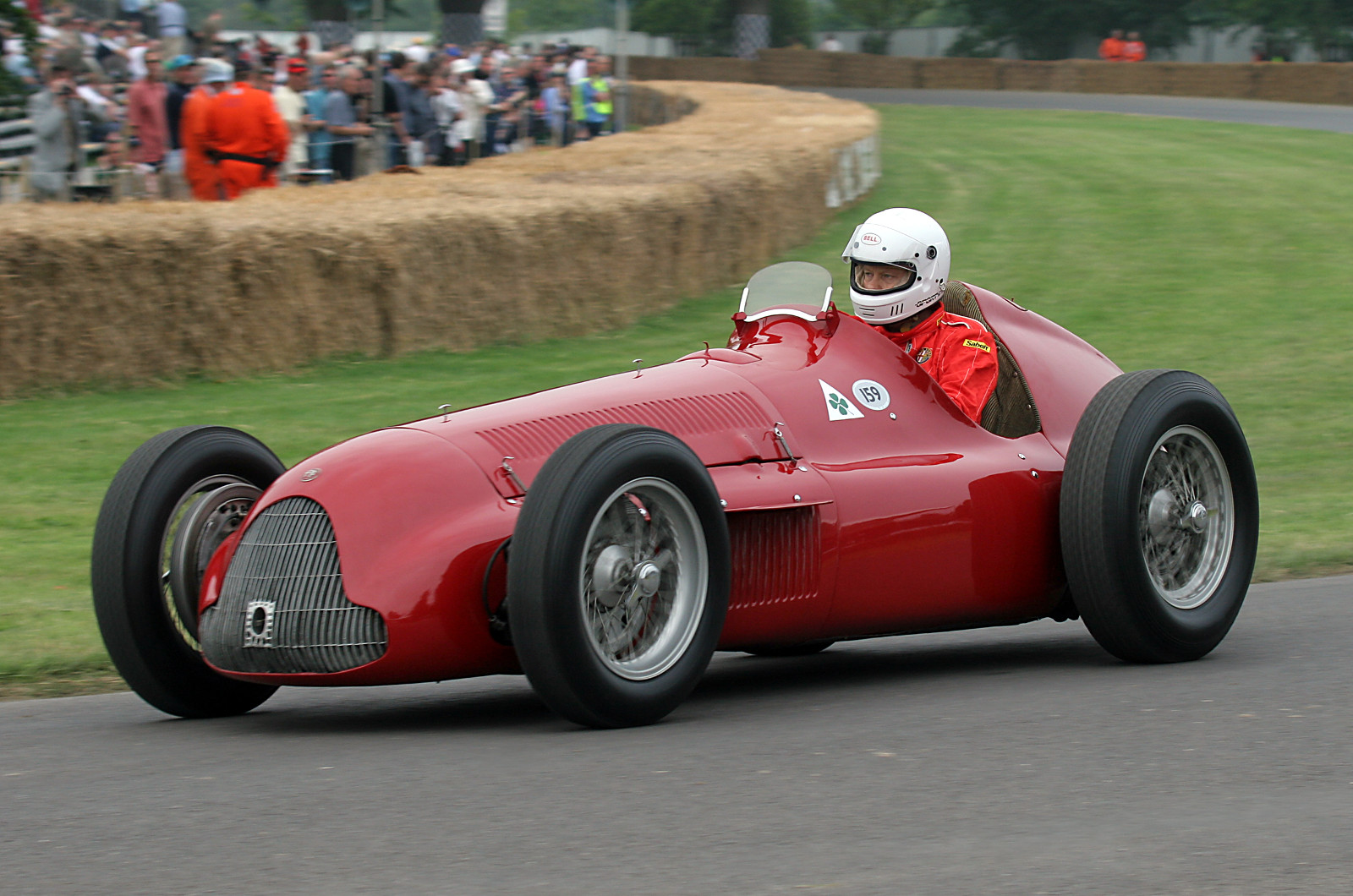
The F1 World Championship was created in 1950. Alfa Romeo immediately dominated it, winning six of the seven rounds (the exception being the Indianapolis 500, which no European team entered). Giuseppe Farina won the title that year and was succeeded by Juan-Manuel Fangio in another Alfa.
Fangio’s car was a 159 Alfetta, a derivative of Farina’s 158 which had itself been designed back in 1937. Alfa Romeo temporarily retired from F1 at the end of the 1951 season. None of its returns led to the success it had enjoyed in the early 50s.
Disco Volante
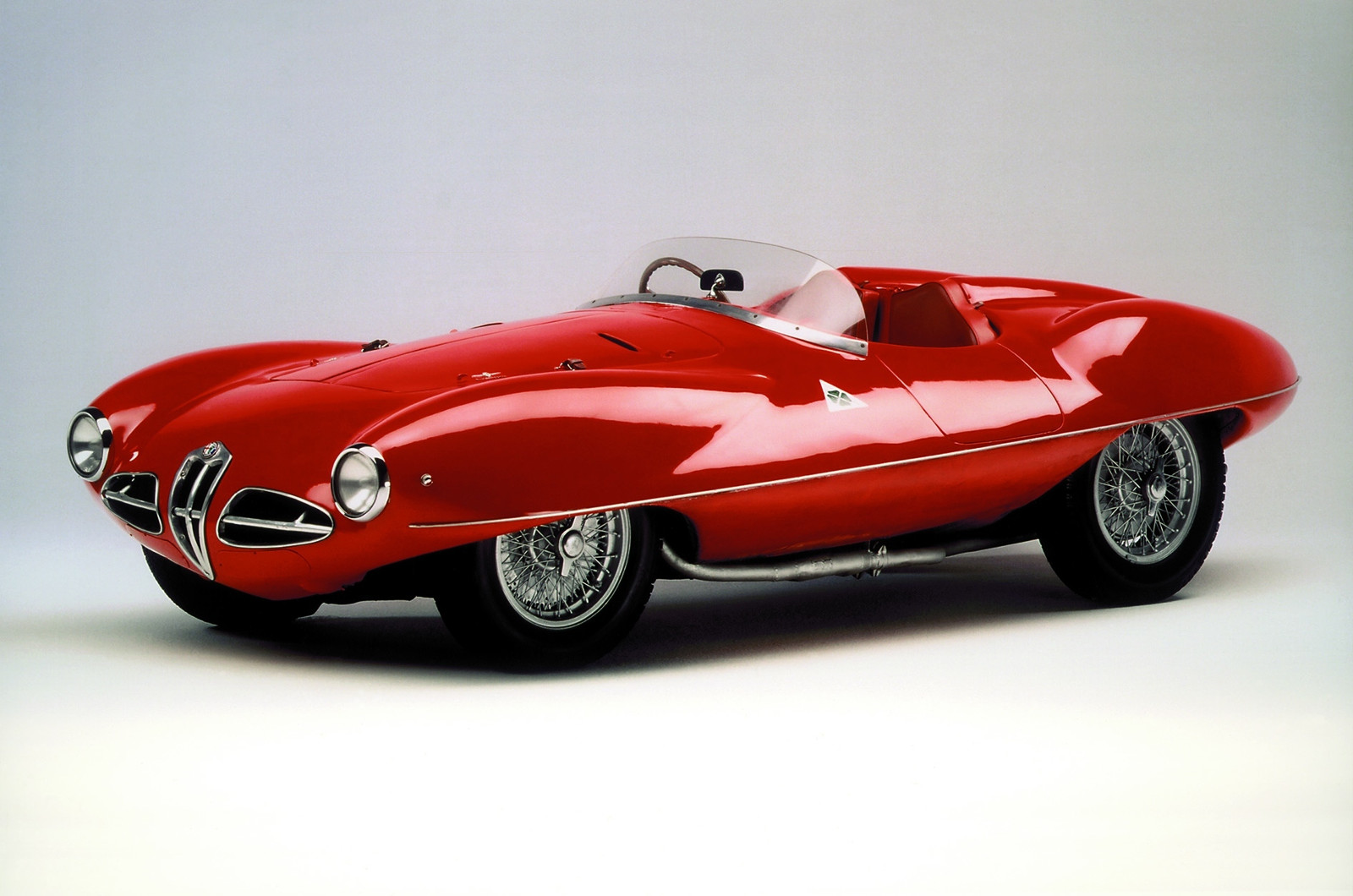
Officially called the 1900 C52, the Disco Volante (‘Flying Saucer’) was an experimental sports racing car of which just five were built in 1952 and 1953. Some of the mechanical components came from the 1900, but the spaceframe chassis and the astonishingly aerodynamic body, developed in partnership with Milan-based Carozzeria Touring, were new.
Alfa Romeo and Touring collaborated again on a new Disco Volante, based on the 8C Competizione, which was revealed in 2013. A convertible version appeared three years later.
Giulietta
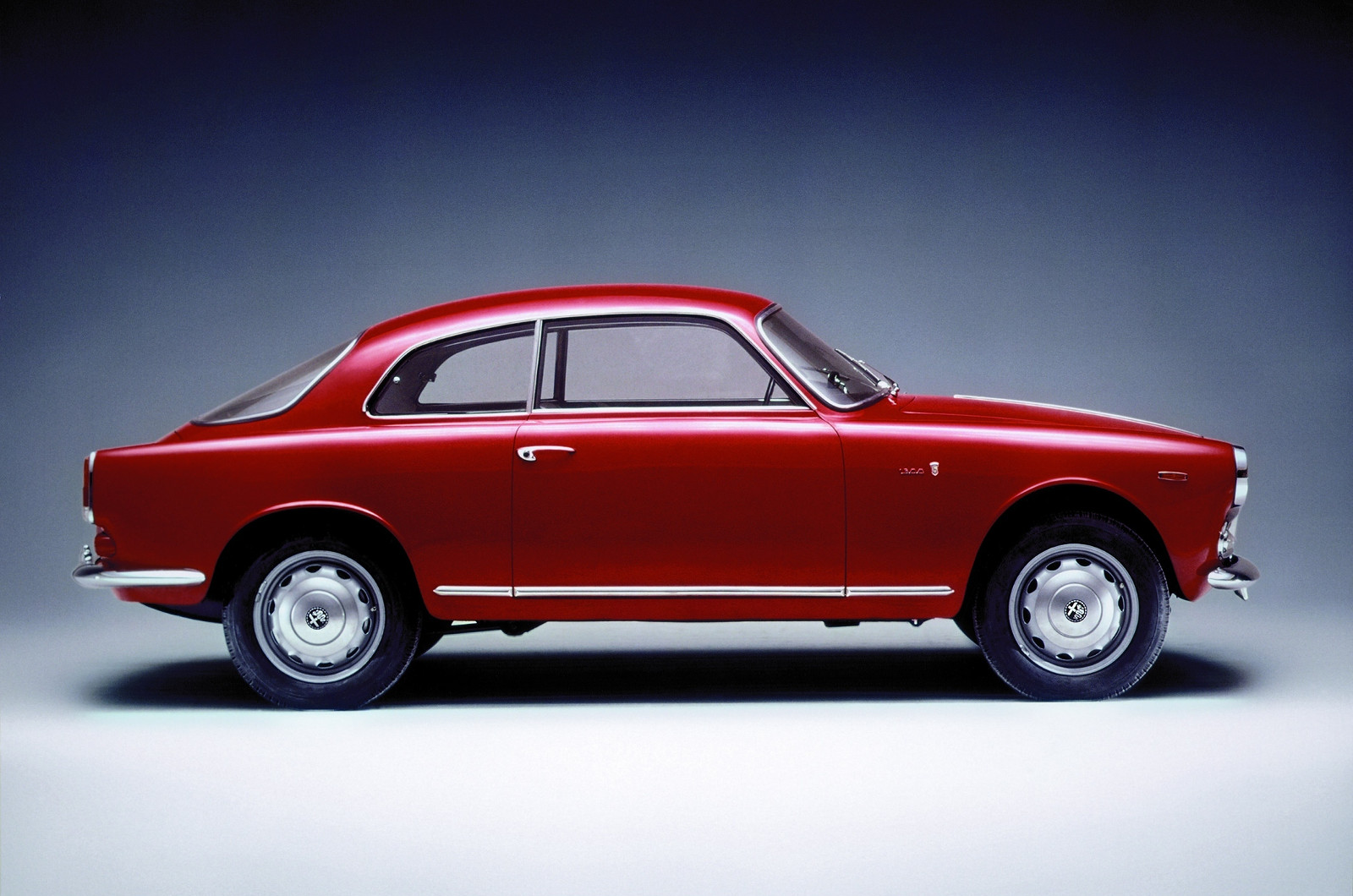
Alfa Romeo has used the Giulietta name three times. The first model, manufactured from 1954 to 1965, was available in saloon, coupé (pictured) and roadster forms, along with a very rare estate called the Promiscua.
Most of them had the same 1.3-litre twin-cam engine with power outputs of up to 99bhp for road use. Competition versions could reach 118bhp. Alfa celebrated the building of the 100,001st Giulietta in 1961, and total production is believed to have exceeded 170,000.
The French connection
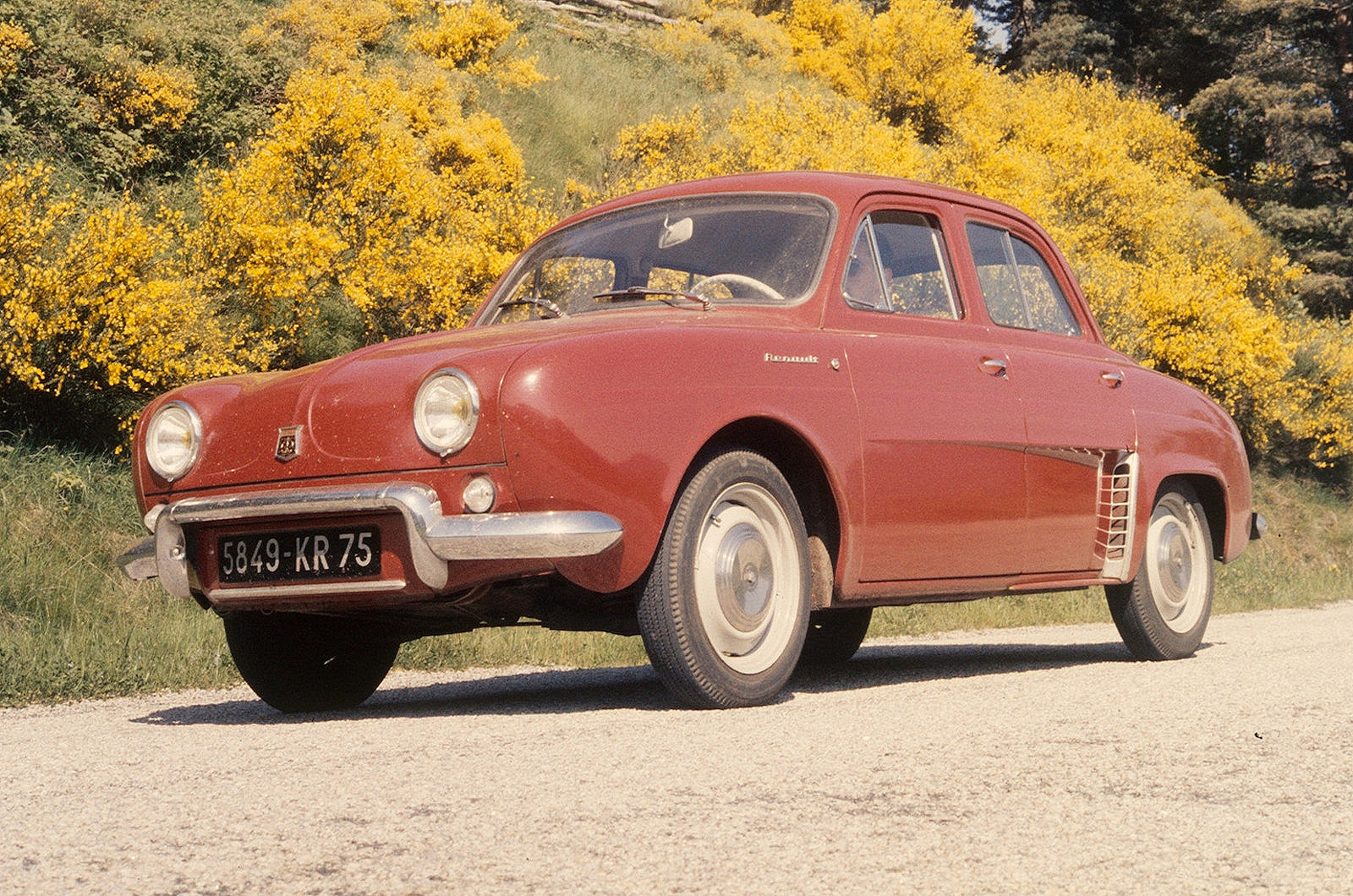
Echoing its early relationship with Darracq, Alfa Romeo built the Renault Dauphine (pictured) under licence in Italy from 1959 and the Renault 4 from 1962. Production of both stopped in 1964.
The Dauphine’s successor was the Renault 8, which bore a close resemblance to an Alfa prototype called the Tipo 103. The two cars were, however, completely unrelated mechanically (not least in that their engines were at different ends), and the Alfa version was never put into production.
Giulia saloons
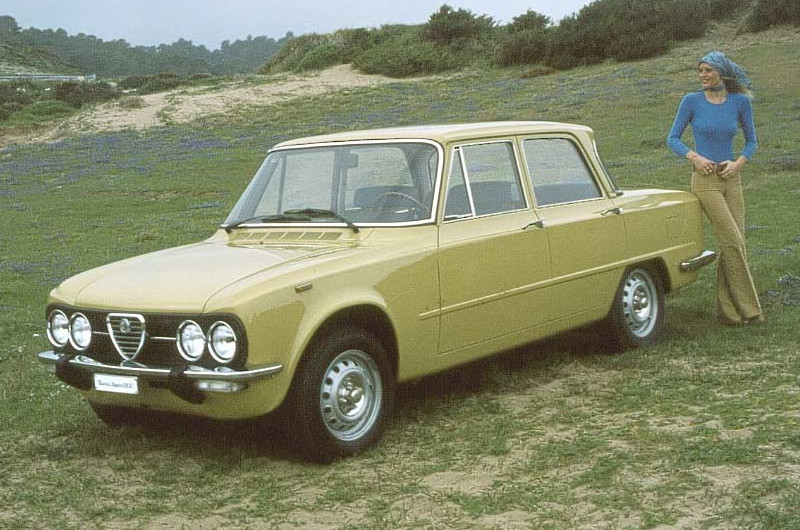
Known as the Type 105, the original Giulia saloon, built from 1962 to 1977, had a boxy body which was far more aerodynamic than it appeared.
Nearly all versions had 1.3- or 1.6-litre petrol engines, but a late model introduced in 1976 was Alfa Romeo’s first diesel-powered passenger car.
Giulia coupés
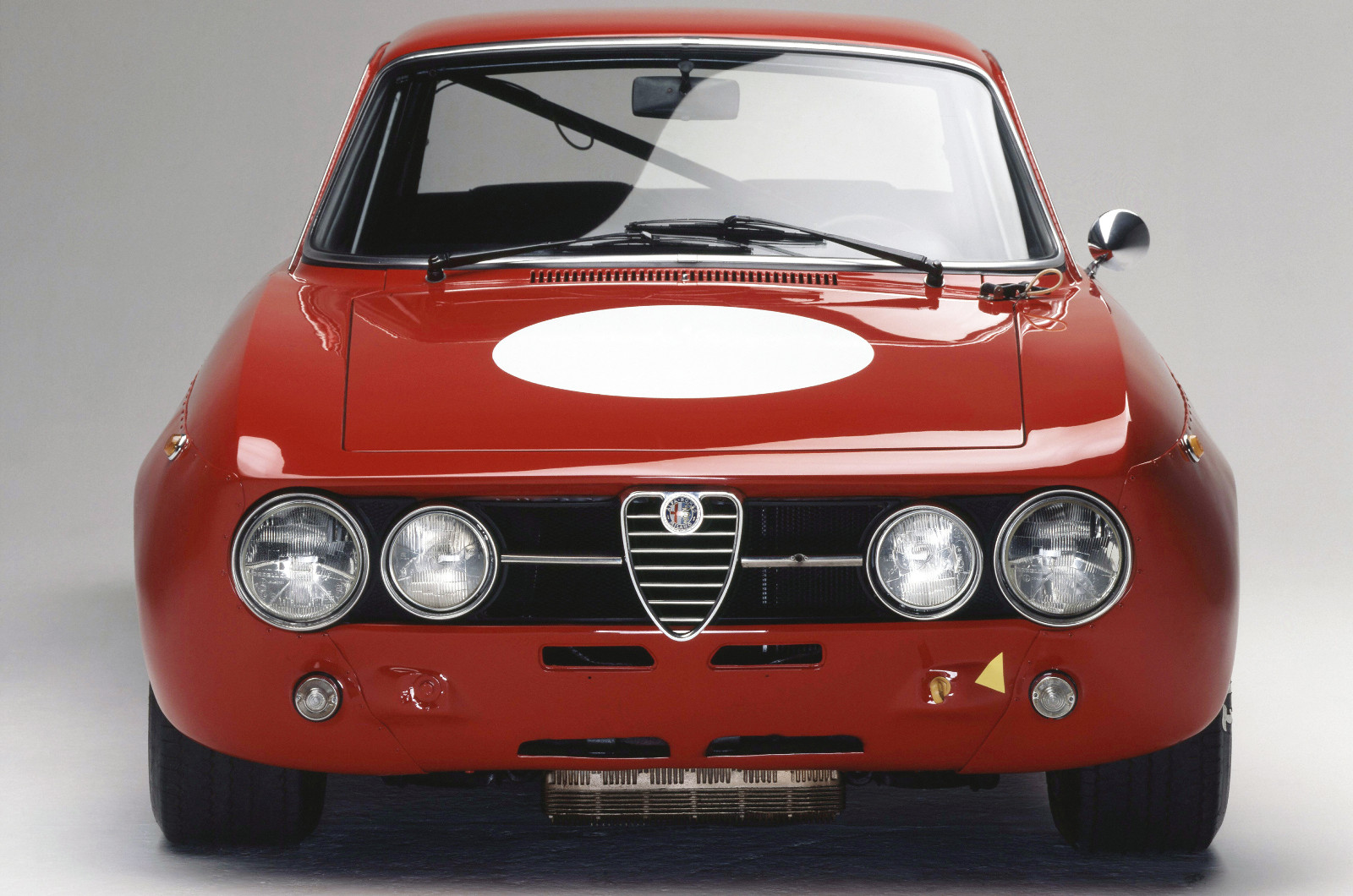
A series of coupés based on a shortened Giulia saloon platform was launched in 1963. Engine sizes ranged from 1.3 to 2.0 litres, and the cars had several names, most of which included the letters GT.
The GTAm (pictured), built by Alfa Romeo’s motorsport division Autodelta, was built specifically for racing. Dutch driver Toine Hezemans won the 1970 European Touring Car Championship in one.
2600
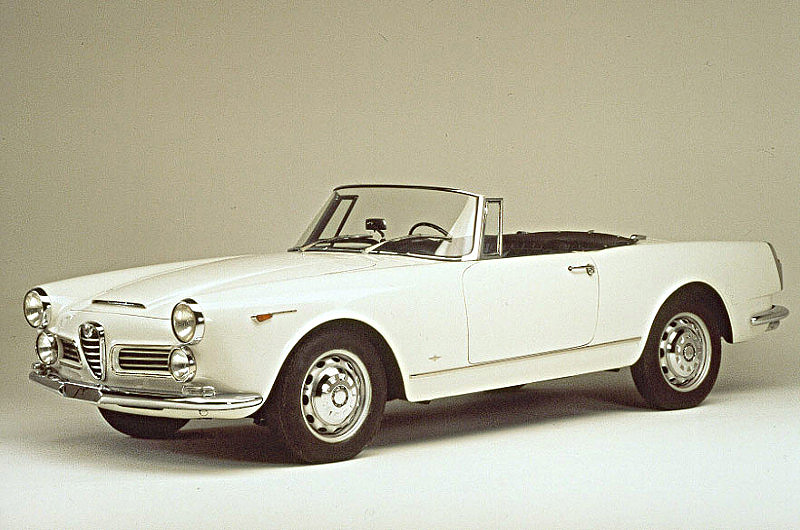
Produced from 1962 to 1968 and a development of the earlier 2000, the 2600 was the last of what would have been described at the time as the ‘classic’ Alfa Romeos, with a six-cylinder engine.
It was offered as a saloon with Alfa’s own body and as a Spider (pictured) and coupé with bodies by Touring and Bertone respectively. Overall, the 2600 was not a great success, and there was no direct replacement.
Spider
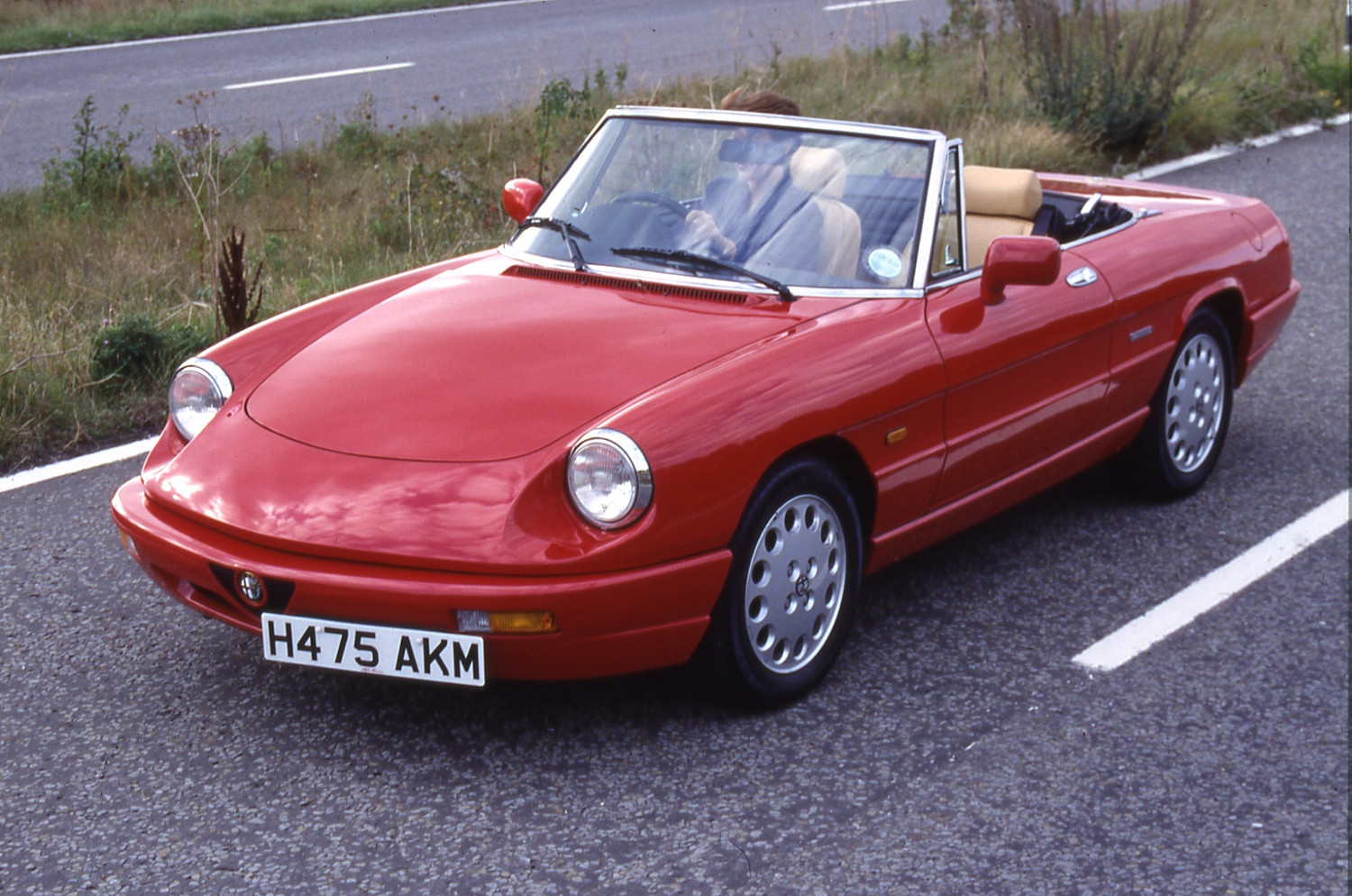
Of all the cars based on the 1962 Giulia, by far the longest-lived was the Spider. Styled by Pininfarina, it was launched in 1966 and featured in the following year’s movie The Graduate (dubbed with a completely inappropriate V8 engine noise) driven by Dustin Hoffman.
This sort of publicity in the first year of a model’s production is the sort of thing manufacturers can usually only dream of, but even Alfa Romeo can hardly have expected at the time that it would still be building essentially the same car (though with several updates) as late as 1993.
33 Stradale
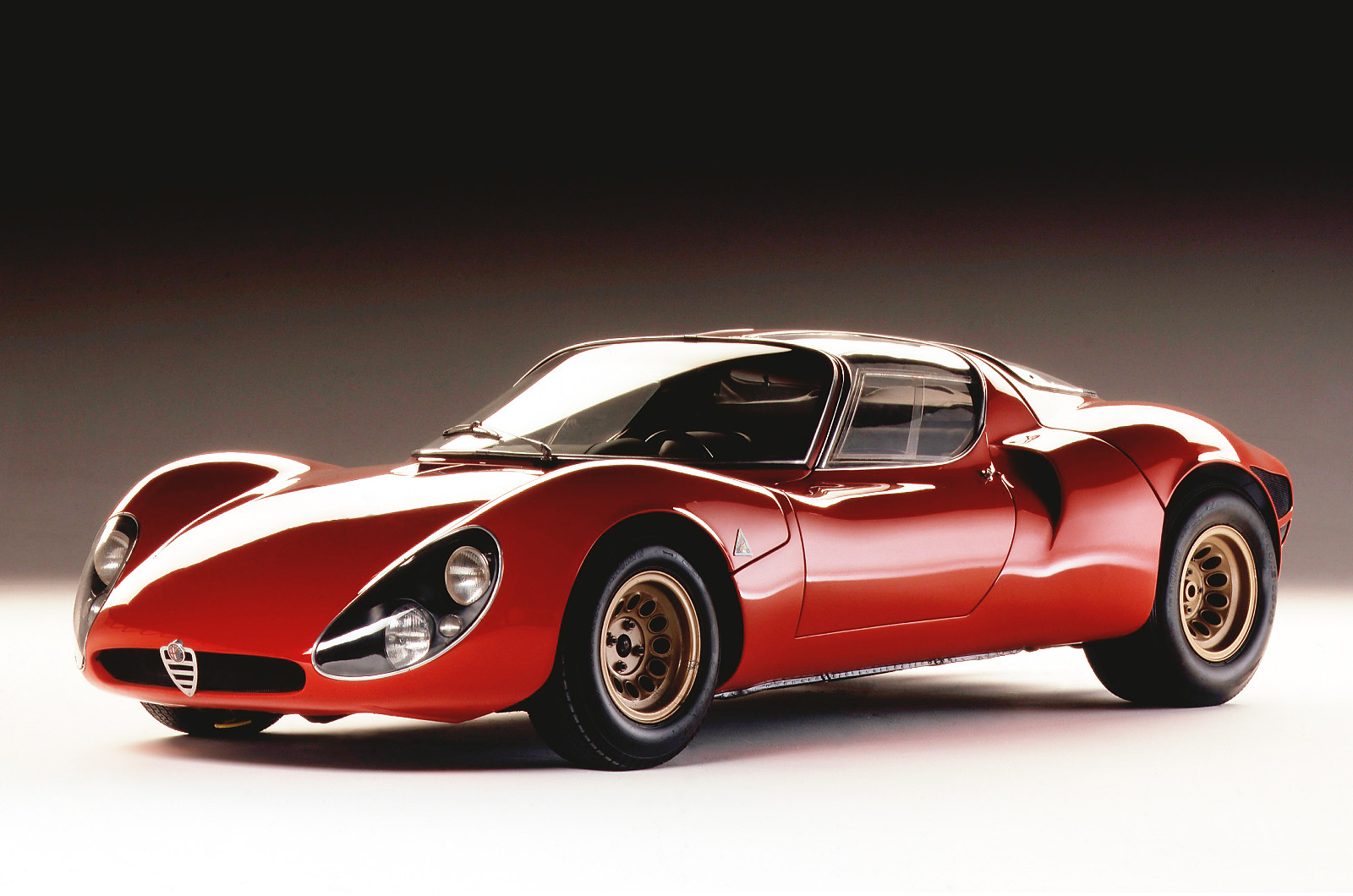
This was the street-legal version of Alfa’s Tipo 33 sports racer, stradale being the Italian word for ‘road’. It had butterfly doors and a 2.0-litre V8 engine with a remarkably high output of 227bhp, only about 40bhp short of what it produced in the race car.
Only 18 were built from late 1967 to early 1969. Survivors are estimated to be worth over £8 million each.
Montreal
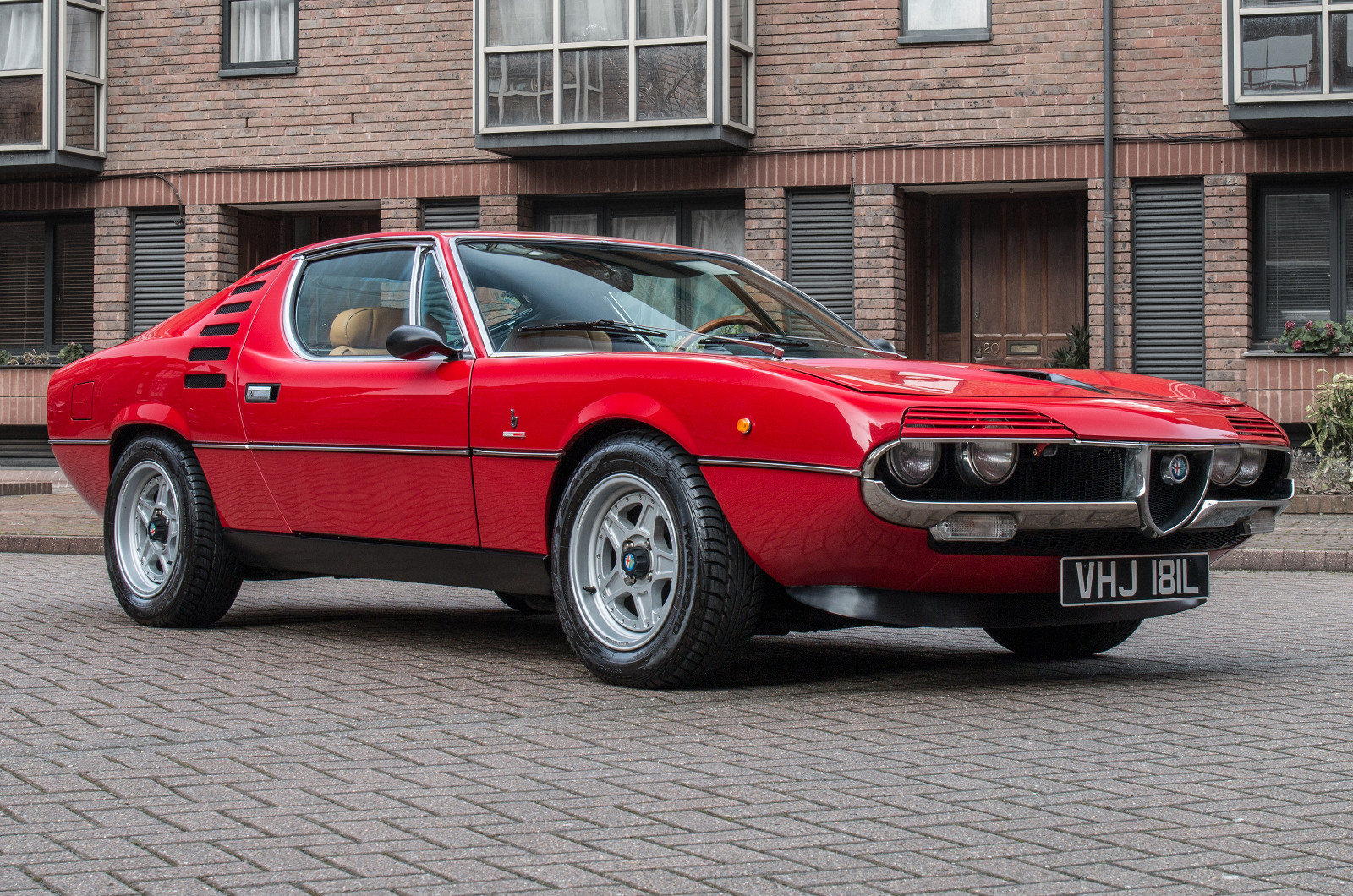
When Alfa displayed an un-named concept car at Expo 67, the public called it the Montreal after the host city. Alfa kept the name for the production model, which differed from the concept in many respects.
For example, the original 1.6-litre four-cylinder engine was abandoned in favour of a larger (2.6-litre) but detuned (197bhp) version of the V8 used in the 33 Stradale. The Montreal was produced from 1970 to 1977 but did not sell particularly well, partly because of its high price.
Alfasud
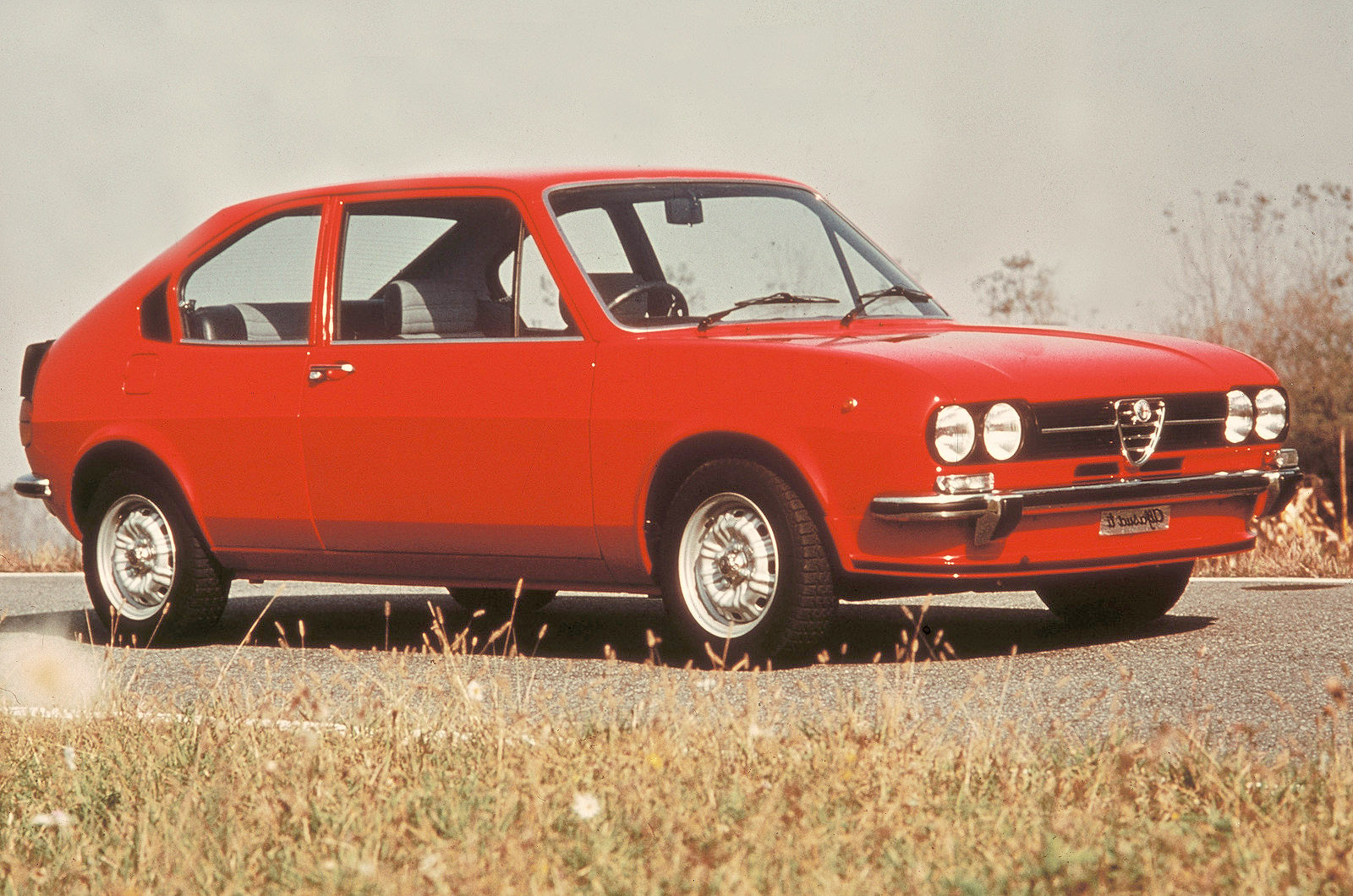
The Alfasud got its name from a government policy to increase manufacturing and employment in the poorer, southern part of Italy (sud being the Italian word for ‘south’). This radical small car, the first front-wheel drive Alfa Romeo, was built in a factory near Naples from 1972, and unfortunately developed an early reputation for rust.
More happily, it also became known for its excellent handling, helped by the fact that the boxer engine layout gave the whole car a helpfully low centre of gravity.
Alfetta, GTV and Giulietta
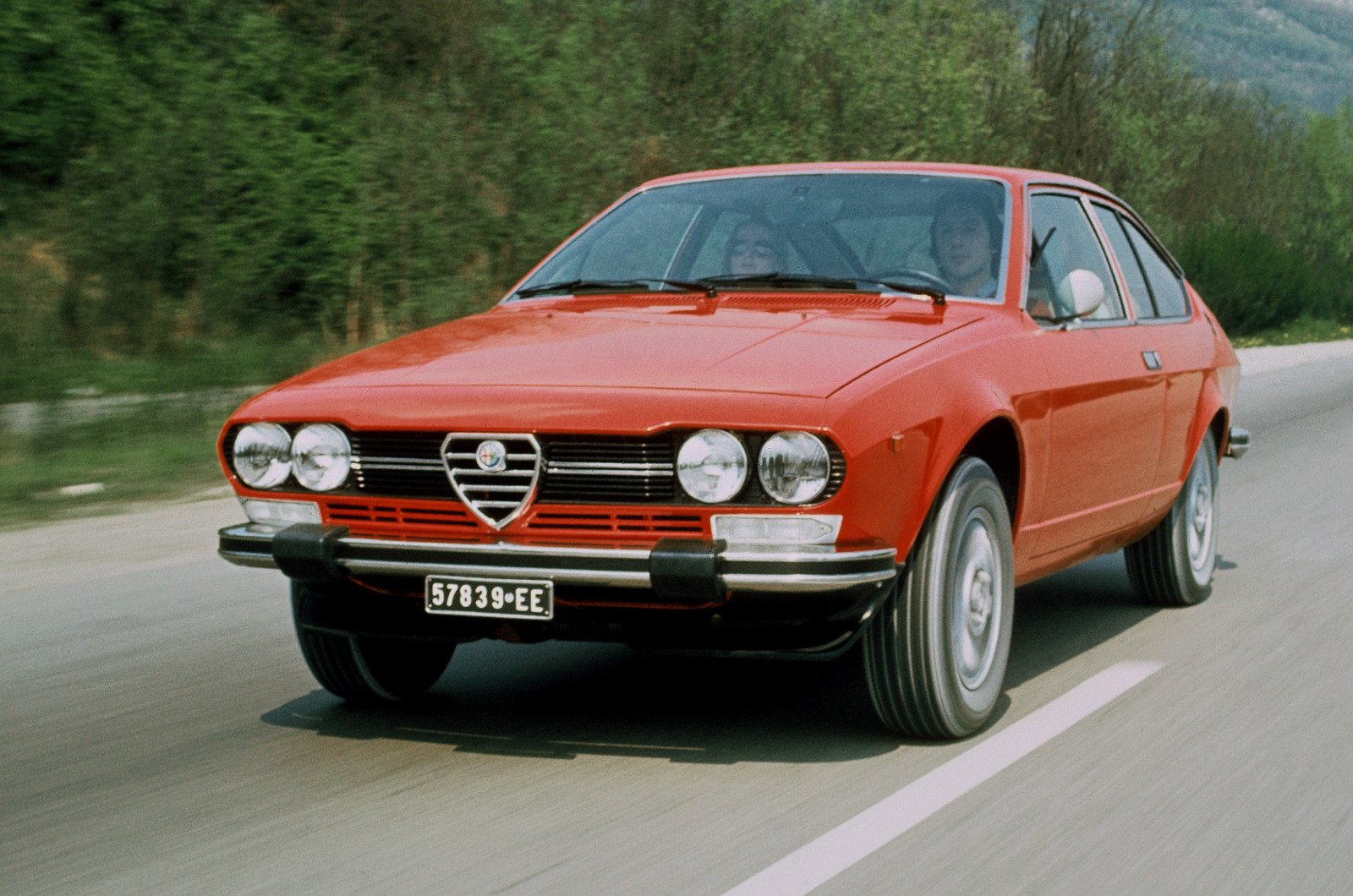
Launched in the same year as the Alfasud, the Alfetta was named after the 159 Alfetta Grand Prix car of the early 1950s. Unusually, the production car had its engine mounted up front and its gearbox at the rear in an attempt to make the weight distribution as even as possible.
The Alfetta saloon was the basis of the GT and GTV (pictured) coupés. More powerful examples had V6 engines, rather than the more common four-cylinder ones, in sizes of up to 3.0 litres. Yet another derivative was the second-generation Giulietta, built from 1977 to 1965.
33
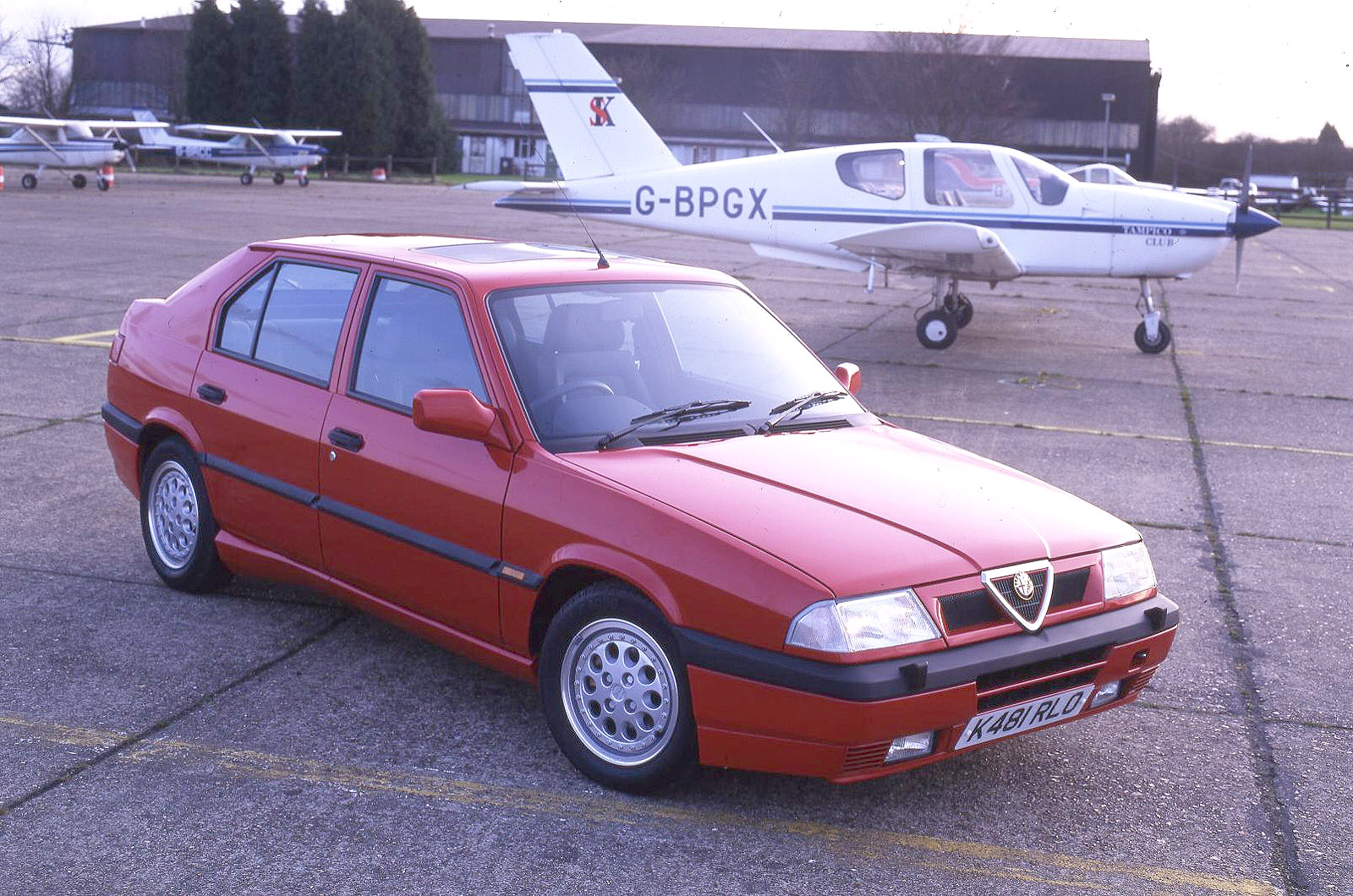
The Alfasud’s replacement was the 33, which like its predecessor had a choice of four-cylinder boxer engines, in this case from 1.2 to 1.7 litres, plus a 1.3-litre three-cylinder diesel supplied by VM Motori.
Though less fondly remembered than the Sud, the 33 remained in production for twelve years, from 1983 to 1995.
164
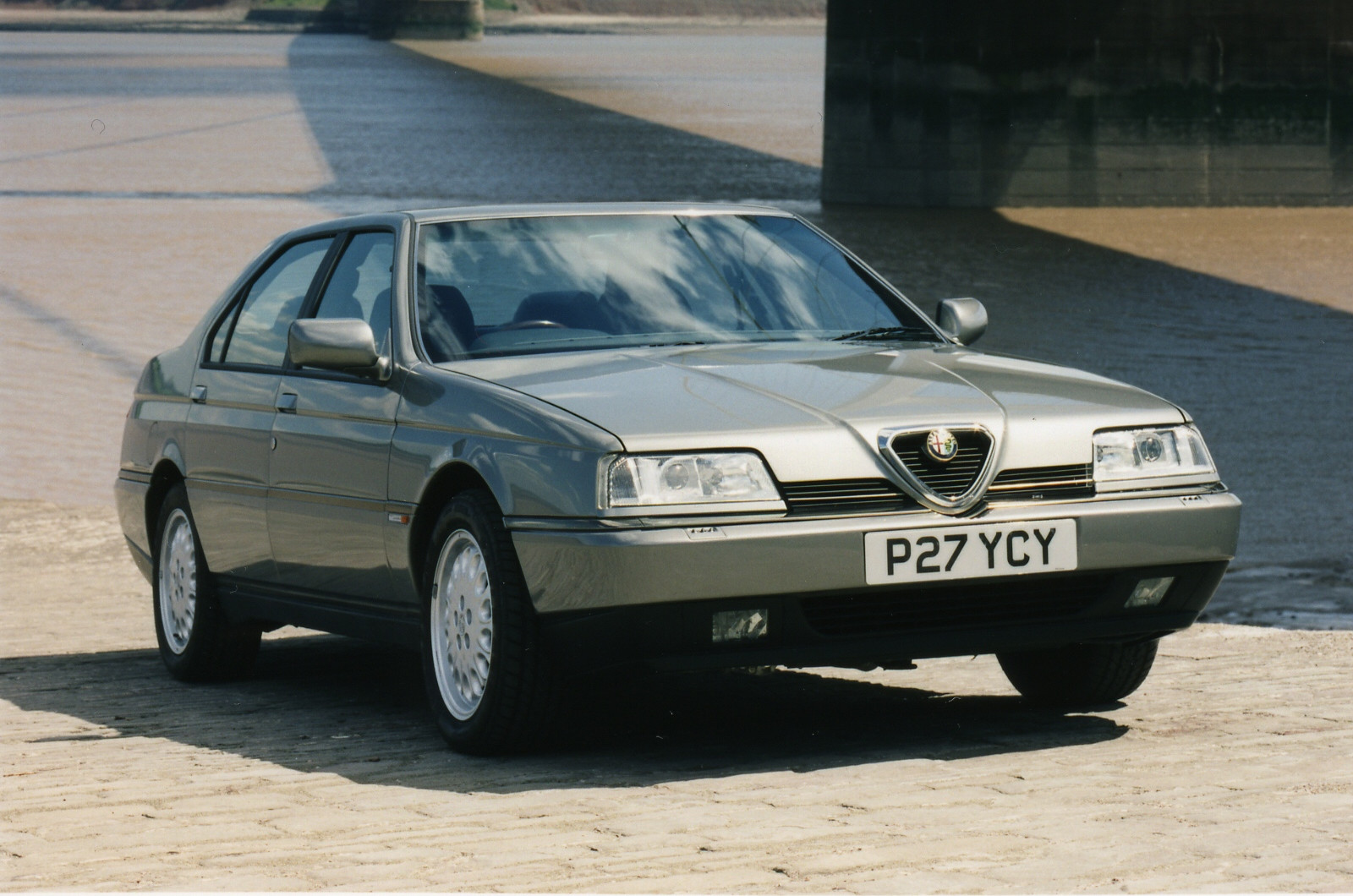
Development of the 164 began when Alfa Romeo was still owned by the Institute for Industrial Reconstruction but went on sale after the company had been bought by Fiat.
Notable for its wedge shaped, created by Pininfarina, the 164 was one of four cars based on the Type Four platform, the others being the Fiat Croma, the Lancia Thema and the Saab 9000. The Alfa was the last to reach the market, in 1988, and went out of production nine years later. US sales stopped in 1995. Alfa would not have a presence in the North American market for two decades after that.
SZ/RZ
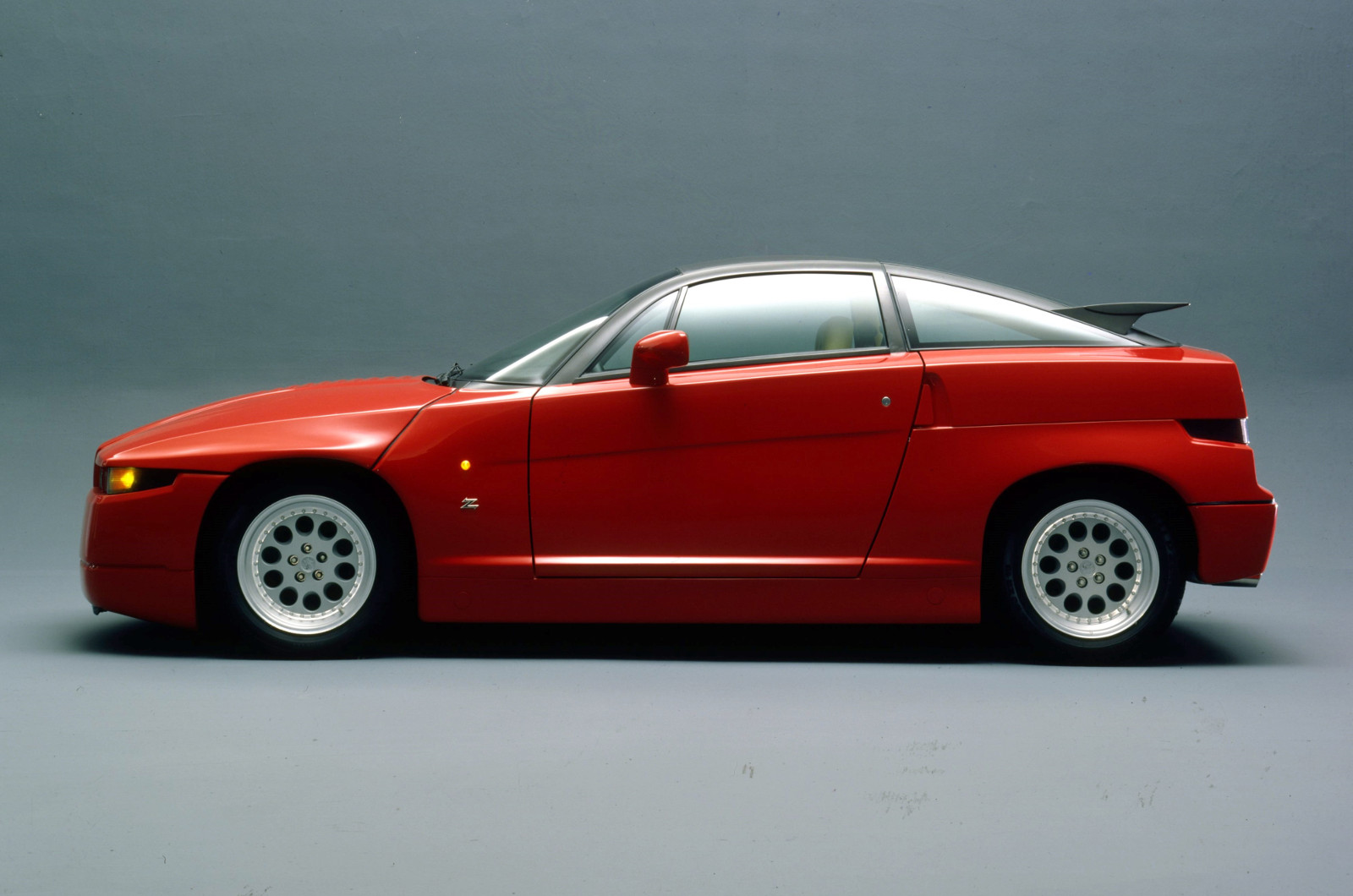
The SZ coupé was closely related to the 75 (sold in the US as the Milano), and used the 3.0-litre V6 engine used in high-performance versions of that car. It was built from 1989 to 1991 and followed by the RZ convertible manufactured until 1994.
No other Alfa Romeo before or since has looked quite like these cars, which were nicknamed Il mostro (‘the monster’), but their six headlights arranged in two sets of three would make a comeback in the 21st century.
155
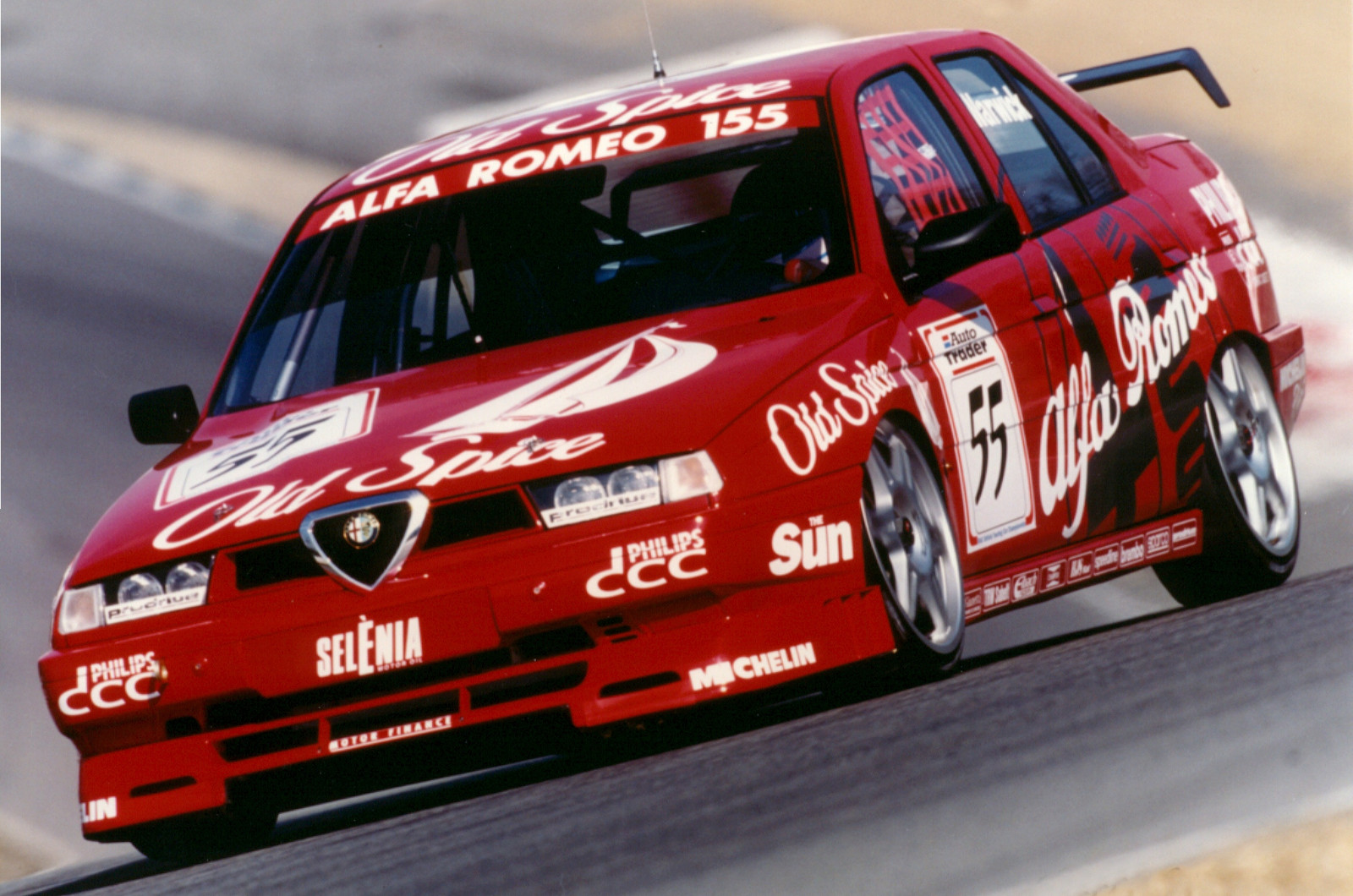
Given the new Fiat connection, it was reasonable enough that the front-wheel drive 155 compact executive should share a platform with the Fiat Tempra and Lancia Dedra. Production began in 1992 and ended six years later.
The car was very successful in motorsport. The 155 Silverstone, launched in 1994, was created specifically to give Alfa Romeo an advantage in that year’s British Touring Car Championship, which it dominated. Other 155s would win Touring Car titles in Germany, Italy and Spain.
145/146
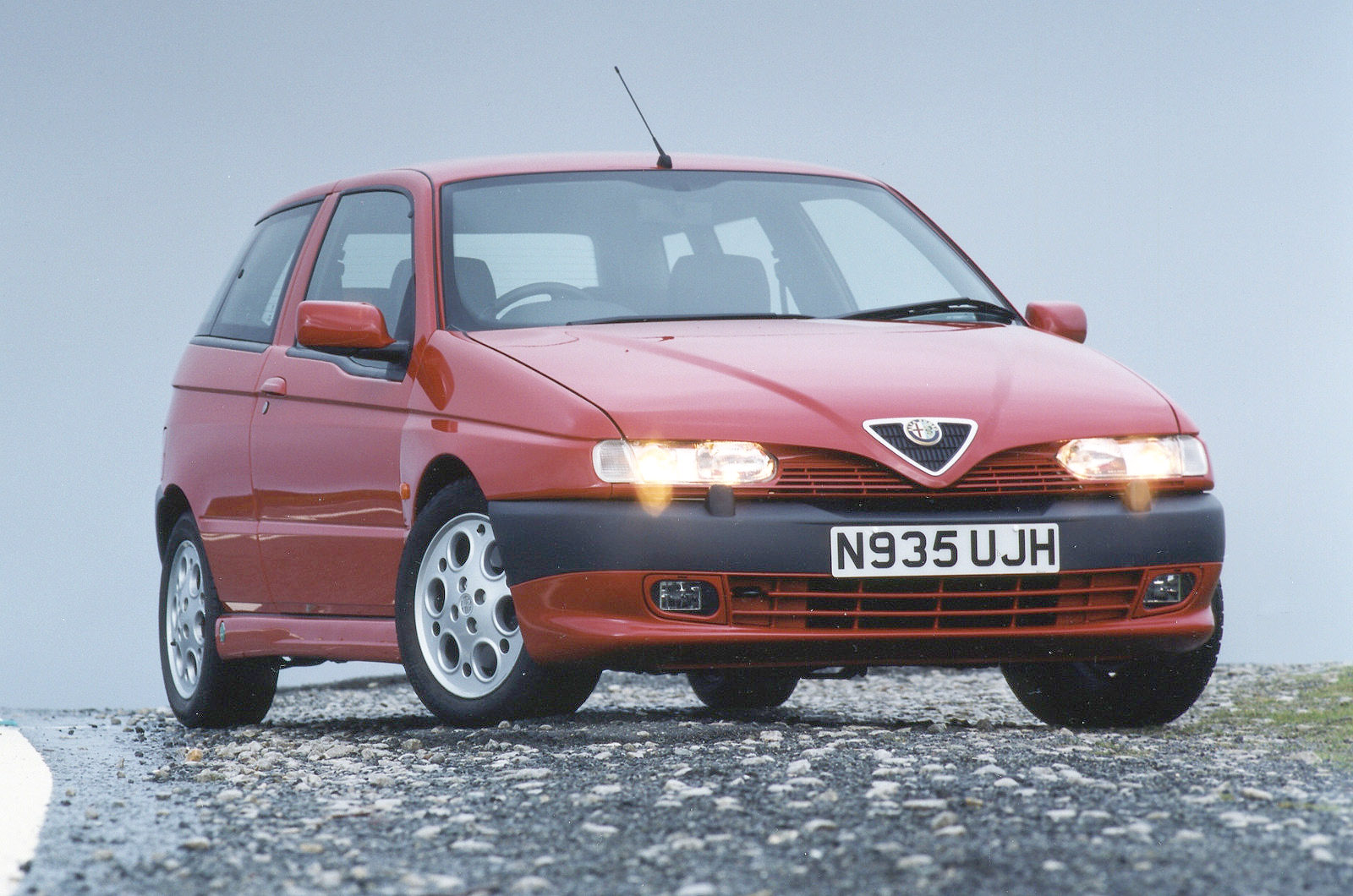
Alfa’s small family hatchbacks of the mid to late 1990s was divided into two ranges with similar mechanicals but different characters. The 145 (pictured) was the more youth-oriented three-door, while the 146 had five doors and more conservative styling, and was aimed at people who might previously have bought a 33.
Like the 33 and the Alfasud, the 145/146 was available at first with boxer engines, though these were discontinued. In hot hatch form, both cars were offered with 2.0-litre TwinSpark engines producing around 150bhp, but only the 145 version had the Quadrifoglio/Cloverleaf badge.
GTV/Spider
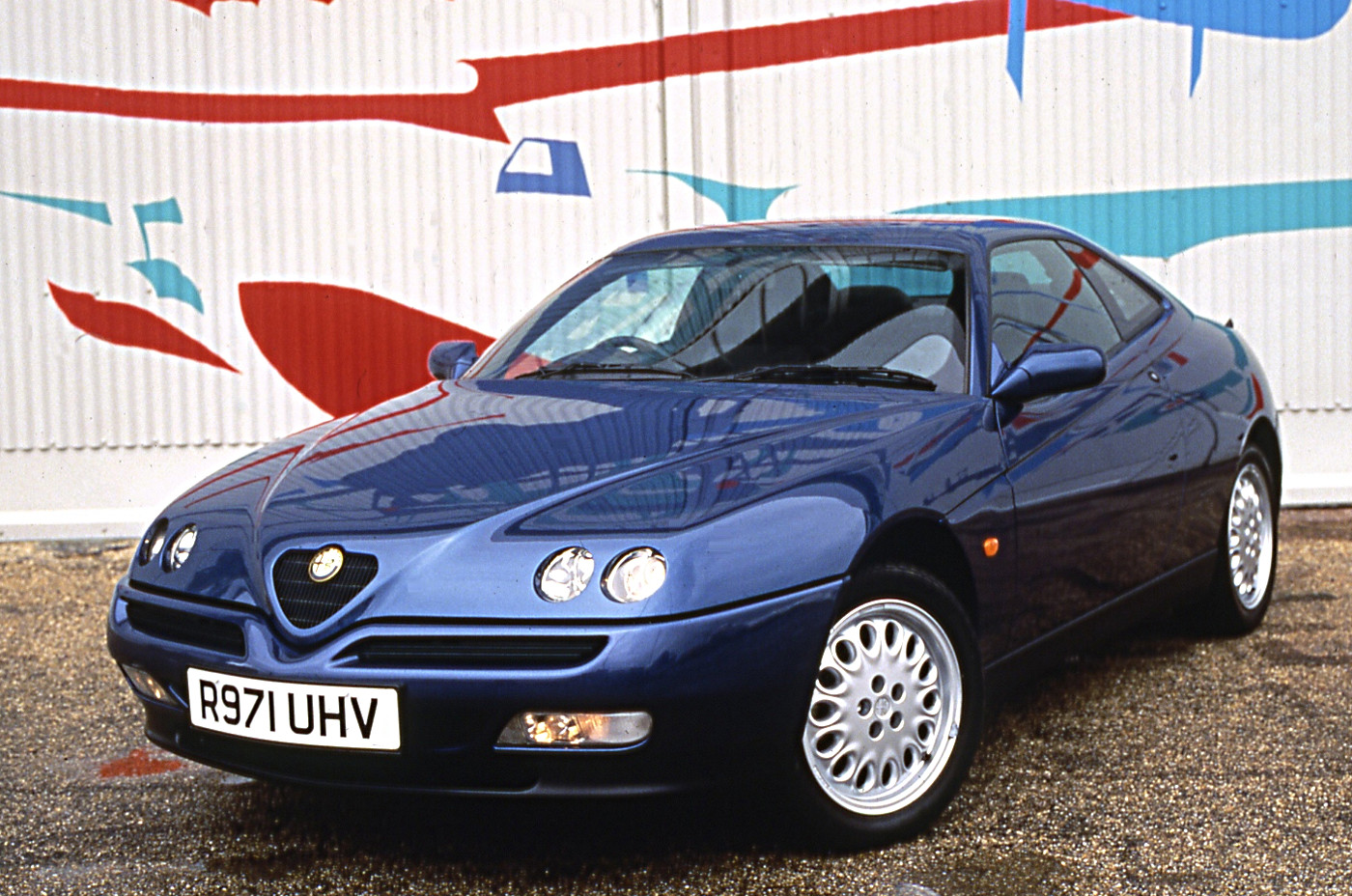
Like the 145/146 whose platform they shared, the GTV and Spider (both using names from Alfa Romeo’s past) were broadly speaking the same car, respectively a two-seater sports coupé and its convertible equivalent which were built from 1993 to 2004.
Alfa offered several four-cylinder and V6 engines. The most unusual was a turbocharged 2.0-litre V6, which was approximately as powerful as the 3.0-litre version but put the car in a lower tax bracket for Italian customers.
156
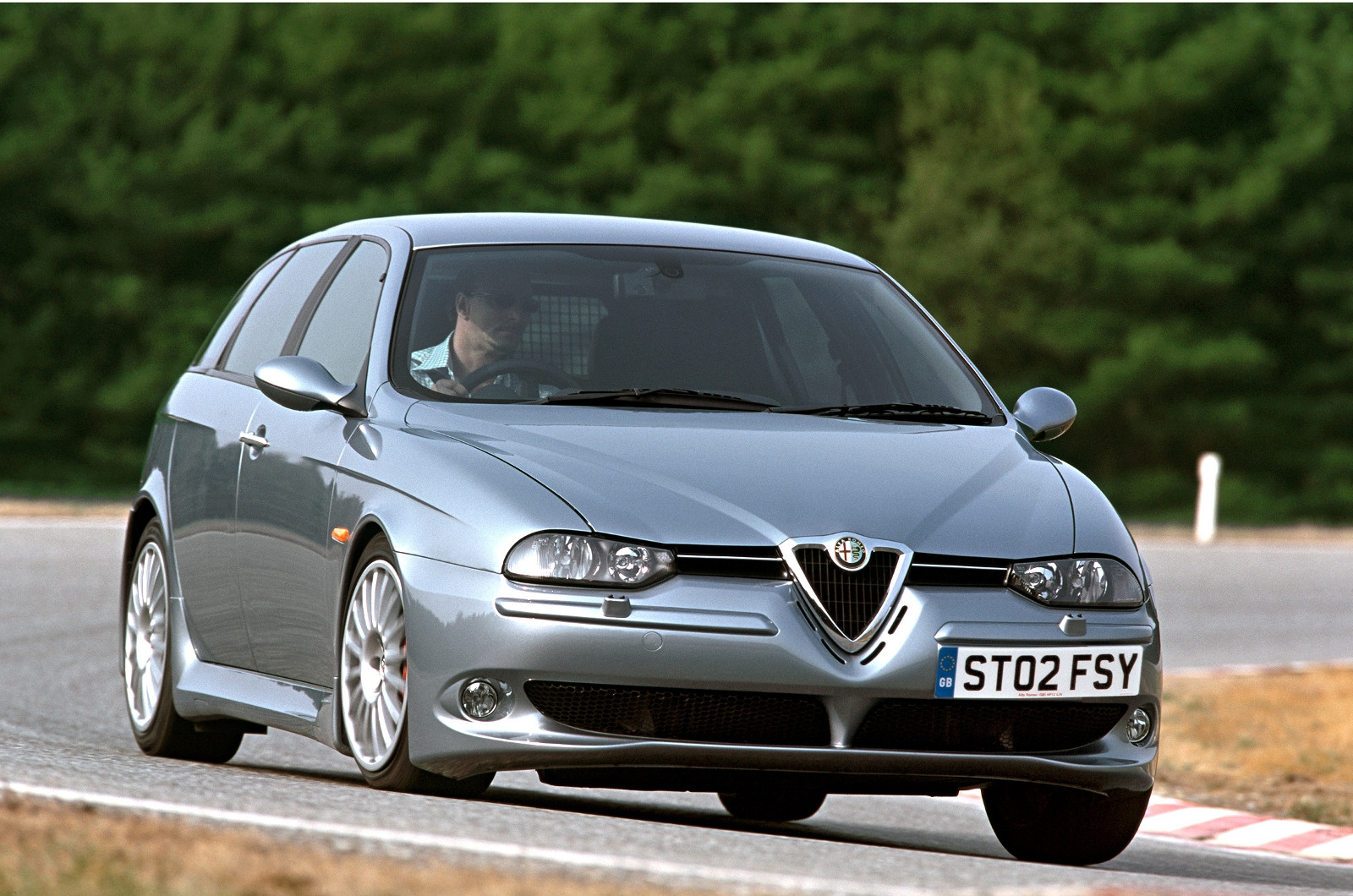
The 155 was replaced by the 156, which was in production for ten years from 1997. It was offered in a great many forms. Engines ranged from a 1.6-litre Twin Spark through a common-rail turbo diesel to a 3.2-litre petrol V6, body styles included saloon, Sportwagon estate and Crosswagon semi-off-roader, and there was a choice of front- or four-wheel drive.
The 156 was very well received. In 1998 it became the first Alfa Romeo ever to win the European Car of the Year award, easily beating the new Volkswagen Golf and Audi A6.
166
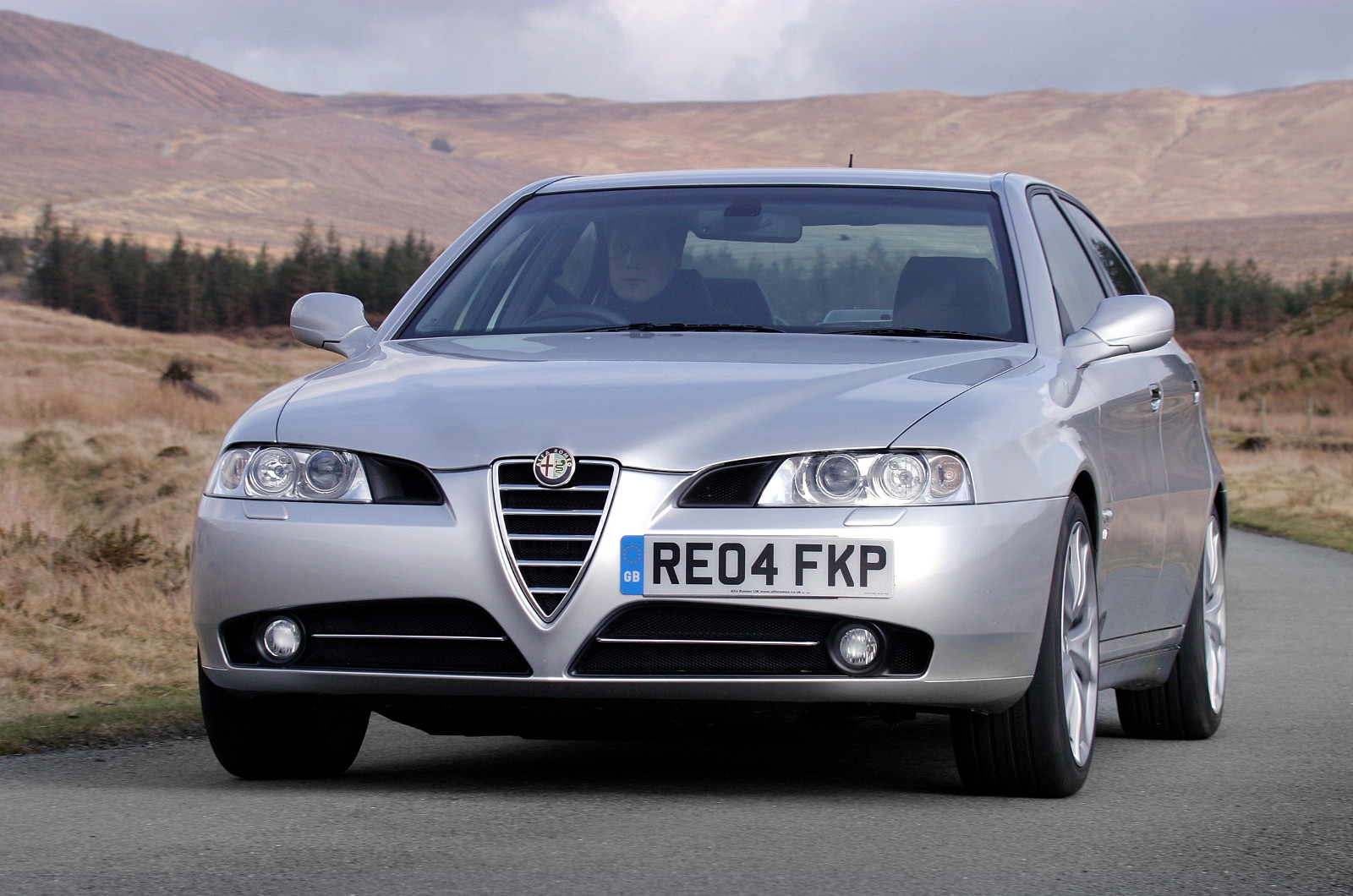
While Alfa Romeo was doing well with its small and medium-sized cars in the late 1990s, it would be difficult to say the same of its largest model. The 166, which used the same platform as the Lancia Kappa, replaced the 164 in 1996 and staggered on until 2007 before being abandoned without a direct successor.
In August 2009, we reported that the 166 was the worst-depreciating car in the UK, worth just 14.4% of its sale price after three years.
147
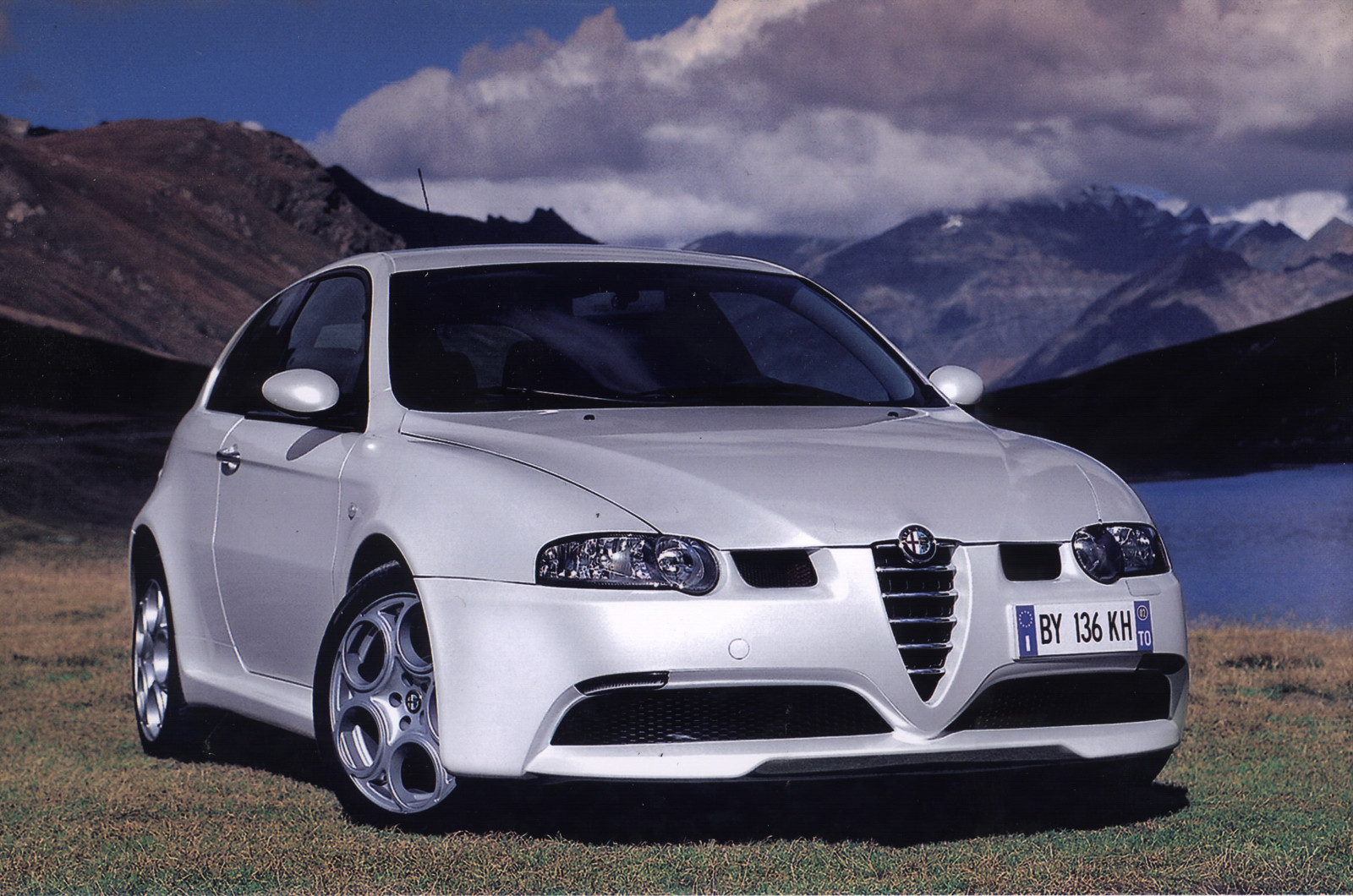
Alfa Romeo rationalised its small hatchback range in 2000, replacing both the 145 and the 146 with the 147, which was available with three or five doors. In 2001 the 147 became the second and so far last Alfa to be named European Car of the Year, beating the Ford Mondeo by a single point.
For the hot hatch GTA version (pictured), Alfa fitted a big V6 under the bonnet, as Volkswagen later did with the Golf R32. The 3.2-litre engine produced 247bhp and gave the car a top speed of 153mph and a 0-62mph time of 6.3 seconds.
GT
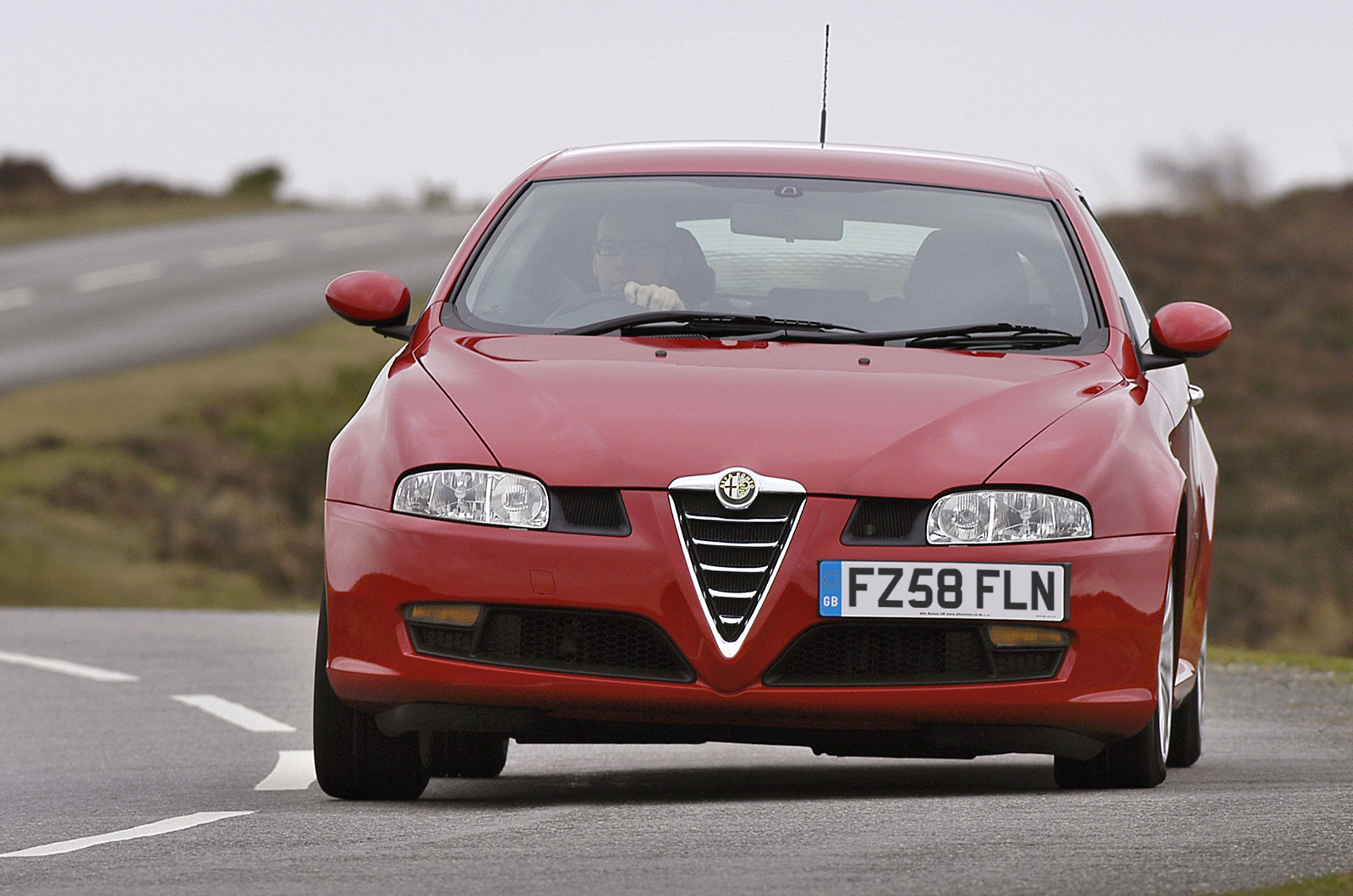
Described by its maker as “a true Gran Turismo sports coupé in the classic Alfa Romeo tradition”, the GT was a sleeker version of the 156 introduced in 2003. A 1.8-litre Twin Spark, 2.0-litre direct injection and 3.2-litre V6 petrol engines were on offer, along with a 1.9-litre turbo diesel.
“It’s a likeable car, the GT,” we reported, speaking of the 2.0, while also noting that “dynamically, it still falls some way short of a BMW 3 Series”.
159
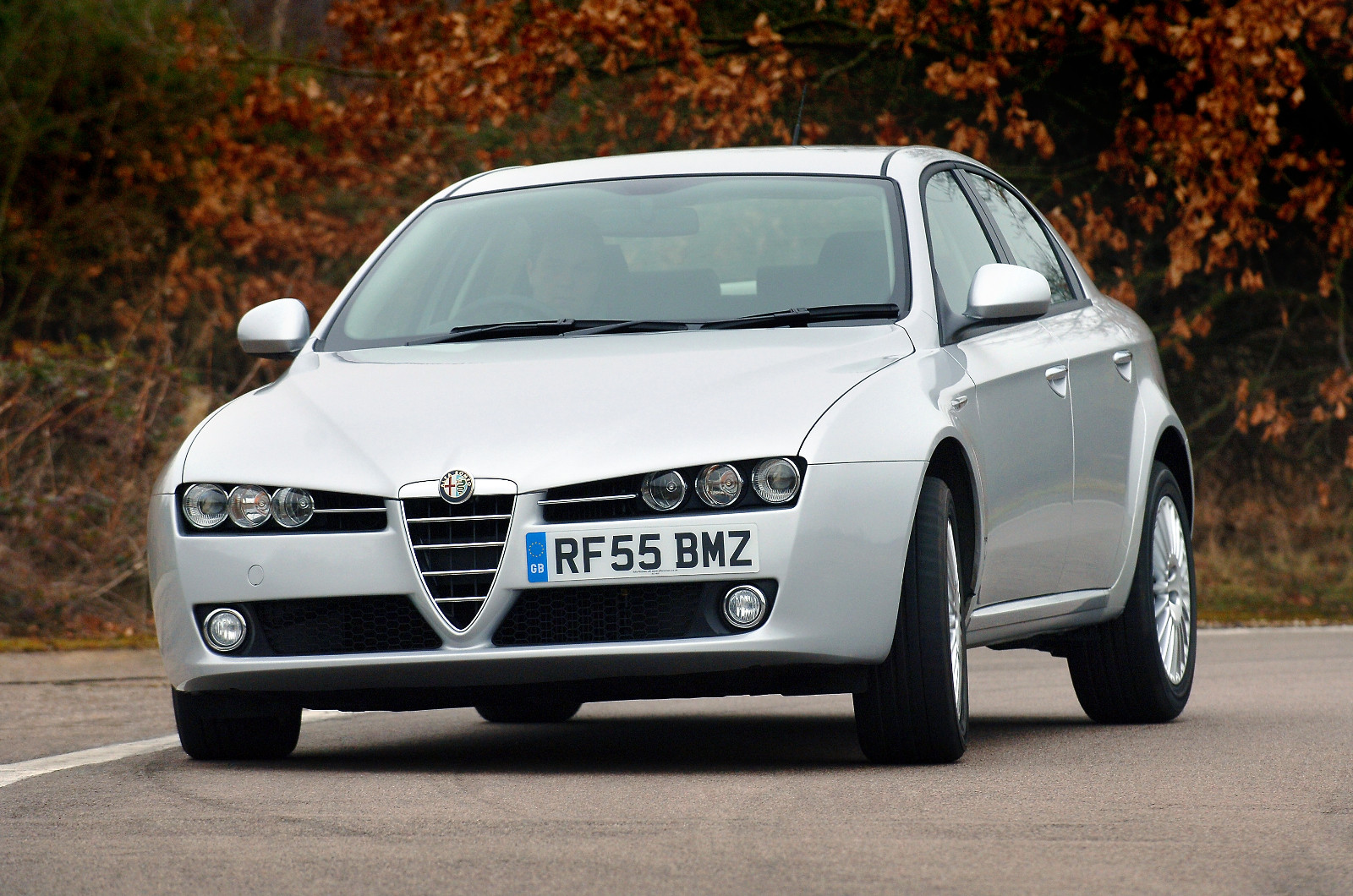
The 159 replaced the 156 in 2004 and remained on the market for seven years. It was based on a platform co-developed by Fiat and General Motors, though only Alfa Romeo used it for cars that went into production.
The outstanding design feature of the 159 was its array of six front lights, three on each side of the car. This had last been seen on the SZ/RZ (though the lights were now circular rather than square) and would be used again in the near future.
Brera/Spider
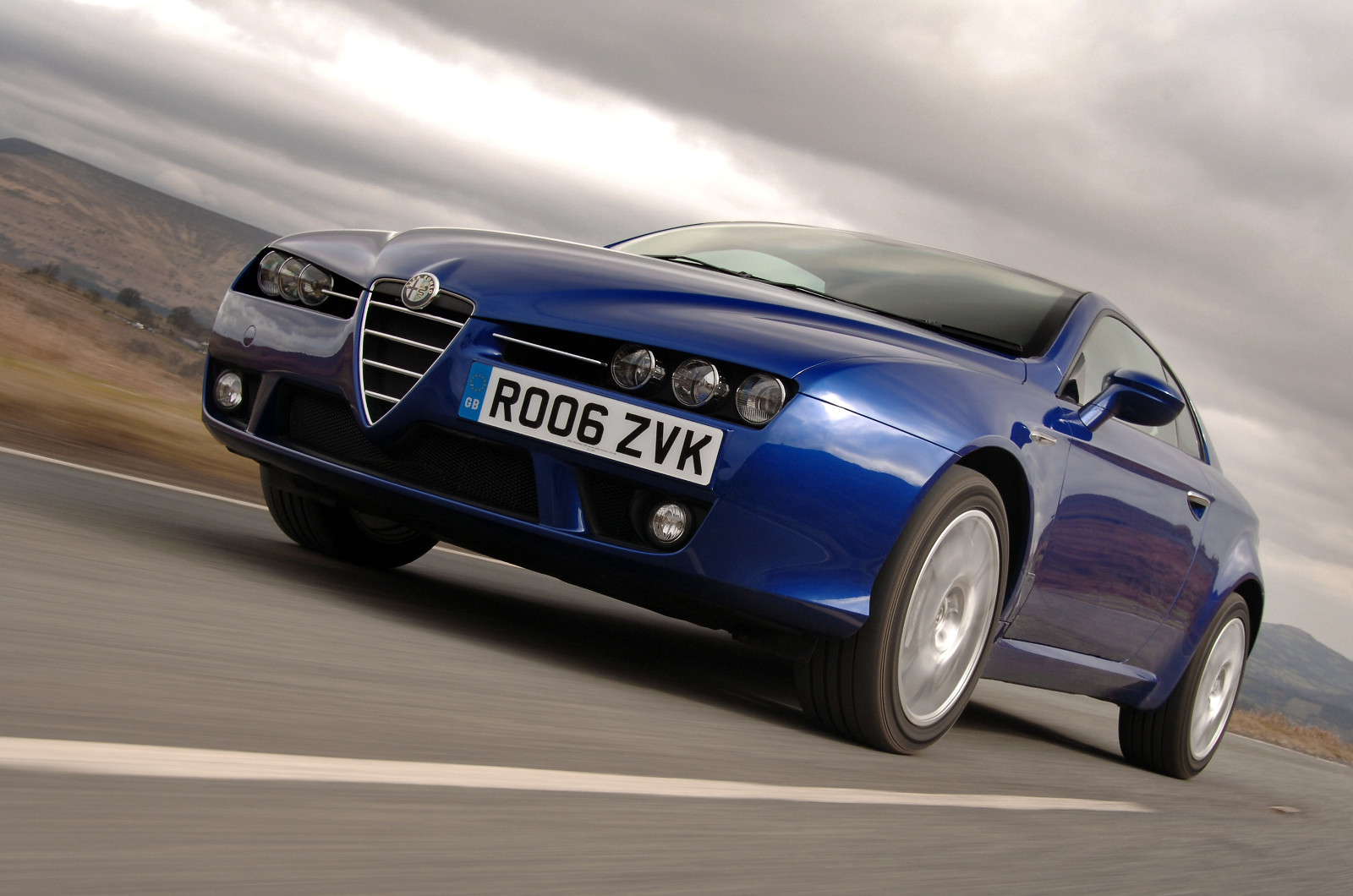
The Brera coupé and Spider convertible were based on the 159 and were in production for five years from 2005. The Brera in particular looked very dramatic (the six-light arrangement definitely helped), but it was criticised for its dull handling, caused by considerable weight and underdamped front suspension.
Alfa Romeo commissioned UK company Prodrive to work on this, and the result was the lighter, lower and more stiffly sprung Brera S. “Really, this is the Brera that Alfa should have built from day one,” we said. “Shame, then, that there’ll be only 500 expensive examples.”
MiTo
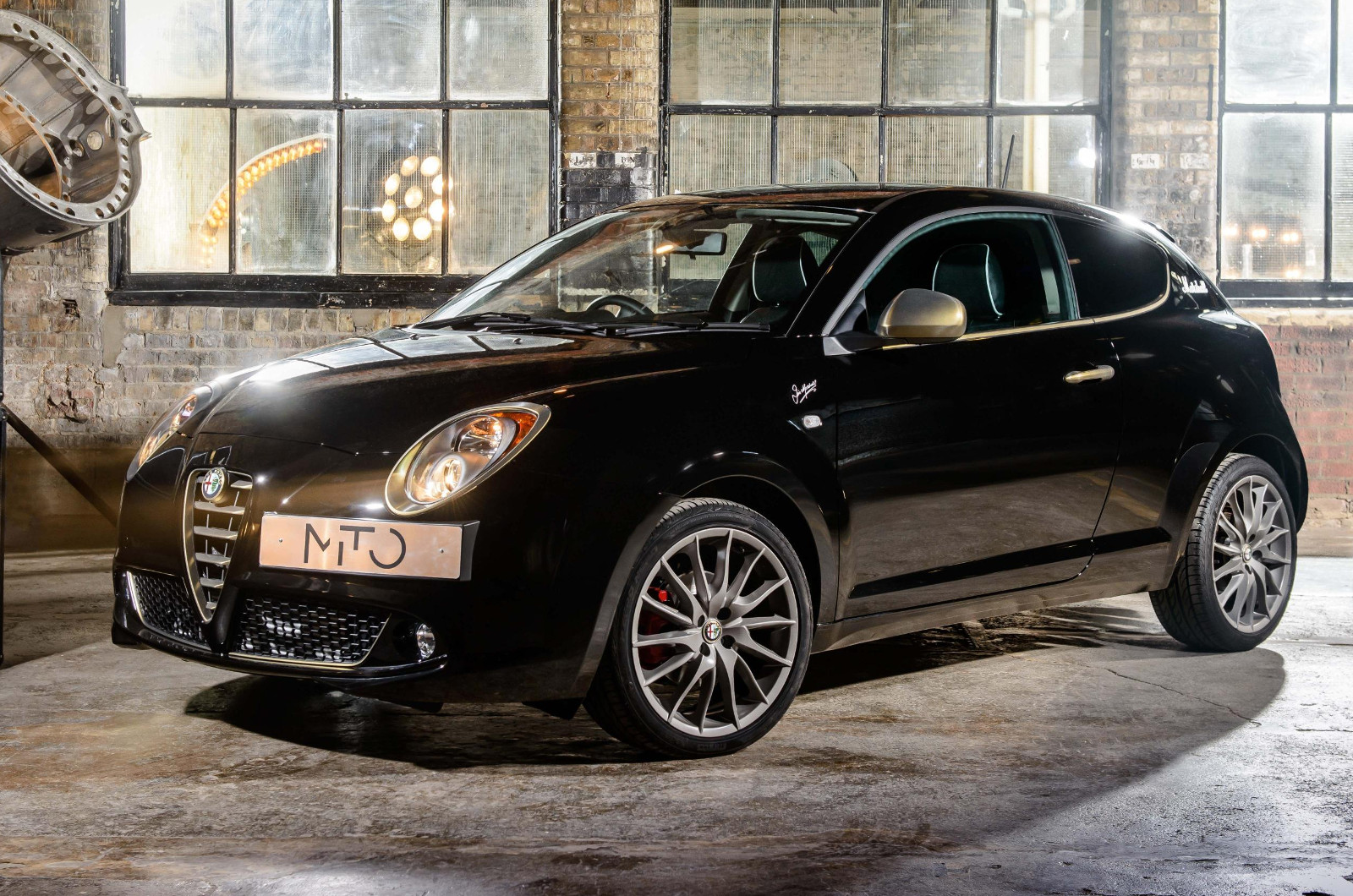
The MiTo’s name refers to the cities where it was designed (Milan) and built (Turin, or Torino in Italian). Launched in 2008, it was based on a General Motors/Fiat platform also used for the Fiat Grande Punto and the Vauxhall Corsa, among others.
The MiTo was one of the first cars to use the MultiAir intake system devised by Fiat Powertrain Technologies and licensed to German company Schaeffler. Under a different name, the same technology is used on Jaguar Land Rover’s Ingenium engines.
8C
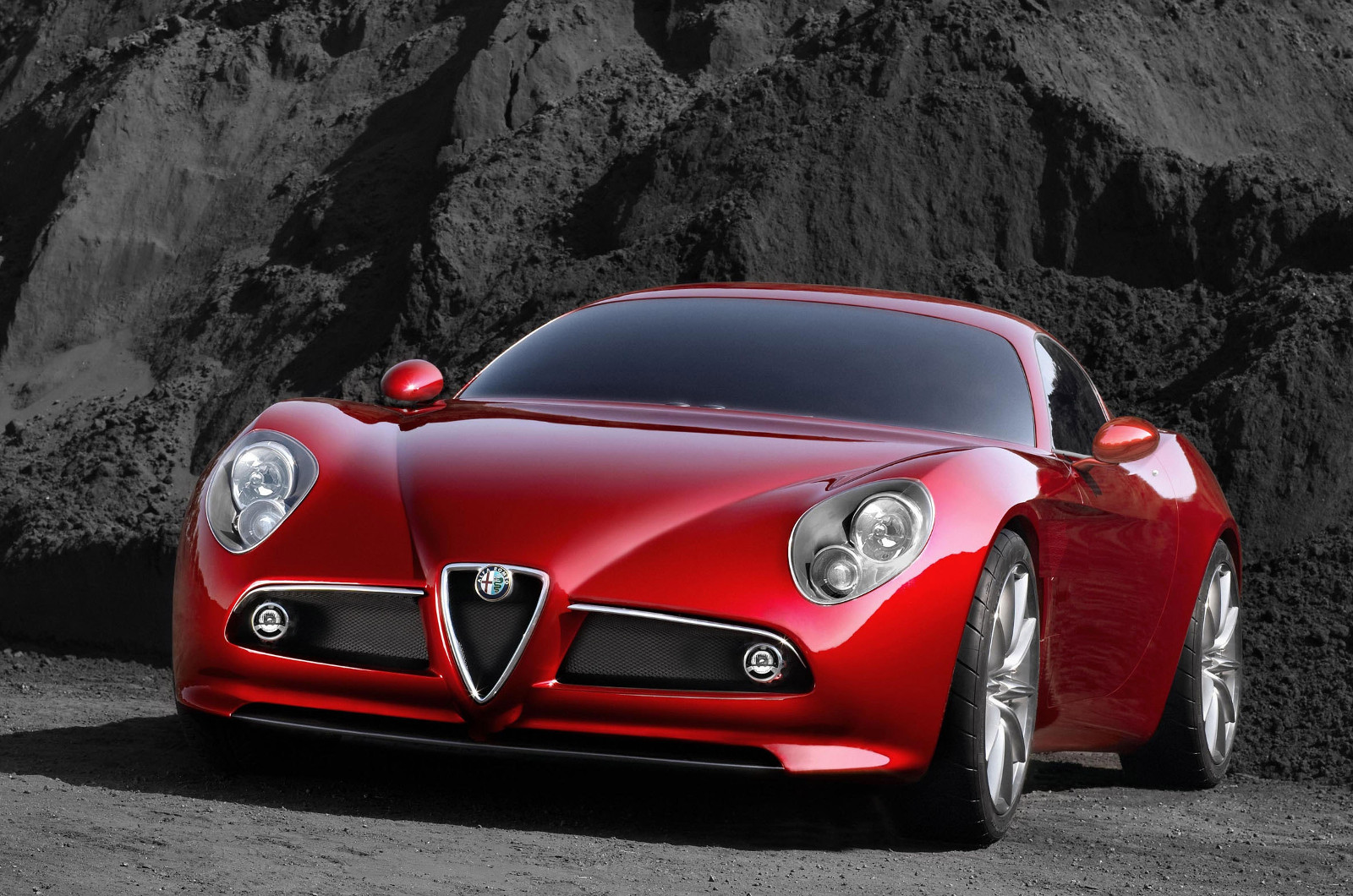
The 8C Competizione and its convertible derivative, the 8C Spider, were produced from 2007 to 2010. Both had a carbonfibre body and used a 444bhp 4.7-litre version of the F136 V8 engine also found in several Ferraris and Maseratis.
Only 500 of each were built. Ninety 8C Competitiziones were earmarked for the US, making this the first Alfa Romeo sold in North America since the 164 was withdrawn from that market in 1995.
Giulietta
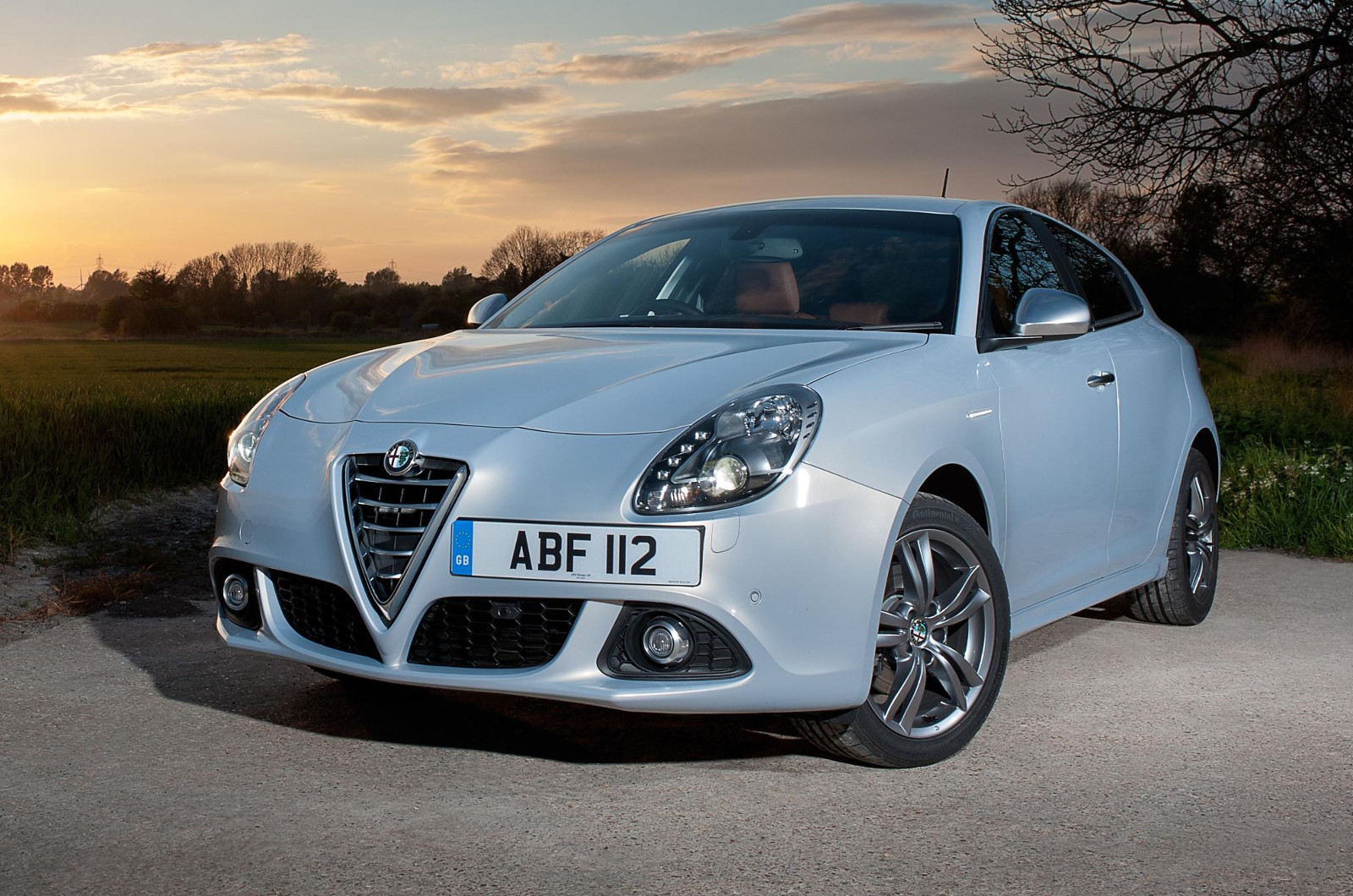
Alfa Romeo brought back the Giulietta name in 2010 for a new family car which replaced the 147. It was the first model based on the Fiat Compact platform also used by Chrysler, Dodge and Jeep, all of which are related to Alfa Romeo following the creation of Fiat Chrysler Automobiles in 2014.
The Giulietta finished second in the 2011 European Car of the Year awards, Alfa’s best result since the 147 won ten years before and since equalled by the Giulietta in 2017.
4C
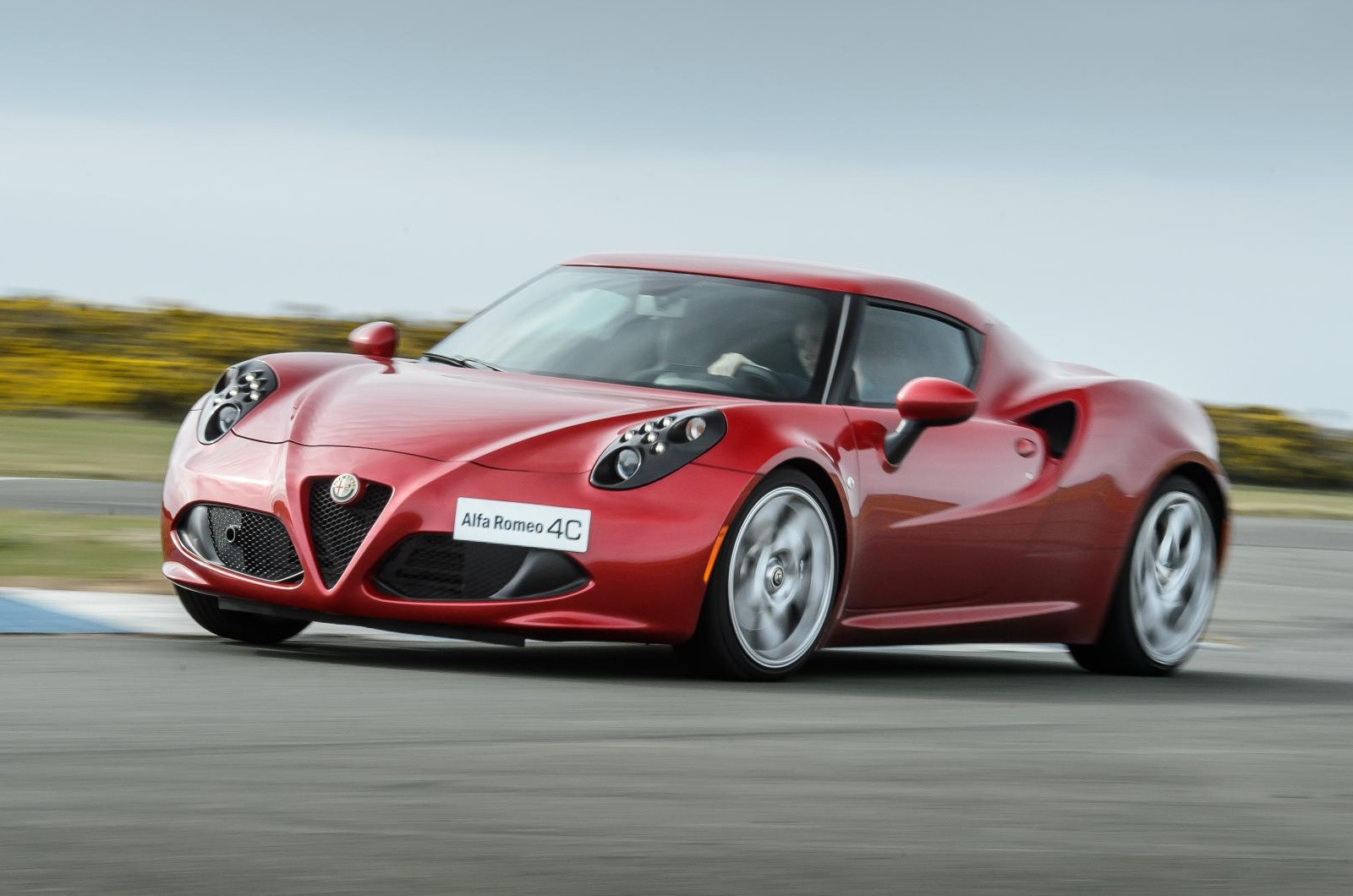
Alfa displayed the 4C as a concept at the 2011 Geneva Motor Show and then in production form at the same event two years later. Like the much more expensive and exclusive 8C, it has a carbonfibre body which helps keep the kerb weight down to almost exactly 1000kg.
The mid-mounted 237bhp turbo petrol engine is one of many Alfa Romeo units in history with a capacity of around 1750cc, the exact figure in this case being 1742cc. Available in coupé and Spider forms, the 4C was the first series production Alfa to go on sale in North America in the 21th century.
Giulia
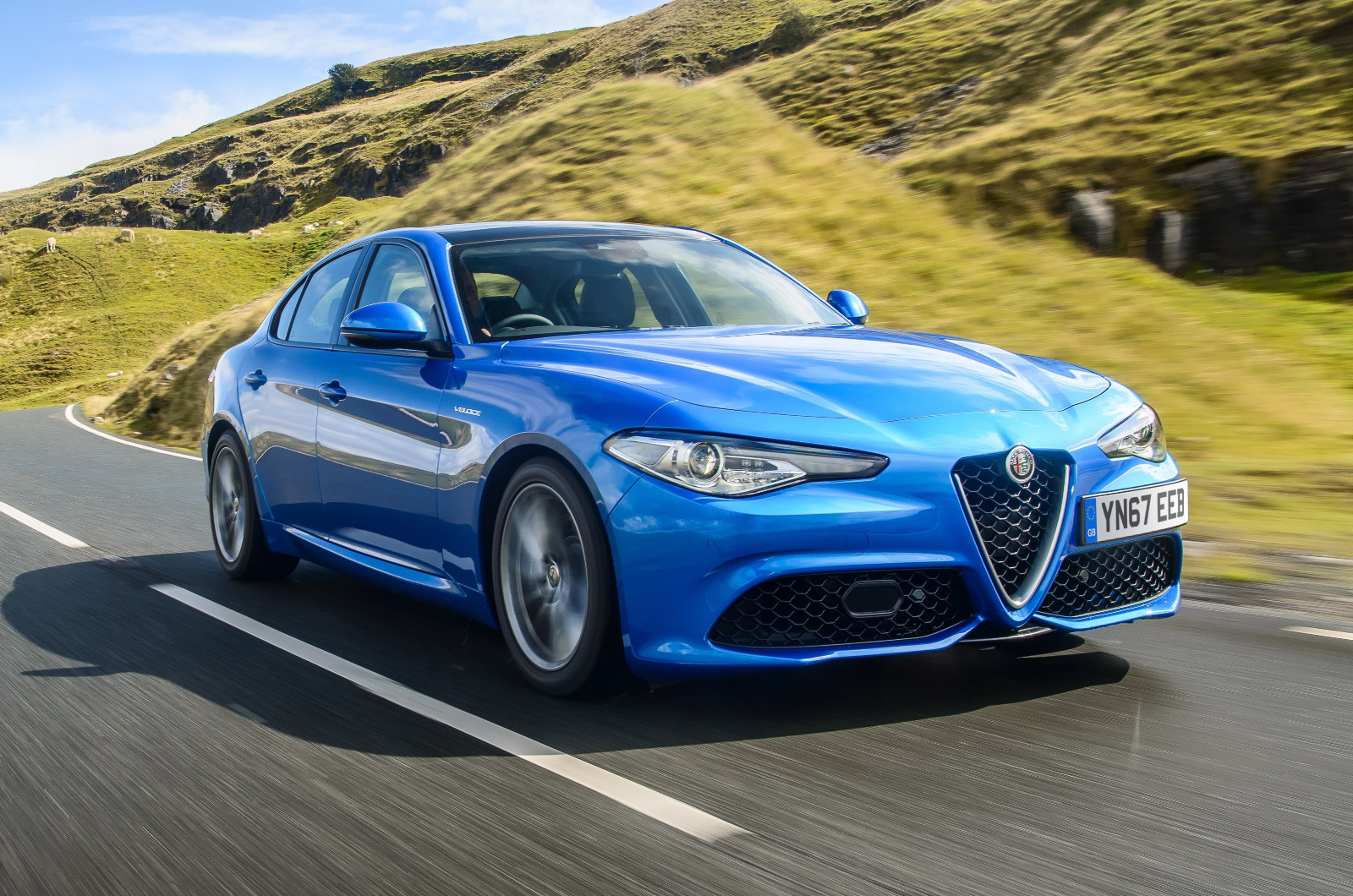
In 2016, Alfa Romeo launched the Giulia, its first saloon since the 159 and first front-engined rear-wheel drive model in nearly a quarter of a century.
Mostly sold as an executive car, the Giulia is also available in high-performance Quadrifoglio form. This version’s turbocharged 2.9-litre V6 petrol engine produces a maximum output of 503bhp, making the Quadrifoglio nearly twice as powerful as any other model in the range.
Stelvio
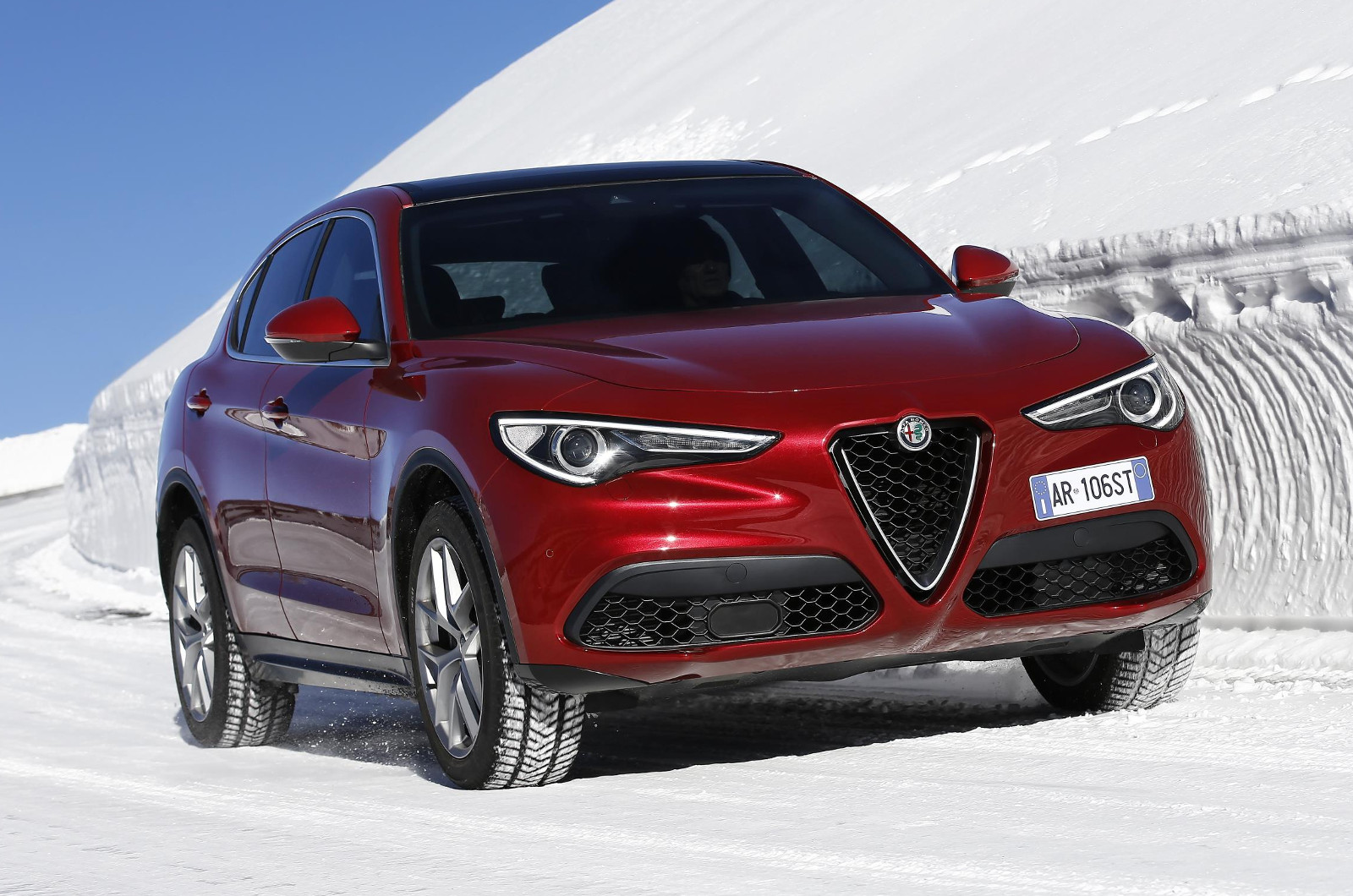
By the mid 2010s it had become almost impossible for any car manufacturer not to have an SUV in its line-up. Alfa Romeo’s entry into the sector was the Stelvio, named after the famous Italian mountain pass and related to the Giulia, with a similar range of engines.
The Stelvio made its public debut at the 2016 Los Angeles Auto Show, and was launched on the US market, along with the Giulia, the following year. As a result, annual Alfa Romeo sales in the region reportedly shot up from a few hundred to over 12,000.
Alfa Romeo Tonale
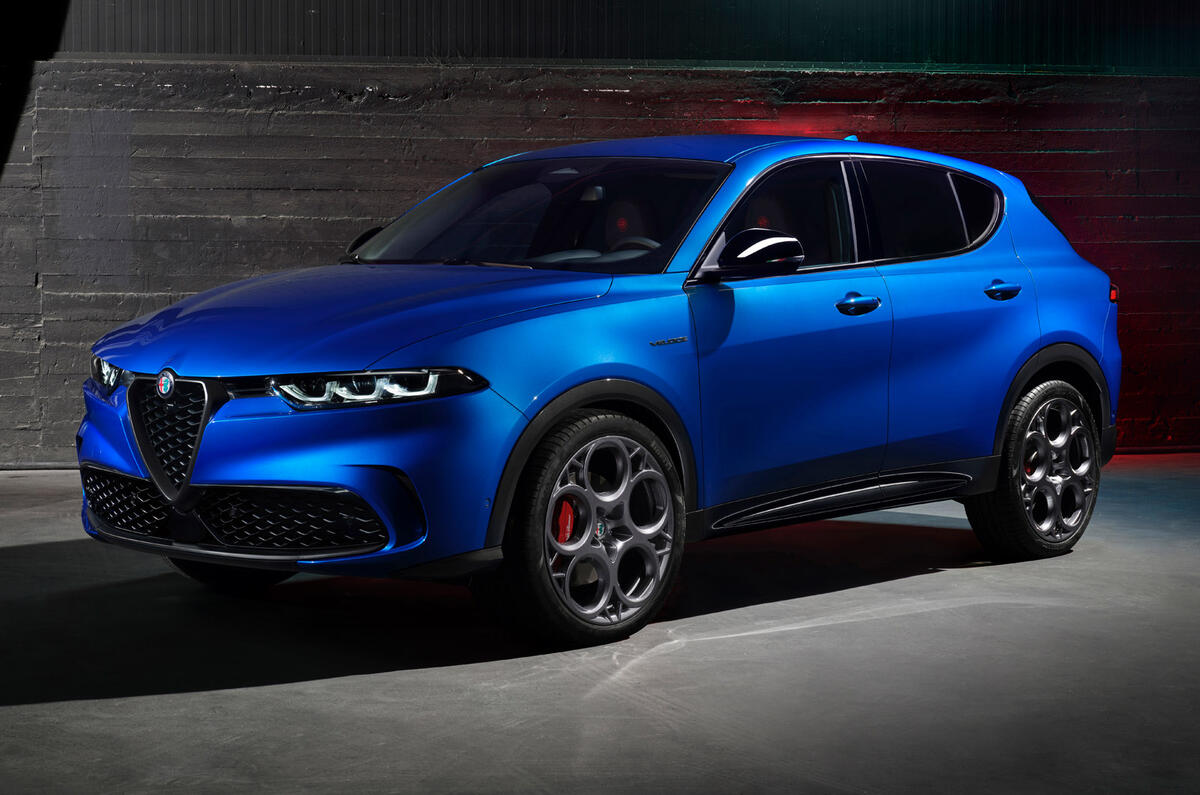
The Tonale SUV arrived in 2022 as a smaller alternative to the Stelvio; it's a sister car to the Jeep Compass and the Dodge Hornet. It comes with a range of engine options, including a diesel.
Alfa Romeo Junior
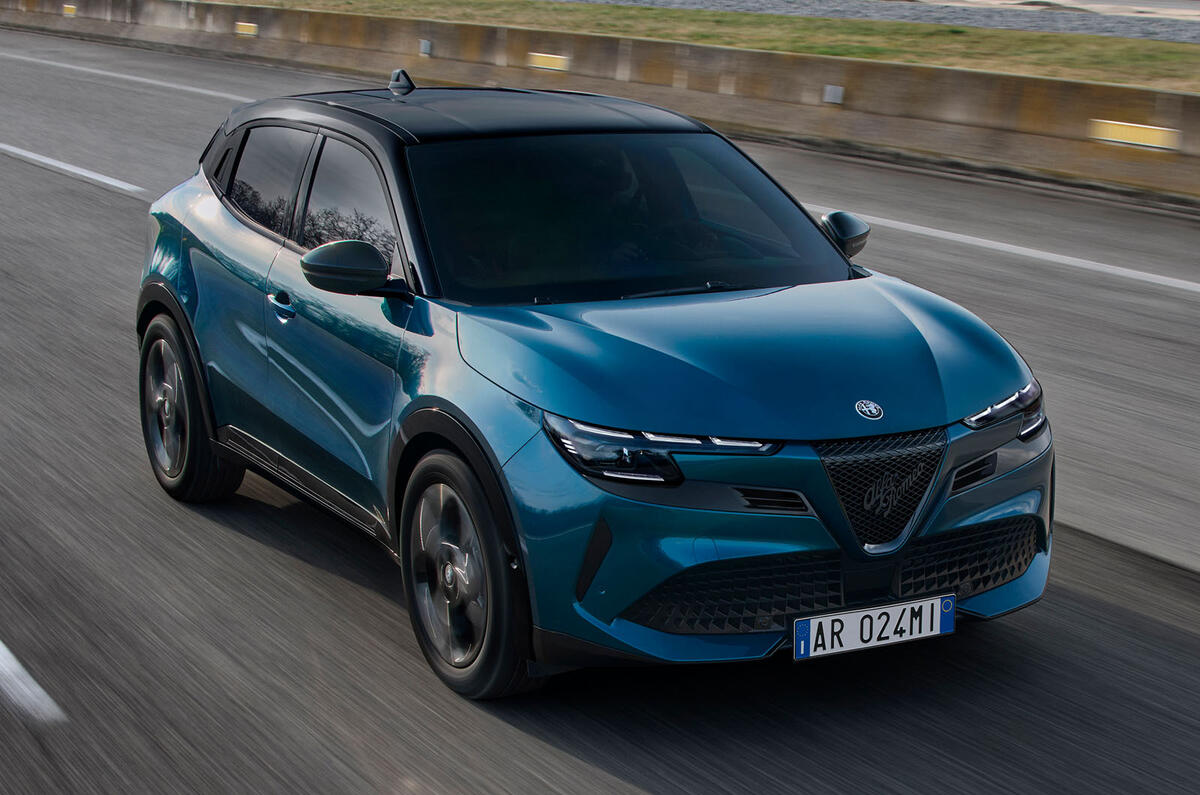
Alfa Romeo launched an even smaller SUV named Junior in 2024. It was originally going to be named Milano, but a member of the Italian government objected, since the car is built in Poland; five days after the unveiling the name was changed. Available with a petrol engine, it's also sold as a fully electric car, and as such is Alfa's first EV. A new era for the famous Alfa Romeo name begins...

Impreza TX Trademark Signals Subaru’s Move Toward a Turbocharged, Manual Hatchback Alternative
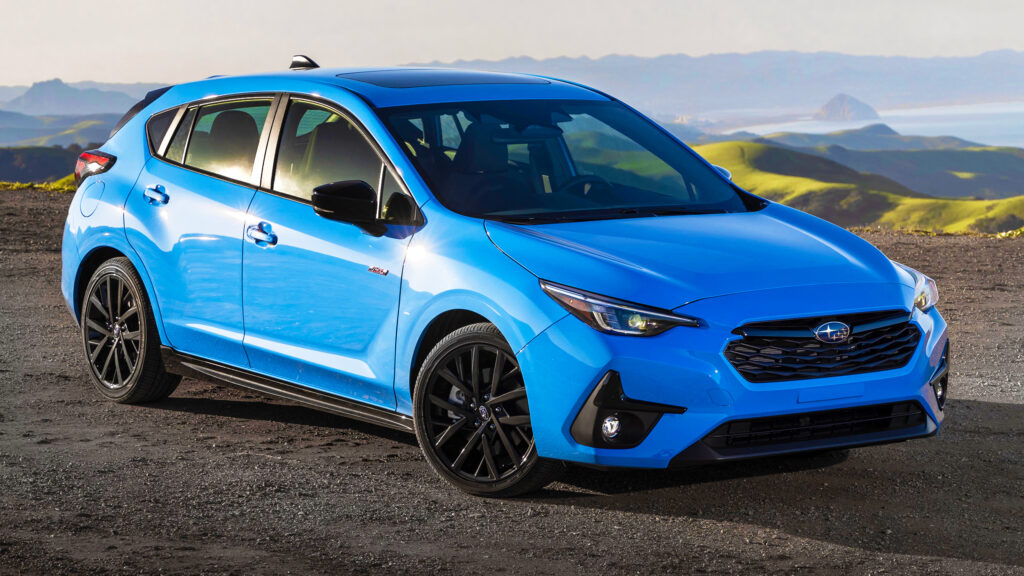

Pikes Peak Racing Confronts the Enduring Challenge of the Mountain’s Indifference

Front-Wheel Drive Cars Redefining Performance and Handling Beyond Rear-Drive Tradition
 The cars that prove you don't need rear-drive balance to have fun
When handling is mentioned, it’s usually rear-wheel drive or all-wheel drive cars that get time in the spotlight.
This is because of the amount of grip and balance offered. But hey don’t hold a monopoly – and many excellent cars to drive have been built whose engines drive just the front wheels – these are some of the best:
Ford Puma
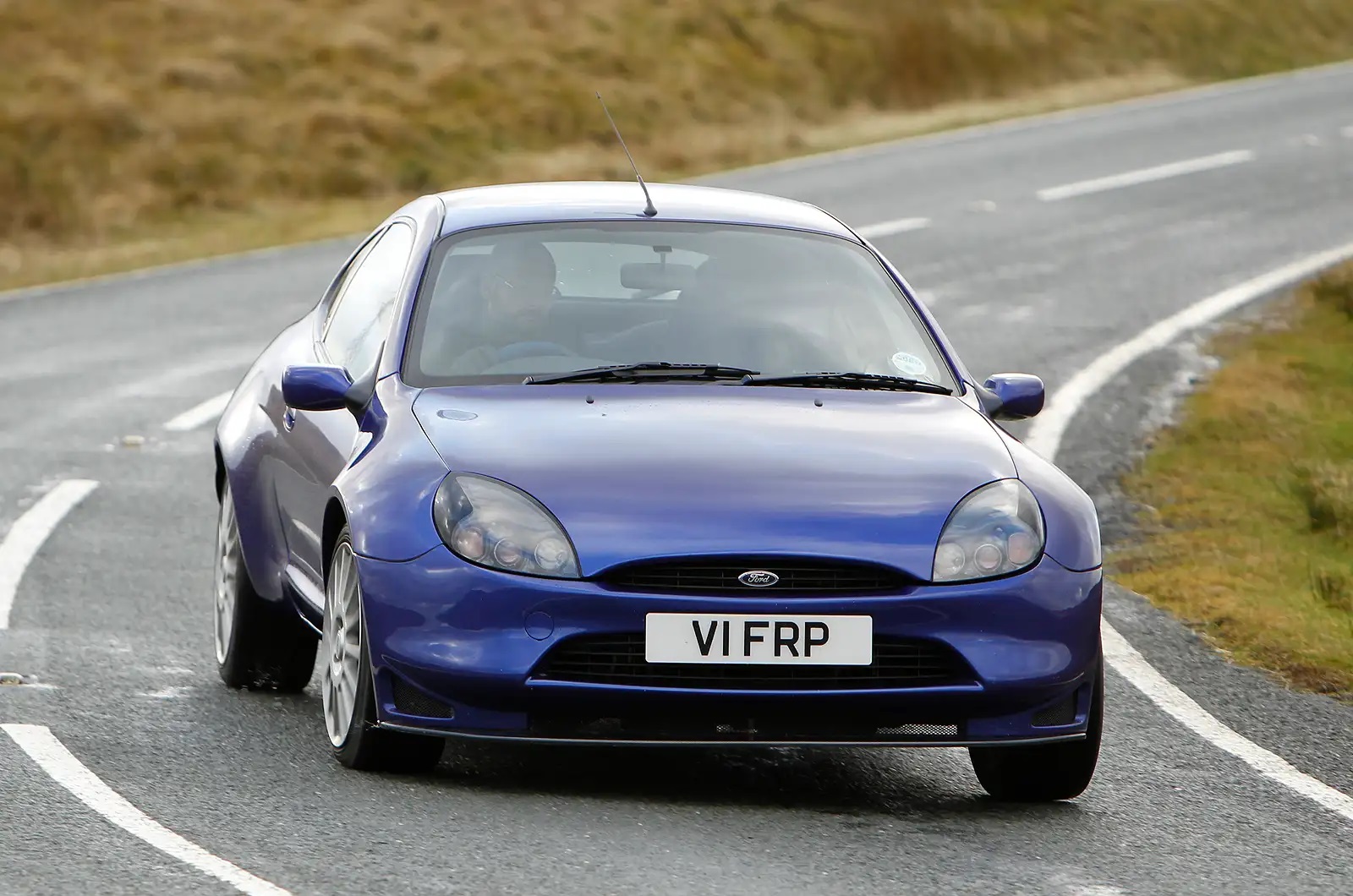
In the 1990s, Mazda had the MX-3, Vauxhall had the Tigra, Fiat gave us the Barchetta, and in 1997, Ford offered the Puma, designed by Ian Callum. While it was available in 1.4, 1.6 and 1.7-litre variants, the 123bhp Yamaha-developed 1.7-litre was the option people favoured and would haul the 1039kg kerb weight to 62mph from rest in just over 9sec.
Underneath was a chassis from a fourth-generation Fiesta with uprated suspension and a lower and wider track, which gave darty handling. A rarer Racing Puma arrived in 1999, to meet rally homologation regulations, with wider arches, uprated camshafts and exhaust, as well as stiffer suspension, and around 30bhp extra.
Honda Integra Type-R
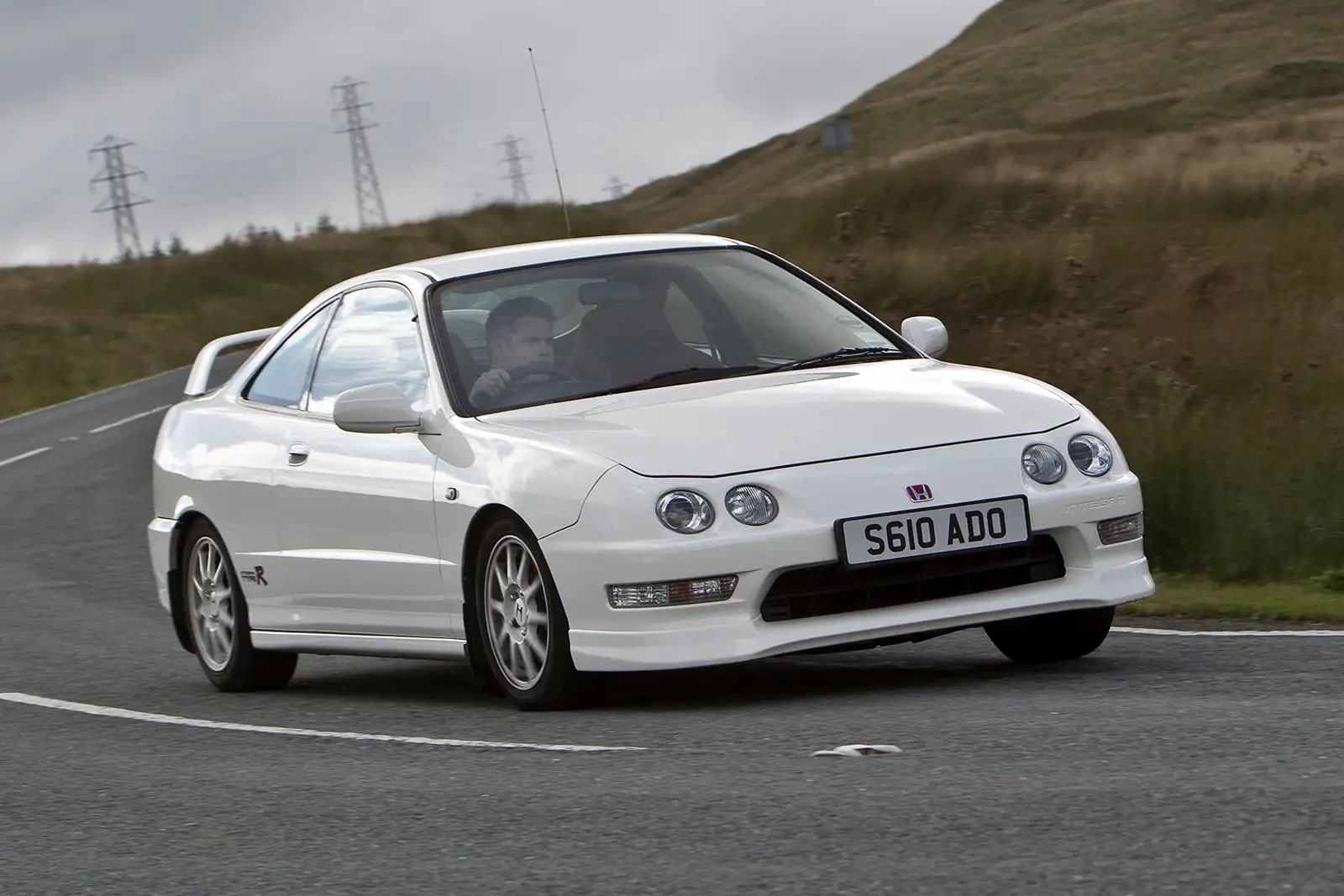
Described by many as the best-handling front-wheel drive car ever made; the Integra Type R was the benchmark for Type Rs that would follow for years to come. The large rear wing reduced lift by 30 percent while an aero lip at the front kept things stable at higher speeds. Its chassis had a reinforced subframe and additional spot welds to boost rigidity, 15in alloys helped the double-wishbone suspension to find its flow and the windscreen was 10 per cent thinner to help keep weight low.
Mini Cooper
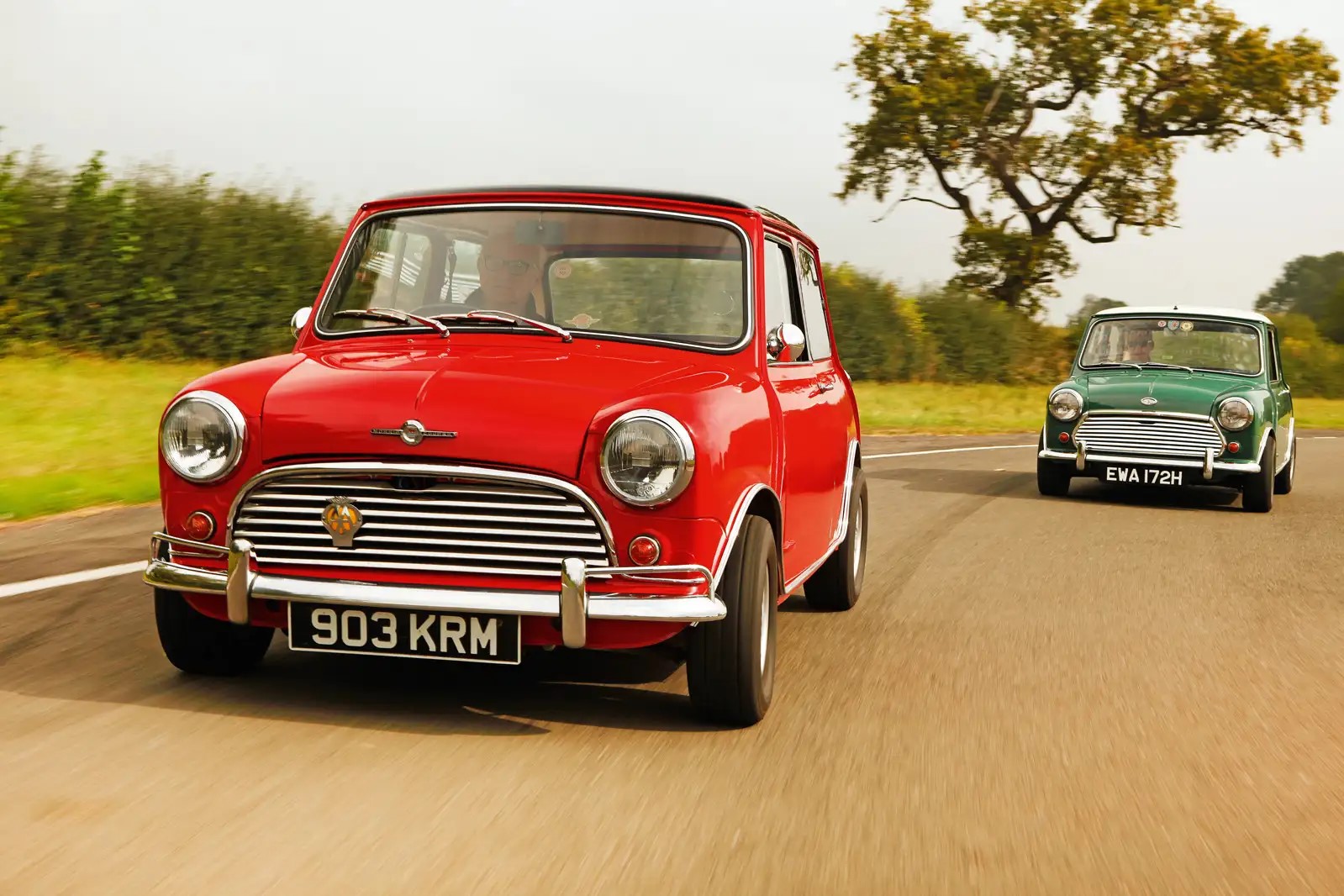
Mini has come far with the Cooper range nowadays but the original Cooper was where it earned its famous go-kart handling and ‘giant killer’ status. A rubber cone suspension set-up was used instead of conventional springs which gave a raw and bumpy ride and all four wheels were pushed out to each corner while a low centre of gravity, and short wheel travel, allowed the Cooper to deliver sharp cornering. More powerful ‘S’ models were released in 1963 with a more powerful 1.1-litre powerplant and larger disc brakes.
Lotus Elan M100
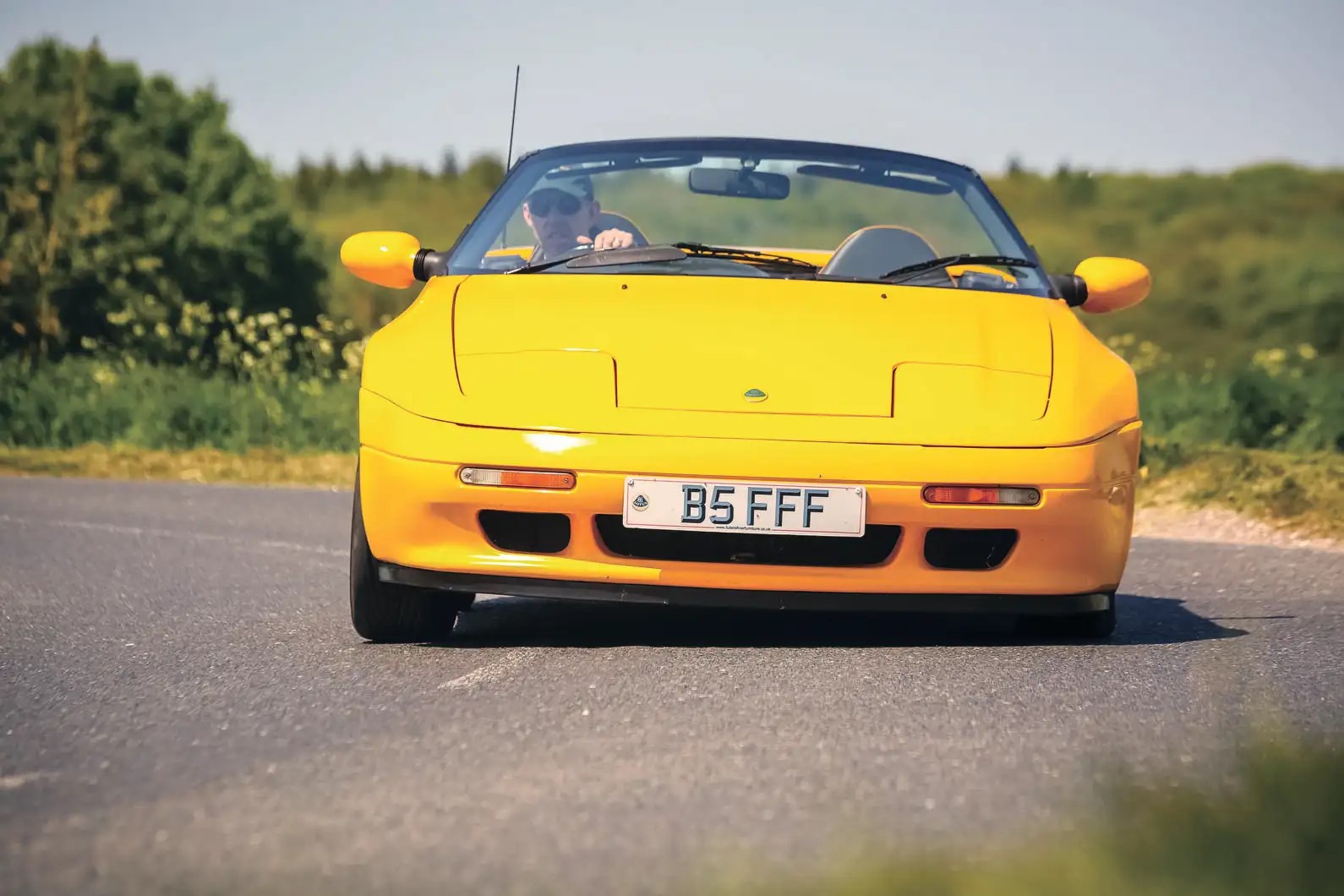
While we’re used to Lotus giving us rear-wheel drive sportscars, the M100 was Lotus’ front-wheel drive answer to the big-selling Mazda MX-5. Lotus used a lightweight composite body which was attached to a rigid steel backbone chassis, the front suspension had a double wishbone set up and a “compliance raft” was attached to the chassis with stiff bushes to help reduce torque steer. Unfortunately, many purists couldn’t see past the idea of a front-wheel drive Lotus and sales flopped with only 4700 cars being produced. Kia later picked up the design and sold 1056 examples in South Korea and Japan.
Renault Clio 182 Trophy
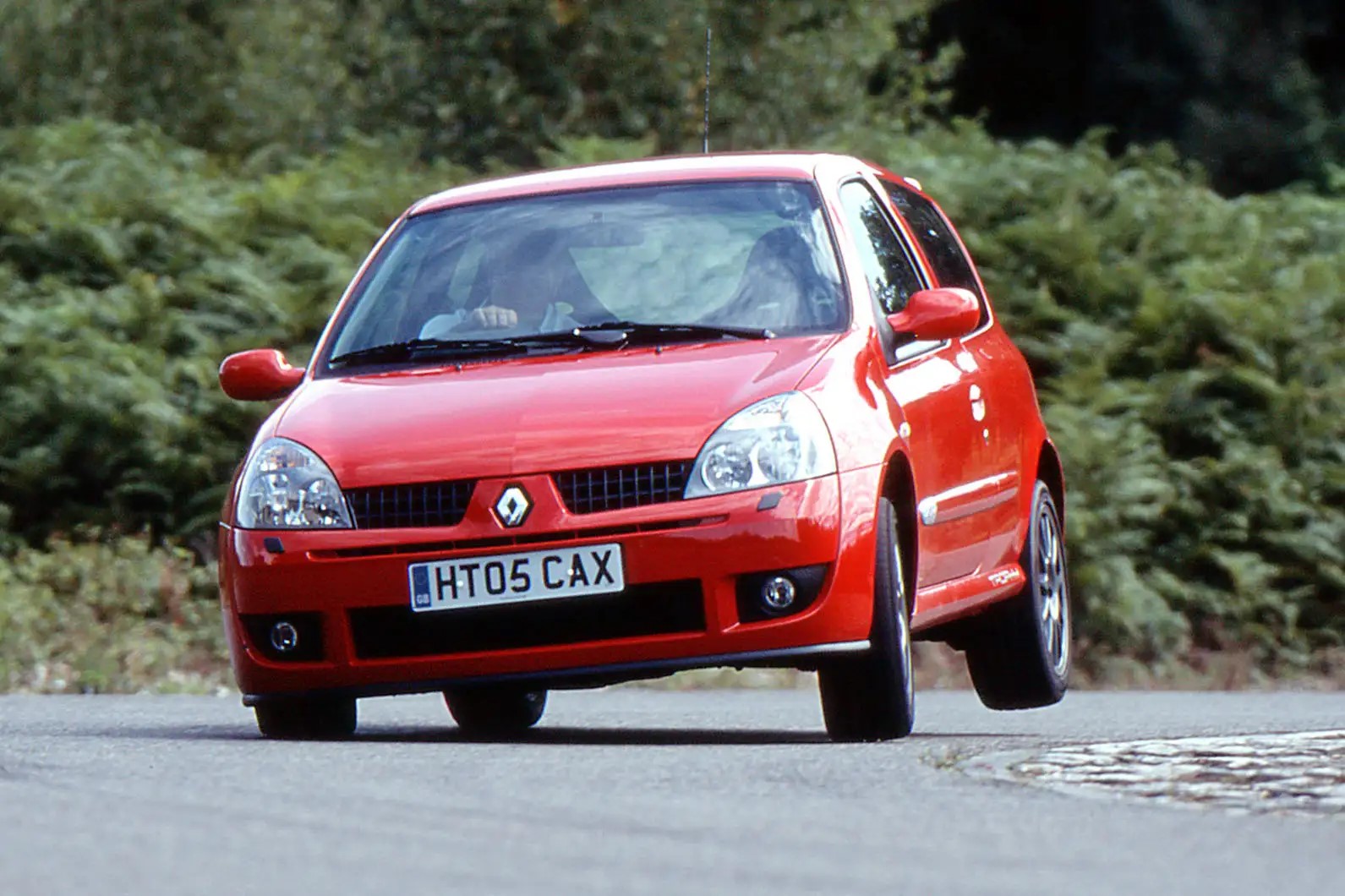
While many Renaultsport cars could make our list, the iconic 182 Trophy offered the compact feel of the Williams with modern 200 Cup performance. Renault Sport engineers took the already fizzy 182 Cup and added Sachs remote reservoir rally-like dampers to the front axle, giving optimised body control and little to no flex under hard cornering. Renaultsport then added hydraulic bump stops and chopped 10mm from the ride height. Vigorous cornering meant the 182 Trophy would lift its rear rather than understeer.
Peugeot 205 GTi
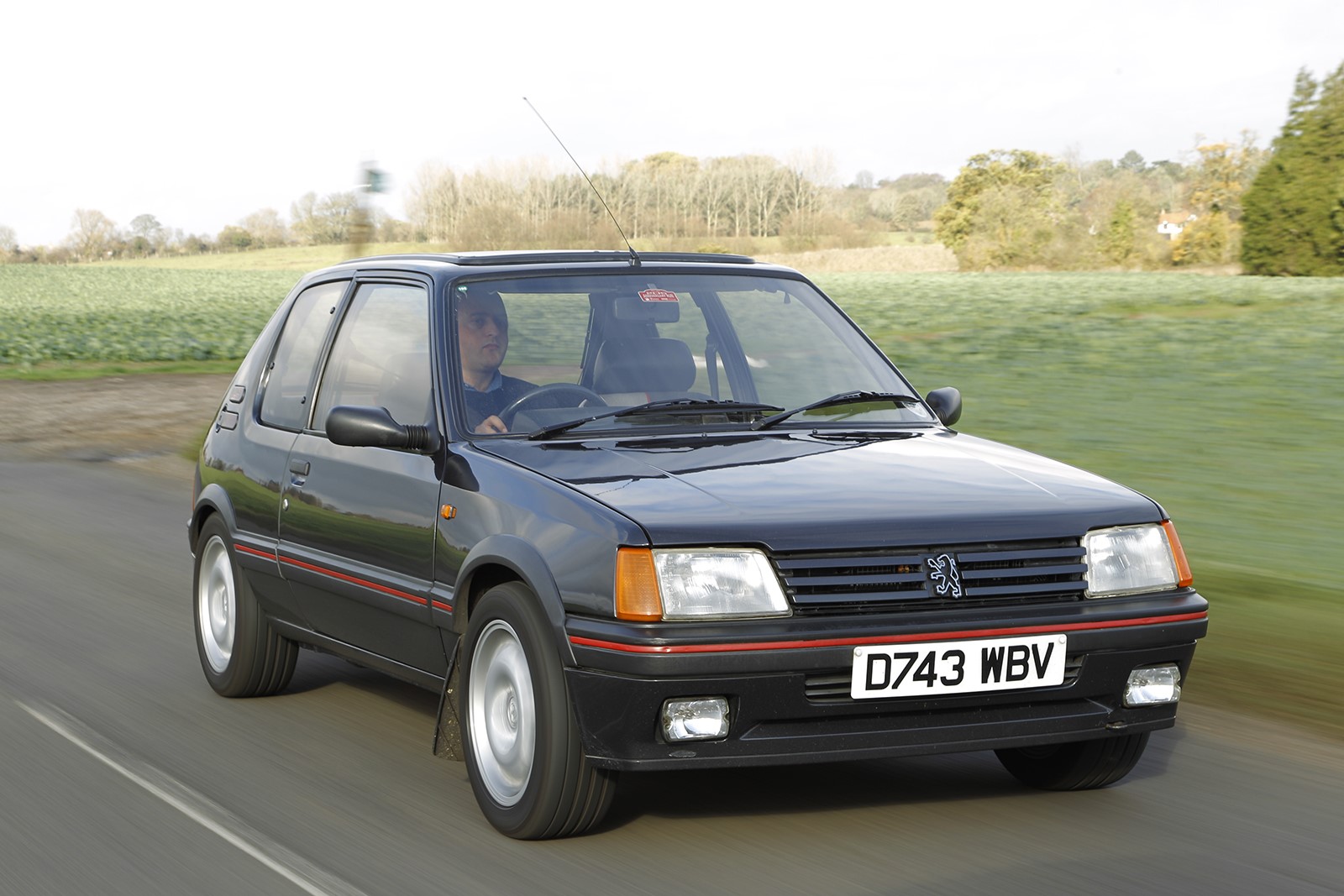
Available with either a 104bhp 1.6-litre or a 130bhp 1.9-litre, the 205 GTi had McPherson front struts and a compact trailing arm setup at the rear, combined with communicative steering, allowing it to rival some bigger and more powerful cars in handling. The 1.9-litre offered suspension tweaks to reduce pitch and roll and combat the understeer that could be found on earlier 1.6 cars. It became increasingly popular because of its price-performance ratio and is still considered one of the world’s best front-wheel drive cars to this day.
Volkswagen Golf GTI Clubsport S
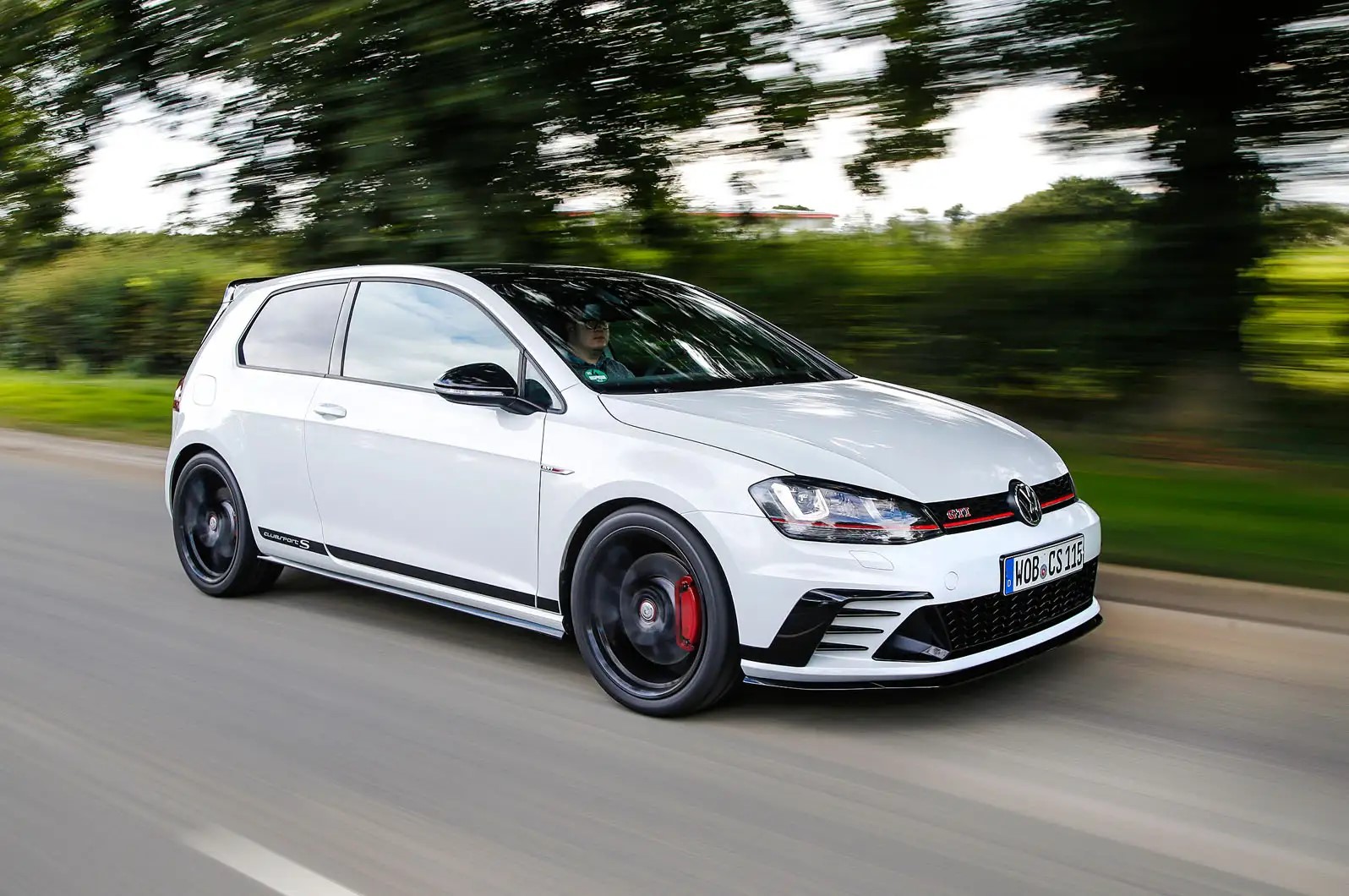
The Honda Civic Type R and Renaultsport Megane 275 Trophy-R were extreme but Volkswagen took it a step further when they upped their GTI and removed the rear seats, freeing up 30kg. 306bhp and bespoke damper tuning, more camber, a lightweight front aluminium subframe and bespoke Michelin Pilot Sport Cup 2 tyres meant the Clubsport S was the quickest front-wheel drive Golf yet. A front splitter and rear wing generated a little amount of downforce which neutralized the 60kg of lift that was once produced by the GTI Performance. This gave the Clubsport S impeccable chassis balance and even promoted oversteer.
Ford Focus RS500
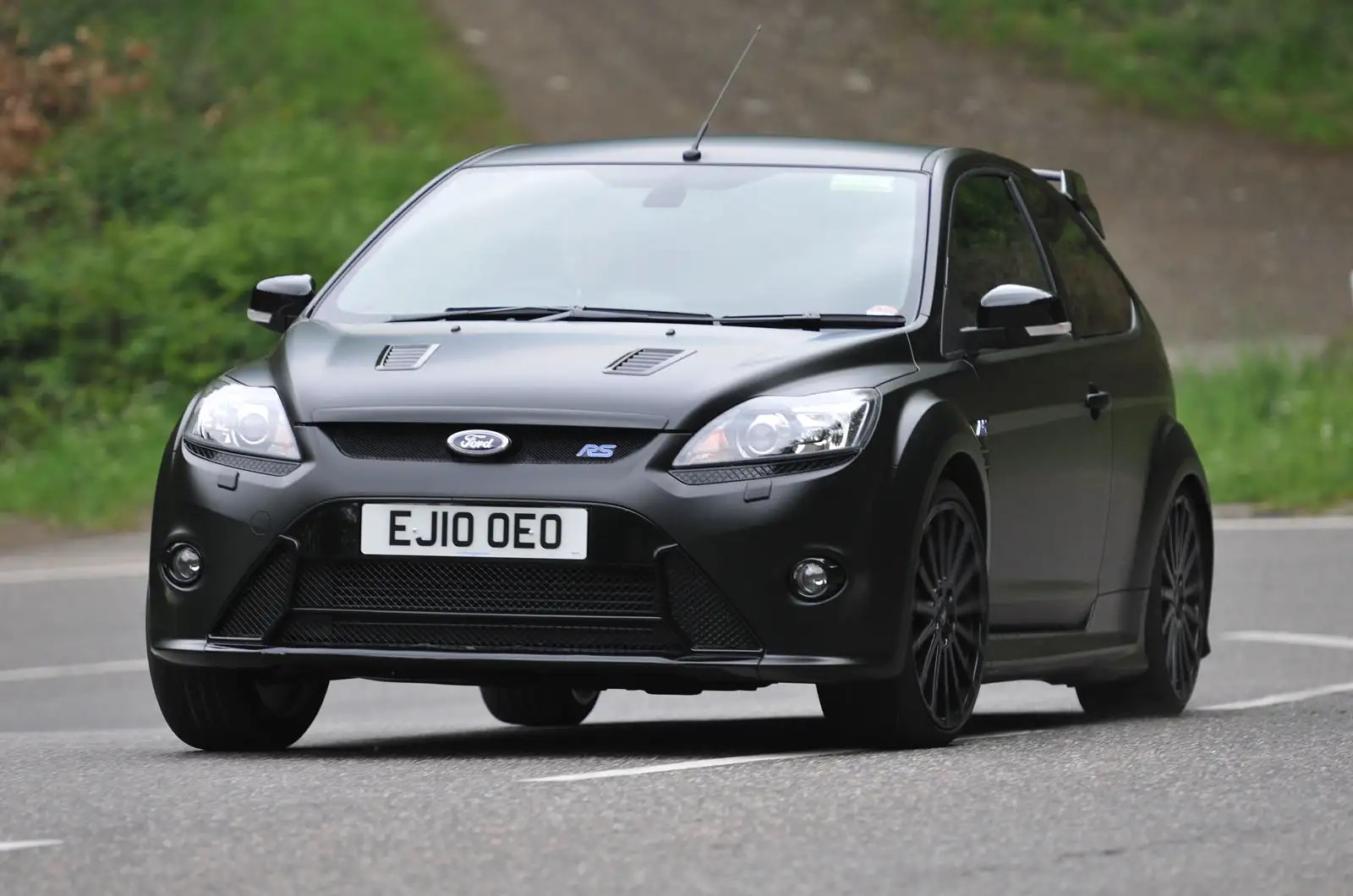
Just as everyone was getting used to the Mk2 Focus RS, Ford then added 45bhp and resurrected the RS500 badge which, as the name suggested, meant only 500 examples of the Focus RS500 would be built. Although the chassis remained untouched from the base Focus RS, an LSD was equipped to help manage the extra power and claw the car around bends, and it would even lift the rear wheel if pushed hard enough. By trailing the brakes toward a corner with the ESP turned off, you could encourage the rear into helping adjust the cornering line.
Ford SportKa
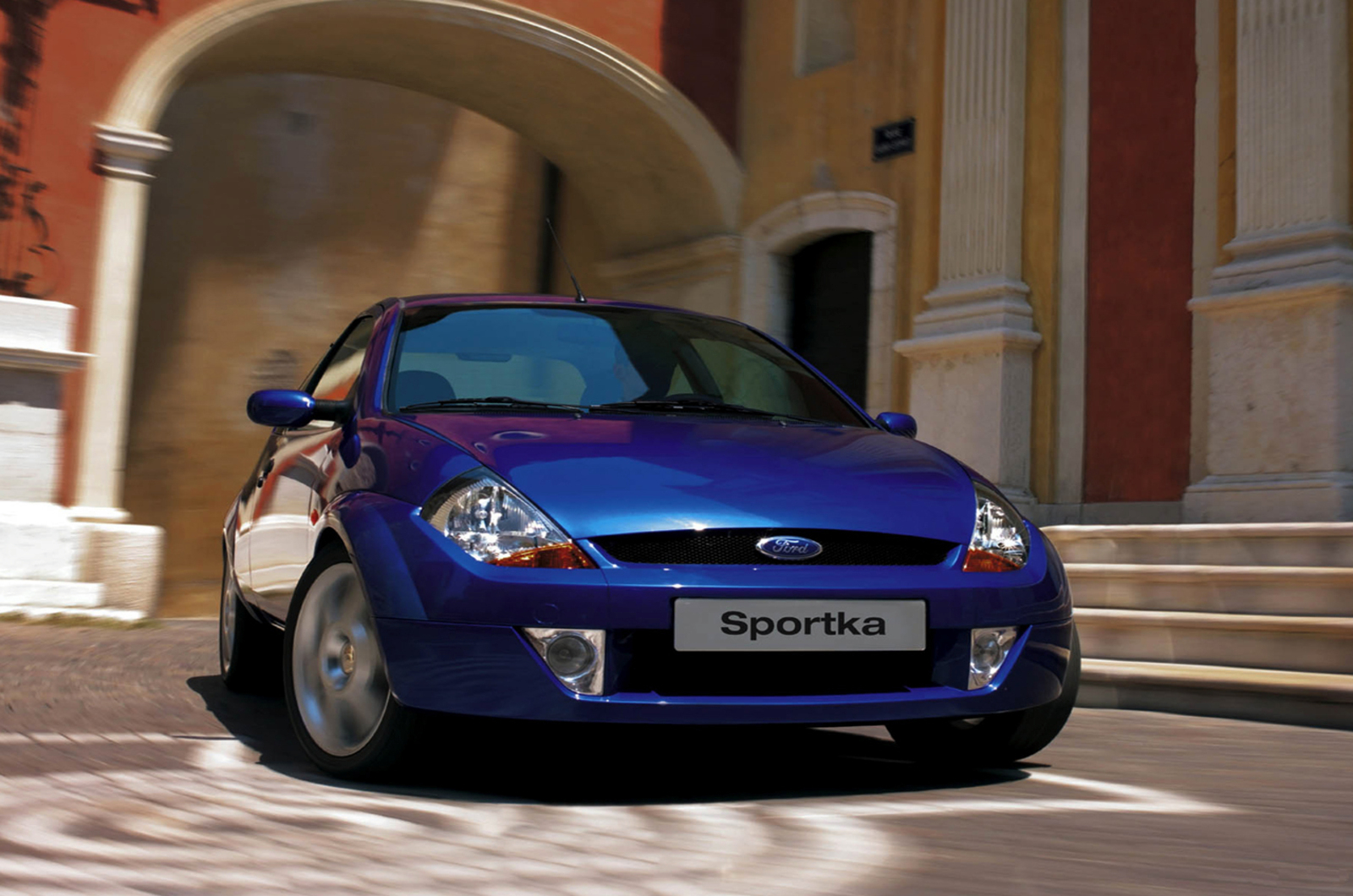
From the 90s the 2010s the compact hot hatchback market was booming, with cars like the Suzuki Swift Sport and Fiat Panda 100hp being vastly popular. Whilst the original Ford Ka lacked performance with its 1.0-litre and 1.3-litre engines, Ford extracted 94bhp from the 1.6-litre for the SportKa. It then underwent chassis changes such as a 22mm wider front track to improve road holding, stiffened bushes, extra bracing, a suspension drop of 14mm and an anti-roll bar that was stiffened by 60 per cent. This meant the SportKa was eager to respond to the slightest of input.
Alfa Romeo Alfasud
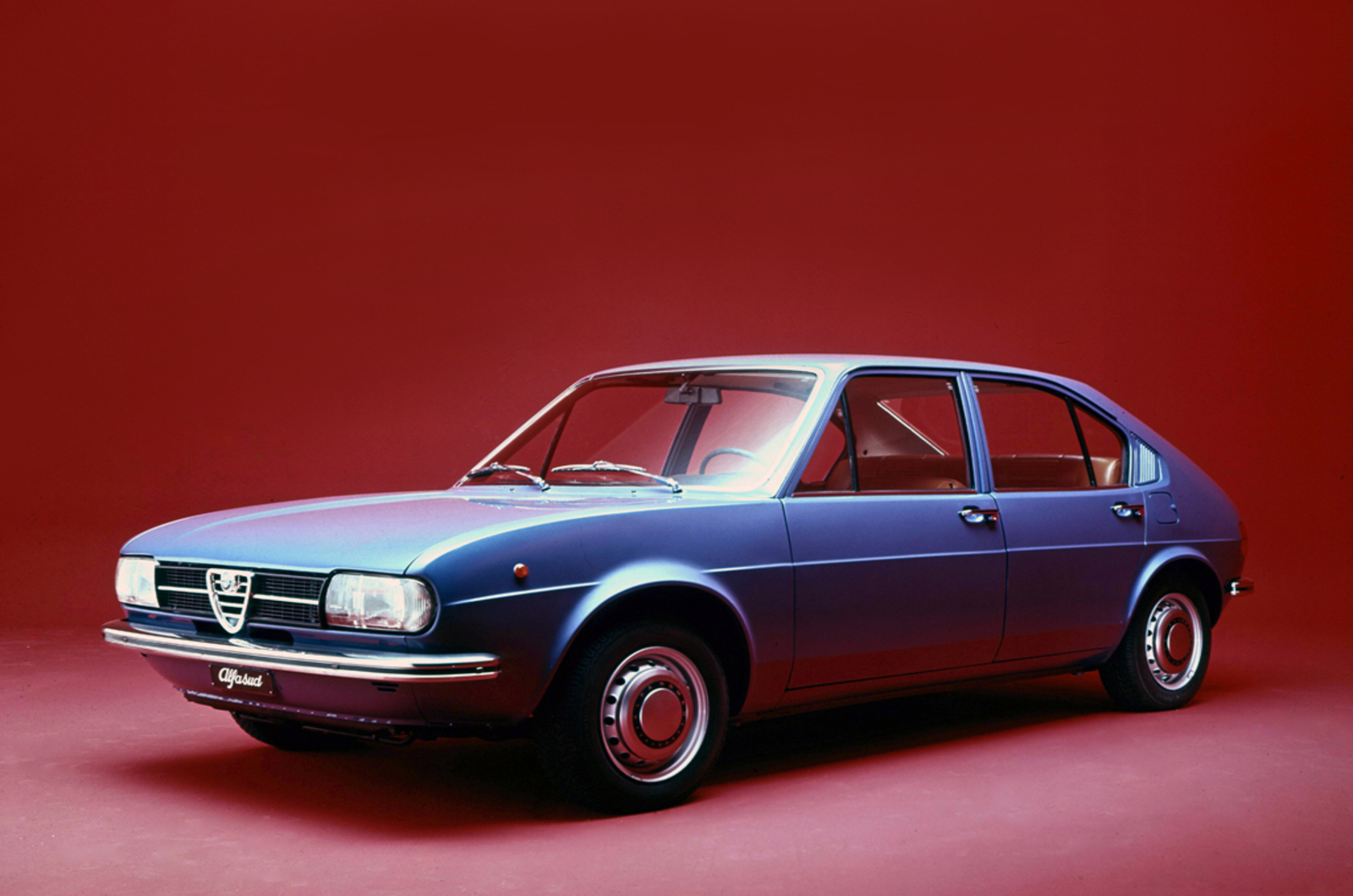
Claimed to be one of the best-handling cars of the 1970s, the Alfasud was let down by questionable build quality which later led to the Golf GTI becoming the favourite. The Alfasud was amongst the first cars to boast four-wheel disc brakes and roll-free handling thanks to its low-slung boxer architecture, MacPherson front strut suspension and a cleaver beam rear axle tied to a Watts linkage which acted as a giant anti-roll bar. This resulted in a well-planted and chuckable car with great road holding.
Renault Megane R26R
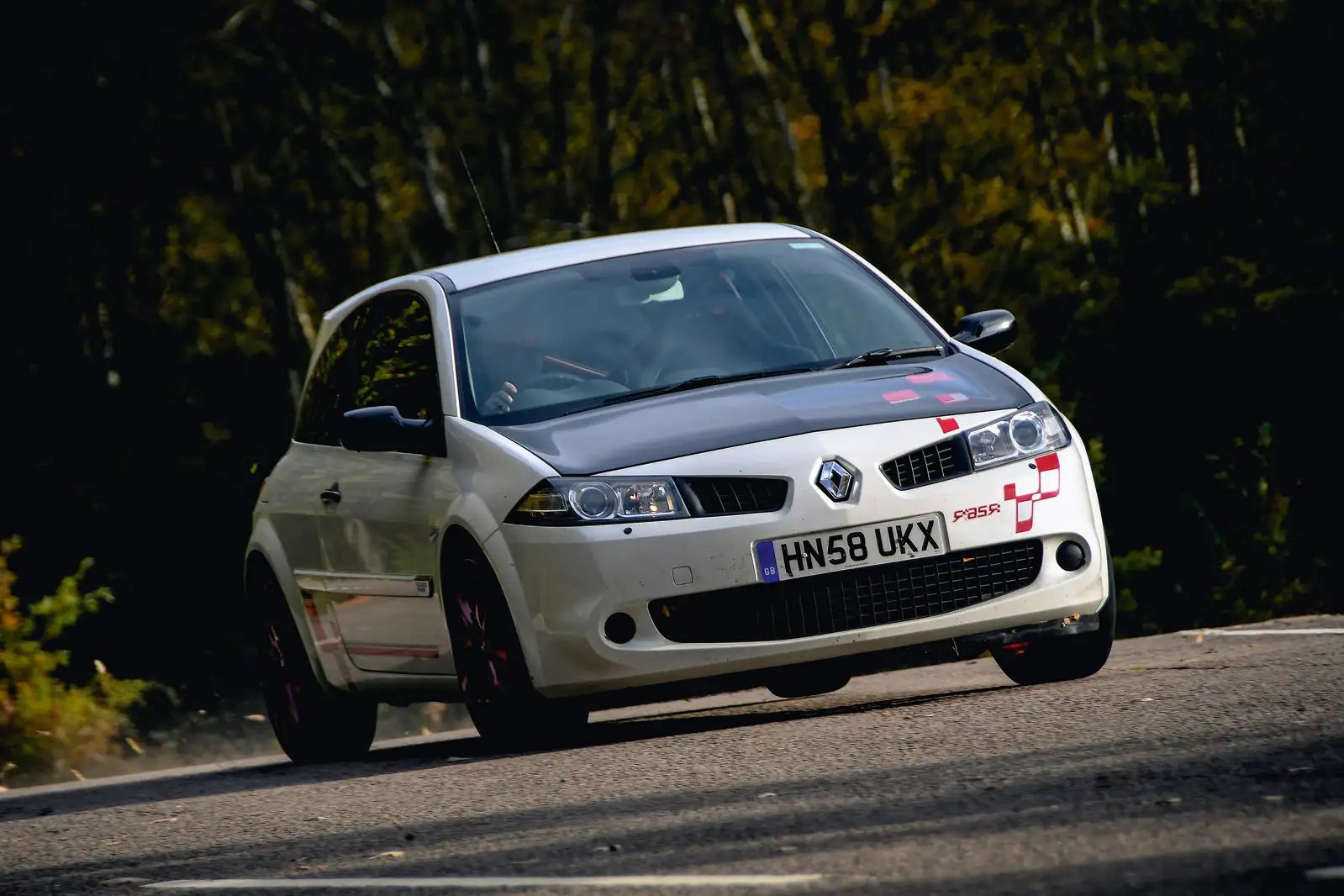
By adding a roll cage and a carbon fibre bonnet, replacing the rear windows with polycarbonate, removing the rear seats, and removing the radio and the passenger airbag, Renaultsport managed to shave 123kg from the old Megane RS with the R26R. The spring rates, front and rear, were over 10 percent softer while the uprated dampers and springs gave better stability and control through the corners. Renault kept the differential from the normal car but fitted the R26R with Toyo tyres which gave it masses of grip.
Seat Leon ST280
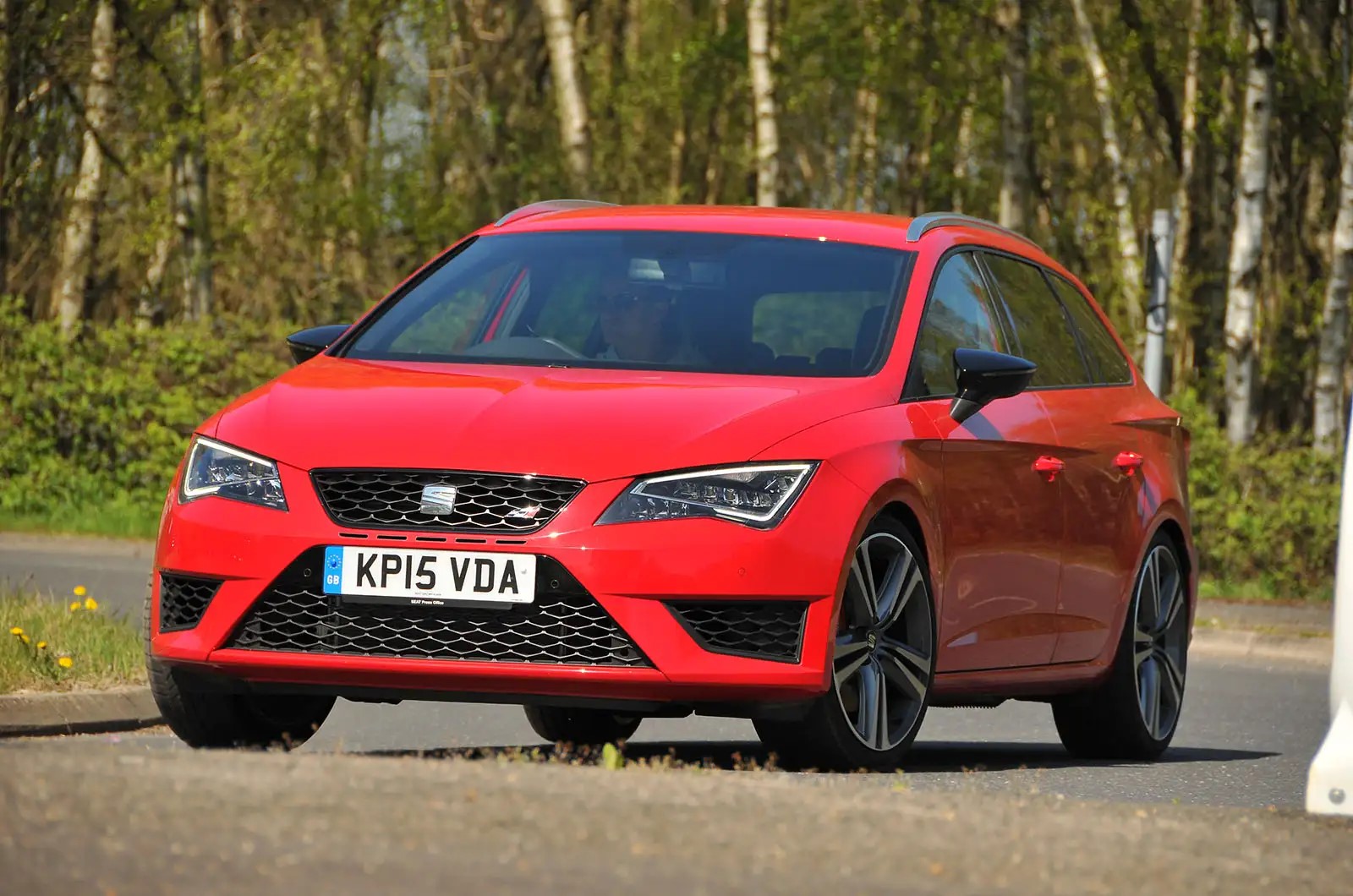
When Seat opted for a front-wheel drive layout for the ST280, they used an electronic differential that could send up to 100 percent of its torque to the outside wheel via a hydraulic clutch. This meant that speed could be preserved at all four corners and that the driver could flatten the throttle out of a bend and experience very little torque steer. The ST280 sat 25mm lower than the regular Leon S, allowing it to hug the road, but buyers could have an optional Performance Pack, aimed more at a track day audience, which included 2.1kg lighter alloy wheels wrapped in Michelin Sport Cup 2 rubber.
Ford Mondeo ST200
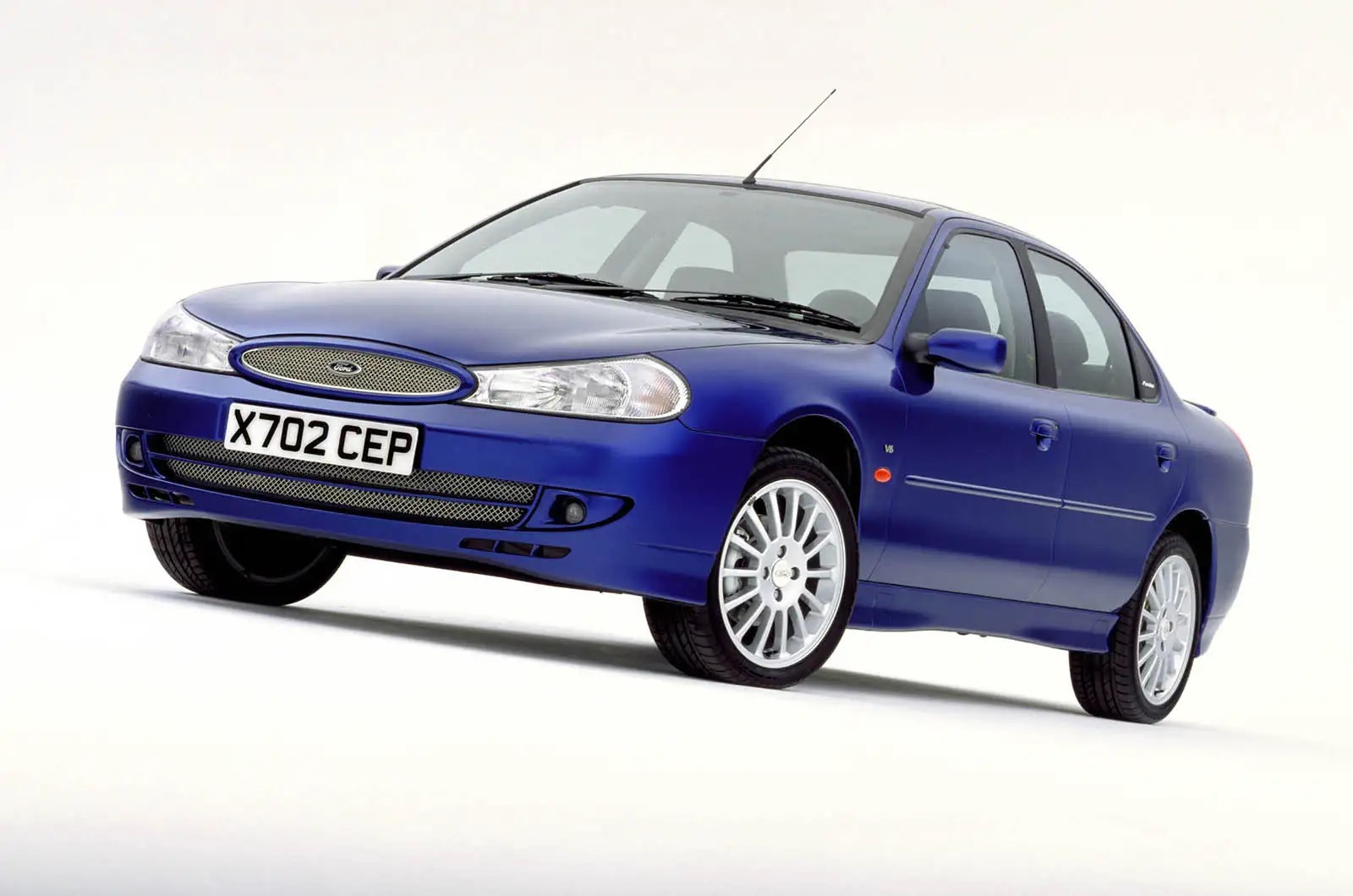
Ford created a fast family car with the Mondeo ST200; it was something that had sharp, responsive steering and firm suspension, carefully set up by Ford engineers, and sat low enough to take corners with gusto while also providing passengers with comfort. 17in wheels sat firmly inside the arches, helping to create the ST200’s aggressive stance. The 2.5-litre V6 was revised from the ST24 which saw the power rise from 167bhp to 202bhp.
Honda Civic Type R
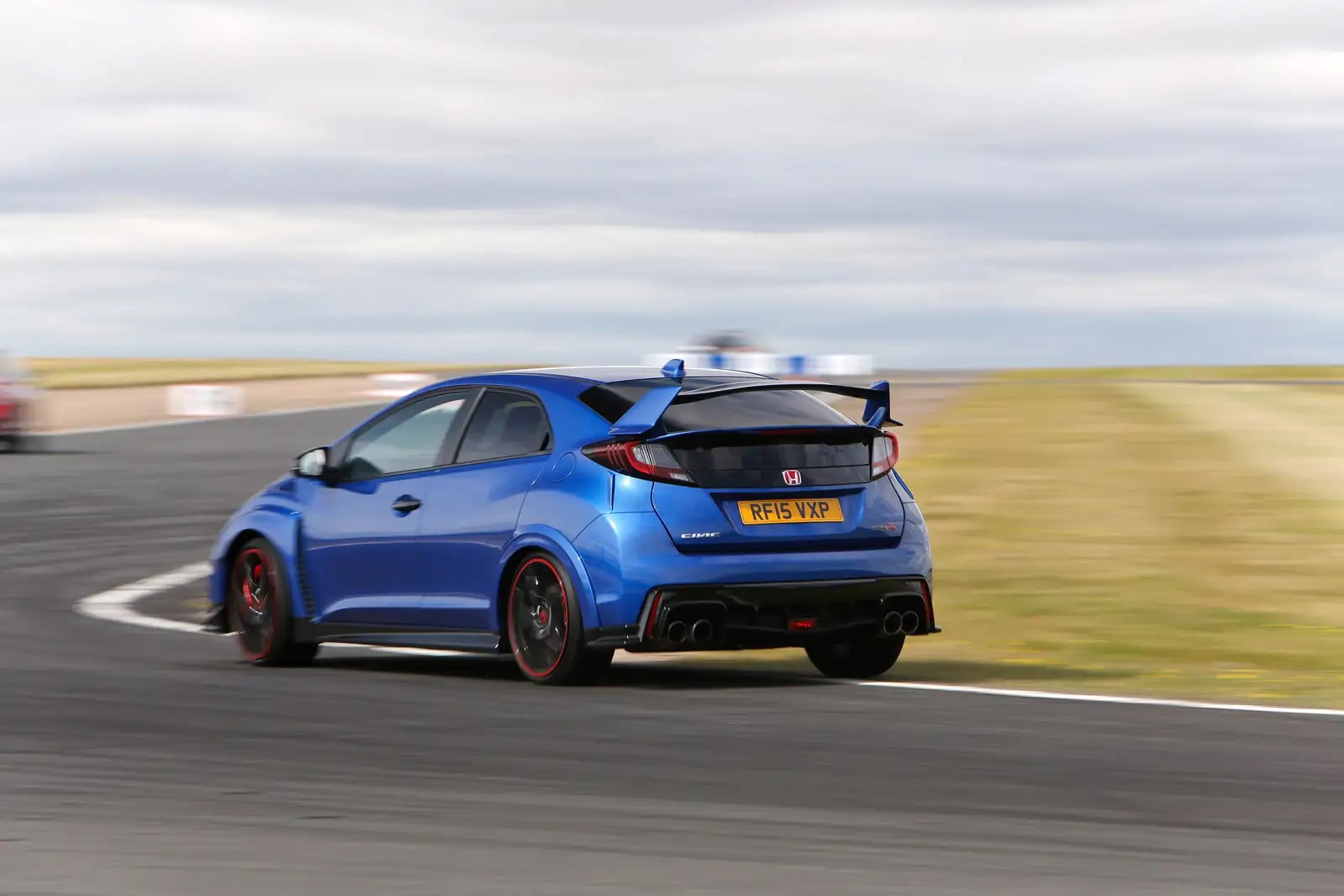
You can’t go wrong with any Civic Type R in Honda’s range; they’ll all offer sublime handling and reliability – but we’re focusing on the FK2 here. Honda adopted a dual-axis front suspension set-up with adaptive damping to help control all 306bhp that’s fed through the front wheels. Grip was provided by 19in wheels that were wrapped in Continental tyres. The +R mode chilled the ESP a bit and stiffened the suspension by 30% which, on smooth tarmac, made for a driver-involving experience.
Abarth 695 Biposto
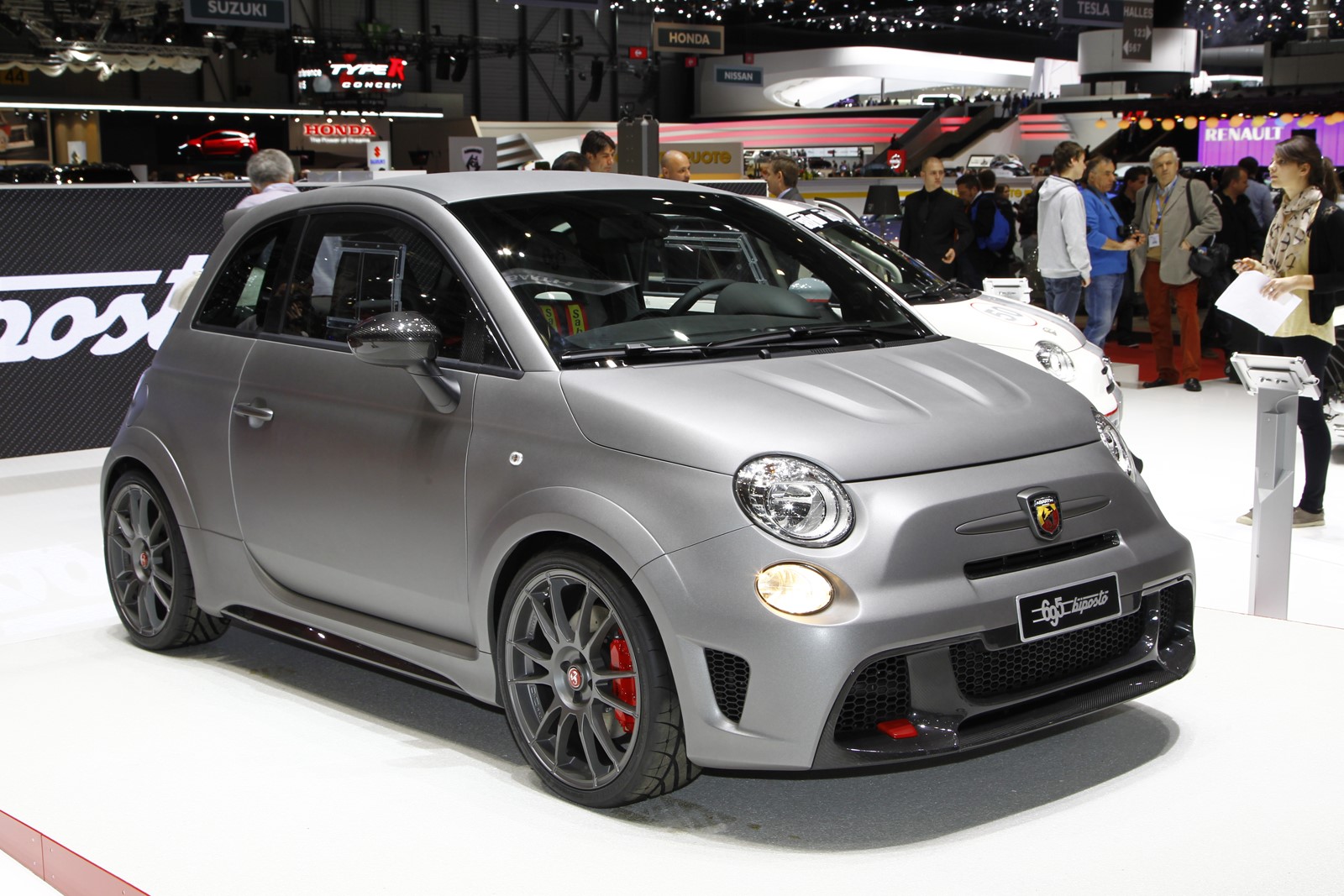
Fiat claimed that the Abarth 695 was the world’s smallest supercar. Buyers could opt for a dog ring H-pattern gearbox mated to a limited-slip differential while racing seats with a four-point harness, roll-cage and 187bhp turbocharged 1.4-litre were standard. By removing the rear seats and adding rally-like netting, Fiat saved 38kg, giving the 695 a total weight of 997kg. An additional 5mm of offset was added to either side which gave an increased track width of 10mm, while the Goodyear Eagle F1 tyres offered a plethora of grip.
Volkswagen Golf GTI Mk1
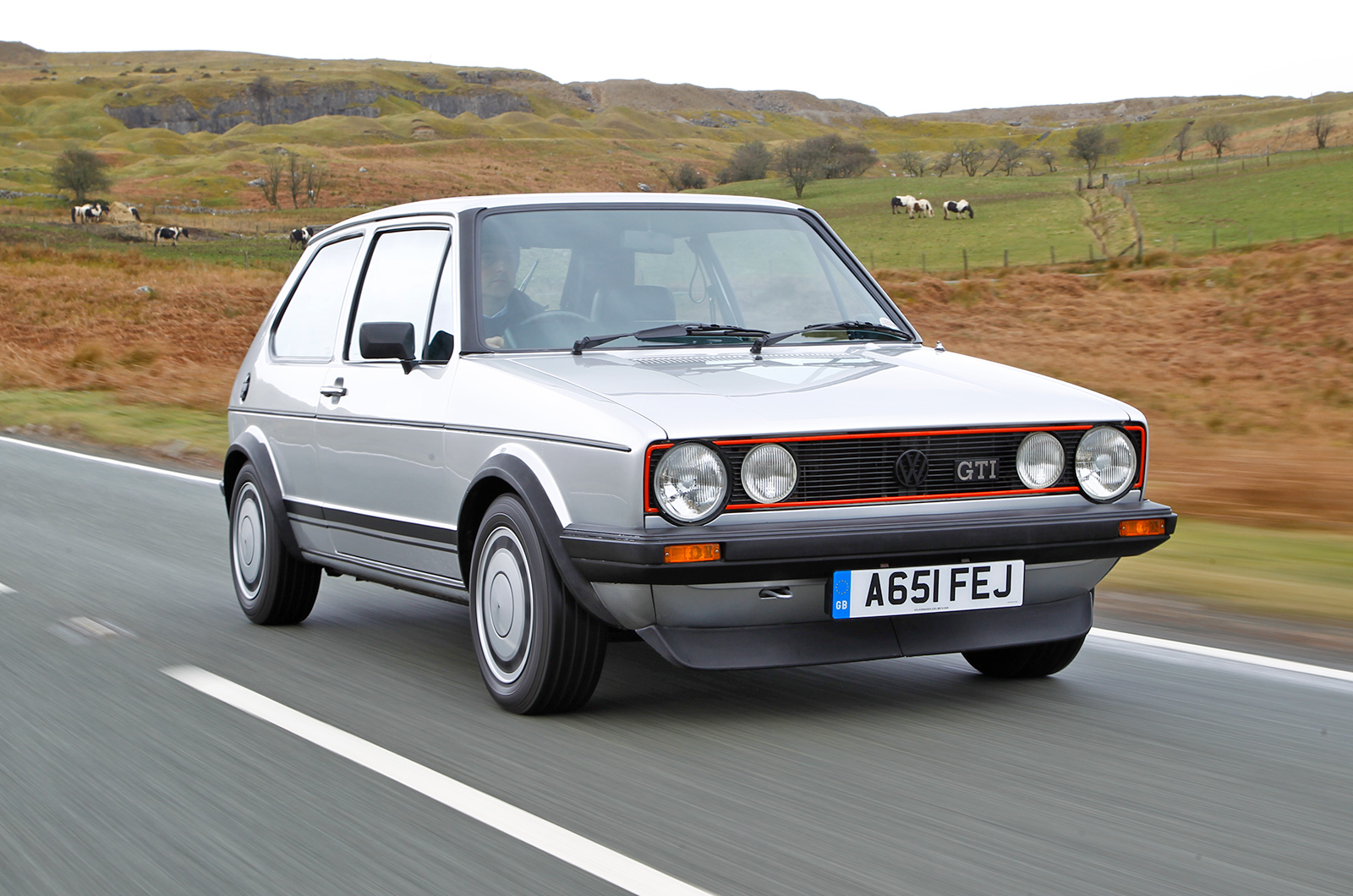
It was only fair that the Mk1 Golf GTI had its place on our list due to its sure-footed stability and nerve-holding stance when it came to bigger rear-wheel drive cars of the same era. In comparison to the normal Golf, Volkswagen gave the GTI stiffer suspension (both dampers and springs), anti-roll bars and they dropped it 20mm closer to the road. Its unassisted steering offered plenty of feedback and the car could make decent pace down a B-road thanks to its 840kg weight and 110bhp on tap – helping to start a legend that, with blips along the way, continues to this day.
Peugeot 106 GTi
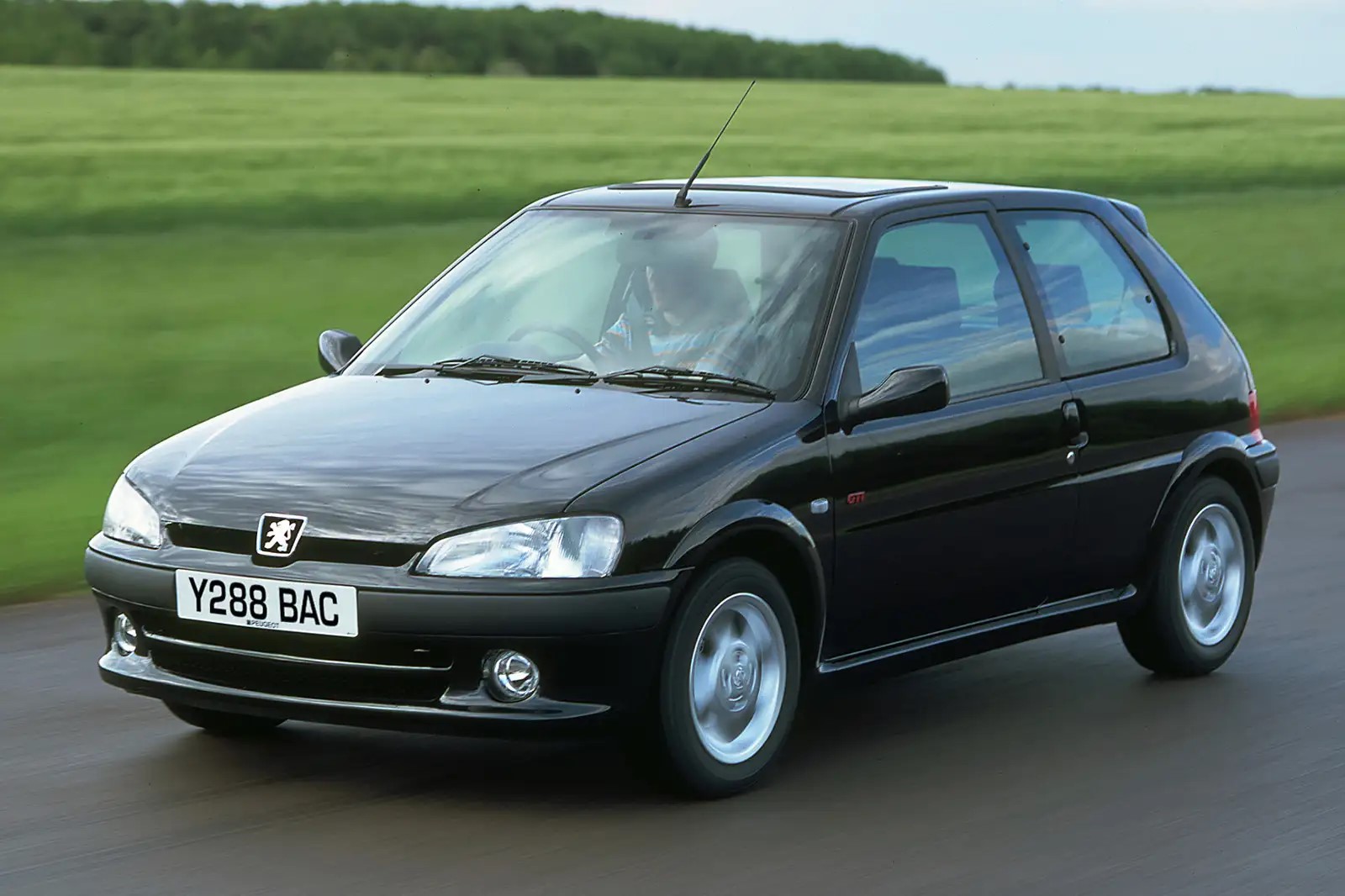
While there were a few front-wheel drive cars to choose from in the 1990s, the Alfa 145, Seat Ibiza Cupra and Renault Clio Williams among many, Peugeot raised the bar for the hot hatch market once again with the 306 GTI-6 and 106 GTi. The 106 GTi was gifted with the usual hot hatchback recipe: MacPherson struts linked by an anti-roll bar, a torsion bar, and an additional anti-roll bar at the rear. Peugeot extracted 120bhp from the 1.6-litre powerplant, which only had 950kg to cart around, resulting in a small but capable car in a B-road blast.
Toyota Celica T-Sport
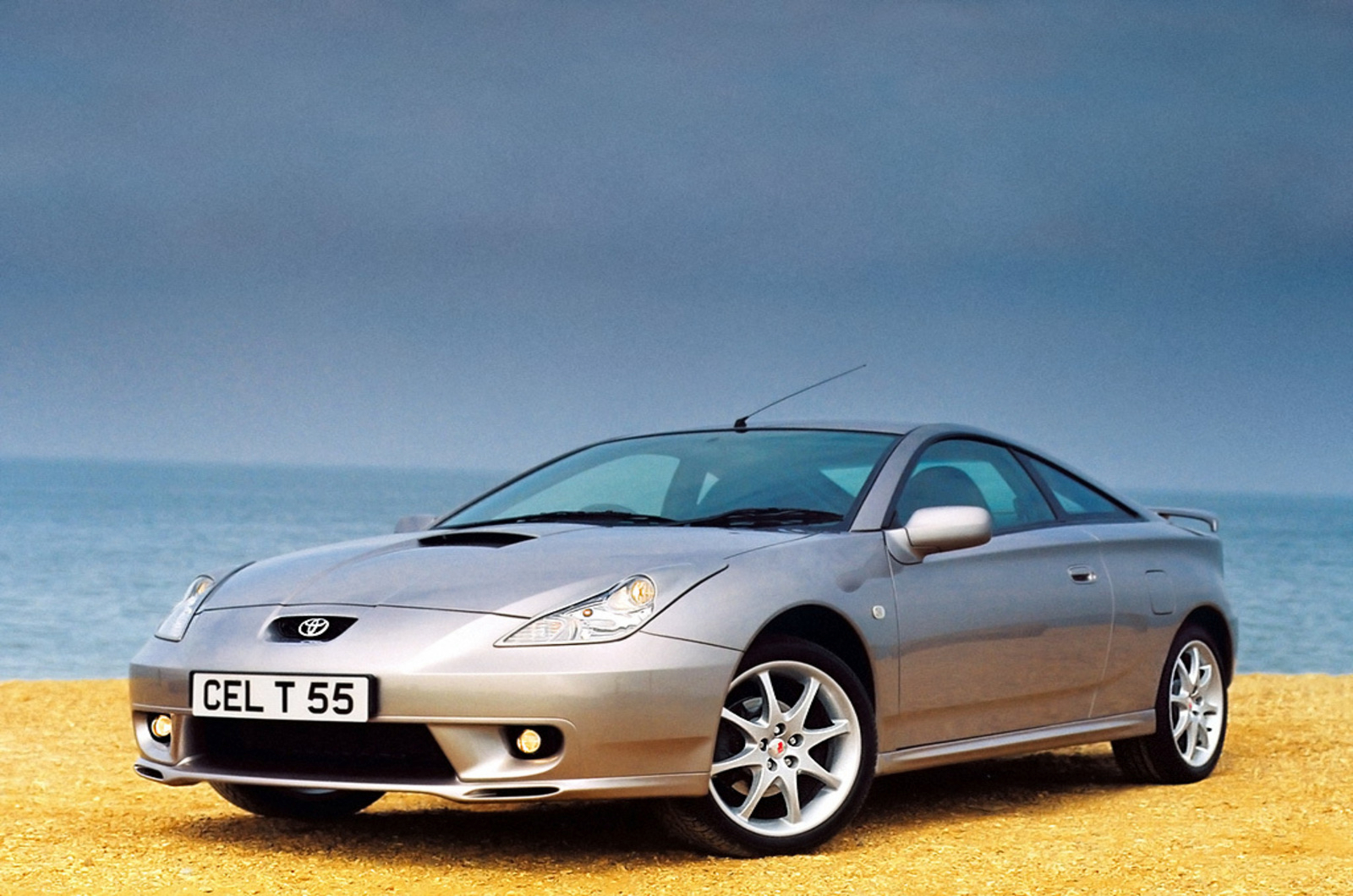
The Celica T-Sport was the flagship in the range and the chassis was described by many as both brilliant and alert. It was introduced just as the Integra Type R and Ford Racing Puma were leaving the party, earning its “best handling front-wheel drive” title rather quickly thanks to its low-slung physique and engine-speed-sensing power steering system, which allowed the driver to tune in to the front wheels. While the chassis remained untouched from previous Celicas, the engine power was raised from 143bhp to 190bhp.
Volkswagen Lupo GTI
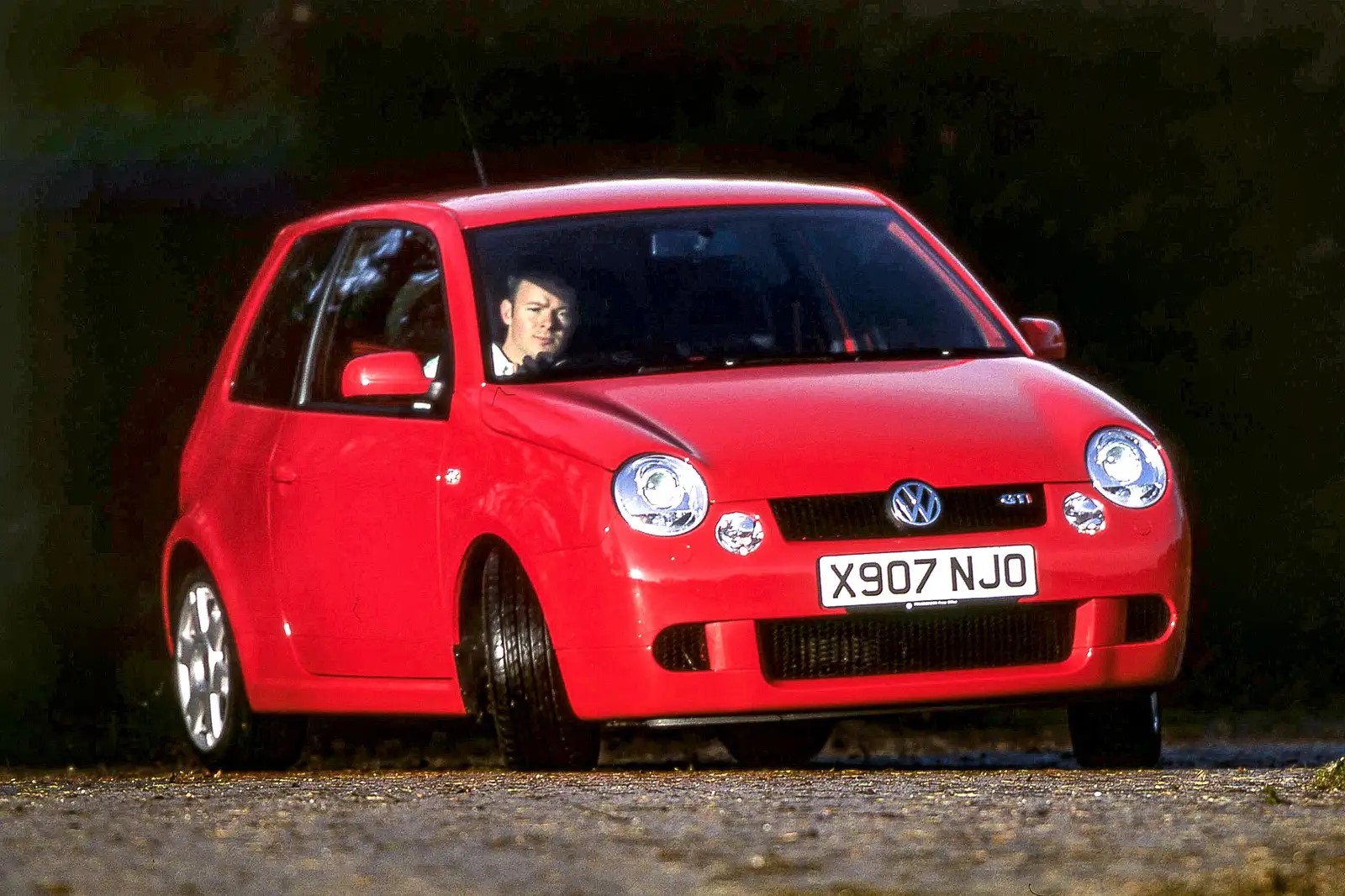
Like the Golf and the Polo, the Lupo GTI gained quite a cult following due to its downright feistiness and high fun factor. It received uprated springs and dampers and the ride height was dropped by 20mm over the normal Lupo giving it a road-hugging stance. Fat tyres and a small wheelbase made for sharp turn-in which in return made it a hoot to drive while understeer was predictable. The 1.6-litre pumped out 125bhp and gave an 8.2sec 0-62mph time.
Hyundai i20N
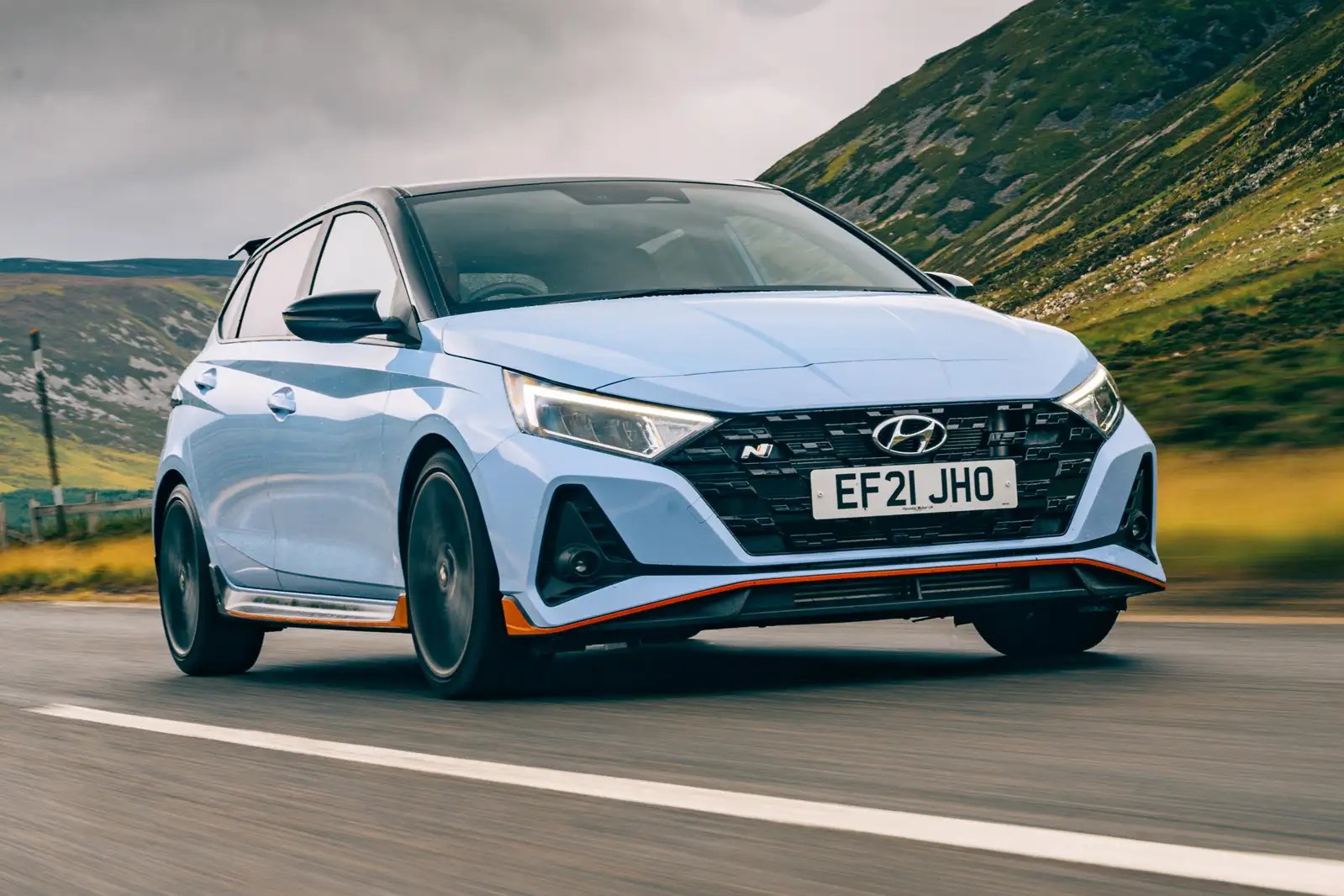
There are various choices for a modern hot hatch but if you can pry yourself away from the popular and well-priced Fiesta ST then the Hyundai i20N may be worth a look. 206bhp is channelled through a limited-slip differential while the 18in alloys are wrapped in Pirelli P Zero tyres as standard. Sturdier front knuckles plus more negative camber and more chassis bracing mean the i20N can provide great cornering confidence albeit with mild torque steer on more cambered roads.

Polestar Exit Highlights Shifting US-China Trade Barriers and the Rise of Regional EV Strategies

Rethinking Luxury in Modern Cars Why Drivers Are Willing to Sacrifice Features for Affordability

Fuel Prices in the UK: How Tax Policy and State Intervention Drive European Pump...
 Sharp rises in fuel costs have hit UK drivers' wallets, but that isn't the case everywhere
British drivers are paying significantly more at the pumps than drivers in several other European countries.
According to RAC data, petrol currently costs around 156p per litre in the UK, compared with roughly 136p in Cyprus, 130p in Spain and 116p in Malta.
Drivers don’t have to refuel too many times before the difference starts hitting their wallets. According to the RAC, filling a 55-litre tank in a typical family car now costs around £87 for petrol and just over £100 for diesel.
Elsewhere in Europe, Polish drivers pay just 122p per litre for petrol, while a litre of petrol costs Bulgarian motorists 131p. If European countries access the same global oil market, and face the same geopolitical challenges, why are petrol and diesel so much more expensive in the UK?
For Luke Bosdet of the AA, the answer is simple. “It's a tax thing,” he said. “Some countries load their tax onto car ownership – car tax and the like. Others load it on to car use – duty on fuel. And others combine the two.”
At this week’s average petrol price of 152.7p per litre, UK drivers pay 26p in VAT and 53p in fuel duty, according to the RAC. That means 79p of every litre sold is tax, equivalent to just over half of the pump price.
Compare that with Spain, where the cost of a litre of fuel is around 130p. RAC figures show why Spain is cheaper. The fuel and retailer margin account for about 76p in both countries. But rather than the 79p in duty and VAT paid by UK drivers, those in Spain pay 53p.
The Malta outlier
But there are outliers too. In Malta, for example, petrol costs just 116p per litre. Yet based on RAC figures, tax accounts for 56% of the pump price, not dissimilar to the UK tax take despite the much lower pump price.
However, if British drivers think they are hard done by, spare a thought for Dutch motorists who pay 193p per litre of petrol and 182p per litre of diesel.
For Stuart Adam, a senior economist at the Institute for Fiscal Studies (IFS), “the UK is roughly in the middle of the pack in terms of prices and slightly above average in terms of tax rate”.
He said that 20 years ago, the UK had “easily the highest tax rates in terms of both petrol and diesel” but “a series of real-term cuts to fuel duties” has meant that’s no longer the case.
So why is petrol and diesel cheaper in Spain, Malta, Poland and Bulgaria Steve Gooding, director of the RAC Foundation, said: “More often than not, the fact that fuel prices are cheaper in southern and eastern European countries is likely to reflect government policies, including state-owned fuel production, designed to keep fuel prices down where average wages are also relatively low.”
Take Malta, for example. A spokesperson for the Central Bank of Malta told Autocar that fuel prices have remained stable in recent years due to a "fixed energy price policy". Through energy subsidies, retail fuel prices have been "maintained at fixed levels despite fluctuations in global oil prices", the spokesperson said.
Duty and VAT: why doesn’t the government cut it?
In the UK, however, the focus has been on fuel duty. Adam said ministers could reduce it if they wanted to, but it would come at a cost.
"The obvious downside is that it costs the government money and the government has been scratching around for revenue in difficult circumstances for some time," he said.
Fuel duty and VAT currently raise around £30 billion a year for the Treasury. Adam noted that if this revenue is reduced, the government would have to raise money elsewhere or accept a lower tax take.
Others think ministers should start by cutting VAT on fuel. The RAC Foundation has calculated that since the US-Iran war began in February, the government has taken more than £741 million extra in VAT from higher pump prices, as part of what it calls the “war premium” in terms of the higher costs motorists have faced.
But in Spain, the government reacted to the war in Iran by temporarily reducing VAT on fuel from 21% to 10% in March. Gordon Balmer, executive director of the Petrol Retailers Association, said VAT is “a tax on a tax” because, unlike fuel duty, the amount of VAT collected rises whenever pump prices increase. He added that the government could do something similar to Spain if it wanted to.
“Instead of announcing summer giveaways such as cheap meal deals and days out at the zoo, the government could have helped everyone by introducing a 10% cut in VAT on fuel,” he said.
Adam disagrees. He argues that removing VAT from fuel duty would make very little difference if the overall tax take remained the same. He said: “As things stand we put VAT on the price of fuel including the duty. However, you could equally well have VAT on the price excluding the duty and make up the revenue with a higher duty rate. But you would end up in a very similar place.”
In response, the Treasury told Autocar that the 5p fuel duty cut has been extended until the end of the year and that mileage rates for people who drive for work have increased from 45p to 55p. It also pointed to Fuel Finder, which is designed to help drivers identify the cheapest forecourt nearby.
Taxes don't tell the whole story
Yet fuel prices are only one part of the cost of motoring. Professor Nigel Driffield, a professor of strategy and international business at Warwick Business School, said: “It is inadvisable to look at one tax in isolation.” He added: “You can compare excise duty and VAT in different countries, but if cars or companies are taxed differently, then the aggregate impact may differ.”
Balmer agrees. He said that several European countries rely much more heavily on toll roads than the UK. "You can actually say the price of fuel is lower, but don't forget they also charge road tolls. If you are looking at it in terms of motoring, you need to take all of the various taxes into account," he said.
For Adam, the bigger question is not how fuel taxes compare across Europe, but why governments tax fuel in the first place.
“The more fundamental question is why we have a specific tax on fuel or, for that matter, a specific tax on driving and cars at all?” he said.
Adam said fuel taxes should not simply be used “to raise revenue or support particular groups of motorists”. Instead, he argued that governments should use them to reflect the wider costs of driving, “including carbon emissions, air pollution and congestion”.
Whether motorists agree is another matter entirely.

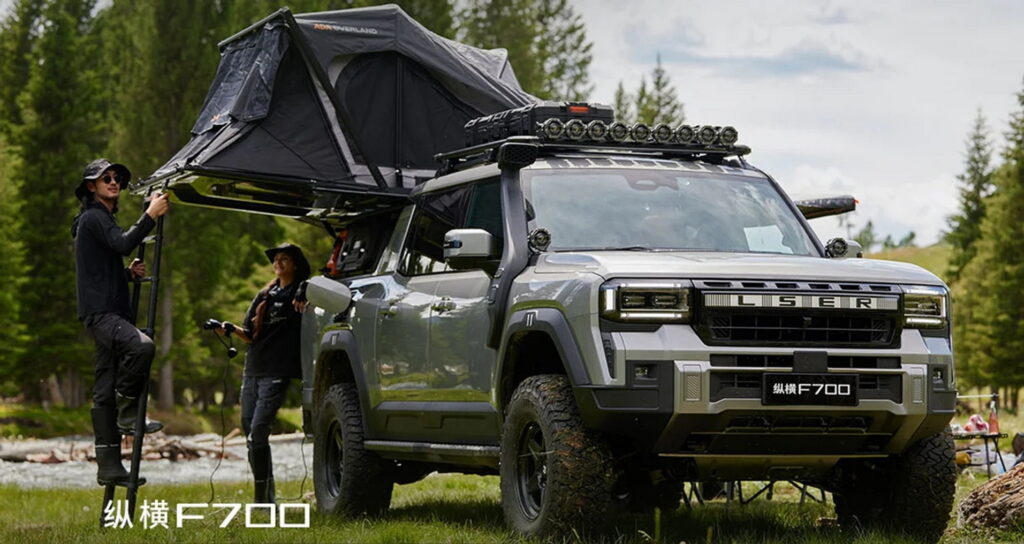
Jetour Zongheng F700 Redefines Midsize Pickups With Plug-In Hybrid Power and Adventure Focus

Automakers Confront California Over Vehicle Tracking Laws and Market Access