BMW M3 Touring Redefines Estate Demand as Global Success Secures Future in Neue Klasse...
 Massive success of BMW's straight-six super estate lays groundwork for a second outing
The M3 Touring will live on in BMW's Neue Klasse era, in part thanks to unexpectedly high demand in markets such as the US and China.
While the M3 saloon is now in its sixth generation, the performance model has only been offered in estate form since the arrival of the G80-generation version in 2021. But strong sales since then have prompted BMW to bring the super-estate back with the next-generation M3, as previewed recently with the Vision M Neue Klasse concept.
The current model is powered by a 523bhp twin-turbo 3.0-litre straight six, and a variant of that engine is set to be offered in the next-gen car, alongside a quad-motor pure-electric version.
BMW has already previewed a new electric 3 Series Touring and, unlike rival Mercedes-Benz, it has pledged to offer EV and ICE versions of the standard car in estate form - and BMW M sales boss Sylvia Neubauer said the performance version will remain.
"The M3 Touring is one of the best models that we have in our portfolio," Neubauer told Autocar.
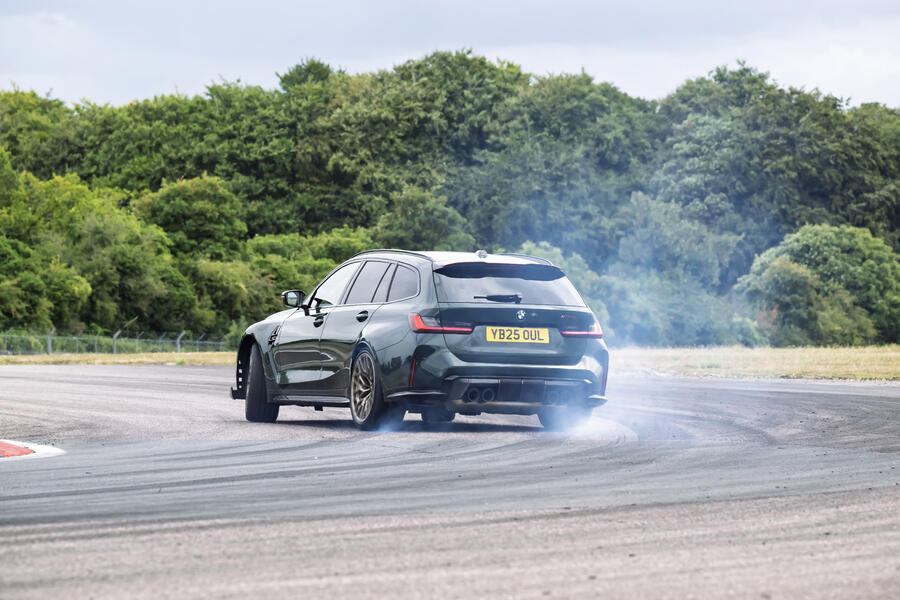
"Normally China is not an estate market at all, but we decided to bring the Touring to China only in the M3 version. So you can't buy a regular 3 Series Touring there but the M3 Touring is a lifestyle statement. And it's been a huge success in China, and the rest of the world."
Neubauer noted that the M3 Touring has also been a hit in the US, another market where they don't offer the standard estate because "it's a market for SUVs and very big cars".
She added that demand for the model was largely organic. "Our dealers are so happy to have this car, because they don't have to push it," she said.
"There's demand, and they're asking for more and more production, so we've been increasing the volume."

Land Rover Defender Bespoke V8s Redefine Collector Luxury With Spectral Paint and Extreme Customization


Electric Car Efficiency Under Heatwave Stress Why High Temperatures Challenge the Renault 4’s Range...
 We know EVs take a range hit when the temperature drops - but hot weather isn't all good news
Like for a lot of people, the novelty of the 30deg C-plus temperatures and fearsome sunshine are wearing off pretty quickly for me. It wasn't long into this latest heatwave before I was practically kneeling in the street and begging the skies for a summer downpour – if only for the sake of my new hydrangea.
Compounding this heat-induced frustration is that once the mercury gets past a certain point, it overshoots the ideal operating window for an EV battery and you start losing the efficiency benefits that come with warmer weather.
The impact isn't quite as drastic as you might see in the depths of winter, but according to Renault's official range calculator, my R4 could lose as much as 35 miles of urban range when the temperature jumps from 20deg C to 35deg C.
That has certainly borne out when I've been pottering around over the past few days, with my average efficiency dipping as low as 3.3mpkWh to give a range of 172 miles – and that's with low-speed driving. I saw a similar percentage drop from the Alpine A290 – with the same basic powertrain – in the coldest weeks of winter.
I wanted to pootle around for a few miles with the air-con off and the windows open at the weekend to see if reducing the draw on the battery markedly increased efficiency, but my distinctly less curious passenger advised that she was liable to abruptly expire or exit the vehicle if I turned the fans off, so that experiment will have to wait until the next heatwave.
In any case, the efficiency hit hasn't really been drastic enough to impact my driving style or cause any charging worries while I've been out and about. The heat, though, has alerted me to an irritating quirk that made me briefly extremely uncomfortable – although I am partly to blame.
Like a lot of electric cars, the 4 can be connected to your phone so you can control and monitor things such as the central locking, the charging system and – most usefully – the climate control, so in theory whether it's Baltic or boiling outside, you can make sure the cabin is at a pleasant ambient temperature before you have even left home.
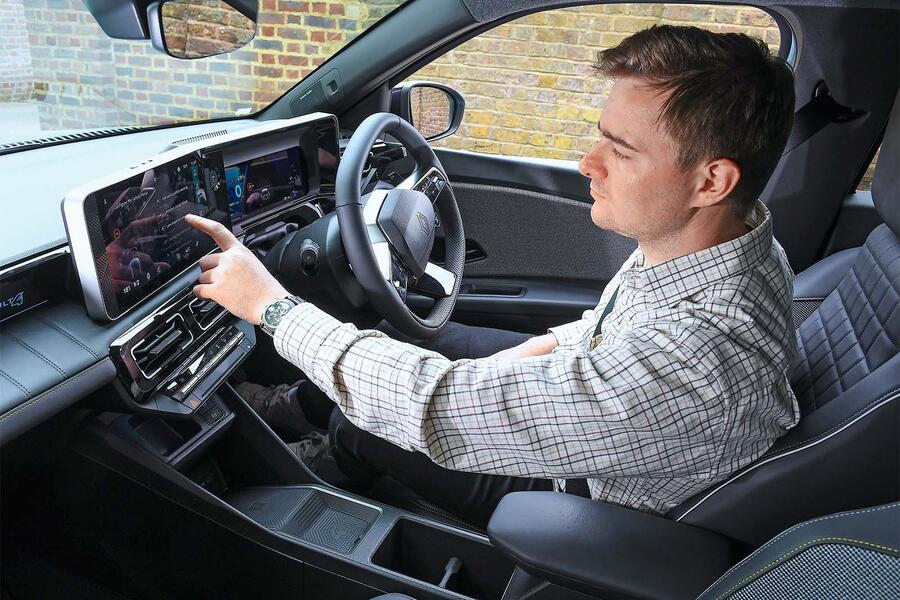
The trouble is, it seems I have previously made an account for this system and I can't remember my details, which is especially annoying because it takes ages to type my email address and possible passwords into the car's touchscreen.
There's a 'forgot your password' option in the app, but it doesn't seem to like any of my new suggestions for some reason. I'll keep trying to suss it out, because it would be really useful to pre-condition the car and check the state of charge remotely, but with all the advancements in in-car connectivity of late, why can't the car just flash up a QR code for me to scan and log in automatically?
Otherwise, though, I'm getting on swimmingly with this cheery little crossover. Quite aside from the practicality advantages it offers over its hatchback sibling, the Renault 5, it's also a generally more agreeable thing for nipping around town in, by dint of its smoother ride and improved visibility.
It's just as easy to park, too, and because it's so closely related under the skin, it's almost as much of a laugh when you pick up the pace a bit.
I have a few big drives on the horizon, and they will give me more of a chance to test the 4's cruising credentials and dynamic character on faster, more flowing roads. I'm hoping that by the time you read this the weather has relaxed into a more June-typical state of temperate mildness, and I can focus on enjoying my time at the wheel rather than enduring it.

Ford Surpasses Recall Woes to Lead Mainstream Brands in JD Power Initial Quality Study,...

FIA Term Limit Reversal Raises Questions About Governance and Leadership Accountability


Solid-State and Semi-Solid Batteries Reshape EV Performance and Charging Speed
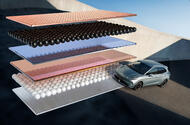 Battery breakthroughs will narrow the gap between ICE and EV, making charging as quick as pumping petrol
As battery technology improves, so the terminology gets more confusing, but soon it may pay to understand the differences when choosing an EV.
Renault and MG have announced forthcoming updates to their respective technologies, with both edging closer to solid-state lithium-ion from conventional liquid electrolyte technology.
MG says it will be the first brand to mass-produce a semi-solid-state battery, called SolidCore. It will be introduced in European MG EVs at the end of this year and is claimed to offer a longer range and faster charging with enhanced cold-weather and all-round performance. MG says the cells contain solid and liquid electrolytes, with around 5% liquid content. Other manufacturers developing semi-solid tech often use an electrolyte gel, which differs from MG's approach.
Earlier this year, Renault's EV and software arm, Ampere, announced a deal with Basquevolt to fast-track development of lithium metal-based lithium ion batteries. Basquevolt's lithium metal battery tech will form the basis of the development for what will be a solid-state battery technology using 'solid-state-type polymer' electrolyte, rather than the conventional liquid electrolyte, to enable the use of lithium metal anodes.
Anodes (negative electrodes) of lithium ion batteries are usually graphite, often with some silicon content to improve energy density. Were they made from lithium metal (like early prototype lithium ion batteries), the battery's energy density by weight would increase substantially. But lithium metal has so far presented insurmountable difficulties for use in large EV batteries.
Examples include the formation of dendrites, needle-like formations that branch out through an electrolyte until it reaches the cathode (positive electrode), shorting out the cell. Another challenge is that a lithium metal-based cell's volume increases and decreases during cycling, which poses a challenge within the tightly packaged confines of a battery pack. Research into the design and materials is ongoing, with several different approaches being taken.
Ampere and Basquevolt have been collaborating for the past year and Basquevolt is said to be demonstrating already that its tech can achieve high energy density while reducing battery pack manufacturing costs.
The safe adoption of lithium metal anodes would result in step changes in both battery capacity and charging speeds, taking manufacturers closer to achieving parity with (if not matching) the time taken to refuel an ICE car.
Semi-solid-state batteries are a more mature technology and MG started mass production of the SolidCore battery last year. But many of the big names are developing all-solid-state as well, with Nissan promising to launch an EV powered by one in 2028, while others, including MG, snap at its heels.

Silverado HD Fifth-Wheel Upgrade Transforms Towing Capability but Demands Commercial Licensing in Australia

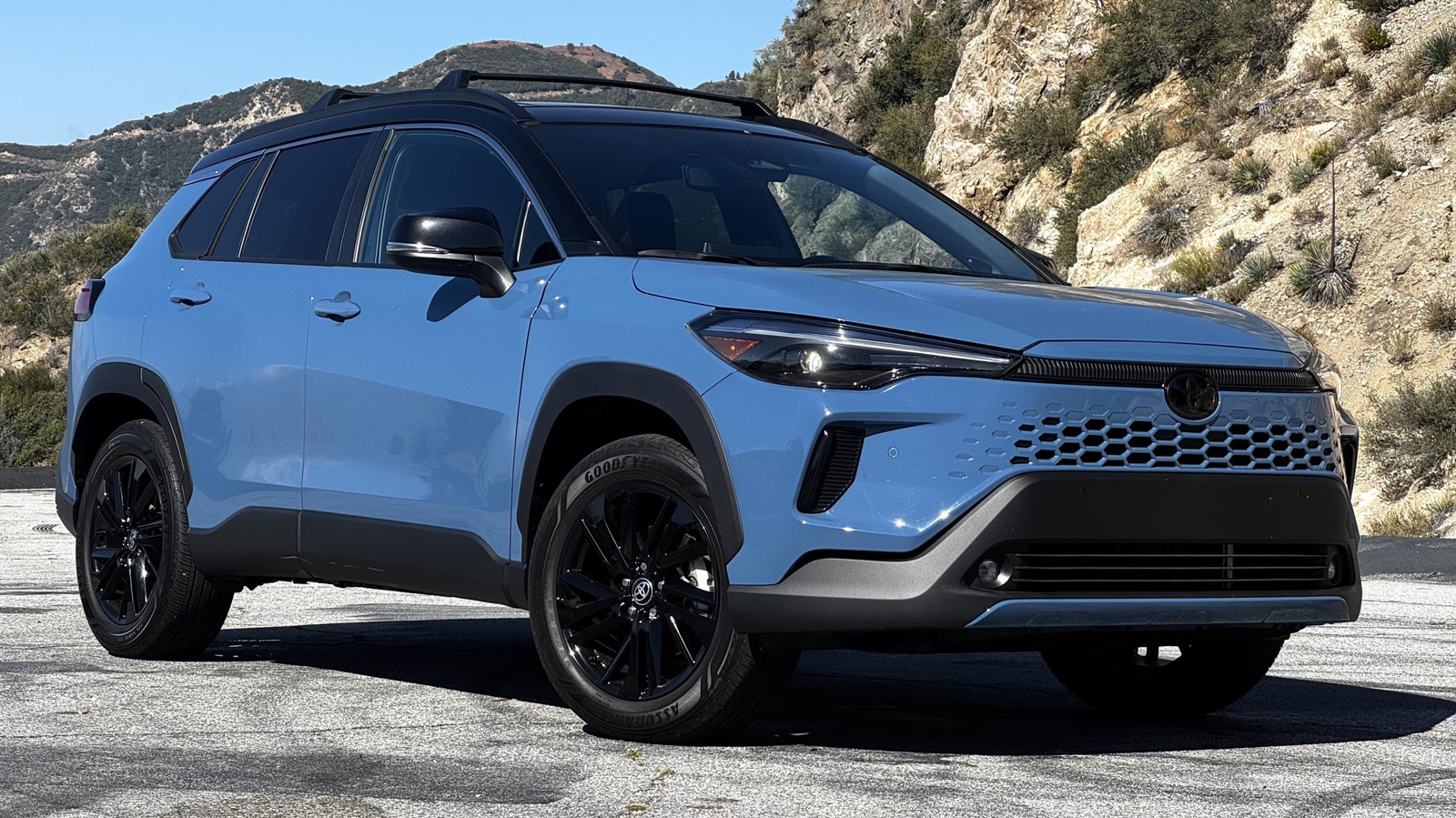
Corolla Cross Hybrid Delivers Practicality Without Pretense

Skoda Enyaq vRS Redefines the All-in-One Electric Family SUV with Performance and Practicality
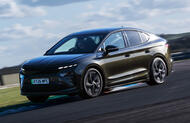 Looking for the perfect blend of weekday skills and weekend thrills? This electric family SUV could be the answer
The perfect two-car garage. It’s a fantasy motoring enthusiasts have debated for decades.
Not familiar with the concept? It’s simple: if you had to choose two cars – one for everyday duties like commuting, the school run and shopping trips, and another purely for weekend B-road blasts – which would you choose? If you’re ever stuck for conversation with a fellow enthusiast, pose this question and watch the sparks fly.
But, alas, in today’s economic climate, the dream of running two cars – particularly when one is reserved almost entirely for Sundays – is becoming harder and harder to justify. And that means more and more drivers are starting to search for one car that’s capable of covering all bases: sensible when it needs to be, fun when it doesn’t.
Watch the video below as we explore whether the 335bhp all-electric Skoda Enyaq vRS really can deliver the best of both worlds.
Skoda Enyaq vRS: the electric family SUV that can do it all
There’s a particular genius to the vRS badge. Since the first Octavia vRS arrived in 2001, those three letters have stood for meaningful performance, real-world practicality and strong value. It’s the everyman performance car formula, refined over decades and now applied to Skoda’s electric family SUV flagship.
The Enyaq vRS continues that tradition with 335bhp, 697Nm and dual-motor all-wheel drive, delivering 0-62mph in 5.4 seconds. But it’s not just about straight-line pace. Dynamic Chassis Control, lowered suspension and revised steering calibration give it a level of composure and adjustability that no electric SUV this size has any right to, allowing it to switch between relaxed motorway cruiser and pulse-raising B-road blaster at the touch of a button.
Crucially, it remains an easy car to live with day to day. The 84kWh battery delivers up to 344 miles of range (WLTP), while 185kW DC charging enables a 10–80% top-up in around 26 minutes.
Inside, that signature vRS DNA injects sporty flair into an otherwise plush, minimalist cabin. There are vRS-specific sports seats, a bespoke sports steering wheel and contrast detailing. As you’d expect from a Škoda, equipment is generous, with a large 13in infotainment screen, augmented reality head-up display, heated seats and a 12-speaker CANTON sound system all included as standard.
Practicality remains a core strength. A 585-litre boot, generous rear space and Skoda’s trademark ‘Smart, Spacious and Stylish’ touches – including an ice scraper in the tailgate and an umbrella in the door – ensure it can still deal with everything hectic family life throws at it without breaking a sweat. Maybe it’s time you try it for yourself.
Learn more about the Skoda Enyaq vRS

Toyota RAV4 Upgrades Extend Model’s Life with Factory Off-Road Kit and Modern Features in...