What Drives the Enduring Allure of the V8 Manual Sedan?
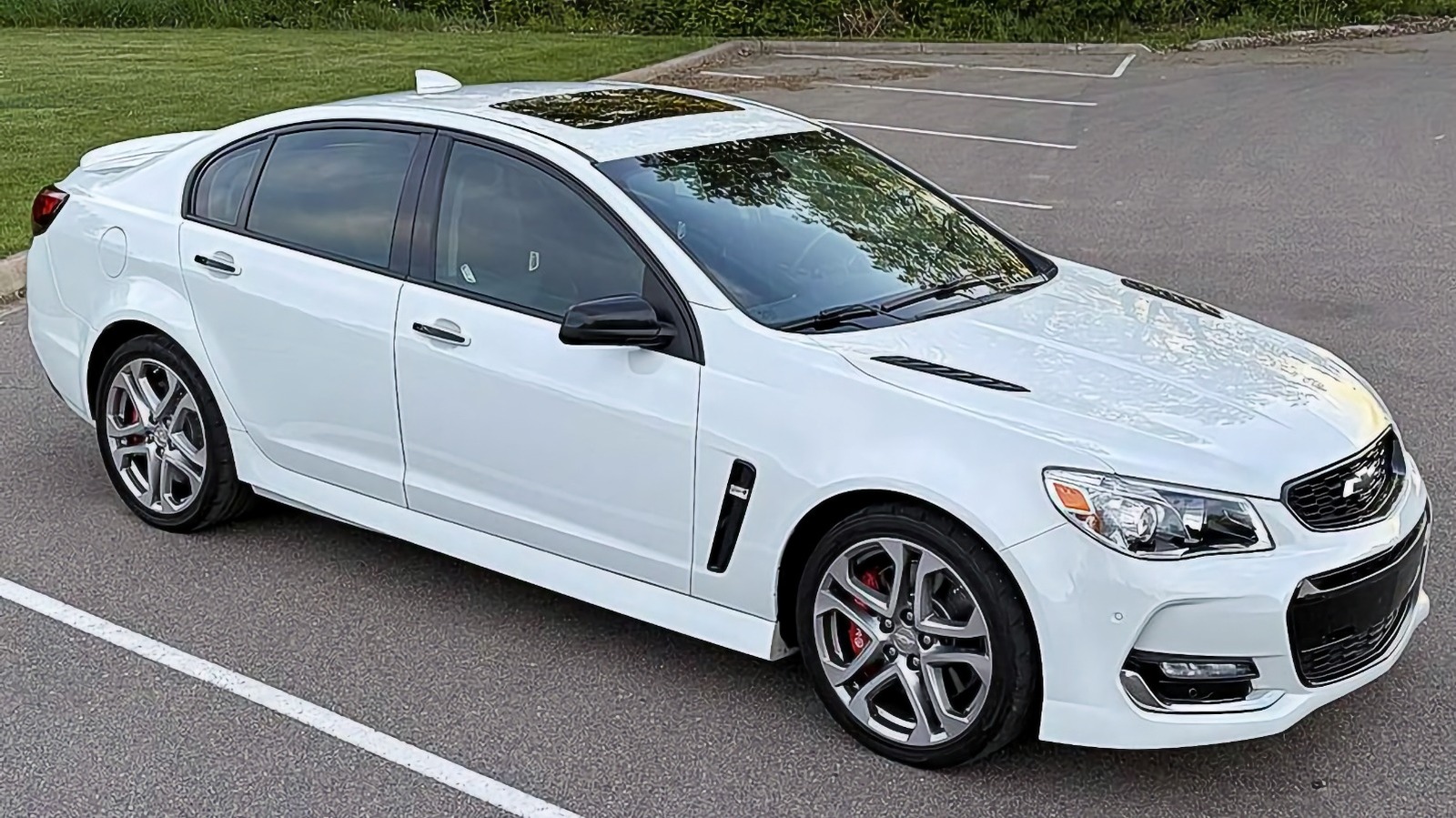
The persistence of a naturally aspirated V8 engine paired with rear-wheel drive and a six-speed manual transmission in a contemporary sedan is, by any rational market logic, an anachronism. Yet, the evidence suggests that such configurations continue to exert a gravitational pull on a subset of enthusiasts and pragmatists alike. The core mechanism at stake here is not merely mechanical nostalgia; rather, it is the synthesis of visceral engagement and utilitarian packaging—a rare convergence in an automotive landscape increasingly defined by efficiency mandates and digital mediation. Under specific conditions, this combination offers a driving experience that is both tactile and accommodating, challenging the prevailing orthodoxy that performance and practicality must exist in separate spheres.
Is the Premium Justified, or a Product of Scarcity?
The $45,500 price tag attached to this sedan cannot be evaluated in isolation from broader market dynamics. On one hand, the sum reflects a premium for mechanical purity in an era of turbocharged homogenization and dual-clutch ubiquity. However, the practical significance of this premium is contingent on the buyer’s priorities: for those seeking raw acceleration or cutting-edge infotainment, the value proposition weakens. For others, the price is a hedge against the disappearance of analog driving experiences. Methodologically, price comparisons with similarly equipped competitors are fraught; few, if any, offer this precise constellation of features. The closest analogues—often coupes or luxury-branded sedans—either sacrifice space or escalate costs beyond the reach of most households. Thus, the price is less a function of material superiority than of market rarity and the symbolic capital attached to such a configuration.
Who Benefits—and Who Is Excluded—by This Unusual Offering?
The immediate beneficiaries are a narrow cohort: driving enthusiasts who require family-hauling capacity, and perhaps a small subset of buyers who view such vehicles as appreciating assets in a future where emissions regulations may render them extinct. Less obviously, the existence of this sedan serves as a reference point for the broader market, a reminder that consumer demand for engagement has not been entirely extinguished. Yet, the offering is structurally exclusionary. Younger buyers, urban dwellers, and those with environmental concerns are implicitly marginalized by the car’s thirst for fuel and its unapologetic mechanical footprint. The evidence here is not merely anecdotal; demographic data on manual transmission sales and V8 adoption rates reveal a pronounced skew toward older, wealthier, and predominantly male buyers. This is not a vehicle for the median household.
What Are the Blind Spots and Second-Order Consequences?
Mainstream interpretations often frame such vehicles as harmless indulgences or “last hurrahs” for a dying breed. This narrative, while emotionally resonant, elides the regulatory and infrastructural headwinds that increasingly circumscribe the viability of high-displacement, rear-drive sedans. The blind spot is twofold: first, a failure to recognize the role of such vehicles in shaping regulatory backlash (by serving as high-profile targets for emissions crackdowns); second, an underestimation of their symbolic influence on automotive culture. The continued production and sale of these sedans may inadvertently slow the adoption of more sustainable technologies by reinforcing the notion that performance and environmental responsibility are mutually exclusive. Conversely, their rarity may catalyze a more nuanced appreciation for mechanical diversity in future policy debates.
What Judgment Should the Informed Reader Draw?
The evidence does not permit a categorical endorsement or dismissal of this sedan’s value proposition. For the informed reader, the salient takeaway is the recognition of what is truly being purchased: not merely a set of mechanical specifications, but a stake in a contested vision of what driving ought to be. The $45,500 price is, in effect, an entry fee to a dwindling club—one whose continued existence is as much a function of regulatory tolerance and cultural nostalgia as of engineering merit. Whether that fee is justified depends less on objective metrics than on the buyer’s appetite for risk, rarity, and resistance to the prevailing currents of automotive design.