What Drives the Allure of the Project Vehicle Versus the Proven Classic?
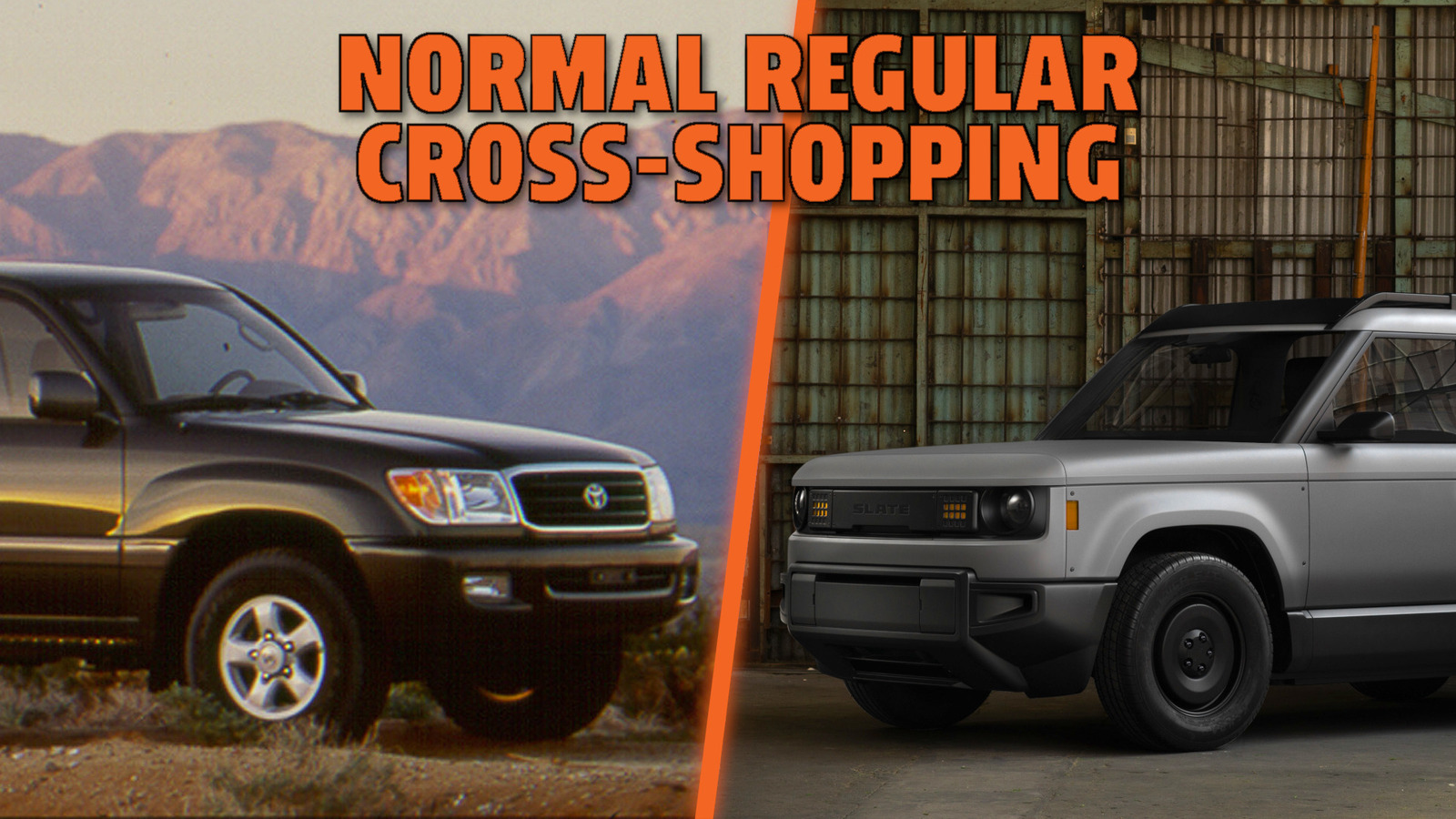
At the heart of this decision lies a tension between two fundamentally different automotive philosophies: the promise of transformation versus the assurance of legacy. The barebones electric workhorse, stripped of frills and ripe for customization, appeals to those who see a vehicle not as a finished product but as a canvas—an evolving project that can be tailored to idiosyncratic needs or experimental ambitions. This orientation privileges the process over the product, inviting a relationship with the machine that is iterative, hands-on, and, crucially, uncertain in its outcomes. The evidence from automotive subcultures suggests that such projects often foster a deeper technical literacy and a sense of ownership that transcends mere possession. Yet, this path is not without its pitfalls: the time, expertise, and resources required to realize the potential of a project vehicle are substantial, and the risk of sunk costs or incomplete realization is ever-present.
In contrast, the stalwart SUV from a storied brand—here, the 1998 Toyota Land Cruiser—offers a different kind of value proposition. Its reputation is not merely the product of marketing mythology but is undergirded by decades of empirical reliability and global field-testing. For many, this lineage translates into a form of practical security: predictable maintenance, established parts networks, and a community of owners whose collective experience reduces the epistemic uncertainty of ownership. However, the very attributes that make the Land Cruiser attractive—its durability, its established identity—also circumscribe the scope for personalization and innovation. The vehicle is, in a sense, already complete; the owner’s agency is exercised within narrower bounds.
How Should Risk and Reward Be Weighed in This Context?
The calculus here is not reducible to a simple risk-reward equation. Rather, it is shaped by the owner’s appetite for uncertainty, their technical competence, and their tolerance for deferred gratification. The electric workhorse, under specific conditions, may yield a vehicle that is both uniquely suited to its owner and emblematic of technological progress. Yet, the probability of technical setbacks, regulatory hurdles, or unforeseen costs is non-trivial. The Land Cruiser, by contrast, offers a high degree of reliability and immediate utility, but at the cost of forgoing the creative satisfaction and potential future-proofing that a well-executed electric project might provide.
It is also worth interrogating the implicit temporal dynamics. The value of a project vehicle is often realized over a longer horizon, with benefits accruing unevenly and sometimes unpredictably. The Land Cruiser’s value, while stable, may be more susceptible to shifts in regulatory or market sentiment around internal combustion vehicles—a factor that, though not immediately salient, could become decisive over the next decade.
Who Benefits—and Who Is Excluded—by Each Choice?
The project vehicle model privileges those with access to specialized knowledge, tools, and networks. It is, in effect, a form of automotive privilege that is not evenly distributed. For enthusiasts with deep technical backgrounds or access to collaborative maker spaces, the barriers to entry are lower; for others, the promise of customization may be illusory, masking a high likelihood of frustration or abandonment. The Land Cruiser, conversely, democratizes reliability but may exclude those seeking to align their transportation choices with emerging environmental norms or personal values around sustainability.
Structural Limitations and Blind Spots in Mainstream Interpretations
Mainstream comparisons between “project” and “proven” vehicles often reduce the choice to personality type—tinkerers versus traditionalists—without adequately accounting for broader systemic factors. For instance, the regulatory landscape for electric conversions remains unsettled in many jurisdictions, introducing a layer of legal and financial risk that is frequently underappreciated. Similarly, the environmental calculus is more complex than it appears: while electrification is often assumed to be inherently superior, the lifecycle emissions of a repurposed internal combustion vehicle—especially one as durable as the Land Cruiser—may, under certain conditions, compare favorably to a new electric build, depending on local energy sources and usage patterns.
What Judgment Should the Informed Reader Draw?
The evidence suggests that neither path is categorically superior; rather, each embodies a distinct set of trade-offs that must be evaluated in light of individual priorities, capacities, and risk tolerance. For those seeking immediate, low-friction utility and a proven track record, the Land Cruiser remains a formidable choice—albeit one whose long-term viability may be shaped by forces beyond the owner’s control. For those with the requisite skills, resources, and appetite for uncertainty, the electric workhorse offers a platform for innovation and self-expression, with the caveat that the journey may be as challenging as it is rewarding. The most prudent course, therefore, is not to seek a universal answer but to interrogate one’s own constraints and ambitions with the same rigor that one would apply to the vehicles themselves.