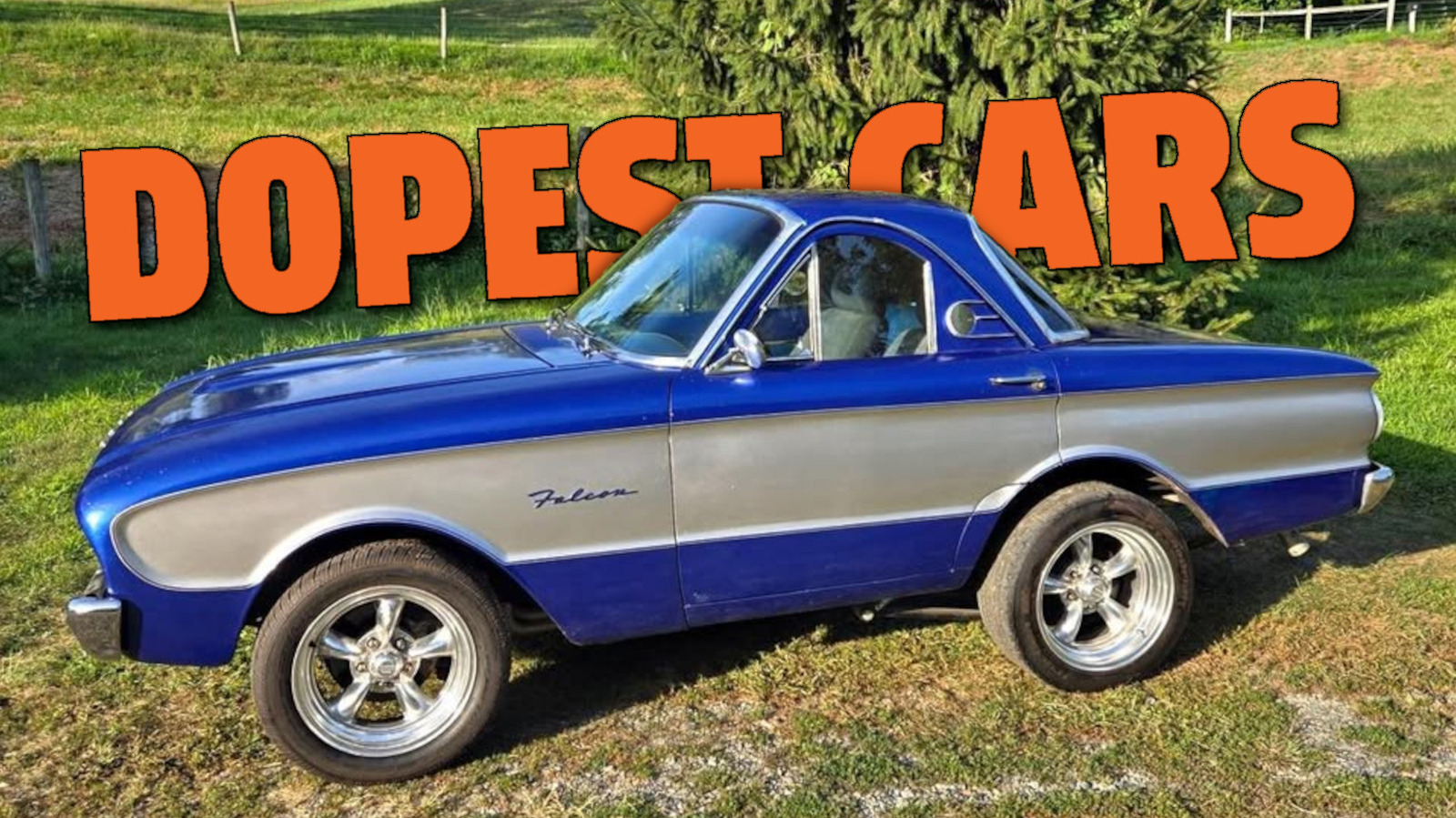
What Drives the Allure of Unconventional Automotive Modifications?
The persistent fascination with radically modified vehicles—whether a squished Ford Falcon, a drag-prepped Nissan 240SX, or a Coney Island-styled Harley-Davidson Electra Glide—signals more than mere aesthetic eccentricity. At its core, this phenomenon reflects a tension between individual expression and the constraints of mass automotive production. The evidence suggests that, for a subset of enthusiasts, the act of transforming a vehicle into something unrecognizable from its factory origins is not simply about performance or status. Rather, it is a pointed assertion of agency in a domain increasingly dominated by homogenized design and algorithmic optimization.
Yet, this interpretation remains contested. Some argue that such modifications are primarily performative, designed to attract attention within insular online communities rather than to advance any meaningful critique of mainstream automotive culture. While this performative dimension is undeniable, it would be reductive to dismiss the underlying impulse as mere spectacle. The act of modification, particularly when it renders a vehicle less practical or even less valuable in conventional terms, can be read as a form of resistance—a refusal to accept the logic of depreciation, resale value, or even roadworthiness as the sole metrics of automotive worth.
How Do These Modifications Complicate Our Understanding of Value and Utility?
The question of value—economic, aesthetic, and functional—sits at the heart of the debate over extreme vehicle modifications. Traditional frameworks would regard a squished classic or a heavily altered motorcycle as depreciated assets, their market value diminished by the very changes that make them unique. However, this perspective fails to account for the alternative economies at play: the social capital accrued within enthusiast circles, the affective value of self-expression, and the symbolic capital of subverting mainstream norms.
Methodologically, attempts to quantify the “worth” of such vehicles are fraught with ambiguity. Auction data and resale statistics, while useful for tracking trends in collector markets, cannot capture the intangible benefits that accrue to owners who see themselves as artists or provocateurs. Moreover, the practical significance of these modifications extends beyond the vehicles themselves. They catalyze conversations about the boundaries of taste, the legitimacy of outsider creativity, and the role of risk—mechanical, legal, reputational—in the pursuit of automotive individuality.
Who Benefits and Who Loses in This Ecosystem?
The beneficiaries of this subculture are not limited to the builders and owners. Secondary markets—custom parts suppliers, niche media outlets, and event organizers—derive substantial value from the visibility and controversy that extreme modifications generate. Conversely, there are less visible costs. Insurance providers, regulatory agencies, and even emergency responders may face heightened risks or administrative burdens as a result of vehicles that defy standard classification. There is also the question of environmental impact, as some modifications prioritize spectacle over efficiency or emissions compliance.
Demographically, the appeal of radical customization appears to skew toward younger, digitally native enthusiasts who are less invested in the preservationist ethos of traditional car collecting. This generational shift complicates efforts to adjudicate the legitimacy of such practices: what one cohort sees as vandalism, another regards as innovation.
What Structural Blind Spots Distort the Debate?
Mainstream discourse often frames these vehicles as curiosities or aberrations, thereby obscuring the deeper structural dynamics at play. The automotive industry’s relentless push toward modularity and platform sharing has, paradoxically, made the act of radical modification both more accessible (thanks to standardized parts) and more subversive (given the uniformity of new models). This tension is rarely acknowledged in surface-level coverage, which tends to focus on the most visually arresting examples without interrogating the economic and regulatory forces that shape the field.
Moreover, vested interests—manufacturers, insurers, even some enthusiast organizations—have a stake in maintaining clear boundaries between “acceptable” and “unacceptable” modifications. These boundaries are not fixed; they are negotiated in real time, often in response to viral moments or regulatory crackdowns. The evidence suggests that the most successful builders are those who can navigate, or even exploit, these shifting fault lines.
What Should the Informed Reader Conclude?
For the analytically minded observer, the spectacle of squished, stretched, or otherwise transformed vehicles is less a sideshow than a barometer of broader cultural currents. The phenomenon compels us to reconsider the relationship between utility and expression, to interrogate the mechanisms by which value is constructed and contested, and to recognize the latent power of subcultural innovation to unsettle established norms. While the mainstream may continue to treat these vehicles as novelties, their deeper significance lies in the questions they raise about autonomy, conformity, and the future of personal mobility.