What Drives Persistent Use of Clearly Unsafe Infrastructure?
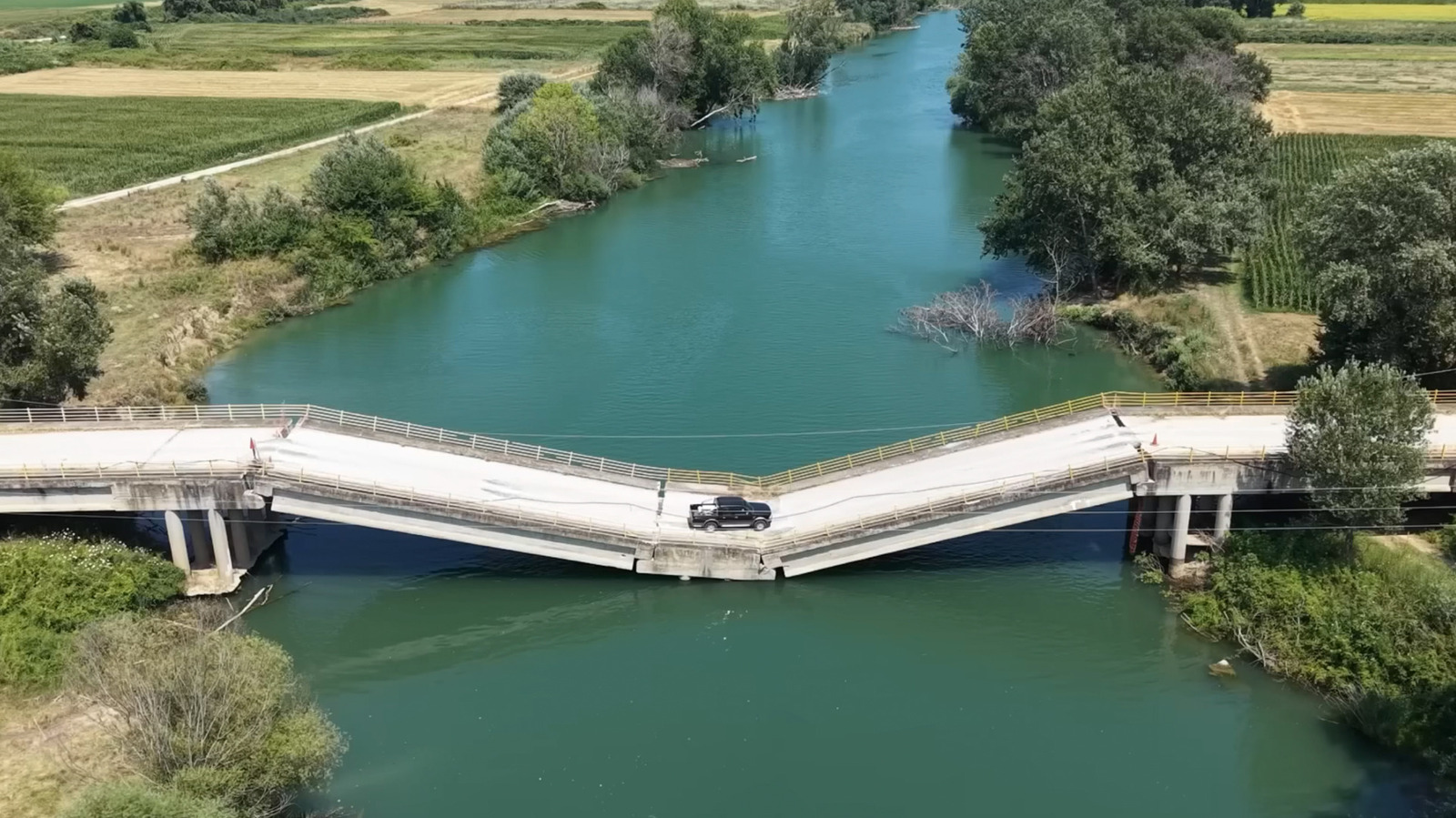
The continued use of a visibly collapsing bridge, despite mounting structural failure, exposes a paradox at the heart of public risk tolerance. On the surface, the situation appears to be a straightforward case of neglect—authorities failing to act, and citizens either unaware or reckless. Yet, the evidence suggests a more complex interplay of necessity, habituation, and institutional inertia. For many, the bridge likely represents not just a physical crossing but a vital artery for daily life, commerce, and social connection. When alternatives are absent or prohibitively inconvenient, the calculus of risk shifts: what might seem irrational from a distance becomes, under specific socioeconomic constraints, a pragmatic adaptation.
The mechanism at stake is not merely individual recklessness but a collective normalization of hazard. Over time, repeated crossings without incident foster a sense of invulnerability, even as the underlying danger escalates. This phenomenon—sometimes described as risk homeostasis—means that visible warning signs may paradoxically reduce their own effectiveness. The bridge’s deteriorating state becomes background noise, its threat discounted until catastrophe renders it undeniable.
Why Do Official Responses Lag Behind Evident Danger?
Institutional response to infrastructure decay is rarely swift, even when the risks are manifest. Several structural limitations converge to produce this inertia. Budgetary constraints, bureaucratic fragmentation, and the political unpopularity of disruptive closures all play a role. In many jurisdictions, responsibility for maintenance is diffuse, with local, regional, and national agencies each able to deflect blame or delay action pending further study. This diffusion of accountability creates a vacuum in which urgent repairs or barricades are perpetually deferred.
Moreover, the incentive structure for public officials often rewards visible action only after disaster strikes. Preventative measures—especially those that inconvenience constituents—carry political costs without the immediate payoff of crisis management. The evidence from comparable cases suggests that only after a high-profile failure does the calculus shift decisively toward intervention. Until then, the bridge remains open, a visible testament to the slow-motion dynamics of infrastructural neglect.
Who Bears the Hidden Costs of Inaction?
The most immediate risk falls on those who cross the bridge daily, but the consequences radiate outward in less obvious ways. Local businesses dependent on the crossing may face existential threats if the bridge finally collapses or is suddenly closed. Emergency services, too, are placed in a precarious position: the prospect of a rescue operation on a failing structure introduces secondary dangers for responders. There is also a psychological toll—an ambient anxiety that erodes public trust in institutions tasked with safeguarding the commons.
Less visible, but no less significant, are the second-order effects on regional development. Persistent infrastructural uncertainty can deter investment, depress property values, and reinforce patterns of geographic inequality. The bridge, in this sense, is not merely a local hazard but a node in a wider network of vulnerabilities.
What Judgment Should an Informed Observer Draw?
To interpret the persistence of use and official inaction as mere folly is to miss the deeper structural drivers at work. The evidence points to a system in which risk is distributed unevenly, institutional incentives are misaligned, and the normalization of danger becomes a coping strategy for communities with few alternatives. While the immediate imperative is clear—either repair or decisively barricade the bridge—the broader lesson is more sobering. Without systemic reform to align accountability, funding, and public engagement, similar crises will recur elsewhere, each time masquerading as an isolated incident rather than a symptom of a chronic condition.