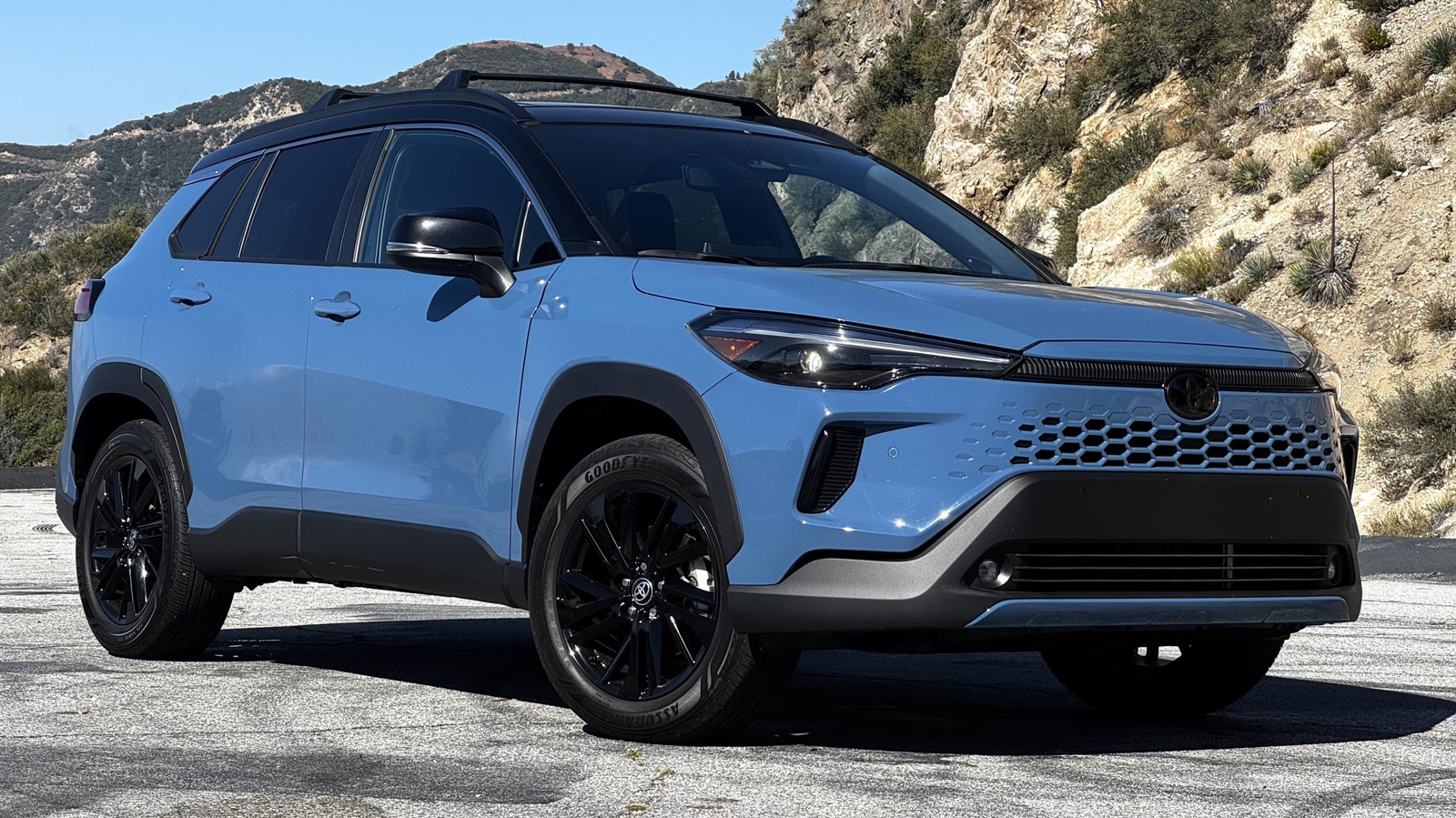
Why the Corolla Cross Embodies a Distinctive Ethos of Reliability
The Corolla Cross, in its latest iteration, does not merely inherit the reputation of its sedan predecessor; it amplifies a particular ethos of dependability that, while often celebrated, is rarely interrogated for its broader social and psychological implications. The prevailing narrative frames the Corolla Cross as a paragon of sensible, almost ascetic reliability—an automotive choice that eschews ostentation in favor of quiet, persistent utility. Yet, this reputation is not merely a product of engineering consistency; it is also the result of a deliberate branding strategy that positions the vehicle as a bulwark against the perceived volatility of modern mobility.
The mechanism at play here is not just mechanical reliability, but a cultivated sense of trustworthiness—one that appeals to risk-averse consumers who prioritize predictability over excitement. This is not a universal value. For some, the Corolla Cross’s unyielding commitment to the familiar borders on the doctrinaire, even the evangelical. The analogy to a religious order—specifically, one known for its disciplined outreach and internal cohesion—captures the car’s almost missionary zeal for dependability. Such a comparison, while playful, gestures toward a deeper truth: the Corolla Cross is less a vehicle than a statement of values, one that resonates most powerfully with those who find comfort in the known and the tested.
How Consumer Psychology Shapes the Corolla Cross’s Appeal
The Corolla Cross’s appeal is not evenly distributed across demographic or psychographic lines. Data from recent automotive market surveys suggest that buyers of the Corolla Cross skew older and more risk-averse than those of similarly priced crossovers. However, methodological caution is warranted: survey samples often underrepresent younger urban buyers, whose preferences may be shifting in response to economic precarity and climate anxieties. The evidence, therefore, supports—but does not conclusively prove—the thesis that the Corolla Cross is the vehicle of choice for those who see car ownership as a hedge against uncertainty rather than an expression of identity.
This orientation has second-order consequences. By foregrounding reliability above all else, the Corolla Cross may inadvertently reinforce a culture of minimal aspiration in automotive design, where the avoidance of failure becomes the highest good. While this strategy insulates Toyota from reputational risk, it also narrows the horizon of what consumers expect from a vehicle in this segment. The result: a feedback loop in which the very virtues that make the Corolla Cross attractive to some may render it invisible to others who seek novelty or emotional engagement from their cars.
Where Mainstream Interpretations Fall Short
Mainstream commentary often celebrates the Corolla Cross as the rational choice, but this framing obscures the structural limitations and vested interests at work. The vehicle’s design and marketing are optimized for regulatory environments and consumer segments that reward incremental improvement over radical innovation. This is not a neutral stance; it reflects a calculated bet on the persistence of current norms. Should regulatory or cultural winds shift—toward electrification, for example, or toward shared mobility models—the Corolla Cross’s virtues may become liabilities, its dependability recast as inertia.
Moreover, the analogy to religious devotion, while superficially humorous, invites a more critical reading. Like any orthodoxy, the Corolla Cross’s brand of reliability can foster exclusion as much as inclusion. Those who do not share its values may find themselves alienated by its very predictability. The evidence suggests that while the Corolla Cross offers real utility to its adherents, it also circumscribes the range of acceptable automotive experience.
What Informed Readers Should Consider
For the analytically minded consumer or industry observer, the Corolla Cross presents a case study in the trade-offs between reliability and innovation, between comfort and aspiration. The evidence does not support a single, universal judgment; rather, it points to the need for context-sensitive evaluation. If your priorities align with the Corolla Cross’s ethos—if you seek a vehicle that minimizes risk and maximizes predictability—then its virtues are self-recommending. But if you are attuned to the possibility that automotive progress requires a willingness to embrace uncertainty, then the Corolla Cross may appear less as a solution and more as a symptom of a culture in retreat from risk.
Ultimately, the Corolla Cross’s significance lies not just in what it offers, but in what it forecloses. Its dependability is real, but so too are its blind spots. The informed reader, therefore, should approach this vehicle not as an unalloyed good, but as a reflection of deeper currents in consumer psychology, market structure, and the evolving meaning of reliability itself.