How Did the Four-Valve Cylinder Head Transform Engine Performance Benchmarks?
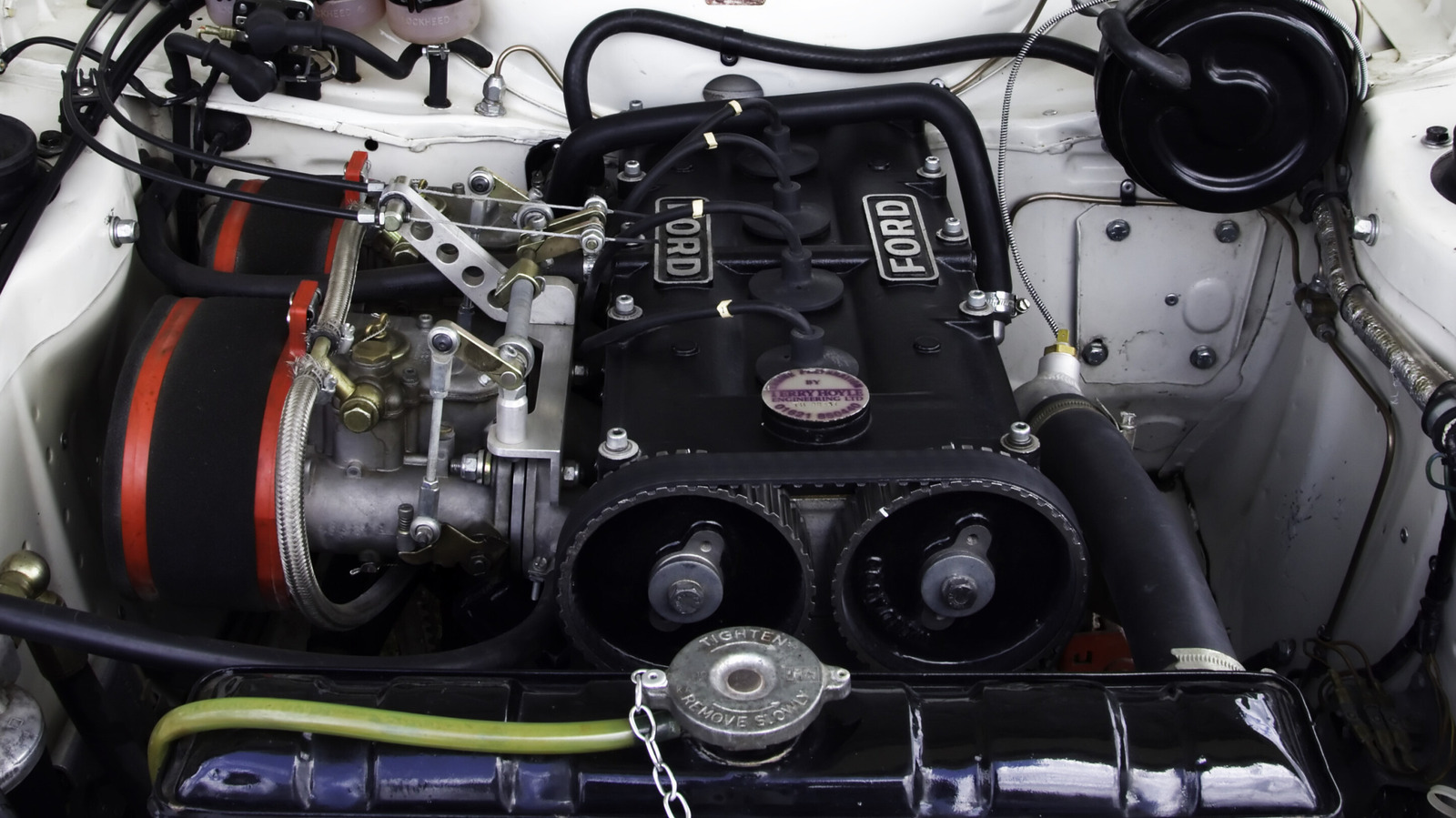
The introduction of the four-valve cylinder head, particularly as exemplified by the Cosworth BDA series, did not merely incrementally improve airflow; it fundamentally redefined the relationship between combustion chamber design and high-revving efficiency. The prevailing two-valve paradigm, long considered sufficient for most applications, imposed inherent restrictions on volumetric efficiency—especially at elevated engine speeds. By doubling the number of valves per cylinder, engineers unlocked a pathway for more direct, less turbulent airflow, thereby enhancing the engine’s ability to ingest and expel gases at rates previously unattainable.
Yet, the evidence suggests that the four-valve configuration’s real significance lies not in its headline airflow figures, but in the way it harmonized with advances in camshaft profiles, ignition timing, and fuel atomization. The Cosworth BDA’s belt-driven, 16-valve head became a locus for experimentation, enabling tuners to push the operational envelope well beyond what conventional wisdom had deemed reliable. This was not a mere technical flourish; it was a recalibration of what naturally aspirated engines could achieve, especially in motorsport contexts where every incremental gain was contested terrain.
Why Does the Four-Valve Legacy Persist in Engine Design Discourse?
The persistence of the four-valve head as an object of study among engine builders is not simply a matter of nostalgia or reverence for past glories. Rather, it reflects the ongoing challenge of balancing peak power output with durability, cost, and regulatory constraints. While forced induction and variable valve timing have since complicated the landscape, the four-valve head remains a canonical reference point—a benchmark against which newer technologies are measured.
Under specific conditions, particularly in high-revving, small-displacement engines, the four-valve architecture continues to offer a blend of breathing efficiency and combustion stability that eludes more complex solutions. However, this interpretation remains contested. Some contemporary engineers argue that advances in direct injection and turbocharging have rendered the four-valve head’s advantages less decisive, especially in road-going applications where emissions and fuel economy dominate the design brief. Nonetheless, the methodological boundaries of such claims are clear: much of the comparative data is context-dependent, shaped by the specific demands of motorsport versus mass-market vehicles.
Who Benefits—and Who Is Overlooked—by the Four-Valve Paradigm?
The most obvious beneficiaries of the four-valve revolution were racing teams and performance enthusiasts, for whom the ability to sustain high RPMs without catastrophic valve float or thermal failure was transformative. Less apparent, however, are the ways in which this technology filtered down to mainstream consumers, often in diluted or cost-engineered forms. The democratization of multi-valve heads in the 1980s and 1990s, while celebrated as progress, also introduced new complexities in maintenance and repair—costs that were not always transparently communicated to buyers.
Moreover, the focus on peak airflow and high-revving capability sometimes obscured the needs of users whose driving patterns rarely exploited these attributes. In this sense, the four-valve head’s ascendancy reveals a structural blind spot: the tendency of performance-driven innovation to set the agenda for an industry, even when the practical benefits for the majority of users are marginal or offset by increased lifecycle costs.
What Are the Second-Order Consequences for Engine Development?
The four-valve head’s legacy is not confined to its immediate technical merits. It catalyzed a shift in how engineers conceptualize the trade-offs between complexity and performance, encouraging a more modular, iterative approach to cylinder head design. This, in turn, fostered a culture of incremental optimization—one that prizes adaptability and cross-application learning. Yet, this very adaptability can breed inertia, as manufacturers become invested in established architectures at the expense of more radical alternatives.
For the informed reader, the lesson is clear: the four-valve revolution exemplifies both the promise and the peril of technological path dependence. While it set a benchmark that continues to inform best practices, it also illustrates the risk of conflating historical success with universal applicability. The prudent course is to interrogate not only what a technology achieves under idealized conditions, but also whom it serves, at what cost, and with what unintended consequences.