How Do Sanctions Reshape Everyday Access to Fuel in Cuba?
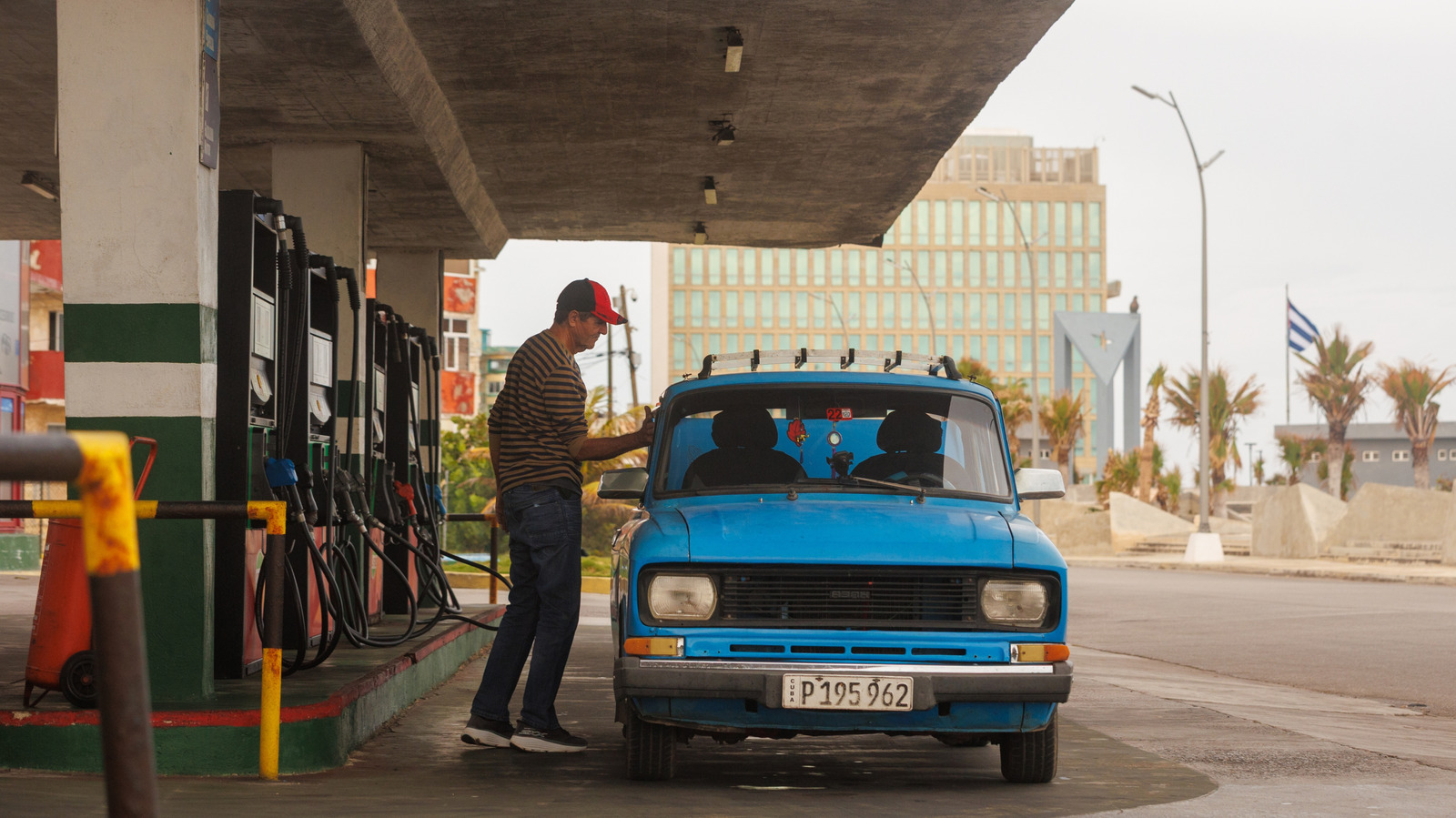
The lived experience of Cubans queuing for hours—sometimes days—only to receive a meager five gallons of gasoline encapsulates the profound, often invisible, consequences of international sanctions. While policy architects may frame such measures as levers of geopolitical pressure, the granular reality is one of pervasive scarcity and a recalibration of daily life. The evidence suggests that sanctions, particularly those targeting energy imports and financial transactions, have not merely inconvenienced the Cuban populace; they have fundamentally restructured the rhythms of urban and rural existence. Yet, the mechanism is not linear: sanctions interact with pre-existing inefficiencies, bureaucratic inertia, and a legacy of centralized planning, producing outcomes that defy simplistic causal attributions.
Why Do Official Narratives and Ground Realities Diverge?
Official discourse—both from sanctioning states and the Cuban government—tends to foreground macroeconomic indicators or ideological justifications. However, these narratives often obscure the micro-level adaptations and frustrations that define the Cuban fuel crisis. For instance, while authorities may tout the use of digital apps to manage rationing as a sign of modernization, the practical outcome is a digital queue that merely replaces physical lines without alleviating underlying shortages. This digitalization, far from signaling progress, may instead deepen inequalities, privileging those with reliable internet access or technological literacy. The mainstream interpretation that digital solutions can offset structural scarcity remains, at best, aspirational under current conditions.
Who Bears the Hidden Costs of Prolonged Scarcity?
The distributive effects of fuel shortages are neither uniform nor random. Urban professionals, reliant on personal vehicles for work, face a different calculus than rural agriculturalists, whose livelihoods may hinge on fuel for machinery or transport to markets. Women, often tasked with household provisioning, disproportionately shoulder the burden of waiting in line or navigating rationing systems. Moreover, the psychological toll—manifested in chronic uncertainty and diminished trust in public institutions—rarely features in official statistics but may prove the most enduring legacy of prolonged scarcity. These second-order effects, while less visible, are arguably more corrosive to social cohesion than the immediate inconvenience of limited gasoline.
What Structural Limitations Perpetuate the Crisis?
It would be analytically naive to attribute Cuba’s fuel shortages solely to external sanctions. Endogenous factors—such as aging infrastructure, limited domestic refining capacity, and a rigid state distribution apparatus—exacerbate the impact of external shocks. The interplay between exogenous constraint and endogenous rigidity creates a feedback loop: as scarcity intensifies, informal markets proliferate, further undermining the efficacy of official rationing and eroding state legitimacy. Vested interests within the distribution chain may also exploit the situation, diverting scarce resources for private gain. Thus, the crisis is as much a function of internal governance as it is of external pressure.
What Should an Informed Observer Conclude?
The Cuban fuel crisis, when scrutinized beyond surface-level anecdotes, reveals a complex tapestry of policy failure, adaptive resilience, and unintended consequence. The evidence does not support a monocausal explanation; rather, it points to the interaction of international sanctions with domestic vulnerabilities and institutional inertia. For policymakers and analysts, the lesson is clear: interventions designed to pressure governments rarely remain confined to their intended targets. Instead, they ripple outward, reshaping the daily calculus of ordinary citizens in ways that are both predictable and profoundly destabilizing. Any future strategy—whether of engagement or containment—must grapple with these second-order effects if it is to avoid perpetuating cycles of deprivation and disillusionment.