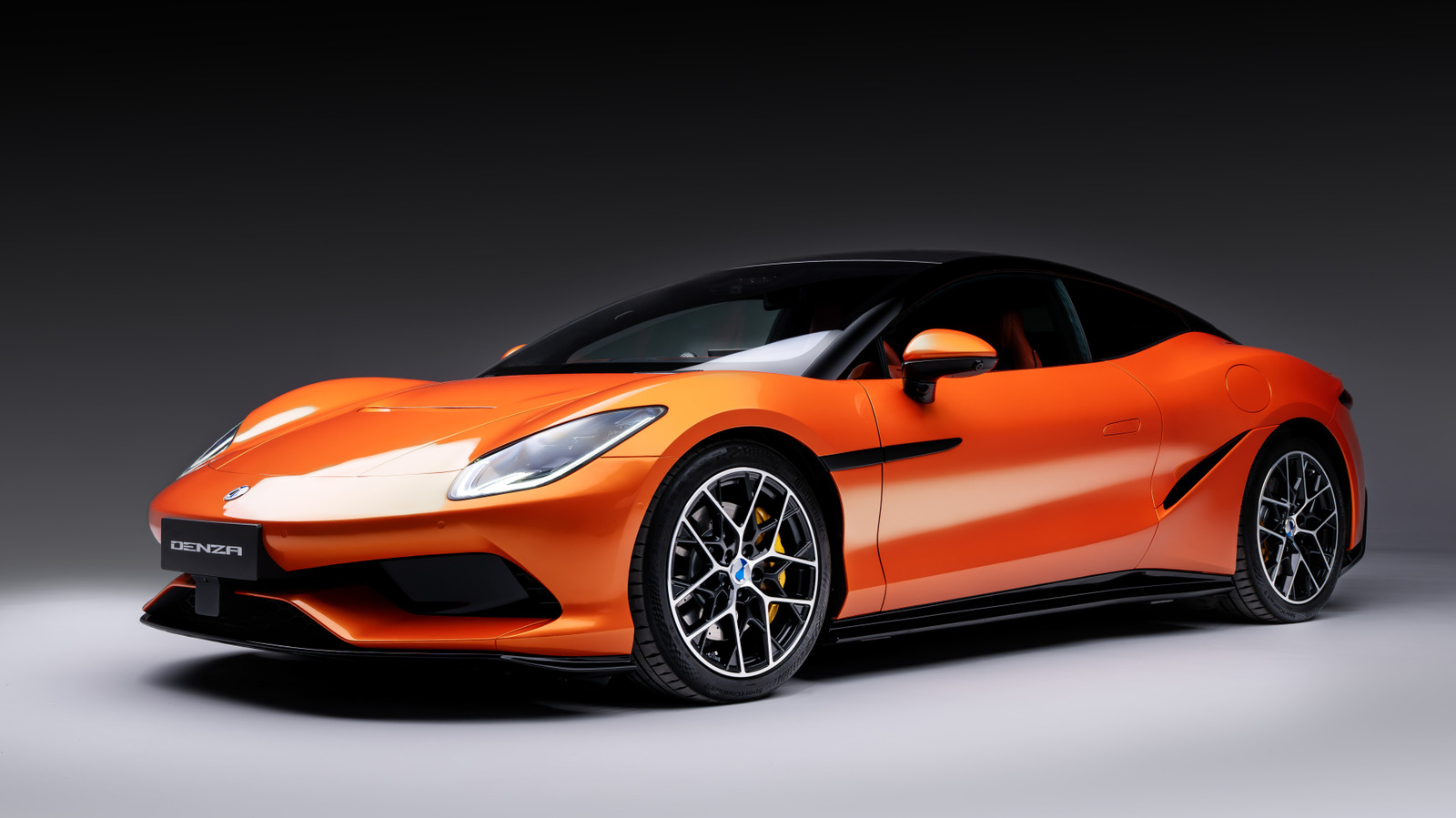
How Does the Denza Z Challenge Conventional Notions of Performance and Luxury?
The Denza Z, a four-seat supercar emerging from BYD’s luxury division, appears at first glance to be yet another entrant in the escalating horsepower arms race. With a claimed 0-62 mph acceleration in under two seconds and a top speed of 217 mph, its headline figures rival or surpass those of established European exotics. Yet, the Denza Z’s significance arguably lies less in its raw numbers than in the structural challenge it poses to entrenched assumptions about the relationship between performance, luxury, and brand provenance.
Historically, the supercar category has been defined not only by speed but by the exclusivity and heritage of its manufacturers. The Denza Z, by contrast, emerges from a context of rapid technological leapfrogging and industrial scale, leveraging BYD’s expertise in battery and electric powertrain integration. The evidence suggests that this car’s existence signals a shift: performance is becoming democratized, less tethered to legacy brands and more to technological prowess. This dynamic, while not unprecedented, raises questions about the future of luxury signaling in an era where technical barriers to entry are eroding.
What Are the Practical and Symbolic Implications of Its Charging Capabilities?
The Denza Z’s ability to recharge in under ten minutes—if substantiated outside controlled demonstrations—would represent a meaningful advance in electric vehicle (EV) usability. Fast charging, long a bottleneck for EV adoption, has often been cited as a practical limitation for high-performance applications. However, the practical significance of this claim depends on the availability of compatible charging infrastructure and the durability of such rapid charging cycles over the vehicle’s lifespan. Without widespread ultra-fast charging networks, the headline figure risks being more symbolic than transformative for most users.
Symbolically, however, the promise of near-instantaneous charging reframes the narrative around EVs from one of compromise to one of parity—or even superiority—relative to internal combustion rivals. This rhetorical shift may prove as consequential as the technical achievement itself, especially for consumers who have viewed EVs as inherently less convenient or exciting.
How Does Pricing Disrupt the Supercar Status Quo?
Perhaps the most subversive aspect of the Denza Z is its pricing, reportedly undercutting established icons such as the Porsche 911 GTS. This pricing strategy, if sustained, could destabilize traditional hierarchies within the luxury performance market. The evidence from adjacent sectors—most notably, the smartphone and consumer electronics industries—suggests that when technologically advanced products are introduced at disruptive price points, incumbent brands are forced to justify their premiums through design, heritage, or intangible brand value.
Yet, the degree to which this dynamic will play out in the supercar segment remains contested. For some buyers, the badge on the hood remains inseparable from the car’s identity and value proposition. For others, especially in emerging markets where brand loyalties are less calcified, the Denza Z’s combination of performance and value may prove irresistible. The long-term outcome will likely hinge on whether Denza can cultivate an aura of desirability that transcends mere specification sheets.
Who Stands to Gain—or Lose—from This Shift?
The immediate beneficiaries of the Denza Z’s arrival are consumers seeking high performance without the traditional price of entry. More subtly, the car’s existence pressures legacy manufacturers to accelerate their own electrification efforts and reconsider their pricing strategies. Conversely, those invested in the exclusivity and mystique of traditional supercars may find their position eroded, as the very definition of “supercar” becomes less about lineage and more about capability.
A less obvious group affected includes policymakers and infrastructure providers. Should vehicles like the Denza Z proliferate, the demand for ultra-fast charging infrastructure will intensify, potentially outpacing current regulatory and investment frameworks. The risk is that the promise of rapid charging becomes a hollow marketing point absent systemic upgrades to public charging networks.
What Blind Spots or Limitations Remain?
Despite its impressive specifications, the Denza Z’s broader impact is circumscribed by several unresolved questions. The durability of its battery under repeated high-speed charging, the real-world availability of compatible infrastructure, and the vehicle’s long-term reliability all remain open to scrutiny. Moreover, the cultural resonance of a supercar from a relatively new luxury brand—particularly outside its domestic market—should not be assumed.
In sum, the Denza Z encapsulates a moment of flux in the automotive world, where technological achievement, pricing strategy, and brand identity are being renegotiated. For the informed observer, its arrival is less a culmination than a provocation: an invitation to reconsider what performance, luxury, and even desirability will mean in the electric age.