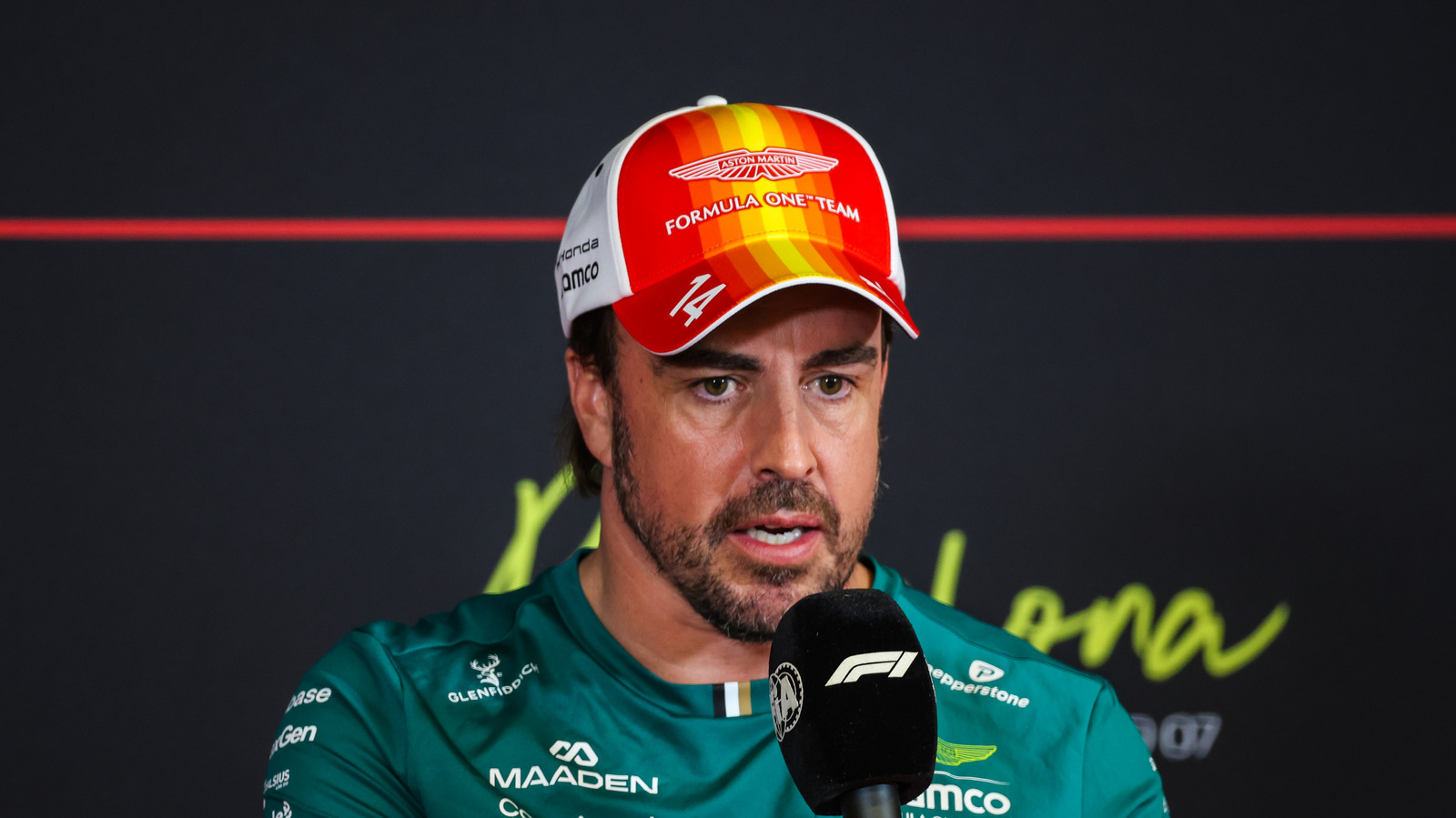
How Does Fernando Alonso’s Potential Retirement Reshape the Narrative of Longevity in Formula 1?
The prospect of Fernando Alonso’s imminent departure from Formula 1, if realized, would not merely close the chapter on a singularly enduring career. It would force a recalibration of what longevity means in a sport defined by relentless technological churn and the physical attrition of its participants. Alonso’s tenure—spanning decades, with periodic exits and returns—has outlasted not only multiple generations of drivers but also entire regulatory eras. The evidence suggests that his persistence is less a function of mere physical resilience and more a testament to adaptive intelligence: the capacity to remain relevant as the sport’s technical and political landscapes shift beneath one’s feet.
Yet, the significance of this longevity is not uniformly celebrated. Critics argue that extended careers can crowd out emerging talent, reinforcing the sport’s tendency toward conservatism and risk aversion in team management. This interpretation, while not without merit, underestimates the degree to which veteran drivers serve as developmental anchors for teams navigating volatile competitive cycles. Alonso’s continued presence has arguably provided a stabilizing influence for constructors seeking to balance immediate performance with long-term innovation—a dynamic often overlooked in surface-level discussions of age and succession.
What Broader Implications Emerge for Formula 1’s Competitive and Cultural Ecosystem?
Alonso’s retirement, should it occur, would reverberate beyond the paddock. For sponsors and broadcasters, the departure of a marquee name threatens to disrupt established audience loyalties, particularly in markets where his personal brand has outsized resonance. The practical significance of this shift, however, is contingent on the sport’s ability to cultivate new narratives—ones that do not rely on the mythos of a single enduring protagonist.
Moreover, Alonso’s exit would sharpen the focus on Formula 1’s structural limitations regarding career sustainability. The sport’s increasing technical complexity and the physical demands of modern cars have, paradoxically, both extended and constrained driver careers. While advances in sports science and simulator training have allowed some to compete at a high level well into their forties, the relentless travel schedule and psychological intensity impose costs that are not evenly distributed across the grid. Younger drivers, often entering the sport with less institutional support, may find the path to similar longevity increasingly narrow.
Whose Interests Are Served or Threatened by the End of an Era?
The end of Alonso’s career would recalibrate power dynamics within teams and among stakeholders. For established constructors, the loss of his experience could expose latent weaknesses in car development programs or strategic decision-making. Conversely, for junior drivers and their backers, the opening of a coveted seat represents a rare inflection point—a chance to disrupt entrenched hierarchies. The evidence from previous transitions suggests that such moments are as likely to entrench existing inequalities as to democratize opportunity, particularly given the sport’s high barriers to entry and the persistent influence of commercial interests.
Why Do Mainstream Interpretations of Driver Longevity Miss the Deeper Stakes?
Mainstream narratives often reduce longevity to a matter of personal achievement or physical endurance. This framing obscures the extent to which a long career is a negotiated outcome—shaped by team politics, sponsorship alignments, and regulatory flux. Alonso’s career, marked by both triumph and controversy, exemplifies the way in which individual agency is always entangled with institutional structures. To treat his potential retirement as merely the end of a record-setting run is to miss the deeper stakes: the ongoing contest over who gets to define excellence, and on what terms.
What Should an Informed Observer Conclude?
If this is indeed Alonso’s final season, the moment invites neither uncritical nostalgia nor simplistic celebration. Rather, it demands a sober reckoning with the forces that enable and constrain sporting longevity. For Formula 1, the challenge is not simply to replace a legendary figure, but to interrogate the systems that determine who endures, who is excluded, and how the sport narrates its own history. The end of the longest career in F1 is not just a personal milestone—it is a mirror held up to the sport’s evolving identity and its unresolved tensions between tradition and transformation.