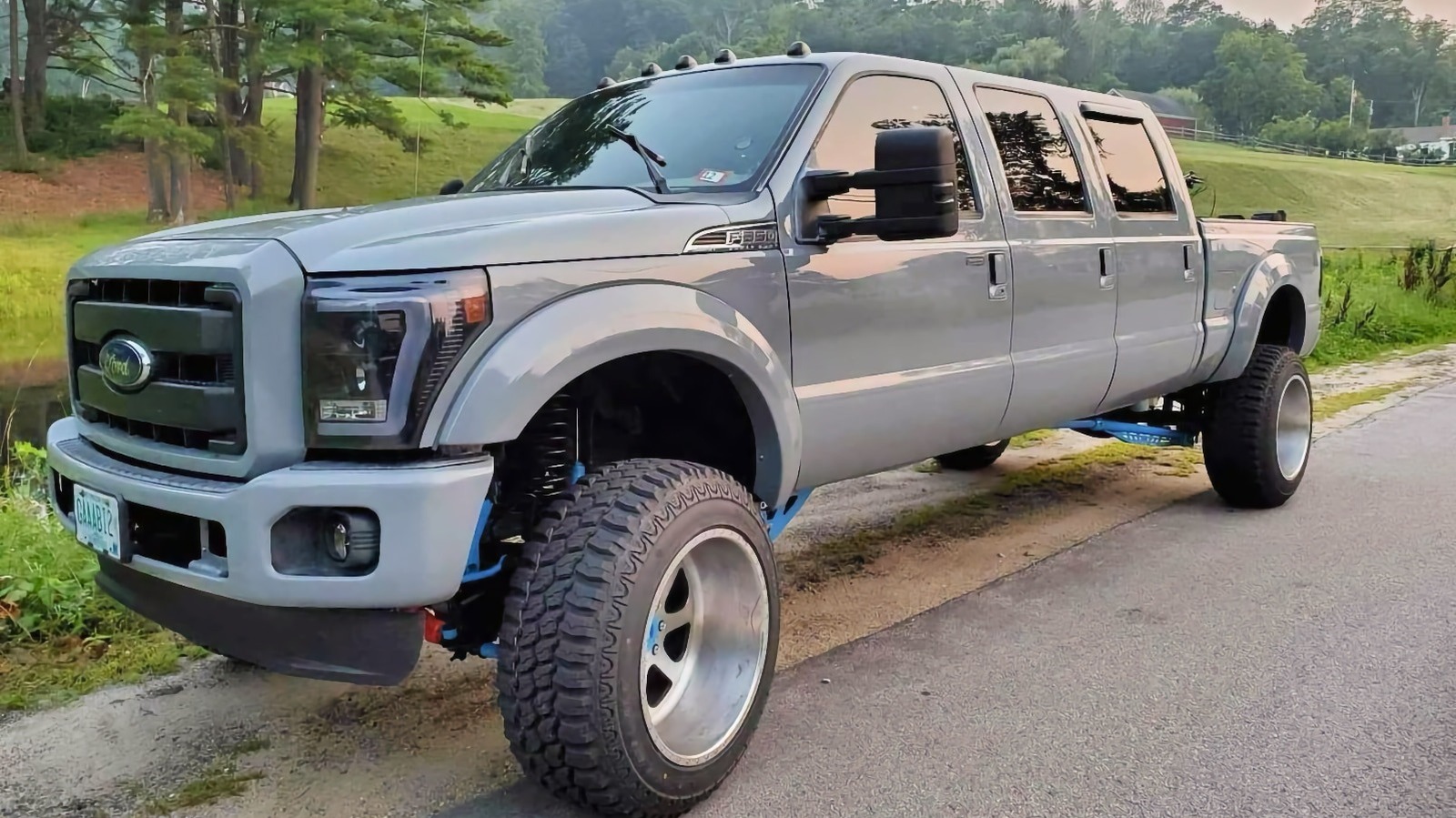
How Does Extreme Customization Transform the Identity of the Ford F-350?
The Ford F-350, in its standard incarnation, already occupies a distinctive niche: a heavy-duty pickup designed for those whose needs exceed the ordinary. Yet, the transformation of this model through a six-inch lift and the addition of extra doors signals a deliberate departure from both utility and manufacturer intent. Such radical customization does not merely alter the truck’s physical dimensions; it redefines its symbolic and functional identity. The evidence suggests that these modifications serve less as practical enhancements and more as statements of personal or subcultural affiliation. The truck becomes a rolling assertion of excess, a deliberate challenge to the boundaries of mainstream automotive design.
What Motivates Owners to Pursue Such Modifications?
The motivations behind extreme vehicle customization are rarely reducible to a single factor. While enthusiasts may cite improved off-road capability or increased passenger capacity, the scale of alteration in this case—six doors, a dramatic lift—implies a more complex calculus. Status signaling, a desire for uniqueness, and participation in a community that values spectacle over subtlety all likely play a role. Under specific conditions, such as rural or enthusiast contexts, these modifications may even be interpreted as acts of resistance against homogenizing trends in automotive manufacturing. However, these motivations remain contested, particularly when weighed against the practical drawbacks: diminished fuel efficiency, altered handling, and potential regulatory complications.
Who Benefits—and Who Loses—When Trucks Become Rolling Monuments?
On one level, the owner enjoys the social capital and personal satisfaction that come from possessing a truly singular vehicle. Custom shops and aftermarket parts suppliers also benefit, as such projects typically require significant investment. Yet, the broader consequences are more ambiguous. Urban infrastructure, already strained by the proliferation of oversized vehicles, must contend with trucks that exceed even the generous allowances of standard design. Pedestrians and cyclists, whose safety is inversely correlated with vehicle size, may bear hidden costs. Insurance and regulatory bodies, too, face challenges in assessing risk and ensuring compliance. The net effect is a redistribution of risk and reward—one that privileges individual expression at the potential expense of collective utility.
What Are the Structural and Regulatory Blind Spots?
The regulatory framework governing vehicle modifications is, at best, patchwork. While certain states impose limits on lift heights or bumper modifications, enforcement is inconsistent and often reactive rather than preventative. This regulatory ambiguity creates space for extreme builds that test the boundaries of legality and safety. Moreover, the aftermarket industry, driven by profit and consumer demand, has little incentive to self-regulate. The result is a structural blind spot: a system that enables and even encourages radical customization without fully accounting for its externalities. The evidence does not support the notion that current oversight mechanisms are adequate to the scale and pace of innovation in this domain.
What Should an Informed Observer Conclude?
The phenomenon of the six-door, lifted Ford F-350 is not merely a curiosity; it is a case study in the tensions between individual autonomy and collective consequence. While the ingenuity and audacity of such modifications are undeniable, their broader implications—social, infrastructural, and regulatory—demand scrutiny. An informed reader should recognize both the expressive power and the latent risks embedded in extreme automotive customization. The challenge lies in balancing the legitimate desire for personal expression with the equally legitimate claims of public safety and shared space. In the absence of more coherent oversight, the onus falls on both consumers and policymakers to interrogate not just what is possible, but what is prudent.