How Does Browser-Based Flight Simulation Reframe Access to Virtual Aviation?
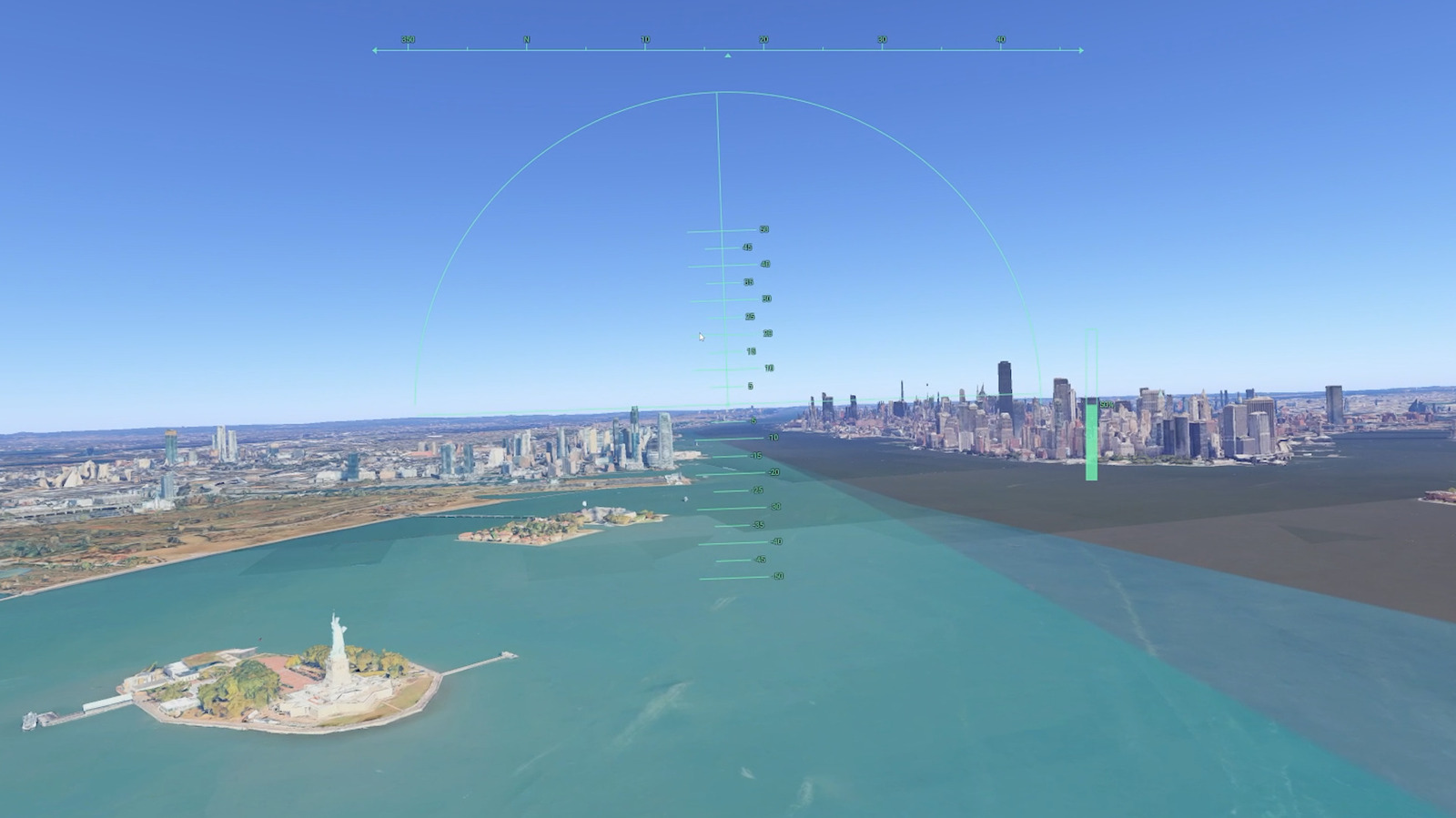
The proliferation of browser-based flight simulators, particularly those leveraging geospatial platforms, has quietly redrawn the boundaries of who can participate in virtual aviation. Historically, the domain of flight simulation has been defined by technical and financial gatekeeping: proprietary software, specialized hardware, and a steep learning curve have collectively excluded the casually curious. The emergence of lightweight, browser-accessible simulators—often built atop widely available mapping engines—subverts this paradigm. By lowering both economic and cognitive barriers, these tools invite a broader spectrum of users to experiment with flight, albeit in a context stripped of the procedural rigor and realism that purists might demand.
Yet this democratization is not unambiguously emancipatory. The absence of air traffic control protocols and the simplification of cockpit instrumentation, while making the experience more approachable, also risk trivializing the complexity of real-world aviation. For some, this trade-off is a feature; for others, a fatal flaw. The evidence suggests that browser-based simulators function less as training grounds and more as exploratory sandboxes—spaces for imaginative play rather than disciplined skill acquisition. The core mechanism at stake, then, is not simulation fidelity but the cultivation of curiosity and spatial awareness.
What Are the Implications for Learning, Engagement, and Representation?
The practical significance of these platforms extends beyond mere entertainment. Under specific conditions, browser-based simulators can serve as gateways to deeper engagement with geography, physics, and even the social dynamics of flight. For younger users or those from under-resourced educational environments, the ability to traverse global landscapes virtually—without cost or logistical friction—constitutes a meaningful expansion of experiential learning. However, the pedagogical value remains contested. While some educators report increased engagement, others caution that the lack of structured guidance and feedback mechanisms may limit substantive knowledge transfer.
A less obvious but equally important consequence concerns the representation of aviation itself. By abstracting away regulatory, technical, and environmental constraints, these simulators risk perpetuating a mythos of flight as consequence-free adventure. This narrative, while seductive, occludes the infrastructural realities and ethical considerations that underpin actual air travel. The tension between fantasy and fidelity is not merely aesthetic; it shapes how emerging generations conceptualize risk, responsibility, and the very meaning of mobility.
Who Benefits—and Who Remains Marginalized—by This Shift?
The ostensible inclusivity of browser-based flight simulation masks persistent inequities. While the platforms are nominally open to anyone with internet access, digital divides—rooted in geography, socioeconomic status, and device compatibility—continue to delimit participation. Moreover, the design of these simulators often reflects implicit assumptions about user familiarity with Western-centric cartography and aviation norms. As a result, users from the Global South or those with alternative spatial literacies may find the experience less intuitive, reinforcing rather than dismantling existing hierarchies of access and understanding.
Structural limitations also arise from the commercial and infrastructural interests underpinning geospatial data provision. The accuracy, granularity, and update frequency of virtual landscapes are uneven, privileging metropolitan centers and tourist landmarks while rendering peripheral regions as undifferentiated or outdated. This selective visibility has second-order effects: it shapes not only where users choose to “fly,” but also which parts of the world are rendered legible or invisible in the collective imagination.
What Should the Informed Reader Conclude About the Future of Virtual Flight?
The browser-based flight simulator, for all its apparent simplicity, is a site of negotiation between accessibility and authenticity, fantasy and pedagogy, inclusion and exclusion. Its significance lies less in its technical prowess than in its capacity to reframe who gets to imagine themselves as a pilot, and on what terms. For the analytically minded reader, the key takeaway is not to dismiss these platforms as mere toys, nor to overstate their educational promise, but to recognize them as artifacts of a broader cultural shift: one in which the boundaries of expertise, play, and representation are being continually renegotiated. The prudent observer will remain attentive to both the emancipatory potentials and the subtle exclusions embedded in this evolving landscape.