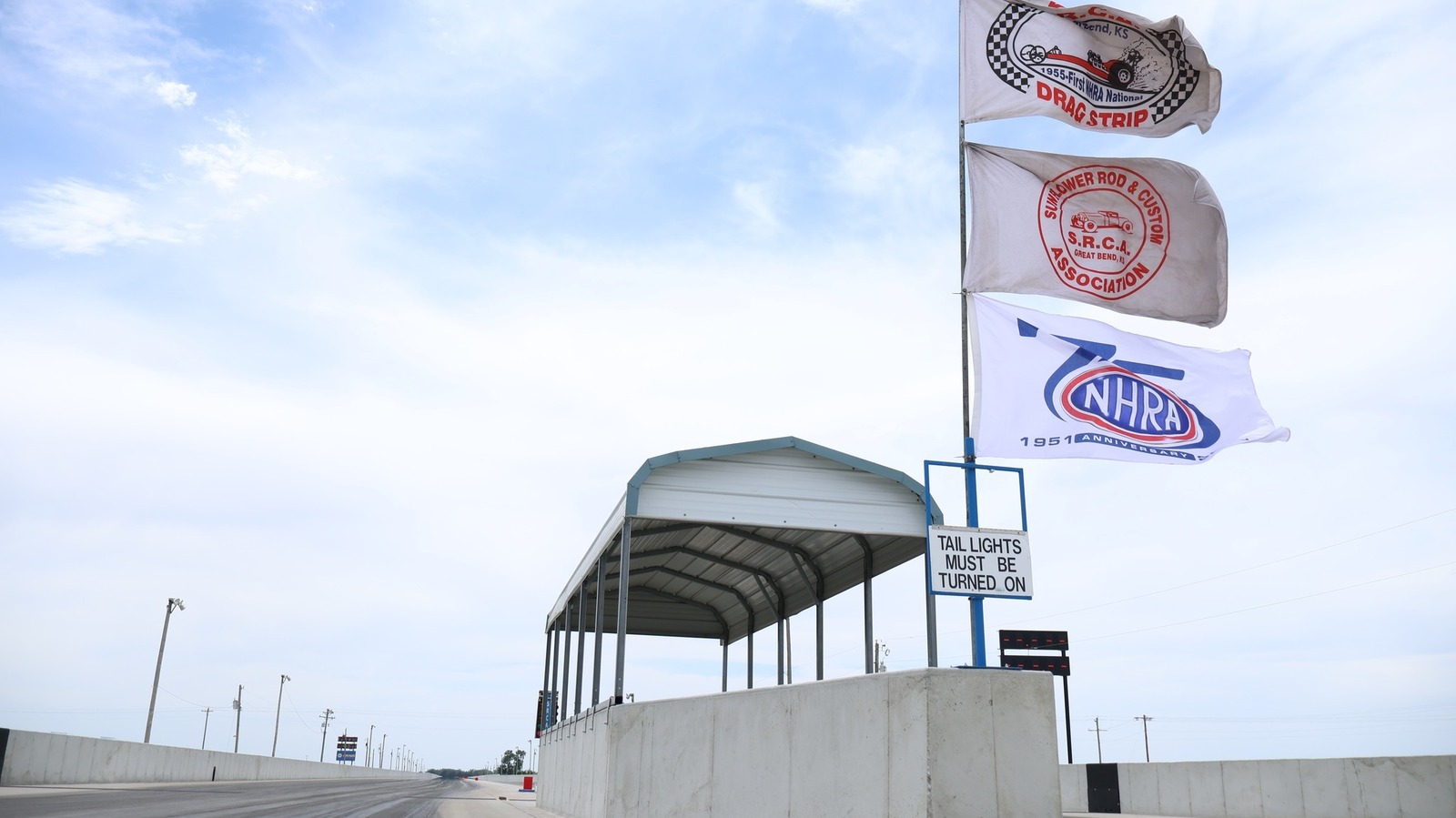
How Local Consensus Enabled the Revival of a Historic Drag Strip
The restoration of the Great Bend drag strip, a project that might have easily faltered in the face of regulatory inertia or neighborhood resistance, instead unfolded as a rare instance of local alignment. While the closure of motorsport venues has become almost routine—often justified by noise complaints, land development pressures, or shifting recreational priorities—the evidence suggests that the successful reopening of this track hinged on a confluence of civic goodwill and pragmatic negotiation. The city’s willingness to support the project, rather than defaulting to risk aversion or bureaucratic delay, marks a departure from the adversarial dynamic that typically characterizes such efforts.
Yet, this outcome is not merely a function of collective nostalgia or economic calculation. Rather, it reflects a subtler mechanism: the capacity of a community to recognize shared cultural assets and to mobilize around them, even when the direct beneficiaries are a minority. In this context, the drag strip’s survival is less a testament to motorsport’s enduring popularity than to the elasticity of local identity—how a place can accommodate seemingly anachronistic pursuits when they are reframed as part of its living heritage.
Why Most Tracks Fail to Survive—and Why This Case Defies the Pattern
The prevailing narrative around motorsport venues in the United States is one of attrition. Tracks close, rarely to be revived, their land repurposed for housing or logistics, their histories consigned to enthusiast forums and archival photographs. This pattern is not accidental. It emerges from structural factors: the rising value of suburban and exurban land, the increasing stringency of environmental and noise regulations, and the waning political influence of grassroots racing communities. Under these conditions, the reopening of a historic drag strip appears anomalous—almost a statistical outlier.
However, closer scrutiny reveals that such anomalies are not random. They occur where the calculus of local interests shifts, often because the costs of inaction (loss of tourism, erosion of civic pride, or the vacuum left by a vanished institution) become more salient than the perceived nuisances. In Great Bend’s case, the alignment of city officials and neighboring residents suggests that the drag strip’s value was not simply recreational but symbolic—a marker of continuity in a landscape otherwise subject to relentless change. This interpretation, while plausible, remains contested: some critics argue that such projects merely postpone the inevitable, propping up declining subcultures with public subsidy. Yet, the practical significance of this critique is limited in contexts where the alternative is not a more vibrant use of land, but vacancy and decay.
Who Benefits—and Who Remains Marginalized—by Heritage-Based Revitalization
The restoration of the drag strip, while celebrated as a communal victory, inevitably privileges certain constituencies over others. Motorsports enthusiasts, local businesses, and civic leaders eager for positive publicity all stand to gain. Less visible are those who experience the costs: residents for whom increased traffic or sporadic noise disrupts daily life, or those who see the allocation of municipal resources to racing as a misalignment of priorities. The evidence on distributive impacts is fragmentary, but the broader pattern is clear: heritage projects often consolidate the influence of established groups while rendering dissent less legible.
Moreover, the framing of the drag strip as a “historic” asset is itself a political act, one that can obscure alternative visions for the site—whether as green space, affordable housing, or a different form of public amenity. The legitimacy of such projects, therefore, rests not only on their economic or cultural merits, but on the inclusiveness of the process by which they are authorized. In Great Bend, the absence of organized opposition may signal genuine consensus; alternatively, it may reflect the limited capacity of marginalized voices to shape outcomes in small-town governance.
What Broader Lessons Emerge from This Exception to the Rule
The reopening of the Great Bend drag strip complicates the prevailing pessimism surrounding the fate of grassroots motorsport in the United States. It demonstrates that, under specific conditions—namely, when local government, residents, and enthusiasts converge around a shared narrative of place—heritage-based revitalization is possible. Yet, this case should not be mistaken for a template. The structural forces driving the closure of similar venues remain formidable, and the replication of Great Bend’s success will require more than nostalgia or civic pride. It will depend on the capacity to articulate, in concrete terms, the public value of such spaces—and to negotiate the inevitable trade-offs with candor and procedural fairness.
For the informed reader, the lesson is not that motorsport venues are destined for extinction or guaranteed revival, but that their fate is contingent: shaped by the interplay of local politics, economic incentives, and the mutable meanings assigned to history. To engage meaningfully with such projects—whether as advocates, critics, or policymakers—requires moving beyond surface-level celebration or lament, and grappling with the deeper question of what, and whom, our collective memory serves.