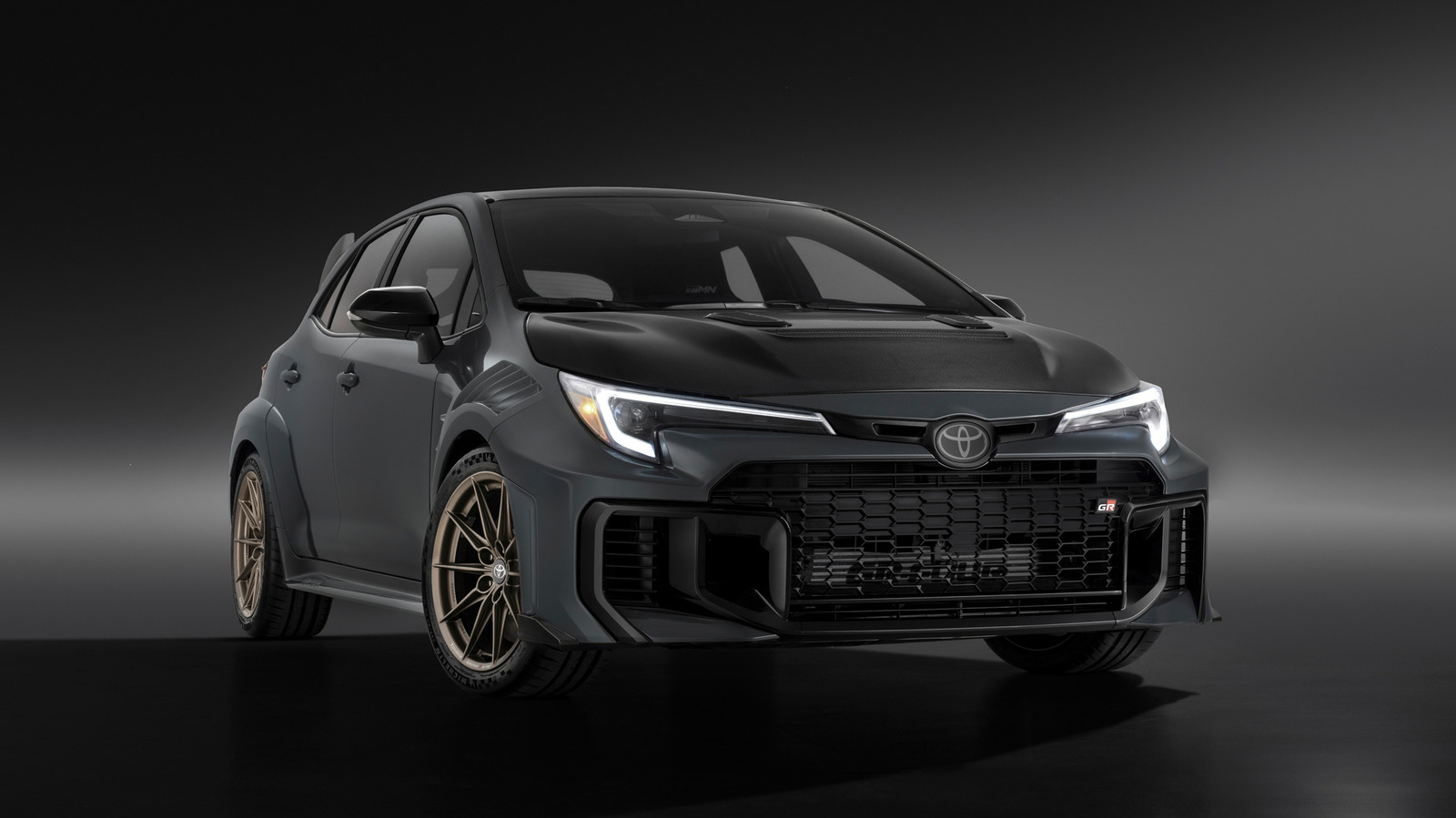
How Does the GRMN Corolla Redefine the Limits of Toyota’s Performance Ambitions?
The decision to produce only 730 units of the Nürburgring-tuned GRMN Corolla globally, with a U.S. entry price of $65,665, signals more than a mere exercise in exclusivity. It reflects a calculated escalation in Toyota’s willingness to challenge the boundaries of its own performance sub-brand. Historically, the GR (Gazoo Racing) moniker has denoted a blend of accessibility and motorsport-derived engineering. Yet, with the GRMN Corolla, Toyota appears to be probing whether its customer base—long accustomed to value-driven propositions—will embrace a model whose pricing approaches that of the outgoing Supra, a vehicle with an entirely different legacy and market positioning.
This move cannot be interpreted simply as a response to enthusiast demand for ever-faster hot hatches. Rather, it is an experiment in brand elasticity. Can Toyota, a company whose reputation has been built on reliability and mass-market appeal, credibly command a price point that encroaches on territory traditionally reserved for European performance marques? The evidence suggests that the answer is far from settled. While early indicators point to strong interest among collectors and brand loyalists, the broader market’s willingness to absorb such a premium remains untested, especially given the proliferation of high-performance alternatives at similar or lower price points.
What Are the Structural and Market Forces Shaping This Limited Production Strategy?
Limiting production to 730 units is not merely a nod to exclusivity; it is a hedge against the volatility of niche performance markets. Scarcity, in this context, functions as both a marketing tool and a risk management strategy. By capping supply, Toyota can cultivate an aura of desirability while minimizing the financial exposure associated with high-cost, low-volume engineering. However, this approach is not without its structural limitations. The GRMN Corolla’s appeal may be diluted by the perception that it is engineered for a collector’s garage rather than for everyday use—a dynamic that has, in other contexts, led to speculative bubbles and subsequent market corrections.
Moreover, the decision to tune the vehicle at the Nürburgring, while symbolically potent, introduces a set of implicit trade-offs. The track’s reputation as a crucible for automotive excellence is well established, but its relevance to real-world driving conditions is contested. Vehicles optimized for the Green Hell often exhibit characteristics—stiff suspensions, aggressive aerodynamics, peaky powerbands—that may compromise comfort and usability on public roads. Thus, while the Nürburgring pedigree may bolster the car’s cachet among purists, it may simultaneously narrow its practical appeal.
Who Benefits—and Who Is Marginalized—by This Pricing and Production Model?
The primary beneficiaries of the GRMN Corolla’s scarcity and pricing are, predictably, those with the means and connections to secure an allocation. For these buyers, the car represents not just a driving experience, but an asset whose value may appreciate over time. Yet, this dynamic also risks alienating the very enthusiasts who have fueled the resurgence of Toyota’s performance brand. The democratizing spirit that animated earlier GR models is, under this regime, subordinated to the logic of exclusivity.
There are also second-order consequences for the broader enthusiast community. When halo models become inaccessible, they may inadvertently erode the aspirational ladder that connects entry-level performance cars to their more rarefied counterparts. This effect, while difficult to quantify, warrants attention: if the GRMN Corolla is perceived as unattainable, it may dampen enthusiasm for the brand’s more affordable offerings, undermining the long-term vitality of the performance sub-brand.
What Should Discerning Observers Infer About the Future of Performance-Oriented Automaking?
The GRMN Corolla’s pricing and production strategy encapsulate a broader tension within the contemporary automotive landscape: the push-pull between democratization and exclusivity, between engineering bravado and commercial pragmatism. Toyota’s wager, at least for now, is that a carefully calibrated dose of scarcity will elevate the brand’s performance credentials without alienating its core constituency. Whether this bet pays off will depend on factors that extend beyond the showroom—macroeconomic conditions, shifting regulatory environments, and the evolving tastes of a new generation of enthusiasts.
For the informed reader, the lesson is clear but nuanced. The GRMN Corolla is less a product than a signal—a test of how far Toyota can stretch its performance ambitions before encountering resistance from the market, its own history, or the shifting sands of automotive culture. The outcome remains uncertain, but the stakes are unmistakably high.