What Drives the Enduring Appeal of the Hemi V8 in an Aging Platform?
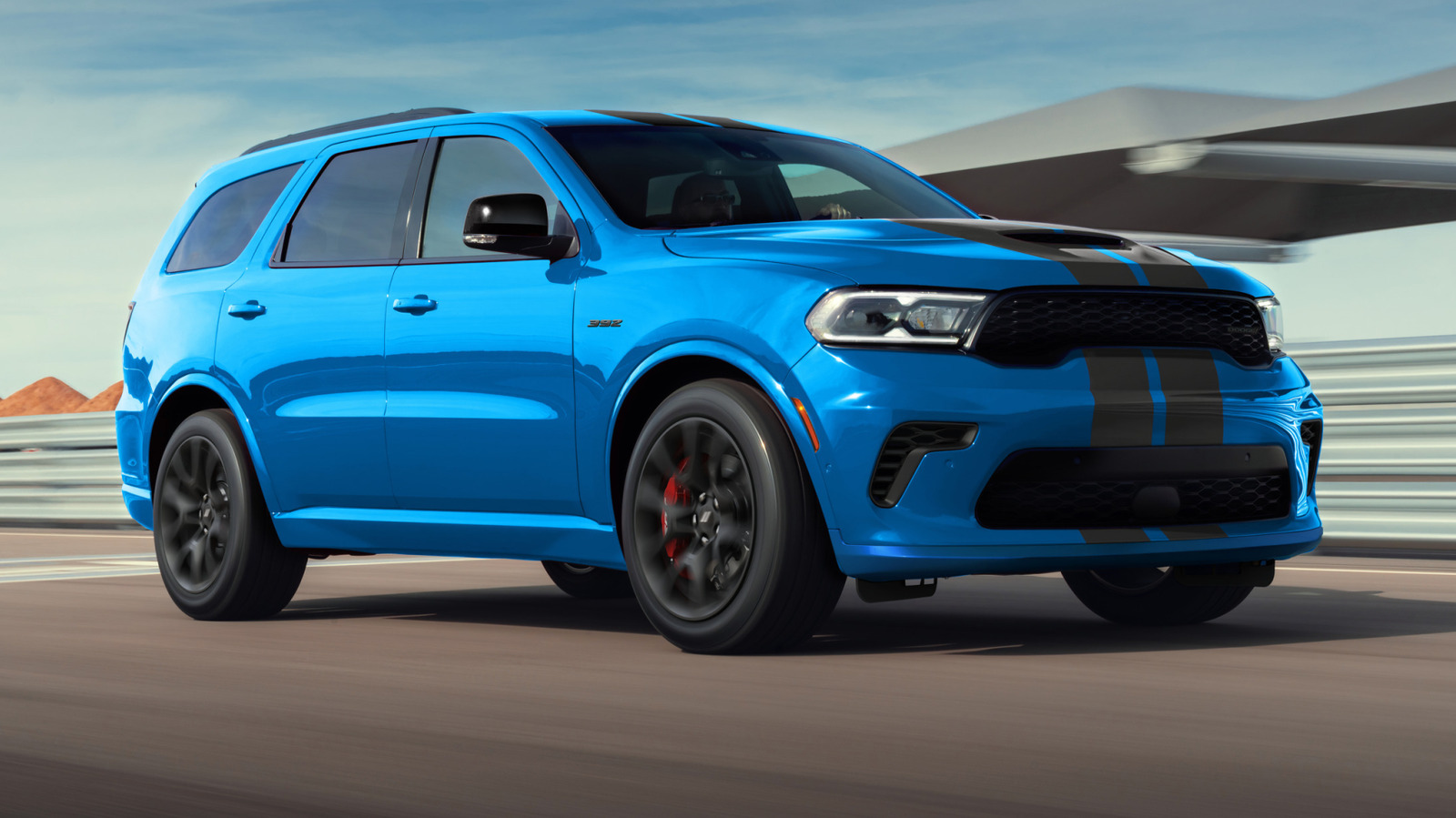
The reintroduction of the 392 V8 engine into the Dodge Durango—a model whose underpinnings have not seen a fundamental redesign in over a decade—raises a question that resists facile answers: why does a legacy powertrain, embedded in an aging SUV architecture, catalyze a sales resurgence in a market supposedly obsessed with electrification and efficiency? The evidence suggests that the answer lies not merely in raw horsepower or nostalgia, but in the complex interplay between consumer identity, regulatory headwinds, and the performative signaling of automakers navigating a liminal technological era.
While the Durango’s recent sales spike coincides with the return of the Hemi V8, attributing this outcome solely to engine displacement risks oversimplification. The V8’s appeal, under current conditions, appears to function as a cultural counterpoint to the prevailing narrative of automotive restraint. For a subset of buyers—disproportionately represented among enthusiasts and those skeptical of electrification mandates—the V8 is less a technical specification than a statement of resistance. This phenomenon is not unique to Dodge, but the Durango’s sales data, when parsed by region and demographic, reveals a particular concentration in markets where regulatory pressures remain less acute and fuel prices, while volatile, have not yet fully suppressed demand for high-displacement engines.
How Do Market Realities Challenge the Narrative of Inevitable Electrification?
The Durango’s recent commercial success complicates the assumption that consumer preferences are converging inexorably toward electrified or downsized powertrains. While industry forecasts and regulatory frameworks increasingly privilege battery-electric vehicles, the persistence of demand for V8-powered SUVs exposes a temporal and geographic lag in this transition. This is not merely a matter of consumer inertia; rather, it reflects a structural disconnect between policy ambitions and the lived realities of buyers whose priorities—towing capacity, visceral driving experience, or brand allegiance—remain poorly served by current electric offerings.
Methodologically, sales figures for the Durango must be interpreted with caution. Short-term spikes may reflect pent-up demand, allocation strategies, or even speculative purchasing in anticipation of future regulatory constraints. Yet, the magnitude of the increase—surpassing half-year records not seen since 2006—suggests more than a blip. It signals a latent market segment that, while numerically limited, exerts outsized influence on brand perception and dealership economics. The mainstream narrative, which often frames such demand as a dying gasp, may underestimate both its resilience and its capacity to shape product planning in the near term.
Who Benefits—and Who Loses—From the Persistence of the V8?
The beneficiaries of the Durango’s V8 resurgence are not limited to Dodge or its most vocal enthusiasts. Dealers, facing thinning margins on commoditized crossovers and electric models, find in the V8 Durango a rare source of pricing power and showroom traffic. Conversely, the environmental cost—measured in aggregate emissions and regulatory penalties—remains externalized, a burden diffused across the broader fleet and, ultimately, society at large. This tension is not merely academic; it shapes the incentives and constraints faced by automakers as they navigate the twilight of the internal combustion era.
Structural blind spots persist. The discourse around the V8’s return often ignores the extent to which such offerings are subsidized, directly or indirectly, by regulatory loopholes and legacy supply chains. Moreover, the focus on headline sales numbers obscures the demographic skew: younger buyers and those in urban centers remain largely disengaged from the V8 revival, suggesting that its cultural resonance, while intense, may be self-limiting over the medium term.
What Should Informed Observers Infer About the Future of Performance SUVs?
The resurgence of the Hemi V8 in the Durango does not herald a reversal of the broader electrification trend. Rather, it illuminates the unevenness of technological adoption and the persistence of subcultures that resist homogenization. For policymakers and industry strategists, the lesson is clear: transitions are rarely linear, and the symbolic value of legacy technologies can outlast their technical rationale. For consumers, the window for acquiring such vehicles may be narrowing, but the intensity of their appeal—rooted as much in identity as in utility—remains undiminished for now.
Ultimately, the Durango’s sales performance should be read not as a repudiation of the future, but as a reminder that the past is never fully past. The V8 endures, not because it is rational, but because it is desired—and in that desire, a host of contradictions, aspirations, and anxieties find expression.