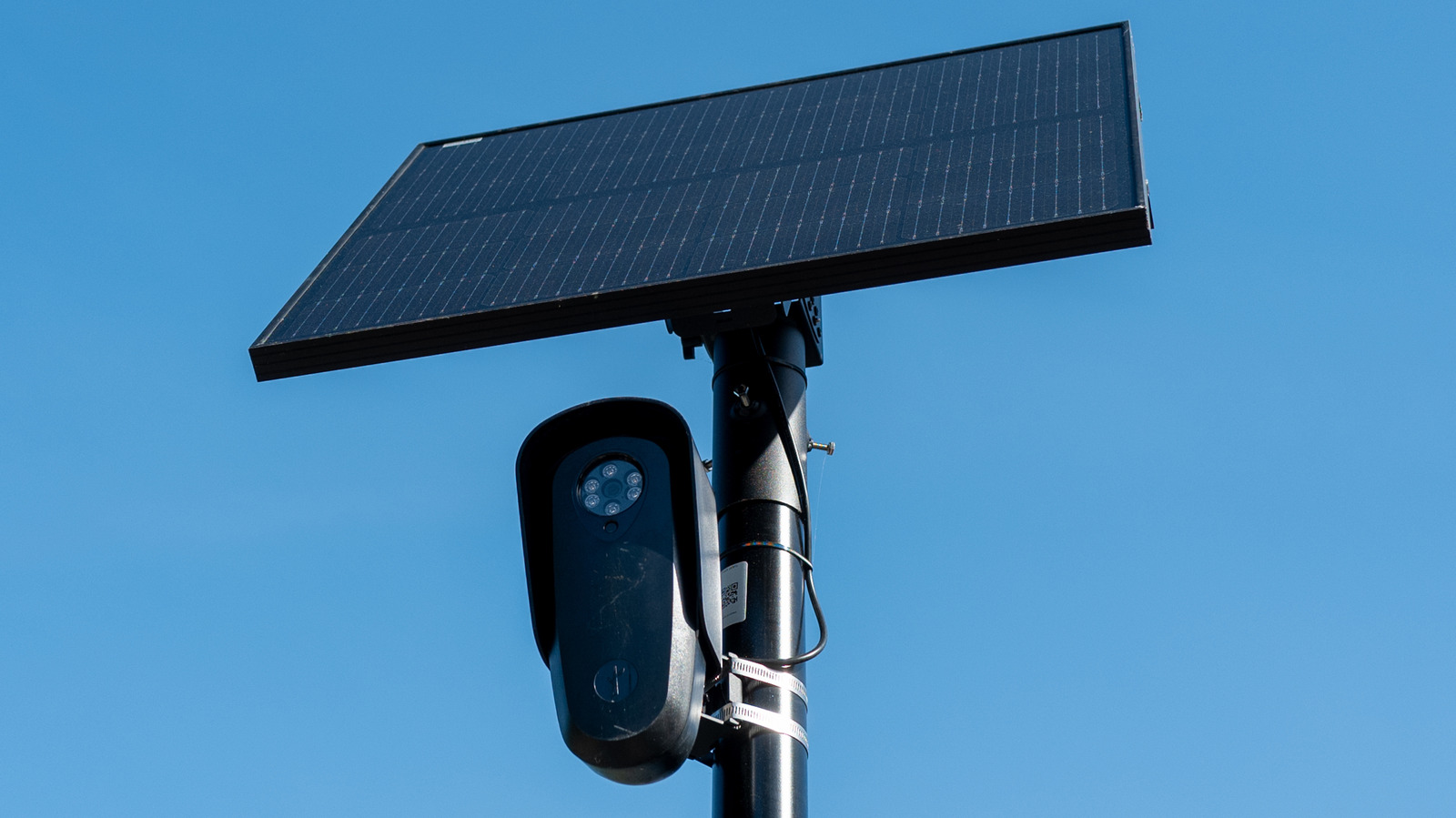
How Do Fixed Camera Poles Interact with Roadway Safety Standards?
The proliferation of roadside surveillance infrastructure—particularly fixed camera poles—raises a fundamental question about the compatibility of such installations with established highway safety standards. The core mechanism at issue is the absence of engineered breakaway points in many of these poles, a design omission that stands in tension with decades of traffic safety research. Breakaway hardware, long mandated for signposts and lighting fixtures, is designed to minimize vehicular damage and injury by allowing the structure to shear away upon impact. By contrast, poles that are either rigidly anchored or simply embedded into the ground introduce a non-trivial hazard: in the event of a collision, the pole does not yield, amplifying the risk of catastrophic injury to vehicle occupants.
The evidence for the efficacy of breakaway designs is robust, yet not universally dispositive. While laboratory crash tests and retrospective accident analyses demonstrate a reduction in fatality rates when breakaway mechanisms are employed, the real-world performance of such systems depends on variables—vehicle speed, angle of impact, pole diameter—that are not always replicated in controlled settings. Nevertheless, the prevailing consensus among transportation safety experts is that non-breakaway poles represent an avoidable escalation of risk, particularly in high-speed corridors or areas with limited sightlines. The practical significance of this risk is not merely statistical; it is embodied in the lived experience of those who traverse these roads, often unaware of the latent dangers posed by ostensibly innocuous infrastructure.
Why Do Non-Breakaway Poles Persist Despite Known Hazards?
The persistence of non-breakaway camera poles is not simply a matter of technical oversight. Rather, it reflects a confluence of institutional incentives, regulatory ambiguity, and cost considerations. Agencies tasked with deploying surveillance infrastructure frequently operate under mandates that prioritize data collection and law enforcement objectives over secondary safety impacts. In many jurisdictions, the regulatory framework governing roadside installations is fragmented, with responsibility divided among transportation departments, law enforcement, and private contractors. This diffusion of accountability creates structural blind spots: safety standards that apply to traditional signage or lighting may not be explicitly extended to newer forms of roadside technology.
Moreover, the economic calculus often favors expedient installation over comprehensive risk mitigation. Breakaway mechanisms entail higher upfront costs and more complex engineering, while direct burial or rigid mounting offers a superficially attractive simplicity. The result is a landscape in which the externalities of increased crash severity are borne not by the decision-makers, but by the motoring public—a classic case of misaligned incentives.
Who Bears the Hidden Costs, and What Remains Unexamined?
The distribution of risk is not uniform. Vulnerable road users—those in smaller vehicles, or in communities with older infrastructure—are disproportionately affected by the presence of non-breakaway poles. There is also a temporal dimension: as the density of roadside surveillance increases, so too does the cumulative exposure to these hazards, a trend that may not be immediately apparent in annualized crash statistics but becomes significant over longer time horizons.
Mainstream interpretations of this issue often focus narrowly on the legality or utility of surveillance, neglecting the embodied consequences for public safety. What remains under-examined is the second-order effect: the normalization of infrastructural shortcuts in the name of technological progress, and the subtle erosion of safety standards that once enjoyed bipartisan support. The debate is further complicated by the opacity of procurement processes and the limited transparency around crash data involving these installations.
What Should an Informed Reader Infer or Demand?
Given these dynamics, the informed reader is left with a clear imperative: to scrutinize not only the ostensible purpose of roadside technology, but the manner of its integration into the built environment. Demanding adherence to established safety standards is not a technocratic quibble—it is a necessary check on the diffusion of risk from institutional actors to the general public. Where regulatory ambiguity persists, advocacy for explicit inclusion of all roadside installations under breakaway requirements is warranted. Ultimately, the question is not whether surveillance infrastructure should exist, but whether its deployment can be reconciled with the foundational obligation to protect human life in the public right-of-way. The evidence suggests that, under current conditions, this reconciliation remains incomplete.