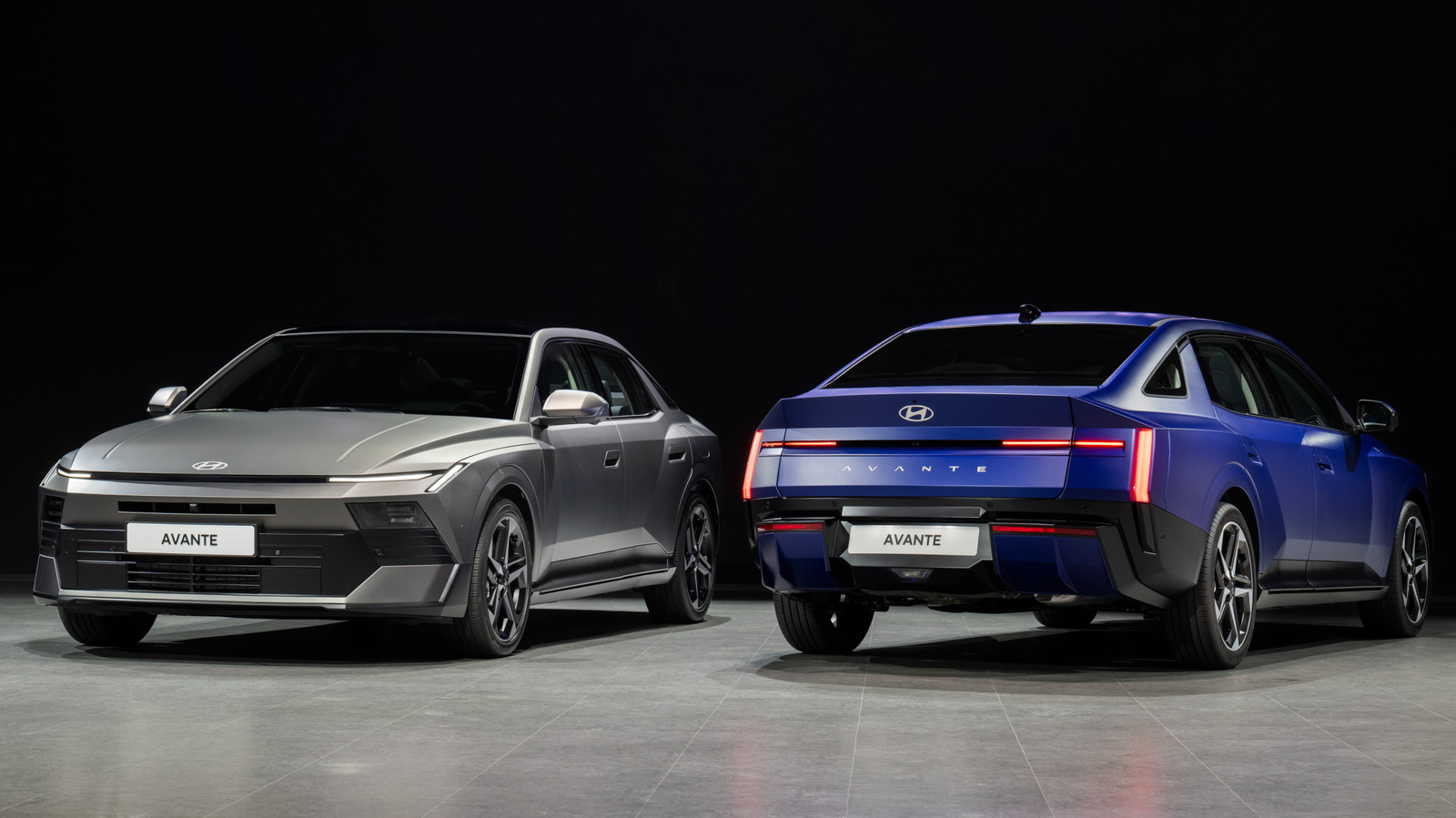
How Does Hyundai’s Redesign of the Elantra Signal a Shift in Automotive Risk-Taking?
The evidence suggests that Hyundai’s recent overhaul of the Elantra departs sharply from the risk-averse strategies that have long governed the mainstream sedan segment. Rather than retreating into the familiar contours of incrementalism, the company has chosen to foreground visual audacity and conceptual ambition. This is not merely a matter of aesthetics. The core mechanism at stake is a recalibration of brand identity—one that seeks to disrupt the tacit consensus around what constitutes “safe” design for mass-market vehicles.
Why would a manufacturer with a best-selling model abandon the formula that secured its success? The answer, while not reducible to a single cause, appears rooted in a recognition that market saturation and consumer fatigue have rendered conventional approaches less effective. Under specific conditions—namely, a crowded field where differentiation is elusive—boldness itself becomes a form of prudence. Yet, this interpretation remains contested. Some industry analysts argue that such a move risks alienating the conservative buyers who have historically sustained the Elantra’s sales. The available data on consumer response is preliminary and methodologically limited, often capturing initial impressions rather than long-term purchase behavior. Nevertheless, the willingness to court controversy rather than consensus marks a notable inflection point.
What Broader Implications Emerge from Hyundai’s Design Gamble?
Beyond the immediate question of sales figures, Hyundai’s strategy raises deeper issues about the evolving relationship between automakers and their publics. The redesign is not simply a product update; it is a bid to redefine the boundaries of acceptability in a segment where novelty has often been penalized rather than rewarded. This move, if successful, could embolden competitors to pursue more experimental trajectories, thereby accelerating the rate of change across the industry. Conversely, should the gamble falter, it may reinforce the very conservatism Hyundai seeks to disrupt.
The practical significance of this shift extends to stakeholders not always foregrounded in automotive discourse. Dealers, for instance, must recalibrate their sales pitches to address a more polarized consumer base. Suppliers, too, may face new demands as design complexity increases. Even regulatory bodies could be drawn into the fray if novel design elements challenge existing safety or emissions frameworks. These second-order consequences, while less visible than quarterly sales reports, may ultimately prove more consequential.
What Are the Structural Constraints and Blind Spots in the Current Discourse?
Mainstream interpretations of Hyundai’s redesign tend to oscillate between celebration of its boldness and skepticism about its market viability. Yet both perspectives risk overlooking the structural limitations that shape such decisions. The global supply chain crisis, for example, has introduced new uncertainties into the product development cycle, constraining the extent to which design ambitions can be realized in practice. Moreover, the vested interests of shareholders, who may prioritize short-term returns over long-term brand repositioning, exert a gravitational pull toward caution.
A further blind spot lies in the demographic assumptions underpinning much of the commentary. Analysts frequently invoke a monolithic “consumer” whose preferences are presumed stable and legible. In reality, the Elantra’s audience is fragmented along lines of age, geography, and cultural capital. Early adopters in urban markets may embrace the redesign as a symbol of forward-thinking taste, while more risk-averse buyers in other regions may view it as an unwelcome departure from tradition. The interplay between these constituencies will determine not only the fate of the Elantra but also the broader trajectory of design innovation in the sector.
What Should an Informed Reader Conclude About Hyundai’s Strategic Calculus?
The evidence, while incomplete, points toward a calculated bet on the part of Hyundai: that the rewards of standing out in a saturated market now outweigh the risks of alienating a portion of the existing customer base. This is not a repudiation of pragmatism but a redefinition of what prudence entails under conditions of heightened competition and shifting consumer expectations. For stakeholders—whether industry professionals, prospective buyers, or observers of corporate strategy—the key takeaway is not to fixate on the surface-level drama of a bold redesign. Rather, the more consequential question is whether this move signals a broader willingness across the industry to challenge the inertia of the familiar, and what new forms of value and risk such challenges might generate.