How Do Public Figures Navigate Political Disruption with Composure?
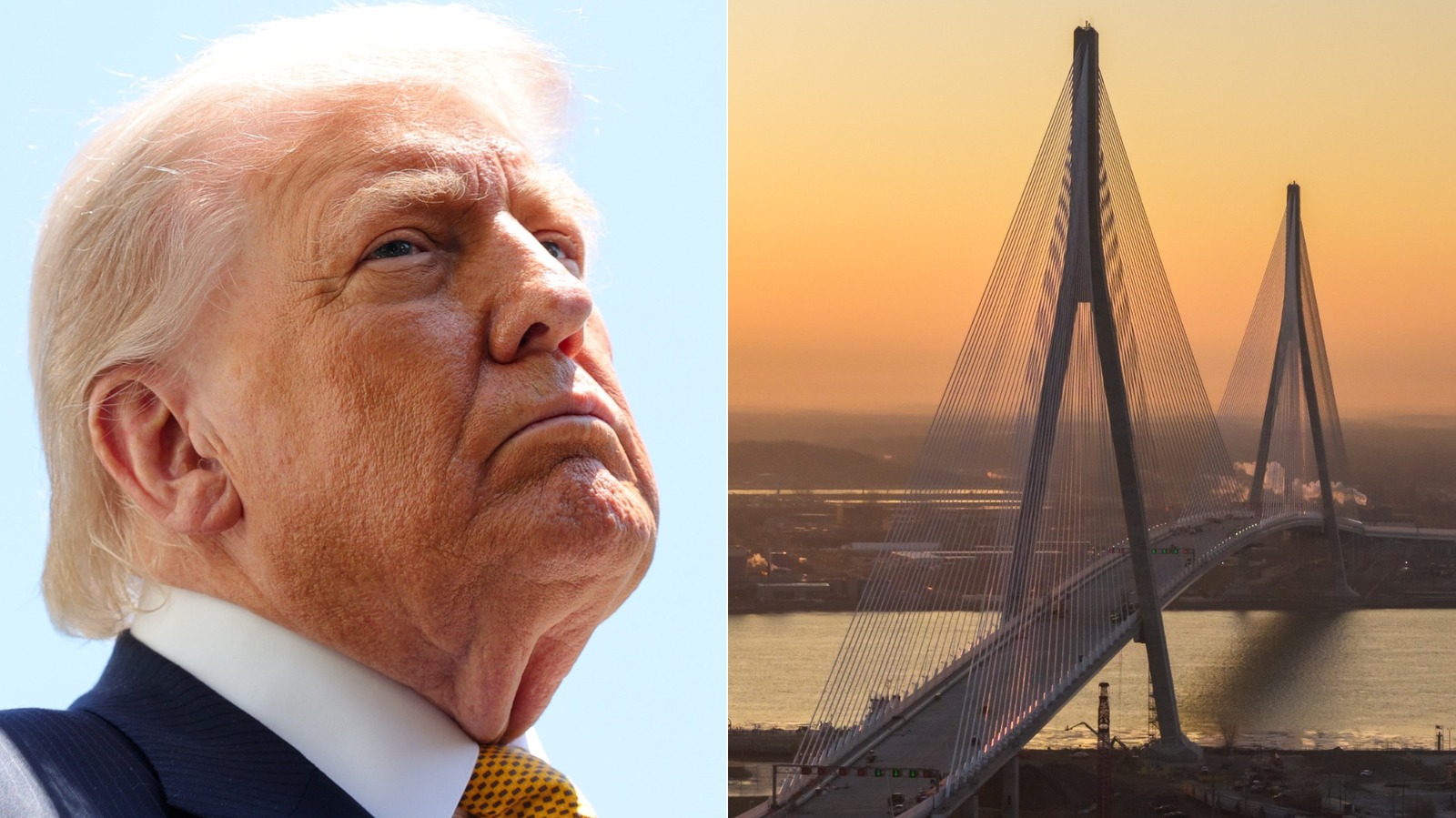
The outward calm displayed by Carney amid significant political turbulence—specifically, the delay of a $6.4 billion international bridge crossing—raises questions about the performative aspects of leadership under duress. While Carney’s demeanor may suggest equanimity, the possibility of a carefully constructed public persona cannot be dismissed. Leaders, particularly those operating at the intersection of international infrastructure and volatile policy environments, often deploy emotional restraint as a strategic tool. This cultivated composure serves multiple functions: it reassures stakeholders, maintains negotiation leverage, and projects institutional stability. However, the evidence for genuine tranquility versus tactical stoicism remains ambiguous, especially when the stakes involve multi-billion-dollar investments and cross-border relations.
What Are the Deeper Implications of Political Interference in Infrastructure Projects?
The suspension of a major infrastructure initiative due to executive branch intervention exemplifies a broader pattern: the vulnerability of long-term public goods to short-term political calculations. While the immediate narrative may focus on administrative obstructionism, the more consequential dynamic lies in the erosion of predictability for both public and private actors. Investors, local communities, and allied governments all face heightened uncertainty when critical projects become bargaining chips in unrelated policy disputes. This uncertainty is not merely an abstract inconvenience; it translates into delayed economic benefits, increased costs, and, in some cases, the fraying of international trust. The methodological challenge here is disentangling the direct effects of political posturing from the slower-moving, but ultimately more damaging, consequences for institutional credibility.
Who Bears the Hidden Costs of Such Delays?
Beyond the visible stakeholders—government officials, contractors, and financiers—there exists a diffuse but significant cohort affected by these disruptions: local workers, small businesses dependent on cross-border commerce, and regional planners whose timelines are thrown into disarray. The distributive impact is rarely symmetrical. Those with the least capacity to absorb shocks—migrant laborers, small-scale exporters, municipal governments—often bear the brunt of protracted uncertainty. This asymmetry is frequently overlooked in mainstream accounts, which tend to foreground elite actors and headline figures. The evidence suggests that the social and economic ripple effects, while harder to quantify, may ultimately dwarf the headline costs.
Why Do Mainstream Interpretations Fall Short?
Prevailing analyses often treat such episodes as isolated incidents or as mere illustrations of executive overreach. This framing, while not inaccurate, risks obscuring the structural incentives that make infrastructure projects uniquely susceptible to politicization. Unlike regulatory tweaks or budgetary allocations, large-scale physical projects embody both symbolic and material stakes. They are, in effect, stages upon which broader contests over sovereignty, economic vision, and national identity are played out. The focus on individual personalities—whether Carney’s composure or an administration’s intransigence—can therefore distract from the underlying institutional fragilities. A more robust interpretation would situate these events within the cyclical logic of political economies that reward spectacle over substance.
What Should an Informed Observer Conclude?
For the analytically minded reader, the lesson is not merely to track the fortunes of individual projects or personalities, but to interrogate the systemic conditions that render such disruptions both possible and, in some sense, predictable. Vigilance is warranted not only in monitoring the overt decisions of political actors, but in scrutinizing the less visible processes by which uncertainty is manufactured and distributed. The evidence does not support fatalism—structural reforms, transparency mechanisms, and cross-jurisdictional agreements can mitigate some of these risks. Yet, under current conditions, the prudent observer will recognize that the calmest faces in the room may be those most attuned to the underlying volatility.