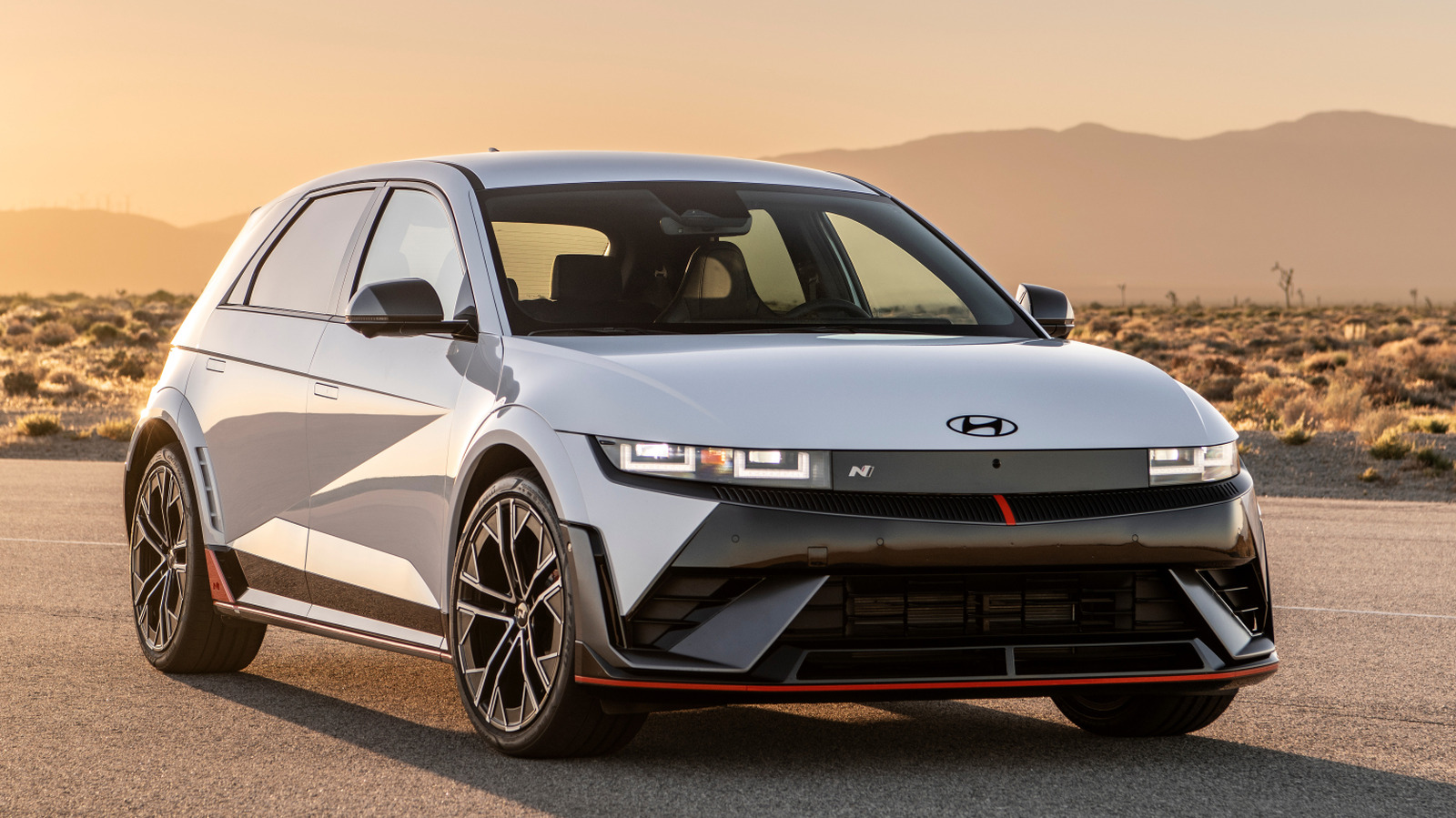
How Does a Price Reduction Reshape the Value Proposition of the Ioniq 5 N?
The recent $6,300 reduction in the manufacturer’s suggested retail price for the Ioniq 5 N, lowering it to $59,900, signals more than a simple recalibration of sticker cost; it reflects a strategic response to evolving market pressures and consumer expectations in the high-performance electric vehicle (EV) segment. While price cuts are often interpreted as a reaction to sluggish demand or intensifying competition, the evidence here suggests a more nuanced calculus. Hyundai appears to be positioning the Ioniq 5 N not merely as a technological showcase but as a credible alternative to both legacy performance vehicles and newer EV entrants. This move, however, raises questions about margin compression, long-term brand equity, and the sustainability of aggressive pricing in a sector where battery costs and supply chain volatility remain unresolved.
The significance of this price adjustment extends beyond immediate affordability. For prospective buyers, the lowered entry point may tip the balance in favor of electrification, particularly among enthusiasts who previously viewed high-performance EVs as prohibitively expensive or insufficiently differentiated. Yet, the practical impact of such a reduction depends on regional incentives, dealer markups, and the evolving landscape of direct-to-consumer sales models. The sticker price, in this context, is less a final figure than a signal—one that may catalyze broader shifts in consumer perception and cross-shopping behavior.
What Does the Introduction of the NACS Port Reveal About Industry Convergence?
The addition of the North American Charging Standard (NACS) port to the Ioniq 5 N is not merely a technical upgrade; it is a tacit acknowledgment of Tesla’s infrastructural dominance and the gravitational pull it exerts on the broader EV ecosystem. By adopting NACS, Hyundai aligns itself with a growing cohort of automakers seeking interoperability and reduced friction for end-users. The practical upshot is clear: access to a more extensive and reliable charging network, which, under current conditions, remains a critical bottleneck for mass EV adoption.
Yet, this shift is not without its ambiguities. While proponents argue that standardization will accelerate the transition to electric mobility, skeptics caution that ceding infrastructural control to a single dominant player introduces new dependencies and potential vulnerabilities. The evidence suggests that, at least in the short term, consumer benefit outweighs these risks, particularly for drivers in regions underserved by alternative charging networks. However, the long-term implications for competition, innovation, and network resilience remain contested—especially if regulatory oversight lags behind technological consolidation.
Who Stands to Gain—or Lose—from These Strategic Adjustments?
At first glance, the primary beneficiaries of these changes are consumers, who gain both financial and practical advantages. Yet, the distribution of gains and losses is uneven. Early adopters who purchased the Ioniq 5 N at a higher price may experience diminished resale values, a perennial risk in rapidly evolving technology markets. Dealers, too, may face margin pressures, especially if inventory acquired at pre-reduction costs lingers on lots.
Conversely, Hyundai’s willingness to absorb short-term financial pain could yield long-term brand dividends, positioning the company as a responsive and consumer-centric player in an increasingly crowded field. The competitive landscape, however, is not static. Rivals may respond with their own price adjustments or feature enhancements, triggering a race to the bottom that could erode profitability across the sector. The evidence here is mixed: while price competition can democratize access, it also risks commoditizing innovation unless accompanied by sustained investment in differentiation.
What Are the Structural Blind Spots and Second-Order Consequences?
Beneath the surface, several structural limitations and blind spots persist. The focus on headline price and charging compatibility risks obscuring deeper challenges: the environmental footprint of battery production, the uneven distribution of charging infrastructure across urban and rural geographies, and the persistent gap between stated performance metrics and real-world driving conditions. Moreover, the celebratory framing of price cuts and interoperability may inadvertently reinforce consumer expectations for perpetual cost declines—an expectation that may prove unsustainable as raw material constraints and regulatory pressures mount.
Second-order consequences also merit scrutiny. As more automakers converge on a single charging standard, the risk of systemic failure—whether through cyberattack, technical malfunction, or monopolistic behavior—increases. Additionally, the narrowing of technological diversity may stifle experimentation with alternative charging paradigms or business models, locking the industry into a path-dependent trajectory that is difficult to reverse.
What Judgment Should the Informed Reader Draw?
For the analytically minded observer, these developments invite both cautious optimism and critical vigilance. The Ioniq 5 N’s price reduction and adoption of NACS represent rational, consumer-friendly adaptations to a rapidly shifting landscape. Yet, the evidence suggests that these moves, while beneficial in the near term, are not panaceas. They are best understood as tactical responses within a broader, unresolved contest over the future architecture of electric mobility. Informed readers should welcome the immediate gains but remain attuned to the structural risks, competitive dynamics, and policy uncertainties that will shape the sector’s trajectory in the years ahead.