How Do Software Updates Redefine the Boundaries of Hypercar Performance?
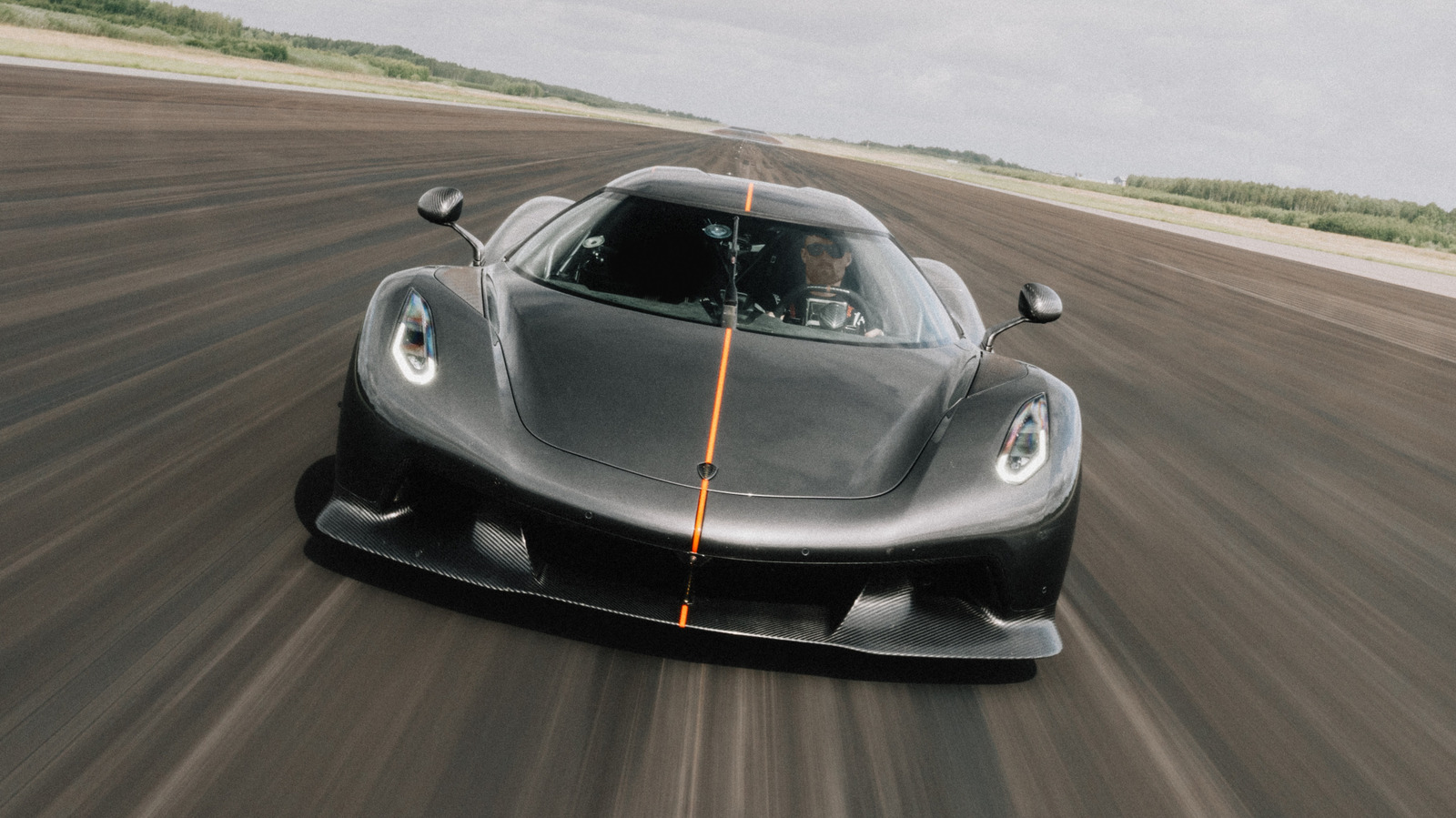
The Koenigsegg Jesko Absolut, a vehicle already positioned at the apex of automotive engineering with its formidable 1,600 horsepower, has recently demonstrated that mechanical prowess alone does not delimit the frontiers of speed. Rather, the evidence suggests that the integration of sophisticated software updates—delivered over the air—has become a decisive factor in the relentless pursuit of new performance records. This development complicates the traditional dichotomy between hardware and software in automotive innovation, revealing a dynamic interplay where digital calibration can unlock latent mechanical potential.
The recent record-setting quarter- and half-mile runs by the Jesko Absolut, following a suite of software enhancements, underscore a paradigm shift: the car’s acceleration and top speed are no longer fixed attributes but variables subject to iterative optimization. While some may argue that such gains are marginal or ephemeral, the practical significance lies in the demonstration that software, not just hardware, now governs the ultimate limits of production car capability. This is not merely a technical footnote; it signals a broader transformation in how performance is engineered, measured, and experienced.
What Mechanisms Enable Software to Surpass Traditional Performance Limits?
At the core of this phenomenon is the capacity of advanced control algorithms to fine-tune engine output, transmission response, and aerodynamic systems in real time. The Jesko Absolut’s recent achievements are not simply the result of increased power delivery but of a holistic recalibration—one that synchronizes powertrain dynamics with traction, launch control, and even active aero elements. This orchestration, mediated by software, allows the car to achieve previously unattainable acceleration figures, such as reaching 190 mph within a quarter mile.
Skeptics might contend that such software-driven gains are constrained by the underlying physical architecture. This caution is not without merit; the ultimate ceiling remains bounded by thermodynamic, material, and safety considerations. Yet, the Jesko’s case demonstrates that the margin between theoretical and practical performance is wider than previously assumed, and that digital intervention can meaningfully narrow this gap. The implication is that the locus of innovation is shifting: the most consequential advances may now occur in code rather than carbon fiber.
Who Benefits—and Who Is Marginalized—by the Software-Driven Performance Revolution?
The immediate beneficiaries of this trend are hypercar owners and manufacturers, for whom over-the-air updates offer a pathway to continuous improvement without the logistical or regulatory burdens of physical modification. For consumers, this translates into a vehicle that evolves—sometimes dramatically—over its lifespan, challenging the notion of obsolescence and recalibrating expectations around value retention.
However, this evolution is not universally benign. The increasing centrality of proprietary software introduces new asymmetries of power and knowledge. Owners become dependent on manufacturers for access to performance upgrades, while independent mechanics and tuners may find themselves excluded from the optimization process. Moreover, the opacity of software-driven changes complicates regulatory oversight and raises questions about standardization, safety, and liability in the event of failure or misuse.
Why Do These Developments Matter Beyond the Realm of Hypercars?
While the Jesko Absolut’s exploits may appear, at first glance, to concern only a rarefied stratum of automotive culture, the underlying dynamics have far-reaching implications. The migration of performance gains from hardware to software foreshadows similar trajectories in mainstream vehicles, where over-the-air updates could recalibrate everything from fuel efficiency to driver-assistance features. This shift has the potential to alter the economics of car ownership, the structure of aftersales markets, and even the regulatory frameworks governing road safety and emissions.
Yet, the evidence remains mixed regarding the broader societal impact. While enthusiasts and early adopters may celebrate the democratization of performance upgrades, there is a risk that software-driven differentiation will entrench new forms of exclusivity, with access to the latest features gated by subscription models or manufacturer discretion. The long-term consequences for consumer autonomy and competition policy remain unsettled.
What Should Informed Observers Conclude About the Future of Automotive Innovation?
The Koenigsegg Jesko Absolut’s record-breaking runs, enabled by software updates, crystallize a pivotal moment in the evolution of automotive technology. The boundaries between mechanical and digital engineering are dissolving, with profound consequences for how performance is conceived, delivered, and controlled. For stakeholders across the industry—engineers, regulators, consumers—the imperative is to recognize that the locus of value creation is shifting toward the intangible, and that the rules of engagement are being rewritten in code.
Caution is warranted. The promise of perpetual improvement must be balanced against concerns about transparency, equity, and control. Yet, the trajectory is clear: in the contest for automotive supremacy, software is no longer a supporting actor. It is the new engine of progress.