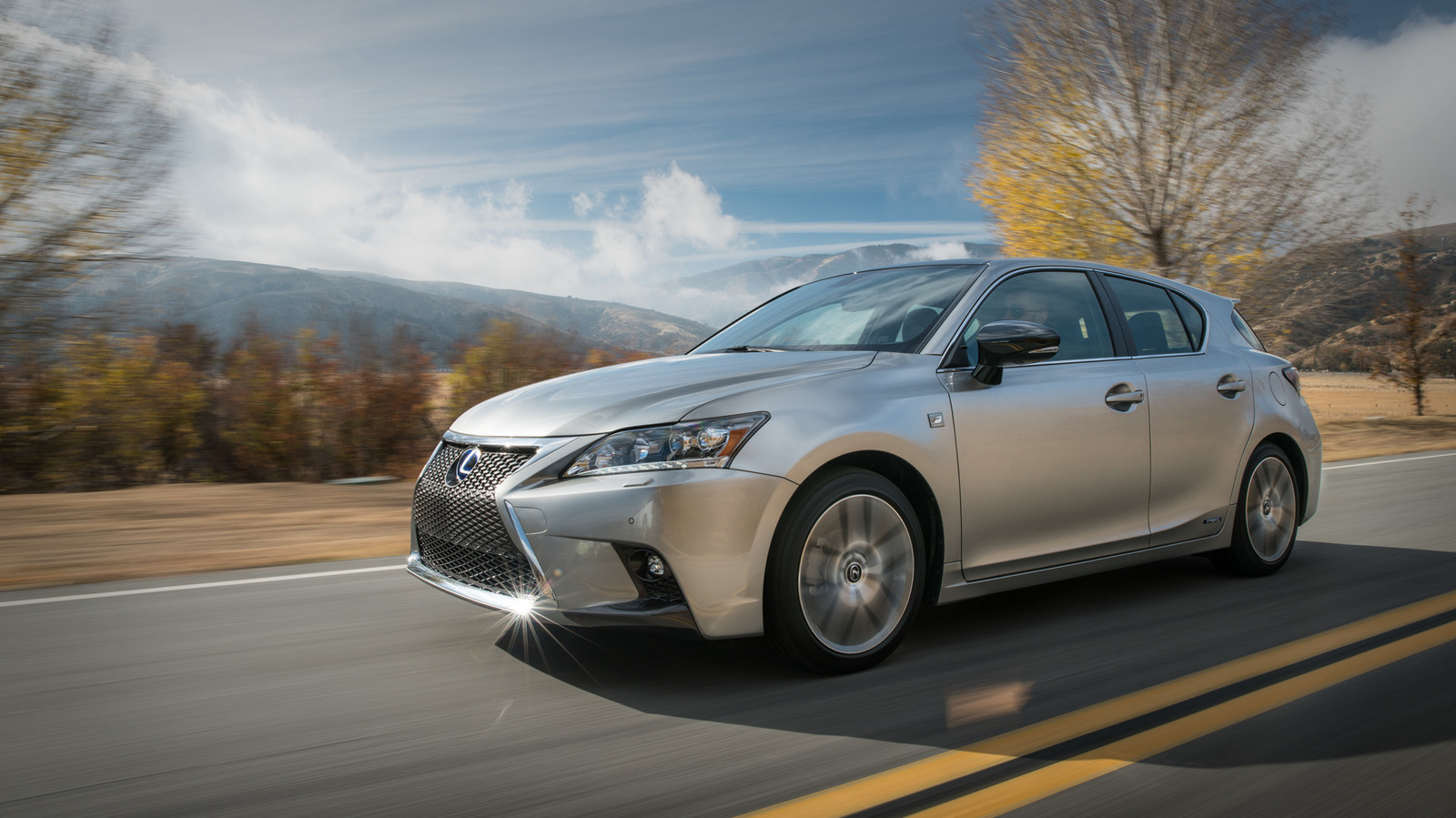
Does the Lexus CT 200h Represent a Meaningful Alternative to Conventional Luxury Hybrids?
The Lexus CT 200h occupies a peculiar niche—one that resists easy categorization. While its hybrid drivetrain borrows heavily from the Toyota Prius, the CT 200h aspires to a more refined, upmarket experience. Yet, the evidence suggests that its performance characteristics—modest acceleration, conservative handling, and restrained styling—do not align with the archetypal luxury hatchback. This tension between aspiration and execution raises a fundamental question: does the CT 200h genuinely expand the boundaries of the luxury hybrid segment, or does it merely repackage familiar virtues for a slightly different audience?
The answer appears to hinge on the priorities of a specific, perhaps underappreciated, demographic. For drivers who value efficiency and environmental signaling over visceral excitement, the CT 200h offers a compelling proposition. Its cabin, while not opulent by the standards of German rivals, delivers a tangible upgrade in materials and noise insulation compared to mainstream hybrids. However, this interpretation remains contested. Critics argue that the CT 200h’s lack of dynamic engagement undermines its luxury pretensions, suggesting that its appeal is more symbolic than substantive. The methodological challenge here lies in defining what constitutes “luxury” in a hybrid context: is it performance, comfort, brand cachet, or some blend of all three?
Why Does the CT 200h’s Approach to Efficiency and Status Matter?
The CT 200h’s significance extends beyond its immediate market segment. It embodies a broader shift in the meaning of automotive status, particularly among buyers navigating midlife transitions. Traditionally, a “midlife crisis” car signaled a turn toward performance or ostentation. The CT 200h, by contrast, signals a different set of values: restraint, responsibility, and a nuanced form of self-regard. This is not a trivial cultural development. If the evidence of shifting consumer preferences holds, the CT 200h may presage a redefinition of what it means to “arrive” in the automotive hierarchy—not with horsepower, but with hybrid badges and subtle luxury cues.
Yet, this reading is not without its blind spots. The CT 200h’s efficiency gains, while real, are bounded by the limitations of its underlying technology. Its fuel economy, though impressive relative to conventional luxury models, falls short of the most advanced plug-in hybrids and electric vehicles now entering the market. Moreover, the model’s appeal is demographically narrow: younger buyers and those seeking technological novelty are likely to look elsewhere. The CT 200h thus risks becoming a transitional artifact—valued by a cohort whose preferences may soon be eclipsed by broader electrification trends.
Who Benefits—and Who Is Left Out—by the CT 200h’s Value Proposition?
The CT 200h’s core constituency appears to be professionals in their late thirties to fifties, individuals who seek to reconcile environmental consciousness with a desire for premium branding. For this group, the CT 200h’s blend of Prius-derived efficiency and Lexus-level comfort offers a rarefied middle ground. Yet, this synthesis is not universally accessible. The price premium over mainstream hybrids may be prohibitive for budget-conscious buyers, while the lack of performance credentials limits its appeal among enthusiasts. Furthermore, the CT 200h’s relatively conservative design may alienate those who equate luxury with visual drama or cutting-edge technology.
Structural limitations also shape the CT 200h’s prospects. The model’s reliance on a dated hybrid platform constrains both its technological relevance and its long-term value retention. Vested interests within the luxury auto segment—dealers, marketers, and even some consumers—may perpetuate the narrative that “luxury” can be decoupled from performance, but this remains an unsettled proposition. The risk is that the CT 200h becomes a case study in brand overreach: a vehicle that promises transformation but delivers only incremental change.
What Should an Informed Reader Conclude About the Lexus CT 200h?
The Lexus CT 200h is best understood as a transitional artifact—an emblem of a moment when luxury, efficiency, and self-image converged in unexpected ways. Its core mechanism is not speed or spectacle, but the quiet assertion of values that run counter to automotive convention. For those attuned to this sensibility, the CT 200h offers genuine utility and satisfaction. For others, it may seem anodyne or even regressive.
The prudent reader will recognize both the CT 200h’s virtues and its limitations. Its efficiency and comfort are real, but contextually bounded. Its status signaling is subtle, but potentially fleeting. As the market moves inexorably toward electrification and as definitions of luxury continue to evolve, the CT 200h’s legacy will likely be as a bridge—useful, perhaps even admirable, but ultimately provisional.