How Do Heavy Vehicles Interact with Vulnerable Public Infrastructure?
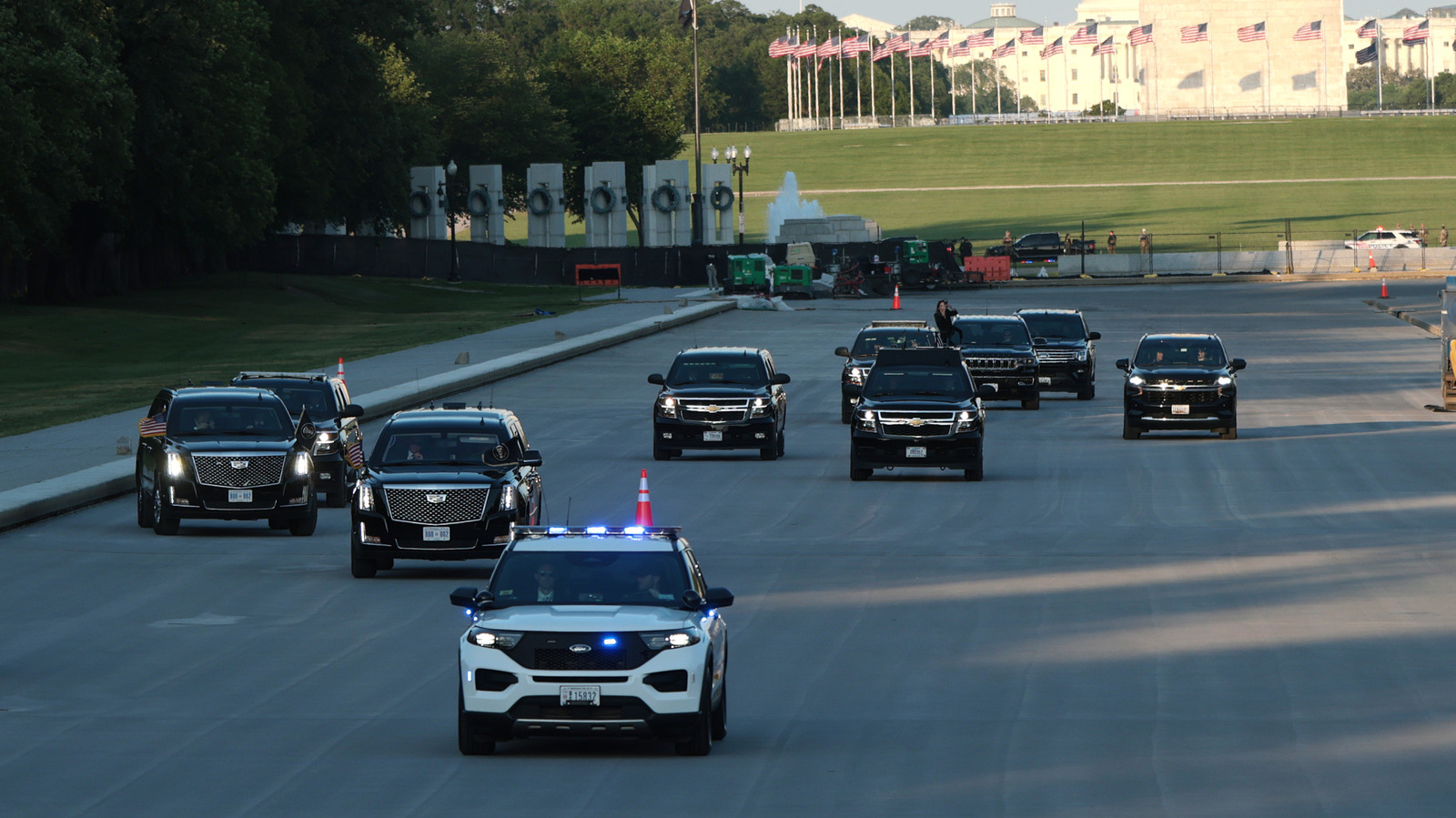
The spectacle of a motorcade traversing the surface of the Lincoln Memorial Reflecting Pool, particularly when the pool is drained and covered with a new blue liner, foregrounds a persistent tension between ceremonial necessity and the fragility of public infrastructure. While the visual symbolism of such events is undeniable, the underlying physical consequences are less immediately visible but potentially far-reaching. Heavy vehicles, by their very design, exert concentrated loads that far exceed the everyday stresses for which most pedestrian-oriented structures are engineered. The evidence suggests that, under specific conditions—such as when a protective liner is newly installed and the underlying substrate is exposed—these loads can induce microfractures, compressive deformation, or delamination within the structure. The precise extent of the damage is difficult to ascertain without post-event forensic analysis, yet the risk calculus shifts markedly when the infrastructure in question is both historic and not originally intended for vehicular traffic.
What Are the Broader Implications of Such Damage Beyond Immediate Repair Costs?
The consequences of structural compromise in a site as symbolically charged as the Lincoln Memorial Reflecting Pool extend far beyond the realm of routine maintenance budgets. At stake is the integrity of a national monument that functions as a locus of collective memory and civic ritual. Even minor, initially invisible damage can propagate over time, leading to more substantial failures—cracking, water leakage, or accelerated material degradation—that threaten both the aesthetic and functional longevity of the site. Moreover, the need for unplanned repairs can divert resources from other preservation projects, creating a cascade of opportunity costs. The practical significance of such incidents, therefore, is not confined to the immediate aftermath but radiates outward, affecting future access, interpretive programming, and the allocation of public funds.
Who Bears the Hidden Costs and Risks of These Decisions?
While the decision to permit heavy vehicles onto a sensitive structure is typically justified on grounds of security or logistical expedience, the distribution of risk is asymmetrical. Maintenance staff, preservationists, and the general public—rather than the event organizers or dignitaries—bear the long-term consequences. This dynamic reflects a broader pattern in which the priorities of high-visibility events can override the stewardship obligations owed to shared heritage. The evidence remains contested regarding the precise threshold at which such crossings become unacceptable, but the pattern of incremental damage is well-documented in analogous contexts. The absence of robust, transparent protocols for risk assessment and accountability exacerbates this structural blind spot.
Why Do Prevailing Interpretations Underestimate the Structural Stakes?
Mainstream narratives often frame incidents of this kind as isolated lapses or unfortunate accidents, thereby obscuring the systemic vulnerabilities they reveal. The focus on surface-level damage—such as visible paint scuffs or liner tears—can distract from the more insidious, cumulative effects of repeated overloading. Furthermore, the episodic nature of high-profile events tends to fragment institutional memory, making it difficult to track long-term trends or enforce preventative norms. In this context, the evidence suggests that a more rigorous, historically informed approach to infrastructure management is warranted—one that privileges the long-term resilience of public assets over the short-term imperatives of spectacle.
What Should an Informed Reader Conclude About the Governance of Public Spaces?
The incident in question, while superficially minor, serves as a microcosm of the broader challenges facing the stewardship of public monuments. It raises uncomfortable questions about the trade-offs between ceremonial display and infrastructural prudence, as well as the mechanisms by which accountability is (or is not) enforced. For the informed reader, the lesson is clear: vigilance and advocacy are required to ensure that the symbolic value of national spaces is matched by a commensurate commitment to their physical preservation. Only by foregrounding the hidden costs and second-order consequences of such decisions can the integrity of shared civic spaces be maintained for future generations.