How Did the Locomotive’s Design Shape the Crew’s Survival Prospects?
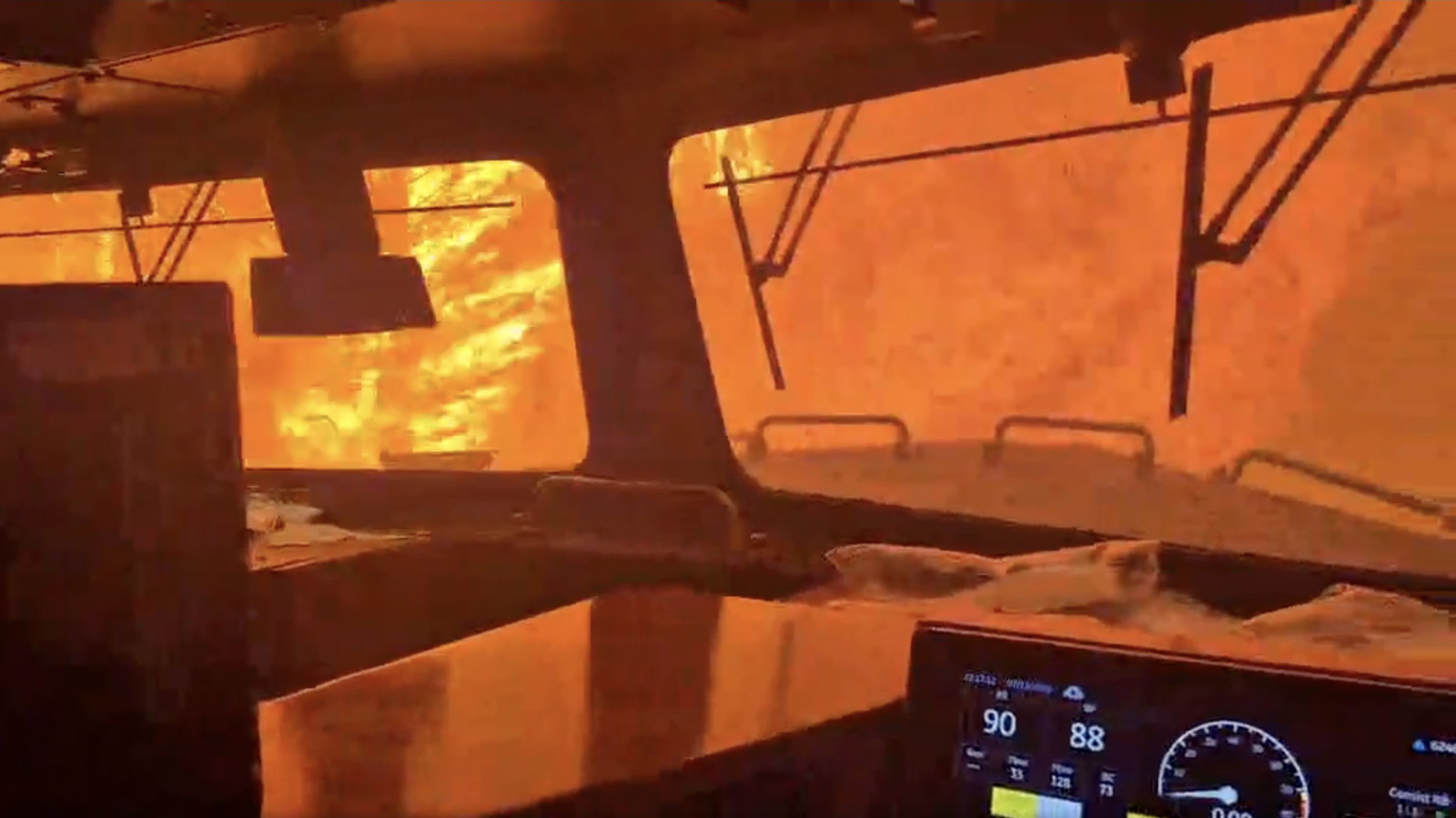
The evidence suggests that the locomotive’s structural integrity and climate control systems played a decisive—if underappreciated—role in safeguarding the crew during the wildfire incident. While the fire’s rapid movement limited its direct contact with the train, it is the locomotive’s robust bodywork and sealed environment that most plausibly shielded those inside from lethal heat and smoke exposure. This is not merely a matter of engineering luck. Rather, it reflects a broader, often overlooked, principle: the survivability of industrial machinery in extreme environments depends as much on the integrity of its ancillary systems (such as air conditioning and pressurization) as on its primary mechanical functions.
Yet, the narrative that attributes the crew’s survival solely to the locomotive’s design warrants scrutiny. The fire’s speed, while fortuitous in this instance, introduces a stochastic element that cannot be engineered away. In slower-moving or more intense fire scenarios, even the best-insulated cabs may not suffice. Thus, while the incident underscores the value of robust locomotive design, it also exposes the limits of technological mitigation in the face of increasingly volatile wildfire behavior.
What Broader Lessons Emerge About Infrastructure Resilience in the Face of Wildfires?
This episode invites a more nuanced consideration of infrastructure resilience. The prevailing discourse tends to frame resilience as a function of hardening assets—thicker steel, better seals, more powerful filtration. However, the practical significance of such measures is bounded by the unpredictable dynamics of wildfire events, which can overwhelm even the most advanced systems under certain conditions. The incident at hand illustrates both the promise and the inadequacy of design-based solutions: while they can tip the balance in marginal cases, they cannot guarantee safety when environmental volatility exceeds design assumptions.
Moreover, the focus on the crew’s survival risks obscuring the broader operational and ecological consequences. Freight rail is a backbone of supply chains; disruptions reverberate far beyond the immediate site of the incident. The fire’s rapid passage, while sparing the crew, may have left critical infrastructure compromised in ways not immediately visible—track warping, signal damage, or latent structural weaknesses. These second-order effects, often underreported, can cascade into systemic vulnerabilities.
Who Bears the Hidden Risks and Costs in Such Incidents?
The immediate drama of crew survival tends to overshadow the diffuse, long-term risks borne by other stakeholders. Maintenance workers, emergency responders, and nearby communities all face heightened exposure in the aftermath of such events, often without the benefit of the locomotive’s protective features. Insurance costs, regulatory scrutiny, and reputational damage accrue to operators, but the distribution of risk is asymmetrical: those least able to control the hazards—trackside residents, for example—are often most affected by the consequences of infrastructure failure.
Furthermore, the incident highlights a structural blind spot in risk assessment frameworks. Traditional models, calibrated to historical fire behavior, may systematically underestimate the frequency and severity of such encounters as climate patterns shift. This misalignment between model and reality creates a zone of unpriced risk, with implications for both public safety and capital allocation.
What Should an Informed Reader Conclude About Future Preparedness?
The core mechanism at stake is not merely the technical adequacy of locomotive design, but the alignment—or misalignment—between engineered systems and the evolving risk landscape. While the evidence from this incident supports the value of robust cab construction and air filtration, it also cautions against overreliance on static design solutions in a context of dynamic environmental threats. An informed reader should resist the temptation to treat this outcome as proof of comprehensive preparedness. Instead, it should be read as a contingent success—one that underscores the need for adaptive risk management, continuous scenario testing, and a broader reckoning with the systemic vulnerabilities exposed by climate-driven hazards.