How Do Subtle Design Tweaks Reflect Maserati’s Strategic Calculus?
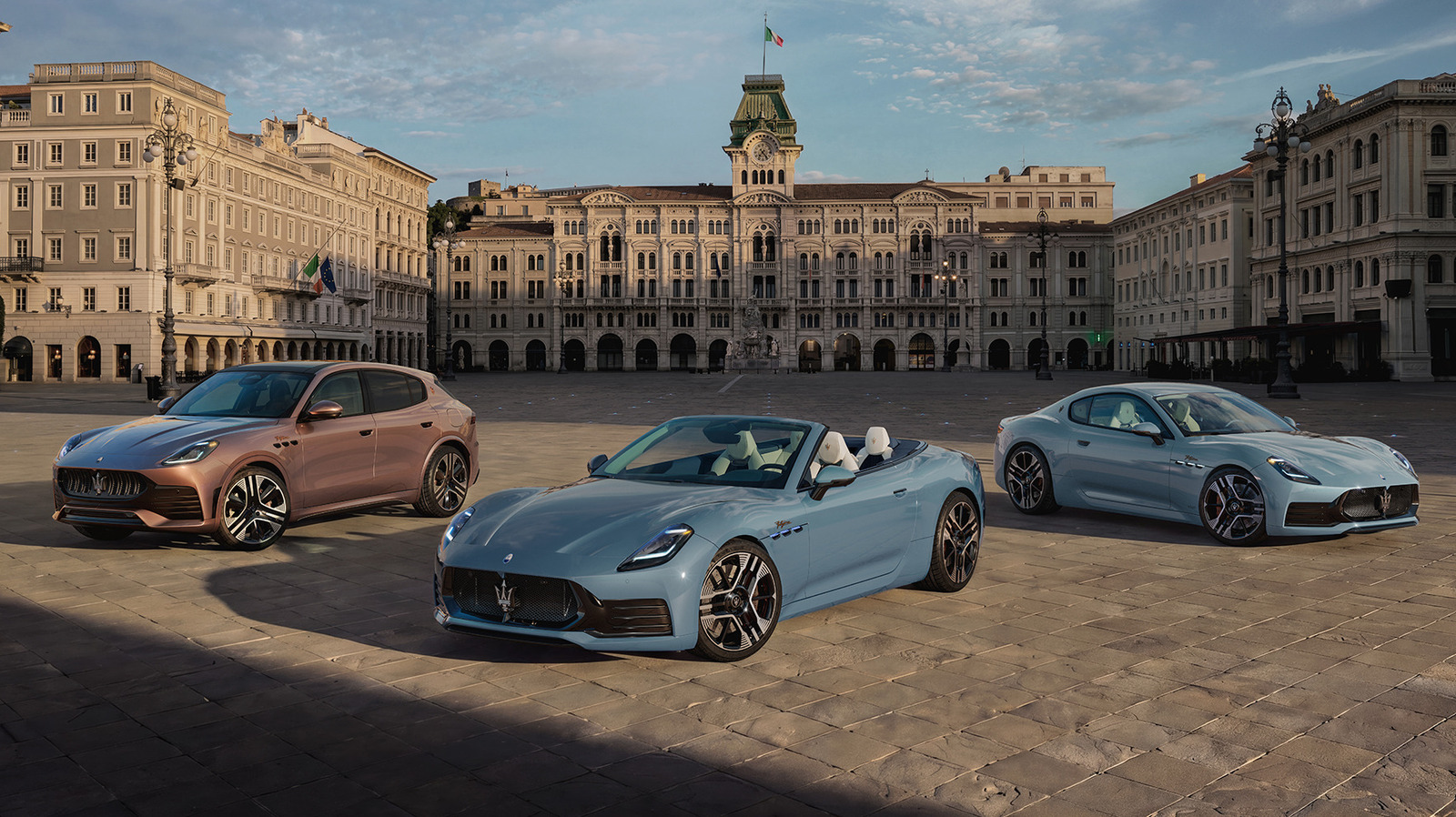
Superficial as they may seem, the redesigned bumpers and the addition of a new clock inside Maserati’s Grecale, GranTurismo, and GranCabrio models signal a calculated restraint rather than creative inertia. In a market segment where radical overhauls often risk alienating a loyal—if niche—clientele, incremental updates serve as a hedge against obsolescence without undermining brand continuity. The evidence suggests that Maserati’s decision to limit visible changes reflects a recognition of the delicate balance between heritage and innovation. For a marque whose cachet is as much about lineage as about novelty, the risk of over-designing may outweigh the potential gains from more conspicuous updates. Yet, this approach is not without its critics: some argue that such minimalism verges on complacency, especially as competitors push the boundaries of both form and function. The validity of this critique, however, is context-dependent; for Maserati’s core audience, subtlety may be a feature, not a flaw.
Why Does the Continued Commitment to Folgore EVs Matter?
Maserati’s ongoing support for the Folgore electric vehicle variants across its lineup warrants closer scrutiny. On the surface, this persistence might appear as a straightforward nod to regulatory pressures and shifting consumer preferences. However, the strategic implications run deeper. By maintaining EV options even as the combustion-engine models receive only modest facelifts, Maserati positions itself as a brand straddling two epochs—one foot in the tradition of Italian grand touring, the other in the emergent landscape of electrified luxury. This duality is not merely symbolic. It reflects the structural uncertainty facing legacy automakers: the pace of EV adoption remains uneven across markets, and the profitability of high-end electric models is far from assured. Under these conditions, Maserati’s approach can be read as a form of risk management, preserving optionality while avoiding overcommitment to any single drivetrain technology. The practical significance of this strategy is clearest in regions where infrastructure and consumer readiness for EVs lag behind regulatory ambition.
Who Is Most Affected by These Incremental Changes?
The direct beneficiaries of Maserati’s restrained refresh are existing owners and brand loyalists, for whom continuity and residual value are paramount. Yet, the second-order effects extend further. Dealers, often caught between the imperatives of moving inventory and maintaining exclusivity, are provided with a narrative of “refinement” rather than “reinvention”—a subtle but crucial distinction in the luxury segment. Meanwhile, potential new entrants to the brand may find the lack of dramatic change either reassuring or underwhelming, depending on their appetite for novelty. There is also an underappreciated demographic dimension: younger luxury buyers, whose expectations are shaped by rapid cycles of technological and aesthetic innovation elsewhere, may interpret Maserati’s conservatism as a sign of stagnation rather than stability. The evidence here is mixed; while some data suggest that heritage brands can successfully cultivate new audiences through storytelling and experiential marketing, the absence of visible transformation risks ceding cultural relevance to more audacious rivals.
What Are the Structural Blind Spots and Vested Interests?
A critical reading must acknowledge the structural incentives that shape Maserati’s choices. The cost of developing all-new platforms or radically reimagined interiors is prohibitive, especially for a manufacturer with volumes far below mass-market competitors. Incrementalism, then, is as much a function of economic constraint as of brand philosophy. Vested interests—ranging from suppliers invested in existing tooling to dealers wary of disruptive change—exert a gravitational pull toward the status quo. This inertia is compounded by regulatory ambiguity: as emissions standards tighten but enforcement timelines remain fluid, the optimal moment for a decisive pivot to electrification remains elusive. The mainstream narrative, which often frames such updates as evidence of creative exhaustion, misses the extent to which these decisions are shaped by a complex interplay of risk, capital, and institutional memory.
What Should the Informed Reader Infer or Do?
For the analytically minded observer, the lesson is not to dismiss incremental updates as mere window dressing. Rather, these changes illuminate the adaptive strategies of legacy brands navigating a period of profound uncertainty. The prudent course for stakeholders—be they consumers, investors, or industry analysts—is to scrutinize not just the visible product changes, but the underlying logic of risk management, resource allocation, and market positioning. In a sector where the pace of change is both overhyped and uneven, the most consequential developments may be those that unfold quietly, beneath the surface of design. The informed reader should resist the temptation to equate subtlety with stagnation; sometimes, the most telling signals are those that barely register at first glance.