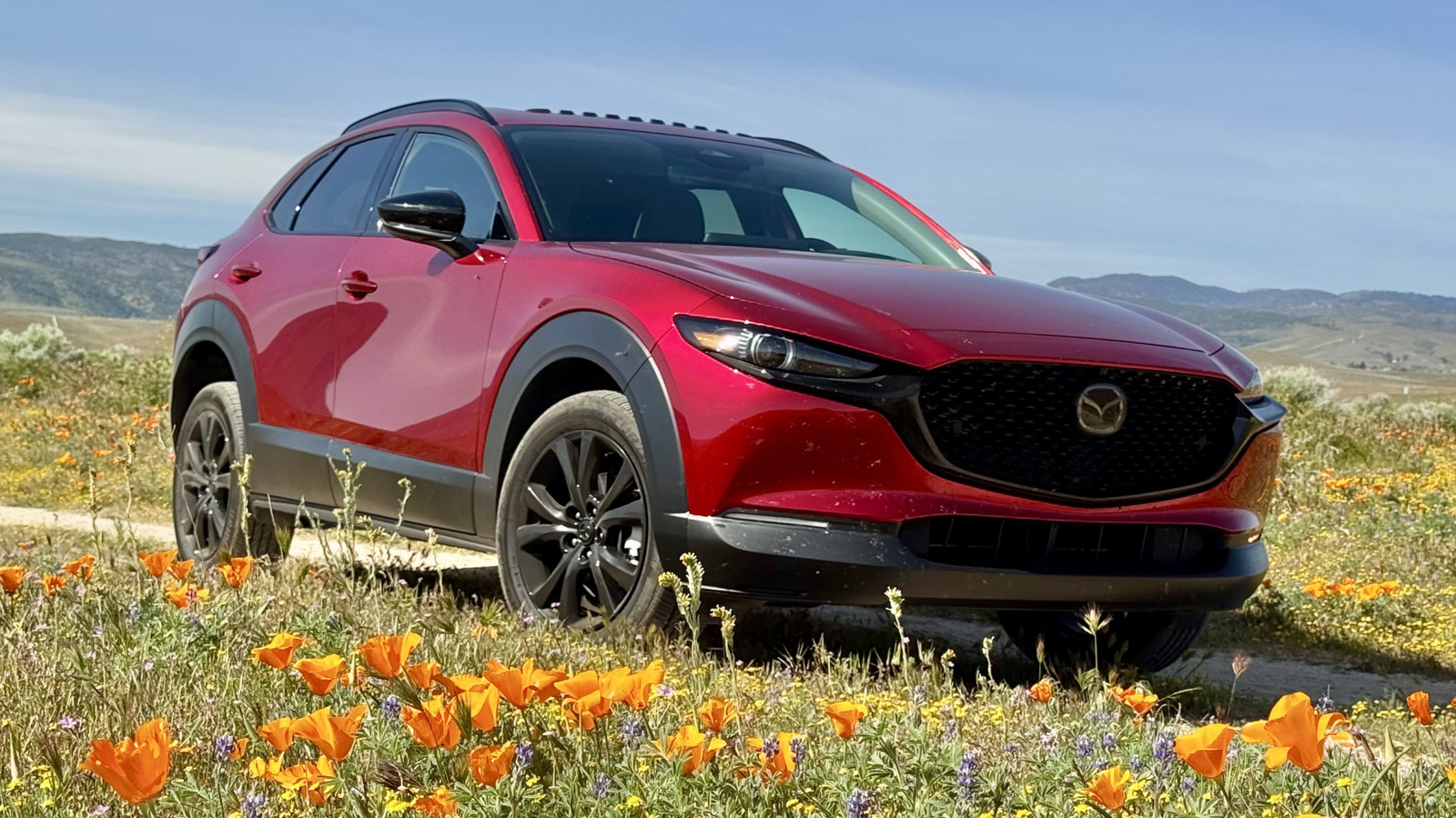
How Does the CX-30’s Technological Plateau Shape Its Value Proposition?
The CX-30 occupies an intriguing position in the subcompact crossover segment: it neither dazzles with the latest technological marvels nor languishes as an obsolete relic. Instead, it exemplifies a calculated restraint, prioritizing refinement and coherence over the relentless churn of gadgetry. This is not merely a function of Mazda’s engineering philosophy but a deliberate market positioning. The evidence suggests that, for a significant subset of buyers, the marginal utility of cutting-edge tech—often deployed as a differentiator in this class—diminishes rapidly when weighed against the virtues of tactile quality, intuitive controls, and a driving experience that aspires to something beyond mere transportation.
This interpretive angle complicates the mainstream narrative, which tends to equate technological novelty with intrinsic value. In the CX-30’s case, the absence of bleeding-edge features may actually shield owners from the depreciation and obsolescence that can afflict more tech-forward rivals. The practical significance is clear: consumers who prioritize longevity, reliability, and a certain analog purity may find the CX-30’s technological conservatism not a liability, but an asset.
What Distinguishes the CX-30’s Driving Experience in a Crowded Segment?
To characterize the CX-30 as “budget Porsche Macan” is not simply to invoke a flattering comparison; it is to highlight a structural anomaly in the segment. Most subcompact crossovers, engineered to a price, exhibit a kind of dynamic indifference—steering that anesthetizes, suspensions that prioritize compliance over engagement. The CX-30, by contrast, offers a chassis that communicates, a powertrain that rewards, and an overall composure that belies its price point. This is not a universal consensus: some critics argue that the ride verges on firm, or that the turbocharged engine’s character is more utilitarian than evocative. Yet, under specific conditions—particularly for drivers who value feedback and control—the CX-30’s dynamic tuning stands apart.
This dynamic distinctiveness matters beyond the realm of enthusiast discourse. It suggests that the CX-30 is engineered not simply to meet the lowest common denominator of consumer expectation, but to cultivate a more discerning, if narrower, audience. The second-order consequence: Mazda’s willingness to accept a smaller market share in exchange for a more loyal, engaged customer base. This is a strategic wager, and one that may insulate the brand from the commoditization pressures that afflict many mainstream automakers.
Who Benefits—and Who Is Overlooked—by the CX-30’s Design Choices?
The CX-30’s appeal is not evenly distributed. Urban professionals, empty nesters, and those seeking a premium experience on a modest budget are likely to find its blend of quality and restraint compelling. Yet, families requiring maximal cargo space, or technophiles seeking the latest driver aids, may find the CX-30’s priorities misaligned with their own. The evidence here is circumstantial but persuasive: sales data indicate a demographic skew toward younger, style-conscious buyers, with a notable underrepresentation among those for whom utility is paramount.
This segmentation is not accidental. It reflects a broader trend in automotive design, wherein brands increasingly tailor products to psychographic niches rather than broad-based appeal. The blind spot, however, is that such focus risks alienating those whose needs fall outside the targeted archetype. For the informed reader, the lesson is clear: the CX-30’s virtues are real but not universal, and its value proposition is contingent on a close alignment between product attributes and personal priorities.
What Are the Structural Constraints and Strategic Implications?
The CX-30’s position is shaped as much by external constraints as by internal virtues. Regulatory demands, cost pressures, and the inexorable march of electrification all circumscribe Mazda’s freedom to innovate—or to resist innovation. The company’s decision to double down on driving engagement and material quality, rather than chase the latest infotainment trends, reflects both a recognition of its own limitations and a shrewd reading of market fragmentation.
Yet, this strategy is not without risk. Should consumer preferences shift decisively toward connectivity and automation, the CX-30’s current strengths may become liabilities. Conversely, if the backlash against over-digitization gains momentum, Mazda’s restraint could be vindicated. The evidence remains equivocal; for now, the CX-30’s approach appears well-calibrated to its intended audience, but the long-term equilibrium is far from settled.
What Judgment Should the Discerning Consumer Draw?
For those unmoved by the siren song of technological maximalism, the CX-30 offers a rare coherence of purpose. Its limitations are real, but so are its virtues. The informed reader should weigh not only the spec sheet but the underlying philosophy: a car that aspires to be more than a sum of features, and that stakes its claim on qualities that resist easy quantification. In a segment often defined by compromise, the CX-30’s refusal to chase every trend may, paradoxically, be its most compelling attribute.