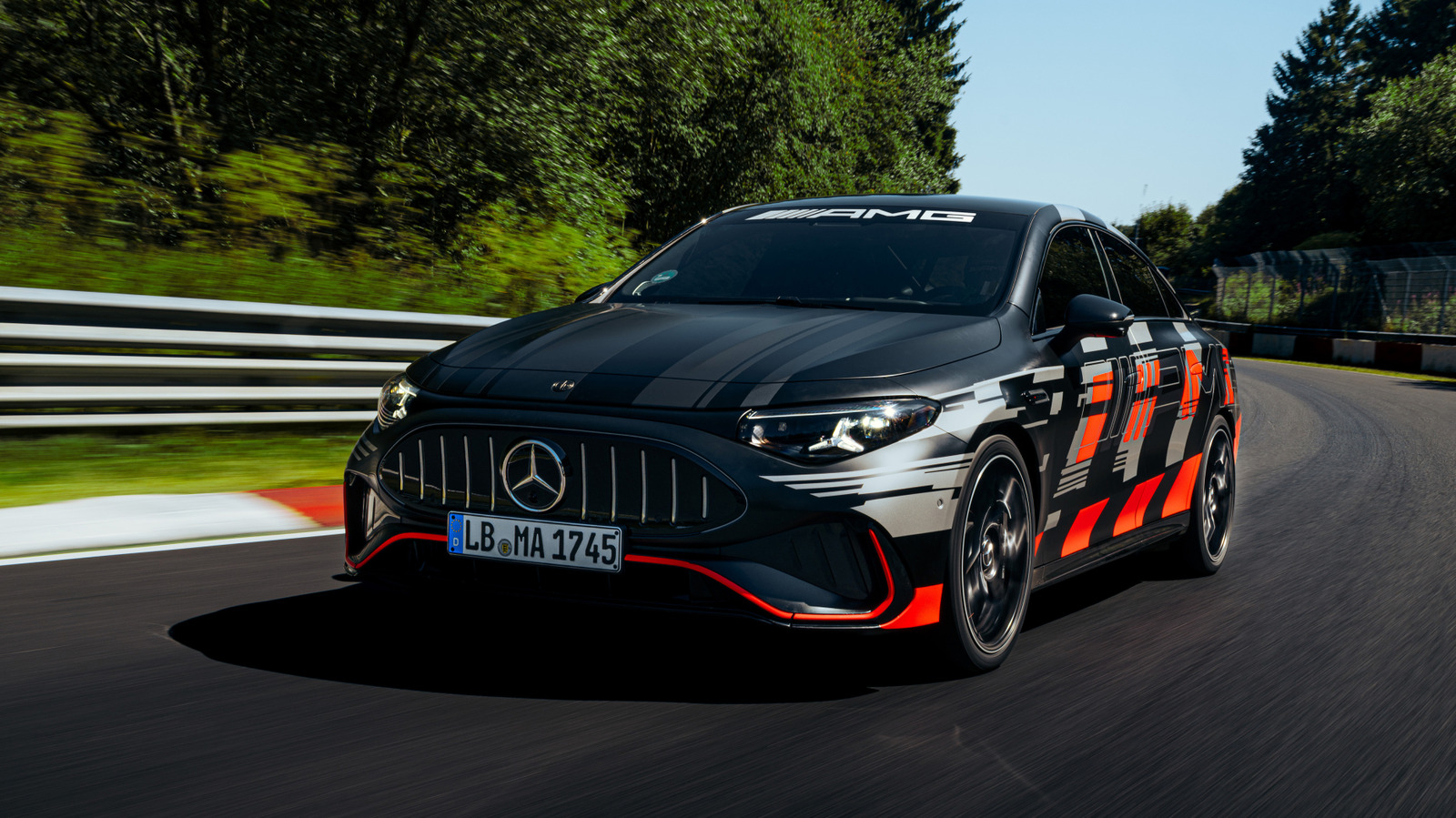
How Does the Electric CLA45 Challenge Conventional Performance Hierarchies?
The electric CLA45’s lap time—outpacing not only its own gas-powered predecessor by nearly 13 seconds but also eclipsing the formidable Porsche Taycan Turbo S—invites a re-examination of entrenched assumptions about automotive performance. Historically, the Nürburgring lap has functioned as a crucible for internal combustion prowess, a metric by which manufacturers and enthusiasts alike have measured mechanical virtuosity. Yet, the evidence from this latest run suggests that the electric CLA45 is not merely competitive; it is redefining the upper echelons of what is technically feasible on the track. This development unsettles the long-standing narrative that electric vehicles, while efficient and quick in straight-line acceleration, must inevitably cede ground to combustion-powered rivals in sustained, high-demand scenarios such as the Nürburgring.
What Mechanisms Enable This Performance Leap?
The core mechanism at play is not simply the raw power output of electric drivetrains, but the nuanced interplay between instantaneous torque delivery, advanced thermal management, and software-optimized traction control. Electric vehicles, under specific conditions, can deploy torque with a precision and immediacy that combustion engines cannot replicate. However, this advantage is often offset by battery thermal limitations and weight penalties. The CLA45’s achievement implies a significant breakthrough in managing these constraints—perhaps through a combination of lightweight battery architecture, regenerative braking strategies that minimize heat buildup, and real-time adaptive suspension systems. While the technical specifics remain proprietary, the practical significance is clear: the gap between electric and combustion track performance is not merely narrowing; it is, in some cases, reversing.
Why Does This Matter Beyond the Lap Time?
Surface-level interpretations might focus on the spectacle of a new lap record, but the deeper significance lies in the shifting landscape of automotive engineering priorities. If electric vehicles can consistently outperform their combustion counterparts in the most demanding environments, the rationale for continued investment in traditional performance platforms weakens. Manufacturers, suppliers, and even regulatory bodies must recalibrate their expectations and resource allocations. For consumers, the implications are equally profound: the emotional and experiential arguments for combustion performance—sound, mechanical engagement, heritage—may increasingly be outweighed by the empirical superiority of electric alternatives.
Who Benefits—and Who Loses—in This Transition?
The immediate beneficiaries are those stakeholders positioned to capitalize on the electrification of high-performance segments: engineers with expertise in battery systems, software developers specializing in vehicle dynamics, and firms agile enough to pivot their product strategies. Conversely, legacy suppliers tethered to combustion-specific components face accelerating obsolescence. There is also a less visible cohort affected: enthusiasts and collectors whose identities and investments are intertwined with the mythology of combustion performance. For them, the CLA45’s triumph is not merely a technical milestone but a cultural inflection point, one that may render cherished benchmarks and traditions increasingly anachronistic.
What Are the Structural Limitations and Blind Spots in the Current Discourse?
Despite the headline-grabbing lap time, several methodological boundaries temper the broader applicability of this result. Track conditions, tire selection, and test protocols can introduce variability that undermines direct comparison. Furthermore, the sustainability of such performance in repeated or real-world scenarios remains contested. Battery degradation, charging infrastructure, and the environmental costs of rare-earth materials all complicate the narrative of unqualified progress. Mainstream interpretations often gloss over these second-order effects, privileging spectacle over systemic analysis.
What Should the Informed Reader Conclude?
The electric CLA45’s Nürburgring performance is not simply a data point in the ongoing evolution of automotive technology; it is a signal that the foundational terms of competition are being rewritten. Yet, this interpretation must be hedged: the durability of this advantage, the scalability of the underlying technologies, and the broader ecological trade-offs all remain open questions. For those seeking to understand where the future of performance lies, the prudent course is neither uncritical celebration nor reactionary skepticism, but a vigilant attention to the shifting interplay of engineering, economics, and cultural meaning.