How Does Mercedes-Benz Navigate Luxury Amidst EV Market Volatility?
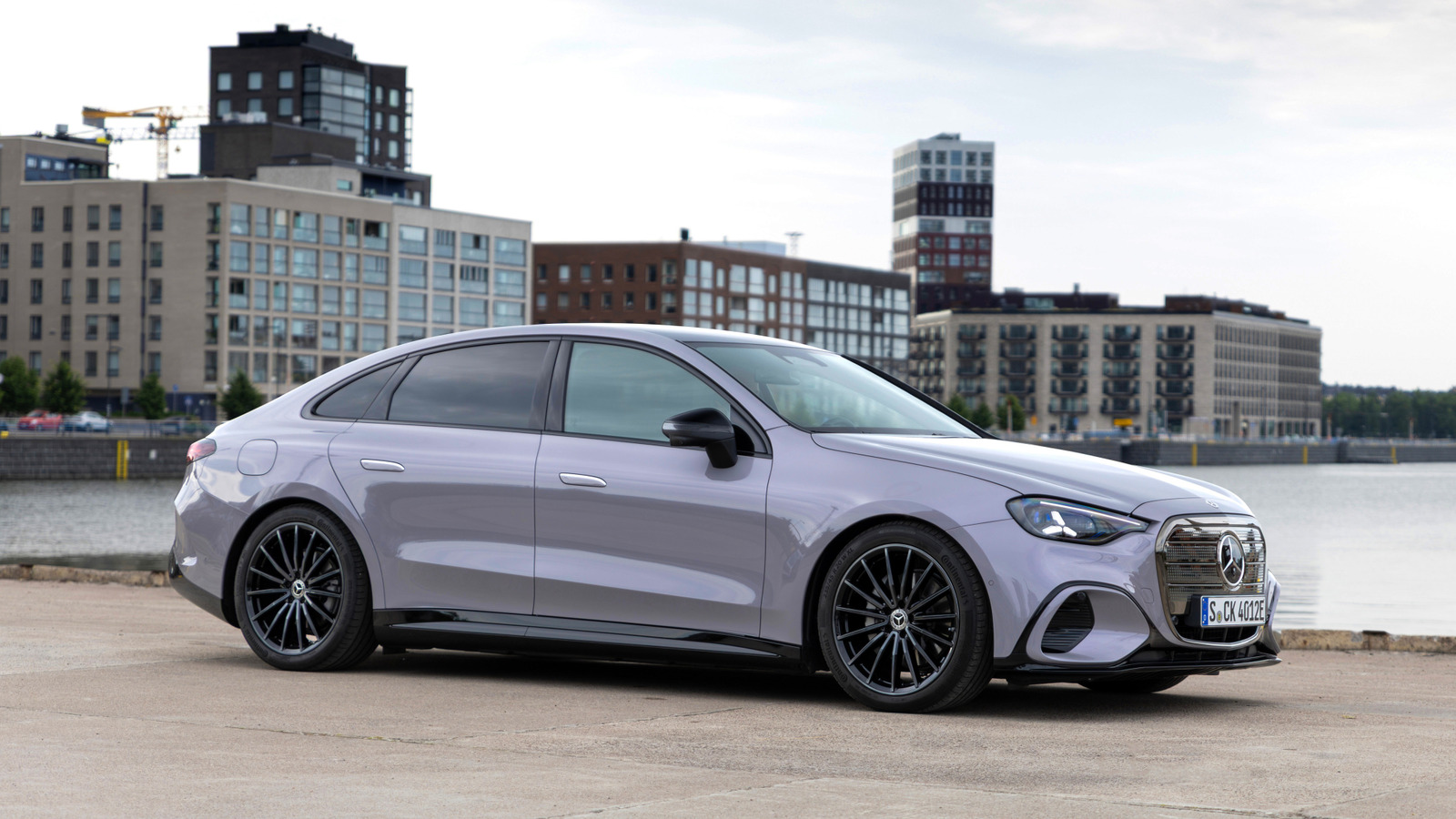
The expansion of the C-Class portfolio at this particular juncture—when the electric vehicle sector is marked by uncertainty and fragmentation—signals a calculated defiance of prevailing market anxieties. Mercedes-Benz, by targeting affluent consumers with an enhanced C-Class offering, appears to wager that luxury buyers remain relatively insulated from the short-term turbulence afflicting broader EV adoption. This move, however, is not merely a matter of product diversification. It reflects a deeper thesis: that the luxury segment, with its emphasis on brand cachet and experiential value, may be uniquely positioned to absorb shocks that would destabilize more price-sensitive tiers.
Yet, this interpretation warrants caution. While historical data suggests that premium automotive demand exhibits some counter-cyclicality—wealthier buyers often maintain purchasing power during downturns—the current EV market introduces novel variables. Regulatory uncertainty, rapidly evolving battery technologies, and shifting consumer expectations around sustainability complicate the calculus. The evidence does not support a blanket assumption that luxury EVs are immune to the sector’s volatility; rather, their resilience is conditional, contingent on the brand’s ability to continuously differentiate and reassure a clientele increasingly attuned to both status and substance.
What Underlying Dynamics Shape the C-Class’s Strategic Positioning?
At the core of Mercedes-Benz’s strategy lies an implicit argument: that the C-Class can serve as a bridge between traditional luxury and the emergent demands of electrification. This is not a trivial balancing act. The C-Class, long a symbol of attainable prestige, now faces the dual imperative of preserving its legacy appeal while signaling technological leadership. In this context, the company’s decision to broaden the model’s horizons is less an act of expansion for its own sake than a bid to redefine the boundaries of luxury itself.
This maneuver, however, exposes a structural tension. The C-Class must satisfy legacy customers who prize refinement and familiarity, even as it courts a new cohort for whom digital sophistication and environmental credentials are non-negotiable. The risk is that, in attempting to be all things to all people, the model could dilute its identity—becoming, in effect, a cipher for the anxieties of a brand in transition. The evidence suggests that success will depend not on the breadth of features but on the coherence of the narrative Mercedes-Benz constructs around the C-Class’s evolving role.
Who Stands to Gain—or Lose—from This Strategic Bet?
The immediate beneficiaries of this expanded C-Class offering are, on the surface, the “well-heeled” customers for whom price is a secondary consideration. Yet, the second-order effects ripple outward. Dealers, for instance, may find themselves navigating a more complex product matrix, with implications for inventory management and customer education. Suppliers, too, face shifting demands as Mercedes-Benz recalibrates its component sourcing to accommodate both legacy and next-generation technologies.
Less obviously, the move has consequences for the competitive landscape. By reinforcing the C-Class’s position at the intersection of luxury and electrification, Mercedes-Benz implicitly challenges rivals to clarify their own value propositions. This could accelerate a bifurcation in the market: on one side, brands doubling down on pure-play EV innovation; on the other, those emphasizing heritage and incrementalism. The practical significance for consumers is a likely proliferation of choice, but also a potential for confusion as distinctions between models and brands become increasingly performative rather than substantive.
What Are the Blind Spots and Structural Constraints?
Despite the apparent confidence of this strategy, several blind spots persist. The assumption that luxury insulates against market chaos may underestimate the speed with which consumer preferences can shift—particularly as younger, sustainability-minded buyers enter the market. Moreover, the reliance on a “well-heeled” customer base presupposes continued economic stability among the global elite, a condition that recent geopolitical and macroeconomic shocks have shown to be less reliable than previously assumed.
Methodologically, much of the available data on luxury EV adoption is retrospective, capturing behaviors in a period of relative economic buoyancy and regulatory clarity. As such, its predictive utility is limited. Furthermore, the company’s internal incentives—to maintain volume and margin in the face of external disruption—may not always align with the long-term interests of consumers or the broader ecosystem.
What Should the Informed Reader Conclude?
The expansion of the C-Class’s horizons, while superficially a story of product innovation, is more accurately understood as a high-stakes negotiation with the future of luxury itself. The evidence suggests that Mercedes-Benz is betting on the continued relevance of brand, experience, and technological signaling in a market where traditional markers of value are in flux. For stakeholders—whether consumers, competitors, or industry observers—the key judgment is not whether this strategy will “succeed” in the conventional sense, but whether it will meaningfully shape the evolving contours of what luxury means in an electrified, uncertain era. The prudent course is to watch not just for sales figures, but for signs of narrative coherence, customer loyalty, and the brand’s capacity to adapt as the ground beneath the EV market continues to shift.