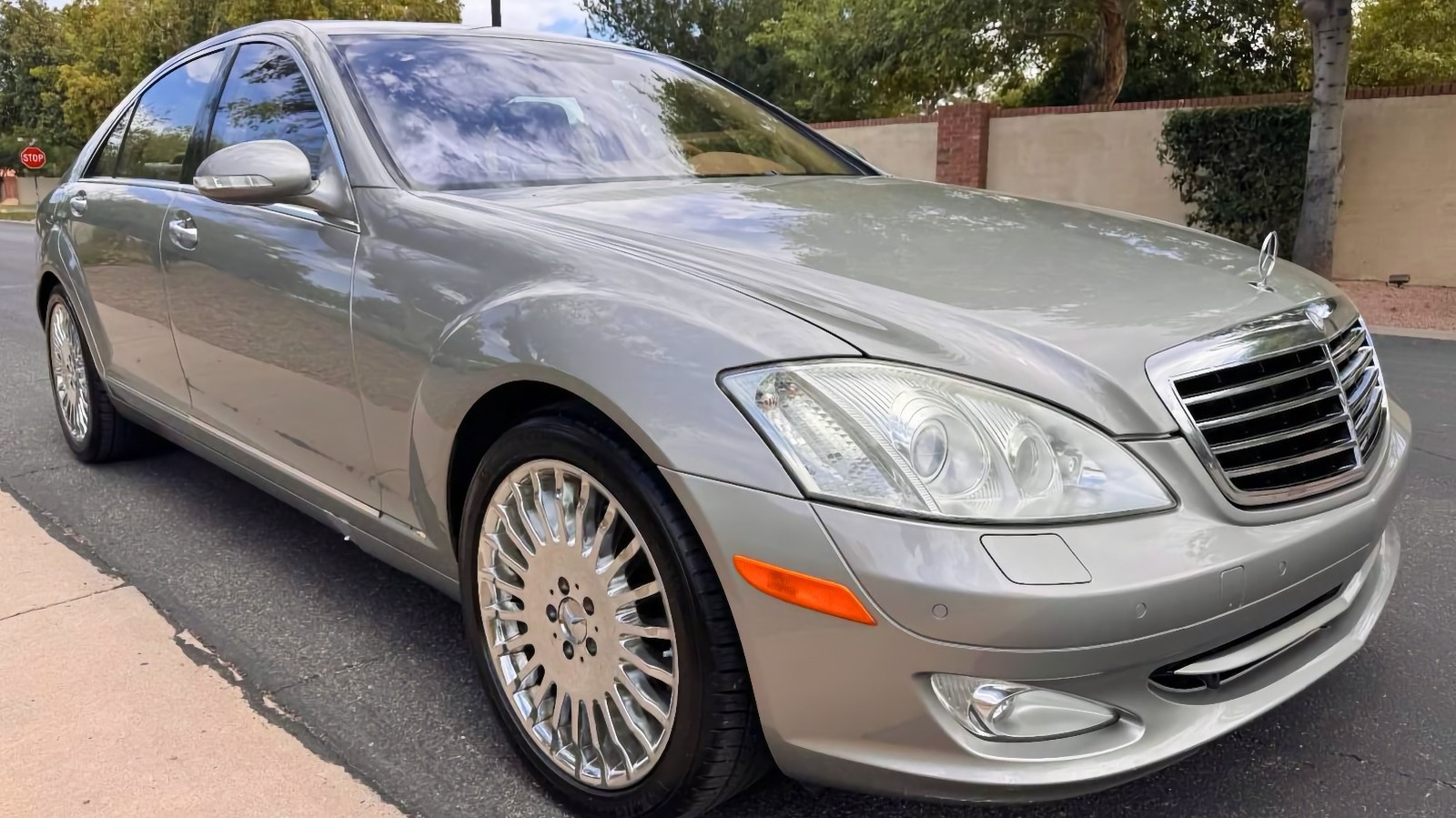
How Does the Legacy of German Engineering Shape Perceptions of the 2007 Mercedes S550?
The 2007 Mercedes S550, emblematic of a certain era of German automotive ambition, continues to project an aura of executive luxury long after its debut. Yet, beneath the surface sheen, a more complex narrative emerges—one in which the very attributes that once defined its desirability now provoke hesitation among prospective owners. The evidence suggests that the S550’s reputation for engineering excellence is inextricably entangled with anxieties about long-term reliability and maintenance costs. This duality is not merely anecdotal; it is rooted in the car’s intricate systems and the broader trajectory of German automotive design philosophy during the early 21st century.
To understand why the S550 still commands attention, one must consider the interplay between its technological sophistication and the psychological residue of its brand legacy. For many, the S550’s presence signals not just affluence but discernment—a willingness to invest in comfort, performance, and status. However, this same sophistication, manifested in complex electronics and proprietary components, has become a double-edged sword. The allure of luxury is shadowed by the specter of unpredictable repair bills, a dynamic that complicates the calculus of ownership for those outside the original target demographic.
What Are the Structural Risks and Rewards of Owning a Used S-Class?
The S550’s depreciation curve, steep by most measures, creates a tantalizing proposition: a car that once cost as much as a small condominium now appears within reach of the aspirational middle class. Yet, this apparent democratization of luxury is illusory. The cost of entry may have plummeted, but the cost of continued participation remains stubbornly high. Maintenance data—while often anecdotal and subject to reporting bias—consistently indicate that out-of-warranty S-Classes can incur annual service expenses rivaling those of new economy cars. This is not a mere function of age; it is a structural feature of the model’s design and supply chain.
The practical significance of these costs extends beyond individual inconvenience. Owners who underestimate the financial demands risk not only mechanical breakdowns but also diminished resale value, as deferred maintenance accumulates. The S550 thus functions as a case study in the broader phenomenon of luxury asset depreciation: the initial exclusivity of ownership is replaced, over time, by a kind of reverse selection, in which only those willing or able to absorb ongoing costs remain in the pool. This dynamic, rarely acknowledged in marketing materials, shapes the lived experience of secondary owners far more than the car’s original list of features.
Who Benefits—and Who Loses—When Luxury Cars Age Out of Their First Lives?
The downstream effects of S-Class depreciation ripple outward, affecting not only individual buyers but also independent mechanics, parts suppliers, and even urban infrastructure. For specialist repair shops, the influx of aging German luxury vehicles represents both opportunity and risk. On one hand, these cars generate high-margin service work; on the other, they expose shops to reputational hazards if repairs prove intractable or prohibitively expensive. The evidence suggests that the secondary market for parts—often salvaged from vehicles that have succumbed to catastrophic failures—thrives precisely because new components remain costly and sometimes scarce.
Less obvious, but no less significant, is the impact on urban parking and insurance markets. Older S-Classes, disproportionately concentrated in metropolitan areas, can distort actuarial models and create localized clusters of high-value, high-risk vehicles. These patterns are rarely captured in mainstream analyses, yet they shape the incentives for both insurers and municipal planners. The S550, in this sense, becomes a vector for broader systemic effects, extending well beyond the garage.
Does the S550’s Enduring Appeal Outweigh Its Practical Drawbacks?
The interpretive challenge, then, is to weigh the symbolic and experiential value of the S550 against its structural liabilities. For some, the pleasure of piloting a machine engineered to exacting standards—however anachronistic those standards may now seem—justifies the attendant risks. For others, the rational calculus of ownership tips decisively in favor of newer, less complicated alternatives. The mainstream narrative, which often frames this as a simple trade-off between luxury and reliability, misses the deeper point: the S550’s allure lies precisely in its refusal to be reduced to mere transportation. It is an artifact of a particular moment in automotive history, one whose contradictions remain unresolved.
For the informed reader, the lesson is neither to embrace nor to reject the S550 uncritically. Rather, it is to recognize that the true cost of luxury is not measured solely in dollars or hours spent at the shop, but in the willingness to inhabit a set of values—about technology, status, and risk—that the car both embodies and complicates. In this respect, the S550 remains, even now, a range-topper of a different sort: not just a machine, but a mirror.