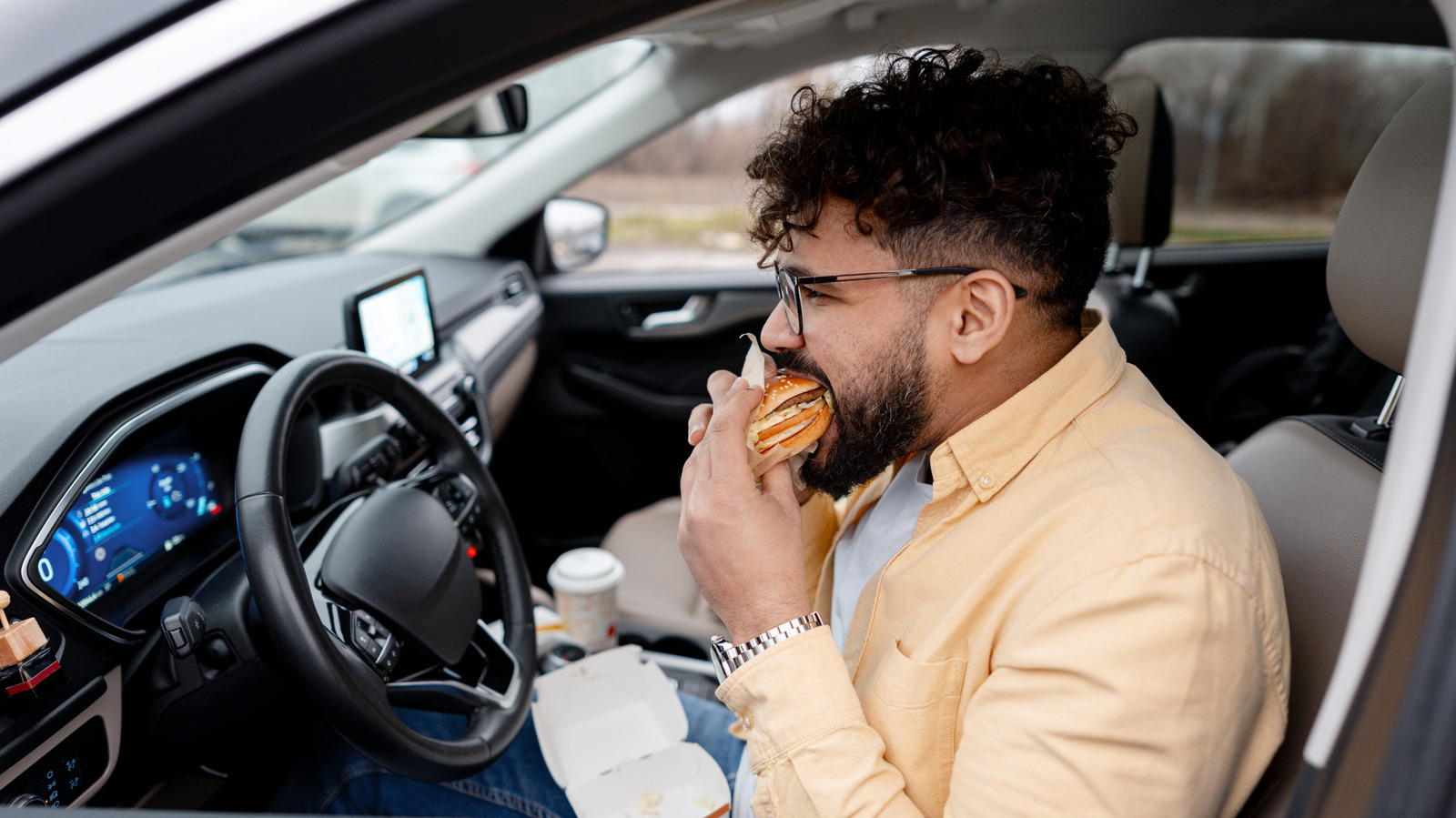
Why Does Eating While Driving Provoke Such Divided Reactions?
The act of eating behind the wheel, seemingly mundane, reveals a surprisingly sharp cultural fault line. For some, the car interior is sacrosanct—a private domain where order and cleanliness reflect personal discipline. For others, the vehicle is a pragmatic extension of daily life, a space where efficiency and multitasking trump aesthetic concerns. The evidence suggests that these attitudes are not merely idiosyncratic but reflect deeper anxieties about control, autonomy, and the negotiation of public versus private boundaries. When individuals express a preference for a spotless car over harmonious relationships, the hyperbole underscores a broader tension: the car as both sanctuary and stage for social performance.
What Underlying Mechanisms Drive the Controversy Over In-Car Eating?
At its core, the debate centers on risk tolerance and the symbolic value assigned to personal space. Eating while driving introduces a dual hazard: the immediate risk of distraction-induced accidents and the longer-term degradation of the car’s interior. While empirical studies consistently link distracted driving to increased accident rates, the marginal risk added by eating—compared to, say, mobile phone use—remains contested. Methodological limitations abound: self-reported data understate true incidence, and observational studies rarely isolate eating as a sole variable. Thus, the practical significance of the risk is often overstated in public discourse, serving more as a proxy for anxieties about modern life’s relentless pace than as a clear-cut safety imperative.
Who Bears the Hidden Costs of This Everyday Behavior?
The surface-level framing—cleanliness versus convenience—obscures a more consequential dynamic. Those who share vehicles, such as families or rideshare drivers, experience the consequences of in-car eating unevenly. For some, the residue of a fast-food meal is a minor irritant; for others, it represents a breach of trust or a tangible economic cost. The evidence suggests that lower-income individuals, who may rely on shared or older vehicles, are disproportionately affected by the cumulative wear and tear that comes from treating the car as a dining room. This distributional asymmetry rarely features in mainstream discussions, yet it shapes the lived reality of millions.
Are Mainstream Interpretations Missing the Point?
Prevailing narratives often reduce the issue to personal preference or individual responsibility, but this lens is myopic. The normalization of eating while driving is, in part, a structural consequence of urban sprawl, inadequate public transit, and the valorization of constant productivity. To frame the debate solely in terms of etiquette or risk is to ignore the economic and infrastructural forces that make in-car dining a necessity for many. Moreover, the performative outrage about crumbs and stains may function as a subtle form of social signaling—a way to demarcate class boundaries or assert moral superiority under the guise of hygiene.
What Should an Informed Reader Conclude?
The question of whether to eat while driving is less about the act itself and more about what it reveals: the friction between individual autonomy and collective norms, the unequal distribution of inconvenience, and the hidden costs of a culture that prizes efficiency over reflection. Rather than adjudicating the debate on the basis of cleanliness or risk alone, an informed reader might consider the broader context—who benefits, who bears the cost, and what values are implicitly being defended. The evidence does not support absolutist positions; instead, it invites a more nuanced reckoning with the trade-offs embedded in everyday choices.