How Has the Concept of Modular Vehicles Evolved Over Time?
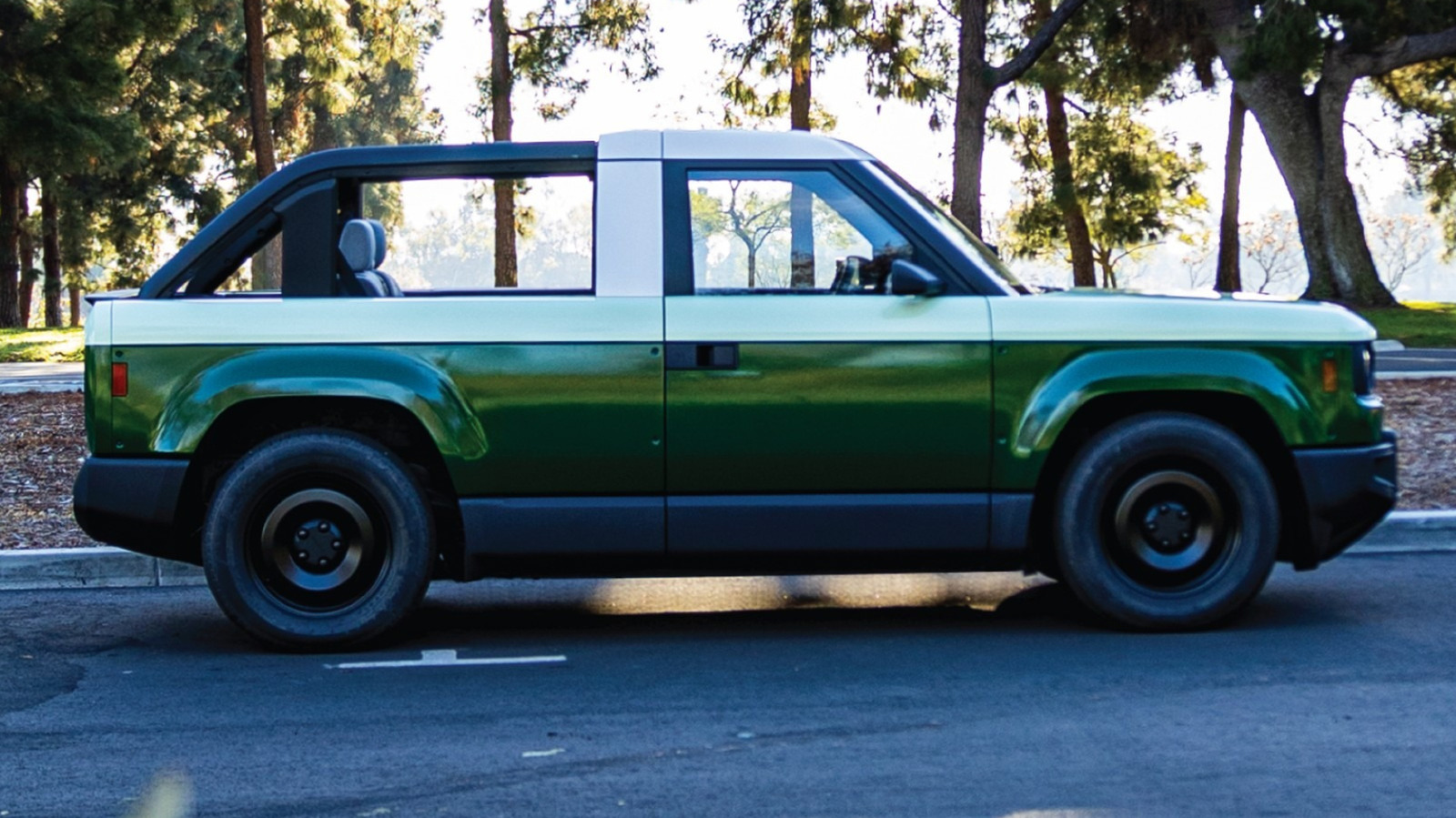
The notion of modularity in automotive design, while often heralded as a contemporary innovation, in fact traces a lineage through decades of experimentation and intermittent adoption. The recent unveiling of the Slate truck, with its promise of swappable components and adaptive utility, is less a radical departure than a reiteration of a perennial engineering ambition: to reconcile the conflicting demands of flexibility, manufacturability, and consumer appeal. Historically, modular vehicles have surfaced in response to shifting technological, economic, and regulatory pressures—each iteration reflecting the constraints and aspirations of its era.
Consider the sporadic emergence of production cars and concept vehicles featuring interchangeable bodywork or reconfigurable interiors. These efforts, ranging from the utilitarian to the whimsical, have typically been constrained by the realities of cost, safety standards, and consumer inertia. The evidence suggests that while modularity offers theoretical efficiencies—streamlined repairs, extended product lifecycles, and customizable ownership experiences—its practical realization has been repeatedly stymied by the complexity of integrating disparate systems and the conservatism of mass-market buyers. This pattern complicates the narrative of linear technological progress and invites skepticism toward claims of unprecedented novelty.
What Drives the Persistent Allure—and Limitations—of Modular Design?
At the core of the modular vehicle proposition lies a tension between the promise of adaptability and the imperatives of structural integrity, regulatory compliance, and brand differentiation. For manufacturers, the appeal is clear: modular architectures could, under ideal conditions, enable economies of scale, reduce tooling costs, and facilitate rapid iteration in response to market shifts. Yet these potential gains are counterbalanced by significant engineering challenges. Swappable parts must meet stringent crashworthiness standards, maintain seamless integration with electronic and mechanical systems, and avoid introducing new points of failure. The historical record is replete with examples—some celebrated, others obscure—where these obstacles proved insurmountable or the resulting compromises proved unacceptable to consumers.
Moreover, the modular ideal often collides with the realities of consumer psychology and market segmentation. While a subset of enthusiasts may prize the ability to reconfigure their vehicles, the broader public has tended to prioritize reliability, aesthetic coherence, and brand identity over abstract flexibility. This divergence has repeatedly undermined the commercial viability of modular concepts, relegating many to the status of intriguing curiosities rather than transformative products.
Who Stands to Gain—or Lose—from a Modular Automotive Future?
If modular vehicles were to achieve widespread adoption, the implications would extend well beyond manufacturers and early adopters. Repair shops could see a shift in business models, with standardized components enabling faster turnaround but potentially eroding the value of specialized expertise. Supply chains might become more resilient, as interchangeable parts reduce dependency on single-source suppliers, yet this same standardization could intensify competition and compress margins for parts manufacturers. Regulators would face novel challenges in certifying the safety and environmental compliance of vehicles whose configurations can change post-sale—a scenario for which current frameworks are ill-prepared.
Less obviously, the modular paradigm could disrupt established patterns of vehicle ownership and resale. If consumers can upgrade or reconfigure their vehicles incrementally, the traditional lifecycle of obsolescence and replacement may be attenuated, with second-order effects on used car markets and the economics of leasing. Yet such outcomes remain speculative, contingent on overcoming the formidable technical and cultural barriers that have historically limited modularity’s reach.
Why Do Mainstream Narratives Overstate the Novelty of Modular Trucks?
The tendency to frame each new modular vehicle as a singular breakthrough reflects a broader pattern in automotive discourse: a preference for technological drama over incrementalism, and for the rhetoric of disruption over the messier reality of iteration and constraint. This interpretive bias obscures the extent to which current innovations are built atop a palimpsest of earlier efforts, many of which failed not for lack of ingenuity but due to the intractable friction between modular ideals and systemic realities.
A more nuanced reading would recognize that while the Slate truck and its contemporaries may advance the state of the art in specific domains—materials, digital integration, or manufacturing processes—the underlying logic of modularity is neither new nor unambiguously ascendant. The evidence, when situated in its full historical and technical context, suggests that modular vehicles remain an aspirational solution to a set of enduring dilemmas rather than a settled answer. For the informed reader, the imperative is not to embrace each new modular concept as a revolution, but to interrogate the structural forces that have repeatedly shaped—and constrained—its evolution.