How Does Scale Transform the Engineering Demands of Monster Trucks?
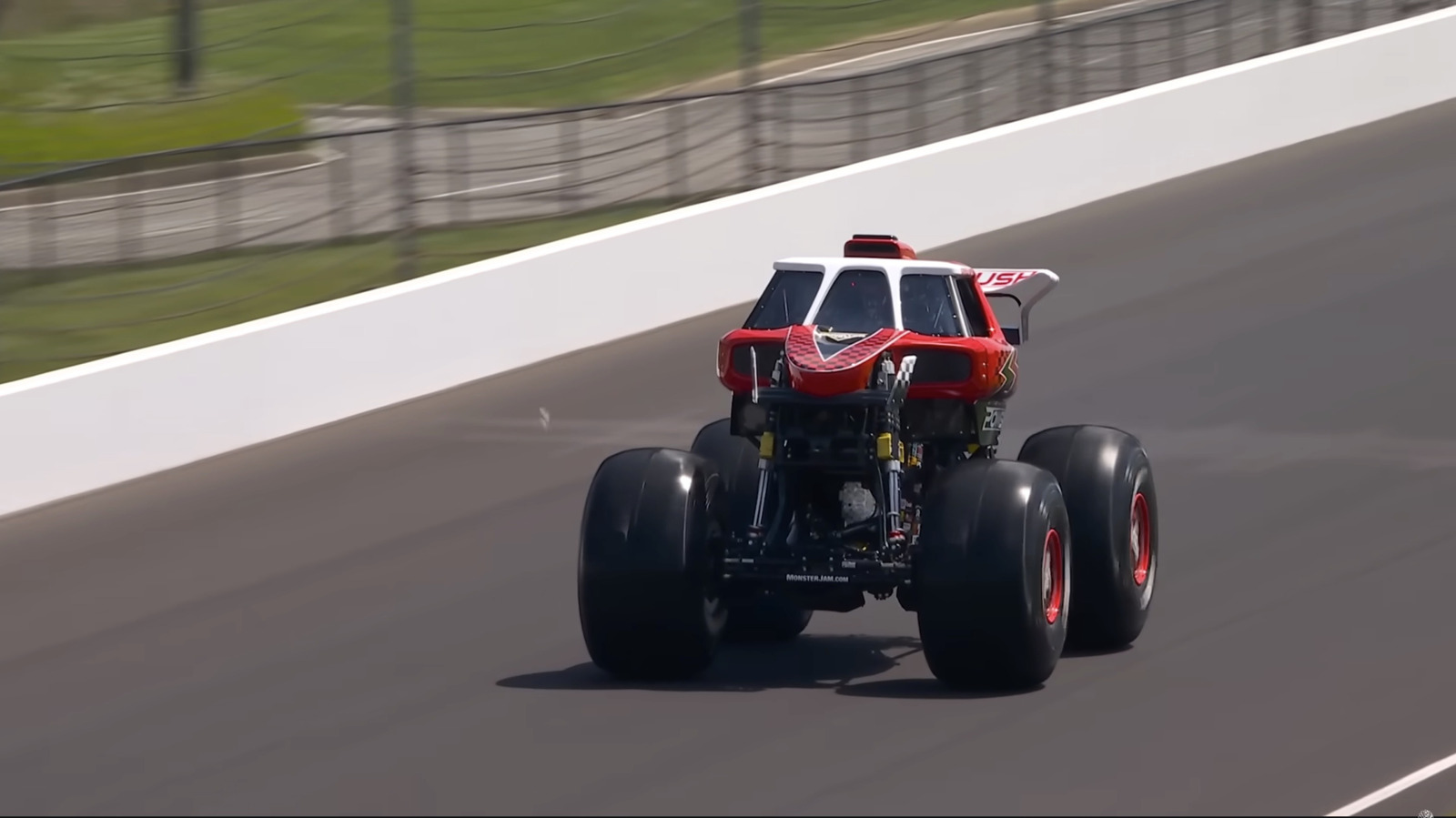
The spectacle of a 12-foot-tall, 12-foot-wide monster truck shattering speed records is not merely a triumph of brute force. Rather, it embodies the convergence of mechanical ambition and the unforgiving realities of physics at scale. When a vehicle’s mass and frontal area swell to such proportions, the drag coefficient and rolling resistance escalate nonlinearly. This means that simply increasing engine output is insufficient; every incremental gain in speed demands exponentially greater power. The evidence suggests that, at these dimensions, conventional drivetrain and chassis solutions become inadequate, necessitating bespoke engineering interventions. The record-breaking run at the Indianapolis Motor Speedway thus represents less a single feat of speed and more a case study in the limits of mechanical scalability.
What Are the Hidden Stakes in Pushing Monster Truck Performance?
Beyond the obvious spectacle, the pursuit of speed records in monster trucks exposes a series of less visible, but arguably more consequential, tensions. For one, the safety envelope narrows dramatically as velocity increases, particularly given the high center of gravity and vast tire footprint. Under specific conditions, even minor instabilities can trigger catastrophic rollovers or structural failures. Moreover, the allocation of resources toward ever-larger engines and reinforced chassis reflects a prioritization of headline-grabbing performance over other potential innovations—such as improved maneuverability, fuel efficiency, or environmental impact mitigation. This focus, while commercially rational, may entrench a developmental path dependency that limits the broader evolution of the field.
Who Benefits—and Who Is Overlooked—When Monster Trucks Break Speed Records?
The immediate beneficiaries are clear: manufacturers, sponsors, and event organizers all capitalize on the publicity and heightened audience engagement that record attempts generate. Yet, the distribution of risk is less equitable. Drivers and pit crews shoulder the most acute physical dangers, while local communities may experience secondary effects such as noise, emissions, and infrastructure strain. Notably, the broader motorsports ecosystem—smaller teams, technical suppliers, and regulatory bodies—must contend with the shifting baseline of what constitutes “competitive” performance, potentially exacerbating resource disparities. This dynamic, while rarely foregrounded in mainstream coverage, shapes the long-term sustainability and inclusivity of the sport.
Why Do Mainstream Narratives Oversimplify the Significance of Such Records?
Mainstream accounts often reduce the achievement to a binary of success or failure, neglecting the intricate interplay of engineering, economics, and risk management that underpins each attempt. This interpretive flattening serves commercial interests by sustaining a mythos of heroic individualism, but it obscures the collective, iterative, and frequently precarious nature of technological progress in this domain. The available evidence, while impressive, is bounded by the specific conditions of the record-setting run: controlled environments, optimal weather, and extensive pre-run preparation. To extrapolate broader lessons about automotive capability or safety from such singular events is, at best, methodologically unsound.
What Should an Informed Reader Conclude About the Broader Implications?
The breaking of a monster truck speed record is less a definitive statement about the future of motorsport than a momentary crystallization of competing priorities: spectacle versus safety, innovation versus tradition, and commercial gain versus systemic risk. For stakeholders and observers alike, the prudent course is to interrogate not only what is possible, but at what cost—and to whom. Only by foregrounding these second-order questions can the field move beyond the allure of raw numbers and toward a more nuanced understanding of progress.