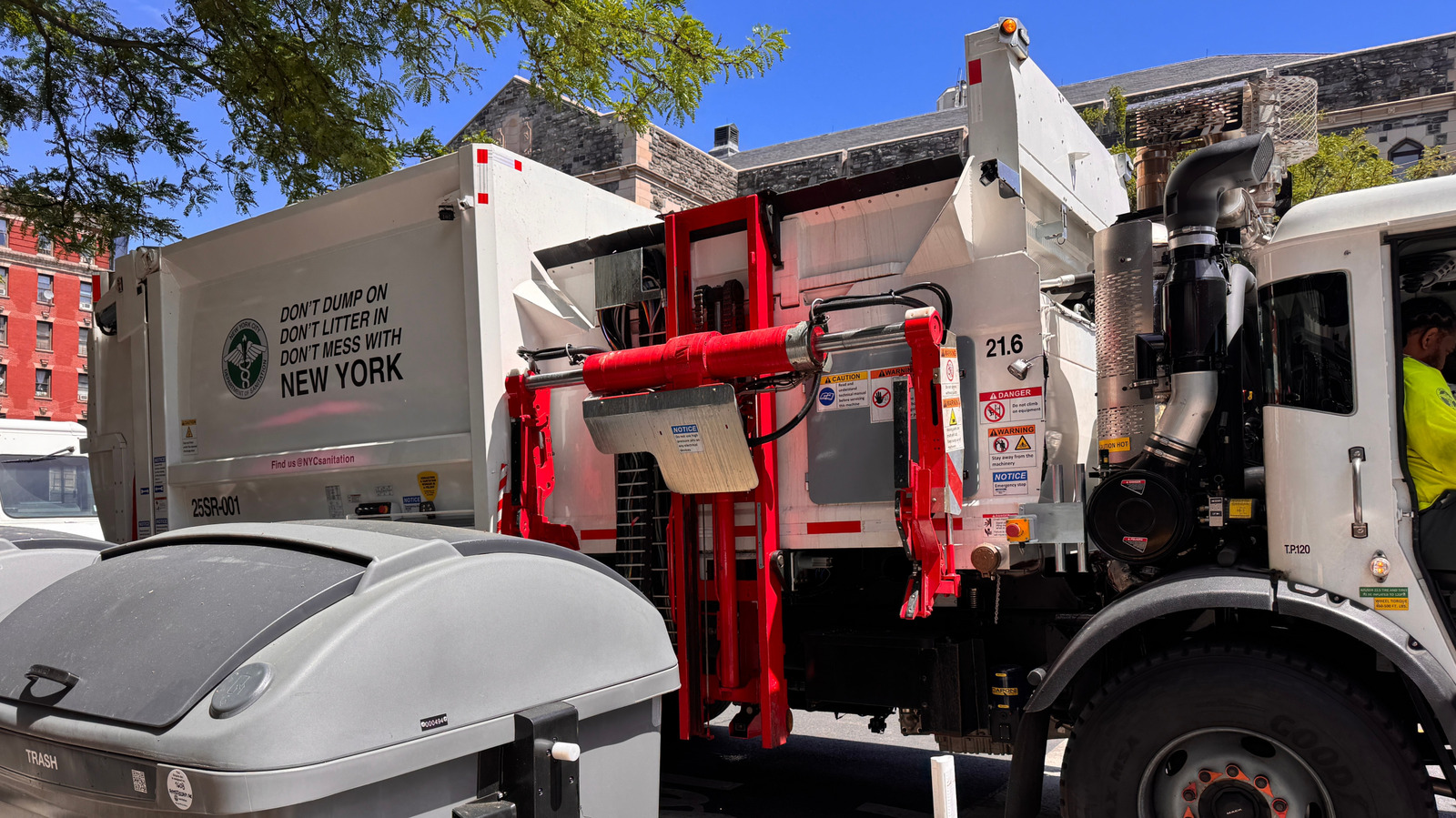
How Does Replacing Street Parking with Trash Bins Reshape Urban Priorities in Upper Manhattan?
The decision to substitute street parking with trash bins in upper Manhattan signals a subtle but profound recalibration of urban priorities. Rather than treating curbside space as a zero-sum contest between vehicles and refuse, the policy foregrounds public hygiene and pedestrian experience as central civic goods. This shift, while seemingly incremental, challenges the entrenched logic that privileges private car storage over collective urban welfare. The evidence from comparable interventions elsewhere suggests that reallocating curb space can reduce litter, discourage illegal dumping, and improve sidewalk accessibility—though the magnitude of these effects remains contingent on local enforcement and community buy-in. Yet, the deeper mechanism at play is not merely logistical but symbolic: by elevating waste management infrastructure to a visible, protected status, the city signals a reordering of what—and whom—the streets are for.
What Are the Unintended Winners and Losers in This Policy Shift?
While residents and pedestrians stand to benefit from cleaner streets and less obstructed walkways, the distributional impacts of this policy are more complex than a simple calculus of gains and losses. Car owners, particularly those without access to off-street parking, will likely experience increased inconvenience and potential costs. However, this burden is not evenly shared; data from transportation studies indicate that lower-income households in Manhattan are less likely to own cars, suggesting that the policy may, under certain conditions, advance equity by prioritizing the needs of non-drivers. Still, delivery workers and tradespeople—whose livelihoods depend on curb access—may find their routines disrupted, a nuance often overlooked in celebratory narratives about urban greening or cleanliness. The policy’s success, therefore, hinges not only on its immediate outcomes but on its capacity to anticipate and mitigate these second-order effects.
Why Might Mainstream Interpretations of Urban Cleanliness Overlook Structural Constraints?
Prevailing accounts often frame urban cleanliness as a matter of individual responsibility or municipal efficiency, but such interpretations risk obscuring the structural constraints that shape waste management outcomes. The introduction of dedicated trash bins addresses only one node in a complex system: without commensurate investments in collection frequency, public education, and enforcement against illegal dumping, the bins themselves may become sites of overflow and nuisance. Furthermore, the political economy of urban space—where curbside real estate is hotly contested by commercial interests, residents, and city agencies—means that even well-intentioned policies can founder on the shoals of competing priorities. The evidence suggests that durable improvements in urban cleanliness require not just infrastructure, but sustained governance and adaptive feedback mechanisms.
What Broader Lessons Emerge for Urban Policy Beyond Upper Manhattan?
The implications of this policy extend beyond the immediate context of upper Manhattan. At stake is a broader question about how cities allocate scarce public space in ways that reflect collective values rather than the inertia of past decisions. The move to prioritize trash bins over parking is, in effect, a modest but telling experiment in reimagining urban commons. If successful, it could embolden policymakers elsewhere to challenge the default privileging of automobiles—a shift with far-reaching consequences for environmental quality, social equity, and the lived experience of city dwellers. Yet, the ultimate judgment must remain provisional, contingent on rigorous evaluation and a willingness to recalibrate in response to unforeseen challenges. For the informed reader, the lesson is clear: urban policy is rarely a matter of technical fixes alone, but of contested visions about who the city is for, and what it means to share its space.