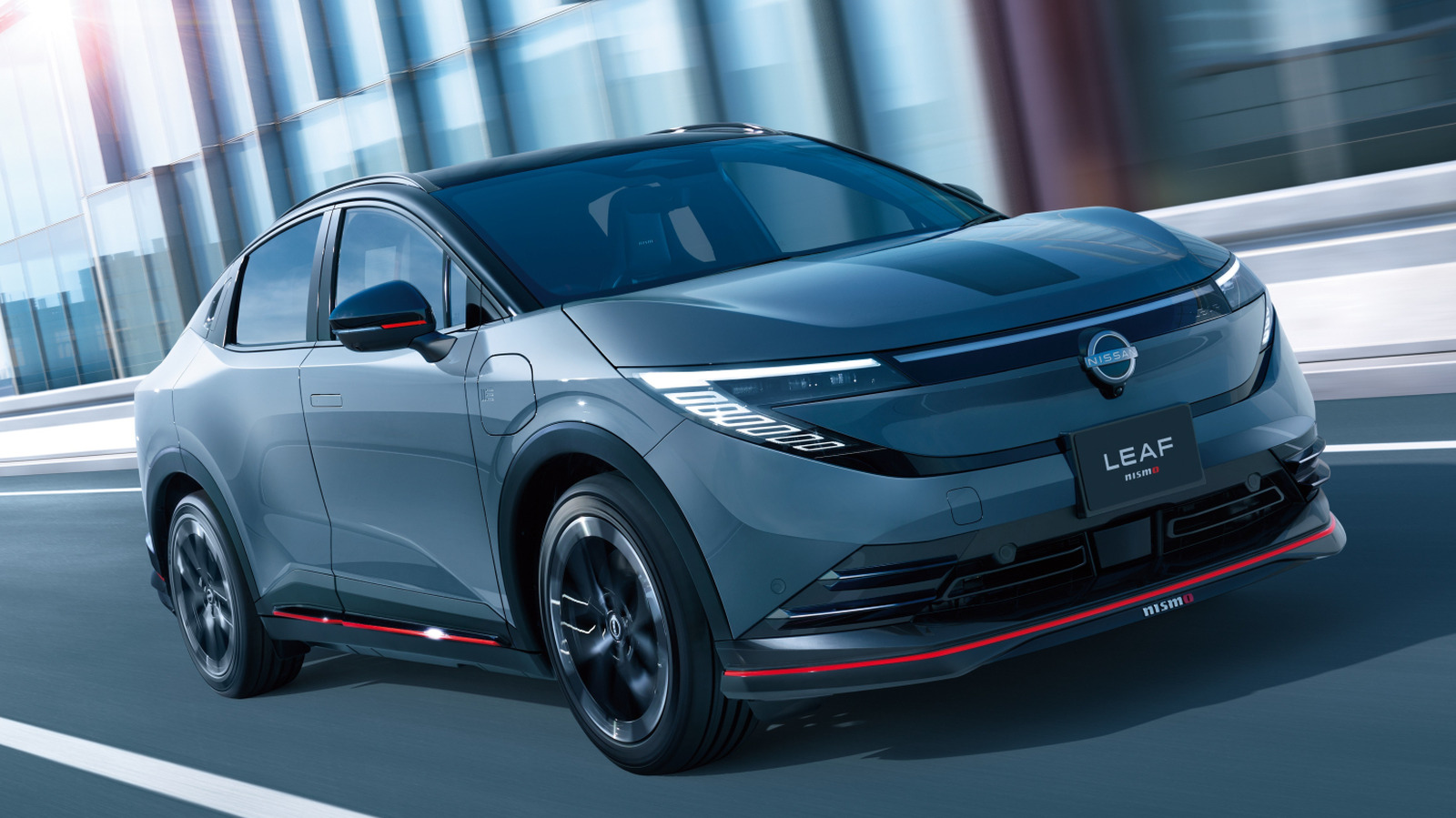
How Does the Nismo Badge Transform the Nissan Leaf’s Identity?
The application of the Nismo badge to the Nissan Leaf signals a deliberate disruption of entrenched automotive categories. Historically, the Leaf has functioned as a symbol of utilitarian electrification—an accessible, pragmatic answer to urban mobility and emissions reduction. Nismo, by contrast, connotes performance, motorsport pedigree, and a certain irreverence toward the constraints of mass-market design. The decision to merge these identities is not merely a marketing flourish; it is an experiment in reconciling the presumed incompatibility between ecological responsibility and driving excitement.
The evidence suggests that this hybridization is less about raw performance metrics—where the Leaf Nismo remains modest compared to traditional sports hatchbacks—and more about reframing the emotional valence of electric vehicles. By infusing the Leaf with Nismo’s design language and handling enhancements, Nissan is attempting to erode the psychological barrier that has long separated “fun” cars from “responsible” ones. Yet, this strategy is not without its contradictions. The Leaf’s underlying architecture, optimized for efficiency rather than outright speed, imposes hard limits on the extent of transformation possible. Thus, the Nismo badge here functions as a provocation: it invites consumers to reconsider what counts as automotive excitement in an era of electrification, even as it exposes the constraints of retrofitting legacy performance branding onto fundamentally different technological platforms.
Why Does the Leaf Nismo Matter Beyond Its Niche Appeal?
The Leaf Nismo’s significance extends well beyond the narrow circle of enthusiasts who might have once dismissed electric vehicles as joyless appliances. Its existence challenges the industry’s prevailing narrative that “affordable” and “fun-to-drive” are mutually exclusive in the EV segment. This matters because, under current market conditions, the mass adoption of electric vehicles is not merely a technical or infrastructural challenge—it is a cultural one. The Leaf Nismo attempts to bridge this gap, albeit imperfectly, by gesturing toward a future in which mainstream EVs are not only tolerated but actively desired for their driving character.
However, the practical impact of this gesture remains contested. While some early adopters may be swayed by the promise of sportier dynamics, the broader market’s response is likely to be shaped by deeper structural factors: total cost of ownership, charging infrastructure, and regulatory incentives. The Leaf Nismo’s ability to shift perceptions, therefore, should be understood as incremental rather than transformative. Its greatest utility may lie in its function as a test case—an indicator of how far consumer expectations can be stretched, and where the boundaries of EV desirability currently reside.
Who Stands to Gain—or Lose—from This Experiment?
The most immediate beneficiaries of the Leaf Nismo are those consumers who have felt alienated by the binary choice between performance and sustainability. For this cohort, the car offers a rare synthesis, albeit one that remains more symbolic than substantive in its performance gains. Yet, the experiment also carries risks. By invoking the Nismo brand, Nissan raises expectations that may outstrip what the Leaf’s platform can deliver, potentially inviting skepticism from both traditional performance enthusiasts and pragmatic EV buyers.
There are also second-order consequences for the broader industry. Should the Leaf Nismo find even modest commercial success, it may embolden other manufacturers to experiment with similar cross-genre branding, accelerating the erosion of old market segments. Conversely, a tepid response could reinforce the perception that the values of performance and electrification are fundamentally incommensurable, at least within the constraints of current technology and price points.
What Are the Structural Limitations and Blind Spots in the Leaf Nismo’s Approach?
The Leaf Nismo’s ambitions are circumscribed by several structural realities. Most notably, the car’s underlying platform was not designed with high-performance applications in mind. This imposes limits on both dynamic capability and the degree of differentiation achievable through suspension tuning or aesthetic upgrades alone. The evidence from early reviews suggests that while the Nismo treatment improves handling and visual appeal, it does not fundamentally alter the car’s acceleration or range—metrics that remain central to many buyers’ evaluations.
Moreover, the experiment is shaped by the inertia of legacy branding. Nismo’s cachet is built on decades of motorsport success and enthusiast credibility—attributes that may not seamlessly transfer to a front-wheel-drive, mass-market EV. There is a risk that the badge, rather than elevating the Leaf, could dilute Nismo’s identity or provoke backlash from purists.
What Should the Informed Reader Conclude?
The Leaf Nismo is best understood as a strategic provocation rather than a definitive solution. It tests the elasticity of consumer expectations and the adaptability of performance branding in a rapidly electrifying market. While its impact may be modest in absolute terms, the experiment is instructive: it reveals both the promise and the limits of cross-pollinating legacy automotive identities with emergent technological paradigms. For the informed observer, the Leaf Nismo invites a more nuanced question—not whether electric vehicles can be fun, but under what conditions, and for whom, such fun becomes meaningful. The answer, for now, remains provisional. Yet the very act of posing the question signals a shift in the cultural logic of the automobile—one that will shape the next decade of mobility far more than any single model or badge.