How Does the Nuvolari’s Design Reflect Audi’s Evolving Identity?
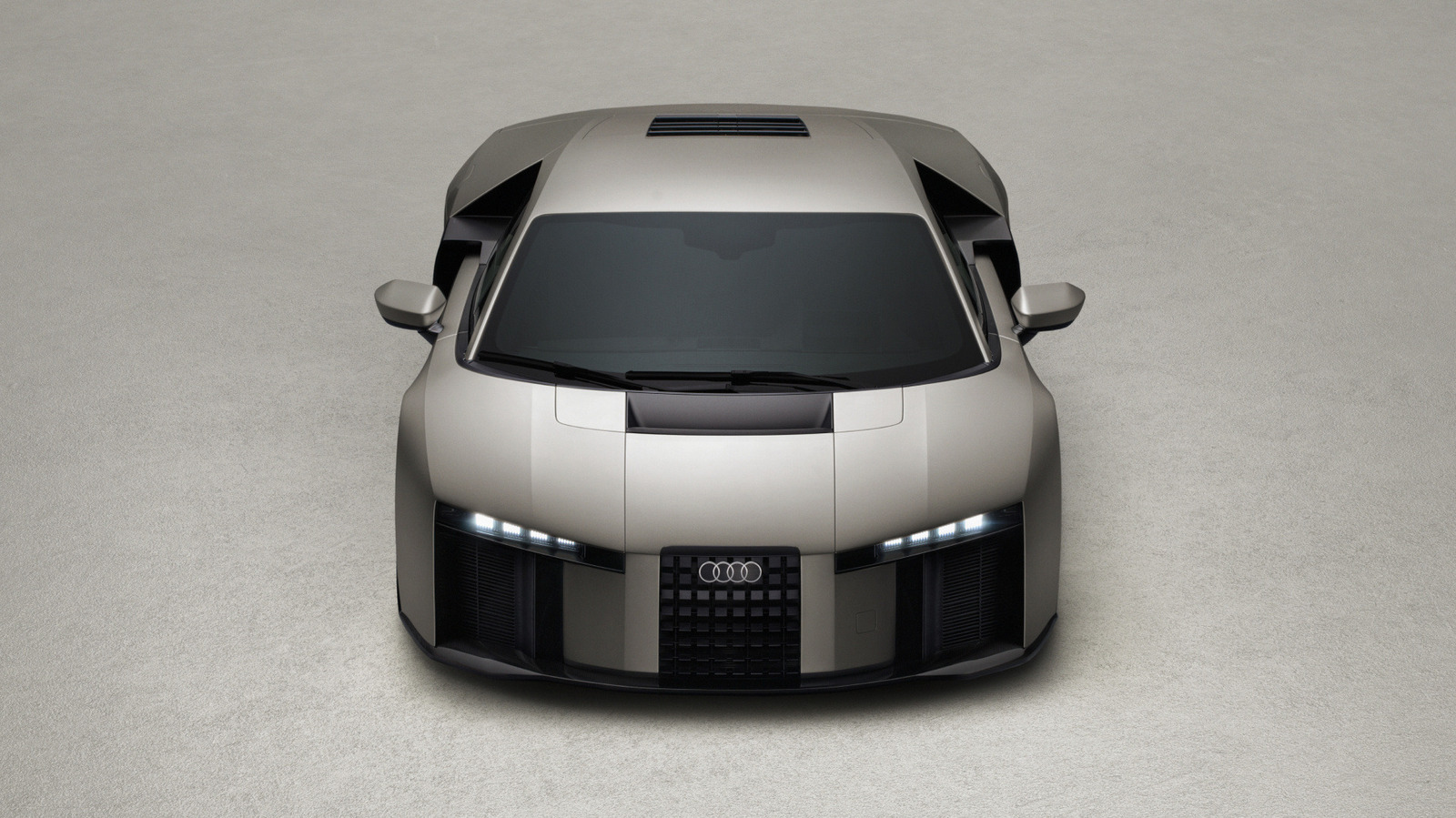
The Nuvolari’s silhouette, at once broad and low-slung, signals a deliberate recalibration of Audi’s design language. While its lineage nods unmistakably to the R8, the car resists the gravitational pull of nostalgia or mere imitation. Instead, the evidence suggests a calculated effort to reconcile heritage with innovation: the Nuvolari’s proportions evoke the muscularity and presence of classic German engineering, yet its surfaces and detailing eschew retro flourishes in favor of a more assertive, contemporary minimalism. This synthesis is not accidental. Rather, it reflects a broader trend among performance automakers—particularly those with storied back catalogs—toward leveraging visual continuity as a form of brand equity, while simultaneously cultivating an aura of forward momentum. The result is a car that feels familiar without lapsing into pastiche, a balancing act that is neither trivial nor universally successful in the segment.
What Does the Nuvolari’s Mechanical Ambition Reveal About Supercar Strategy?
The decision to equip the Nuvolari with a V8 capable of spinning to 10,000 rpm is, on its face, a statement of technical bravado. Yet beneath the headline figure lies a more nuanced strategic calculus. In an era where electrification and turbocharging dominate the performance discourse, the choice to pursue a high-revving, naturally aspirated configuration reads as both an act of defiance and a calculated appeal to a shrinking but vocal enthusiast demographic. This is not merely about numbers; it is about affect, about the visceral, analog connection that such engines foster. However, the practical significance of this approach is circumscribed by regulatory realities and shifting consumer expectations. The Nuvolari’s mechanical purity may resonate with purists, but its long-term viability is shadowed by emissions constraints and the inexorable march of hybridization. Thus, the car’s powertrain is best understood not as a blueprint for the future, but as a limited-run coda to a receding era—an artifact whose value is amplified precisely by its temporal precariousness.
Who Stands to Gain—or Lose—from the Nuvolari’s Market Positioning?
The Nuvolari’s exclusivity, signaled by its limited production run, introduces a layer of social and economic stratification that extends beyond automotive circles. For collectors and brand loyalists, the car represents both a status symbol and a speculative asset, its rarity likely to confer appreciation in value and cultural cachet. Yet this dynamic is not without its discontents. The focus on scarcity and spectacle risks alienating segments of the enthusiast community for whom accessibility and shared experience are paramount. Moreover, the allocation of engineering resources to such halo projects may divert attention from broader innovation in mass-market models, a trade-off that is often obscured in official narratives. The evidence here is mixed: while halo cars can elevate brand perception and inspire technological trickle-down, they can also reinforce perceptions of exclusivity and detachment from everyday mobility concerns.
What Broader Implications Emerge from the Nuvolari’s Introduction?
The arrival of the Nuvolari invites reflection on the structural tensions facing performance car manufacturers at the intersection of tradition, regulation, and market segmentation. Its design and engineering choices, while compelling in isolation, are best interpreted as responses to a moment of existential uncertainty for the segment. The car’s very existence is a wager—on the enduring appeal of mechanical purity, on the market’s appetite for exclusivity, and on the ability of heritage to confer legitimacy in a rapidly changing landscape. For the informed reader, the lesson is not simply to marvel at the Nuvolari’s technical or aesthetic achievements, but to interrogate the conditions that make such projects both possible and precarious. The future of the supercar, the evidence suggests, will be shaped as much by regulatory and cultural forces as by horsepower or design. The Nuvolari, in this light, is less a culmination than a provocation—a reminder that the meanings we attach to performance and prestige are themselves in flux.