What Drives Electric Vehicle Adoption in Infrastructure-Poor Environments?
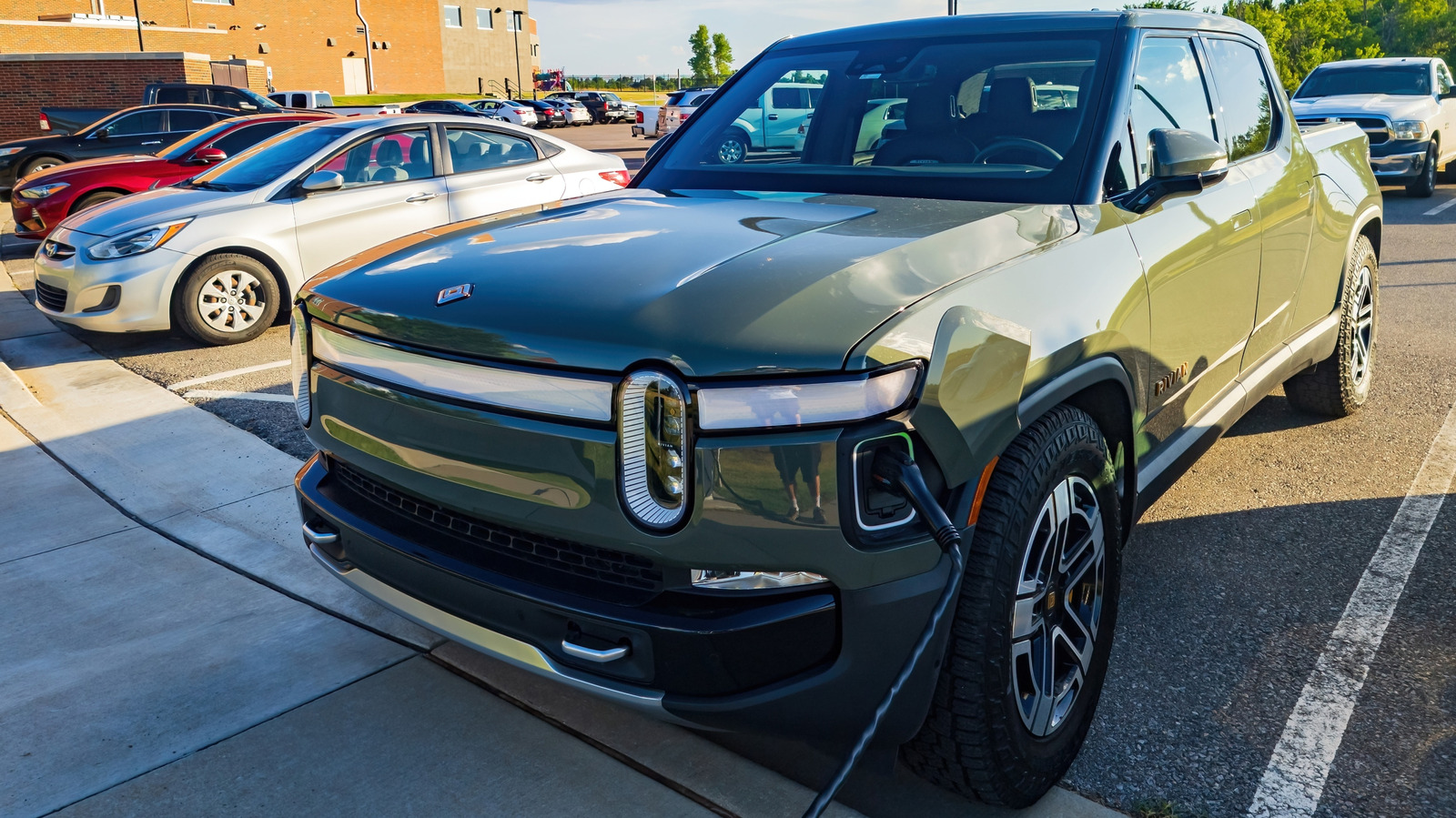
Oklahoma’s surge in electric vehicle (EV) adoption, despite its lackluster charging infrastructure and modest state-level incentives, presents a paradox that unsettles conventional wisdom. The prevailing narrative posits that robust public charging networks and generous subsidies are prerequisites for mass EV uptake. Yet, the evidence from Oklahoma suggests that these factors, while influential, may not be determinative. Instead, a more nuanced interplay of cultural, economic, and technological forces appears to be at work.
The core mechanism at stake is not simply the presence or absence of infrastructure, but rather the adaptability of early adopters and the shifting calculus of vehicle ownership. In Oklahoma, a state historically defined by its oil economy and rural expanses, the willingness of residents to purchase EVs hints at a latent demand driven by factors such as lower operating costs, heightened environmental awareness among specific demographics, and the influence of national automaker marketing. This pattern challenges the assumption that infrastructure must precede adoption; instead, it suggests a feedback loop in which consumer demand can catalyze subsequent infrastructure investment.
How Do Oklahoma’s Incentives and Infrastructure Compare—and Why Might They Matter Less Than Assumed?
The state’s EV incentives, by most comparative measures, are unremarkable. Direct purchase rebates are limited, and public charging stations remain sparse outside major urban centers. Methodologically, this creates a natural experiment: Oklahoma serves as a control group against states with aggressive pro-EV policies. The practical significance of this arrangement lies in its ability to isolate non-policy drivers of adoption.
One plausible explanation is the prevalence of home charging, which mitigates the need for ubiquitous public infrastructure, at least for early adopters with access to private garages. However, this interpretation remains contested. Critics argue that such a model is inherently exclusionary, privileging homeowners over renters and urban over rural residents. The demographic skew of Oklahoma’s EV buyers—disproportionately affluent, suburban, and technologically literate—underscores this limitation. Thus, while the state’s adoption figures are notable, they may mask underlying inequities in access.
What Broader Implications Emerge for National EV Policy and Market Strategy?
Oklahoma’s experience complicates the prevailing policy orthodoxy. If EV adoption can accelerate in regions with minimal infrastructure and tepid incentives, then the causal relationship between policy inputs and consumer behavior warrants re-examination. This does not imply that infrastructure and incentives are irrelevant; rather, their marginal utility may diminish once a critical mass of early adopters is reached. For policymakers, the lesson is twofold: targeted interventions may be more effective than blanket subsidies, and efforts to broaden access—particularly for renters and lower-income households—are essential to avoid entrenching new forms of mobility inequality.
For automakers and charging providers, Oklahoma’s anomaly signals both opportunity and risk. The state’s unexpected uptake could justify accelerated infrastructure deployment, but it also exposes the fragility of relying on early adopters without addressing broader structural barriers. Should market enthusiasm wane, the absence of robust public charging could quickly become a bottleneck, stalling further growth.
Which Stakeholders Are Overlooked in the Mainstream Narrative?
The focus on aggregate adoption rates obscures the heterogeneity of experience within Oklahoma. Rural residents, renters, and those without access to home charging remain structurally disadvantaged, a reality often glossed over in celebratory accounts of statewide progress. Moreover, utility companies, whose grid management challenges intensify with increased home charging, represent a critical but under-discussed stakeholder. Their capacity to adapt—through demand response programs or grid modernization—will shape the long-term viability of Oklahoma’s EV transition.
What Judgment Should the Informed Reader Draw?
Oklahoma’s case demonstrates that the path to widespread EV adoption is neither linear nor uniform. While infrastructure and incentives matter, their absence does not preclude significant progress—at least among certain demographics. However, this progress is fragile and uneven, carrying the risk of reinforcing existing inequities if left unaddressed. The evidence suggests that a more granular, context-sensitive approach to policy and market development is warranted, one that anticipates second-order effects and targets structural blind spots rather than relying on one-size-fits-all solutions.