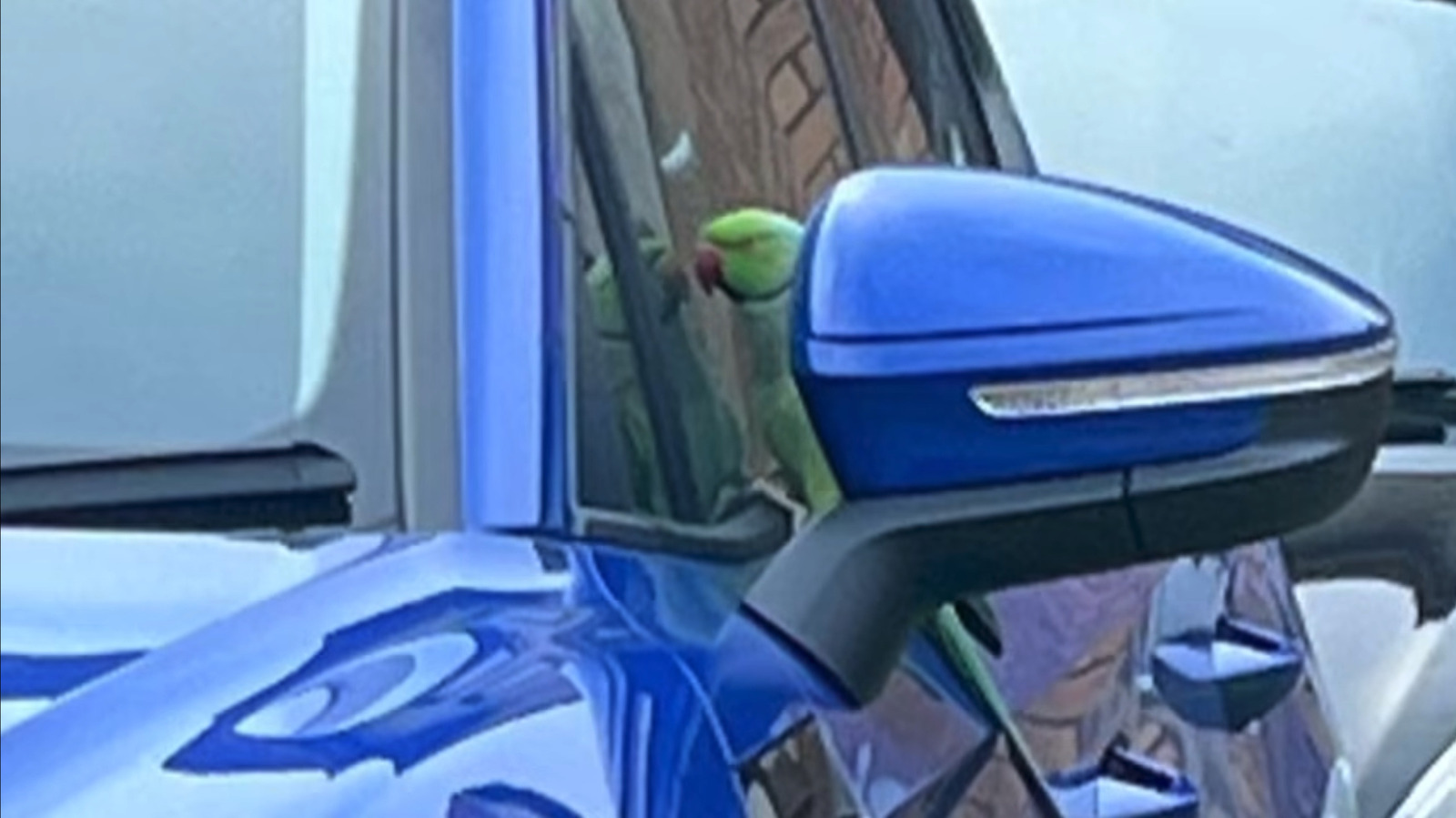
What Drives Parrots to Target Car Components? Exploring Behavioral and Environmental Triggers
The spectacle of a parrot systematically dismantling or consuming rubber car parts presents a puzzle that resists easy explanation. While Scotland’s nature agency has advanced several hypotheses, the evidence remains fragmentary and the phenomenon itself is underexplored in the ethological literature. One plausible mechanism involves the parrot’s innate curiosity and need for cognitive stimulation; parrots, particularly those in urban or suburban environments, routinely seek novel objects to manipulate, a behavior that may be amplified in the absence of natural foraging opportunities. Alternatively, the chemical composition of synthetic rubber—sometimes containing plasticizers or compounds that mimic natural plant alkaloids—could inadvertently attract birds whose dietary instincts are poorly matched to anthropogenic materials. However, these explanations are not mutually exclusive, and neither fully accounts for the apparent selectivity or persistence observed in some cases.
Why Should Urban Wildlife Interactions With Vehicles Command Greater Attention?
Beyond the immediate inconvenience to vehicle owners, the broader significance of such interactions lies in what they reveal about the shifting boundaries between wildlife and human infrastructure. The parrot’s behavior, while superficially anomalous, may signal deeper ecological dislocations: as traditional habitats are fragmented or degraded, adaptable species are forced into closer and sometimes maladaptive contact with human technology. This is not merely a story of animal mischief; it is an index of environmental pressures and the unintended consequences of urban design. Moreover, the costs are not distributed evenly. Car owners in areas with high parrot populations may face recurring repair expenses, while local ecosystems may be subtly reshaped as birds adapt to—or are harmed by—synthetic materials.
How Reliable Are the Prevailing Theories, and What Remains Unresolved?
Current interpretations, while plausible, rest on limited observational data and a paucity of controlled studies. The hypothesis that parrots are attracted by the tactile or gustatory properties of rubber is supported by anecdotal reports but lacks rigorous experimental confirmation. Similarly, the suggestion that chemical cues are involved is intriguing, yet the specific compounds at play and their effects on avian sensory systems remain largely speculative. Complicating matters further, not all parrot populations exhibit this behavior, suggesting that local environmental factors or learned social behaviors may play a decisive role. Until systematic studies are conducted—ideally combining field observation with laboratory analysis—any definitive explanation must remain provisional.
What Broader Lessons Can Be Drawn About Human-Wildlife Coexistence?
The parrot’s campaign against car components, while seemingly trivial, encapsulates a larger dilemma: the unpredictable ways in which wildlife adapt to, exploit, or are imperiled by human artifacts. It challenges the assumption that technological environments are neutral backdrops, instead highlighting their active role in shaping animal behavior. For policymakers and urban planners, the episode underscores the need for more nuanced approaches to coexistence—ones that anticipate not only the direct impacts of development but also the cascading behavioral adaptations it may provoke. For the informed reader, the take-away is not simply to marvel at avian ingenuity or lament property damage, but to recognize the subtle feedback loops that bind ecological and technological systems, often in ways that defy straightforward management or prediction.