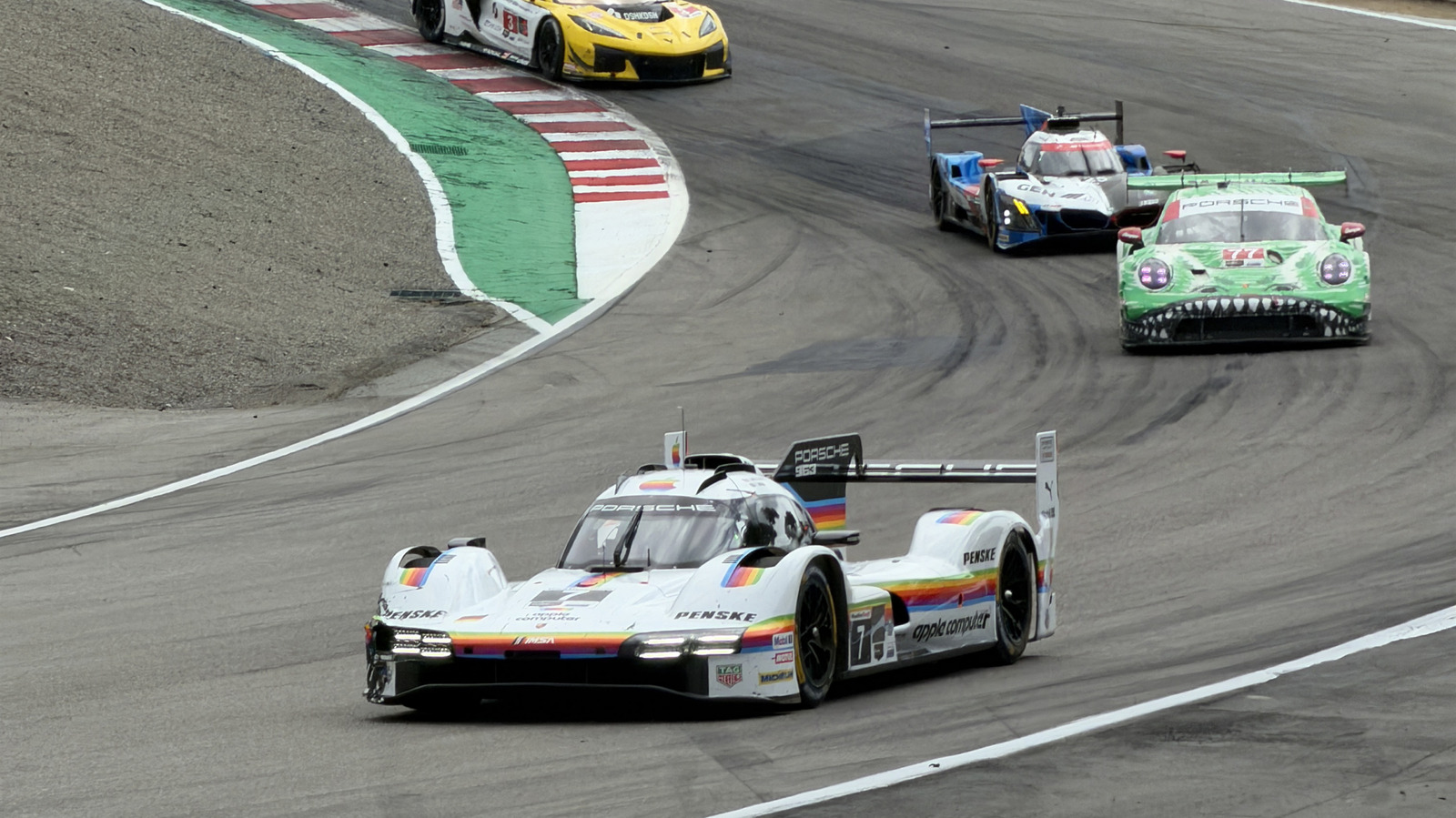
What Distinguishes the Customer Team Dynamic in IMSA’s GTP Grid?
The presence of a single customer entry—the JDC-Miller 963—on the GTP grid introduces a subtle but consequential divergence from the manufacturer-dominated field. While factory teams benefit from direct engineering support, proprietary data, and a seamless integration of technical updates, customer teams must navigate a more complex landscape. Their access to information is mediated, their resources comparatively constrained, and their influence over developmental priorities necessarily limited. This asymmetry is not merely logistical; it shapes the competitive narrative, as customer teams are compelled to innovate within narrower parameters, often extracting performance through operational discipline and adaptive strategy rather than brute-force technical superiority.
Yet, the evidence does not support a simplistic underdog narrative. Under specific conditions—such as variable weather, strategic gambles, or reliability attrition—customer teams have demonstrated an ability to disrupt the expected order. The JDC-Miller 963’s presence on the grid thus functions as a litmus test for the permeability of the GTP category: does the architecture of the series genuinely allow for upward mobility, or does it tacitly entrench manufacturer hegemony? The answer, while not definitive, appears to hinge on the evolving regulatory environment and the degree to which technical parity is enforced in practice rather than merely in principle.
Why Does Laguna Seca Occupy a Unique Position in the IMSA Calendar?
Laguna Seca’s significance transcends its technical demands. The circuit’s undulating topography and iconic corners—most notably the Corkscrew—are frequently cited, but these features alone do not account for the venue’s enduring allure among drivers and engineers. The evidence suggests that Laguna Seca operates as a crucible for both mechanical grip and driver intuition, rewarding those who can synthesize data-driven setup with a willingness to improvise at the limits of adhesion. This duality is not universally present across the IMSA calendar; many circuits privilege either raw power or aerodynamic efficiency, but few require such a nuanced negotiation between car and environment.
Moreover, the timing of the Laguna Seca round—often situated at a pivotal juncture in the championship—amplifies its strategic weight. Teams arrive with accumulated knowledge and emergent anxieties, aware that a misstep here can reverberate through the remainder of the season. For customer teams in particular, the event offers an opportunity to recalibrate expectations: a strong result can validate their developmental trajectory, while a setback may expose structural limitations that cannot be remedied in the short term.
Who Benefits—and Who Is Marginalized—by the Current Structure?
The prevailing structure of IMSA’s GTP grid, with its blend of factory and customer entries, is frequently lauded for fostering diversity and unpredictability. However, this interpretation risks overlooking the ways in which resource disparities are institutionalized. Factory teams, by virtue of their scale and integration, are positioned to dictate the tempo of technical evolution. Customer teams, meanwhile, are often relegated to a reactive posture, their agency circumscribed by contractual and informational dependencies.
This dynamic has second-order consequences that extend beyond the immediate competitive context. Young drivers and engineers affiliated with customer teams may find their career trajectories shaped less by merit than by the vagaries of access—an outcome that subtly undermines the meritocratic ideal often invoked by series promoters. Conversely, the visibility of customer teams can serve as a catalyst for broader participation, signaling to prospective entrants that the barriers, while formidable, are not insurmountable.
What Should an Informed Observer Conclude About the State of IMSA Competition?
The evidence, while nuanced, points toward a system in flux. The presence of customer teams like JDC-Miller in the GTP category is both a testament to the series’ openness and a reminder of its unresolved tensions. For the health of the championship, it is imperative that regulatory bodies remain vigilant against the ossification of competitive hierarchies. Technical regulations must be enforced with both rigor and flexibility, ensuring that innovation is not monopolized by the best-resourced actors.
For stakeholders—whether fans, sponsors, or aspiring entrants—the lesson is clear: the surface spectacle of parity often conceals deeper structural asymmetries. Genuine competitive diversity requires not only formal access but also substantive support, transparency, and a willingness to interrogate the interests that shape the sport’s evolution. Only then can venues like Laguna Seca fulfill their potential as arenas of both excellence and opportunity.