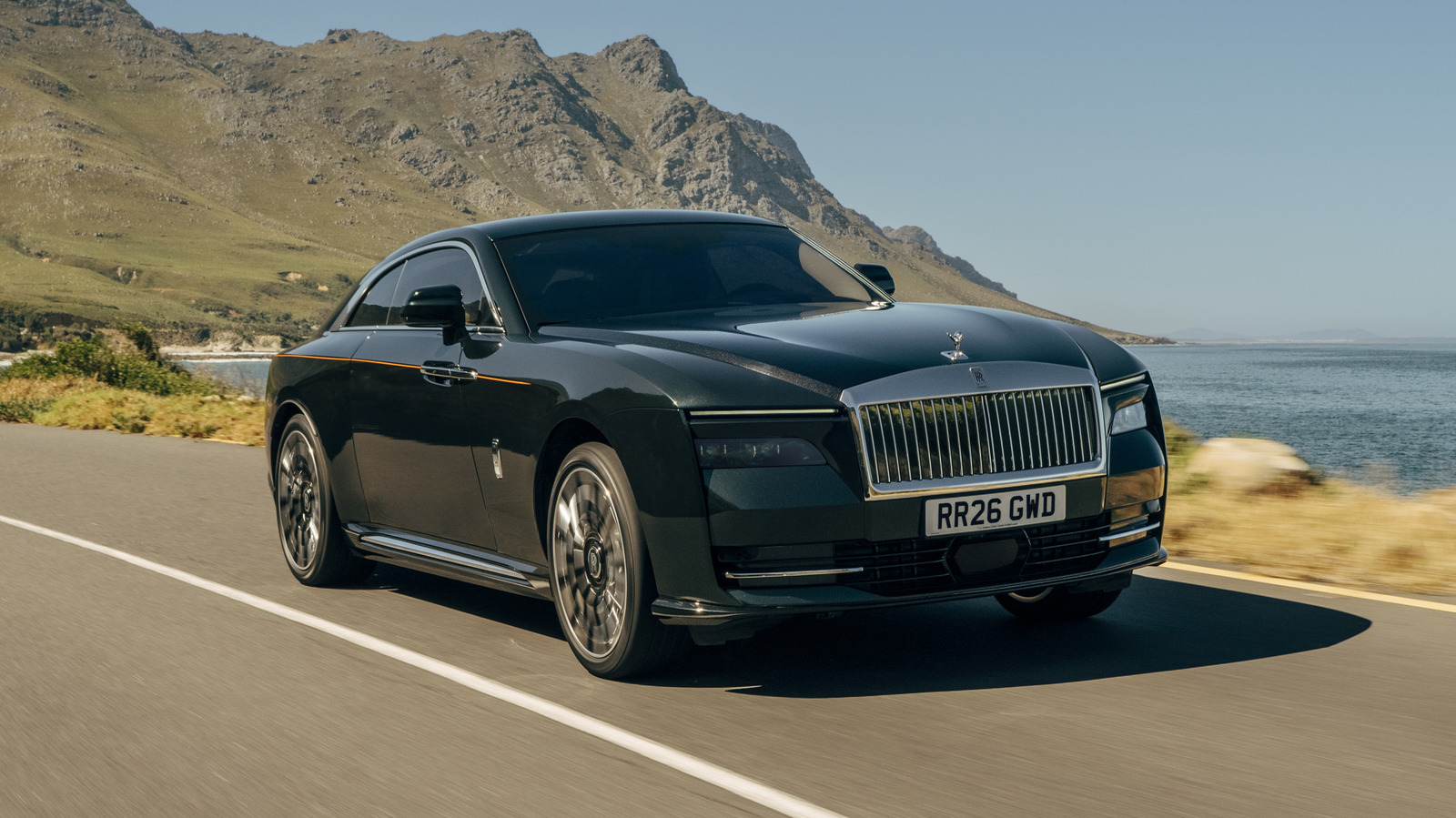
How Do Aesthetic Innovations in the New Spectre Signal a Shift in Automotive Luxury?
While the silhouette of the latest Spectre remains a familiar gesture toward tradition, the evidence suggests that the true locus of innovation resides not in its external form but in the radical complexity of its interior options. This is not merely a matter of ornamentation. Rather, the proliferation of intricate trim choices and bespoke features signals a recalibration of what constitutes luxury in the automotive sector. Historically, luxury vehicles have traded on the cachet of exclusivity and performance; now, the locus of value appears to be migrating toward the domain of personal expression and artisanal detail.
Such a shift is not without precedent—consider the trajectory of haute horology, where the visible mechanism and decorative flourishes have become as significant as timekeeping accuracy. Yet, the Spectre’s approach arguably exceeds even these analogues in its embrace of the baroque. The redesigned clock, for instance, is less a utilitarian instrument than a statement of intent: a deliberate assertion that, for the clientele in question, the passage of time is less urgent than the experience of it. This is a subtle but consequential distinction, one that recasts the automobile as a vessel for aesthetic contemplation rather than mere conveyance.
What Are the Practical and Symbolic Implications of Hyper-Customization?
The expansion of customization options in the Spectre is not simply a marketing flourish. It reflects a deeper structural transformation in the relationship between manufacturer and consumer. Under specific conditions—namely, among an ultra-high-net-worth clientele—choice itself becomes the ultimate luxury. Yet, this proliferation of options is double-edged. While it enables a degree of personalization previously reserved for coachbuilt vehicles, it also risks overwhelming the buyer or diluting the coherence of the brand’s design language.
Empirical data on buyer satisfaction with hyper-customized vehicles remains limited and methodologically fraught, often confounded by selection bias and the performative nature of luxury consumption. Nevertheless, anecdotal evidence from bespoke commissions suggests that the psychological value of choice can plateau or even invert, leading to decision fatigue or post-purchase regret. The Spectre’s intricate options, then, may serve as both a differentiator and a potential liability—a tension that the manufacturer must navigate with care.
Why Does the Persistence of Conservative Exterior Design Matter?
The decision to retain a largely unchanged exterior silhouette, even as the interior undergoes radical transformation, is not merely a matter of brand conservatism. Rather, it reflects a calculated response to the paradoxes of status signaling. For many buyers, the outward signifiers of luxury must remain legible to a peer group that values continuity and recognizability. Underneath this surface, however, the interior becomes a private theater of innovation, accessible only to those invited inside.
This bifurcation between public restraint and private exuberance is not unique to the automotive world; it echoes patterns observed in luxury real estate and high fashion, where the most avant-garde elements are often hidden from public view. The mainstream interpretation—that luxury is about conspicuous display—thus appears incomplete. In reality, the most discerning consumers may seek precisely the opposite: a form of exclusivity that is all the more powerful for being invisible to the uninitiated.
Who Stands to Gain or Lose from This Evolution in Luxury?
The immediate beneficiaries of this new paradigm are, of course, the buyers themselves, who gain unprecedented agency over the configuration of their vehicles. Yet, the second-order effects are more diffuse. Suppliers of rare materials and artisanal labor may find new opportunities, while mass-market manufacturers could face pressure to offer greater customization at scale—a prospect fraught with logistical and economic challenges.
Conversely, there are losers as well. Traditional notions of brand identity may erode in the face of infinite variability, and the very artisans whose skills are now in demand may find themselves subject to the whims of fashion rather than the dictates of craft. Moreover, the environmental implications of bespoke manufacturing—often overlooked in celebratory accounts—warrant scrutiny, particularly as sustainability becomes an increasingly salient criterion for luxury consumption.
What Should the Informed Observer Conclude?
The Spectre’s latest iteration, with its conservative exterior and riotously inventive interior, encapsulates a broader shift in the logic of luxury. The evidence suggests that for a certain echelon of buyers, the value proposition has migrated from performance and status to the orchestration of private, highly individualized experiences. This is not a universal trend; it remains contingent on cultural context and economic stratification. Yet, for those seeking to understand the future of luxury, the Spectre offers a compelling—if paradoxical—case study in the evolving dialectic between tradition and innovation.