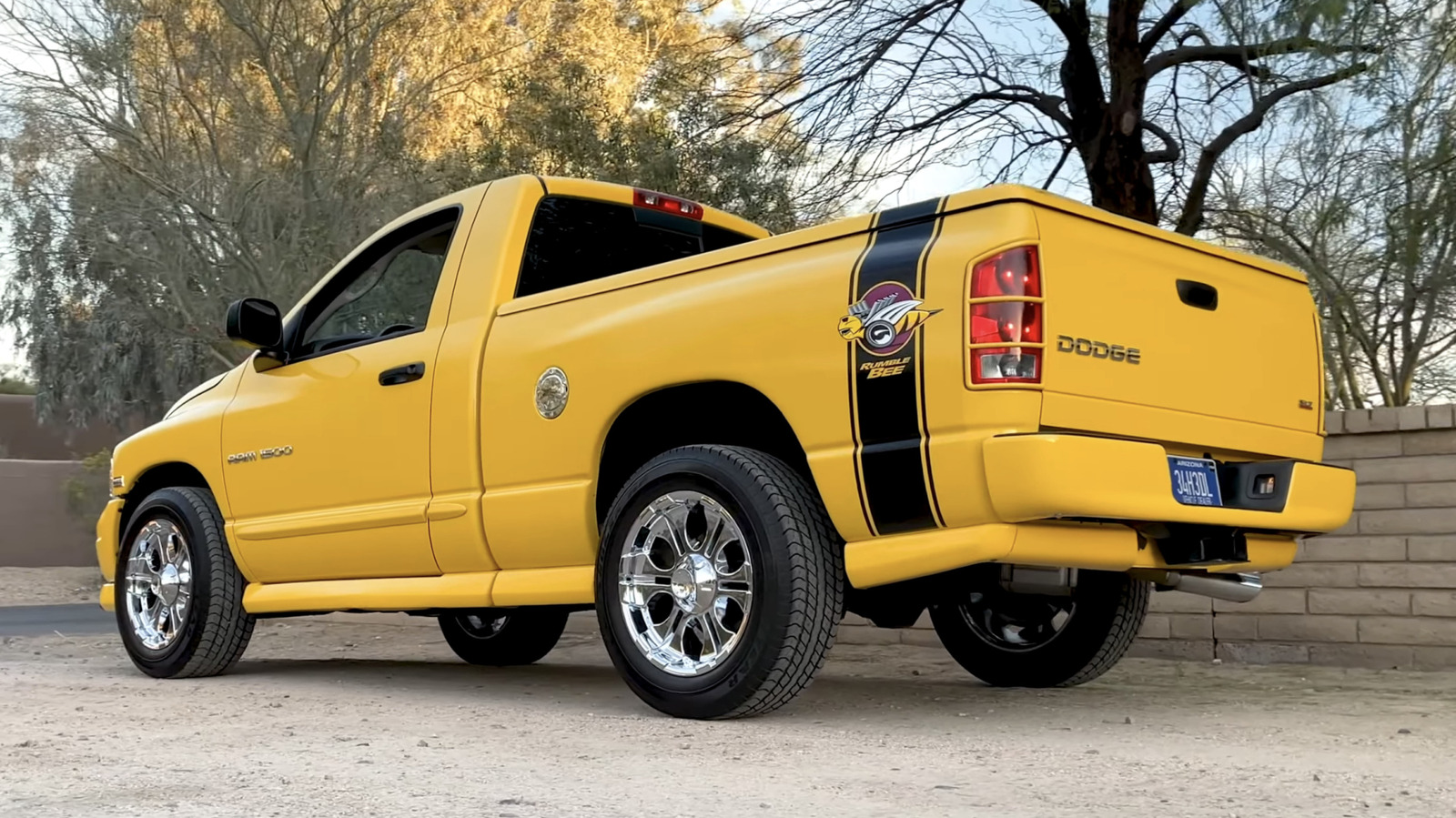
What Drives the Enduring Appeal of the Rumble Bee Concept?
The reintroduction of the Ram 1500 Rumble Bee model this week signals more than a nostalgic nod to early-2000s truck culture; it reveals a persistent appetite for vehicles that blend utilitarian capability with a distinctively performative aesthetic. The Rumble Bee, both in its original and revived forms, occupies a liminal space between muscle car bravado and pickup truck pragmatism. This hybrid identity—neither purely workhorse nor mere showpiece—suggests a nuanced consumer desire: the yearning for vehicles that telegraph individuality and power while retaining a veneer of everyday utility. The evidence, however, does not unequivocally demonstrate that such models drive significant market share; rather, their symbolic resonance often outpaces their sales footprint. The Rumble Bee’s appeal, then, may be less about volume and more about brand halo effects and the cultivation of enthusiast subcultures.
How Does the Rumble Bee Challenge Conventional Truck Market Segmentation?
Traditional segmentation in the full-size pickup market has long rested on binary oppositions: work versus play, utility versus luxury, subtlety versus spectacle. The Rumble Bee, by design, destabilizes these categories. Its bold visual cues—striking color schemes, aggressive badging, and performance-oriented features—invite a reconsideration of what a pickup truck can represent. Under specific conditions, such as regional markets with strong car culture or among younger male buyers, these models can serve as gateways to broader brand engagement. Yet, the data on actual conversion rates from special-edition models to long-term brand loyalty remains inconclusive. The Rumble Bee’s existence thus exposes a structural limitation in prevailing market analyses: the tendency to underweight the symbolic and emotional dimensions of vehicle choice.
What Are the Blind Spots and Second-Order Consequences of the Rumble Bee’s Revival?
While the Rumble Bee’s return is likely to generate short-term buzz and social media engagement, the evidence suggests that such models risk reinforcing a narrow conception of truck identity—one that privileges spectacle and nostalgia over innovation or inclusivity. This dynamic can inadvertently marginalize potential buyers who seek alternative forms of self-expression or who prioritize sustainability and technological advancement. Moreover, the focus on heritage-inspired performance trucks may divert resources from the development of models that address emerging regulatory pressures or shifting demographic preferences. The mainstream narrative, which often frames these vehicles as harmless fun, rarely interrogates the opportunity costs or the ways in which such releases may entrench legacy mindsets within automotive design and marketing teams.
What Should an Informed Reader Infer About the Broader Automotive Landscape?
The Rumble Bee’s reappearance is not merely a product launch; it is a strategic gesture within a contested field of meanings. For industry observers and consumers alike, the key takeaway is not the truck’s horsepower or paint scheme, but the underlying tension between tradition and transformation in the automotive sector. While the Rumble Bee may delight a subset of enthusiasts and reinforce brand mythology, its broader significance lies in what it reveals about the persistent allure—and potential limitations—of nostalgia-driven product cycles. An informed reader should approach such revivals with a critical awareness of both their cultural resonance and their structural constraints, recognizing that the true stakes extend well beyond the showroom floor.