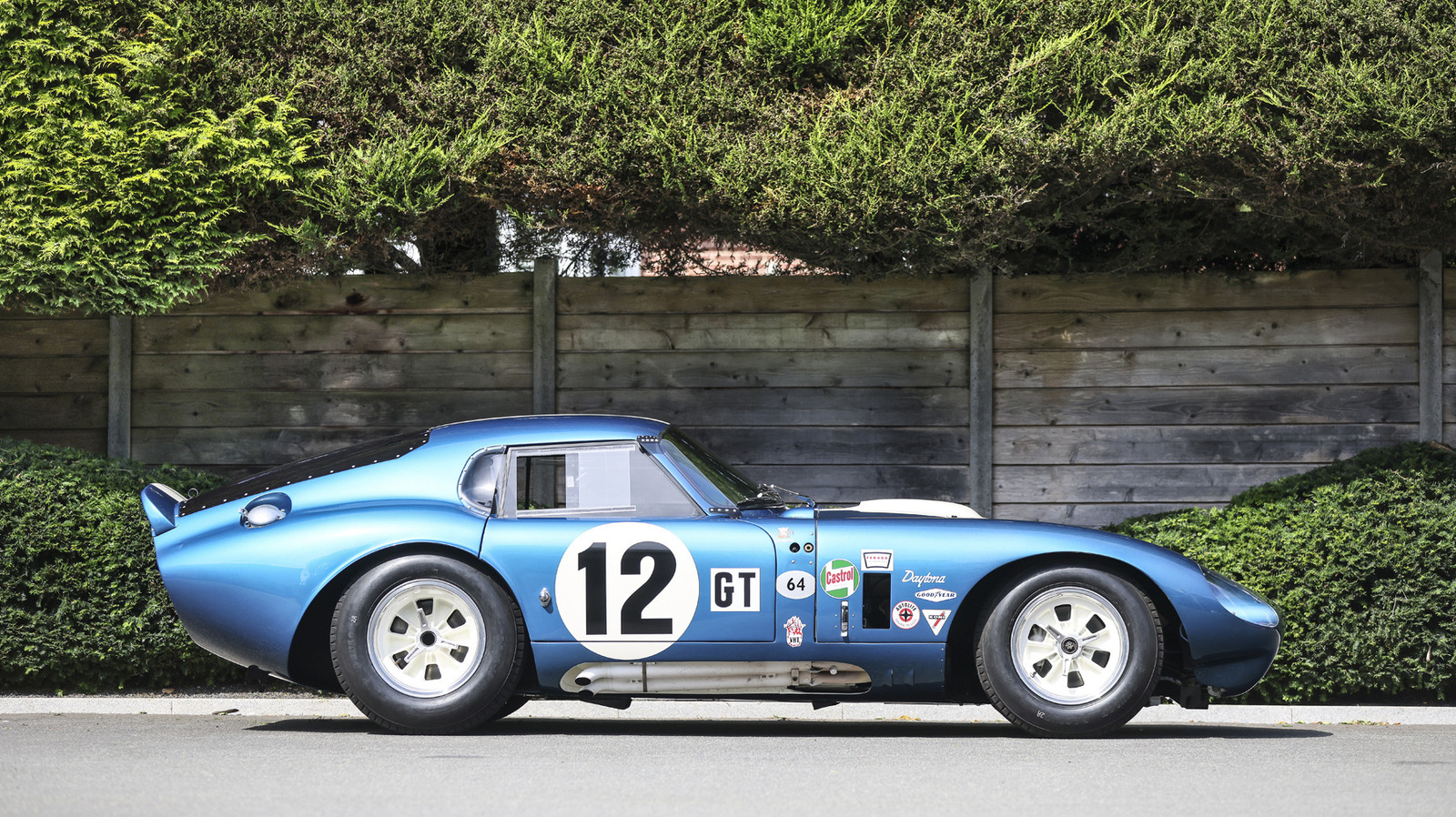
How Does Ownership History Shape the Cultural Value of the Daytona Coupe?
The question of provenance—who owned an object and under what circumstances—often exerts a gravitational pull on the market value and cultural significance of rare automobiles. In the case of chassis CSX2300, the only one of the six original Daytona Coupes to have been owned by Carroll Shelby himself, the evidence suggests that ownership history is not merely a footnote but a primary driver of both narrative and price. Shelby’s direct association with this car imbues it with a singular aura, one that transcends the already considerable cachet of the Daytona name. Yet, the precise mechanism by which provenance translates into value remains contested. Some collectors argue that the technical pedigree and racing record should predominate, while others—often those with a keen sense for the performative aspects of collecting—insist that the “Shelby-owned” designation is a form of cultural capital that cannot be replicated or substituted.
Why Does the Rarity of Public Auctions Matter for Market Dynamics?
The fact that this is the first public auction of a Daytona Coupe since 2009 introduces a layer of scarcity that is not merely quantitative but temporal. Auctions, by their very nature, are moments of price discovery, and their infrequency in this segment means that each event functions as a referendum on the evolving tastes and priorities of elite collectors. The methodological boundary here is clear: auction results are shaped by the idiosyncrasies of the moment—who is in the room, what other assets are competing for attention, the prevailing macroeconomic climate. Thus, while headline prices may be reported as definitive, their practical significance is bounded by the episodic and performative nature of the auction format. The absence of regular transactions makes it difficult to disentangle enduring value from transient exuberance.
What Broader Implications Emerge for Heritage and Identity in Automotive Culture?
Beyond the immediate circle of collectors and enthusiasts, the sale of CSX2300 invites reflection on the ways in which objects become vessels for collective memory and identity. The Shelby-owned Daytona Coupe is not simply a machine; it is a symbol, a node in a network of stories about American ingenuity, competition, and self-mythologizing. Yet, the mainstream narrative—often focused on the heroics of Shelby and the technical innovations of the Daytona—may obscure the more diffuse consequences of such sales. For instance, the consolidation of iconic vehicles into private collections, often out of public view, raises questions about access and the democratization of heritage. Who gets to see, study, or be inspired by these artifacts when their fate is determined by the highest bidder? The evidence here is fragmentary, but the trend toward privatization appears to be accelerating.
What Should the Informed Reader Conclude About the Stakes of This Auction?
For those seeking to understand the stakes, the sale of CSX2300 is less about the car itself than about the ongoing negotiation between history, capital, and cultural memory. The informed reader should recognize that while the headlines may trumpet record prices or celebrity provenance, the deeper story concerns the mechanisms by which value is constructed, contested, and ultimately sequestered. To engage critically with such events is to ask not only what is being sold, but what is being lost—or preserved—in the process.