How Rapid Response Capabilities Are Reshaping Space Security
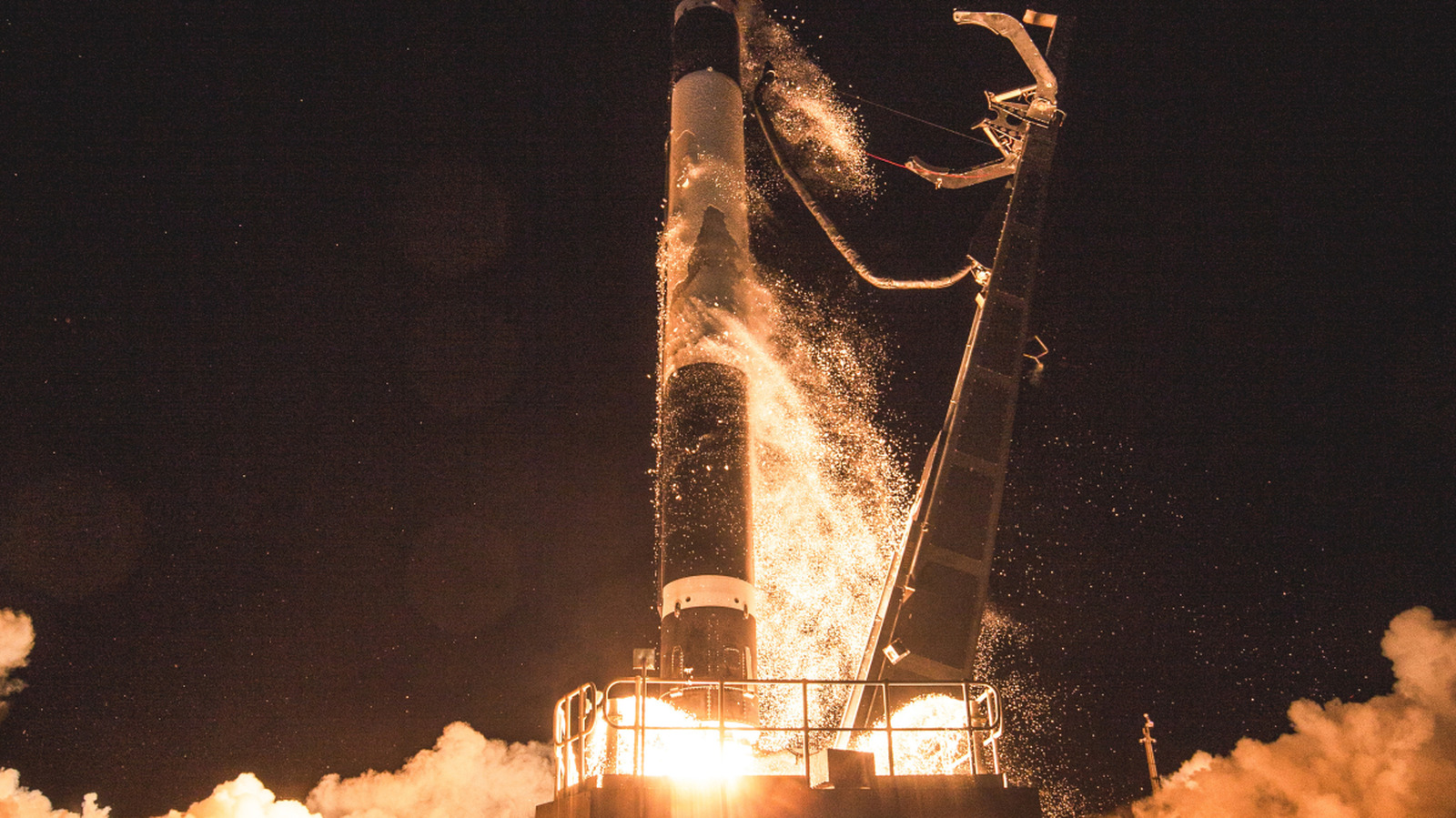
The question of how swiftly a military entity can neutralize a threatening spacecraft is not merely a matter of technological prowess; it is a barometer for the evolving logic of deterrence and escalation in the orbital domain. While the public imagination often lags behind, picturing space launches as ponderous, months-in-the-making affairs, recent developments suggest a paradigm shift. The evidence, though still emergent and subject to operational caveats, indicates that certain military units are now capable of launching responsive missions with a velocity that rivals terrestrial air defense—at least relative to the traditionally glacial pace of space operations.
What Mechanisms Enable Rapid Space Launches?
The core mechanism underpinning this acceleration is the adaptation of terrestrial rapid-response protocols—historically the province of fighter squadrons or missile defense crews—to the unique constraints of space. This involves not only technological upgrades (such as modular launch platforms and pre-staged payloads) but also a fundamental reorganization of command, control, and logistical chains. The analogy to scrambling fighter jets is instructive, but imperfect: unlike aircraft, rockets require complex fueling, trajectory planning, and coordination with global tracking networks. Nevertheless, under certain conditions, the procedural bottlenecks that once mandated weeks or months of preparation can now be compressed into hours or days.
The operational significance of this shift is not absolute. While some demonstration launches have achieved rapid timelines, these remain exceptions rather than the rule. The majority of current launch infrastructure is still optimized for predictability and cost-efficiency, not speed. Moreover, the ability to launch quickly does not guarantee the ability to intercept or neutralize a threat in orbit—a distinction often blurred in public discourse.
Why Does Launch Speed Matter Beyond Surface-Level Threats?
The strategic implications of rapid launch capability extend far beyond the immediate scenario of an errant or hostile spacecraft. At stake is the credibility of deterrence in an environment where adversaries may seek to exploit the presumed sluggishness of space response. If a state can credibly threaten to replace, augment, or defend its orbital assets on short notice, the calculus for would-be aggressors shifts. This, in turn, may stabilize or destabilize the broader security environment, depending on the transparency and signaling that accompany such capabilities.
Yet, the logic is not unidirectional. The very existence of rapid launch protocols could incentivize preemptive action by adversaries, who may fear being outpaced in a crisis. The risk of miscalculation grows as the timeline for decision-making contracts. In this sense, the technological race for speed is inseparable from the psychological dynamics of escalation.
Who Is Most Affected by This Shift in Space Operations?
While military planners and policymakers are the immediate stakeholders, the ripple effects of rapid launch capabilities touch a broader array of actors. Commercial satellite operators, for instance, must now contend with the possibility of military launches that could disrupt orbital traffic or electromagnetic environments with minimal warning. Civil agencies tasked with space situational awareness face new burdens in tracking and deconflicting an increasingly dynamic launch schedule.
Perhaps less obviously, the public—whose reliance on space-based infrastructure is both profound and largely invisible—has a stake in the stability of these new protocols. The opacity of military space operations, justified on grounds of national security, can erode public trust if not balanced by credible oversight and international norms.
What Structural Limitations and Blind Spots Persist?
Despite the headline-grabbing demonstrations of rapid launch, several structural impediments remain. The physical infrastructure for launch is geographically concentrated and vulnerable to attack or sabotage. Regulatory and diplomatic constraints—such as launch notifications and coordination with international partners—impose friction that cannot be wished away by technological fiat. Furthermore, the focus on speed may inadvertently divert resources from resilience measures, such as hardening satellites or developing non-kinetic means of threat mitigation.
A more subtle blind spot lies in the assumption that faster is always better. In reality, the value of rapid launch depends on the specific threat environment, the reliability of intelligence, and the capacity to discriminate between genuine and spurious alarms. The risk of accidental escalation, or of launching into an ambiguous situation, is not trivial.
What Should Informed Readers Conclude?
The evidence suggests that rapid launch capabilities are no longer a speculative ambition but an operational reality—albeit one bounded by significant technical, organizational, and strategic constraints. The mainstream narrative, which frames this as an unalloyed good or a simple technological race, misses the deeper ambiguities and second-order risks. For policymakers, the imperative is to balance speed with prudence, and to invest in transparency mechanisms that reduce the risk of miscalculation. For the broader public, the challenge is to demand accountability in a domain whose significance is only growing, even as its operations recede from view.