Why Do American and Russian Spacecraft Land in Such Different Ways?
The divergent landing strategies of American and Russian space programs—ocean splashdowns versus terrestrial touchdowns—are not merely technical curiosities but windows into deeper institutional logics, risk tolerances, and geopolitical contingencies. While the casual observer may attribute these differences to geography or engineering preference, the evidence suggests a more intricate interplay of historical accident, bureaucratic inertia, and divergent philosophies of astronaut safety and recovery logistics.
How Did Historical Contingencies Shape Landing Doctrine?
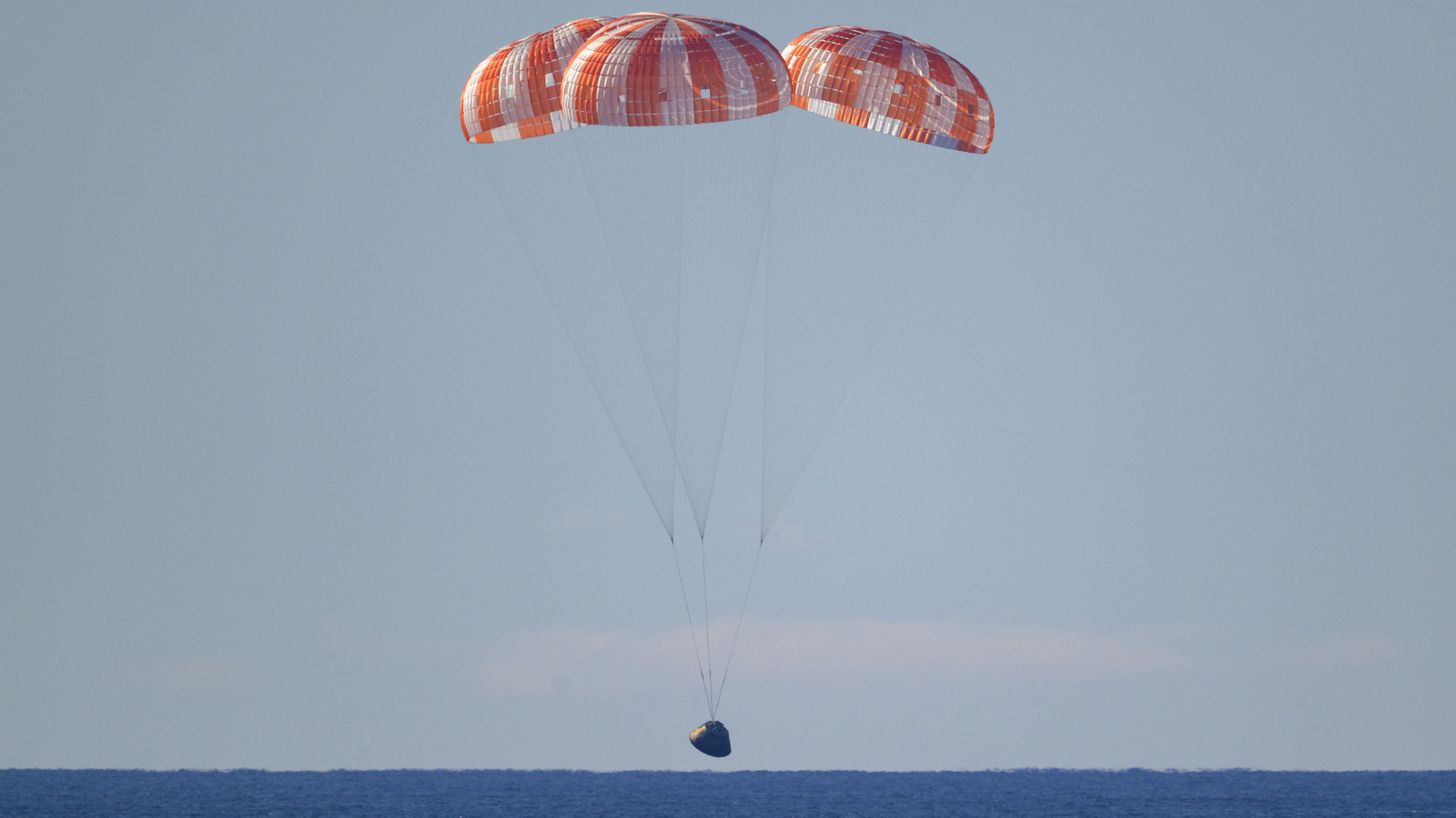
The American predilection for ocean landings, crystallized during the Mercury, Gemini, and Apollo programs, emerged less from an inherent technological superiority than from a confluence of factors: the vastness of the Pacific as a natural buffer, the logistical reach of the U.S. Navy, and a Cold War imperative to minimize the risk of sensitive hardware falling into adversarial hands. This approach, while operationally expensive and dependent on naval assets, offered a margin of error—water, after all, is more forgiving than rock. Yet, this logic was not inevitable. Early American planners debated land-based recovery, but the political and technical risks—parachute failures, unpredictable winds, the specter of a capsule crashing in a populated area—tilted the calculus toward the sea.
By contrast, the Soviet Union, constrained by geography and lacking comparable naval projection, developed a robust terrestrial landing doctrine. Soviet capsules, engineered with reinforced heat shields and retrorocket systems to soften impact, routinely touched down on the steppes of Kazakhstan. This approach, while riskier in terms of physical shock to cosmonauts, allowed for rapid overland recovery and minimized the logistical complexity of ocean retrieval. The Soviet model, however, was not without its own vulnerabilities: winter landings in remote areas, the possibility of landing in hostile or inaccessible terrain, and the ever-present risk of injury from hard landings.
What Are the Underlying Philosophies of Risk and Recovery?
The American and Russian approaches reflect not just different geographies but fundamentally distinct attitudes toward risk management and institutional trust. American missions, with their emphasis on redundancy and crew survivability, prioritized minimizing the consequences of system failure—even at the cost of operational complexity. The ocean, in this schema, becomes a safety net, albeit one that demands a flotilla of ships and helicopters standing by.
The Russian system, by necessity and design, accepts a higher baseline risk in exchange for logistical simplicity and rapid recovery. The evidence does not suggest that one approach is categorically safer; rather, each system optimizes for the constraints and priorities of its originating society. Notably, the Russian approach has produced a higher incidence of minor injuries upon landing, but also a track record of rapid post-landing medical intervention.
Who Benefits—and Who Bears the Costs—of These Choices?
The primary beneficiaries of ocean landings are, arguably, the astronauts themselves, who face lower impact forces and reduced risk of injury. Yet, this benefit is not distributed evenly: the cost and complexity of maintaining a global naval recovery capability falls on taxpayers and, by extension, on other government priorities. Conversely, the Russian approach, while less expensive in terms of recovery infrastructure, externalizes risk onto the crew and, potentially, onto rural populations in the event of off-target landings.
It is tempting to read these differences as mere artifacts of national style, but such a view underestimates the structural incentives and constraints at play. The American system’s reliance on ocean recovery is sustainable only for a superpower with global reach; the Russian system’s terrestrial focus is viable only with vast, sparsely populated land to absorb the risk of error.
What Are the Second-Order Consequences and Blind Spots?
Beyond the immediate question of crew safety, these divergent landing doctrines have shaped the evolution of spacecraft design, recovery operations, and even public perceptions of spaceflight risk. American capsules, optimized for water landings, are heavier and more buoyant; Russian capsules, by contrast, are engineered for structural resilience. These design choices, in turn, influence everything from launch vehicle requirements to mission planning.
A less obvious but significant consequence is the way these practices have shaped international cooperation and competition. Joint missions—such as those involving the International Space Station—must reconcile these divergent doctrines, leading to hybrid solutions or, at times, operational friction. Moreover, as commercial spaceflight expands, the inherited logic of ocean versus land recovery will be tested against new economic and regulatory realities.
What Should an Informed Reader Conclude?
No single approach to spacecraft recovery is universally optimal; each reflects a contingent response to a web of technical, geographic, and political constraints. The evidence suggests that future innovations—such as propulsive landings or reusable vehicles—may render the old dichotomy obsolete. Yet, for now, the American and Russian models endure, not because they are perfect, but because they are deeply embedded in the institutional DNA of their respective space programs. For policymakers and engineers alike, the lesson is clear: technical decisions are never merely technical. They are, inevitably, political choices with far-reaching consequences.