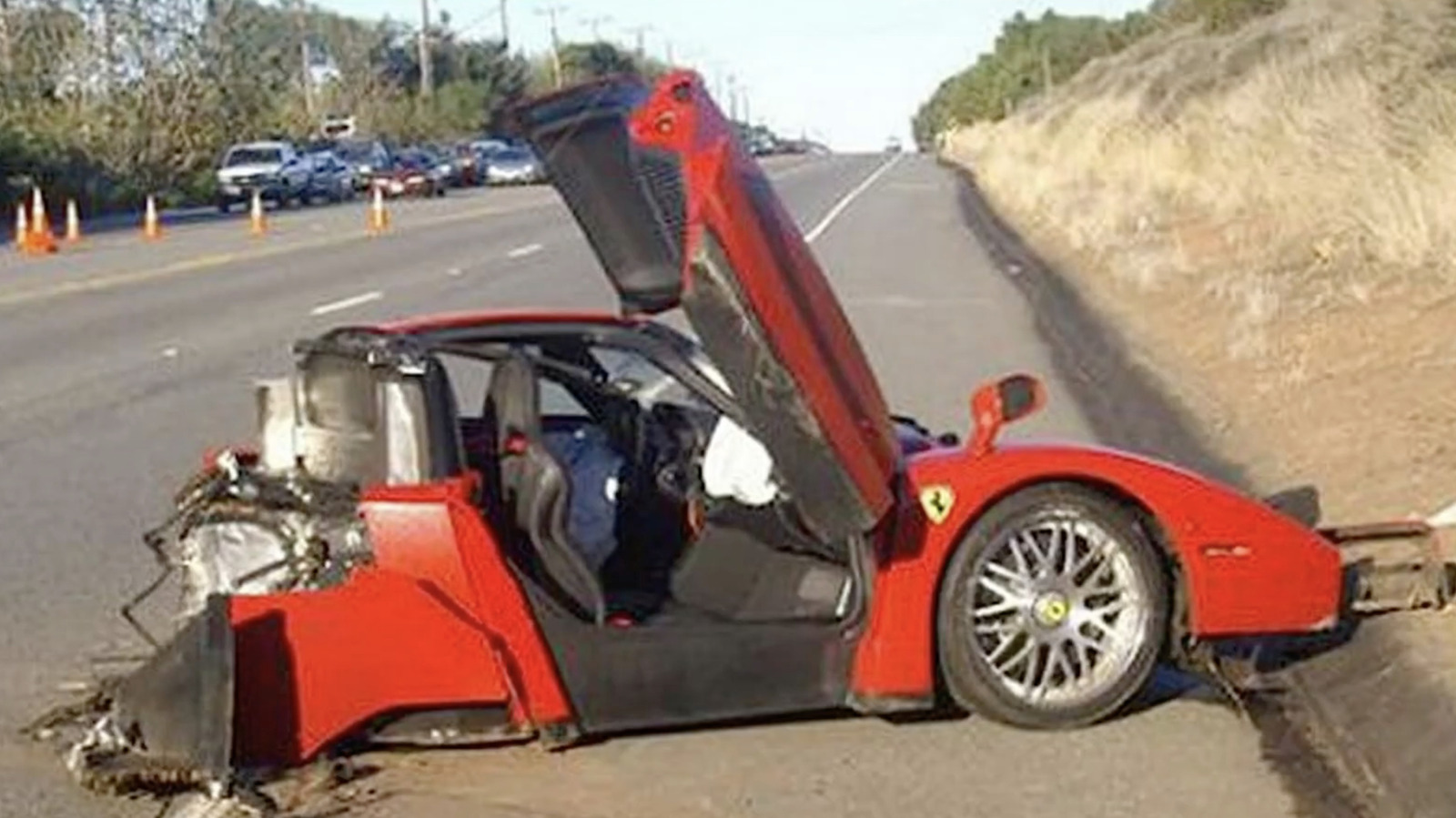
Why Does the Reappearance of Stefan Eriksson’s Crashed Ferrari Enzo Still Captivate?
The resurfacing of Stefan Eriksson’s infamous Ferrari Enzo, years after its catastrophic crash, is more than a curiosity for automotive enthusiasts; it is a prism through which to examine the enduring allure of scandal, the persistence of digital memory, and the shifting boundaries between notoriety and nostalgia. The evidence suggests that this vehicle’s continued presence in public discourse is not merely a function of its mechanical rarity or the drama of its destruction, but rather a reflection of the way certain artifacts become touchstones for collective fascination—especially when their stories intersect with themes of excess, downfall, and unresolved mystery.
What Mechanisms Sustain the Cultural Afterlife of a Notorious Wreck?
The Ferrari Enzo crash involving Eriksson was, at its core, a convergence of high-performance engineering, personal hubris, and legal intrigue. Yet the vehicle’s reappearance in online spaces years later points to a deeper mechanism: the transformation of physical wreckage into a kind of digital relic. Unlike most accidents, which fade from memory as quickly as they are cleaned from the roadside, this Enzo persists—its image endlessly recirculated, its story retold with each new sighting. This persistence is not accidental. It is sustained by a feedback loop in which the car’s notoriety amplifies its visibility, and its visibility, in turn, renews its notoriety.
Such cycles are not unique to this case, but the Enzo’s particular blend of celebrity, criminality, and technical spectacle renders it unusually potent. The car’s continued appearance in social media posts and online forums suggests that, under specific conditions, the afterlife of an object can eclipse its original function. The Enzo is no longer just a car; it is a symbol, a meme, a cautionary tale, and—perhaps most tellingly—a nostalgic artifact for those who witnessed its fall from grace.
Who Is Affected by the Ongoing Circulation of This Story—and Why Does It Matter?
At first glance, the primary stakeholders might seem limited to car enthusiasts or those with a taste for true crime. Yet the ripple effects are broader. For the automotive industry, the Enzo’s saga serves as a case study in the risks of exclusivity and the vulnerabilities of brand prestige. For digital communities, it is a reminder of the internet’s power to immortalize moments that, in a pre-digital era, would have faded into obscurity. And for the broader public, the story’s endurance raises uncomfortable questions about the ethics of fascination: Why do we continue to revisit the scene of someone else’s misfortune? What does this say about our collective appetite for spectacle and schadenfreude?
Moreover, the story’s persistence may have second-order consequences for how future incidents are reported and remembered. If notoriety guarantees a kind of digital immortality, the incentives for both participants and observers shift, subtly but inexorably, toward ever-greater sensationalism.
What Are the Structural Blind Spots and Limitations in Mainstream Interpretations?
Mainstream accounts often frame the Enzo’s reappearance as a quirky footnote or a simple matter of nostalgia. This interpretation, while not without merit, risks overlooking the structural dynamics at play. The story’s endurance is not just about the car or its driver; it is about the infrastructure of digital memory, the economics of attention, and the ways in which certain narratives are privileged over others. There is a tendency to treat the Enzo as an isolated incident, when in fact it is emblematic of a broader pattern: the transformation of private misfortune into public entertainment, mediated by algorithms and incentivized by clicks.
Furthermore, the methodological boundaries of available data—fragmented, anecdotal, and often filtered through layers of online curation—complicate any attempt to draw definitive conclusions about the story’s true impact. The evidence remains suggestive rather than dispositive, and any interpretation must be tempered by an awareness of these limitations.
What Should the Informed Reader Take Away?
The reappearance of Stefan Eriksson’s crashed Ferrari Enzo is not simply a matter of automotive trivia. It is a case study in the afterlives of scandal, the mechanics of digital memory, and the ethical ambiguities of collective fascination. For those seeking to understand the deeper currents shaping public attention, the Enzo’s story offers a cautionary lesson: that what endures is not always what is most important, but rather what is most resonant—often for reasons that remain only partially understood. The informed reader, then, is called not merely to marvel at the spectacle, but to interrogate the conditions that make such spectacles possible, and to consider the costs—both visible and hidden—of our enduring appetite for stories that refuse to die.