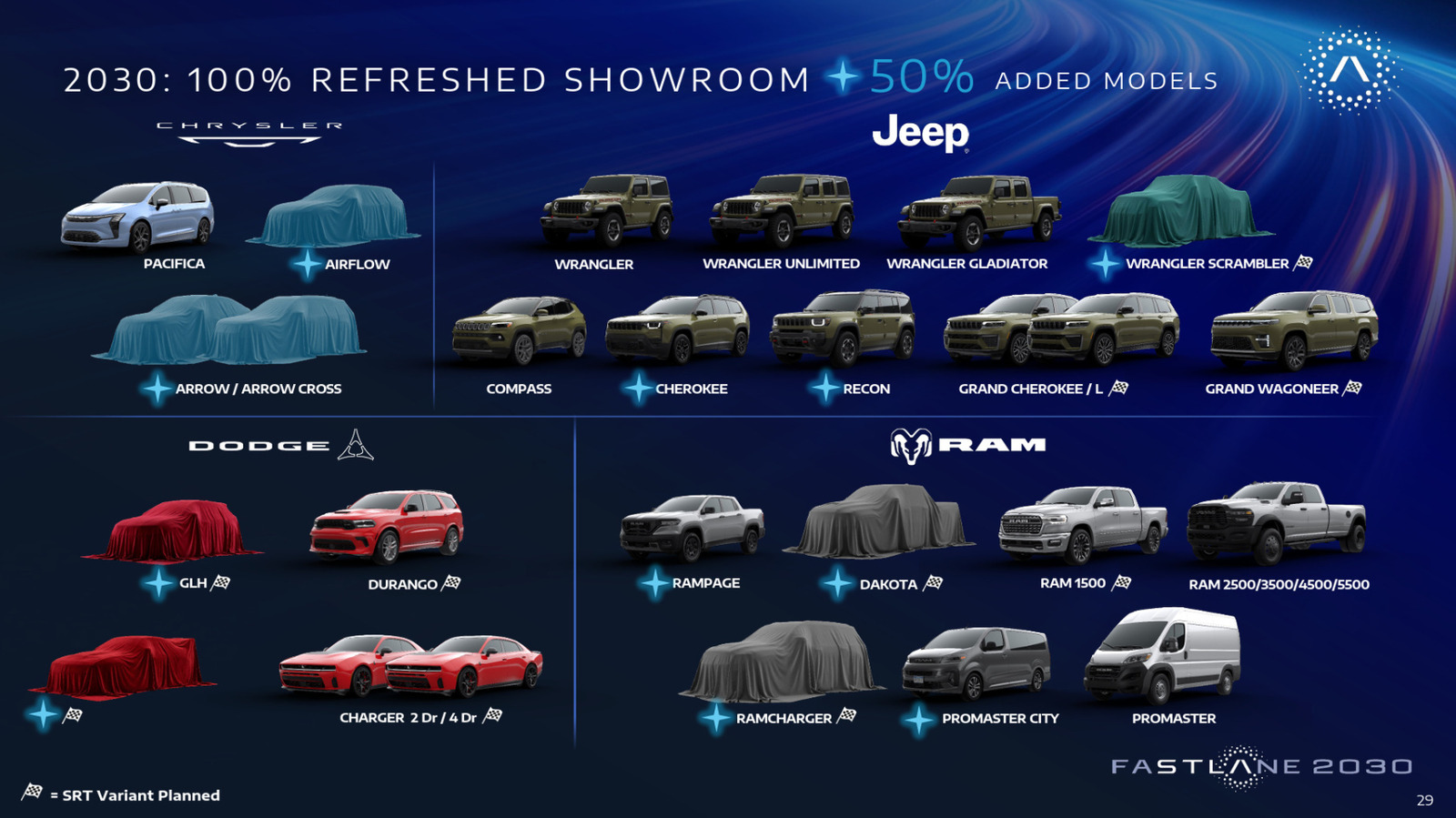
What Drives Stellantis’ Aggressive U.S. Model Expansion?
The announcement that Stellantis will introduce 11 new Chrysler, Jeep, Dodge, and Ram models to the U.S. market by 2030 signals more than a routine product refresh. At its core, this initiative appears to be a calculated response to intensifying regulatory, technological, and consumer pressures reshaping the American automotive landscape. The evidence suggests that Stellantis is not merely chasing incremental market share; rather, it is attempting to reassert relevance in a sector where legacy brands face existential threats from electrification mandates, shifting mobility preferences, and the encroachment of new entrants with software-centric vehicles.
Yet, the precise mechanism by which these new models will achieve differentiation remains ambiguous. While the company touts innovation and modernization, the risk of cannibalization within its own portfolio—given overlapping brand identities and target demographics—cannot be dismissed. The implicit wager is that breadth will translate to resilience, but this assumption is historically fraught. The U.S. market’s appetite for novelty is real, but its tolerance for redundancy is limited.
How Will These New Models Reshape Consumer Choice and Industry Competition?
For consumers, the proliferation of new Stellantis offerings could, under optimal conditions, expand options in segments that have grown stagnant. However, the practical significance of this expansion depends on the degree of substantive innovation embedded in these vehicles. If the new models merely iterate on established formulas—incremental powertrain upgrades, cosmetic refreshes, or superficial tech integrations—their impact will likely be muted. Conversely, if Stellantis leverages this opportunity to introduce genuinely differentiated electric or hybrid platforms, or to pioneer new connectivity paradigms, the competitive landscape could shift in ways that legacy rivals and upstart disruptors will be forced to address.
The industry-wide implications are similarly contingent. Should Stellantis succeed in capturing new demand, particularly among younger or sustainability-oriented buyers, it may catalyze a broader reallocation of R&D investment among its peers. Yet, the risk of overextension—spreading resources too thinly across too many nameplates—remains a structural vulnerability. The historical record of large automakers attempting simultaneous multi-brand reinvention is, at best, mixed.
Who Stands to Gain or Lose from Stellantis’ Strategy?
Superficially, dealers and suppliers aligned with Stellantis may anticipate a windfall from increased product variety. However, the distribution of benefits is likely to be uneven. Dealers in regions with entrenched brand loyalty or favorable regulatory environments may flourish, while those in saturated or declining markets could see inventory bloat and margin compression. Consumers, meanwhile, may benefit from short-term incentives and greater choice, but only if the new models avoid the pitfalls of badge engineering and deliver authentic value.
Less obvious are the second-order effects on labor, regional economies, and the broader supply chain. Should Stellantis prioritize electrified models, the transition could accelerate job displacement in traditional powertrain manufacturing hubs, even as it creates new opportunities in battery and software development. The net effect on employment and regional prosperity will hinge on the company’s willingness to invest in domestic capacity versus relying on globalized supply networks—a decision fraught with political and economic consequences.
What Blind Spots or Structural Limitations Could Undermine Success?
The most salient blind spot in Stellantis’ strategy may be its assumption that brand equity alone can sustain loyalty in an era of rapidly shifting consumer values. The evidence from recent market entrants suggests that software experience, seamless connectivity, and sustainability credentials increasingly trump legacy brand prestige. If Stellantis underestimates the speed or magnitude of this shift, its new models risk obsolescence on arrival.
Moreover, the company’s ability to execute such an ambitious rollout is constrained by global supply chain volatility, regulatory uncertainty, and the capital-intensive nature of electrification. Any disruption—be it from geopolitical instability, raw material shortages, or regulatory whiplash—could derail timelines and erode consumer confidence.
What Should an Informed Observer Conclude?
While the scale of Stellantis’ planned U.S. model expansion is undeniably ambitious, its ultimate success will depend less on the quantity of new offerings than on their qualitative distinctiveness and adaptability to emergent consumer and regulatory realities. The prudent observer will look beyond headline numbers, scrutinizing the substance of each launch for evidence of genuine innovation, strategic coherence, and operational discipline. In a market where the cost of misreading the future is measured not just in lost sales but in existential risk, the stakes could hardly be higher.